All posts by humanistfreedoms

Humanists UK calls for broad curriculum in schools to protect freedom of thought

Humanists UK has called upon all states to make sure the school curriculum is critical, objective, and pluralistic, particularly in its approach to religions and humanism. This is necessary to safeguard the right to freedom of thought. Humanists UK made this call in response to a consultation issued by Dr Ahmed Shaheed, the UN Special Rapporteur on Freedom of Religion or Belief.

International human rights law includes the right to ‘freedom of thought, conscience, religion, or belief’. But, freedom of thought has been little considered in its own right.

Humanists UK said freedom of thought encompasses much more than our private internal experiences. It is a skill set. The skill of being able to seek out, receive, comprehend, and evaluate information. Like any skill, it needs to be taught and developed.

States have a duty to create a culture in which freedom of thought and free enquiry can flourish. In practice, this means having laws that protect people from propaganda and misinformation. It also means schools must teach critical thinking skills. These skills include an understanding of the scientific method. It also means teaching in detail about different religions and humanism, but in a critical, objective, and pluralistic way. All citizens must have access to a wide variety of educational resources, whether that means through books, online, or by other means. And the media also has a strong role to play in informing and educating citizens – particularly public sector media. It must also make sure its content is pluralistic.

Humanists UK also called for the global repeal of blasphemy and apostasy laws. As freedom of thought is an absolute right, no one should be punished because they hold certain thoughts. Laws that criminalise apostatic or blasphemous thoughts are thus incompatible with this right.

Humanists UK’s Director of Public Affairs and Policy Richy Thompson commented,

‘Thought is not only a private experience. It is also a skill. Like any crucial skill, it needs to be taught and given the opportunity to develop. Thus, the state must ensure schools teach in a critical, objective, and pluralistic way. We are concerned that in the UK this is not being achieved. Religious education syllabuses still frequently exclude humanism. All state schools must conduct a daily act of compulsory worship – usually Christian in nature. And we are also aware of an increasing number of illegal religious schools. In these schools, the curriculum is extremely narrow, putting the children at risk of indoctrination. We need a society where all schools, the media, and public access to information is diverse and pluralistic.’

Notes:

For further comment or information, please contact Humanists UK Director of Public Affairs and Policy Richy Thompson at press@humanists.uk or phone 020 7324 3072 or 07534 248 596.

Read the consultation response.

Read more about our education campaigns.

Read more about our international campaigns.

Humanists UK is the national charity working on behalf of non-religious people. Powered by 100,000 members and supporters, we advance free thinking and promote humanism to create a tolerant society where rational thinking and kindness prevail. We provide ceremonies, pastoral care, education, and support services benefitting over a million people every year and our campaigns advance humanist thinking on ethical issues, human rights, and equal treatment for all.

In 2021, Humanists UK is celebrating its 125th anniversary with a renewed focus on its history. The new website Humanist Heritage is a rich new web resource that uncovers the untold story of humanism in the UK – a story of people, groups, objects, places, movements, publications, and ideas.

Citations, References And Other Reading

  1. https://humanism.org.uk/2021/06/09/humanists-uk-calls-for-broad-curriculum-in-schools-to-protect-freedom-of-thought/
  2. https://www.ohchr.org/EN/Issues/FreedomReligion/Pages/freedom-of-thought.aspx

The views, opinions and analyses expressed in the articles on Humanist Freedoms are those of the contributor(s) and do not necessarily reflect the views or opinions of the publishers.

Human: The Movie

Upon occasion, a work of art catches our full attention when we least expect it. Maybe that work of art is a magnificent garden, cultivated over decades by a single family with a harmonious vision and discovered down that one street you kept meaning to walk along. Maybe it’s a piece of music that gets into your head and heart so completely from the first time you heard it that it no longer seems to be separate. Or maybe it’s some other bit of human skill and design – some exquisite sculpture, poem, painting, building, guitar, novel, or what have you that stops everything else and occupies you fully.

Human: The Movie is that kind of experience.

The Director’s cut version that I’ve linked from Youtube says in the description box:

What is it that makes us human? Is it that we love, that we fight ? That we laugh ? Cry ? Our curiosity ? The quest for discovery ? Driven by these questions, filmmaker and artist Yann Arthus-Bertrand spent three years collecting real-life stories from 2,000 women and men in 60 countries. Working with a dedicated team of translators, journalists and cameramen, Yann captures deeply personal and emotional accounts of topics that unite us all; struggles with poverty, war, homophobia, and the future of our planet mixed with moments of love and happiness. The VOL.1 deals with the themes of love, women, work and poverty. In order to share this unique image bank everywhere and for everyone, HUMAN exist in several versions : A theatrical version (3h11), a TV version (2h11) and a 3 volumes version for the web

The film appears to have been funded by two foundations The Bettencourt Schueller Foundation whose website says that “from its earliest days, the Foundation’s action has been driven by one unwavering principle: contributing to the common good. Acting with complete freedom while remaining true to this principle, the Foundation focuses on three areas of commitment: life sciences, the arts and inclusive society” and The GoodPlanet Foundation which is an extension of Yann Arthus-Bertrand’s artistic work and environmental commitment. GoodPlanet aims to make ecology and humanism a central issue in order to encourage people to take concrete action for the Earth and its inhabitants. The GoodPlanet Foundation takes action in three main areas: environmental and solidarity field projects, educating people on sustainable development and helping companies and people develop an environmentally responsible approach.

What is the next wave of humanism? In our earlier examination, we argued that  “contemporary humanists of the twenty-first century are concerned with applied humanism – the many ways that humanism is used for solving problems. The New Humanist says, ‘I am Extreme; I am Radical; I am Hardcore. I am Humanist.‘”….and it seems that the contemporary humanists are also saying “I am connected to my world. I care.”

Citations, References And Other Reading

  1. Featured Photo Courtesy of: http://www.human-themovie.org/
  2. https://www.fondationbs.org/en
  3. https://www.goodplanet.org/en/

The views, opinions and analyses expressed in the articles on Humanist Freedoms are those of the contributor(s) and do not necessarily reflect the views or opinions of the publishers.

Jane Goodall Receives 2021 Templeton Prize


Pennsylvania, USA, May 20, 2021 – Dr. Jane Goodall, DBE, founder of the Jane Goodall Institute, UN Messenger of Peace and world-renowned ethologist and conservationist, whose groundbreaking discoveries changed humanity’s understanding of its role in the natural world, was announced today as the winner of the 2021 Templeton Prize. The Templeton Prize, valued at over $1.5 million, is one of the world’s largest annual individual awards. Established by the late global investor and philanthropist Sir John Templeton, it is given to honor those who harness the power of the sciences to explore the deepest questions of the universe and humankind’s place and purpose within it. Unlike Goodall’s past accolades, the Templeton Prize specifically celebrates her scientific and spiritual curiosity. The Prize rewards her unrelenting effort to connect humanity to a greater purpose and is the largest single award that Dr. Goodall has ever received.


“We are delighted and honored to award Dr. Jane Goodall this year, as her achievements go beyond the traditional parameters of scientific research to define our perception of what it means to be human,” said Heather Templeton Dill, president of the John Templeton Foundation. “Her discoveries have profoundly altered the world’s view of animal intelligence and enriched our understanding of humanity in a way that is both humbling and exalting. Ultimately, her work exemplifies the kind of humility, spiritual curiosity, and discovery that my grandfather, John Templeton, wrote and spoke about during his life.”

Jane Goodall Wins the Templeton Prize - SCIFI.radio - Your ...


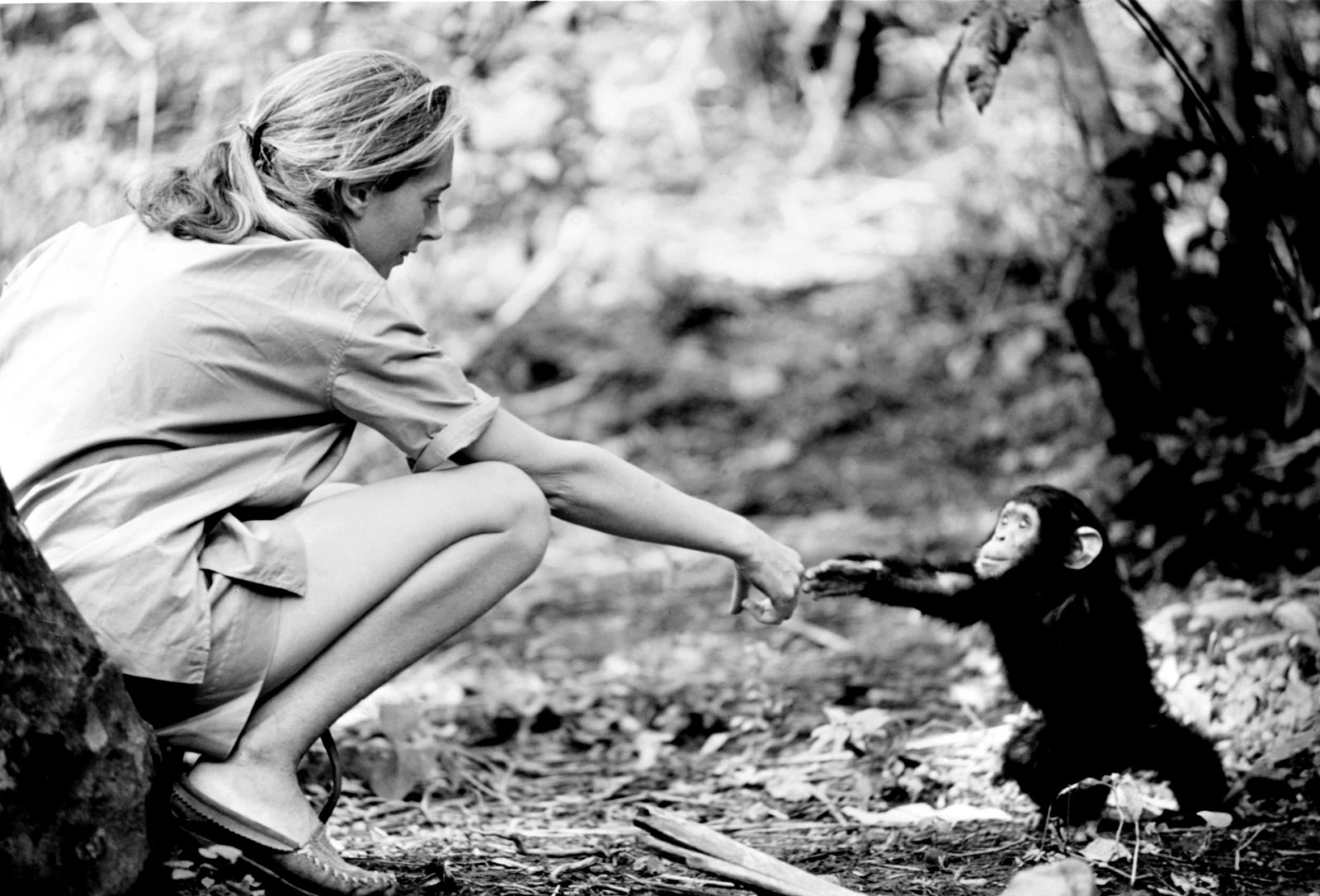
Dr. Goodall has caused a revolution in how scientists and the public perceive the mental, emotional, and social complexity of animals, regarding them as extensions of ourselves. She was the first to observe that chimpanzees engaged in activities, such as creating tools, which were previously believed to be exclusive to humans. She also proved that they have individual personality, forethought, and complex societies, much like human beings. Through her observations, Dr. Goodall showed that under certain circumstances they wage war and also, like us, show compassion. Most importantly, throughout her career, Dr. Goodall has championed the value of all life forms on Earth, changing both scientific practice and the culture at large.


“I have learned more about the two sides of human nature, and I am convinced that there are more good than bad people,” said Dr. Jane Goodall, in her acceptance statement for the Templeton Prize. “There are so many tackling seemingly impossible tasks and succeeding. Only when head and heart work in harmony can we attain our true human potential.”


“I can identify closely with the motto that Sir John Templeton chose for his foundation, How little we know, how eager to learn, and I am eternally thankful that my curiosity and desire to learn is as strong as it was when I was a child,” she added. “I understand that the deep mysteries of life are forever beyond scientific knowledge and ‘now we see through a glass darkly; then face to face.’”


As the 2021 Templeton Prize laureate, Dr. Goodall filmed a reflection on her spiritual perspectives and aspirations for the world and an interview with Heather Templeton Dill to announce her award. She will
participate in the 2021 Templeton Prize Lectures in the fall.

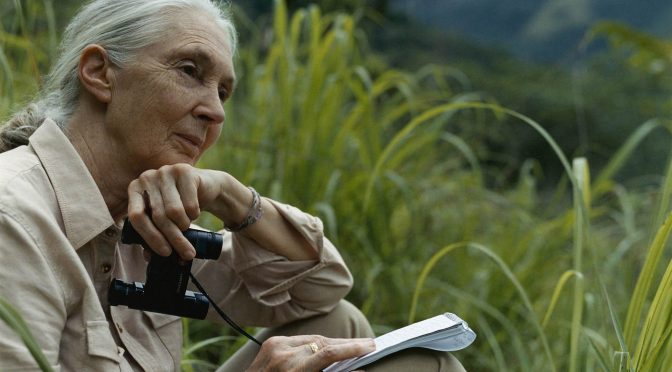
Dame Jane Goodall: "It's because of our lack of respect ...


Dr. Jane Goodall’s legacy extends beyond her research. As a conservationist, humanitarian and advocate for the ethical treatment of animals, she is a global force for compassion, a United Nations Messenger of Peace, and an icon to millions around the world. She founded the Jane Goodall Institute (JGI) in 1977 to continue her work to study and protect chimpanzees while also improving the lives of local communities through education and training. Since then, JGI has conserved 1.5 million acres of forests, supported 13 communities, and provided safe habitats to more than 5,000 chimpanzees and gorillas. Roots & Shoots, her environmental and humanitarian program, has inspired and empowered young people of all ages to become involved in hands-on projects to benefit the community, animals and the environment in over 65countries. Goodall has devoted her life to educating audiences of all ages about the natural world, traveling an average of 300 days per year over the last three decades.


Despite being grounded by the pandemic, her influence and popularity have grown with her virtual participation in events and lectures around the world. Since March 2020, Dr. Goodall has spoken to thousands of people in more than 150 countries, communicating on the global crisis and the connections between the rise of zoonotic diseases, biodiversity, sustainability, poverty, and humanity’s relationship with nature. At the same time, she launched a podcast, The Hopecast, from her attic studio at her childhood home in Bournemouth, England, and at the age of 87 is reaching millions of people through social media.


Dr. Goodall receives the 2021 Templeton Prize in celebration of her remarkable career, which arose from and was sustained by a keen scientific and spiritual curiosity. Raised Christian, she developed her own sense of spirituality in the forests of Tanzania, and has described her interactions with chimpanzees as reflecting the divine intelligence she believes lies at the heart of nature. In her bestselling memoir, A Reason for Hope, these observations reinforced her personal belief system—that all living things and the natural world they inhabit are connected and that the connective energy is a divine force transcending good and evil.

Goodall is the first ethologist and the fourth woman to receive the Templeton Prize since its inception in 1972. The Templeton Prize winner is selected following an extensive selection process that mobilizes an anonymous group of expert nominators from a diverse cross-section of fields, followed by a rigorous ranking process through a panel of judges, who have included royals, former presidents, scientists, and religious leaders. Judges rank nominees according to a range of criteria before scores are calculated for a winner. This year’s nine judges include Cecilia Z. Conrad, Ph.D., CEO of Lever for Change and Managing Director of the John D. and Catherine T. MacArthur Foundation; Indra Nooyi, Former Chair and CEO of PepsiCo.; Rev. Dr. Serene Jones of Union Theological Seminary; and Anousheh Ansari, CEO of the XPrize Foundation.

I Was Here.: Jane Goodall


Under the leadership of Heather Templeton Dill, president of the John Templeton Foundation, in 2020 the Templeton Prize updated its nomination process to produce a more diverse candidate pool for its award. Such steps included encouraging the nominations of women, increasing the number of female nominators and judges to more than half, and making a priority of recruiting diverse backgrounds and experiences in the nomination and selection process.


Goodall joins a list of 50 Prize recipients including St. Teresa of Kolkata (the inaugural award in 1973), the Dalai Lama (2012), and Archbishop Desmond Tutu (2013). Last year’s Templeton Prize went to geneticist and physician Francis Collins, Director of the National Institutes of Health and leader of the Human Genome Project, for his demonstration of how religious faith can motivate and inspire rigorous scientific research. Other scientists who have won the Prize include Martin Rees (2011), John Barrow (2006), George Ellis (2004), Freeman Dyson (2000), and Paul Davies (1995).


About the Templeton Prize
Established in 1972, the Templeton Prize is one of the world’s largest annual individual awards. It is given to honor individuals whose exemplary achievements advance Sir John Templeton’s philanthropic vision: harnessing the power of the sciences to explore the deepest questions of the universe and humankind’s place and purpose within it. Currently valued at 1.1 million British pounds, the award is adjusted periodically so it always exceeds the value of the Nobel Prize. Winners have come from all faiths and geographies, and have included Nobel Prize winners, philosophers, theoretical physicists, and one canonized saint. The Templeton Prize is awarded by the three Templeton philanthropies: the John Templeton Foundation, based in West Conshohocken, Pennsylvania, and by the Templeton World Charity Foundation and Templeton Religion Trust, based in Nassau, The Bahamas. To learn more, visit TempletonPrize.org

The Templeton Prize I Celebrating Scientific & Spiritual ...


About the Jane Goodall Institute
The Jane Goodall Institute is a global community-centered conservation organization that advances the vision and work of Dr. Jane Goodall. By protecting chimpanzees and other great apes through collaboration with local communities, best in class animal welfare standards and the innovative use of science and technology, we improve the lives of people, other animals and the natural world we all share. Founded in 1977 by Dr. Goodall, JGI inspires hope through collective action, and is growing the next generation of compassionate changemakers through our Roots & Shoots youth program, now active in over 50 countries around the world. To learn more, visit JaneGoodall.org

Jane Goodall Biography ⋆ (THE TRUE STORY) | Goodread Biography

Citations, References And Other Reading

  1. Featured Photo Courtesy of: http://www.la-epoca.com.bo/2018/12/13/jane-goodall-estamos-viviendo-la-sexta-extincion-masiva-de-especies/
  2. https://www.janegoodall.org/our-story/about-jane/

The views, opinions and analyses expressed in the articles on Humanist Freedoms are those of the contributor(s) and do not necessarily reflect the views or opinions of the publishers.

Human Solidarity and Nature Conservation

In our search for interesting, challenging and critical perspectives on contemporary humanism, we occasionally find articles published in other venues that we think humanistfreedoms.com readers may enjoy. The following article was published on Manuel Garcia, Jr.’s personal website on April 11, 2021.


By: Manuel Garcia, Jr.

“As far as we can discern, the sole purpose of human existence is to kindle a light in the darkness of mere being.” Carl Gustav Jung [1]

Life is the actualization of potentialities embedded within the biochemical processes that form the mechanisms of genetics and evolution. Does life have a purpose, or is it entirely a statistically random fluke made possible by the astronomical number of possibilities available for the expression of molecular chemistry in the wide array of physical conditions interspersed throughout the vastness of space? To believe that life has a consciously intended purpose is to believe that life is an intentional creation by a conscious supernatural entity or entities. If so, what is that purpose?

We know that the most elementary organisms of proto-life, like the SARS-CoV-2 virus that infects people with the deadly COVID-19 disease, have no purpose beyond the mindless mechanical continuation of their genetic formats, by feeding their metabolisms through parasitism. But, what of more conscious organisms, like: plants, animals, us?

We humans pride ourselves as presumably having the most highly developed conscious minds of all life-forms on Planet Earth (though very deep ecologists and naturalists disagree with this presumptuousness). From this human-centric point of view, the various levels of consciousness of living organisms are all evolutionary adaptations enhancing the survivability of individuals, to thus enhance the likelihood of the propagation and continuation of their species as environmental conditions change.

For believers in the supernatural there is an imposed obligation, or supra-natural goal, or “higher purpose” to human consciousness, which can be most generally characterized as finding union with God. For non-believers, the fully conscious experience of being alive is the totality of that higher purpose. In either case, the realization of that purpose is to be had by the combination of human solidarity and nature conservation.

Homo sapiens are social animals, and their full development as individuals — their realization of purpose — requires social connection and connection with Nature.

TALES BY LIGHT

“Tales by Light” [2] is an Australian television series (in 3 seasons) about the use of photography and videography to tell stories visually so as to change society for the better: activism. Here, I am only writing about episodes from Season 3. By its very nature this series is visually “beautiful” — in terms of the technical perfection of the image composition, capture and presentation — even when abysmally grim and ugly situations are being shown in order to advance the complete story. This is about emotional punch delivered visually. And of course, incredibly happy bursts of emotion are delivered in the same way by the presentation of images of lushly colorful nature, and joyful and inspiring scenes of human warmth, kindness and sheer exuberance. The three stories (each given in two parts) that affected me were:

1, CHILDREN IN NEED: This story, by Simon Lister, is about the children of Dhaka, Bangladesh, who scrounge through the most disgusting, unsafe and unsanitary heaps of rubbish to find scraps of material that can be recycled locally — like plastic forks and containers — in the abysmal poverty of their society; or who do difficult work in unsafe and toxic conditions to support their families. There are millions of these kids in Bangladesh.

Many Bangladeshi kids work in primitive workshops with zero health and safety codes, procedures and equipment, for example to produce pans and bowls by hands pressing sheet metal against spinning mandrels, again with no protective shields from whirling machinery gears and belts right at hand; nor any proper ventilation and filtration to protect them from toxic metal dust, or fumes in workshops using solvents and chemicals.

The story of such child laborers in the poorest societies on Earth is being documented as part of a UNICEF program to bring world (rich world) attention to the problem of child labor, and to generate financial resources to then provide safe and sanitary spaces for such children to be able to get food, education, rest, shelter for the night off the streets, and the joyful companionship of other children. But, since the money these children gain from their difficult and hazardous work is always the lifeline for the support of their families, often of single mothers, such a labor force is considered “normal” in their societies, and lamentably economically essential for these individuals.

The ultimate “solution” for eliminating this heartbreaking situation would be a worldwide awakening to an actual commitment to species-wide human solidarity. That that idea becomes self-evident through the medium of photography testifies to its power as an art-form.

2, PARADISE IN PERIL: This story, by Shawn Heinrichs, is of the conservation of the ocean biodiversity and habitat of the Raja Ampat Islands. Here, the art of photography is being used to present the story of the value of an amazing tropical coral reef and mangrove forest environment in New Guinea (Indonesia).

That story is told in two directions, first “upscale” to the societies of the wealthy industrialized and developed economies, to generate financial resources needed to establish locally manned, maintained, patrolled, owned — and in selected zones sustainably fished — marine reserves, and to ensure their continued operation and ongoing scientific study.

That story is also told “downscale,” in video presentations in their own language to the actual people living in the environments that are being protected, so that new generations of conservationists grow out of the youth of that indigenous population, now fired up with a greater understanding of the positive impact their healthy local environment has on their own lives as well as on the global environment.

The emotional impetus to these conservation efforts, both locally and remotely, is sparked by the visual impact of the photos and videos of the stunning and vibrant beauty of life moving in that magical submerged translucent habitat. The Raja Ampat Islands is one of the few places on Earth where all measures of biodiversity and ecological health are improving right now, even despite advancing global climate change; and this is entirely because of cooperative human intentionality.

3, PRESERVING INDIGENOUS CULTURE: This story by Dylan River, an Australian filmmaker with an Aboriginal grandmother, is of the recording for posterity of Aboriginal ways and languages slowly being lost with the passing away of elders, of the stories behind some of their ancient rock art, of ways of living off the land and sea while being intimately connected to the natural environment, and of community as the essence of being.

On a visit to Arnhem Land, Dylan is immersed into a welcoming ritual by the Yoingu people, whose spokesman at the event states that though Dylan is from far away he is “part of the family” as is everybody in spirit. The entirety of this brief and simple greeting conveys a fundamental truth that is more clearly and wisely stated, and lived by the Yoingu, than with any of the fatuous self-satisfied pronouncements by our many supposedly powerful and always hypocritical political leaders, who collectively oversee and exacerbate the poisonous fractiousness and sociological cannibalism of our national and world societies.

The basic truth here is that every human being “is something Nature is doing” — as Alan Watts put it — and that Nature is integral, it is a harmoniously self-entangling network of life. And that is what healthy human community should be.

I recommend this series to you because of its many simultaneous dimensions of beauty.

To my mind, the financial investments made by the executives of Canon Incorporated, National Geographic (a subscription television network in Australia and New Zealand that features documentaries, and is owned by The Walt Disney Company), and Netflix, to produce and broadcast this series were very worthy, even as I know there would necessarily also have been a component of profit motive in those investment decisions.

What is needed in our world is ever the same: more human solidarity and nature conservation. The wider broadcast of these three stories from the series Tales By Light could help awaken more people to that realization, or at a minimum give some comfort to those who already know.

Acknowledgment: Gretchen Hennig perceptively brought Tales by Light to my attention.

Here is a musical ornamentation to all the above; about a child, really any child: “Chihiro.”
https://soundcloud.com/ellasolanagarcia/chihiro

Notes

[1] “Our age has shifted all emphasis to the here and now, and thus brought about a daemonization of man and his world. The phenomenon of dictators and all the misery they have wrought springs from the fact that man has been robbed of transcendence by the shortsightedness of the super-intellectuals. Like them, he has fallen a victim to unconsciousness. But man’s task is the exact opposite: to become conscious of the contents that press upward from the unconscious. Neither should he persist in his unconsciousness, nor remain identical with the unconscious elements of his being, thus evading his destiny, which is to create more and more consciousness. As far as we can discern, the sole purpose of human existence is to kindle a light in the darkness of mere being. It may even be assumed that just as the unconscious affects us, so the increase in our consciousness affects the unconscious.”

C. G. Jung (1875-1961), from the closing chapter of his autobiography “Memories, Dreams, Reflections,” entitled “Life and Death,” written between 1957 and 1961. This excerpt is highlighted and discussed at
https://www.brainpickings.org/2012/03/13/memories-dreams-reflections/

[2] Tales by Light (on Netflix)
https://www.netflix.com/title/80133187

Tales by Light (official website)
https://www.canon.com.au/explore/tales-by-light

Tales by Light (series described)
https://en.wikipedia.org/wiki/Tales_by_Light


Manuel Garcia, Jr. is a retired physicist who blogs at https://manuelgarciajr.com on “energy, nature, society,” like on global warming; plus idiosyncratic poetry. During his working career he designed many experiments in high power, high energy and explosive energy physics. His orientation is rationalist, leftist, Zen and humanist.

Citations, References And Other Reading

  1. Featured Photo Courtesy of:
  2. https://manuelgarciajr.com/
  3. https://www.un.org/ungifts/content/sphere-within-sphere

The views, opinions and analyses expressed in the articles on Humanist Freedoms are those of the contributor(s) and do not necessarily reflect the views or opinions of the publishers.

On Consciousness: A Probe into the Boundaries of Science (ONLINE EVENT)

May 13, 2021 19:30 EDT

What is consciousness? Is this even a sensible question to ask? Join us for a fascinating evening of discovery into scientific inquiry, where neuroscience meets ethical philosophy.

Leonard Maler | Brain and Mind Research Institute ...

Leonard Maler, Neuroscientist and Distinguished Professor at Ottawa University’s Department of Cellular and Molecular Medicine will introduce us to interesting new concepts in consciousness that open a doorway into new issues, perspectives and approaches. Arising out of recent discoveries on the neural bases of consciousness and on extensive discussions with colleague, University of Ottawa Philosophy Professor, Vincent Bergeron, the limits of “access” consciousness encounter philosophical ideas on “phenomenal” consciousness and their ethical implications.

Humanist Ottawa is a volunteer-run association, serving the Ottawa community since its founding in 1968. Our vision is a world where reason and compassion guide public policy and social values to enable the fulfillment of human potential.

May 13, 2021 19:30 EDT

Register in advance for this meeting:
https://us02web.zoom.us/meeting/register/tZMtcO6vqD4sH9HTfM4UhXxrH4sZ6X3PYUjD

After registering, you will receive a confirmation email containing information about joining the meeting.


The views, opinions and analyses expressed in the articles on Humanist Freedoms are those of the contributor(s) and do not necessarily reflect the views or opinions of the publishers.

Mubarak Bala: One Year After

On April 28, 2021, the United Nations Office of the High Commissioner for Human Rights released the following statement regarding Mubarak Bala.

You may also wish to read Wole Soyinka’s letter on the 100th day of Mubarak’s detention.


One year after: Authorities must comply with Federal High Court decision to release Mubarak Bala on bail

GENEVA (28 April 2021) – UN experts* today called on Nigerian authorities to comply with the decision of the Federal High Court to release the prominent humanist and rights defender Mubarak Bala on bail.

“Today marks one year since Mr. Bala was arrested and detained in Kano State, without any formal charges, on allegations of blasphemy. His arbitrary detention has continued despite our appeals to the Government in May and July last year,” the human rights experts said.

As president of the Humanist Association of Nigeria, Mr. Bala had led human rights education campaigns promoting freedom of religion or belief and worked to raise awareness about religious extremism. His arrest on 28 April 2020 followed a petition filed with Kano police a day earlier alleging that he had insulted the Prophet Muhammad in Facebook posts.

“The arrest and prolonged detention of Mr. Bala is not only a flagrant violation of fundamental rights, but it has also had a chilling effect on the exercise of fundamental freedoms in Nigeria,” the UN experts said. “Through his continued detention, the Government is sending the wrong signal to extremist groups that the silencing and intimidation of human rights defenders and minority non-believers is acceptable.”

On 21 December 2020, the Federal High Court in Abuja ruled that Mr. Bala’s detention, as well as the denial of his ability to choose his own legal representation, constituted gross infringements of his rights to personal liberty, fair hearing, freedom of thought, expression and movement. The Court ordered his release on bail and that he be awarded damages of 250,000 Naira (about 650 US dollars).

“We are disappointed that the respondents failed to comply with the Court’s order and blatantly undermined the competence of the judicial system,” said the experts. “The Government must take action to ensure that the responsible authorities respect the due process and enforce the judicial ruling.”

On 27 January, Mr. Bala’s lawyer filed another petition to the Federal High Court in Abuja to summon for Mr. Bala’s bail pending trial, if any. A hearing was scheduled for 20 April, which has not yet taken place because Courts are on strike.

“As soon as the Courts resume, the hearing of the new petition must proceed promptly and the authorities must end this unjustified prolonged detention of Mr. Bala for good,” the experts said.

“We remain deeply concerned for Mr. Bala’s security due to continuous death threats and his overall well-being in detention. Such prolonged incarceration may also amount to a form of psychological torture that could severely impact on his mental and physical health in consequence.

“International law protects everyone’s freedom of thought, conscience and religion or beliefs and the right to opinion and expression but it does not protect religions or beliefs per se. The use of blasphemy law is against international human rights law and the imposition of death penalty based for blasphemy is doubly egregious,” stressed the experts.  


*The experts: Mr. Ahmed Shaheed,Special Rapporteur on freedom of religion or beliefMs. Mary Lawlor, Special Rapporteur on the situation of human rights defendersMr.Nils Melzer, Special Rapporteur on torture and other cruel, inhuman or degrading treatment or punishmentMs. Tlaleng Mofokeng, Special Rapporteur on the right to physical and mental healthMr. Morris Tidball-BinzSpecial Rapporteur on extrajudicial, summary or arbitrary executions;  Mr. Fernand de Varennes, Special Rapporteur on minority issuesMs. Irene Khan, Special Rapporteur on the promotion and protection of the right to freedom of expression; and Mr. Diego García-Sayán, Special Rapporteur on the independence of judges and lawyers.

Special Rapporteurs are part of what is known as the Special Procedures of the Human Rights Council.

Special Procedures, the largest body of independent experts in the UN Human Rights system, is the general name of the Council’s independent fact-finding and monitoring mechanisms that address either specific country situations or thematic issues in all parts of the world. Special Procedures’ experts work on a voluntary basis; they are not UN staff and do not receive a salary for their work. They are independent from any government or organization and serve in their individual capacity.

Check the Declaration on the Elimination of All Forms of Intolerance and of Discrimination Based on Religion or Belief

UN Human Rights, country page: Nigeria

For more information and media requests please contact: Ms. Chian Yew Lim (+ 41 22 917 9938 / clim@ohchr.org

For media inquiries related to other UN independent experts please contact: Mr. Renato de Souza (+41 22 928 9855 / rrosariodesouza@ohchr.org)Follow news related to the UN’s independent human rights experts on Twitter @UN_SPExperts.

Concerned about the world we live in?
Then STAND UP for someone’s rights today.
#Standup4humanrights and visit the web page at http://www.standup4humanrights.org

Citations and References

  1. https://humanists.international/2020/08/wole-soyinka-sends-message-of-solidarity-to-mubarak-bala/
  2. https://www.theguardian.com/books/2020/aug/06/wole-soyinka-protests-imprisonment-of-nigerian-humanist-mubarak-bala
  3. https://freemubarakbala.org/
  4. https://en.wikipedia.org/wiki/Wole_Soyinka
  5. https://www.ohchr.org/EN/NewsEvents/Pages/DisplayNews.aspx?NewsID=27033&LangID=E
  6. https://allafrica.com/stories/202104280898.html
  7. https://religionnews.com/2021/04/30/global-pressure-mounts-for-nigerian-atheists-release-after-year-in-detention/

The views, opinions and analyses expressed in the articles on Humanist Freedoms are those of the contributor(s) and do not necessarily reflect the views or opinions of the publishers.


Film Premiere: 8 Billion Angels

8 Billion Angels World Premiere
April 20, 2021 8PM EST/5PM PST

Celebrate Earth Day Week
By joining the world premiere of
8 BILLION ANGELS
with celebrity naturalist Chris Packham, hosting a conversation after the screening with expert panelists including 8 Billion Angels Producer Terry Spahr.

Click HERE for more event information


The views, opinions and analyses expressed in the articles on Humanist Freedoms are those of the contributor(s) and do not necessarily reflect the views or opinions of the publishers.

Virtual Book Launch: Ray Argyle’s Biography of George Jacob Holyoake

Visit the Event Page

Conway Hall Ethical Society presents:

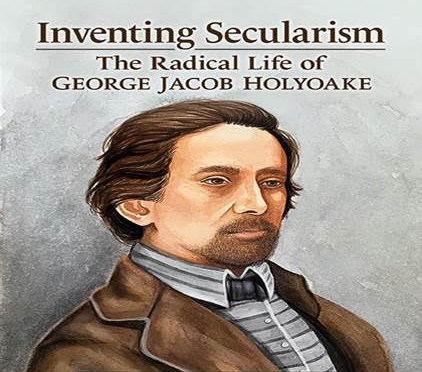
*ONLINE* National Secular Society: Inventing Secularism – The Radical Life of George Jacob Holyoake – book launch with Ray Argyle

Thursday 22nd April @ 7:00 pm – 8:00 pm (London, UK) – 2pm Eastern Daylight Time !

Event Navigation

 BOOK NOW

** This is an ONLINE only event. Please register for an online ticket using the “Book Now” link **

* Conway Hall is a charity and we politely ask you to add a donation of at least £5 when registering. *


You may recall Ray Argyle from his articles here on humanistfreedoms.com (search for “Ray Argyle” using the search tool). If you’re as crazy for the history of humanism and secularism as we are, you’ve been anticipating the release of his biography of George Jacob Holyoake for months. Well the virtual book launch is upon us!

What follows is the press-release information shared with us when the book was in pre-launch phase. We’re still reading and expect to launch our review soon!


Secularism, the world’s most widely applied model for the separation of church and state, has freed peoples and their governments from control by religious authority. At a time when it is being challenged by evangelical Christianity and fundamentalist Islam, Inventing Secularism, the first modern biography of secularism’s founder, George Jacob Holyoake, is scheduled for the Spring 2021 list of McFarland & Co.

Ray Argyle, Canadian biographer of French president Charles de Gaulle and American ragtime composer Scott Joplin, writes that George Holyoake “changed the life experience of millions around the world by founding secularism on the idea that the duties of a life lived on earth should rank above preparation for an imagined life after death.”

Jailed for atheism and disowned by his family, Holyoake came out of an English prison at the age of 25 determined to bring an end to religion’s control over daily life. He became a radical editor and in 1851 invented the word secularism to represent a system of government free of religious domination. Inventing Secularism reveals details of Holyoake’s conflict-filled life in which he campaigned for public education, freedom of the press, women’s rights, universal suffrage, and the cooperative movement. He was hailed on his death in 1906 for having won “the freedoms we take for granted today.”

More than 160 secular and humanist organizations around the world today advocate principles set out by George Holyoake in his newspaper The Reasoner and in hundreds of lectures as well as books and pamphlets.

Argyle’s Inventing Secularism warns that a rise in religious extremism and populist authoritarianism has put secularism under siege in countries ranging from the United States to such once staunchly secular nations as Hungary, Poland, Turkey and India. He writes that Holyoake “looked beyond his own time, confident of a future of moral as well as material good, offering an infinite diversity of intellect with equality among humanity.” 

Inventing Secularism, US$45.00, is available for pre-order at https://mcfarlandbooks.com/product/inventing-secularism.  

McFarland & Company, Inc., Publishers, is located in Jefferson, North Carolina, and is one of the leading publishers of academic and scholarly nonfiction in the United States, offering about 6000 titles in print.


Sources, Citations and References

Featured Photo Courtesy of https://rayargyle.com/a-radical-life/


The views, opinions and analyses expressed in the articles on Humanist Freedoms are those of the contributor(s) and do not necessarily reflect the views or opinions of the publishers.
April 2021 Call for Submissions

2020 was HumanistFreedoms.com’s first full year of operation. We enjoyed publishing articles promoting and celebrating humanism and our common humanity. We thank our contributors, readers and visitors for making http://www.humanistfreedoms.com a unique online magazine.

Please follow our website, share articles with your friends and help us grow. At the end of February, we’ve had almost half of the views we had for all of 2020! You can help!

Now for 2021 we are looking for even more essays, articles and stories to share! We are not able to pay for articles (yet) but we want to hear what you have to say. This month, themes that we want to explore include:

  • Contemporary Humanism’s Biggest Priorities and Challenges for 2021
  • Leadership Within The Humanist Movement
  • Humanism and Secularism
  • Humanism and Human Trafficking
  • Digital Humanism
  • Humanism and Global Population
  • A Humanist Perspective of Radical Politics
  • Humanist Photography: Photographer Review
  • Humanism in the Arts
  • Humanism Behind the Mask: Maintaining Respect and Compassion During the Pandemic
  • Humanism and the Environment
  • Humanism and Freedom of Expression: Lessons From 2020
  • Humanism and Freedom of/from Religion: Global Lessons
  • Humanism and Architecture
  • Book Review: A Humanist Recommends….

Do you have an idea that isn’t on our list? Let us know. Inquire at humanistfreedoms@gmail.com

A Call for Radical Humanism: the Left Needs to Return to Class Analyses of Power

In our search for interesting, challenging and critical perspectives on contemporary humanism, we occasionally find articles published via other venues that we think humanistfreedoms.com readers may enjoy. The following article was located on https://www.counterpunch.org/.


This article first appeared on https://www.counterpunch.org/ on July 1, 2020 and is re-published with permission of the author as a resource to the HumanistFreedoms.com article “Next Wave Humanism”.


By: Julian Vigo

How do white people live with themselves? This is the presumed ethical position emanating from liberal corners in the aftermath of the recent protests around the US. While a seemingly thought-provoking question nudging white folks to contemplate “their racism,” the problem with this question is the question itself. Indeed the minute we individualize what are structural problems of police violence and focus upon rooting out “wrong thought” as if a new global war on terror, we necessarily default to witch hunts of individuals through McCarthyesque callouts instead of understanding racism as a byproduct of structural inequalities.

Blog | People Interact | Blog about people-centered design ...

It has been troubling for me to witness how the liberal soft left has almost entirely capitulated to combating racism as a a moral problem in recent years. If George W. Bush’s war against “terrorism” hadn’t already taught those throughout the political spectrum that you can’t bomb a country into “peace”, certainly George Floyd’s death and the ensuing protests ought to have taught us all that racism is not an evil that inhabits the souls of individuals or that can be disappeared through consciousness-raising sessions led by upper-class white folks. Certainly, there are those who are willing and able to lead the prayer group in this new plateau of wokery such as the recent call to repent by Chick-fil-A CEO, Dan Cathy. Where prayer sessions, kneeling and public calls for atonement become the go-to instead of political dialogue and action, the left is deeply in trouble.

In tackling police violence and other social inequities rampant throughout the world today, we must address the underlying problems and not give overdue focus to the symptoms of the problems. For instance, we already know that class and not race is what determines who is affected most by institutional injustices, from the police murders of George Floyd to Tony Timpa to the the mass incarceration rates of the poor. Nathaniel Lewis demonstrates that after controlling for class, race is not “statistically significant” and that “class appears to be a larger factor than usually reported when studying racial disparities.” And from this query, other questions must necessarily emerge to include our involvement in having asked certain questions and not others and in having kowtowed to what Adolph Reed calls “race reductionism” at the heart of this issue. In short, why is the left seemingly unable to move towards a material analysis of how racism is one of many arms of oppression produced by capitalism?

Instead of approaching this topic of police violence we are told that “systemic racism is enabled when white people do not speak out” and “academia isn’t a safe haven for conversations about racism.” But both expressions are neoliberal sleights of hand for not addressing the structural issues and where attacking a “bad ideology” is believed to be had at the end of myriad callouts and rituals to shame specific individuals who need their thoughts corrected. As for academia not being a safe haven for discussing racism, academic discourse has vastly enabled the ways in which we don’t discuss the structural problems that have brought about racism and sexism. It is in capitalism’s interest that we are all standing about the public square screaming about statues we don’t like rather than clamor for real reform of our governments. Indeed, much of the theory emanating from American higher education of the last thirty years has obtusely avoided discussing class while instead addressing representation, not participation. Just as the left has abandoned discussing class in favor of focussing upon symbolism and representation, political action of recent years has centered on the most superficial changes from language to public imagery. The actual stuff of inequality which engages people’s ability to pay bills, to eat, and to pay rent, has been unsurprisingly absent from both academia and the recent calls to get white people to atone for their sins.

Radical Picture | Free Photograph | Photos Public Domain

For instance, why is the liberal soft-left not demanding answers from politicians such as Joe Biden who signed onto the Violent Crime Control and Law Enforcement Act of 1994 leading to the mass-incarceration of mostly black men, and putting them in prison for longer? Or why the criminal justice system in the US is locking up so many poor women? Why are American liberals getting behind a presidential candidate who tells African Americans that they aren’t “black” if they don’t vote for him while not seeing how such positive racism still amounts to racism as usual?

One example of how race reductionism is hurting black Americans is taken up by Adolph Reed who analyzes how Joe Biden is not only seriously out of touch with the issues that actually affect most African Americans, paradoxically Biden is billed as the candidate who serves the best interests of the “African American community” because he has not supported universal healthcare. Worse, the Affordable Care Act maintains that “the lower official premiums are in one’s area for that second-cheapest silver plan, the more low-income people actually have to pay for health care.” This is one of many ways that class-consciousness would address the very issues that result in poverty and police violence that affect a whole range of poor Americans to include black, Latino, and white Americans.

While Jesse Jackson has written about class bias and the excessive use of force by the police in reference, the need to focus upon historical material readings of current events is still not hitting home for many. Sam Mitrani notes that the police were created to “protect the new form of wage-labor capitalism that emerged in the mid to late nineteenth century from the threat posed by that system’s offspring, the working class.” Even as we know how police violence functions and who is in its crosshairs, many angry protestors are demanding us to repeat the incantation, “Black lives matter” with literally no class analysis in sight.

A large part of the reason why class analysis has taken a backseat to focussing upon racism is the dire lack of understanding that systemic racism is born from systemic economic oppression, as are socially embedded norms of misogyny, for instance. But it is easier for Americans to address their troubling history with racism because we haven’t had to develop the language to address capitalism because we have a better language: en masse pop-psychology. This is best seen through Robin DiAngelo’s 2018 book, White Fragility, which has recently resurfaced in media reports as many white Americans are using this book to signal their understanding of racism and their participation in it. Yet DiAngelo is part of the liberal racist management class and representative of the kind of sophistry of this movement that holds individuals accountable to their racism based on their skin color. Hers is a rehashing of Rousseau’s “noble savage”, racism but with a positive spin, which was the hallmark of 18th-century Enlightenment. Where Rousseau believed that the “savage” was free from sin and morality, DiAngelo similarly espouses a similarly bizarre and racist concept of black Americans in the drive to cleanse the souls of white Americans.

DiAngelo is a white woman who has made a killing telling largely middle and upper-middle class white Americans that racism is everywhere. They are told, much like Haley Joel Osment’s character in The Sixth Sense, to “see racism everywhere.” Simply contest DiAngelo’s hypothesis or question if race reductionism might be a huge side-circus issue to keep us from addressing the largely issues of poverty, student loan debt, and the US involvement in the mass surveillance of Muslims both inside and outside its borders, and you run the risk yourself of being called a racist. Just ask UK Labour MP, Rebecca Long-Bailey, Kier Stammer’s shadow education secretary who was fired from her position on Thursday for tweeting in support of British actor, Maxine Peake, who pointed out that US police officers had learned the technique of neck kneeling from Israeli secret services.

Indeed, what is passing as “racist” today has even come down to who can get the largest mob to act in the name of acts that at times are not even racist. Take for instance the recent Twitter event orchestrated by Karlos Dillard who followed a woman home and filmed her in attempting to replicate the Central Park incident last month when Chris Cooper filmed Amy Cooper’s attempt to weaponise racism against him. The problem here is that there was absolutely no evidence of racism. Still Dillard was able to create a social media mob scene to effectively exploit a woman he was stalking as he later posted the video on Twitter which doxxed this woman on Twitter to include filming her license plate and home address. Since then, several people have pointed out that this was staged encounter which is apparently one in a series of Dillard’s harassment of women in making “false Karen statements” to local media and on social media. As Meghan Murphy points out, Dillard uses these harassment videos of women as part of a marketing ploy to draw people towards his website where he sells “Karen” t-shirts. Dillard recycles his exploitation videos of women by conflating their reactions with the police murders of black Americans. Like many others on social media who have employed the “Karen” memes in recent weeks, Dillard has successfully turned the blame of racism onto white women as he equates their having “flipped [him] off” as racist. Despite the pushback by some on social media, class issues are at the heart of who has the power to stalk and harass white women calling this “racist” and those who are at the other end of a police killing.

This dilation of what racism means has been taken to the streets in Toronto where posters are hung in public spaces of a nondescript white woman named “Becky” who “may be armed with financial privilege, white feminism, false victimhood…and a smartphone.” And while many might wish to be alert to what is nothing other than a public relations ploy to weaponize now white women as the problem where Twitter posts and Instagram views might lead to our somehow solving racism, all of this is a huge distraction from the class-based issues that create racism. If only blaming police violence and poverty on white women would solve everything we could all move along after a quick Hail Mary citing white feminists as the problem.

The neoliberal urge to call out racism assigning it to individuals is not new and from where I am sitting, much of the outrage has been largely manufactured. This is not to say that individuals are not racists. As someone who has written extensively about this subject first-hand after an attack, I know quite well how racism and xenophobia function. But I would be derelict to describe reality were I to make out that racism is limited to the era of colonialism, the slave trade, or even Cesare Lombroso’s measurements of cranial size of certain ethnicities to include southern Italians formed part of his theory of the “median occipital fossa” being linked to a criminality etiology. Indeed, we would be making a huge mistake to believe that callouts of racism actually engage in anti-racism any more than they potentially engage in a new form of racist act.

Indeed, what we witnessed with the Coopers—Amy and Chris—last month, two antagonists who paradoxically share the same last name, is that callouts serve to highlight shitty individuals where little to nothing is actually done to change the fact of racism. Where one calls Amy Cooper a racist, another notes that the real “Karen” in this situation is Chris Cooper who took it upon himself to enforce park rules. The problem we now face as a society is not whether Amy is or is not a racist, but the fact that this judgment call is being left up to everyone from mobs on Twitter and her former-employer such that as it stands the right to eat and have a home depends on passing a moral purity test, even if what Amy Cooper did is morally reprehensible.

For the liberal class pushing for such callouts none of these judgments of the “Who Is Racist” blacklist impact our society positively. To be certain, the “knowledge” that yet another racist has been labelled does absolutely nothing to improve the fact of racism, nor of how we might be misreading racism. And herein lies the problem: that liberal solutions to racism are in fact reproducing racist tenets by highlighting that because of one’s whiteness, one is either already a racist or in denial of one’s racism (which begs the question of the former). This kind of liberal game of “fighting racism” reaches back to a language that many will recognize from pop psychology of the 1980s and 1990s where if only we can understand our own participation in the dynamic then all will be solved.

DiAngelo’s White Fragility serves as the postmodern Bible to liberals who seek to right a historical wrong, even if well-intended. A central tenet to DiAngelo’s book is that white people are socialized into a “deeply internalized sense of superiority that we either are unaware of or can never admit to ourselves, we become highly fragile in conversations about race.” Another tenet of her book is that “all white people are invested in and collude with racism” (emphasis mine). Together, these two ideas present what I call a philosophical Möbius strip where there is no way out of the puzzle—you are either guilty of racism because you accept this tenet and you are even more guilty of racism if you do not. But then much of Christianity is based on a similar entrapment. DiAngelo’s hodgepodge syncretism of pop-psychology, Christianity and liberalism leads the reader to believe that confession is not only good for the soul, but it will solve all our problems through the fantastic public confession, where words magically make everything better. Yet, we have well over 150 years of documented psychoanalysis to show that no such confessions or re-invention of language will do anything other than kick this issue into the long grass.

Moreso, DiAngelo proves that addressing racism only centers the white subject all over again. DiAngelo takes the focus off of black lives redirecting a narrative of racism that isn’t a structural result of material and political inequality. Instead, DiAngelo rather successfully makes racism all about white people. Or, as DiAngelo says, it’s about white people speaking too much or too little and it’s about white people being unable to feel discomfort or their feeling discomfort because they are racists. It’s almost a phenomenon that DiAngelo’s book is sold at all given that it is incoherent from its definition of “racism” which depends on the subject having structural power (which would of course, exclude poor or disabled white people) to its feel-good core which depends upon a Christian-esque confession for the “guilty” white reader to pass to the next level (one can only presume).

So let’s look to the facts about what would amount to systemic racism. According to the Pew Research Center the black imprisonment rate in the U.S. fell by a third since 2006, bringing a significant change in the decarceration of African Americans. While not perfect, this is a significant and important change to note when discussing systemic racism. As for economic equality, we are seeing that African American households are not even at the 60 percent income mark as white American households according to The Economist and black unemployment is double that of white unemployment. But then what these studies do not discuss are the median incomes that are far above those of white Americans: Asian households whose real median income falls between $83,376 to $87,194. Still many progressive white Americans believe that addressing these facts necessitates apocalyptic terms where ideas like “white racism” and “white supremacy” is going to result in racism being “solved” as opposed to addressing issues that have direct and realizable responses, such as the widespread poverty in the US.

Here’s an interesting fact about the Department of Justice’s report into the killing of Michael Brown by a member of the Ferguson Police Department: not only does the report underscore that 25% of the City’s population lives below the federal poverty level, but the entire justice system in Ferguson is skewed working against the accused due to their poverty from the first instance: “Court staff and staff from other municipal courts have informed us that defendants in poverty are more likely not to receive such a letter from court because they frequently change residence.” The report also notes, “In particular, Ferguson’s practice of automatically treating a missed payment as a failure to appear—thus triggering an arrest warrant and possible incarceration—is directly at odds with well-established law that prohibits ‘punishing a person for his poverty.’ Bearden v. Georgia, 461 U.S. 660, 671 (1983).” There is a danger that by not referencing the enormous poverty that is at the cross-section of most acts of police violence, that we are entering into a dangerous tautology whereby race always and uniquely matters.

Not surprisingly, DiAngelo’s book doesn’t really care about black lives as anything more than pawns in her angling to increase her business which is as an anti-racist corporate trainer. Black Americans end up becoming these caricatures and white people are, antithetically, deeply complex subjects. There is no deeper understanding of racism after reading DiAngelo’s book any more than one gains an understanding of what a terrorist is after reading the Patriot Act in full (I have). DiAngelo’s “success” in waging a fake war against racism is simply to have given Americans an immensely racialized charge of what “white people” or “black people” are, say or think. If we follow DiAngelo’s training to its full end, we would thusly be living in an incredibly racist (and sexist) world where one can finish such a “training” only to become hyper-racialized subjects.

Miami's Wynwood Art District | Gray Line Miami

So, the answer to my original question is a rephrasing of my original question: how can those of us on the left live with ourselves creating more divisions in fighting racism by manipulating what are fundamentally class issues of poverty and class empowerment? The minute we think that “white people” are like this and “black people” like that we have lost the plot. And it is no surprise that Black Lives Matter has similarly pitched a corporate message to Americans and to funders such as George Soros, Rob McKay, and other Democracy Alliance donors have given millions to groups associated with the movement (now over $133 million). These people have successfully enacted a cult whereby cheap one-off confessions and checks written out to BLM is the penitence one pays for the crimes of the father. Black Lives Matter has become a capitalist free-for-all with other companies known for unethical labor practices like Reebok which has recently virtue signaled whilst calling out CrossFit for not having sympathized deeply enough with BLM. This in addition to the organization’s founders having cashed in to the tune of $100 million from the Ford Foundation in 2017 along with most all of BLM’s co-founders having developed very close ties to various corporations, foundations, academic institutions and government-sponsored agencies. In 2016, Opal Tometi even spoke at the Aspen Institute which has strong ties to the military. So much for defunding the police if you are down with supporting the military.

What social theaters like DiAngelo’s book and Black Lives Matter prove is that race relations in the US have now become part of a managerial class of elites who can just as easily control the media message as well as any other corporate-sponsored speaker. Just spin a message, package it within a Christian orthodoxy, give talks at think tanks closely aligned with the Department of Defense, and the world is yours. Who cares about addressing the causes of racism or even mentioning the increasing poverty in the US when the politics of race reductionism has created a new job specialty, loads of new funding sources, and the inspiration for five-minute spots on CNN about this new and improved “war on racism.” Yet there is no way to win a “war” which is poised upon ideological purity whereby only the self can battle bigotry. In the end, the racism being fought by both DiAngelo and BLM is precisely a narcissistic and neoliberal form of whitewashing structural inequalities through the name-and-blame game whereby the more woke points scored, the least racist the subject is. Hence this is the best game in town for corporations and politicians looking to win over hearts and minds where the white subject controls all. Just look at how many percentage points black salaries have moved in the past month.

As protestors topple statues of Civil War generals and abolitionists alike, this might be a good moment for us to pause and think that perhaps the first problem in naming racism might begin with reflecting upon our embrace of “race” as a signifying real. Moreover, we need to deeply ponder if race might just be the side-show which is keeping us from addressing what are primarily class issues. As troubling as our country’s legacy is having been built on slavery, the decimation of the country’s indigenous population, and unbridled capitalism, the one common factor of the repression of humans in these situations was not decided by their “race” but was most definitely decided between those who held the money, the guns, and the power and those who didn’t.


Julian Vigo is a scholar, film-maker and human rights consultant. Her latest book is Earthquake in Haiti: The Pornography of Poverty and the Politics of Development (2015). Visit https://lubellule.com/ for more.


The views, opinions and analyses expressed in the articles on Humanist Freedoms are those of the contributor(s) and do not necessarily reflect the views or opinions of the publishers.


Featured Image courtesy of: https://graylinemiami.com/blog/miamis-wynwood-art-district/