2020 was HumanistFreedoms.com’s first full year of operation. We enjoyed publishing content which promoted and celebrated humanism and our common humanity. We thank our contributors, readers and visitors for making http://www.humanistfreedoms.com a unique online magazine.
Now for 2021 we are looking for even more essays, articles and stories to share. We are not able to pay for articles (yet) but we want to hear what you have to say. This month, themes that we want to explore include:
Contemporary Humanism’s Biggest Priorities and Challenges for 2021
Leadership Within The Humanist Movement
Humanism and Secularism
Humanism and Human Trafficking
Humanism and Global Population
At Home with a Humanist: Stories from the Lockdown
A Humanist Perspective of Radical Politics
Humanist Photography: Photographer Review
Humanism in the Arts
Humanism Behind the Mask: Maintaining Respect and Compassion During the Pandemic
Humanism and the Environment
Humanism and Freedom of Expression: Lessons From 2020
Humanism and Freedom of/from Religion: Global Lessons
Book Review: A Humanist Recommends….
Do you have an idea that isn’t on our list? Let us know. Inquire at humanistfreedoms@gmail.com
In our January 2021 Call for Submissions, we asked for articles in consideration of “Contemporary Humanism’s Biggest Priorities and Challenges for 2021“. In the United States of America (USA), one of the leading humanist organizations, American Humanist Association has left the gates with a clear indication that the identity of leadership within humanist organizations is a leading priority.
Roy Speckhardt announced that he will be leaving his position as American Humanist Association Executive Director by the fall of 2021
Speckhardt, who joined the American Humanist Association (“AHA”) staff 20 years ago and was appointed Executive Director in 2005, says his decision to open his position for a new voice is the right one for the AHA and the humanist movement.
Speckhardt explained that, “Being at the helm of such an organization as the AHA, whose mission is so critical to our times and whose influence far outstrips its size, was the greatest honor of my life, but I’ve decided it’s time for me to step down and make room for new leadership. It is my emphatic hope that my seat is filled with a Black or Brown humanist because our movement has gone too long without such diversity at the helm and this would open the door for the AHA to truly achieve its potential as a humanist and anti-racist institution.”
Speckhardt oversaw the AHA’s exponential growth and evolution from a small organization focused more on the philosophical aspects of humanism to an advocacy powerhouse with significant access in all levels of government. During his tenure, the organization quadrupled its capacity and membership, and its annual reach grew explosively from thousands previously to millions today. He helped move the organization from a modest townhouse to a statement headquarters building in the heart of the nation’s capital, a venue where the founding members of the Congressional Freethought Caucus gathered to determine its mission. Speckhardt saw the organization achieve many firsts, from seeing humanists and other nontheists named in federal legislation, to launching the movement’s first staffed social justice department, to seeing the first time an AHA staff attorney argued a case before the U.S. Supreme Court.
“I have gratitude for everything our team, members, and supporters invested. It’s because of you that we were able to achieve successes together,” Speckhardt added. Coming to the AHA after serving six years with the Interfaith Alliance and once appointed the AHA’s Executive Director, Speckhardt made hundreds of public appearances, wrote scores of published articles, and authored the AHA’s primer, Creating Change Through Humanism. His next book, Justice Centered Humanism, will be released in April 2021.
Sunil Panikkath, President of the AHA Board of Directors, praised Speckhardt for his many years of service.
“Roy drove the humanist perspective to new heights of awareness, acceptance, and prominence. He traveled the nation meeting with local leaders and other supporters, regularly defended humanist viewpoints in the media, and assembled a team of professionals ready to make a difference in Washington,” said Panikkath.
Panikkath said that a search is underway to find a new Executive Director for the AHA, which will celebrate its 80th anniversary next year. Speckhardt will remain at the AHA through the transition and will continue to be closely involved as chair of a new AHA Board Committee on Advancement.
“With the help of our chosen executive search firm Professionals For Non Profits, who have posted the position, we are getting started on a thorough, nationwide search to find new leadership for the American Humanist Association, a search that will involve all AHA stakeholders,” said Panikkath. “I am confident we will find a new leader who will be well qualified to meet the challenges before us and to take advantage of opportunities for further growth and development of humanism.”
The American Humanist Association (AHA) works to protect the rights of humanists, atheists, and other nontheistic Americans. The AHA advances the ethical and life-affirming worldview of humanism, which—without beliefs in gods or other supernatural forces—encourages individuals to live informed and meaningful lives that aspire to the greater good of humanity.
The views, opinions and analyses expressed in the articles on Humanist Freedoms are those of the contributor(s) and do not necessarily reflect the views or opinions of the publishers.
In our January 2021 Call for Submissions, we asked for articles in consideration of “Contemporary Humanism’s Biggest Priorities and Challenges for 2021“. In Canada, two leading humanist organizations, Humanist Canada and Ontario Humanist Society appear to have left the gates with clear demonstrations that the separation of church and state in the publicly-funded education system is among their top priorities. Each has upcoming events focused on this ongoing issue.
HumanistFreedoms.ca was founded in support of one Ontario citizen’s attempts to protect his human rights while trying to oppose Ontario’s existing system of public funding of Catholic school systems. Read more about Dr. Richard Thain’s legal battle in our featured article.
The Ontario government currently funds four overlapping school systems: English public, English Catholic, French public, and French Catholic. In Quebec, Manitoba, Newfoundland, and Labrador, religiously segregated school systems have been eliminated. Ontario is now the only province that funds the religious schools of the Catholic faith exclusively.
The Elementary Teachers’ Federation of Ontario and the Ontario Secondary Schools Teachers’ Federation have urged the Ontario government to end funding of the province’s Catholic schools and move toward one secular school system for each official language.
Join us for a conversation about the one school system initiative:
How did the Ontario school system come to be the way it is? What are the social, financial, environmental, and educational consequences of the current organization of our school system? How would the transition to a single school system be implemented? How would it impact teachers and parents? What are the financial benefits of merging the public and catholic school boards across Ontario? What is the current political situation with respect to moving towards a single secular school system for each official language?
Alvin Tedjo was a leadership candidate in the 2020 Ontario Liberal Party election to replace Kathleen Wynne. He was the first-ever Liberal candidate to propose merging the public and catholic school boards across Ontario in order to improve the quality of education for all students, regardless of their religion. Alvin’s proposal was supported by two public polls during the leadership election that saw a majority of Ontarians agree with him. He also proposed introducing a basic income and expanding child care.
Alvin has previously served as Vice President of the Ontario Coalition for Better Childcare. He is the founder of Canadians for Paternity Leave, a coalition that successfully pressured the federal government to increase paternity leave for Canadians. Alan was Director of Government Relations at Sheridan College and Senior Policy Advisor to the Minister of Training, Colleges and Universities. He currently works as a senior manager at Ryerson University.
Alvin is the father of three young children. He lives in Mississauga with his wife Rebecca, a registered nurse.
Leonard Baak is President of One School System.
Leonard was born and raised in Nova Scotia. In 1986, he moved to Ontario to attend university and has worked as a software developer in Ottawa since 1991.
Appalled at what he saw as “the discrimination and waste in our school system”, Leonard and two other equally dissatisfied parents, incorporated OneSchoolSystem.org in 2004 to lobby for change.
Leonard is a married father of two university-aged kids.
The mission of the Ontario Humanist Society (OHS) is to practise and to foster humanism at the Provincial level by providing focus, service and a sense of ethical identity to humanists and humanist associations across Ontario in a manner consistent with humanist principles, practice and core values as stated in the Humanist Manifestos, Amsterdam Declaration and the United Nations Universal Declaration of Human Rights. Ontario Humanist Society presents the first virtual speaker program in their showcase of 2021 events.
Via: ZOOM Meeting
Date: Tuesday February 23, 2021
Time: 7:30 pm – 8:30 pm
The Ontario provincial government is currently the only province funding religious schools of the Catholic faith exclusively. The Elementary Teachers’ Federation of Ontario and the Ontario Secondary Schools Teachers’ Federation have urged the government to move toward one secular school system for each official language. This discussion will include a short history, major issues, current state, and how we can better serve our children and society as a whole.
Our moderator and speaker, Zain Ghadially, is a passionate Ontario public school educator who focuses a lot of his own time on discussion, debate, and ethics.
The views, opinions and analyses expressed in the articles on Humanist Freedoms are those of the contributor(s) and do not necessarily reflect the views or opinions of the publishers.
In our January 2021 Call for Submissions, we asked for your submissions on topics relating to humanism, including a request for articles on the theme of Humanism’s Biggest Priorities and Challenges for 2021. As a website devoted to providing information about the fundamental links between humanism and human rights & freedoms, we cannot ignore the worst deprivations of human dignity during our aspirations for the highest of human freedoms.
On February 2, 2021 the United Nations Office on Drugs and Crime released the fifth edition of its Global Report on Trafficking in Persons. The report covers 148 countries and provides an overview of patterns and flows of trafficking in persons at global, regional and national levels, based primarily on trafficking cases detected between 2016 and 2019. As UNODC has been systematically collecting data on trafficking in persons for more than a decade, trend information is presented for a broad range of indicators.
Divided into six sections (Global Overview, Socio-Economic Factors and Risks of the COVID-19 Recession, Children – Easy to Target, Trafficking for Forced Labour, Traffickers use of Internet and Regional Overview) and pushing 200-pages, the report provides a sobering perspective on one of humanity’s oldest and most odious problems.
Traffickers see their victims as commodities without regard for human dignity and rights. They sell fellow human beings for a price that can range from tens of US dollars to tens of thousands, with large criminal organizations making the highest incomes.
The report is produced every two years. The 2020 edition covers data from the world’s largest database on trafficking victims, compiling figures from official sources across 148 countries. It also analyses 489 court cases from 71 different countries, providing qualitative information on the perpetrators and the characteristics of the crimes.
The article below the infographic is a related press release that had been embargoed until February 3, 2021.
Share of children among trafficking victims increases, boys five times; COVID-19 seen worsening overall trend in human trafficking, says UNODC Report
Vienna 2 February 2021 – The number of children among detected trafficking victims has tripled in the past 15 years, while the share of boys has increased five times. Girls are mainly trafficked for sexual exploitation, while boys are used for forced labour, according to the Global Report on Trafficking in Persons, launched by the United Nations Office on Drugs and Crime (UNODC) today.
In 2018 about 50,000 human trafficking victims were detected and reported by 148 countries. However, given the hidden nature of this crime, the actual number of victims trafficked is far higher. The Report shows traffickers particularly target the most vulnerable, such as migrants and people without jobs. The COVID-19-induced recession is likely to expose more people to the risk of trafficking.
“Millions of women, children and men worldwide are out of work, out of school and without social support in the continuing COVID-19 crisis, leaving them at greater risk of human trafficking. We need targeted action to stop criminal traffickers from taking advantage of the pandemic to exploit the vulnerable,” said UNODC Executive Director Ghada.
“The UNODC Global Report on Trafficking in Persons 2020, coupled with the technical assistance UNODC provides through its global programmes and field network, aims to inform governments’ anti-trafficking responses, end impunity, and support victims as part of integrated efforts to build forward from the pandemic.”
Profile of the Victims
Female victims continue to be the primary targets for trafficking in persons. For every 10 victims detected globally in 2018, about five were adult women and two were young girls. Around 20 per cent of human trafficking victims were adult men and 15 per cent were young boys.
Over the last 15 years, the number of detected victims has increased, while their profile has changed. The share of adult women among the detected victims fell from more than 70 per cent to less than 50 per cent in 2018, while the share of children detected has increased, from around 10 per cent to over 30 per cent. In the same period, the share of adult men has nearly doubled, from around 10 per cent to 20 per cent in 2018.
Overall, 50 per cent of detected victims were trafficked for sexual exploitation, 38 per cent were exploited for forced labour, six per cent were subjected to forced criminal activity, while one per cent were coerced into begging and smaller numbers into forced marriages, organ removal, and other purposes.
Victims’ profiles differ according to the form of exploitation. In 2018, most women and girls detected were trafficked for sexual exploitation, whereas men and boys were mainly trafficked for forced labour.
The share of detected victims trafficked for forced labour has steadily increased for more than a decade. Victims are exploited across a wide range of economic sectors, particularly in those where work is undertaken in isolated circumstances including agriculture, construction, fishing, mining, and domestic work.
Profile of the Offenders
Globally, most persons prosecuted and convicted of trafficking in persons continue to be male, with around 64 and 62 per cent respectively. Offenders can be members of organized crime groups, which traffic the great majority of victims, to individuals operating on their own or in small groups on an opportunistic basis.
Traffickers see their victims as commodities without regard for human dignity and rights. They sell fellow human beings for a price that can range from tens of US dollars to tens of thousands, with large criminal organizations making the highest incomes.
Traffickers have integrated technology into their business model at every stage of the process, from recruiting to exploiting victims. Many children are approached by traffickers on social media and they are an easy target in their search for acceptance, attention, or friendship. UNODC has identified two types of strategies: “hunting” involving a trafficker actively pursuing a victim, typically on social media; and “fishing”, when perpetrators post job advertisements and wait for potential victims to respond. The internet allows traffickers to live stream the exploitation of their victims, which enables the simultaneous abuse of one victim by many consumers around the globe.
The views, opinions and analyses expressed in the articles on Humanist Freedoms are those of the contributor(s) and do not necessarily reflect the views or opinions of the publishers.
2020 was Humanist Freedoms first full year of operation and we enjoyed publishing content which promoted and celebrated humanism and our common humanity. We thank our contributors, readers and visitors for making http://www.humanistfreedoms.com a unique online magazine.
Now for 2021 we are looking for even more essays, articles and stories to share. We are not able to pay for articles (yet) but we want to hear what you have to say. This month, themes that we want to explore include:
Contemporary Humanism’s Biggest Priorities and Challenges for 2021
At Home with a Humanist: Stories from the Lockdown
A Humanist Perspective of Radical Politics
Humanist Photography: Photographer Review
Humanism in the Arts
Humanism Behind the Mask: Maintaining Respect and Compassion During the Pandemic
Humanism and the Environment
Humanism and Freedom of Expression: Lessons From 2020
Humanism and Freedom of/from Religion: Global Lessons
Book Review: A Humanist Recommends….
Do you have an idea that isn’t on our list? Let us know. Inquire at humanistfreedoms@gmail.com
In our search for interesting, challenging and critical perspectives on contemporary humanism, we occasionally find articles published via other venues that we think humanistfreedoms.com readers may enjoy. The following article was located on mdpi.com, an open-access publishing source.
According to the author’s biography on Dublin City University, Dr. Peter Admirand “has a Ph.D. from Trinity College Dublin; a M.A. in Theology (Ethics) from Boston College; a M.A. in British and American Literature from Georgetown University; and a B.A. in English from The Catholic University of America. Previously he served as an Interim Programme Coordinator for the M.Phil in Ecumenics Programme at the Irish School of Ecumenics and lectured in peace studies, ethics, and interfaith dialogue. He also was an adjunct lecturer in English Departments at Pratt Institute, Queen’s College (CUNY), York College (CUNY), St John’s University, and Lasell College.…his publications and research interests are in the areas of interreligious dialogue (especially Jewish-Christian dialogue); religion and literature (including comic studies); testimonies of mass atrocity; post-Holocaust Jewish thought; liberation theology; forgiveness, justice, and the unforgivable; memory and ethics; theodicy; war and peace; the representation of God and theological themes in literature; and atheism and secular humanism.“
In September of 2020, Dr. Admirand participated in a forum titled
“Learning from Atheist-Theist Dialogue: Seven Virtues for the Present and Future Church” where Admirand states “in my forthcoming book, Seeking Common Ground: A Theist/Atheist Dialogue, co-written with humanist philosopher Andrew Fiala, we structured a dialogue around seven agreed virtues. Our aim was to focus on what we can learn from one another and solidify commonalities, even as we grappled with elephant-in-the-room differences.“
Turning to the novels, Les Misérables, The Brothers Karamazov, and The Plague, this article focuses on theist–atheist encounters within fiction as guides and challenges to contemporary atheist–theist dialogue. It first provides a discussion of definitions pertinent to our topic and a reflection on the value and limitations of turning to fiction for the study and development of theist–atheist dialogue specifically, and interreligious dialogue more broadly. In examining each of the novels, I will first provide a very brief historical context of when each novel was written, the time and place the covered scenes transpire in the novel, and the authors’ positions toward religion(s) when writing their books. I will close the article on some lessons to glean from these fictional dialogues for contemporary theist–atheist dialogue.Keywords: Les Misérables; The Brothers Karamazov; The Plague; atheism; dialogue
1. Introduction
Seeking to learn from dialogues between atheists and theists in literature, I first need to state the obvious. Works written by novelists, who may or may not ascribe to a certain faith or ideology, depict an imaginary encounter between fictional characters as conceived from the novelist’s perspective. As such, they are closer to the monologues that have most often dominated (non-violent) interactions between believers and nonbelievers. Think, for example, of Cicero’s On the Nature of the Gods or David Hume’s Dialogues Concerning Natural Religion1. Consider also works that seek to address some so-called “other” though really aims to proselytize and to refute the “other”, not mutually learn. In Augustine’s City of God, for example, he argues why Christianity is the true faith—notwithstanding the recent sack of Rome—and claims that such horrors would not have happened if belief and propitiation of the old gods had not been maintained.2For much of Western history, atheists and theists, if they spoke much at all, often did so at cross-purposes. As Charles Taylor has noted, though, it has only been in recent times that the real possibility of atheism in the North Atlantic World has been deemed a viable, potential life-choice option for the majority.3 Or as Alec Ryrie writes in Unbelievers: An Emotional History of Doubt: “In many of the regional, educational, and political subcultures that make up the modern United States, open and unapologetic unbelief is the norm”.4 Many parts of Europe, especially in the Nordic countries, had already anticipated the trend and seemed to cement the intractable inevitability of the secularization thesis.5 Yet, even as zeal for the thesis has cooled, the so-called European exceptions, such as Ireland and Poland, have seen great growth in the number of nones or those unchurched.6 So, too is there an increase in multiple religious belonging in the West, a feature traditionally aligned with the East.7 Regardless, human identity and longing for what are deemed religious or transcendental forms of belief and belonging, whether in traditionally religious or secular leanings, remain universal in scope.8This article is focused on moments of private discussion and dialogue between two characters in novels, one identifying (or describable as) as theist and another as atheist. In doing so, I will first provide a very brief historical context of when each novel was written, the time and place the covered scenes are supposed to transpire in the novel, and the authors’ position toward religion(s) when writing their books. At times, I will connect the discussions to recent or contemporary debates in interfaith dialogue. I will close the article on some lessons to glean from these fictional dialogues for contemporary theist–atheist dialogue. I will focus on three examples from well-known works of fiction: Les Misérables, The Brothers Karamazov, and The Plague.Why these three novels specifically? According to Michael Schmidt in his magisterial, The Novel: A Biography, critics initially “savaged” Les Misérables;9 Saul Bellow rebuked The Plague as an example of a novel formed from ideas and not believable characters: “Camus’ The Plague was an IDEA. Good or bad? Not so hot, in my opinion”10; while disparaging claims of Dostoevsky’s prose as “deliberately repetitious, flat, low key”, are not uncommon.11 My reasons for examining these three otherwise acclaimed novels are mostly personal. While at The Catholic University of America in the mid-nineties, I was introduced to Dostoevsky’s The Brothers Karamazov through Professor Declan’s honours seminar and in his book, After Ideology: Recovering the Spiritual Foundations of Freedom, while Professor Stephen Schneck encouraged close philosophical reading of The Plague for an ethics and politics class. As Camus so closely read Dostoevsky, the theodicy problem was lit in my own burgeoning theological imagination. Les Misérables was a more recent read, initially spurred by filling a gap in a novel I should have read by now, but has since become one of my favourites, along with Ulysses, Moby Dick, and perhaps an outlier to some, Cormac McCarthy’s The Road. For our purposes, though, these novels offer fascinating and illuminating moments of theist–atheist encounters.Before examining key scenes in those novels, I will first discuss definitions pertinent to our topic and reflect on the value and limitations of turning to fiction for the study and development of theist–atheist dialogue specifically, and interreligious dialogue more broadly.
2. Naming and Shaming: On Definitions, Identity, and Judgments
Not surprisingly in these discussions, terminology becomes suspect if not convoluted. Consider atheism, a robustly fluid term. Recall how Christians were deemed atheists by the Roman Empire for their refusal to acknowledge and propitiate the Roman gods.12 Those of the Abrahamic faiths, moreover, have not always seen the God of Abraham in the other and so labelled them infidel, heretic, God denier and even god killer.13 Christians have also slandered other Christians who do not belong to their church or sect,14 while despite the proclaimed oneness of Islam, intra-Muslim conflicts and division are facts of the geopolitical world, as in Indonesia where Shi’ia Muslims or those of the Ahmadya Islamic sect are deemed heretics.15Atheism is broadly defined in The Oxford Handbook of Atheism as “an absence of belief in the existence of God or gods”,16 but probing further reveals further distinctions and nuance among many atheists. Philip Kitcher refers to himself as a “soft atheist” because he does not fully foreclose the possibility, even if unlikely, that science may one day prove a theistic framework.17 He thus distinguishes his position from hard (or strong) atheists, especially New Atheists who are adamant that theistic belief is false.18 J.L. Schellenberg has more recently promoted “progressive” atheism, which aims ultimately to be a moral system that improves upon and so transcends forms of theism in which a so-called God of love is still linked with oppressive actions or beliefs. It is also an attempt to move atheism away from what it does not believe towards what it does believe.19For this article, can I, as a theist, define atheism as a position for those whom the existence of any supernatural power or being, whether manifest as one or the many, is nonsense, nonexistent, a chimera, a false proposition, a nonstarter? In my conception of atheism, such a worldview is bereft of any metaphysical understanding or potential, and so strictly material (even as that term is problematic from a scientific perspective).20 Everything can be, or will be, tested, proved or disproved by rational, scientific means.21 There can be no angels or devils inhabiting such worlds, no afterlife, no ultimate purpose to life and the universe, which instead has arisen only by chance and circumstance.22 There is no metaphysical soul. Divisions, and any form of hierarchies based on reasonableness or goodness, though, persist. For example, just as supposed God-lovers can be misanthropes, atheists can be deeply moral, even saintly in their actions and disposition.23 While moral striving is ubiquitous across faith positions, some atheists, or nonbelievers may also still embrace what they label the “spiritual”. Sam Harris, one of the original four New Atheists, highlights the benefits of meditation and his study under Buddhist masters that opened his worldview to a spirituality that did not entail he “believe anything irrational about the universe”.24 Ronald Dworkin, another atheist attuned to the mystery and sublimity of the universe, liked to call himself a “religious atheist”.25 Humanist chaplain Christ Steadman, open to partnering and dialoguing with theists, came to embrace the term “faitheist”, initially a pejorative term hurled at him.26 Does my definition of atheism above still hold? Not for many atheists, some of whom may self-identify by a wide range of terms, such as nonbeliever, nones, antireligious, secular humanist, Christian humanist, and so on.27Consider also nontheistic religious traditions—such as certain forms of Buddhism, Taoism, and Confucianism—where few definitions or lines in the sand will be tidy and impenetrable on the question of spirituality, metaphysics, other realms, and deities. Going further on definitions, there are serious questions on the universality of Western terms and categories, such as “religion” or “religions”. Such terms sometimes have no direct equivalent in many Eastern or indigenous traditions, or only do so after historic encounters (or clashes). What is deemed “religious” is often plural, porous, and interdependent, learning from and responding to other traditions. John Thatamanil, for example, preferring to speak of what is religious, and not of religion or religions, writes: “Religious traditions are not communities of consensus so much as they are sites of internal contestation”.28 Ideally, he would prefer what he calls “comprehensive qualitative orientation”.29Thus, three descriptors that many theists traditionally claim as exclusively theirs; namely, “moral, spiritual, and religious”, are increasingly present in an atheist or nonbelievers’ worldview and quest for secular meaningfulness. Atheist philosopher Martin Hägglund, for example, highlights how accepting that there is only this life and the permanence of mortality is what gives existence heightened meaning and value.30 In a similar vein, while I am a Catholic theologian, my work examining humility and forgiveness has been inspired by atheist positions which seem to demand a more precarious and so profound humility and forgiveness in a world deemed without God.31Even as terms such as “religion” or “atheist” can be difficult to pin down, other terms such as “misotheist” may further complicate the picture. What about a person who believes in some form of a transcendent God but hates and rejects any kind of worship of such a being or beings?32 One of my examples below, the famous conversation between brothers Ivan and Alyosha Karamazov in The Brothers Karamazov, is technically a debate and discussion between a theist and a misotheist; not a theist and atheist.33Such terms, however, ultimately depend upon a stable, constant state of belief or non-belief, when in truth, most living people inhabit fairly fluid, if occasionally sharp, fluctuations. Agnostics, moreover, with various degrees, shades, and nuances, acknowledge the possibility and complexity on both the atheist and theist ledger. They do not feel or assert that a definitive position can be proved or determined either way, even as such individuals may lean strongly to one side or the other.34 Still more of us may be nominal believers or nonbelievers, perhaps living extended periods of our lives without deep reflection or agonistic agony one way or the other—perhaps simply believing in belonging35 or prioritizing other areas of our lives beyond religious identity, whether we tick the box for belief in God or not. Some, moreover, consider themselves apatheists, asserting that the God question has no value or meaning in their lives.36Again, most human beings often inhabit shifting and variously solid or porous positions of belief and unbelief, or simultaneously inhabit elements of these various positions throughout their lifetimes. Faith and doubt are more often bedfellows than engaged in any life-or-death duel.37 When we factor in multiple religious belonging, the picture again becomes multi-layered and somewhat paradoxical, or at least a context that cannot be settled as “black or white”.38In the study of interfaith or interreligious dialogue, we speak of various kinds of dialogues: the dialogue of life, the intra or interfaith dialogues (ecumenical dialogues); academic dialogues, intermonastic dialogues, elite/institutional interfaith dialogue, and so on.39 For the purposes of this article, I examine the atheist–theist dialogue, which is often overlooked.40 Many atheists, for example, are pleasantly surprised when invited to academic or government forums on religious pluralism or interfaith dialogue, almost accustomed to not being included. In the West, as well as in many communist countries around the world, atheist–theist relations have often been hostile and tense.41 In the United States, atheists are often the groups deemed least trusted, according to a number of national and local surveys, as Phil Zuckerman and others have noted.42 They are also deemed to be the least electable. There has not been an outwardly atheist, party-nominated US presidential candidate, for example.43 After the 9/11 attacks and the publishing popularity of the New Atheists, atheist voices were more often heard in public discourse and other cultural mediums in the West (even as some scholars have challenged their long-term contribution to any growth in atheism).44 Nevertheless, we have even seen the rise of what Arthur Bradley and Andrew Tate have called “The New Atheist Novel”. Examining the tropes and themes of Richard Dawkins and the other New Atheists, Bradley and Tate show how major contemporary novelists, such as Ian McEwan, Martin Amis, Salman Rushdie and Philip Pullman, promote reason and science over religious superstition and religious fundamentalism in their works.45While anti-New Atheist books have been written by religious believers, there were also exceptions to the rule, from The Oxford Handbook of Atheism, coedited by a Christian theologian, Stephen Bullivant, and an atheist, Michael Ruse, along with a number of works by atheist writers who sought to present religious belief in a fair and balanced way; for example, Timothy Crane’s The Meaning of Belief: Religion from an Atheist’s Point of View.46 My ongoing collaboration with atheist philosopher Andrew Fiala, moreover, has sought to find common ground among atheists and theists even while examining core issues of disagreement and dissonance around belief and unbelief in God.47 Such works also share great resonance with the recent focus of The Dalai Lama in advancing secular ethics, especially the notion that all human beings, regardless of religious belief, are drawn and seek to promote compassion.48 For The Dalai Lama, compassion “constitutes a basic aspect of our nature shared by all human beings”.49The key is to seek and encounter one another beyond identity-barriers, whether religious, economic class, ethnicity, gender, sexual orientation, nationality, or political affiliation. Through our stories and narratives, many bridges can be built or crossed.50 While encountering real living beings is always preferable, fiction also provides a gateway and platform to meet, empathize, and experience the perspectives, fears, and dreams of the unfamiliar and unknown. The great Israeli novelist, Amos Oz, highlights how literature enabled him to overcome lingering or suppressed hatred of Germans after the Shoah. As he writes: “Imagining the other is not only an aesthetic tool. It is, in my view, also a major moral imperative”.51As a personal aside, I grew up in a rich and layered, even if perhaps a twilight-fading Catholic world in Long Island in the 1980s. While the presence of Jewish neighbours and friends no doubt later nurtured my latent interfaith awareness,52 I knew no atheists. Yes, there were people struggling with their faith or perhaps (angrily was the word) renounced faith in God, but such was presented as an anomaly or mere phase. I also recall one or two instances where loss of faith was linked to an experience in war or the Holocaust, but in general, belief in God was taken for granted. I attended a Catholic grammar school and Catholic high school followed by my undergraduate years at The Catholic University of America. After a year in the Jesuit Volunteer Corps, I received two postgraduate degrees at two Jesuit Universities (Georgetown and Boston College) before my PhD at Trinity College Dublin in Ireland.How deep and lasting were my contacts with atheists before my postgraduate work? Reading the essays of Kai Nielson and his striving for ethics without God in college, stands out, as do other, purely literary or theological encounters. From the writings of Camus to the nature essays of anthropologist and humanist Loren Eiseley,53 I encountered atheists as immersed in the mystery of the world and in seeking to alleviate the pain and suffering of others, as any religious believer or theist. Such reading set a foundation for real, healthy contacts and friendships with nonbelievers today, even as my own Catholic faith (while often battered by doubt from clergy abuse of children)54 still endures. Turning to the novelists, it is not surprising, then, that even as I continue to work in the area of theist–atheist dialogue with fellow flesh-and-blood human beings, I also contend that examining literature can help to hone, challenge, and develop our dialogical, and for me, theological and ethical, language, horizons, and aims. My first example, affectionately called, Les Mis, is, of course, a publishing sensation, whether as epic novel, a perennial East End and Broadway play, or a movie and television favourite.55
Although the origins of Les Misérables begin in 1845, as Adam Gopnik notes, “[Victor] Hugo wrote Les Misérables in the Channel Island of Guernsey in the late 1850s while in exile from the Second Empire of Louis Napoléon, Napoléon’s nephew…”57 The magnum opus was published in 1862. While born Catholic, Hugo pulled away and rebelled against the institutional Church as he grew older, emphasizing instead social justice for the poor and oppressed. As Gordon Leah writes of the role of Providence in Les Misérables:In the final analysis, the novel is an
Victor Hugo
extended call to drastic social reform, incorporating memorable passages on the sewers, the housing conditions, the lives of street urchins, the treatment of orphans, the exploitation of the poor by criminals and by the social system. Additionally Hugo sees God as the provident Creator and Sustainer whose will it is that these evils should be cured and whose agent in so doing is the man of prayer and action whose soul has, in the words of the Bishop, been bought back from evil and given to God.58(Gordon is referring, of course, to Jean Valjean)For our purposes, we will focus on the story of Monsieur Charles-Francoise-Bienvenu Myriel, who we are told in the novel’s opening, “in 1815…was bishop of Digne” (1).59 The Bishop was 75 years old and had been elevated to the episcopate in 1806. Especially illuminating are his interactions with the character called the Conventionist G—, who is identified and labelled as an atheist. Note that the Bishop was said to be modelled after Charles-Françoise-Melchior-Bienvenue de Miollis, whom James Maddon tells us, also lived simply, cared deeply for the poor, and even offered shelter to a criminal (Pierre Maurin) who was sentenced for stealing a loaf of bread. Conservative Catholics, including the Miollis family, were disgruntled about the Bishop’s portrayal in the book and the critiques of the institutional church (“Notes”, 1195). Others who shared Hugo’s critique of the institutional church feared his message was dulled by such a positive portrayal of a priest. As Lisa Gasbarrone writes: “According to his wife, Hugo defended his choice of the Bishop with the observation that a member of the liberal professions would be anachronistic for 1815, the momentous year in which the novel opens”.60 He also felt the Bishop’s heroic saintliness would accentuate the underwhelming reality of clergy performance in his time. In the longer context of the story, it is the Bishop’s altruistic forgiveness of Jean Valjean that shocks and inspires the ex-convict to overcome his (legitimate) bitterness and strive to take this new chance and live for God and true justice. He had stolen the Bishop’s only real possessions he had clung to from his previous life; “a set of six silver knives and forks and a big soup ladle…and two big solid silver candlesticks” (21). Yet, the Bishop protects and forgives him.The opening of the novel expends 100 pages on the character of the Bishop, who is Christ-like in every way but martyrdom—kind, compassionate, forward thinking, and social-justice oriented. He foreshadows, I would contend, later liberation theologians such as Oscar Romero and Ignacio Ellacuría.61 Unlike Christ, but more like a St Ignatius or St Thomas,62 the Bishop was born into a wealthy family. He had also been married, though childless. His wife died while
they were emigrants, having left the country after the 1789 revolution. He returned to France as a priest. He lived simply. “He didn’t preach so much as chat” (10), speaking with “the same eloquence as Jesus Christ himself, sincere and persuasive” (11). He stood with, and comforted, the criminal on the scaffold and happily met supposed robbers, saying: “Prejudices are the real thieves, vices are the murderers” (25). He was a Bishop to all—or nearly all, as he had eschewed the atheist.The bishop’s dialogue with the atheist occurs in the subtitle: “The Bishop Before an Unknown Light”. The scene reveals both men in human illumination, warts and all. Their scene together is brief, and I can only imagine a deeper and longer-lasting connection if they had more time to converse, learn from one another, and correct false presumptions.G—lived alone and was a member of the National Convention. The narrator says the Bishop’s actions towards the Coventionist were even more “risky than the trip through the mountains held by bandits”. Conventionists, and especially atheists, were often feared and detested by many at that time. “The man was more or less a monster”, it was said—as he had rejected rule by kings. For this position, he was isolated in a “godforsaken hole of a place in an extremely wild valley” (32). He had neither neighbour nor visitor, and so the Bishop would say: “There is a soul there who is all alone” (32). Yet, even the Bishop’s initial thrust for kindness was tempered by cultural and societal “aversion” to what the man represented. A few times he headed in the man’s direction, but then turned away. Word spread that G—was dying and death was imminent. The Bishop, after a few false starts, headed off to that “unholy spot” (32).When he steps into G—’s dilapidated hut, G—asks the Bishop who he is, as no one from the town had ever visited him. G—, discovering the man is his bishop, reaches out his hand. The Bishop does not take it (33). He notes that the man does not look as sick as he had been told.The atheist says he only has a few hours left but is glad the Bishop came and is happy to see the sun one last time. He tells a shepherd boy, who was serving him, to go to bed as he must be tired. G—also thought this way he can die while the boy is sleeping. It was a kind act, but the saintly bishop was unmoved. He was perturbed, though, as G—addressed the Bishop like any other man, even as he “gazed at him with a congeniality in which one might have discerned, perhaps, the humility that is appropriate when a person is so close to returning to dust” (34).As noted, the Bishop was hoping for a deathbed conversion, but G—, emotionally and mentally strong and alert, exuded fervour and perseverance even as his body was moving toward death. In this regard, G—foreshadows Hugo years later on his deathbed in 1885, where a priest also sought (but failed in) his return conversion to the Catholic Church.63Regardless, the Bishop sits down and begins to speak with a tone of “reprimand” (34). When G—says that man should be governed by science”, and the Bishop adds conscience too, G—replies: “It’s the same thing. Conscience is the quota of innate science we each have inside us” (34).Already the Bishop is “amazed” by his words, more so when G—clarifies that he protested and called for the death of ignorance, not the death of the king as he believed no man had such a right, guided by a call for social justice and the end of slavery.They then discuss and clearly disagree on the value of the 1789 Revolution, which pains the Bishop, but which G—sees as “mankind’s crowning achievement” (35). As they further discuss the violence of the revolution, the “bishop almost regretted having come, and yet he felt obscurely and strangely shaken” (36).The atheist mentions the example of Christ, who spoke what we would call truth to power and that innocence cannot only be claimed by one group. The Bishop quietly agrees. The atheist then argues that we must cry over all the victims of state violence and oppression, whether the child king or the common people. Again, the Bishop agrees. G—pushes further and says the suffering of the people has lasted longer and there we must focus. Another silence unfolds. The atheist’s tone shifts. He accosts the Bishop for coming into his home and questioning his motives, so again asking the bishop who he really is, presuming he is just a toadied member of the Church elite, far from the plight of the people. Readers know that is not the case with this Bishop. When G—calls the Bishop “a worm in a carriage!”, the narrator justly remarks: “It was the Conventionist’s turn to show human weakness and the bishop’s turn to show humility” (37).Gently, the Bishop asks—despite all the supposed riches he had and has—how all the destruction from the revolution “prove[d] that pity is not a virtue, clemency is not a duty, and that ‘93 was not hideously ruthless” (37).G—then apologizes to the Bishop for not treating the other and his ideas with courtesy. He also apologizes for using all the Bishop’s material wealth against him in his argument, and that he will not make such references again. The Bishop simply thanks him but does not correct him by saying he renounced such luxuries years ago.As the Conventionist adds and links mistakes on different sides of the political spectrum before and during the revolution, the Bishop, shocked by the comparison, then replies: “Progress should believe in God. Good cannot be served by impiety. An atheist is a bad leader of the human race” (37). Note how the bishop’s bias is still active today. G—, initially silent, experiences a shiver, and with tears exclaims, seemingly in a defensive or sarcastic tone: “O you! O ideal! You alone exist!”In response, the Bishop “experienced an inexpressible commotion” (37). David Bellos contends the scene above and G’s response (which I will note in a moment) are meant to convey the existence of God, “boiled down in Les Misérables to a bafflingly dense paragraph put in the mind of the outcast revolutionary, G”.64 G—’s “bafflingly dense” words, uttered after pointing to the sky, are: “Infinity is. It is there. If infinity had no self, the self would be its limit; it would not be infinite. In other words, it would not be. However it is. So it has a self. This self of infinity is God” (38–39). He dramatically shudders. G—’s words almost resemble something of the spirit of the great 14th century Dominican scholar and mystic, Meister Eckhart,65 or contemporary new age spiritualism. It is not a typical statement of an atheist, and here again may be closer to Hugo’s evolving beliefs towards something Divine but free of any human, religious institution.Returning to the scene, the Bishop looks more kindly on the man, especially sensing death was very near. He reaches towards him and asks if he wants to express belief in God. “This hour is the hour of God. Don’t you think it would be a shame if we met in vain?” (39).The atheist recounts his life, mostly the good deeds he has done and the suffering he has endured, even acknowledging how he protected a convent and “my own enemies—you lot” (39). He concludes: “What have you come to ask of me?”Here, finally, is the key to the whole arc, and it is the Bishop who is changed. As Kathryn Grossman comments, “References to knees and kneeling recur at a number of critical, interlocking junctions”66 and serve to unite the novel’s narrative strands and structure. Just as Jean Valjean later kneels before Myriel, here the bishop kneels before G—and asks for his “blessing” (40). Though G—has already died, the narrator comments that the Bishop then became even more gentle and caring of the poor and of the children, clearly touched and changed by his encounter with the atheist (40). Perhaps Jean Valjean was thus also a beneficiary.
4. Brothers in Dialogue
Fyodor Dostoevsky, like all great theists, was also drawn to atheism.67 Ultimately, though, he firmly believed that religion and God were needed to maintain some moral order in our world, and that without such a foundation, as Ivan Karamazov intoned, “everything would be permitted” (69).68 Dostoevsky was a profoundly angst-ridden man who could also breathe life into holy, optimistic characters such as Zosima, Alyosha, or of Sonya’s unconditional and forgiving love in Crime and Punishment.69Dostoevsky’s gamboling and debts, his early political activism, his sentence by execution under a firing squad in 1849, and his last-minute reprieve, followed by imprisonment in the Omsk stockade
Fyodor Dostoevsky
from 1850 to 1854 in Siberia, are well-documented in his fiction, letters, and in scholarly biographies and journal articles. Especially relevant is his autobiographical prison novel”,70The House of the Dead. As Joseph Frank has noted, these prison years “were of decisive importance in [Dostoevsky’s] life and resulted in what he called the “transformation of his convictions”. The experiences garnered in these years changed Dostoevsky from an opponent into a supporter of Tsarism, and finally consolidated the foundations of his faith in Christ and in a Christian God who transcended the bounds of reason”.71 In The House of the Dead, the narrator even blesses the prison for saving his life.72The Brothers Karamazov was published in 1881, so almost three decades after his release, and one year before his death in 1882. In the novel, Fyodor Karamazov, the father, is described as a landowner who is “not only worthless and depraved but muddleheaded as well” (7). He only thought of himself. He was an “old fool” (74). As the opening of the novel reveals, the father had died 13 years previously. As the story unfolds, the question is which of his sons killed him, for any one of them had motive. Fyodor Karamazov, it is worth noting, was said to be modelled after Dostoevsky’s own troubled father, who (among three competing versions) supposedly was murdered by his serfs, whom he treated terribly. Dostoevsky was away at school during the death. Speculation (famously by Freud) on his father’s demise and its impact on the son is ongoing.73In the novel, the father had three sons through two wives. Alexei (Alyosha) is the young novice who often is seen to represent the spiritual side of man. Ivan is the brother who, we will see, has rebelled against belief in God, and represents the intellectual side of man. Dmitri, the eldest, represents the passionate or sensualist side of man. Their father was also rumoured to have a so-called illegitimate son, Smerdyakov. He had raped a vulnerable, mute, and homeless “holy fool” named “Reeking Lizaveta”. The boy’s name means “son of the ‘reeking one’”. She died while in childbirth. According to Sharon Cohen, the rape of Lizaveta not only proved the wantonness of Fyodor Karamazov but the guilt of the town in not trying to care and protect her earlier. Thus, Smerdyakov “is a composite of the devil’s son and a “holy innocent”, for he assimilates both the best and worst of humanity”.74 Smerdyakov was said to have skinned and hung cats as a child, later becomes a servant in his father’s household, and shares Ivan’s anti-God (or atheist) beliefs. He is also the one, perhaps driven on by Ivan’s words, who murders their father (though Dmitri is blamed).For our purposes, we will examine (though briefly) the well-known debate/dialogues about God and theodicy between Alyosha and Ivan, again focusing on challenges and lessons depicted in this believer–nonbeliever dialogue. It should be stressed that, much like Hugo, Dostoevsky was also a theist, but more so than Hugo, deeply feared what he saw as a nihilistic surge through Europe rooted in a turning away from God and traditional religious belief. Alyosha, deemed by Dostoevsky as the hero of the novel precisely for his stance and hope for God, was named after one of Dostoevsky’s sons who tragically died three years into his life from epilepsy in 1878. Note also that Dostoevsky suffered from epilepsy (as did Smerdyakov).The Brothers Karamazov is the most important, profound and damning literary text to examine the problem of theodicy: why an all-loving, omnipotent God could create and sustain a world in which the innocent suffer because, it is said, free will is needed for humanity’s striving and fulfilment.75 Ivan, who as Bernard Schweitzer argues, is really a misotheist—a hater of God as opposed to an atheist strictly speaking—presents the young Alyosha with lyrical, emotionally and rationally potent arguments on why he rejects the world as God has apparently constructed it, and so returns his “ticket” to him (245). As Rowan Williams comments, Ivan “is speaking for the Dostoevsky of
decades earlier”76. On the one hand, as with all the Karamazovs, Ivan is attracted to signs of life and verdure—even hope—but is despondent and crushed by the useless suffering and horror also imbued in our world.Even if Ivan was only to experience life’s dregs, “still I would want to live—”, he tells Alyosha, to taste all of life until at least 30. “Though I do not believe in the order of things, still the sticky little leaves that come out in spring are dear to me, the blue sky is dear to me” (230). So, too, he loves “some people” and great deeds. Alyosha says Ivan is halfway there, as he needs to love and believe that all this beauty and life that will die can be reborn and redeemed.Ivan then tells Alyosha that, when he previously had blurted out there was no God, it was to tease him—but similar to the Buddha, now says there is no way of knowing if God invented man or man invented God, and Alyosha is best not to think about it (235). Ivan again admits he can believe in the idea of God as the infinite Good, but not “this world of God’s” (235). He even admits that all the evil and destruction of this world, as Marilyn McCord Adams later argues in her book, Horrendous Evils and the Goodness of God, can and will be redeemed77—though Ivan stresses: “but I do not accept it, and do not want to accept it!” (236). Here Ivan is the opposite of the biblical Job, who bore the majority of his sufferings in silence, refused his wife’s advice “to curse God and die”, and who seemed happy enough when his riches were restored, even if his children, smitten by the satan, were not themselves reborn (he is granted new ones). The Book of Job, an exasperating and (I would argue) immoral biblical book, haunted Dostoevsky, and plays a key role in the novel, especially in Zozima’s preaching upon it.78 Note also that spurring Ivan’s anger at God is the unjust suffering of others. According to Gustavo Gutiérrez’s reading of Job, it was Job’s plight and subsequent solidarity with the poor and forsaken of the world that gave to him the ability to speak a prophetic and contemplative language about God.79 As a theist, I am grateful and humbled by challenges to belief in God because of suffering, whether from an Ivan Karamazov or Primo Levi.80Alyosha thus wants to know why Ivan rejects this world, and Ivan is torn. He wants to tell his brother. He also fears persuading him to his position, and so admits: “Perhaps I want to be healed by you” (236). Is Ivan open, struggling and willing to cross back to the other side?Ivan doubts, though, that Christ-like love is possible for human beings. It is plausible from a distance, but close up and daily love? No. He turns to the suffering of the innocent, of children, especially, at the hands of so-called “‘animal’ cruelty”. He then rightly notes such a term insults other animals, as “no animal could ever be as cruel as a man, so artfully, artistically cruel” (238). Ivan cites “atrocities” committed by Turks and Circassians in Bulgaria (238), a specific claim needing to be contextualized,81 but we can mention any past and present atrocity, with any group of people, to witness such abysmal and creative destruction and terror.82 This leads to Ivan’s deliciously true and wicked statement (after speaking of a game Turkish soldiers played with a baby before they “shatter its little head”, when he remarks: “I think that if the devil does not exist, and man has therefore created him, he has created him in his own image and likeness” (239). Contra Genesis 1:27, we are not holy beings created to be good by a holy God, Ivan is saying, but devilish beings who inflict misery on others. Ivan delights in his shatteringly agnostic comment about the Devil.83Ivan then describes how the torturing of children is universal: “There is, of course, a beast hidden in every man, a beast of rage, a beast of sensual inflammability” (241–42). Of a 5-year-old girl, tortured by her parents, forced to eat excrement, Ivan says her prayers to God show the world should be rejected, especially when we claim we need to know the existence of good and evil, and so of cases like that girl’s suffering. However, he rejects such cases and reasoning and so rejects the world (242). Similarly, Anne Applebaum, in her majestic historical account of the Russian Gulag, retells the crushing story of “Little Eleanora” who is born and dies in the camps, despite the desperate pleas and prayers of her mother to God. Ivan, too, has cut to the heart of the impossible challenge brought to theists, impossible to justify or to ignore if theistic faith can somehow be maintained.84Knowing he has struck a chord, Ivan apologizes for upsetting Alyosha, but his younger brother tells him to proceed. So, Ivan presents the story of a “house-serf” who accidentally hurt the favourite hound of his master, a general from an aristocratic family. The boy had thrown a stone which hit the dog’s paw. Because of the affront, the boy, eight, is stripped naked, and with all the servants watching, especially his mother, is told to run. Mercilessly, the Master sends all his many hounds after the boy. They rip him to shreds. Ivan asks what to do with this general (243).85Alyosha says he should be shot. Ivan approves. However, this returns Ivan to the why question: why must innocent children, especially, suffer for some future harmony? On account of the innocent victims, Ivan refuses to sing, “Just art thou, O Lord”—even if some harmony, some peace could be possible in the future. Ivan will stay here with the victims and their screams and so is incapable of singing such praise. For how can there be any atonement for such suffering? And hell is of no value: “what do I care if the tormentors are in hell, what can hell set right, if these ones have already been tormented?” (245). No one, moreover, can forgive the torturer of the children but the children—and how can we expect hope or justify such an embrace? Ivan thus returns his ticket to God, rejecting this world. He then challenges Alyosha if he would create a world like ours if only one child had to suffer, such as that poor girl whose parents made her eat excrement, to “found your edifice on the foundation of her unrequited tears?” (245). Alyosha says he cannot. Such a world cannot be justified upon the existence of one case of innocent, useless, anguished suffering (let alone genocides and mass atrocities).Alyosha, does, though, bring up Jesus, and his sacrifice and atonement. Ivan tells him he was building towards Jesus and so tells the story of “The Grand Inquisitor”. As Frank Armstrong comments, through Ivan and the Grand Inquisitor story, “Dostoyevsky is voicing his deep animosity to Catholicism, the Jesuit order in particular and the conflation of religious with temporal power generally”.86 According to Gary Adelman, Dostoevsky also “poured his extreme life-hatred of Jews…into the Grand Inquisitor, quite consciously attacking in him the Jew in his own imagination”.87 Antonio Malo, meanwhile, contends that through the Legend of the Grand Inquisitor, “Dostoevsky demonstrates the origin of nihilism, or that is, the system of thought by which one leads his or her life as if God were dead”.88 As Malo, argues, though, “for Dostoevsky, evil can only be defeated by love”, and this claim and hope is embodied in Jesus.89 The tale has garnered a plethora of views. The Brothers Karamazov is what David Tracy would call a classic work, which jars and surprises the generations that encounter it, transforming and challenging them.90 Bridging the persuasive accusation of Adelman with the hope of Malo, I follow here Harold Bloom who writes: “And yet the greatness of…The Brothers Karamazov is unquestionable. Dostoevsky the novelist transcends the idolizer of the Tzar, the anti-Semite, the enemy of human freedom”.91 In Ivan’s tale, a story within a story, Jesus is said to have returned during the Great Inquisition in Spain in the 16th century. Such, too, it is worth noting, was a time of great violence committed in the name of God. Supposed converts from Islam and Judaism were particularly distrusted (recall that Jews were expelled from Spain in 1492, and surviving Muslims forced to convert after the Reconquista against the Moors). Violence in the name of religious belief is pervasive.Thus, in this charged setting, Jesus is arrested by the Grand Inquisitor because he fears that Jesus’ trust in human beings is dangerous; that humankind needs to be ordered what to do, not presented with more trust. Excessive freedom will only lead to further suffering. The Grand Inquisitor contends that Jesus gave the Church the means to make men happy through obedience. The Church gives the masses the basic sustenance they desire, and in return they relinquish their freedom, which they cannot morally and properly execute. Man cannot have bread and freedom, the Grand Inquisitor argues, and man really needs and prefers bread. Is this assessment of the human condition correct, as DH Lawrence and others have asked?92The Inquisitor’s claims are not new. They echo Juvenal’s phrase of “bread and circuses” given to Roman citizens to appease them. They also resonate with similar phrases in later Maoist China and with a China economically strong today but still hiding past failures like the Great Chinese Famine.93 Just as Jesus would be a threat in such 20th century totalitarian regimes, he is arrested in 16th century theocratic Spain. Throughout the Grand Inquisitor’s narrative, Jesus says nothing. His only reply is to “gently” kiss the Grand Inquisitor on the lips, resembling Judas’ betrayal of Jesus (Mark 14: 44–45). While the betrayed is the same, here the kissed and kisser are reversed. Though the Church betrays Jesus, he kisses the Grand Inquisitor out of kindness and forgiveness, not from Judas’ malice or disappointment. Gorman Beauchamp writes: “The implication of Christ’s remaining silent is clear: there is nothing more to be added to what he had said of old. His message has not changed, will not change, remains forever what it was, admits of no clarification or amendment. One accepts it, suggests Dostoevsky, as it is—a great and profound mystery, apprehensible only by faith—or accepts it not at all”.94 Additionally, it is worth highlighting that Wil van den Bercken notes:Seen from Orthodox iconography, the portrait of Jesus that emerges from ‘The Grand Inquisitor’ is unconventional. It is the opposite of Christ Pantocrator or the throned Christ of the Day of Judgement. Instead, we have here a compassionate Jesus among the people and then a submissive, silent prisoner in front of a human judge.95To me, Dostoevsky’s Jesus echoes my own Catholic theological vision, rooted in my mature following of liberation theology and in the kind, gentle Jesus taught to me as a child.Serving as a Christ figure, Alyosha then also kisses Ivan (263). The elder brother says he will think upon Alyosha’s actions and when he is on the cusp of ending it all at age thirty, he will return to Alyosha for one more talk. Sadly, instead, Ivan suffers the onset of brain fever, a Victorian condition that was said to bring on madness from “emotional shock or excessive intellectual activity”.96 Was he tormented by the “demons” of his anti-God beliefs, as someone like Dostoevsky might think? Examining Aquinas’ account of wisdom, Alina Beary alleges Ivan’s picture of a godless world really showed his “infatuation with his own intellectual brilliance” and not wisdom.97 This failure was especially evident in Ivan’s pride-filled dealings with Smerdyakov. Easily influenced,98 Smerdyakov takes Ivan’s views that all is permitted and that there is no God to then murder their father. It also results in Dmitri’s (false) arrest. While Ivan hopes Smerdyakov will testify to exonerate Dmitri, Smerdyakov instead kills himself. Traditionally, suicide was a symbol of rejection and despair at the possibility of God’s grace and forgiveness, again commonly linked with Judas as betrayer, who died from hanging (Matt 25: 27, though from a fall with his intestines spilling out; Acts 1: 18). The father, though, was no Christ figure as a victim.99Nevertheless, while Alyosha’s religious belief is humbled and challenged and Ivan’s misotheism seems to leave him in madness, few theists would allege that Ivan’s challenges have been satisfactorily answered, especially in regard to growing dissatisfaction with atonement theories.100In our third and final example, it is the theist who is again challenged and ultimately most distraught from these theodicy discussions.
5. A Doctor and a Priest (and Two Journalists)
Albert Camus’ The Plague was begun before WWII, but mostly written shortly after its end, and published in 1947. As Tony Judt notes:He started gathering material for it in January 1941, when he arrived in Oran, the Algerian coastal city where the story is set. He continued working on the manuscript in Le Chambon-sur-Lignon, a mountain village in central France where he went to recuperate from one of his periodic bouts of tuberculosis in the summer of 1942. However Camus was soon swept into the Resistance and it was not until the liberation of
Albert Camus
France that he was able to return his attention to the book.101While perhaps historically rooted in a choleric epidemic that descended upon Oran after French colonial occupation in 1870, the novel takes place in the 1940s. Both a literal and allegorical reading of the plague is common. Its setting in the 1940s with a Nazi and Communist threat and war resonate. The novel is rooted in a search for meaning and purpose in the context of loss and plague, with the hovering sense that all of life, sooner or later, will succumb to such tragedies. How we respond is of the utmost importance. Both now and then, this eternal question lingers: Is it absurd to care about a human response when there are no gods, no ultimate justice? It is not surprising that Camus’ novel has seen deep rereading in our time of COVID-19.For our purposes here, I will mostly focus on the interactions between Dr Bernard Rieux, who is an atheist, and the Catholic priest, Father Paneloux. We will also include some key discussions with Rieux and two journalists, Tarrou and Rambert, who also do not believe in God.Camus is usually identified by others as atheist, even as he could be coy about the label. Some theists have sought to find in Camus a sign or movement towards theism before his tragic death, but at most, I agree with Robert Royle:He’s questing and enigmatic, something like Ivan Karamazov, his favorite character in his favorite novel by his favorite author. He’s more indignant over suffering and injustice than hardened in a stance against God. In this, Camus was somewhat in the Samuel Beckett mode: ‘God doesn’t exist, the bastard.’ He still might exist and be a bastard for all he seems to allow.102It is worth noting that, as Vivienne Blackburn comments, Camus’ desire is “for genuine dialogue” and cooperation with religious believers.103In the novel, as dead rats start to appear throughout the city, foreboding ill, Dr Rieux is contacted by a journalist, Raymond Rambert (as noted, a fellow atheist, 205),104 who is supposed to write about the conditions of the Arab populations, ill-treated then (and now) in France. When Rieux admits he will not share his thoughts if the full truth of their condition is not uncovered, the journalist says he speaks “in the language of Saint Just”, referring to the French revolutionary (who remains a controversial figure). Tellingly, the narrator remarks that Rieux knew nothing of such a claim, but “the language he used was that of a man who was sick and tired of the world he lived in—though he had much liking for his fellow man—and had resolved, for his part, to have no truck with injustice and compromises with the truth” (12). This is much like Camus’ humanist creed—no belief in God, but deep
love for his fellow man and woman, a commitment to the unvarnished truth and no allegiance or dealings with injustice. Instead, Rieux tells the journalist about the rats (13), whose corpses pile up, soon to be matched by human beings. As the horrid truth slowly dawns on Rieux—that this was plague—he tells himself not to waste time on worry and reflection: “The thing was to do your job as it should be done” (41).Father Paneloux was a Jesuit priest. As an aside, in The Brothers Karamazov, Alyosha had tried to distance himself from that Catholic order after Ivan narrated his Grand Inquisitor story.105 In Camus’ novel, after the plague had been raging in Oran for a month, the narrator focuses on a particular homily of Fr Paneloux.106 We are told he was scholarly and reached nonspecialists on previous sermons on individualism. “In these he had shown himself a stalwart champion of Christian doctrine at its most precise and purest” (92). He had earned some “local celebrity” for his unvarnished truths.To combat the plague, the religious authorities organize a week of Prayer, culminating in Father Paneloux’s Sunday sermon “under the auspices of St. Roch, the plague-stricken saint” (92). In his sermon, the Jesuit claims plague has fallen on the people because of their moral laxity and lack of faith—that “they deserved” this present calamity (94). He intones that these are the end times, and we need to focus on God and our salvation—but that “God is unfailingly transforming evil into good”—the classic theodicy statement and justification (99). Words of his sermon—especially as the town is mostly shut down—reach many.Another journalist, Tarrou, asks Dr Rieux what he thought of the sermon. Rieux had heard about the sermon from others. He generously replies that his work in hospitals prevents any belief in collective punishment, but kindly says Christians sometimes say such things but do not really mean it and are “better than they seem” (125). When Rieux confirms to Tarrou that he does not believe in God (126) but emphasizes that the main difference between him and Paneloux is that the scholar has not seen death up close so can speak more confidently of truth “with a capitol T”, he also clarifies that a country priest may know of death.107 Tarrou then wants to know about Rieux’s devotion (to alleviate suffering) while being an atheist.Rieux tells him it is simple: there are sick people “and they need curing” (127)—even as the struggle is a “never-ending defeat” (128). Rieux’s teachers are, in fact, “suffering” (129) and “the moral code” of comprehension (130). He later tells the journalist Rambert the only way to face the plague is with “common decency” (163), doing his job as a doctor, and through healing. His example later inspires Rambert (again, a fellow atheist) to stay in Oran and not run off with his love and to seek happiness because, similar to Rieux, he is driven to work on a cure (210).Plague continues to spread, though. Hope for a cure in a child was instead met with the innocent’s slow, agonizing demise. Surrounded by a sense of helplessness and impotence (216), Father Paneloux sank to his knees imploring: “My God, spare this child!” (217). However, the cries and moans of others only smother the prayer. Rieux, meanwhile, “tightly gripp[ed] the rail of the bed shut his eyes, dazed with exhaustion and disgust” (217).The child, finally, dies.When the priest motions to speak with Rieux, who is utterly spent after months of twenty-hour days, helplessly seeking to heal, Rieux “swung round on him fiercely. “Ah! That child, anyhow, was innocent, and you know it as well as I do!” (218).After Rieux breaks away, they then continue the discussion, Rieux apologizing for his tone, feeling sometimes all one has is a feeling of “mad revolt”. While resonant with much of Camus’ The Myth of Sisyphus,108 the phrase also resembles the passion of Ivan.Paneloux, ever dutiful, invokes a theodicy comment, saying, “we can love what we cannot understand”. However, Rieux “shook his head. ‘No, Father. I’ve a very different idea of love. Additionally until my dying day, I shall refuse to love a scheme of things in which children are put to torture” (218).The priest then mentions the gift of grace. The doctor acknowledges he has no such gift, but says the more important thing, despite their differences, is that they are “working side by side for something that unites us—beyond blasphemy and prayers” (219).Paneloux then says Rieux is also working for “man’s salvation”, an extraordinary statement for its time. Remember, this is before Vatican II, and especially Nostra Aetate.As the priest gets up to leave, and Rieux again apologizes for his tone, the Jesuit, unlike the Bishop in Les Mis, cannot conceal his disappointment in not convincing Rieux of God. Rieux again stresses they are both together fighting disease. Paneloux now knows “the smell of the sheep”, as Pope Francis, a Jesuit, likes to say.Paneloux invites Rieux to a sermon he will give touching on their discussions and experiences together. Rieux goes to the Church, which is much more sparely attended than the last main sermon. So, too, the Jesuit’s tone is generally gentler, and as the narrator notes, the priest speaks of we and not you. He does not deny the message of his first sermon but emphasizes that we must have total belief or none. Those are the stakes—and the death of innocent children make the stakes even higher—so he has to fully trust all will be ok. There is a desperation in his voice that other clergy notice and distrust.Physical suffering follows the priest—though, as Rieux surmises, it is not plague symptoms. He still treats him with care. Father Paneloux soon dies, in what is labelled a “doubtful case”. As always, answers are not clear. Why did he die? Was it a statement about his faith?109We again come back to the issue posed by the Bishop and G–– in Les Misérables. As Tarrou asks Rieux: “Can one be a saint without God?” (255; Tarrou is also an atheist).For the narrator, and for Rieux (and Camus), the answer is to be healers (308), with or without faith in God. Of that, there is little doubt.
6. When Fiction Instructs Life: Lessons for Atheist–Theist Dialogue
The three well-known examples above are rich and varied in the types and level of lessons gleaned for contemporary atheist–theist dialogue in the North Atlantic World. Note that I again return to Taylor’s phrasing because, in general, the discussion would shift drastically in, for example, India, where religious pluralism or the historical validity of atheism is more accepted (at least before the rise of Hinduva ideology). In Hinduism, even as perhaps the majority strand emphasizes one God through many approaches and manifestations of deities, there is a healthy atheist path also possible.110In traditional Muslim countries, and for much of Africa, atheism is deeply marginalized if nonexistent. Consider, for example, the ravages of horrors after the Rwandan genocide, and yet, unlike much Jewish writing after the Shoah,111 there was little doubt and questioning about God (though there was questioning of the failures of its institutional churches).112 In Jean Hatzfeld’s most recent publication, Blood Papa, predominantly focusing on the children in the next generation (but born in or after the 1994 genocide), faith in God is deep and engaging.113While there are pockets (especially in the United States) where Christian identification and belief are expressed in more rigid and fundamentalist tones, and despite the reality that atheists are continually viewed with distrust in many polls and case studies, the spread of those affiliating as atheist, none, or agnostic remains robust, if not growing consistently.114 As noted, in Europe attachment to the major institutional Christian churches continues to decline, including the countries often deemed as exceptions, namely Ireland and Poland. Atheism, or at least those identifying as a none (especially among the youth) is also rising. Of course, Muslim immigrants and those of other non-Christian faiths continue to bulk up and nuance overall theistic faith in Europe, but the atheist–theist dialogue has become especially important. There is little or no evidence that those born after the late 1990s will return to the Church in the way of my parents’ generation, for example—and they are more likely to be religiously and spiritually fluid even as they are driven by social justice and especially environmental concerns.Overall, the most important lesson in these novels is the power of face-to-face interactions; the back-and-forth process of listening, responding and questioning, sustained, ideally, over time or by a succession of encounters. Unfortunately, in our novels, the discussions were more often one-off events, as in the case of the Bishop and the Conventionist, where everything was a bit more dramatic and existential. So, too in The Plague as Father Paneloux dies soon after his humbling, while Ivan’s intellectual and spiritual fate in The Brothers Karamazov is left unknown.Crucially—almost despite themselves—we see the way the other’s words move and challenge. This is especially true as there were (and remain) so many preconceptions and biases against atheists in the context of these works. Today, one may also acknowledge contexts where God believers are marginalized. The Conventionist, for example, just assumes that the Bishop is as economically corrupt as all the others (which the Bishop humbly and graciously does not try to refute). The Bishop, however, is steadfast in his belief that salvation and moral good are not possible for atheists and cannot fathom an atheist’s ethics, even as the Conventionist exudes a deep moral life that came with consequences for his ethical ideals and values. When the Bishop asks for the atheist’s blessing—there is no more dramatic and telling sign of the change—we witness the catharsis of an already good and holy man. As noted, the Bishop ends up becoming even more radically attuned to the needs of the poor. While the Conventionalist remains faithful to his atheistic vows (though I am a little confused by his use of the infinite, God language, and the self), he dies in the presence of a bishop (though outside the Sacramental life of the Catholic Church). There is a kindness that both show the other after some testy moments and presumptions. Both, in different ways, are healed and gift one another with their fidelity to their distinctive creeds. The dialogue of the brothers in Dostoevsky’s novel, as noted, is the greatest discussion of the problem of evil in any medium, literary or theological—especially from an atheist or misotheist’s perspective. Ivan’s arguments are concise, careful, and full of vexation. Alyosha was no intellectual equal to Ivan—though a lengthy discussion between Father Zosima and Ivan would have been interesting. Again, the key issue—as it was in The Plague—is the suffering of innocent children. Why do they have to needlessly and unjustly suffer? Ivan is adamant that there is no answer of justification for such loss. Alyosha tries to emphasize Christ—and similar to Father Paneloux’s sermons in The Plague—promotes a total fidelity and trust in God. Neither Ivan nor Rieux (nor Tarrou nor Rambert) is impressed in the end. Again, troubling from a theist’s perspective, the illness of Paneloux is dubbed a “doubtful case” (234), literally in terms of whether it is plague that had killed him, but metaphorically could also purport his movement from extreme fideism to doubt. The dialogues in all three of these novels reveal nuance, integrity, and complexity among its conversation partners, even if there is no full conversion either way. More importantly, we are reminded how labels like “the atheist” or “the Jesuit” can be distracting and restrictive. Human beings are works-in-progress, steeped in contradictions and paradoxes. Faith and doubt can often seem interchangeable words at various periods or moments in our lives. As noted above, Ivan does not deny the existence of God; even Alyosha experiences doubt regarding his faith, echoing some of Ivan’s claims (341).115 The Conventionist G—, while termed an atheist, seems to acknowledge something transcendent, though he rejects any institutional religious belonging. Father Paneloux, dying with the label of a “doubtful case”, best exemplifies the ambiguity and the ebbing and flowing of faith and doubt in our lives. This realization is deeply relevant to the believer-non-believer dialogue, which is usually structured in an oppositional manner. Forced divisions, though, overlook ample overlap and blending. Such is not simply because underneath labels, we are all human beings who love and are loved, though this truth should not be cursorily dismissed. As importantly, the distinctive aims, perturbations, and desires of atheists and theists share sufficient space and similarity for understanding, and hopefully, compassion. Can we recognize one another as parts of ourselves and see ourselves in one another? Such is when dialogue and partnership can flourish. It is unfortunate that Ivan (like Nietzsche) suffers madness so that some theists can posit his doubt of God spurred such a state, but in Dr Rieux we have only reasonable and kind responses to a world of suffering without God. Note also the moral changes and conversions of Tarrou, Paneloux, and Rambert—a conversion of social justice—to choose to be close to death and suffering and to become, as the end of The Plague notes, healers. In all the New Atheism rebukes against religion, and theistic counterclaims,116 what is lost and forgotten are the beauty and value of the people on both sides of the divide, of those in between, and the far greater need beyond, or perhaps deeply intertwined with, some belief in the Transcendent. There was little call in their debates to join together to be healers in this world—for all who are broken, plague-sick, alone, and all those suffering in jails, refugee camps, ghettos, plague-quarantine, anonymity, and general indifference. The God question and labels, such as atheist or theist, become secondary to social justice concerns in two of these novels, and virtually unanswerable outside of faith in The Brothers Karamazov. However, the encounters humble and challenge all who take the time to listen and truly try to learn from the other, whether in real life or as seen in the fictional encounters examined in these three classic novels.
Funding
This research received no external funding.
Conflicts of Interest
The author declares no conflict of interest.
References
Adams, Marilyn McCord. 1999. Horrendous Evils and the Goodness of God. Ithaca: Cornell University Press. [Google Scholar]
Adelman, Gary. 2000. Disrobing Dostoevsky’s Grand Inquisitor: The Hidden Legacy of Christian Anti-Semitism in Brothers Karamazov. The Comparatist 24: 83–98. [Google Scholar] [CrossRef]
Admirand, Peter, and Andrew Fiala. 2019. The Believer-Nonbeliever Dialogue. SEARCH: A Church of Ireland Journal 42: 209–22. [Google Scholar]
Admirand, Peter. 2008. Healing the Distorted Face: Doctrinal Reinterpretation(s) and the Christian Response to the Other. One in Christ 42: 302–17. [Google Scholar]
Admirand, Peter. 2010. Embodying an ‘Age of Doubt, Solitude, and Revolt’: Christianity Beyond ‘Excarnation’ in A Secular Age. The Heythrop Journal 51: 905–20. [Google Scholar] [CrossRef]
Admirand, Peter. 2011. Dirt, Collapse, and Eco-responsibility: ‘Natural’ Evils and the Eager Longing for Eco-justice. Worldviews: Global Religions, Culture, and Ecology 15: 1–24. [Google Scholar] [CrossRef]
Admirand, Peter. 2012. Amidst Mass Atrocity and the Rubble of Theology: Searching for a Viable Theodicy. Eugene: Cascade Books. [Google Scholar]
Admirand, Peter. 2014. The Pedophile Scandal and Its (Hoped-for) Impact on Catholic Intra- and Interreligious Dialogue. In Loss and Hope: Global, Interreligious, and Interdisciplinary Perspectives. Edited by Peter Admirand. London: Bloomsbury, pp. 123–36. [Google Scholar]
Admirand, Peter. 2018. Should we still teach a beautiful novel by a racist author? International Journal of Ethics Education 3: 75–88. [Google Scholar] [CrossRef]
Admirand, Peter. 2019a. Humbling Faith: Brokenness, Doubt, Dialogue: What Unites Atheists, Theists, and Nontheists. Eugene: Cascade Books. [Google Scholar]
Admirand, Peter. 2019b. Humbling the Discourse: Why Interfaith Dialogue, Religious Pluralism, Liberation Theology, and Secular Humanism Are Needed for a Robust Public Square. Religions 10: 450. [Google Scholar] [CrossRef]
Admirand, Peter. 2020a. Atheist Critiques of the New Atheists: Advancing Atheist-Theist Dialogue. Interreligious Studies and Intercultural Theology 4: 175–99. [Google Scholar]
Admirand, Peter. 2020b. Building Bridges among Bridge-Destroyers: Post-Conflict Interfaith Dialogue after the Bosnian War. Soundings: An Interdisciplinary Journal 103: 419–48. [Google Scholar]
Admirand, Peter. 2020c. Following the Breadcrumbs: Jesus as Superfluous to Salvation? A Catholic Search. Studies in Christian-Jewish Relations 15. Available online: https://ejournals.bc.edu/index.php/scjr/article/view/12119 (accessed on 22 December 2020). [CrossRef]
Applebaum, Anne. 2003. Gulag: A History. New York: Anchor. [Google Scholar]
Augustine. 1980. The City of God. Translated by Henry Bettenson. Edited by David Knowles. Middlesex: Penguin. [Google Scholar]
Bailey, Kenneth E. 2008. Jesus through Middle Eastern Eyes: Cultural Studies in the Gospels. Downers Grove: InterVarsity. [Google Scholar]
Beary, Alina. 2018. The Curious Case of Ivan Karamazov: A Thomistic Account of Wisdom and Pride. The Heythrop Journal 59: 35. [Google Scholar] [CrossRef]
Beauchamp, Gorman. 2007. ‘The Legend of the Grand Inquisitor’: The Utopian as Sadist. Humanitas 20: 125–51. [Google Scholar]
Bellos, David. 2018. The Novel of the Century: The Extraordinary Adventure of Les Misérables. London: Penguin. [Google Scholar]
Berger, Alan L., ed. 2012. Trialogue and Terror. Eugene: Wipf & Stock. [Google Scholar]
Bidwell, Duane R. 2019. When One Religion Isn’t Enough: The Lives of Spiritually Fluid People. Boston: Beacon Press. [Google Scholar]
Blackburn, Vivienne. 2011. Albert Camus: The Challenge of the Unbeliever. Scottish Journal of Theology 64: 313–26. [Google Scholar] [CrossRef]
Blessing, Kimberly A. 2014. Atheism and the Meaningfulness of Life. In The Oxford Handbook of Atheism. Edited by Stephen Bullivant and Michael Ruse. Oxford: Oxford University Press, pp. 104–18. [Google Scholar]
Bloom, Harold. 2003. Introduction. In Fyodor Dostoevsky. Edited by Harold Bloom. Philadelphia: Chelsea House, pp. 9–11. [Google Scholar]
Bradley, Arthur, and Andrew Tate. 2010. The New Atheist Novel: Philosophy, Fiction and Polemic after 9/11. London: Continuum. [Google Scholar]
Bregman, Rutger. 2020. Humankind: A Hopeful History. Translated by Elizabeth Manton, and Erica Moore. London: Bloomsbury. [Google Scholar]
Bruce, Steve. 2011. Secularization. Oxford: Oxford University Press. [Google Scholar]
Bullivant, Stephen M. 2008. A House Divided against Itself: Dostoevsky and the Psychology of Unbelief. Literature and Theology 22: 16–31. [Google Scholar] [CrossRef]
Bullivant, Stephen, and Michael Ruse. 2013. Introduction: The Study of Atheism. In The Oxford Handbook of Atheism. Edited by Stephen Bullivant and Michael Ruse. Oxford: Oxford University Press, pp. 1–7. [Google Scholar]
Bullivant, Stephen, and Michael Ruse, eds. 2014. The Oxford Handbook of Atheism. Oxford: Oxford University Press. [Google Scholar]
Camus, Albert. 2005. The Myth of Sisyphus. Translated by Justin O’Brien. London: Penguin. [Google Scholar]
Camus, Albert. 1975. The Plague. Translated by Stuart Gilbert. New York: Vintage. [Google Scholar]
Casanova, José. 2011. The Secular, Secularizations, Secularisms. In Rethinking Secularism. Edited by Craig Calhoun, Mark Juergensmeyer and Jonathan VanAntwerpen. Oxford: Oxford University Press, pp. 55–74. [Google Scholar]
Case, Anne, and Angus Deaton. 2020. Deaths of Despair and the Future of Capitalism. Princeton: Princeton University Press. [Google Scholar]
Taylor, Charles. 2007. A Secular Age. Cambridge: Harvard University Press. [Google Scholar]
Cicero. 2008. On the Nature of the Gods. Translated by P. G. Walsh. Oxford: Oxford University Press. [Google Scholar]
Cohen, Charles L., Paul F. Knitter, and Ulrich Rosenhagen, eds. 2017. The Future of Interreligious Dialogue: A Multireligious Conversation on Nostra Aetate. Maryknoll: Orbis. [Google Scholar]
Cohen, Sharon. 2014. ‘In Balaam’s Ass’: Smerdyakov as a Paradoxical Redeemer in Dostoevsky’s The Brothers Karamazov. Christianity and Literature 64: 46. [Google Scholar] [CrossRef]
Contino, Paul J. 2020. Dostoevsky’s Incarnational Realism: Finding Christ among the Karamazovs. Eugene: Cascade Books. [Google Scholar]
Cornille, Catherine, ed. 2013a. The Wiley-Blackwell Companion to Inter-Religious Dialogue. Oxford: Wiley–Blackwell. [Google Scholar]
Cornille, Catherine. 2013b. Multiple Religious Belonging. In Understanding Interreligious Relations. Edited by David Cheetham, Douglas Pratt and David Thomas. Oxford: Oxford University Press, pp. 324–40. [Google Scholar]
Crane, Timothy. 2017. The Meaning of Belief: Religion from an Atheist’s Point of View. Cambridge: Harvard University Press. [Google Scholar]
Crossan, John Dominic. 2009. Jesus: A Revolutionary Biography. New York: HarperOne. [Google Scholar]
Dalai Lama, and Franz Alt. 2017. An Appeal to the World: The Way to Peace in a Time of Division. New York: HarperCollins. [Google Scholar]
Dalai Lama. 2010. Toward a True Kinship of Faiths: How the World Religions Can Come Together. New York: Doubleday Religion. [Google Scholar]
Dalai Lama. 2011. Beyond Religion: Ethics for a Whole World. Boston: Houghton Mifflin Harcourt. [Google Scholar]
Dark, Ken. 2020. Roman-Period and Byzantine Nazareth and its Hinterland. Abingdon: Routledge. [Google Scholar]
Davies, Brian. 2011. The New Atheism: Its Virtues and its Vices. New Blackfriars 92: 18–34. [Google Scholar] [CrossRef]
Davis, Stephen T., ed. 2001. Encountering Evil: Live Options in Theodicy. Louisville: Westminster John Knox. [Google Scholar]
Day, Abby. 2011. Believing in Belonging: Belief & Social Identity in the Modern World. Oxford: Oxford University Press. [Google Scholar]
Diller, Jeanine. 2016. Global and Local Atheisms. International Journal for Philosophy of Religion 79: 7–18. [Google Scholar] [CrossRef]
Dostoyevsky, Fyodor. 1985. The House of the Dead. Translated by David McDuff. Middlesex: Penguin. [Google Scholar]
Dostoyevsky, Fyodor. 2004. The Brothers Karamazov. Translated by Richard Pevear, and Larissa Volokhonsky. London: Vintage. [Google Scholar]
Drexler-Dreis, Joseph. 2019. Decolonial Love: Salvation in Colonial Modernity. New York: Fordham University Press. [Google Scholar]
Dworkin, Ronald. 2013. Religion without God. Cambridge: Harvard University Press. [Google Scholar]
Dwyer, Anne. 2012. Dostoevsky’s Prison House of Nation(s): Genre Violence in ‘Notes from the House of the Dead’. The Russian Review 71: 209–25. [Google Scholar] [CrossRef]
Eaton, Mark. 2020. 9/11 and its Literary-Religious Aftermaths. In The Routledge Companion to Religion and Literature. Edited by Mark Knight. Abingdon: Routledge, pp. 69–79. [Google Scholar]
Eiseley, Loren. 1979. The Star Thrower. New York: Harvest. [Google Scholar]
Ellacuría, Ignacio, and John Sobrino, eds. 1993. Mysterium Liberationis: Fundamental Concepts of Liberation Theology. Maryknoll: Orbis. [Google Scholar]
Emerson, Caryl. 2009. Translator’s Afterword. In Dostoevsky and the Christian Tradition. Edited by George Pattison and Diane Oenning Thompson. Cambridge: Cambridge University Press, pp. 220–24. [Google Scholar]
Epstein, Thomas. 2020. Strangers in the Philosophical Night: Camus and Dostoevsky. In Brill’s Companion to Camus: Camus among the Philosophers. Edited by Matthew Sharpe, Maciej Kałuża and Peter Francev. Boston: Brill, pp. 158–76. [Google Scholar]
Fealy, Greg. 2017. The Politics of Religious Intolerance in Indonesia. In Religion, Law, and Intolerance in Indonesia. Edited by Tim Lindsey and Helen Pausacker. London: Routledge, pp. 115–31. [Google Scholar]
Fendt, Gene. 2020. The Augustinianism of Albert Camus’ The Plague. The Heythrop Journal 61: 471–82. [Google Scholar] [CrossRef]
Fiala, Andrew, and Peter Admirand. Forthcoming. Seeking Common Ground: An Atheist-Theist Dialogue. Eugene: Cascade Books.
Fiala, Andrew. 2017. Secular Cosmopolitanism, Hospitality, and Religious Pluralism. New York: Palgrave. [Google Scholar]
Firestein, Stuart. 2016. Failure: Why Science Is So Successful. Oxford: Oxford University Press. [Google Scholar]
Flood, Gavin Dennis. 2020. Hindu Monotheism. Cambridge: Cambridge University Press. [Google Scholar]
Frank, Joseph. 1966. Dostoevsky: The House of the Dead. The Sewanee Review 74: 779–803. [Google Scholar]
Frank, Joseph. 2010. Dostoevsky: A Writer in His Time. Edited by Mary Petrusewicz. Princeton: Princeton University Press. [Google Scholar]
Fromm, Erich. 1994. Escape from Freedom. New York: Henry Holt. [Google Scholar]
Galán, Jorge. 2020. November: A Novel. Translated by Jason Wilson. London: Constable. [Google Scholar]
Ganiel, Gladys. 2016. Transforming Post-Catholic Ireland: Religious Practice in Late Modernity. Oxford: Oxford University Press. [Google Scholar]
Gasbarrone, Lisa. 2008. Restoring the Sacred in ‘Les Misérables’. Religion & Literature 40: 5. [Google Scholar]
Gnanadason, Aruna. 2020. With Courage and Compassion: Women and the Ecumenical Movement. Minneapolis: Fortress Press. [Google Scholar]
Gopnik, Adam. 2009. “Introduction” to Victor Hugo, Les Misérables. Translated by Julie Rose. New York: The Modern Library, pp. xiii–xx. [Google Scholar]
Gretton, Dan. 2019. I, You, We, Them. Journeys beyond Evil: The Desk Killers in History and Today. London: William Heinemann. [Google Scholar]
Grob, Leonard, and John K. Roth, eds. 2012. Encountering the Stranger: A Jewish-Christian-Muslim Trialogue. Seattle: University of Washington Press. [Google Scholar]
Grossman, Kathryn M. 2017. Figuring Transcendence in Les Misérables: Hugo’s Romantic Sublime. Philadelphia: Penn State University Press. [Google Scholar]
Gutiérrez, Gustavo. 2002. On Job: God-Talk and the Suffering of the Innocent. Translated by Matthew J. O’Connell. Maryknoll: Orbis. [Google Scholar]
Hägglund, Martin. 2019. This Life: Why Mortality Makes Us Free. London: Profile Books. [Google Scholar]
Haight, Roger. 2019. Faith and Evolution: A Grace-Filled Naturalism. Maryknoll: Orbis. [Google Scholar]
Harris, Sam. 2015. Waking Up: A Guide to Spirituality without Religion. New York: Simon & Schuster. [Google Scholar]
Hatzfeld, Jean. 2018. Blood Papa: Rwanda’s New Generation. Translated by Joshua Jordan. New York: Farrar, Straus and Giroux. [Google Scholar]
Hedges, Paul. 2016. Towards Better Disagreement: Religion and Atheism in Dialogue. London: Jessica Kingsley. [Google Scholar]
Heraclides, Alexis, and Ada Dialla. 2015. Humanitarian Intervention in the Long Nineteenth Century: Setting the Precedent. Manchester: Manchester University Press. [Google Scholar]
Hugo, Victor. 2009. Les Misérables. Translated by Julie Rose. New York: The Modern Library. [Google Scholar]
Hume, David. 2008. Dialogues Concerning Natural Religion, and the Natural History of Religion. Oxford: Oxford University Press. [Google Scholar]
Izmirlieva, Valentina. 2020. Hosting the Divine Logos: Radical Hospitality and Dostoevsky’s Crime and Punishment. In The Routledge Companion to Religion and Literature. Edited by Mark Knight. Abingdon: Routledge, pp. 277–88. [Google Scholar]
Jisheng, Yang. 2013. Tombstone: The Great Chinese Famine, 1958–1962. Translated by Stacy Mosher, and Jian Guo. New York: Farrar, Straus and Giroux. [Google Scholar]
Johnson, Ian. 2017. The Souls of China: The Return of Religion after Mao. New York: Pantheon. [Google Scholar]
Kantor, Vladimir. 2009. Pavel Smerdyakov and Ivan Karamazov: The Problem of Temptation. Translated by Caryl Emerson. In Dostoevsky and the Christian Tradition. Edited by George Pattison and Diane Oenning Thompson. Cambridge: Cambridge University Press, pp. 189–225. [Google Scholar]
Katz, Steven T., Shlomo Biderman, and Gershon Greenberg, eds. 2007. Wrestling with God: Jewish Theological Responses during and after the Holocaust. Oxford: Oxford University Press. [Google Scholar]
Kaufman, Whitley. 2019. New Atheism and its Critics. Social Compass 14: e12560. [Google Scholar] [CrossRef]
Kitcher, Philip. 2014. Life after Faith. New Haven: Yale University Press, pp. 23–25. [Google Scholar]
Knitter, Paul. 2017. Without Buddha I Could Not Be a Christian. London: Oneworld. [Google Scholar]
Kosicki, Piotr H, ed. 2016. Vatican II Behind the Iron Curtain. Washington: The Catholic University of America Press. [Google Scholar]
Lane, Christopher. 2013. The Age of Doubt: Tracing the Roots of Our Religious Uncertainty. New Haven: Yale University Press. [Google Scholar]
Lawrence, D. H. 1955. The Grand Inquisitor. In Selected Literary Criticism. Edited by Anthony Beal. London: Heinemann, pp. 233–41. [Google Scholar]
Leah, Gordon. 2018. Providence, Duty, Love: The Regeneration of Jean Valjean in Victor Hugo’s Les Misérables. The Heythrop Journal 59: 24–33. [Google Scholar] [CrossRef]
Le Poidevin, Robin. 2010. Agnosticism: A Very Short Introduction. Oxford: Oxford University Press. [Google Scholar]
Lešić-Thomas, Andrea. 2006. The Answer Job Did Not Give: Dostoevsky’s ‘Brat’ia Karamazovy’ and Camus’s ‘La Peste’. The Modern Language Review 101: 774–88. [Google Scholar] [CrossRef]
Levenson, Jon D. 2012. Inheriting Abraham: The Legacy of the Patriarch in Judaism, Christianity, and Islam. Princeton: Princeton University Press. [Google Scholar]
Lindeman, Marjaana, Pinja Marin, Uffe Schjoedt, and Michiel van Elk. 2020. Nonreligious Identity in Three Western European Countries: A Closer Look at Nonbelievers’ Self-identifications and Attitudes Towards Religion. The International Journal for the Psychology of Religion 30: 288–303. [Google Scholar] [CrossRef]
Lynch, Tom, and Susan N. Maher, eds. 2012. Artifacts and Illuminations: Critical Essays on Loren Eiseley. Omaha: University of Nebraska Press. [Google Scholar]
Malik, Shoaib Ahmed. 2018. Defining Atheism and the Burden of Proof. Philosophy 93: 279–301. [Google Scholar] [CrossRef]
Malo, Antonio. 2017. Nihilism and freedom in the Legend of the Grand Inquisitor. Church, Communication and Culture 2: 259–71. [Google Scholar] [CrossRef]
Murphy, Jeffrie G. 2014. The Case of Dostoevsky’s General: Some Ruminations on Forgiving the Unforgivable. In Punishment and the Moral Emotions: Essays in Law, Morality, and Religion. Oxford: Oxford University Press, pp. 181–214. [Google Scholar]
Norenzayan, Ara. 2013. Big Gods: How Religion Transformed Cooperation and Conflict. Princeton: Princeton University Press. [Google Scholar]
Oz, Amos. 2005. The Devil’s Progress. Guardian, 4–5. [Google Scholar]
Ozmet, Katherine. 2017. Grace without God: The Search for Meaning, Purpose, and Belonging in a Secular Age. New York: Harper Perennial. [Google Scholar]
Peace, Jennifer, Howe Or N. Rose, and Gregory Mobley, eds. 2012. My Neighbor’s Faith: Stories of Interreligious Encounter, Growth, and Transformation. Maryknoll: Orbis. [Google Scholar]
Peterson, Audrey C. 1976. Brain Fever in Nineteenth-Century Literature: Fact and Fiction. Victorian Studies 19: 445–64. [Google Scholar]
Pinker, Steven. 2018. Enlightenment Now: The Case for Reason, Science, Humanism, and Progress. New York: Viking. [Google Scholar]
Radler, Charlotte. 2006. Losing the Self: Detachment in Meister Eckhart and Its Significance for Buddhist-Christian Dialogue. Buddhist-Christian Studies 26: 111–17. [Google Scholar] [CrossRef]
Ramet, Sabrina P., and Irena Borowik, eds. 2017. Religion, Politics, and Values in Poland: Continuity and Change Since 1989. New York: Palgrave MacMillan. [Google Scholar]
Rampton, Vanessa. 2010. Dostoevskii and the Book of Job: The Struggle to Find Faith. Studies in Religion/Sciences Religieuses 39: 203–17. [Google Scholar] [CrossRef]
Richmond, Walter. 2013. The Circassian Genocide. New Brunswick: Rutgers University Press. [Google Scholar]
Rittner, Carol, ed. 2004. Genocide in Rwanda: Complicity of the Churches? St. Paul: Paragon House. [Google Scholar]
Robb, Graham. 1999. Victor Hugo: A Biography. New York: W.W. & Norton. [Google Scholar]
Roberts, Alice, and Andrew Copson. 2020. The Little Book of Humanism: Universal Lessons on Finding Purpose, Meaning and Joy. London: Piatkus. [Google Scholar]
Roberts, Peter. 2018. Love, Attention and Teaching: Dostoevsky’s The Brothers Karamazov. Open Review of Educational Research 5: 1–15. [Google Scholar] [CrossRef]
Roberts, Sean R. 2020. The War on the Uyghurs: China’s Internal Campaign against a Muslim Minority. Princeton: Princeton University Press. [Google Scholar]
Romero, Oscar. 2004. The Violence of Love. Translated by James R. Brockman. Maryknoll: Orbis Books. [Google Scholar]
Rosenshield, Gary. 2006. Religious Portraiture in Dostoevsky’s ‘Notes from the House of the Dead’: Representing the Abrahamic Faiths. The Slavic and East European Journal 50: 581–606. [Google Scholar] [CrossRef]
Royle, Robert. 2014. Camus between God and Nothing. First Things, 25–30. [Google Scholar]
Rusch, William G. 2019. Toward a Common Future: Ecumenical Reception and a New Consensus. Eugene: Cascade Books. [Google Scholar]
Ruse, Michael. 2015. Atheism: What Everyone Needs to Know®. Oxford: Oxford University Press. [Google Scholar]
Ryrie, Alec. 2019. Unbelievers: An Emotional History of Doubt. London: William Collins. [Google Scholar]
Sahni, Kalpana. 1986. Oriental Phantoms: F. Dostoevsky’s Views on the East. Social Scientist 17: 36–45. [Google Scholar] [CrossRef]
Schellenberg, J. L. 2019. Progressive Atheism: How Moral Evolution Changes the God Debate. London: Bloomsbury Academic. [Google Scholar]
Schmidt, Michael. 2014. The Novel: A Biography. Cambridge: Harvard University Press. [Google Scholar]
Schweizer, Bernard. 2011. Hating God: The Untold Story of Misotheism. Oxford: Oxford University Press. [Google Scholar]
Sigalow, Emily. 2019. American JewBu: Jews, Buddhists, and Religious Change. Princeton: Princeton University Press. [Google Scholar]
Stedman, Chris. 2012. Faitheist: How an Atheist Found Common Ground with the Religious. Boston: Beacon Books. [Google Scholar]
Stenger, Victor J. 2014. Atheism and the Physical Sciences. In The Oxford Handbook of Atheism. Edited by Stephen Bullivant and Michael Ruse. Oxford: Oxford University Press, pp. 432–48. [Google Scholar]
Stromberg, David. 2018. Narrative Faith: Dostoevsky, Camus, and Singer. Newark: University of Delaware Press. [Google Scholar]
Thatamanil, John J. 2020. Circling the Elephant: A Comparative Theology of Religious Diversity. New York: Fordham University Press. [Google Scholar]
Tracy, David. 1987. Plurality and Ambiguity: Hermeneutics, Religion, Hope. New York: Harper & Row. [Google Scholar]
van den Bercken, Wil. 2011. Christian Fiction and Religious Realism in the Novels of Dostoevsky. London: Anthem Press. [Google Scholar]
Vetlovskaya, Valentina A. 2011. Alyosha Karamaov and the Hagiographic Hero. In Fyodor Dostoevsky, The Brothers Karamazov: Second Norton Critical Edition. Edited by Susan McReynolds. New York: W.W. & Norton, pp. 677–88. [Google Scholar]
von Brück, Michael. 2007. A Theology of Multiple Religious Identity. In Converging Ways: Conversion and Belonging in Buddhism and Christianity. Edited by John D’Arcy May. OS Klosterverlag: Dankt Ottilien, pp. 181–206. [Google Scholar]
Watson, Peter. 2014. The Age of Atheists: How We Have Sought to Live since the Death of God. New York: Simon and Shuster. [Google Scholar]
Whitmarsh, Tim. 2017. Battling the Gods: Atheism in the Ancient World. London: Faber & Faber. [Google Scholar]
Wilson, Jessica Hooten. 2017. Giving the Devil His Due: Demonic Authority in the Fiction of Flannery O’Connor and Fyodor Dostoevsky. Eugene: Cascade Books. [Google Scholar]
Yadlapati, Madhuri M. 2013. Against Dogmatism: Dwelling in Faith and Doubt. Champaign: University of Illinois Press. [Google Scholar]
Yiwu, Liao. 2011. God Is Red: The Secret Story of How Christianity Survived and Flourished in Communist China. Translated by Wenguang Huang. New York: HarperOne. [Google Scholar]
Zuckerman, Phil. 2014. Living the Secular Life: New Answers to Old Questions. New York: Penguin. [Google Scholar]
Zuckerman, Phil. 2019. What It Means to Be Moral: Why Religion Is Not Necessary for Living an Ethical Life. Berkeley: Counterpoint. [Google Scholar]
(Augustine 1980). On the question of the ubiquitous clashes between an author’s personal or moral lifestyle and the art he or she produces, specifically the question of whether to still teach an inspiring and moral novel written by an author with a racist and muddled biography, see (Admirand 2018). Care must be taken, of course, to ascribe ideas in a novel with the author’s own, though it is also not surprising that biographical elements are often present, consciously or unconsciously in creators’ works.
3
(Taylor 2007). Writing about Taylor’s book is a field within itself, but for my analysis, see (Admirand 2010).
For a standard account, see (Bruce 2011); for a helpful examination of related terms, see (Casanova 2011).
6
Decline in the Church’s lost power and role in Ireland has been especially evident in the referendums allowing gay marriage (2015) and abortion (2018). While Ireland did see great financial gains in the so-called Celtic Tiger, causes of Church decline have been rooted in Church scandals, from sexual child abuse and cover-up by clergy to the Magdalene Laundries, among other travesties. See, for example, (Ganiel 2016). On religion in Poland since the fall of Communism, see (Ramet and Borowik 2017; Luxmoore 2019).
Name-calling (and much worse) has been far too common among the so-called Abrahamic faiths (for an account challenging the term “Abrahamic”, see (Levenson 2012)). Christians calling Jews “God killers” in the Middle Ages or “vermin” during the Shoah, and slandering Muslims as “heathens”, while Jews and Muslims deemed Christians polytheistic on account of misunderstood Trinitarian belief, was once commonplace. Fortunately, the growth of interreligious dialogue and a deeper understanding of religious pluralism, especially after the 1965 Vatican II document, Nostra Aetate, has been encouraging. See, for example, (Grob and Roth 2012; Berger 2012). On the legacy of Nostra Aetate and interreligious dialogue, see for example, (Cohen et al. 2017).
14
Intra-Christian violence, a hallmark especially of postreformation Europe, momentarily stalled after the Treaty of Westphalia, then was masked under various national or racist ideologies and imperial aims, not to mention the horrors of WWI and WWII, but has since seen a great decline, even as some lament the stagnant state of ecumenical progress after the great hope of the 1910 World Missionary Conference. For a concise history and proposal for ecumenical growth, see, for example, (Rusch 2019); on the role of women and the ecumenical movement, see (Gnanadason 2020).
Soft, weak, hard, strong, implicit, and explicit: these adjectives placed before “atheism” can mean different things to different atheists. Sometime “weak” or “soft” implies a lack of corresponding belief or any robust conviction in either the existence or nonexistence of deities. While this latter description would normally point to agnosticism, Shoaib Ahmed Malik contends some contemporary atheists have “conflated” agnosticism with atheism. See (Malik 2018). Consider also the issue of global or local atheisms. See, for example, (Diller 2016).
One place to look are atheist or humanist manifestos in which a call to heal the earth or save the poorest of the poor from economic exploitation and death seem little different from moral imperatives from religious institutions. Steven Pinker, for example, contends that reason and science embodied in humanism, and not religion, are what has most improved the quality of life most profoundly in contemporary times and which should be our focus in the future (Pinker 2018). See also (Roberts and Copson 2020).
(Thatamanil 2020, p 156). Contending that American capitalism is also a “comprehensive qualitative orientation”, Thatamanil contends many Christians who practise capitalism are engaged in multiple religious belonging, especially when such economic practises are supported or allowed to hurt the most vulnerable in society (Thatamanil 2020, pp. 187–90).
Stephen Bullivant contends that through their “dreams, visions, and gratuitous actions”, Ivan, like Raskolnikov in Crime and Punishment or Kirillov in The Possessed, imply “that at a deeper level (that of their inner double) they possess a profound and insuperable faith in Christ.” He thus describes them closer to pseudo-atheists or anonymous Christians. See (Bullivant 2008).
34
Coined by Thomas Huxley in 1869, such a position of learned, but humble unknowing on whether a Divine Being does or does not exist can be of great appeal, even as the position is chided by some atheists and theists for refraining from taking a clear stance. See, for example, (Le Poidevin 2010). A grade between agnostics and theists are deists who believe the universe was created by God who then “withdrew” from the world and so rules out any divine interventions, prayers, or grace. As Charles Taylor and others have argued, the step towards deism heralded the advance of exclusive humanism (Taylor 2007, p. 318). For a history of atheism and its key figures, see (Watson 2014).
35
On the pervasive need to belong to groups even if doubting the religious or metaphysical tenets, see (Day 2011).
See, for example, (Kosicki 2016). In China, see the amazing book by atheist dissident Liao Yiwu and his interviews and accounts with many religious people persecuted in Communist China, in (Yiwu 2011); for an account of the growth of religions in China despite sporadic (or increasingly, sustained) persecution, see (Johnson 2017). Writing in 2020, evidence for China’s persecution of the Uyghurs (predominately Muslim) in re-education camps is irrefutable. See, for example, (Roberts 2020).
(Bradley and Tate 2010). For an account contending that “various Anglo-American writers have gravitated to religious themes in trying to represent what happened on 9/11 and afterwards”, see (Eaton 2020, p. 69).
The best place to start for Eiseley’s writing is in the collection, The Star Thrower (Eiseley 1979). For commentary, see especially (Lynch and Maher 2012). I have written about Eiseley in (Admirand 2011).
As will be seen below, calling G—an atheist again raises problems of terminology. Additionally worth noting is the Bishop’s earlier dinner with a senator who spouts an atheistic creed. As Bellos argues, through the Bishop’s witty banter, Hugo “slams the door on the fingers of his unbelieving left-wing friends” (Bellos 2018, p. 96).
For a good introduction to the writings of Oscar Romero, see, (Romero 2004). For Ellacuría’s impact on Latin American Liberation Theology, see especially his edited collection (Ellacuría and Sobrino 1993; Drexler-Dreis 2019, pp. 136–43). For an accurate, novelistic account of the murder of Ellacuría, along with five fellow Jesuits, their housekeeper and the housekeeper’s daughter, see (Galán 2020).
62
Debates on the socio-economic standing of Jesus’ family are ongoing. Luke’s Gospel and the well-known nativity tell of “no room in the inn” can be examined in various ways (for a helpful analysis, see (Bailey 2008)). Confer also that Mary and Joseph offer to pay for the sacrifice of turtledoves at their visit to the Temple (Luke 2:24)—such offerings were usually meant for the poor (Leviticus 12:8). Having to flee to Egypt, according to the Gospel of Matthew, would certainly have negatively impacted their economic situation. On the other hand, some may refer to the gifts of the magi at Jesus’ birth and the tradition of Joseph and Jesus as carpenters (Mark 6:3 and Matt 13:55) to contend the term artisan, not peasant, may be more applicable, though the biblical scholar John Dominic Crossan argues that would still position Jesus below peasant farmers. See (Crossan 2009, pp. 28–29). Recent archaeological findings challenge the image of Jesus as a peasant preaching in a pastoral backwater. Of note is the recent archeological discoveries in Nazareth and Sephorris, a sophisticated urban city, only four miles away from where Jesus grew up (see, for example, (Dark 2020)). In regard to Ignatius, after convalescing at Manressa from his battle wounds and determined to spend the rest of his life for Christ, Ignatius famously tried to give all of his possessions away and even exchanged his sumptuous clothes for a beggar—though the beggar was later arrested on suspicion of stealing and so Ignatius had to announce his good deed to clear the beggar’s name. St Thomas Aquinas, as St Francis of Assisi, also came from wealth and sought to give everything to the poor—both against their family’s wishes.
Meister Eckhart’s theology is richly robed in apophatic statements of God, and a contemplative yearning to become one with God, seemingly dissolving and perfecting our self though becoming divine. He had some of his tenets condemned for heresy in 1329 by Pope John XXII in the bull “In agro dominico”, though recent attempts to rehabilitate him during the Papacy of John Paul II were met with claims that such rehabilitation of his overall stature in the Church was not needed. More recently, he is seen as a bridge to Christian–Buddhist dialogue; for example, with his call for detachment and denial of the self. See (Radler 2006).
(Dostoyevsky 2004). All subsequent citations from The Brothers Karamazov will be in the text.
69
For an illuminating account of Sonya’s radical hospitality through her reading of the raising of Lazarus to Raskolnikov, see (Izmirlieva 2020).
70
See (Dwyer 2012). Dwyer examines the multi-ethnic and religious depictions of the characters in the novel, showcasing Dostoevsky’s growing awareness of the diversity of people within the Russian Empire. She also highlights what he came to see as his own new awareness of the narod, the Russian people. Interestingly, Gary Rosenshield, referring to the novel as semi-autobiographical, notes “it contains remarkable descriptions of the religious character, behaviour, and practice of Jews, Christians, and Muslims [and] can be counted as one of the few major works of nineteenth-century fiction that portray the religious practices of all the Abrahamic faiths”. See (Rosenshield 2006, p. 581). He contends its openness to other means of salvation besides the Russian Orthodox Church is rejected by the time Dostoevsky writes The Brothers Karamazov.
71
(Frank 1966, p. 779). As Frank adds, Dostoevsky, in a beautiful letter in February 1854 to “Natalya Fonvizina, “the cultivated and deeply religious wife of an exiled Decembrist”, acknowledged his deep periods of doubt and unbelief, but having had moments of connection with God, contends that even if shown belief in Christ was a lie, he would still “remain with Christ rather than the truth” (ibid., p. 803). See also (Williams 2009, pp. 14–17).
72
(Dostoyevsky 1985, p. 340). As Joseph Frank reminds us, though, it was really Dostoevsky’s new insights in how Christianity’s moral grounding and life pervaded the camps and “helped to mitigate some of its inhumanity” that it convinced him Christianity could not be replaced without great harm to Russian society. See (Frank 2010, pp. 211–12).
On theodicy, see, for example, (Davis 2001); for my account of theodicy and witness testimonies, see Admirand 2012). For other claims on the novel’s greatness, see, for example, (Roberts 2018, p. 1).
76
For a helpful literary and theological account of Dostoevsky’s writings, see (Williams 2009, p. 28).
For my commentary on the Book of Job, and on Gustavo Gutierrez’s interpretation, see (Admirand 2012, chp. 7). On theodicy themes in Job that link The Brothers Karamazov and The Plague, see (Lešić-Thomas 2006, pp. 779–82); on Job’s influence in the life and work of Dostoevsky, see (Rampton 2010).
Surprisingly, Primo Levi wrote he profited little from his reading of Dostoevsky.
81
See, for example, (Sahni 1986). Sahni writes: “Russia in the war against Turkey in 1877 is seen as a saviour of the Slav people still under the yoke of Turkey. The war assumes the proportions of a crusade. Dostoevsky becomes more and more intolerant of non-Christian peoples and nations. The decision by the Russian Government to forcibly evict the Crimean Tartars is fully approved by the writer, who fears that if the Russians do not move in it will be the Jews”, with Sahni adding that Dostoevsky’s “anti-Semitic leanings are well known” (Sahni 1986, p. 42). Regarding Circassians as victims of genocide committed by the Russians in the 19th century, see (Richmond 2013). Finally, Alexis Heraclides and Ada Dialla highlight crimes committed by “irregular” Bashibazouks (mercenary soldiers of the Ottoman Empire) and Circassians (“refugees from Russia”) sent to Bulgaria to “terrorize the population into submission” on account of a recent uprising in 1876. Estimates of the Bulgarian dead vary widely among the Ottoman and Bulgarian sources, from up to 3000 victims according to the former, and 100,000 by the latter. See (Heraclides and Dialla 2015, pp. 150–51).
The question of the inherent goodness of human nature is a standard belief in Christianity—even if various churches demure on how or to what extent original sin has corrupted human beings. For an atheist’s account of our inherent compassion and solidarity (also echoing here the Dalai Lama), see (Bregman 2020, p. 314).
On Tracy’s method of hermeneutical suspicion, see (Tracy 1987, pp. 14–15). For another work that employs Tracy’s term of “the classic” to The Brothers Karamazov, see (Contino 2020, pp. 1–2).
(Lawrence 1955, p. 239). Lawrence notes he initially dismissed The Brothers Karamazov and especially the Grand Inquisitor section as “a piece of showing off”, but had since reread the novel two times, and “each time found it more depressing because, alas, more drearily true to life” (ibid., p. 233).
93
(Jisheng 2013). On human beings fleeing from freedom and so aligning with dictators who provide basic needs, see (Fromm 1994).
94
(Beauchamp 2007, p. 137). The main thrust of the article is to show the parallels of the story with Plato’s Republic, both of which reveal sadistic atrocities abutted by attempts to create utopias.
95
(van den Bercken 2011, p. 86). Den Bercken also writes: “Although the picture of Jesus, sketched here by Dostoevsky, does not fit into Orthodox iconography, it does fit into nineteenth century representation of Jesus, manifested in popular Catholic and Protestant pictures for religious education and in Russian romantic painting (A. Ivanov, I. Kramskoy)” (ibid., p. 86).
Contrary to the claim that Smerdyakov is a mere tool of Ivan, Vladimir Kantor warns that “If we endorse the point of view on Smerdyakov that he is a passive murderer…in someone else’s hand, a person merely carrying out Ivan’s plan, then we will enter naturally into a contradiction with the poetic and worldview-shaping concepts that govern Dostoevsky’s cosmos, a cosmos resting on the fact that each person bears full responsibility for his or her own acts, regardless of the social level from which he comes and no matter how undeveloped he may be”. See (Kantor 2009, p. 190). For Kantor, Smerdyakov is Ivan’s tempter. As Caryl Emerson pens Smerdyakov is “an active force for evil at work on a delicate, corruptible, still undecided soul”. See (Emerson 2009, p. 223).
99
Rowan Williams helpfully shows how the Story of the Grand inquisitor is not unresolved but has its themes addressed in the “life and teaching of Zosima” in the sixth book of the novel and “Ivan’s encounter with the Devil in chapter nine of book 11” (Williams 2009, p. 29).
(Camus 1975). All subsequent citations from The Plague will be in the text.
105
The Jesuits had been suppressed by Pope Clement XIV and then later restored by Pope Pius VII in August of 1814, shortly before the opening of Les Misérables. Jesuits receive a few passing references in the novel.
106
While I focus below on a scene (the death of a child from the plague) which Gene Fendt calls one “of the classics of the anti-theistic argument from evil”, I acknowledge his sharper retort that only seeing the antitheistic layer “suffers from an incomplete evaluation of Paneloux’s sermons, and is blind to the Augustinian substructure of the novel, which reveals that something more divine is present and active.” See (Fendt 2020, p. 471).
107
See, for example, the poems of RS Thomas, many of which show the local, country priest having to confront the daily reality of death in his parish.
David Stromberg writes that the “old Jesuit priest Father Paneloux” resembles the sketch of a “young priest who loses his faith”, in Camus’ early notes on the novel. See (Stromberg 2018, p. 58).
(Case and Deaton 2020, p. 176). Case and Deaton note, however, that the lack of a religious community is one factor that the poor whites under their discussion have grown in isolation, and so deaths of despair.
The views, opinions and analyses expressed in the articles on Humanist Freedoms are those of the contributor(s) and do not necessarily reflect the views or opinions of the publishers.
Evolution. It’s only one word, but how many hundreds or thousands of other words, ideas and opinions does that one word conjure up? How many books have been written about evolution since Charles Darwin’s The Origin of Species was published in 1859? A comprehensive collection that included all books for, against, explaining, confusing, misrepresenting, re-purposing and otherwise largely or wholly devoted to evolution were included, it would make an astounding and enjoyable library.
Even in the absence of such a devoted library, it is entirely possible for the average enthusiast to delve the shelves of their public library and reach a point when it seems like there isn’t much more to be considered. Perhaps academics, biologists and others of specialist sort may have further footnotes to add, but really – is there anything fresh?
Well, yes there is. In 2020, Gaia Vince published Transcendence: How Humans Evolved Through Fire, Language, Beauty and Time. According to the author’s website, Gaia Vince is an “award-winning science journalist, author, broadcaster and speaker…. particularly interested in how human systems and Earth’s planetary systems interact.” who feels that “this is a unique time in Earth’s history, in which climate change, globalisation, communications technology and increasing human population are changing our world – and us – as never before.”
At about 350 pages, the book incorporates a mix of anecdotes, storytelling, and science journalism that is often but not always effective on the first read. But that may be a characteristic in its favour. Like evolution, the book requires a commitment of time. It isn’t exactly like all the other books on evolution. It needs to be read and considered – and sometimes even re-read.
It’s fresh.
In a unique time in Earth’s history when human population is rapidly changing the world, fresh perspective-taking is needed. We shouldn’t be glazing over our routine understandings of the fundamental processes of life. We need to struggle with them a bit more. We need to deepen and widen our perspectives. That is what it seems that Gaia Vince has tried to do with this book.
The book is worth the time and resources you may spend.
The views, opinions and analyses expressed in the articles on Humanist Freedoms are those of the contributor(s) and do not necessarily reflect the views or opinions of the publishers.
In our search for interesting, challenging and critical perspectives on contemporary humanism, we occasionally find articles published in other venues that we think humanistfreedoms.com readers may enjoy. The following article was published on Manuel Garcia, Jr.’s personal website as well as CounterPunch in December 2020 and is republished with the author’s permission.
“We be of one blood, ye and I” — Mowgli, in The Jungle Book, by Rudyard Kipling
The hierarchy of the five allegiances is: nepotism, tribalism, classism, nationalism, humanism.
Family connection is the emblem of conformity with nepotism.
Group identity is the emblem of conformity with tribalism. That emblem can be: race, religion, language, ethnicity, cult bondage.
Money wealth is the emblem of conformity with classism.
National identity is the emblem of conformity with nationalism.
Species-wide identification as homo sapiens is the emblem of conformity with humanism.
Each allegiance is a strategy to gain competitive advantage over other human beings. That competitiveness decreases from extremely intense with nepotism, to absent with pure humanism.
For each allegiance, those above it are barriers to its complete success. Humanism, being the least competitive relationship between humans, is also the most stymied by the combination of: nationalism, classism, tribalism and nepotism. We see this reflected in the inhumanity of homo sapiens world society, for which deprivation there is no compelling physical nor sociological reason.
Nationalism is stymied by the combination of classist greed, tribalist bigotry and family-linked corruption; and it is slightly diluted by expansive humanist cosmic consciousness. The managers of national governments, who are too often motivated by the three higher ranked allegiances, may at times try to unite a multicultural national population with the imagery of democracy, equality, inclusion and diversity. This is particularly so when armies have to be raised for wars of national defense and foreign conquest.
Nationalism is most successful when applied through a lush and expansive economy providing a high standard of living for all. In providing secure and fulfilling jobs with good pay, and which ease the existential anxieties of individuals and gives them roles they can adopt as emblems of self worth, economic nationalism in essence pays people off to relinquish their reliance on classism, tribalism and nepotism. As the equitable economics of any nation withers, so does its mass appeal to national allegiance, and deepens its fragmentation by classist greed, tribalist bigotry and nepotistic corruption.
Homo sapiens world society is devolving through a planetary sustainability crisis, of which global warming climate change is one compelling symptom. That crisis is driven by classism — economic greed — which is exacerbated by the other allegiances except humanism. The solution for overcoming that crisis is well-known: humanism applied with reverence for Nature and All Life, and in perpetuity.
Merely stating that solution illuminates all the barriers to its implementation. Besides being structural and non-personal in the sense of nationalistic competitions and economic exclusivities, such barriers are also weaves of egotistical personal attitudes and failures of moral character dominated by selfishness and bigotry.
It is clear, from looking at the aggregate of homo sapiens world society today, that the prospects for reversing that devolutionary planetary crisis are very dim indeed. For too many people, the idea of eliminating all the old socio-economic structures along with all their personal prejudices, and replacing them with a planetary humanism of species-wide solidarity to fashion a sustainable human-with-Nature world and truly radiant civilization, is just too fearful to even imagine let alone seriously consider. Certain death inequitably distributed by relentless impoverishment is by far preferred, even though most people suffer from it. The tragedy of human existence is that most people prefer to live out their lives and die without changing their ideas even when those ideas are harmful to them.
Frustrated humanists can easily imagine a worldwide French Revolution breaking out in defiance of that tragedy, with the decapitation of the nepotistic, tribalist and classist national managements, and with the eruption of a liberating world socialist nirvana. This is like the aspirational dream of Christianity held by the millions of slaves in the Roman Empire.
But in the sad reality of our present world, could any violent outburst by the impoverished and oppressed be motivated by a globalist liberating humanism, instead of merely reactionary survivalism for family, tribe and class? What few revolutions of this type not quashed in their embryonic stages by the economic and national managers, would soon recycle the same poisonous exclusivities of former times but with a new cast of leading characters.
To transcend this pernicious eddy and actually evolve humanity out of its present decaying stagnation would require a universal enlightenment of human attitudes and consciousness. And that is an unrealistically utopian thought indeed. But incredibly, it is neither a logical nor physical impossibility, just an extreme improbability.
Is it possible for us as individuals to increase that probability? Based on a realistic view of the long arc of human history the clear answer is “no,” despite the numerous temporary blooms of localized enlightened society that have occurred during the lifetime of our homo sapiens species. But it is depressing and dispiriting to live with that “no” dominating one’s thinking. The mere fact of having been born entitles you and every other human being with the right to enjoy a fulfilling life with a liberated consciousness, the right to seek achieving your full human potential.
One can seek that fulfillment along the simultaneous parallel paths of supporting a family of whatever kind, caring for others through both personal and societal means, creative immersion in arts, sciences and craftsmanship, and championing global socialist humanism by both intellectual allegiance to it and personal engagement with it in the political and societal arenas you are a part of, at whatever level. Ultimately, the course and fate of humanity is the sum total of the courses and fates of the individual lives comprising it, and the greatest impact we each can have on helping to steer that great stream is made by the quality of the choices we each make regarding the conduct of our own personal lives.
Achieving a morally enlightened personal fulfillment in no way guarantees the morally enlightened success of any subgroup the homo sapiens species — your family, your tribe, your class, your nation — and least of all of humanity as a whole; but it helps! And living with that as personal experience is very satisfying indeed.
Manuel Garcia, Jr. is a retired physicist who blogs at https://manuelgarciajr.com on “energy, nature, society,” like on global warming; plus idiosyncratic poetry. During his working career he designed many experiments in high power, high energy and explosive energy physics. His orientation is rationalist, leftist, Zen and humanist.
The views, opinions and analyses expressed in the articles on Humanist Freedoms are those of the contributor(s) and do not necessarily reflect the views or opinions of the publishers.
In this installment of commentary on the current Covid19 pandemic, we will consider our current status in regards to testing, restrictions, vaccination development, and public policies. As usual, in light of our epistemic model, it is always important to remember Rumsfeld’s Rule:
“There are known knowns. There are things we know that we know. There are known unknowns. That is to say, there are things that we now know we don’t know. But there are also unknown unknowns. There are things we do not know we don’t know.”[1]
So at this point in the pandemic, we must ask ourselves: what do we know, and what do we know we don’t know about this particular virus?
Controlling the Spread of the Disease:
It is important to understand that there are three ontological states of being when it comes to human infection: asymptomatic, pre-symptomatic, and symptomatic. We have known for quite some time that many spreaders of the disease have been asymptomatic i.e. those infected but who exhibit no symptoms. Because of various studies carried out by different countries around the world – including Iceland, the UK, and others, we are starting to see a clearer picture on the actual percentage of asymptomatic carriers of the virus.[2] Coming in somewhere between 75% and 86%, we are discovering that one of the central reasons such a virus can spread so quickly is not simply due to its high level of virulence i.e. ability to infect a host, but to the fact that so many people don’t even realize they have it, and therefore, don’t self-isolate.
Dr. Christopher DiCarlo
At this point in the pandemic, we are starting to see some variance in regards to viral mutations throughout the world. The UK has found that several new mutations have arisen, some of which have made the virus more communicable, others making the virus somewhat weaker:
The new strain of coronavirus spreading through Britain has a ‘striking’ amount of mutations, scientists have claimed. Members of the UK’s Covid-19 Genomics UK Consortium (COG-UK), who have been investigating the evolved strain, say they have uncovered 17 alterations, which they described as ‘a lot’. Many of the changes have occurred on the virus’s spike protein, which it uses to latch onto human cells and cause illness. Alterations to the spike are significant because most Covid vaccines in the works, including Pfizer/BioNTech’s approved jab, work by targeting this protein.[3]
These mutations have some people worried that the currently developed vaccines will not have any effect on these variants. “But scientists, including England’s chief medical officer Chris Whitty, have said there is ‘currently no evidence’ the mutation — which has been spotted in Wales, Scotland, Denmark and Australia — will have any impact on vaccines.”[4] So that is some good news as we face this second and far more devastating wave of infections. But we must also remember, that such a virus will continue to evolve and mutate even after massive vaccinations have been carried out:
…vaccines won’t put an end to the evolution of this coronavirus, as David A. Kennedy and Andrew F. Read of The Pennsylvania State University, specialists in viral resistance to vaccines, wrote in PLoS Biology recently. Instead, they could even drive new evolutionary change. There is always the chance, though small, the authors write, that the virus could evolve resistance to a vaccine, what researchers call “viral escape.” They urge monitoring of vaccine effects and viral response, just in case.[5]
A lot of people don’t realize this, but there will be scientists who will track the mutation rates of Covid-19 for months or even years after global inoculations have taken place. We can be fairly optimistic that with the various vaccines in circulation now, the likelihood for ineffectiveness over time remains fairly low:
There are some reasons to be optimistic that the coronavirus will not become resistant to vaccines. Several years ago, Dr. Kennedy and Dr. Read presented an analysis of the difference between resistance to drugs and vaccines. Neither bacteria nor viruses evolve resistance to vaccines as easily as they do to drugs, they wrote. Smallpox vaccine never lost its effectiveness, nor did the vaccines for measles or polio, despite years of use.[6]
So it looks as though we can rest assured that scientists will not have to continuously battle an ever-changing, shape-shifting, virus in the years to come.
And let’s remember, a global viral pandemic will always follow this exact pattern of reaction: Testing, Isolation, Anti-virals, and Vaccine (or TIAV)
To return to our acronym – TIAV, let’s where we’re at in terms of current information:
Testing: “Don’t let the perfect be the enemy of the possible”
In regards to testing, there have been some developments since my last paper in September but quite frankly, I’m disappointed in the overall failure of testing placement by our local, provincial, and federal governments. Where are the ‘at-home self-tests’ for Covid-19? They exist, but they have not been approved for wide distribution and use. In my last paper, I had discovered that Precision Biomonitoring received approval for their PCR rapid testing units on July 7th. But neither the Provincial nor Federal Governments purchased any such devices. Instead, major Canadian and US companies purchased them which allowed mining, fishing, logging, and even the movie industries to continue with little interruptions. Had our governments purchased such units and hired the right people to put them in key places such as airports, retirement homes, supply chains, private businesses, etc., we could have minimized the effects of the inevitable second wave of infections. Be that as it may, we are still using the same, basic testing facilities that have been in place since March, 2020. The response times are still anywhere from 2-5 days which is helpful but still far too long to have any significant impact on controlling and tracing the spread of the virus.
What I referred to in earlier papers as the ‘Holy Grail’ of tests, may finally be a reality. The FDA just recently announced its Emergency Use Approval for the first fully at-home Covid-19 Test by Ellume.[7] Although not as accurate as the PCR tests, medical authorities believe they will go a long way in allowing people to safely test themselves from the comfort of their own home rather than having to wait in line ups and wait for days for results.
In terms of accuracy,
With all antigen tests, positive results are highly accurate and should be treated as a presumptive positive (meaning, you should act as though you have Covid until another test can verify it). However, there is a higher chance of false negatives, because antigen levels can drop lower than what the tests can detect, according to the FDA. In other words, a negative antigen test result doesn’t rule out a Covid-19 infection. Clinical trials found that Ellume’s home test correctly identified 96% of positive samples and 100% of negative samples in people with Covid symptoms. In people without symptoms, the test correctly identified 91% of positive samples and 96% of negative samples. That means this test works best with people who have Covid symptoms, because antigen tests return positive test results when a person is most infectious. So, while this test can save you a trip to a clinic and a long wait in line to get antigen tested, the results should be taken with a grain of salt. Getting a negative result from an antigen test doesn’t give you the green light to behave as though you’re uninfected. The most reliable way to tell if you have Covid or not is to get a PCR test, which is considered the gold standard.[8]
Whether or not Health Canada will approve this new test is not known at this time. They are currently considering numerous applications for such quick response at-home tests. What we do know is that they have refused approval for similar at-home antigen tests in the past:
Where are Canada’s rapid at-home coronavirus tests? Infectious disease experts have been asking themselves — and public health officials — this for months. “If every Canadian had that in their medicine cabinet, we might be able to test our way out of this,” said Colin Furness, an infection control epidemiologist and assistant professor at the University of Toronto… …Furness is hopeful for a wider approval. He said at-home tests have the ability to not only assist busy public health agencies but also help keep businesses and schools afloat.[9] “We have to think of it like a screening tool, a magic thermometer,” he said. “It doesn’t provide you a diagnosis but it tells you something’s wrong.”[10]
Other medical experts are collectively shaking their heads at the poor policies in place for the approval and massive distribution of such at-home rapid-testing kits.
Many of these tests have gotten a “bad rap” because they’re considered less sensitive than lab-based tests, said Dr. Prabhat Jha, an epidemiologist at the University of Toronto, and director of the Centre for Global Health Research at St. Michael’s Hospital…Jha believes there’s too much weight being put on this threshold. He believes an effective home testing strategy is a critical part of Canada’s response to the second wave of the virus.[11]
Based on this information, are we safe to infer that if we had such tests back during the summer, we could have drastically reduced the number of infections that led to the second wave?
“Making them available to nursing home staff, for example, would be worth it. Sure, there’d be some you miss, but you could substantially reduce the number of people who are showing up positive at a nursing home, asymptomatically,” he said. “We don’t have to let the perfect be the enemy of the possible.” [12]
It seems as though we have been waiting a long time for such tests. I never imagined that, during a global pandemic, several vaccinations would be discovered and widely distributed before a single, reliable, rapid-response at-home test could be produced.
Isolation:
At this point in time – mid to late December, 2020 – we find ourselves in Canada faced with a rapidly rising second wave of infections. Many restrictions have been placed across the country. We are seeing a rate of 2400 cases a day in Ontario. This is four times higher than during the first wave in March-April. For various reasons – people ignoring social restrictions, businesses staying open, lax enforcement of Covid-19 regulations, kids returning to school, pandemic fatigue, excitement for a vaccine, etc. – the rate of infections has steadily increased since the end of the summer. Governments are forced to impose tougher restrictions on ‘hot spots’ which, in turn, causes residents of that area to move into less restricted areas to shop, dine, etc., which eventually causes a greater spread of infections turning that area into a ‘hot spot’ and so on, and so on, ad nauseum.
It is discouraging to see how some absolutely ridiculous policies were put in place regarding isolation with Covid-19. From the Ontario Provincial Ministry of Health’s website, the following protocol can be found on the ‘COVID-19 Screening tool for students and children in school and child care’ (Version 3: October 5, 2020): “Household members without symptoms may go to school/child care/work.”[13] Think about this for a second. What’s wrong with this statement? Quite a bit, actually. First of all, it commits the fallacy of ‘begging the question’ by assuming that only those people showing signs of the virus are a threat and need to stay home. However, as we all have known for a very long time, it is those who are asymptomatic who are the greatest spreaders of the virus. In fact, the latest research indicates that those who are asymptomatic far outnumber those who are not by a ratio of up to 3 to 1.[14] Because of this policy, thousands upon thousands of unsuspecting and asymptomatic people – especially elementary school-aged children – will attend school to spread the disease to other unsuspecting children who show no signs of the illness but who will quite likely pass it on to their unsuspecting older siblings, parents, and grandparents. In effect, this policy allows for an extremely effective way of transmitting the virus throughout a given population. Such a policy has allowed very young children to become central vectors in transmitting the disease. It is a self-defeating, ill-conceived policy, and it needs to stop – immediately! I have been trying to relay this to the Minister of Education, Stephen Lecce, and the Premier of Ontario, Doug Ford, for months; but to no avail.
Any and all such policies which assume – falsely – that checking for Covid symptoms amounts to preventing the spread of the virus, are flawed. So any person who is asymptomatic can leave a household entirely infected with Covid-19 and return to work, or attend school, or go to a daycare. A more comprehensive policy might have included something akin to the following protocol: Whenever any person within a household is positively diagnosed with Covid-19, ALL members of that household should remain isolated. When – AND ONLY WHEN – every person in that household produces a negative test result from a PCR testing site, should they end their isolation. By allowing all non-symptomatic members of an infected household to move throughout the community governments have initiated a policy which has rapidly increased the rate of spread of infection.
What we might want to consider at this point is: Who created this part of the policy for isolation regarding Covid-19? Was it a single person? A committee? How were medical professionals consulted on such a development? Citizens have a right to know; because this small technicality may be largely responsible for the rapid transmission of the virus throughout Ontario.
There are other problems involving isolation – or perhaps, more accurately – non-isolation. ‘Anti-maskers’ are people who believe that wearing a mask while in public places, is unnecessary. They sometimes hold large anti-lockdown freedom marches. Not unlike Trump rallies, such events are both highly politicized and often become super spreader gatherings. Wearing a mask is no longer seen as a public duty i.e. “We’re all in this together”. Instead, wearing a mask is viewed as a symbol of political oppression i.e. “No way, is ‘the man’ or ‘Big Government’ going to tell me what to do!” There are many factions of society – from Mennonite communities, to New Age devotees, to far-right conservatives – who show up for such marches.
It is science which has led the waythroughout this entire pandemic.
There is a general feeling of anti-science in the air. And that is unfortunate; for it is science which has led the way throughout this entire pandemic.[15] From our decades-long predictions and warnings, to pleading for attention that this pandemic was inevitable, to the understanding of its cause, to its genetic identification, vaccination development, etc., science has been at the forefront leading and advising us of the most responsible actions to take. In world-record-breaking time, several vaccinations have been produced to put an end to the virus so the world can return to some form of normalcy. To see such people flout the value of scientific evidence because of their oddly-kept and deeply skewed views of liberty and freedom has such ironic flavour as to go entirely unnoticed beneath their watch. Anti-maskers are wrong. Period. Wear a mask; it’s among the very least you can and hence, should do – for your community, your country, your world. Science proves that masks work; therefore, you listen to science and wear a mask – irrespective of any and all political ideologies.[16]
Anti-Virals:
The biggest news to date with antivirals is that the Latest COVID-19 guidelines have come out against two leading antivirals: bamlanivimab and remdesivir. In a recent paper, it was found that:
…there are insufficient data to recommend either for or against the use of bamlanivimab for the treatment of outpatients with mild to moderate COVID-19. The drug should not be considered the standard of care, and hospitalized patients should not receive bamlanivimab outside of a clinical trial, according to the treatment panel. It recommended that clinicians discuss trial participation with patients and prioritize use of the drug in patients with the highest risk of COVID-19 disease progression.[17]
Dexamethasone and convalescent plasma treatments continue to be used successfully in ICU’s throughout the world.
Vaccines:
There has been considerable development of vaccination therapies since Part III of this series. As of mid-December, 2020 the world is now receiving vaccinations from two major companies: Pfizer and Moderna. Both are mRNA vaccines which is a very new form of technology which was developed in accordance to discoveries made by 2020 Nobel Prize Laureates Drs. Emmanuelle Charpentier and Jennifer A. Doudna.
That method, formally known as CRISPR-Cas9 gene editing but often called simply CRISPR, allows scientists to precisely cut any strand of DNA they wish. In the 8 years since its creation, CRISPR has been a boon for biologists, who have published thousands of studies showing that the tool can alter DNA in organisms across the tree of life, including butterflies, mushrooms, tomatoes, and even humans.[18]
This same technology has allowed scientists to rapidly develop vaccines against Covid-19. Known as mRNA (or messenger ribonucleic acid):
COVID-19 mRNA vaccines give instructions for our cells to make a harmless piece of what is called the “spike protein.” The spike protein is found on the surface of the virus that causes COVID-19. COVID-19 mRNA vaccines are given in the upper arm muscle. Once the instructions (mRNA) are inside the immune cells, the cells use them to make the protein piece. After the protein piece is made, the cell breaks down the instructions and gets rid of them. Next, the cell displays the protein piece on its surface. Our immune systems recognize that the protein doesn’t belong there and begin building an immune response and making antibodies, like what happens in natural infection against COVID-19. At the end of the process, our bodies have learned how to protect against future infection. The benefit of mRNA vaccines, like all vaccines, is those vaccinated gain this protection without ever having to risk the serious consequences of getting sick with COVID-19.[19]
Currently, both the Pfizer and Moderna vaccines are being shipped to enormous freezers which must keep them at very cold temperatures: Pfizer at -75o C and Moderna at – 20o C.[20] This will obviously complicate logistics. But many countries have already established guidelines and supply chain management strategies in an effort to optimize deliveries of the vaccine.
Triage: Who Gets the Vaccine First?
Since this is our first pandemic, determining the triage or order of preference for a medical intervention is a political, legal, and moral determination. In regards to which countries first receive the vaccine, Canada is involved with a coalition known as COVAX:
COVAX is a global initiative led by the WHO, the Coalition for Epidemic Preparedness Innovations (CEPI) and international vaccine alliance organization Gavi, that aims to bring governments and vaccine manufacturers together to ensure all countries have access to the COVID-19 vaccine once they become available.[21]
So far, there are approximately 184 countries participating in the COVAX program. But this does not limit wealthier nations (like Canada) from reaching out directly to pharmaceutical companies in procuring vaccines:
Higher-income countries are not limited to resorting to COVAX just because they’ve signed on. Several, like Canada and the European Union, have been dealing directly with pharmaceutical companies to secure vaccine doses. To date, Canada has procured nearly 414 million vaccine doses — more than 10 doses per-person for its population of 37.9 million while the European Union, which is home to almost 448 million people, is also on track to obtain 1.1 billion COVID-19 vaccine doses. In a statement to Global News, the office of the Prime Minister said that Canada had announced $440 million into COVAX — the second largest contribution any country has made so far.[22]
So, as a country, Canada seems well-positioned in receiving various vaccines as they become approved for world-wide distribution. In regards to who, exactly, will be receiving the vaccines as they arrive, we notice that a system of priorities has been put in place. On the Government of Canada’s website, we find the following guidelines:
The objective of this advisory committee statement is to provide preliminary guidance for public health program level decision-making to plan for the efficient, effective, and equitable allocation of a novel coronavirus disease 2019 (COVID-19) vaccine once it is authorized for use in Canada when limited initial vaccine supply will necessitate the prioritization of immunization in some populations earlier than others. These recommendations aim to achieve Canada’s pandemic response goal: “To minimize serious illness and overall deaths while minimizing societal disruption as a result of the COVID-19 pandemic.” Due to anticipated constraints in supply, these National Advisory Committee on Immunization (NACI) recommendations apply to provincial/territorial publicly-funded immunization programs only and not for individuals wishing to prevent COVID-19 with vaccines not included in such programs.[23]
There are specific key populations that have been identified as priority status. Such key populations include at high risk of severe illness and/or death from COVID-19 includes:
Advanced age, those most likely to transmit COVID-19 to those at high risk of severe illness and death from COVID-19 and workers essential to maintaining the COVID-19 response, Healthcare workers, personal care workers, and caregivers providing care in long-term care facilities, or other congregate care facilities for seniors, other workers most essential in managing the COVID-19 response or providing frontline care for COVID-19 patients, household contacts of those at high-risk of severe illness and death from COVID-19, those contributing to the maintenance of other essential services for the functioning of society, those whose living or working conditions put them at elevated risk of infection and where infection could have disproportionate consequences, including Indigenous communities.[24]
The following graph summarizes the National Advisory Committee on Immunization’s (or NACI) interim recommendations on key populations for early COVID-19 immunization for public health program level decision-making:
So the good news is: the end to the pandemic is in sight. The bad news is that by the time vaccinations get into the arms of enough Canadians to reach actual herd immunity (70+%), many will become sick and many more will continue to die. We have learned, recently, that such a tactic of deliberately allowing millions to become infected with the virus to quicken the likelihood of herd immunity was carried out by the Trump Administration:
A top Trump appointee repeatedly urged top health officials to adopt a “herd immunity” approach to Covid-19 and allow millions of Americans to be infected by the virus, according to internal emails obtained by the House Oversight Committee and shared with POLITICO. “There is no other way, we need to establish herd, and it only comes about allowing the non-high risk groups expose themselves to the virus. PERIOD,” then-science adviser Paul Alexander wrote on July 4 to his boss, Health and Human Services assistant secretary for public affairs Michael Caputo, and six other senior officials.[25]
At first sight, one might think this might be an effective way to try to battle a virus. However, upon further consideration, it becomes quickly apparent that far more people will fall ill and die as a result. For example, if just 1% of those infected with Covid-19 die, and 300 million Americans contract it in an effort to hasten herd immunity, then that means around 3 million people in the US, alone, will die. Trump’s appointee furthers his illogical suggestion by saying:
“Infants, kids, teens, young people, young adults, middle aged with no conditions etc. have zero to little risk….so we use them to develop herd…we want them infected…” Alexander added. “[I]t may be that it will be best if we open up and flood the zone and let the kids and young folk get infected” in order to get “natural immunity…natural exposure,” Alexander wrote on July 24 to Food and Drug Administration Commissioner Stephen Hahn, Caputo and eight other senior officials.[26]
Here’s where things get interesting and perhaps, a little frightening. If, and I say: IF, Paul Alexander was aware of the projected death rate, and he continued to push for his bizarre idea of bringing about herd immunity, THEN it follows that he was willing to sacrifice a great many lives in order to speed up the movement of the virus through the US population – and the number of lives sacrificed would be well into the millions. What’s more, the suggestion of such an idea makes a great deal of sense now that we recall how states like Florida and Texas simply ignored CDC and WHO guidelines for dealing with the virus and let all businesses stay open and resume as usual. And perhaps this is why Trump was downplaying the use of masks and holding such enormous rallies:
Alexander also argued that colleges should stay open to allow Covid-19 infections to spread, lamenting in a July 27 email to Centers for Disease Control Director Robert Redfield that “we essentially took off the battlefield the most potent weapon we had…younger healthy people, children, teens, young people who we needed to fastly [sic] infect themselves, spread it around, develop immunity, and help stop the spread.”[27]
There is no definitive evidence that Alexander’s suggestions were fashioned into any type of formal policy: “In a statement, a Health and Human Services spokesperson said that Alexander’s demands for herd immunity “absolutely did not” shape department strategy.”[28] Be that as it may, to what extent did such an idea lie in the backs of the minds of those who neglected to act quickly and decisively against the spread of such a deadly virus? Especially when another main chief medical advisor to President Trump, Dr. Scott Atlas, was a major advocate in promoting herd immunity:
During a Fox News appearance on Aug. 3 discussing college reopenings, Atlas echoed an argument often made by Trump that children “have no risk for serious illness” and “they’re not significant spreaders,” adding, “There should never be and there is no goal to stop college students from getting an infection they have no problem with.”[29]
Practically all public health care professionals have argued the opposite and have now recognized the crucial role people who are asymptomatic play in transmitting and spreading the disease:
While researchers are still studying the effects of the virus on children, a study published in JAMA Pediatrics in July found children carry as much or more of the infection in their noses and throats compared to adults, while a Centers for Disease Control and Prevention contact tracing study found young people between ages 10 and 19 years old are more likely to spread the coronavirus in households, where other family members may be more susceptible to severe symptoms.[30]
Donald Trump has surrounded himself with ‘yes men’ for his entire Presidency. For those who dare to question, they have been shown the door and ridiculed on Twitter. To know just how bad Dr. Atlas’s advice has been, we need look no further than an endorsement from the President himself:
“Scott is a very famous man who’s also very highly respected,” Trump said on Monday. “He’s working with us and will be working with us on the coronavirus,” Trump said in August. “And he has many great ideas. And he thinks what we’ve done is really good, and now we’ll take it to a new level.”[31]
Notice how Trump refers to Atlas’s apparent ‘fame’ first? Trump has always cared more about vacuous and value-starved credentials like ‘fame’ and ‘ratings’ as sign-posts for excellence in his concept of professionalism rather than virtues like honesty, integrity, earned professional merit, and dependability. For anyone to think that the Trump Presidency’s task force on Covid-19 (led by Vice President Mike Pence) was “really good”, demonstrates a blind obedience to a political power and indicates a person who has surrendered the values of science as being impartial and objective.
Before joining Trump’s Covid-19 ‘Task Force’, Atlas held a position as senior fellow at Stanford University’s Hoover Institution, a conservative think tank. Atlas himself is not an infectious disease expert but a board-certified diagnostic neuroradiologist and has served as a professor and chief of neuroradiology at Stanford University Medical Center from 1998 to 2012. His highly-politicized medical advice regarding the pandemic has been met with swift and fierce rebuke from his colleagues at Stanford. In a scathing letter, dozens of Stanford University Medical School’s top faculty denounced their former colleague for promoting what they called “falsehoods and misrepresentations of science”:
“Many of his opinions and statements run counter to established science and, by doing so, undermine public-health authorities and the credible science that guides effective public health policy,” according to the letter, signed by Dr. Philip A. Pizzo, former dean of Stanford School of Medicine; Dr. Upi Singh, chief of Stanford’s Division of Infectious Diseases, and Dr. Bonnie Maldonado, professor of epidemiology and population health, and 105 others.[32]
When scientific knowledge loses its objectivity and professionals decide to weaponize such misleading information, people suffer, and people die. And this is exactly what we have been seeing because of extremely poor leadership on the part of Mr. Trump, and unforgiveable behaviour on the part of Dr. Atlas. In my estimation, ‘Dr.’ Atlas should have his medical degree suspended or stripped for spreading such medical misinformation. We shall see if any professional repercussions ensue in the following months.
The importance of why world leaders must be well-informed and guided by professional advisers who provide the most current and accurate scientific information cannot be overstated. To ignore this, is to do so at the peril of many innocent people.
We did not meet the second wave with the same amount of dedication as we did with the first wave. And unfortunately, this is showing in the number of cases, hospitalizations, and deaths throughout the world. Hopefully, we will be able to flatten the curve on this wave as quickly as possible so we are all in a much better position to reach peak immunization when the vaccine becomes available to us.
NOTE: I am not going to waste any time discussing the anti-vaccination position. The bottom line is this: Anti-vaxxers are wrong. If the Covid-19 vaccination poses no real health threat to you, it automatically becomes your prima facie minimal duty – to yourself, to others, to your country, and to the world, to get it.
Dealing with Anxiety by Battling Misinformation
Emotionally, the pandemic has taken its toll on us. It is difficult to say at this point, how long after the world returns to normal will we need to deal with issues of anxiety and PTSD. As many are facing pandemic fatigue and are simply tired of having their lives affected by such a pathogen, we must remain vigilant in following rigorous protocols of physical distancing, mask-wearing, handwashing, testing, tracking and tracing, and patience in waiting for our turn to get the vaccine. We can best deal with anxiety when we start with solid, reliable, and responsibly-attained information. If anyone reading this series of papers has any questions regarding the scientific soundness of available information, there are plenty of websites available to help:
If you are unable to find answers to your questions regarding reliable information about Covid-19, feel free to reach out to me, personally and I will do my best to comply. I can be reached at: cdicarlo@criticalthinkingsolutions.ca.
Conclusion:
We will get through this. And we will all be the better for it. For it is in such times of crises that we discover the value and the virtue of the human condition. Here’s hoping that my next paper will report incredible progress against this virus not only in Canada, but throughout the rest of the world. And may it also be the last paper I will need to write about Covid-19.
The views, opinions and analyses expressed in the articles on Humanist Freedoms are those of the contributor(s) and do not necessarily reflect the views or opinions of the publishers.
Almost three months have now passed since my second commentary on the Covid –19 pandemic. Since then, much has developed in terms of testing, restrictions, vaccination development, and public policies. As usual, in light of our epistemic model for knowing where we’re now at, it is always important to remember Rumsfeld’s Rule:
“There are known knowns. There are things we know that we know. There are known unknowns. That is to say, there are things that we now know we don’t know. But there are also unknown unknowns. There are things we do not know we don’t know.”[1]
So we must ask ourselves again: at this point in time, what do we know, and what do we know we don’t know about this particular virus?
Controlling the Spread of the Disease:
As we have known since early in the pandemic, what makes the spread of this virus particularly difficult to contain is that a significantly large percentage of those infected with it, show no symptoms. This characteristic – the fact that carriers can be asymptomatic – is the single greatest reason we are all living under the conditions we now find ourselves.
Dr. Christopher DiCarlo
To keep things in perspective, let’s remember from previous papers that a global viral pandemic will always follow this exact pattern of reaction: Testing, Isolation, Anti-virals, and Vaccine (or TIAV)
To return to our acronym – TIAV, let’s now look at each element in light of current information:
Testing:
There have been so many developments in testing since my last paper that it’s very difficult to keep up. So I will only focus on what appear to be among the most promising of tests. Currently, the Holy Grail of Covid-19 testing – a quick and accurate home saliva test – is not yet widely available. However, there have been quite a few advancements over the last few months. For example, in case some of you may be wondering how the NBA basketball, and the NHL hockey playoffs were possible, you can thank Yale University’s School of Public Health for a new test called: SalivaDirect.
“The SalivaDirect test for rapid detection of SARS-CoV-2 is yet another testing innovation game changer that will reduce the demand for scarce testing resources,” said Assistant Secretary for Health and COVID-19 Testing Coordinator Admiral Brett P. Giroir, M.D. “Our current national expansion of COVID-19 testing is only possible because of FDA’s technical expertise and reduction of regulatory barriers, coupled with the private sector’s ability to innovate and their high motivation to answer complex challenges posed by this pandemic.”[2]
Players in both leagues have been kept in ‘bubbles’ and are tested on a regular basis. It’s an accurate and fairly quick test which is less invasive than nasal swab tests:
“Providing this type of flexibility for processing saliva samples to test for COVID-19 infection is groundbreaking in terms of efficiency and avoiding shortages of crucial test components like reagents,” said FDA Commissioner Stephen M. Hahn, M.D. “Today’s authorization is another example of the FDA working with test developers to bring the most innovative technology to market in an effort to ensure access to testing for all people in America. The FDA encourages test developers to work with the agency to create innovative, effective products to help address the COVID-19 pandemic and to increase capacity and efficiency in testing.”[3]
However, here in Canada, the approval for this type of testing has been put on hold. Health Canada initially declined to approve at-home testing and have received considerable criticism from public health experts:
Dr. Colin Furness, an infection control epidemiologist and assistant professor at the University of Toronto, said that at-home testing could be a powerful way of preventing viral spread. If everyone in Canada were able test themselves every day, he said, then “you’d have no pandemic.” “I think it’s a travesty that Health Canada would stand in the way of home testing with saliva/paper tests,” he said in an e-mail. Health Canada, which regulates what medical and diagnostic tests are available on the market, won’t be approving at-home tests for COVID-19 because of concerns about their accuracy when used by the public. “While Health Canada recognizes that home self-testing could make it possible for a greater number of people to be tested … we have concerns about the risks of home self-testing,” said Eric Morrissette, spokesman for Health Canada.[4]
Such rapid testing was addressed on September 23rd in the Throne Speech in which Justin Trudeau promised to do more in terms of testing but did not indicate when, exactly, the approval might be given:
Health Minister Patty Hajdu has said her department isn’t satisfied that the testing systems submitted for approval yield accurate enough results. In Wednesday’s throne speech, the government said it is “pursuing every technology and every option for faster tests for Canadians.” Once they are approved, the government promises to deploy them quickly, and is creating a “testing assistance response team” in the meantime to help with the insatiable growth in demand.[5]
The recent long line-ups at Covid-19 testing sites has prompted demand for a better way in which to rapidly diagnose the virus. On a personal note, I must say that I am a bit surprised with the length of time it has taken to develop, access, and apply such new technologies in diagnostics.
“People lining up to be tested is a problem,” said Raywat Deonandan, an epidemiologist at the University of Ottawa. Deonandan said he understands why governments are reluctant to wave through tests that aren’t delivering the highest quality of results, but he said there are ways to use them without risking safety. “They can be surveillance tools,” he said. “This is what I call the failure of imagination on the part of people that are OK’ing this.” He said the lower-quality tests tend to deliver more false positives than false negatives, which means people with COVID-19 wouldn’t be getting missed. Rather the tests can help quickly ferret out people with possible COVID-19, who can then be sent for clinical diagnosis using the more accurate molecular test to confirm it.[6]
This raises an extremely important point: You don’t need 100% accuracy in testing in order for it to help. Deonandan likened such lower-quality Covid tests to cancer tests like mammograms where if there is a concern and need for further analysis, a person can be sent for more accurate testing to confirm or rule out cancer.
Perhaps due to professional and public pressure, Health Canada had a change of heart on such tests:
Health Canada is willing to consider approving home COVID-19 tests to screen for the virus, a spokesman for the minister of health told Reuters, in a win for public health experts and doctors who have argued that frequent and inexpensive testing could beat back the pandemic. The health ministry had previously said it was concerned that people might misuse home tests or misinterpret the results. “In response to the evolution of the pandemic, Health Canada is now considering applications for home testing devices for screening purposes,” said Cole Davidson, spokesman for the minister of health said in a statement.[7]
It is unfortunate that Canadian agencies, politicians, and medical professionals could not have come to a quicker decision regarding such testing devices.
Ethical Dilemma 1
What are we to do when health experts disagree over the value and benefits of new technologies for the public? Why was Health Canada so reluctant to consider such rapid tests for Covid-19? Why did it require a public outcry from medical professionals and public health experts to change their minds? Such delays have essentially cost considerable money, time, and energy, not to mention actual lives lost due to such delays in effective decision-making. Perhaps Health Canada should adopt a curriculum of Critical Thinking into their methodologies?
If ever there were a phrase to watch for during a pandemic, it’s ‘game-changer’. You will see this phrase come up repeatedly over the next several months regarding new technologies.
Recently, developments have been made in attaining and utilizing patient information which some view as a game-changer. In Orillia, Ontario, new techniques are being used to chronicle patient information which can be used at the time of care and for follow up tracing.
The COVID-19 assessment centre in Orillia is using technology to help speed things up as the lineups for testing grow significantly. The new device resembles an old, chunky cellphone, but it works to cut the amount of time health care staff spend registering patients. The device quickly scans a patient’s health card and driver’s license, saving staff from having to handwrite the information and then transfer it into a computer. Orillia Soldiers’ Memorial Hospital’s assessment centre is the first hospital-based centre in Ontario to implement the new technology. The COVID testing centre processed its most ever tests in a single day at 300 last week, and with the new technology, staff believe they can bump that up to 500 per day.[8]
Staff say that if the pilot project proves to be successful, it could be used at other COVID assessment centres facing long line-ups across the province.
And speaking of a ‘game-changer’, a new machine has recently been developed in Canada which can detect Covid-19 in the air:
This could be a game-changer. A new Canadian technology to detect COVID-19 in the air was just launched. The company behind it claims it could help stop outbreaks before they even happen. The company is Kontrol Energy Corporation and their new machine is called BioCloud. They say it’s an “unobtrusive wall-mounted technology which detects the presence of COVID-19 in the air.” According to a news release about the launch, “immediate applications in schools, hospitals, long term care facilities and mass transit vehicles including planes, trains and buses represent a game changer in the fight against COVID-19.” It’s been a long time coming. Kontrol’s CEO Paul Ghezzi said their “team has been working day and night since the onset of the pandemic to bring this exciting technology to market.” They explain that the product has undergone extensive testing and they even partnered with top experts like Western University’s Dr. David Heinrichs, who is a microbiology and immunology professor.[9]
It would appear that now that the world has seen its share of epidemics and pandemics, the time is right to develop and utilize this type of technology. But it won’t be easy. And it definitely won’t be cheap:
The device would continuously sample air quality and if it picks up the new coronavirus floating around, it sends a notification to the facility management, who can then take proper measures to prevent an outbreak. Now it’s a matter of getting the technology out there. Kontrol says they hope to have them in Canadian schools by November…They are also preparing to make up to 20,000 of these things a month but it won’t be cheap. Every BioCloud unit is expected to cost US$12,000, that’s about CA$15,800 each.
The future is going to look quite a bit different once such detection devices are put in place. But we must be careful if we are to assume that we can know and control the exact location and virulence of every pathogen we might encounter.
Ethical Dilemma 2
What public health experts need to be considering right now is to what extent is our obsession with cleanliness and avoidance of infection from Covid-19 going to affect our communal immune systems once a vaccination is ready and the world population has been inoculated. In other words, while we are currently bathing in hand sanitizer and other forms of personal hygiene, we must ask ourselves: What are we doing to our collective microbial ecosystems? What effects will our obsession with over-sanitizing have on the mutation rates of other microbes – especially bacteria?
We need to get smart about pathogens. We should not become germaphobes; on the contrary – we need to become ‘germ-aware’. And that means we need to know how to co-exist with pathogens and parasites. We are constantly in an arms race against these tiny organisms. So we better learn as much as we can about what kills them, what does not, and what creates environments perfect for nasty mutations to thrive which will then seek out human hosts in order to replicate.
Another encouraging story regarding testing comes again from my hometown of Guelph, Ontario, where a company has just received approval from Health Canada to distribute a portable Covid-19 testing device that can produce results in about 30 minutes.
Health Canada has granted approval for the Hyris bCUBE to be used as a medical device for COVID-19 human testing… The Hyris bCUBE is a portable DNA-testing laboratory in a box, offering Point of Care (POC) testing wherever people are—anytime, anywhere. Controlled by any device with an internet connection, including a smartphone, the scientifically validated bCUBE analyzes test samples through a cloud-based platform that delivers accurate results in minutes… Considered the “gold standard” according to the CDC and WHO’s effective testing guidelines, the bCUBE deploys PCR (Polymerase Chain Reaction) technology that has demonstrated a 95%+ accuracy rate in clinical trials… Songbird Life Science is the exclusive Canadian distributor of the Hyris bCUBE. Along with several DNA/RNA-identification technologies that Songbird can deploy to suit a space or community’s specific requirements, the bCUBE is a key component to Songbird’s risk-management consultancy services.[10]
I recently had the opportunity to speak to one of the Co-Founders and Science Advisors at Songbird, Mike Soligo and Dr. Steven Newmaster. The Songbird company is doing some pretty interesting work in detection and diagnostics of various pathogens – including Covid-19. Their company is able to evaluate an entire facility – a school, hospital, factory, store, office, etc., and test the complete environments of each – including surfaces, ventilations systems, water, etc. They can even train people to become pseudo-technicians who can operate the Hyris bCUBE themselves. There are two standard tests for such a device in diagnosing up to 6 human infections: There is a short test – about 26 minutes – which can determine negativity of infection. And there is a longer test – about 90 minutes – which can confirm positivity of infection. Both Soligo and Newmaster said such units were excellent for isolated indigenous communities, private businesses, airports, etc. The very name of the company – Songbird – has been chosen because it represents a sentinel for a problem in the environment. This is the second company to have a diagnostic test approved from Health Canada and interestingly enough, both are from Guelph.
What is Still Needed: Rapid and Relatively Accurate Response Testing
As I have been mentioning for decades, the Holy Grail of testing for any pathogen such as Covid-19 would be a fast and relatively accurate home test that anyone could use. Right now, this doesn’t exist. But there are some companies working on making this a reality. For example, researchers are currently adapting CRISPR, synthetic biology, and other creative approaches to detect SARS-CoV-2 nucleic acids outside of the lab or doctors’ offices, in the hopes of making diagnostics more affordable and accessible.[11]
On May 20, Mammoth Biosciences established a partnership with pharmaceutical company GlaxoSmithKline Consumer Healthcare to further develop DETECTR into a handheld, disposable device that would be appropriate for home use and be about as expensive as an at-home pregnancy test. “The way point-of-need and at-home diagnostics will work is if they’re truly all-in-one,” says Trevor Martin, Mammoth Biosciences’ CEO. “It needs to be as easy to use as a pregnancy test, and we’re also very much believers that it needs to give you results that are as trusted and accurate as something you would get in the lab.”[12]
One of the unanticipated benefits of the development of such testing units now is that they may prove to be beneficial at a future time if or when we are faced with the potential to battle another pandemic or viral or bacterial outbreak.
As for competition, “I don’t think that the testing for coronavirus is going to be a winner-take-all situation,” [University of Albany biomedical engineer Ken] Halvorsen says. “There really need to be lots of different options. And it may turn out that there are many different testing types that all work in different situations,” he adds. “This may not be a short-term problem. We may be testing for years.”[13]
So is there any hope in the coming months for the ‘Holy Grail’ of Covid tests? Perhaps. There is a new test called Abbott’s BinaxNOW Covid-19 Ag Card which is claimed to be fast, reliable, portable, and affordable.
Abbott (NYSE: ABT) announced today that the U.S. Food and Drug Administration (FDA) has issued Emergency Use Authorization (EUA) for its BinaxNOW™ COVID-19 Ag Card rapid test for detection of COVID-19 infection. Abbott will sell this test for $5. It is highly portable (about the size of a credit card), affordable and provides results in 15 minutes. BinaxNOW uses proven Abbott lateral flow technology, making it a reliable and familiar format for frequent mass testing through their healthcare provider. With no equipment required, the device will be an important tool to manage risk by quickly identifying infectious people so they don’t spread the disease to others. Abbott will also launch a complementary mobile app for iPhone and Android devices named NAVICA™. This first-of-its-kind app, available at no charge, will allow people who test negative to display a temporary digital health pass that is renewed each time a person is tested through their healthcare provider together with the date of the test result. Organizations will be able to view and verify the information on a mobile device to facilitate entry into facilities along with hand-washing, social distancing, enhanced cleaning and mask-wearing.[14]
For the record, Admiral Brett Giroir, Coronavirus Task Force Member for the Trump Administration, ordered 150 million of the BinaxNOW tests for use in the US.
And just a few hours ago, a press release announced that:
Health Canada regulators today approved the ID NOW rapid COVID-19 testing device for use in this country — a move that could result in millions more tests for communities across the country grappling with a surge in coronavirus cases. The Abbott Laboratories-backed molecular devices can be administered by trained professionals at like places like pharmacies, without the need for a laboratory to determine if someone is infected with the virus.[15]
The federal Ministry of Health just announced that it will be purchasing 7.9 million ID NOW tests from Abbott Laboratories for distribution in Canada.
These are point-of-care devices can produce COVID results in 15 minutes. Point-of-care means the testing can be done and analyzed at the same place. In other words, the tests do not need to be sent away to a laboratory for analysis. Instead, within just 15 minutes, people can find out their results. Although it’s not the ‘Holy Grail’ of fast and accurate home tests, it is pretty close. And it will help considerably in knowing who is infected and who is asymptomatic, so that we can more accurately trace and control the spread of the virus.
There is a bit of an issue, here, though. This is the third point-of-care device that has been approved by Health Canada; and it is an American company. As you may recall in Part II of this series, I reported that Precision Biomonitoring was the first such device approved by Health Canada months ago. And it was produced right here in good ‘ol Canada. Why did the Feds wait almost three extra months to purchase and utilize these types of devices when a Canadian company had already received approval? As we noted earlier, during the Throne Speech on September 23, 2020, the Liberal government said it is “pursuing every technology and every option for faster tests for Canadians.” But were they? All evidence points to the contrary.
Why did the Feds wait almost three extra months to purchaseand utilize these types of devices from the US when a Canadiancompany had already received approval months before?
I just recently spoke to Mario Thomas, CEO of Precision Biomonitoring who informed me that sales of these units have been very good. However, all sales have been to private companies – from mining, to construction and fisheries, and even to movie studios. “Private companies have stepped up and the demand is so high, we cannot keep up,” said Thomas, when asked about productivity and sales. However, when I asked him about government interest, he said neither the federal nor the provincial governments were interested in purchasing and utilizing these devices. Let’s think about that. If such devices were purchased and utilized en masse at airports, long term care and retirement homes, supply chains, and every other potential hot spots throughout the country, we could have controlled and monitored the spread of the virus as efficiently as other model countries such as Taiwan, South Korea, Viet Nam, etc. But they didn’t. And now the second wave is back. These devices could have been in place since early July, and just now we are seeing the government act nearly three months later. Why? As soon as the Precision Biomonitoring units were approved by Health Canada, my consulting firm begged the provincial and federal governments to purchase such units and have them put in place prior to the 2nd wave; but they did nothing. I find this lack of action and lack of support for accurate, reliable, and Canadian-made products ethically disgraceful and morally shameful. Not only have the provincial and federal governments failed to support Canadian contributions in the fight of the pandemic, they have postponed our collective abilities to intelligently control the spread of this virus. And that has invariably caused suffering and death. I am willing to maintain that there may be other reasons of which I am unaware for the delay in attaining such test devices and for the purchase of the US-made Abbott devices. But as it stands, I am unable to fathom the reason for such delays.
We can never forget that, until there is a vaccine which can be distributed widely and quickly, testing is our best defense against this, or any future pathogen. Knowing greater details about infection rates will allow for greater human mobility which will be good for economies and human interaction worldwide. And in regards to testing overall, our governments – at both the provincial and federal levels – have failed us.
Isolation:
Although isolation restrictions had eased in various places around the world, more restrictions are being imposed as we enter into the start of a second wave in Ontario, in Canada, and in many other countries throughout the world. The numbers of infections in Ontario have risen considerably over the last few weeks. The demographics of new infections indicate a strong skewing towards young adults between the ages of 20 and 40. On September 24th, a leaked document from the Ontario Government revealed a plan to avoid another COVID-19 lockdown:
The 21-page draft, provided by a government source this week, acknowledges the recent upsurge in new COVID-19 cases, and lays out three possible scenarios of what the second wave could look like: small, moderate or large. Whichever scenario plays out, the plan favours responding with targeted restrictions, rather than widespread closures or a lockdown. “If there is a resurgence of COVID-19, either locally or province-wide, targeted action may be taken to adjust or tighten public health measures,” says the document. “The return to an earlier stage of provincial reopening, or even regional approaches to tightening would be avoided in favour of organization-specific or localized changes.”[16]
Given the events of past pandemics such as the 1918 Spanish flu, many scientists anticipated a rise in cases after the summer months. What is very, very important at this stage, is for governments (at all levels) to balance the economy with the benefits for public health. And this is no easy feat.
What is very, very important at this stage, is for governments (at all levels) to balance the economy with the benefits for public health.
Anti-Virals:
There have been some significant improvements in the treatment of patients in ICU’s suffering from severe effects of SARS-CoV-2. I had mentioned the steroid dexamethasone in the last paper. Studies are indicating considerable efficacy in treating severely ill Covid patients:
Dexamethasone and other corticosteroid drugs are effective treatments for seriously ill COVID-19 patients, according to a meta-analysis of seven randomized controlled trials including a total of more than 1,700 participants. The analysis, conducted by a team at the World Health Organization (WHO) and published yesterday (September 2) in JAMA, concluded that the drugs reduced the risk of dying within 28 days compared with standard care or placebo. The organization has issued new guidelines recommending use of the drugs in the treatment of patients with severe or critical COVID-19.[17]
Although results of using steroids such as dexamethasone have proven largely positive, we must also realize that it may not be the right treatment for all patients varying in degree of severity:
The WHO has cautioned that the findings do not mean that steroids should be given to all COVID-19 patients, and the organization currently recommends doctors not to prescribe the drugs to people with mild disease. One study included in the meta-analysis found that corticosteroids might even increase mortality in non-severe patients.[18]
So these antivirals do not come in a ‘one-size-fits-all’ approach. And there is still so much to learn in regards to combating the virus once it takes serious hold on an individual’s health.
Another form of antiviral that is being tested involves an antibody-based drug which has been hailed as reducing hospitalizations. But what are antibodies? And how can they be used to make a drug to battle Covid-19?
Convalescent plasma treatments, which work by giving a patient a myriad of antibodies from recovered COVID-19 patients, have received emergency use authorization from the US government, but their benefits are uncertain. Lilly’s LY-CoV555 is monoclonal and provides a singular, targeted antibody treatment that can be scaled up and provide consistent dosing. The medicine binds to the spike protein on the SARS-CoV-2 virus, preventing it from infecting cells.[19]
In regards to the effectiveness of such a treatment, Eli Lilly reports a 72 percent reduction in hospitalization risk among patients who received its monoclonal antibody compared to those who received a placebo.[20] It’s still in the early stages of drug therapies, but this approach seems quite hopeful.
“This is a good start,” Eric Topol, director of the Scripps Research Translational Institute, who was not involved with the study, tells STAT. “A lot is pinned not only on Lilly but on the whole family of these [monoclonal antibodies], because even though they’re expensive and they’re not going to make a gajillion doses, they could make a big difference in the whole landscape of the pandemic.”[21]
Now as hopeful as this study was, here’s where science gets messy. Another antibody study, out of India, found little efficacy in their results.
Despite the lack of survival benefit shown in the ICMR study, some positives gleaned from the trial include improved symptoms and oxygenation and faster viral clearance in patients in the intervention arm compared with the control arm…“I see the cup being half full in terms of the viral load data and the improved oxygenation and so forth,” Joyner says. The half empty part, he adds, is that most of the plasma had low titers of antibodies and was given relatively late during the course of the disease—a median of eight days after onset of symptoms. “Those are the two main limitations of the study.”[22]
So even though, overall, there was not a strong indication of efficacy of the treatment, this may be due to the low dosage of antibodies that was given to patients who were late during the course of the disease (rather than earlier in its contraction). What we do see when we look closely at this study is that such low dosages late in the course of the disease still produced improved symptoms and oxygenation and faster viral clearance in patients in the intervention arm compared with the control arm. And that is significant.
In the weeks and months to come, we will keep a close eye on convalescent plasma treatments and recall that was this type of treatment that helped defeat the Spanish flu virus in 1918. This anti-viral therapeutic approach has been around for over a century.
Vaccines:
There has been considerable development of vaccination therapies since Part II of this series. As of September 30, 2020 researchers are testing 43 vaccines in clinical trials on humans, and at least 91 preclinical vaccines are under active investigation in animals. For an update on the development of these vaccines, please click here. But what are vaccines and how do they work?
We saw in Part II of this series that vaccines must go through a series of phases and trials before they are ready to inoculate the public. But there are several different ways in which vaccines can be made and developed. There are genetic vaccines which deliver some of the coronavirus’ own genes into our cells to prompt an immune response. This is the type of vaccine Moderna is currently developing and believes will be ready for distribution in early 2021. Then there are viral vector vaccines. These contain viruses bio-engineered to carry coronavirus genes. Some viral vector vaccines enter cells and cause them to make viral proteins. Other viral vectors slowly replicate, carrying coronavirus proteins on their surface.[23] This is the type of vaccine Johnson & Johnson is currently developing. And then there are protein-based vaccines. These also contain coronavirus proteins but do not contain any genetic material. Some vaccines may contain whole proteins while others only contain fragments of them. Inactivated or Attenuated Coronavirus Vaccines are created from weakened coronaviruses or coronaviruses that have been killed with chemicals. Sinovac Biotech in China is in Phase 3 of development with this vaccine. And finally, there may already be vaccines in use for other diseases that may also protect against Covid-19. There are numerous universities and biotech companies working with repurposed vaccines:
The Bacillus Calmette-Guerin vaccine was developed in the early 1900s as a protection against tuberculosis. The Murdoch Children’s Research Institute in Australia is conducting a Phase 3 trial called the BRACE to see if the vaccine partly protects against the coronavirus.[24]
In regards to where we’re at right now, in late September, 2020, with vaccine development, in an excellent article by Carl Zimmer and Katie Thomas, they state that there are two major players in the race for the Covid-19 vaccine.
In planning documents sent last week to public health agencies around the country, the Centers for Disease Control and Prevention described preparations for two coronavirus vaccines they refer to simply as Vaccine A and Vaccine B. The technical details of the vaccines, including the time between doses and their storage temperatures, match well with the two vaccines furthest along in clinical tests in the United States, made by Moderna and Pfizer.[25]
Both Moderna and Pfizer are developing the newer form of genetic vaccines:
Moderna and Pfizer are testing a new kind of vaccine that has never before been approved for use by people. It contains genetic molecules called messenger RNA. The messenger RNA is injected into muscle cells, which treat it like instructions for building a protein — a protein found on the surface of the coronavirus. If all goes well, the proteins stimulate the immune system and result in long-lasting protection against the virus.[26]
Both companies are currently testing their candidates in Phase 3 trials. In both of their earlier human studies, neither vaccine produced serious side effects and provoked test subjects’ immune systems to create antibodies that can neutralize the Covid-19 virus. Although this is hopeful, both companies need to wait until Phase 3 trials have been completed; because only Phase 3 trials will determine whether or not such vaccines are safe to use widely throughout the world’s populations.
A Phase 3 trial collects data about the symptoms volunteers experience after their injection, and whether they become infected with the coronavirus. After “unblinding” the data, researchers compare the rates of infection and adverse side effects between people who receive the vaccine and those who receive the placebo. If significantly more people get Covid-19 on the placebo than the vaccine, that is evidence that the vaccine is effective. The F.D.A. has indicated that vaccine makers should aim for 50 percent protection in order to be considered effective.[27]
You might now be thinking, doesn’t a vaccine need to be 100% effective? Just as we saw that testing for Covid-19 does not have to be 100% all of the time to be effective, so too, with vaccines. As Dr. Francis Collins says: “50% is a long way from 0%. Most influenza vaccines are 50% and they save a lot of lives each year.”[28]
But when will these vaccines become available?
That is the most important question facing the world right now. But the answer is a little tricky and depends upon who you ask:
Pfizer recently said it was “on track” for seeking government review “as early as October 2020.” Moderna has said it expects to complete enrollment in its Phase 3 trial in September, but has not provided an estimate about when the vaccine might be ready for the public. Federal officials said in May that the first doses of a vaccine being developed by AstraZeneca, in partnership with the University of Oxford, could be delivered by October. But AstraZeneca, which recently began Phase 3 trials of the vaccine in the United States, is now saying it could supply the first doses of the vaccine in the United States by the end of 2020.[29]
But I thought Russia already discovered a vaccine and is already inoculating its citizens? Well, yes and no. Yes, Russia has “developed” a vaccine and yes, they are administering it. But there are some medical and ethical questions to consider with their vaccine.
To date, almost 40 scientists have signed an open letter, pointing out suspicious patterns in the data and a general lack of transparency because Russian scientists are withholding complete data.
The first data detailing Russia’s COVID-19 vaccine—nicknamed Sputnik—was published last week (September 4) in The Lancet. Almost immediately, other scientists began to call attention to unlikely patterns in the data, asking for raw numbers to verify the study’s conclusions. Enrico Bucci, a systems biologist and bioethicist at Temple University, published an open letter on his blog September 7 to draw The Lancet’s attention to suspected data manipulation. While he stresses that the letter is not an allegation, “the presentation of the data raises several concerns which require access to the original data to fully investigate…“It’s like you enter a room with nine people and you add their ages together and find that that number is exactly the same as the combined weight of those people,” Bucci tells Chemistry World. “It is strange. But we don’t have access to the data and we can’t really assess what is going on.””[30]
So, even if Russian scientists have developed a viable vaccine against Covid-19 – known as Sputnik V – they are being extremely elusive and opaque in demonstrating its efficacy with data. It will be interesting to see how this plays out over the next few months.
There is one very interesting development to note regarding the race to find a Covid-19 vaccine. On Tuesday, September 8th, nine major drug companies signed a pledge stating that they would “stand with science” and not develop a vaccine prematurely unless and until it had gone through rigorous testing for public safety and effectiveness.
The companies did not rule out seeking an emergency authorization of their vaccines, but promised that any potential coronavirus vaccine would be decided based on “large, high quality clinical trials” and that the companies would follow guidance from regulatory agencies like the Food and Drug Administration. “We believe this pledge will help ensure public confidence in the rigorous scientific and regulatory process by which Covid-19 vaccines are evaluated and may ultimately be approved,” the companies said.[31]
Dr. Francis Collins, Director of NIH, stated[32] that the Data and Safety Monitoring Board (DSMB) watches over vaccine trials. He stated that they are scientists – not politicians, and they literally watch over the testing of vaccines to see who receives it and who receives a placebo to see whether or not there is strong, statistically-convincing data which indicates either that the vaccine works, doesn’t work, or if there are other problems. Collins stated that members of this board are like gate-keepers who assure that nothing gets approval without strong scientific evidence. He also stated that the FDA also adheres to very strict guidelines with their own advisory committee – the Vaccine and Related Biological Products Advisory Committee (VRBPAC). And he also mentioned that CEO’s of large pharmaceutical companies would not submit potential vaccines to the FDA unless they had substantial reasons to believe in its efficacy. This assures that there are a lot of protective steps in place to assure that once a vaccine is ready for wide inoculations, it is both safe and effective.
On that note, we have recently learned that Prime Minister Justin Trudeau has just purchased 20 million doses of Oxford University COVID-19 vaccine:
The government has signed multiple agreements for more than 150 million doses of COVID-19 vaccines, from several potential vaccines, but until Friday had not signed a deal with AstraZeneca, a British firm who are manufacturing the Oxford vaccine. Canada is now invested in six major vaccine candidates and Trudeau said the government is prepared to do all it can to secure a working vaccine. “Canadians must have access to a safe and effective vaccine against COVID-19 as quickly as possible, no matter where it was developed,” he said.[33]
But Trudeau also said that we cannot just think about Canadians when it comes to vaccinations availability:
The prime minister also announced Canada would provide $440 million to the Vaccine Global Access Facility (COVAX). The COVAX program is designed to have wealthier countries finance vaccines for poorer ones by sharing the cost. COVAX is invested in nine vaccine candidates, including the Oxford one. Canada’s investment is split in two with $220 million to acquire 15 million doses for domestic use and $220 million dedicated to bringing vaccines to poorer countries.[34]
In order to mitigate risk, Trudeau’s cabinet has purchased vaccines from several different companies worldwide:
In addition to the Oxford/AstraZeneca deal, Canada has signed deals with Sanofi and GlaxoSmithKline, Johnson & Johnson, Novavax, Pfizer, and Moderna. In total there are orders for more than 150 million doses spread across the six companies. Assuming the vaccine candidates pass clinical trials, [Procurement Minister Anita] Anand said all of the companies should make deliveries to Canada in early 2021.[35]
One of the things to keep in mind at this stage is that we are seeing record-breaking efforts in the development of a viable vaccine for Covid-19. Generally, we know such vaccines take anywhere from 5 to 10 years to develop. So if we were to see one ready for distribution by Halloween or Christmas, it really would be something akin to a medical miracle. But let’s face it – even when a vaccine becomes available, it’s going to take quite some time to produce billions of doses and distribute them worldwide. So in terms of living in a pre-pandemic world again, we should be looking at next spring or summer at the earliest.
Covid- 19 Fears: Returning to Work:
Even though we are now facing a second wave of infections, many businesses – including schools – have reopened and workers are somewhat trepidatious about returning to work. This apprehension may be the result of levels of uncertainty regarding our current state in battling this particular virus. And so, at its heart, lies an epistemic problem of battling levels of ignorance regarding the safety concerns of returning to work.
Let’s look at it this way: Consider two numbers: 0 and 1. And let 0 represent the value that it is impossible to contract the Covid-19 virus and let 1 represent the value that contracting the virus is certain. Between the numbers 0 and 1 lay the realms of probability.
For example, if one were to live isolated in a cabin in the woods far from any contact with humans and could survive without the need for outside human contact or intervention, then in all probability, this person’s likelihood of contracting Covid-19 approaches or even reaches a 0 chance of probability of occurring. On the other hand, if one were to attend a large gathering – say, an indoor event in which thousands of people are gathered and are not physically distancing or wearing masks, then the probability quickly begins to edge towards 1. As in the case of former Republican Presidential candidate, Herman Cain, this became a very unfortunate reality. Mr. Cain contracted the virus (he was in attendance at Trump’s Oklahoma rally on June 20, 2020) and unfortunately died as a result.
So people have been returning to work and are dealing with levels of uncertainty. They might be asking themselves questions like:
Who might have the virus and be asymptomatic?
Will I be able to physically distance?
What PPE will be available?
What if fellow workers start relaxing guidelines?
What happens to me or my family if I contract the virus?
When people are uncertain, they feel less empowered and less in control of their lives. We must understand that the search for security and control is hard-wired into us. Humans crave the feeling of stasis or equilibrium and work very hard to reach it e.g. working to save for retirement, living in countries with stable economies, etc. When faced with uncertainty, people don’t really know how close to 0 and 1 they actually are. And because we are all also hard-wired with a flight-or-fight response to danger or perceived threats, we will often act irrationally if we are either lacking in information or receiving potentially false information.
That brings us to our next concern.
Covid-19 and Conspiracy Theories:
The last aspect of Covid-19 we need to consider at this point is the level of misinformation and disinformation that has become available online and what its effects might be to the general public and especially, to those struggling with mental health issues.
A new study published today in the journal Social Science & Medicine found that conspiracy theories regarding COVID-19 have been persistent from March to July and are associated with the reluctance to adopt preventive behaviours, such as mask-wearing and vaccination in the future.[36]
History is filled with examples of how quickly false information can spread and become adopted when large groups of people are faced with uncertainties. From the Black Death plague to the attacks of 9/11, people have been blaming governments, minorities, Big Science, and even aliens for the causes of such world calamities.
But we must be vigilant and patient during times of uncertainty. For science is a slow and methodical process; but it is unquestionably the best one we’ve got.
Researchers found the most common COVID-19-related conspiracies had to do with three main issues: the perceived threat of the pandemic, taking preventive actions (such as mask wearing) and the safety of vaccines…“Conspiracy theories are difficult to displace because they provide explanations for events that are not fully understood, such as the current pandemic, play on people’s distrust of government and other powerful actors, and involve accusations that cannot be easily fact-checked,” co-researcher Kathleen Hall Jamieson said in a statement. The study suggests that those who did not believe in the conspiracies were 1.5 times more likely to wear a face mask every day outside of the home when in contact with others compared to those who most strongly believed in the conspiracies.[37]
So how do we deal with such misinformation? We arm ourselves with the skill set of Critical Thinking. We check resources, we corroborate information, we carefully consider the known knowns and especially the known unknowns, and we use the scientific method. We should also be extremely wary of the trustworthiness of social media platforms like Facebook, Twitter, and Instagram where anyone, anywhere, and at any time can say whatever they like without any shred of evidence. “Researchers say that counteracting the effects of conspiracy beliefs will require persistent public health campaigns and straightforward messaging particularly on platforms where COVID-related conspiracies have flourished.”[38]
Finally, we must realize that living under pandemic conditions has increased levels of stress, anxiety, and depression amongst the general population. The pandemic has exacerbated mental health conditions in many people, isolated others, and complicated lives in a variety of ways. And it certainly doesn’t help when we see news stories with headlines like: ‘UW chemistry professor calls COVID-19 ‘fake emergency’[39] Apparently, a chemistry professor by the name of Mike Palmer “stands alone” amongst his colleagues and administrators but had written in an outline for one of his courses: “Because of the fake COVID emergency in-class exams cannot be made mandatory. I have therefore decided to cancel them entirely. Evaluation will accordingly be based entirely on assignments.”[40] Since he has not responded to any requests for an interview, we are left wondering why such a person, who holds such an esteemed position in science, would say such a thing. It would be interesting to hear his argument and know a little more about his biases. When left as it is, the public has no way of dealing with this information but only see that a person in a position of authority is stating counter information to that sent out by the rest of the scientific community.
And then there’s Dr. Stella Immanuel, a physician working in Texas, who has made some extremely bizarre claims regarding the Covid-19 virus and other ailments. In late July, Dr. Immanuel, who is also a Christian pastor, gave a speech on the steps of the US Supreme Court in Washington, where she claimed that she had treated over 350 Covid – 19 patients with hydroxychloroquine and not had one death. Even though studies prove otherwise, she has insisted that taking hydroxychloroquine is not harmful because it is widely taken in her home country of Cameroon, where malaria is endemic.
“Dr.” Immanuel is also a pastor and the founder of Fire Power Ministries in Houston, an organization she uses to spread other conspiracies about the medical profession.
Five years ago, she alleged that alien DNA was being used in medical treatments, and that scientists were cooking up a vaccine to prevent people from being religious. Some of her other claims include blaming medical conditions on witches and demons – a common enough belief among some evangelical Christians – though she says they have sex with people in a dream world. “They turn into a woman and then they sleep with the man and collect his sperm… then they turn into the man and they sleep with a man and deposit the sperm and reproduce more of themselves,” she said during a sermon in 2013.[41]
Aside from these extremely bizarre beliefs, Dr. Immanuel believes that gay marriage results in adults marrying children and she also claims she can remove generational curses from placentas with a specific prayer. In a better world, Dr. Immanuel would have her medical licence revoked. To date, she is still practicing medicine.
There are other even more ludicrous theories circulating online, from the idea that the virus was created in a lab in China and has been released as a bioweapon, to the belief that wealthy elites like Bill Gates manufactured it so he could make money from vaccination production, to the concept that it’s no worse than the common flu, to the belief that we don’t need to wear masks, or that 5G technology has weakened our immune systems and allowed the virus to take hold throughout the world.
We know that the pandemic has generated considerable anxiety and unease throughout the world. Many of those already battling mental health issues prior to the pandemic found their conditions worsened due to fears of contracting the virus, employment and financial uncertainties, and exposure to conflicting information from the media – especially, conspiracy theories. There has never been a time in history when we have seen such a proliferation of conspiracy theories. But why? And why now? And why so many? And why are some either coming from or being endorsed by the current President of the United States as well as other world leaders? It is indeed ironic that, after spreading so much false information about the coronavirus, we have just learned that both President Trump and his wife have now contracted Covid-19.[42]
Unlike any other time in history, we are inundated with information from many sources of media. And we are racing to catch up to what is reliable, dependable, and true – all the while, feeling deep, emotional, attachments to our personal understanding of important issues. It has unfortunately become quite fashionable today to claim that what people feel about issues should be taken as seriously as the facts about those issues. Emotional attachment to specific viewpoints and the facts about the world are often two completely different things. It’s not as though a person’s feelings are not to be validated; they are. However, one’s feelings should only be validated up and until the point where they conflict with the facts.
But what if facts have no bearing in a conversation with a conspiracy theorist? Are we to rely then, purely on logic? We might think so; but seldom is the case that logic is at the forefront of a conspiracy theory. So, if conspiracy theorists don’t care much for logic and facts, what do they care for? Being heard; being unique; and gaining status in society because of their exclusive insights and access to information. So the first lesson in how to talk to a conspiracy theorist is to listen. Let them do the talking; because they will – but only if they have some feeling of trust in the dialogue. The next steps involve the development of a Socratic method of dialogue combined with the therapeutic counselling of Cognitive Behavioural Therapy. Trying to understand the underlying needs for such status, we can gradually come to better appreciate the context and biases under which a conspiracy theorist developed their views. With this understanding, we are in a much better position to begin to introduce, gradually, inconsistencies or contradictions in their beliefs. Over time, it is possible to have more meaningful dialogue with conspiracy theorists. And ultimately, this is what we want to be able to do more successfully – because they are our brothers and sisters, or parents, or kids, or neighbours, or anybody.
Recommendations – What Needs to be Done Now:
As we saw in Part II of this series, what the world needs right now is the development and distribution of hundreds of thousands of portable, fast, and accurate testing devices throughout the world – especially those locations and countries most affected. I am indeed saddened and disheartened to learn that our governments squandered the opportunity to ramp up quicker, more accurate point-of-care testing units at key locations throughout the country back in early July. So I am hopeful that the recently purchased US Abbott NOW Testing Units will be utilized widely throughout our own province and country, at hospitals, retirement homes, police, ambulance, and fire stations, all supply side and food distributors and processors, migrant workers, borders, airports, bus stations, etc.
Conclusion:
I am hopeful that a vaccine will be ready for distribution by late 2020 or early 2021. And I am hopeful that better testing becomes utilized more quickly than it has been. We need to move forward intelligently and with compassion for those who are suffering most during this pandemic. Let us hope then, that our leaders become a little more capable of using Critical Thinking and Ethical Reasoning skills when it comes to dealing with the next phases of this pandemic.
The views, opinions and analyses expressed in the articles on Humanist Freedoms are those of the contributor(s) and do not necessarily reflect the views or opinions of the publishers.





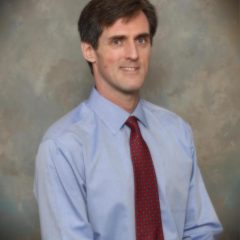


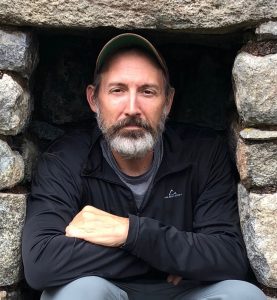


%2Fbro_k-titlepage.jpg&f=1&nofb=1)


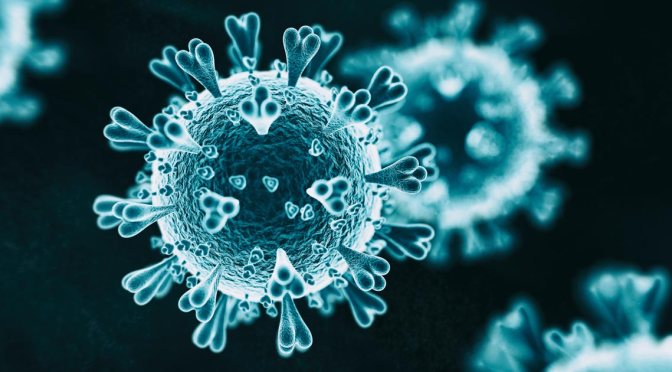


 Humanist Heritage Canada