Category Archives: Uncategorized

Atheist Ireland Applauds WRC Ruling

The Workplace Relations Commission has ruled that the Irish Defence Forces discriminated on the ground of religion against former Atheist Ireland officer John Hamill by not giving him an equal opportunity to apply for the position of military chaplain. The Irish Times reported on this yesterday, and John Hamill has blogged about it today and has published the full WRC ruling.

Atheist Ireland welcomes the ruling. John’s tenacity over four years has resulted in a more secular army. The ruling also vindicates the arguments made in 2021 by Atheist Ireland, the Evangelical Alliance of Ireland, and the Ahmadiyya Muslim Community of Ireland, in our joint submission to the Public Consultation Commission on the Defence Forces.

In that submission, we said the Defence Forces is a microcosm of society and should have a clear neutral policy on religion and belief. It should not be seen as promoting a particular religious belief or obliging personnel to participate in religious rites. We said that about 9% of Defence Forces personnel are non-Christian or have no religion, yet all Chaplains are either Roman Catholic (the majority) or Church of Ireland.

We highlighted that the chaplaincy website links military situational awareness with ‘deepening awareness of the role of faith’ and is illustrated by a Christian Bible passage from Exodus. Catholicism is part of the culture of the Defence Forces. A commitment to pluralism, diversity and inclusion is not part of the culture notwithstanding the fact that Ireland is pluralist country with different religions and nonreligious beliefs.

In times past and also today Defence Force personnel are coerced to take part in Catholic or Catholic-led religious ceremonies without any effort made to put in place rules/guidelines to ensure that they need not participate on the grounds of conscience.

That behaviour was and is unconstitutional. Regardless it is still is part of the culture of the Defence Forces. The Defence Forces have never apologised or even acknowledge that this behaviour breaches the rights of all and undermines our Constitution and human rights law.

The Defence Forces is a microcosm of society and should have a clear neutral policy on religion and belief. It should not be seen as promoting a particular religious belief or obliging personnel to participate in religious rites by including religious services in military events.

This ruling should result in a fair procedure for appointing chaplains and a wider reform of the influence of the Catholic church on our defence forces.

Relevant extracts from the ruling include:

On the 30th December 2020, the complainant referred a complaint pursuant to the Employment Equality Act. The complaint was scheduled for adjudication on the 8th March 2022, and this took place remotely… the complainant has been writing to the respondent since November 2018 regarding ‘religious discrimination in military chaplaincy’. This letter is on headed paper entitled ‘Atheist Ireland’…

In evidence under affirmation, Michael Nugent outlined that he had made representations on this issue on behalf of Atheist Ireland. He referred to the census returns and the increasing proportion of the population who identified themselves as non-religious.

The complainant (John) outlined that he had written to the respondent several times regarding the appointment of military chaplains in the Defence Forces. He indicated his interest in applying for the role of military chaplain. He submitted that the respondent was not a religious body, nor was it under the control of a religious body, so section 37 of the Employment Equality Act did not apply.

This case relates to the complainant’s expressed wish to apply for the role of chaplain in the Defence Forces. There was no process for him or anyone else to submit a formal application, and nor was he considered for appointment in November 2020. The question is whether discrimination occurred in the filling of this post of chaplain.

In this case, the respondent followed an established path of seeking a nomination from the relevant Bishop, and then appointed the priest put forward by that Bishop.

While there may be historical reasons for the appointment process as constituted, and no evidence of deficiency in the service, the process is, by operation, discriminatory on grounds of religion. Section 37(2) does not exempt this from the ambit of discrimination because being a priest or minister of one of two religions is not a ‘determining occupational characteristic’ and the requirement is not proportionate.

I, therefore, conclude that there was unlawful discrimination in contravention of the Employment Equality Act because there is no application process for potential applicants to apply for the role and the process that is in place is based entirely on being a clergy member of one of two churches.

I decide that the complainant was discriminated against on grounds of religion, and I order that the respondent review the process of appointing military chaplains to ensure compliance with the Employment Equality Act and to ensure that suitably-qualified candidates can apply for military chaplaincy roles in order to reflect and foster the diversity of members of the Defence Forces.”

Citations, References And Other Reading


Featured Photo Courtesy of : Atheist Ireland

The views, opinions and analyses expressed in the articles on Humanist Freedoms are those of the contributor(s) and do not necessarily reflect the views or opinions of the publishers.

By continuing to access, link to, or use this website and/or podcast, you accept the HumanistFreedoms.com and HumanistHeritageCanada.ca Terms of Service in full. If you disagree with the terms

New Enlightenment Project: A Digital Humanist Community

As a part of the Humanist Heritage Canada’s updated organization plan for 2023, we are featuring articles about the wide variety of contemporary Canadian organizations that self-proclaim a humanist philosophy.

This week, we are pleased to present an update from the New Enlightenment Project (NEP). We introduced this organization of Canadian Humanists, who felt the need for a “platform where all subjects of concern to Humanists could be discussed freely and where civilized debate could be held without fear” in a discussion article in October of 2021 – shortly after the organization was founded.

NEP currently operates a website and Facebook discussion page. The latter requires users to join. Our own “membership” was pending at the time this article was posted – so we can’t comment on the quality nor quantity of discussions to be enjoyed.

Enlightenment Humanism Projected to Advance in 2023-24

Lloyd Hawkeye Robertson, President
New Enlightenment Project


In an October 2021 interview I told Humanist Freedoms that our newly created organization aimed to 1) provide education on the enduring qualities of reason and compassion which define humanism; 2) affirm that the application of humanist values flow from a stance firmly rooted in reason and compassion; and, 3) improve our knowledge base through open discussion and free debate. The New Enlightenment Project accomplished much in 2022 and we project major future advances for Enlightenment Humanism.


As part of our podcast interview series, Steven Pinker touched on the challenge of defending humanism from people who claim to be secular but nonetheless attack Enlightenment principles such as our support for science, reason and freedom of speech. Another podcast interview discussed how these people, often called the “Woke,” cancelled two articles by B.C. lawyer Shahdin Farsai on the subject of “correct pronouns,” and then attempted to cancel her law practice. An article co-authored by the president of NEP and the news editor of the Centre for Inquiry Canada opined:

Our goal above all else should be to value evidence-based critical thinking. In keeping with Article 4 of the Amsterdam Declaration on humanism, we strive for open, undogmatic dialogue that seeks to combine personal liberty with social responsibility. (Robertson & Tasca, 2022 p. 25)


In 2022 Humanists International ratified an updated “New Amsterdam Declaration” affirming the ethical and rational principle by which humanists can lead fulfilling and meaningful lives within the modern world context. We see the Declaration as a guide and we are reviewing it for the purpose of adopting our own declaration this coming year.


In the 2021 interview with Humanist Freedoms I said that one of our priorities was “to come to terms with indigeneity in a postcolonial world.” The challenge is to present an alternative to the new religious movement of Native Spirituality that positions science and reason as “one way of knowing” among many. For those who hold this view their beliefs trump evidence, but such dogmatism is not inherent in aboriginal cultures (Robertson, 2021) . Secular humanism is relevant to aboriginal peoples in several ways: 1) A humanist perspective emphasizes individual agency leading to people taking control of their own lives, communities, and cultural heritage; 2) Humanism values diversity and respect for different cultures, beliefs, and lifestyles; and 3) Evidence-based decision-making as embraced by humanism can be seen as important for aboriginal communities in making decisions about their future and addressing social, economic, and environmental challenges.


Diversity of thought is common in both humanism and cultures aboriginal to North America and, indeed, is a strength leading to new solutions. In the spirit of promoting such diversity we interviewed Frances Widdowson, co-author of the book Disrobing the Aboriginal Industry. We then completed two interviews with Cree/Metis elder and author Keith Goulet , In the first we explored the history and application of the Doctrine of Discovery as espoused by the 15th Century Roman Catholic Church, In the second interview we explored the traditional Cree family or clan system and the link between language and worldview. In both interviews we explored humanism within the aboriginal context.


The Doctrine of Discovery, which declared that the Americas were uninhabited for the purpose of colonization, had profound and lasting effects. Going forward, we are planning a joint campaign with the Italian humanists, Unione degli Atei e degli Agnostici Razionalisti, to encourage the pontiff to rescind or repudiate the doctrine. We also note that land acknowledgements, meant to acknowledge Canada’s original inhabitants, have become performative and are often historically inaccurate. In the upcoming year we will explore the function and purpose of these land acknowledgements.


In our 2021 interview I noted that globally we have to deal with religiously infused authoritarian regimes, particularly in the Muslim world, who harass, jail and even execute atheists. We have united with humanists internationally in defending those suffering from such oppression and defending those apostates who are often cancelled from universities and publishers for their bravery. We are concerned that Islam is shielded from criticism by our prime minister who accuses critics of “Islamophobia,” and that no other religion is defended in this way. We agree with the Association humaniste du Quebec that the term “Islamophobia” should be replaced with the phrase “combating violence against Muslims” with recognition that criticizing a doctrine or practice is not the same thing as violence. We abhor actual violence against all groups including women and children in Islamic families and communities and that will be part of our campaign in 2023.


In summation, our mandate is to unite humanists who are still committed to Enlightenment ideals. We shall gather with Enlightenment humanists across Canada and abroad in pursing this mandate into 2024.

References

Robertson, L. H. (2021). The Medicine Wheel Revisited: Reflections on Indigenization in
Counseling and Education. SAGE Open, 11(2), 1-11.
https://doi.org/10.1177/21582440211015202
Robertson, L. H., & Tasca, E. (2022). Waking from Wokism: Inoculating Ourselves against a
Mind Virus. Free Inquiry, June/July, 21-25.

Citations, References And Other Reading

  1. Featured Photo Courtesy of : New Enlightenment Project

The views, opinions and analyses expressed in the articles on Humanist Freedoms are those of the contributor(s) and do not necessarily reflect the views or opinions of the publishers.


By continuing to access, link to, or use this website and/or podcast, you accept the HumanistFreedoms.com and HumanistHeritageCanada.ca Terms of Service in full. If you disagree with the terms of service in whole or in part, you must not use the website, podcast or other material.

Humanist Heritage UK Earns a Grant

Humanists UK and Conway Hall are delighted to announce the award of a grant of just over £160,000 from The National Lottery Heritage Fund to expand the work of the Humanist Heritage project. Humanist Heritage uncovers the untold story of humanism in the UK – a story of people, groups, objects, places, movements, publications, and ideas.

Made possible by money raised by players of the National Lottery, the new two-year project – ‘Humanist Heritage: doers, dreamers, place makers’ – focuses on the remarkable freethinkers and activists who changed the world, and the communities they built around them. The project will combine digital interpretation with artistic response and public programming.

This year, a new interactive virtual tour of Conway Hall, London – one of the only two surviving buildings in the UK built by and for humanists – will enable people near and far to virtually visit this unique space for the first time, learning more about the rich history contained there. This will include school groups, university students, and those who – with no lift access to rooms above the ground floor – are unable to visit the library or main hall balcony in person.

From the life and work of its namesake, Virginia-born abolitionist and social reformer Moncure Conway, through a 130 year tradition of Sunday concerts, to the meetings and activities of LGBT Humanists (founded in 1979 as the Gay Humanist Group), there will be plenty for users to discover. 2024 will mark the 45th anniversary of LGBT Humanists, offering further opportunities to highlight its groundbreaking work and vibrant community through collaborations, exhibitions, and public events.

Research will be underpinned by Conway Hall’s vast library and archive, the largest and most comprehensive humanist research resource of its kind in the United Kingdom, as well as by the special collections at the Bishopsgate Institute. Personal stories will also be heard through the gathering of oral histories, offering insights impossible to capture from written materials alone.

The project will offer volunteers the chance to assist in the digitization, interpretation, and sharing of these collections and their stories. As well as shedding new light on the history and influence of non-religious people in the UK, these help to illuminate a vast range of themes and issues still resonant and relevant today, including work for freedom of speech and of the press, efforts to gain the vote, providing ceremonies, creating communities around shared values and ideals, and championing equality for women, ethnic minorities, and LGBT people. It also includes creators of art, literature, music, and song – all of which will be used to inform and inspire a new generation of artists and activists.

These various project strands represent a vibrant and ongoing history of challenging the status quo, and of creating space – physical and metaphorical – to foster community. The project will reveal, explore, and share this inspiring heritage, encouraging audiences and participants to see themselves as inheritors of the rights won and tradition revealed.

Commenting on the award, Humanist Heritage Coordinator Madeleine Goodall said:

‘We are so excited to have received this support thanks to National Lottery players and are looking forward to working closely with Conway Hall to celebrate these unsung heroes, and engage more people than ever before.

‘This grant gives us a transformative opportunity to explore the rich history of humanist activism in brand new ways, to discover even more about it, and to tell the story through the incredible space and collections of Conway Hall.’

Holly Elson, Head of Programming at Conway Hall, said:

‘We are delighted to be working with Humanists UK on this exciting project, and extremely grateful to The National Lottery Heritage Fund for supporting our work to increase access to these fascinating collections and stories. Working with artists, community groups, and young people will enable new perspectives and vibrant interpretations to be drawn from our historic spaces and archival material, and provide an exciting opportunity to explore their continuing relevance today.’

Director of Understanding Humanism Luke Donnellan commented:

‘Today more and more people are discovering a connection with the humanist worldview. This ongoing funding of the Humanist Heritage project will help to raise awareness of the rich and influential history of this approach to life. The resources will be of great value to students and teachers, of whom several supported the bid, as well as the wider public, and will bring learning about an often hidden history to life in new and exciting ways.’

Citations, References And Other Reading

  1. Featured Photo Courtesy of : Conway Hall, UK

The views, opinions and analyses expressed in the articles on Humanist Freedoms are those of the contributor(s) and do not necessarily reflect the views or opinions of the publishers.


By continuing to access, link to, or use this website and/or podcast, you accept the HumanistFreedoms.com and HumanistHeritageCanada.ca Terms of Service in full. If you disagree with the terms of service in whole or in part, you must not use the website, podcast or other material.

Got a Taste For Some BAHACON?

If you’ve been hankering for a Canadian secular humanist conference ever since the Imagine No Religion series ended with INR7 in Toronto back in 2017, the folks in the Bluewater region (Sarnia, Ontario) may have served-up just the thing.

The first BAHACON conference was held in 2022 and everyone had such a good time, it seemed to be self-evident that a follow-up was going to happen.

According to the Bluewater Atheists, Humanists and Agnostic’s (BAHA) website and Facebook pages, the second edition of their conference (BAHACON) is scheduled to take place in Sarnia from August 25 to 28, 2023 – with tickets going on sale on March 1.

Currently, BAHACON appears to have at least a dozen top-notch speakers linked-up:

Seth Andrews

Dan Barker

Annie Laurie Gaylor

Matt Dillahunty

Aron Ra

Drew Bekius

Dave Warnock

Josh Bowen

Gretta Vosper

Jeremiah Camera

Mark Gura

Hemant Mehta

BAHA’s mission is to nurture a community in the Sarnia-Port Huron area that values secular humanism, promotes and preserves freethought in the public square, provides supportive fellowship, and engages in humanitarian good works.

Citations, References And Other Reading

  1. Featured Photo Courtesy of : Bluewater Atheists, Humanists, Agnostics

The views, opinions and analyses expressed in the articles on Humanist Freedoms are those of the contributor(s) and do not necessarily reflect the views or opinions of the publishers.


By continuing to access, link to, or use this website and/or podcast, you accept the HumanistFreedoms.com and HumanistHeritageCanada.ca Terms of Service in full. If you disagree with the terms of service in whole or in part, you must not use the website, podcast or other material.

The Morgentaler Decision: 35 Years-on

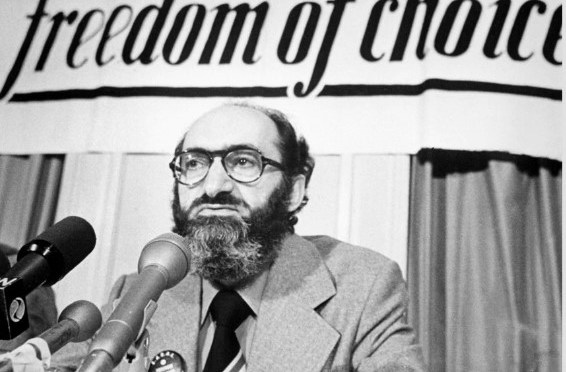
On January 28, 1988, the Supreme Court of Canada struck down Criminal Code provisions which made abortion illegal in Canada. Only 35 years ago! Known as the “Morgentaler decision”, the case stands as one of Canada’s strongest legal precedents for the advancement of human rights. 

Dr. Henry Morgentaler (1923-2013) was born in Poland but moved to Canada in 1950, having survived the holocaust. He started a medical practice in Montreal in 1955; In 1967, Dr. Morgentaler presented a brief before a House of Commons Health and Welfare Committee that was investigating illegal abortion. At the time, medical practitioners could, under Canada’s criminal code, face life in prison for attempting to induce an abortion; women could also face up to two years in prison. Typical of his deep compassion and humanism, Morgentaler presented the position that any woman should have the right to end her pregnancy without risking death.

Initially, Dr. Morgentaler refused requests to end pregnancies, referring to two other physicians providing abortions. In 1968, however, Dr. Morgentaler founded the Montreal Morgentaler Clinic, the first freestanding clinic to offer safe abortion services in Canada. It was established when Dr. Morgentaler, as an activist with the Canadian Humanist Association, began protesting Canada’s restrictive laws. The clinic was situated in the same house where Dr. Morgentaler had his family medicine practice, and remained there until 1995.

Despite raides by policy, criminal charges and conviction, firebombing of his Toronto clinic and decades of opposition, Dr. Morgentaler persevered in his fight to advance and sustain human rights of women in Canada and was appointed to the Order of Canada for his commitment to increased health care options for women in 2008. Polling indicted that two-thirds of Canadians agreed at that time.

Should you wish to learn more about Dr. Morgentaler and the Morgentaler Decision, you may wish to visit the 25th-Anniversary Celebratory website which remains available at this time.

Citations, References And Other Reading

  1. Featured Photo Courtesy of :
  2. http://www.morgentaler25years.ca/

The views, opinions and analyses expressed in the articles on Humanist Freedoms are those of the contributor(s) and do not necessarily reflect the views or opinions of the publishers.


By continuing to access, link to, or use this website and/or podcast, you accept the HumanistFreedoms.com and HumanistHeritageCanada.ca Terms of Service in full. If you disagree with the terms of service in whole or in part, you must not use the website, podcast or other material.
Soka Gakkai International Association of Canada: It’s All About Buddhist Humanism

Humanism is the perspective that humans are the starting point for all ethical, moral and intellectual inquiry. Despite a starting point of this type, a dominant assumption about humanism in our contemporary culture(s) seems to suggest that a particular form of humanism is the only version of humanism to be explored – and that is secular humanism.

Earlier in January, we shared information regarding Humanistic Judaism and Toronto’ Oranyu Congregation. Oranyu says that you can choose both when facing the question “How Can I be both Jewish and Secular Humanist?”

Another Toronto-base organization seems to offer a similar perspective to those who may be interested in Buddhism. Soka Gakkai International Association of Canada (SGI) was founded in 1985 and currently has centres in eight cities across the country.

SGI’s website suggests that their community model has, “e no set rules that regulate the lives of SGI members, but they are encouraged to live constructive and contributive lives and to respect the laws and norms of the societies and cultures in which they live. Based on conviction in the dignity and inherent worth of all human beings, as taught in the Lotus Sutra, individuals are trusted to develop the ability to see the true nature of their thoughts, words and actions, and the wisdom to make the right choices for their lives. Practicing Buddhism naturally leads one to refrain from denigrating and destroying life and to wish to support and encourage others. The SGI Charter lays out the broad goals of the organization and its vision of contributing to a peaceful, just and sustainable world based on the principles of Nichiren Buddhism.

SGI’s religious practice model is base on the writing of Nichiren – a 13th-century Japanese Buddhist priest who formulated a practic eof chanting believe to bring a person’s life into harmony with the greater life of the universe,. This is believed to foster wisdom, courage, compassion and something called life force (at least, on the SGI website).

According to SGI, Nichiren’s version of enlightenment is the fusion of our subjective wisdom with objective reality (i.e. the real world). At SGI, Enlightenment is not a fixed point or achievement but an ongoing engagement of life’s challenges.

The peacefully-phrased position of SGI is that “At the heart of Buddhism lies the belief that each individual has limitless positive potential and the power to change his or her life for the better. Through their practice people can become more fulfilled and happier and also able to contribute more to the world. Buddhism teaches that a universal Law underlies everything in the universe, and that all life is interconnected. It also holds that we are all ultimately responsible for determining the direction of our own lives.

For those who may crave the community of a religion with a focus on various deities and dogmas, SGI offers a form of Humanism to explore.

Note that SGI publishes periodicals in both English and French.

Citations, References And Other Reading

  1. Featured Photo Courtesy of : https://tricycle.org/beginners/buddhism/who-is-nichiren-and-what-is-the-nichiren-school/
  2. https://www.sgicanada.org/about/sgi-canada-centres
  3.  https://www.oraynu.org
  4. https://tricycle.org/magazine/nichiren-chanting/

The views, opinions and analyses expressed in the articles on Humanist Freedoms are those of the contributor(s) and do not necessarily reflect the views or opinions of the publishers.


By continuing to access, link to, or use this website and/or podcast, you accept the HumanistFreedoms.com and HumanistHeritageCanada.ca Terms of Service in full. If you disagree with the terms of service in whole or in part, you must not use the website, podcast or other material.

The Quest to Pantheonize Olympe de Gouges

Perched atop the Montagne Saint Geneviève in Paris, The Panthéon is a secular mausoleum for distinguished French citizens. Since 1791, it has been a temple of the nation and an altar to liberty. The building, which had formerly been a church was transformed to a secular celebration with patriotic statuary and murals. To be Pantheonized is to be celebrated by the nation as a hero.

On January 7, 2022, a movement to Pantheonize Olympe de Gouges launched a petition to achieve this goal. According to the organizers, “the political exclusion of women has long persisted and its effects continue to be felt….Olympe de Gouges fought this exclusion at the root, she immediately denounced its injustice and misdeeds.

Olympe de Gouges was is best remembered for championing women’s rights in her Declaration of the Rights of Woman and the Female Citizen (1791). As a humanist, she opposed discrimination, violence and oppression in all its forms.

According to olympedegouges.eu, Olympe was “denied a place in the powerful circles of her day she found her political voice by writing an astonishing number of pamphlets and posters that she freely disseminated around Paris. Her texts chart her battles against injustice and inequality, her belief that solidarity and cooperation should predominate, her hatred of dictatorships and the corrupting influence of power, her profound pacifism, her respect for mankind, her love of nature, and, of course, her desire that women be allowed a worthwhile role in society. She pleaded against slavery and the death penalty, dreamt of a more equal society and proposed intelligent taxation plans to enable wealth to be more fairly divided. She called for a form of welfare state, trial by jury and reasonable divorce laws to protect women and children from penury. Believing in the power of drama to encourage political change she wrote several plays that ingeniously highlight contemporary concerns...For having unreservedly expressed her opinions on democracy she was considered, by those in power during the last years of the French Revolution, to be a dangerous agitator. She was guillotined in Paris on the 3rd November 1793.”

Whether Olympe de Gouges is Pantheonized or not is a matter for the citizens of France. But it certainly seems as though she ought to be a leading contender.

What was Happening in Canada At Those Times?

In Canada in 1793, the Act Against Slavery came into force, making Upper Canada (i.e. Ontario) the first British-based jurisdiction to bring an end to slavery. While the act was a compromise that did not do all that it ought to have done, it remained in force until 1833 when it was superseded by the British Parliament’s Slavery Abolition Act.

Citations, References And Other Reading

  1. Featured Photo Courtesy of : https://olympedegougesaupantheon.org/about/
  2.  https://www.olympedegouges.eu/
  3. https://www.lemonde.fr/en/opinion/article/2023/01/14/olympe-de-gouges-an-exemplary-symbol-of-feminism-and-humanism-must-join-the-pantheon_6011553_23.html

The views, opinions and analyses expressed in the articles on Humanist Freedoms are those of the contributor(s) and do not necessarily reflect the views or opinions of the publishers.


By continuing to access, link to, or use this website and/or podcast, you accept the HumanistFreedoms.com and HumanistHeritageCanada.ca Terms of Service in full. If you disagree with the terms of service in whole or in part, you must not use the website, podcast or other material.

Oranyu: You Can Choose Both

Humanism is the perspective that humans are the starting point for all ethical, moral and intellectual inquiry. Despite a starting point of this type, a dominant assumption about humanism in our contemporary culture(s) seems to suggest that a particular form of humanism is the only version of humanism to be explored – and that is secular humanism.

Indeed, the vast majority of the well-known humanist organizations in Canada and around the world assert an overtly secular humanist identity. In many cases, these organizations strive to forge a secular humanist identity that eliminates any and all traces of organized religion (and much of the culture that goes with it) from the mix. While that may be just the recipe for fulfillment that some people need, for others – it may not be quite right.

And this is where the universal nature of humanism’s starting point – an ethical, moral and intellectual centred on humans – draws a tremendous strength and versatility. It allows for organizations like Oranyu Congregation for Humanistic Judaism to firmly assert that “you can choose both.

Oranyu was founded in 1969 as the Secular Jewish Association by a group of families. Oraynu is based on the cultural and philosophical ideals of the Jewish Enlightenment, known as the Berlin Haskalah movement which began in Berlin in the late 1700s . The underlying principles of the Haskalah movement were to preserve Jewish culture while striving for integration with the dominant or surrounding societies.

In this modern iteration of these principles, Oraynu provides all the services required of a Jewish congregation within a secular humanist perspective.

For Oranyu, “The foundation of ethics is not God. The foundation of ethics is human dignity, human survival and human happiness. Ethical behavior consists of relationships between people. Some people behave well without believing in God and some people who believe in God do not behave ethically. We celebrate our Jewish identity. We use poetry and prose to express that connection – to encourage reflection and meditation. We sing Jewish songs in English, Hebrew, and Yiddish. We create our own liturgy which includes blessings for wine, challah, candlelighting, holidays, etc. As well, we sometimes adapt traditional materials to be consistent with humanistic Jewish philosophy.

Here in the second decade of this twenty-first century, we have already experienced the emergence of altogether too many polarizing social, political and ideological events and situations and faced altogether too many over-inflated false dilemmas. Oranyu’s message, whether it is new or simply renewed, that “You can choose both” is perhaps one of the most necessary messages of this decade that any humanist organization might care to extend to the community.

The Oranyu Congregation for Humanistic Judaism is one of the many examples of Canada’s rich humanist heritage.


Citations, References And Other Reading

  1. Featured Photo Courtesy of : https://www.oraynu.org

The views, opinions and analyses expressed in the articles on Humanist Freedoms are those of the contributor(s) and do not necessarily reflect the views or opinions of the publishers.


By continuing to access, link to, or use this website and/or podcast, you accept the HumanistFreedoms.com and HumanistHeritageCanada.ca Terms of Service in full. If you disagree with the terms of service in whole or in part, you must not use the website, podcast or other material.

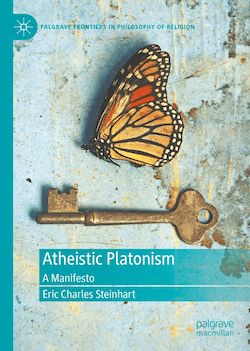
Atheistic Platonism

Looking for something to read in the new year?

Atheistic Platonism: A Manifesto by Eric Steinhart is available as an e-book or printed format via Amazon.

Eric Charles Steinhart is Professor of Philosophy at William Paterson University.  Among many articles and books, he has authored Your Digital Afterlives: Computational Theories of Life after Death, The Logic of Metaphor and Believing in Dawkins: The New Spiritual Atheism. You may wish to visit Steinhart’s website for chapter abstracts as a sampler.

According to Steinhart, “Atheistic Platonism is an alternative to both theism and nihilistic atheism. Where atheisms based on materialism fail, atheisms based on Platonism succeed.

Atheistic Platonism provides reality with foundations that are eternal, necessary, rational, beautiful, and utterly mindless. It argues for a plenitude of mathematical objects, and an infinite plurality of possible universes.

Atheistic Platonism provides mindless rational grounds for objective values, and for objective moral laws for the persons who evolve in universes.

Atheistic Platonism defines a meaningful and spiritually deep way of life, which facilitates ethical self-improvement.

Atheistic Platonism includes computational theories of life after death, in which humans ascend through transhuman and superhuman degrees of animal excellence.

Atheistic Platonism includes a rich system of spiritual symbols. It values transformational practices and ecstatic experiences.”

  • Publisher ‏ : ‎ Palgrave Macmillan; 1st ed. 2023 edition (December 1, 2022)
  • Language ‏ : ‎ English
  • Hardcover ‏ : ‎ 352 pages
  • ISBN-10 ‏ : ‎ 3031177517
  • ISBN-13 ‏ : ‎ 978-3031177514

Citations, References And Other Reading

  1. Featured Photo Courtesy of : ericsteinhart.com
  2. https://www.cambridge.org/core/journals/religious-studies/archive-collection/platonic-atheism

The views, opinions and analyses expressed in the articles on Humanist Freedoms are those of the contributor(s) and do not necessarily reflect the views or opinions of the publishers.


By continuing to access, link to, or use this website and/or podcast, you accept the HumanistFreedoms.com and HumanistHeritageCanada.ca Terms of Service in full. If you disagree with the terms of service in whole or in part, you must not use the website, podcast or other material.
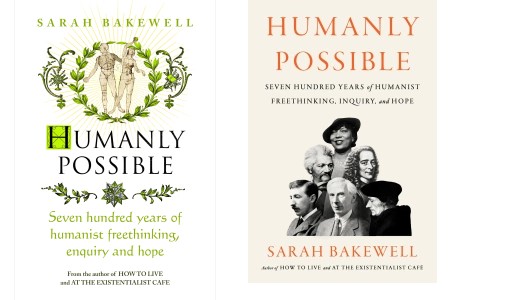
Humanly Possible: 700 Years of Humanist Freethinking, Inquiry and Hope

COMING SOON – MARCH 2023

There’s a new history of humanism coming to libraries and bookstores in March that you may want to get your order(s) in for now! Written by Sarah Bakewell, Humanly Possible: 700 Years of Humanist Freethinking, Inquiry and hope promises to introduce “us to some of these people, as it asks what humanism is and why it has flourished for so long, despite opposition from fanatics, mystics and tyrants. It is a book brimming with ideas, personalities and experiments in living ‒ from the literary enthusiasts of the fourteenth century to the secular campaigners of our own time, from Erasmus to Esperanto, from anatomists to agnostics, from Christine de Pizan to Bertrand Russell, and from Voltaire to Zora Neale Hurston. It takes us on an irresistible journey, and joyfully celebrates open-mindedness, optimism, freedom and the power of the here and now ‒ humanist values which have helped steer us through dark times in the past, and which are just as urgently needed in our world today.

Whether you think of yourself as a humanist or not, an education in ethical, philosophical and religious material is essential to navigating the ever-more complicated and challenging options and opportunities that we face as individuals and society. Bakewell’s book presents a history of humanism for those who are drawn to humanism, literature and the humanities as well as those who may prefer to base their moral choices on fellow-feeling and responsibility to others, rather than on religious commandments.

Bakewell’s book tells the story of the many extraordinary individuals throughout history who have put rational inquiry, cultural richness, freedom of thought and a sense of hope at the heart of their lives.

UK: Chatto & Windus, March 2023.

US: Penguin, March 2023.

Canada: Knopf, March 2023.

Translations

Translations are forthcoming in Chinese, Dutch, German, Italian, Spanish, Swedish and Turkish. More information will be posted here when available.

Citations, References And Other Reading

  1. Featured Photo Courtesy of : sarahbakewell.com

The views, opinions and analyses expressed in the articles on Humanist Freedoms are those of the contributor(s) and do not necessarily reflect the views or opinions of the publishers.


By continuing to access, link to, or use this website and/or podcast, you accept the HumanistFreedoms.com and HumanistHeritageCanada.ca Terms of Service in full. If you disagree with the terms of service in whole or in part, you must not use the website, podcast or other material.