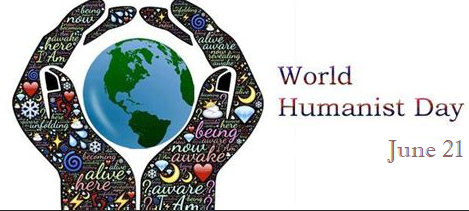
Humanism is the perspective that humans are the starting point for all ethical, moral and intellectual inquiry.
- Why Humanism?
- History
- The Amsterdam Declaration
- Canada’s Humanist Heritage Timeline
- Humanist Canada
- Oranyu Congregation for Humanistic Judaism

Why Humanism?
Humanists International’s minimal statement on humanism declares that it is a “democratic and ethical life stance that affirms human beings have the right and responsibility to give meaning and shape to their own lives. Humanism stands for the building of a more humane society through an ethics based on human and other natural values in a spirit of reason and free inquiry through human capabilities. Humanism is not theistic, and it does not accept supernatural view of reality.”
History
At HumanistHeritageCanada.ca, it is our perspective that humanism, unlike theism and religions, is an inherent and universally consistent trait of humanity that has always been a part of the human condition across all cultures. During many periods of human history and within various cultures, non-humanistic and even anti-humanistic perspectives have been undeniably more dominant; however, these perspectives do not obliterate the foundation that humanism establishes.
As the human condition and the societies and cultures in which humans have lived and evolved over time, so too has the expression and application of humanism. The expression and application of humanism in the times of Cicero, Erasmus, Spinoza, Kurtz or Hitchens was each to its time. Based on this perspective, at HumanistHeritageCanada.ca, when we refer to humanism that was contemporaneous to the times when considering past events and contemporary applied humanism when referring to current events and aspirations for the present and future.
The Amsterdam Declaration
The 2022 Annual General Assembly of Humanists International assembly marked the 70th anniversary of the first World Humanist Congress (see our article) and launched an updated version of The Amsterdam Declaration – a set of agreed-upon principles of humanism. The Declaration bears four key items:
- Humanists strive to be ethical.
- Humanists stive to be rational.
- Humanists strive for fulfillment in their lives.
- Humanism meets the widespread demand for a source of meaning and purpose to stand as an alternative to dogmatic religion, authoritarian nationalism, tribal sectarianism and selfish nihilism.
Canada’s Humanist Heritage Timeline
Canada’s Humanist heritage can be observed and understood via significant events, publications, organizations and the actions of individual people.
Our timeline is under construction but we encourage you to review it and recommend any additions that will help to document and celebrate the history of humanism in Canada.
Canada’s Humanist Communities
Humanism is both an individual trait and a cooperative behaviour in communities. It is important, therefore, to recognize organizations that have been formed to respond to the needs and goals of humanists. They’re contemporaneous applications of humanist energy.
Humanist Canada
According to Humanist Canada (founded in 1954), “Humanism is a progressive philosophy of life based on a profound respect for human dignity and the conviction that human beings are ultimately accountable to themselves and to society for their actions. It is a secular worldview that affirms our ability and responsibility to lead ethical and meaningful lives. Many people are Humanist without even knowing it. Humanists are motivated by ethics, compassion, and fairness, and guided by reason and scientific inquiry. We are inspired by history, art, music, literature, and the beauty of the natural world.“
Oranyu Congregation for Humanistic Judaism
The Oranyu Congregation (founded in 1969) declares that “The foundation of ethics is not God. The foundation of ethics is human dignity, human survival and human happiness. Ethical behavior consists of relationships between people. Some people behave well without believing in God and some people who believe in God do not behave ethically.“
References, Notes And Other Reading
- https://humanists.international/what-is-humanism/
- https://humanists.international/what-is-humanism/the-amsterdam-declaration/
About this Page
This page was most recently updated on 14 February 2025.
By continuing to access, link to, or use this website and/or podcast, you accept the HumanistFreedoms.com and HumanistHeritageCanada.ca Terms of Service in full. If you disagree with the terms of service in whole or in part, you must not use the website, podcast or other material.
 Humanist Heritage Canada