Tag Archives: agnostic

Bill C-9: What Do Canada’s Humanists Think?

Bill C-9 was introduced during Canada’s 45th Parliament on September 24, 2025. Sponsored by Sean Fraser, the Liberal Member of Parliament and Minister of Justice and Attorney General of Canada, the bill is titled, “An Act to amend the Criminal Code (hate propaganda, hate crime and access to religious or cultural places).”

As of January 4, 2026, Bill C-9, the Combating Hate Act, remains under review by the Standing Committee on Justice and Human Rights in the House of Commons, with no further progress reported since its consideration in committee meetings through November 2025. The bill, introduced in September 2025, aims to strengthen protections against hate crimes and intimidation by creating new criminal offences related to obstructing access to religious, cultural, and educational spaces, as well as banning the public display of hate symbols. A major point of contention has been the proposed removal of the “good faith” religious exemption, which would allow individuals to defend expressions rooted in religious belief from being classified as willfully promoting hatred. This amendment, approved by the committee, has sparked significant concern among faith and civil-liberties groups, including the Canadian Civil Liberties Association and the Canadian Muslim Public Affairs Council, who argue it risks criminalizing protected religious expression and peaceful protest.

  • The bill proposes four new criminal offences: intimidation to impede access to protected spaces, intentional obstruction of lawful access, a new hate crime offence, and a prohibition on displaying hate or terrorist symbols in public.
  • The definition of “hatred” in the bill aligns with Supreme Court precedents, specifying it as involving “detestation or vilification” rather than mere dislike or offense.
  • Despite government claims that the bill preserves Charter freedoms, critics argue that the broad language, particularly around intent to provoke fear, could lead to subjective enforcement and disproportionately impact racialized and religious minorities.
  • Humanist and secular groups have not been explicitly mentioned in the provided context, but the broader civil-liberties opposition to the bill’s potential chilling effect on free expression may resonate with humanist values emphasizing rational discourse and freedom of thought.

Also on January 4, 2026, Humanist Heritage Canada conducted a brief survey of several of Canada’s leading humanist and secularist organizations and found very little to draw conclusions regarding what these organizations may think about the bill.

One organization that can be relied-up to publish some kind of statement regarding relevant proposed legislation, BC Humanists, circulated their three-page brief regarding the bill dated November 17, 2025. The organizations stated that, “the new criminal code offenses risk silencing religious dissent…While supportive of efforts to combat hate and bigotry, the BCHA warns the current bill instead privileges religious institutions and threatens civil liberties.We do not believe the government has struck the right balance with Bill C-9.”

We will continue to monitor the published statements of Canadian humanist organizations for indications of what their positions might be. Until that time, we will have to conclude that they don’t actually have any. When and if any further information is received, we’ll update this article.

In the meantime, it is OUR position that Canadian humanists should make themselves aware of the legislation by actually reading it, and then following-up by reading the published statements of various organizations that may be wholly or partially for and against the bill. Here are a few places to start:

  • Canadian Labour Congress: The version of the Bill being debated in the House of Commons has the potential to infringe on our hard fought-for rights of freedom of expression and freedom of association with little to no oversight.  (Dec 12, 2025)
  • 50 Briefs Submitted to Parliament: Canadian Buddhist Temples and CoHNA Canada (Coalition of Hindus of North America)…”certain wording in the bill may create unintended legal and enforcement risks for religious communities that use the ancient and sacred symbol… which predates the Nazi emblem by millennia. Our concern is focused on ensuring that Buddhist, Hindu, and Jain communities are not inadvertently criminalized or targeted due to misinterpretation of their religious emblem....exemptions are defences raised after investigation”
  • Justice Centre For Constitutional Freedoms: Criminalizing emotions does not reduce crimeBill C-9 repeals the current requirement that the Attorney General consent to prosecutions for hate propaganda offences. This crucial safeguard promotes a proper public-interest assessment that considers, among other things, the Charter’s protection of free expression. The removal of this review process will result in more Canadians being prosecuted over what they say on social media and elsewhere. (November 2025)
  • Canadian Bar Association: There are concerns that despite the protective intent behind hate offence legislation, its application may produce unintended consequences, particularly in light of the historical over-policing of marginalized communities (November 3, 2025).

AI Disclosure

This article was drafted using a process that included artificial intelligence tools. If you have any stylistic concerns or find any factual errors or omissions, please let us know.

Up For Discussion

If you’re interested in analyzing and discussing this issue, there are actions you can take. First, here at Humanist Heritage Canada (Humanist Freedoms), we are open to receiving your well-written articles.

Second, we encourage you to visit the New Enlightenment Project’s (NEP) Facebook page and discussion group.

Citations, References And Other Reading

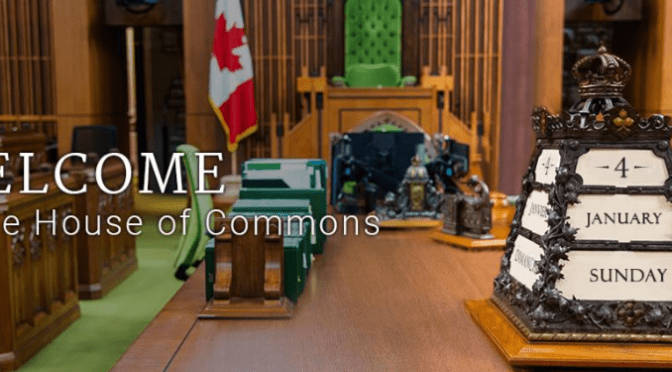
  1. Featured Photo Courtesy ofhttps://www.ourcommons.ca/en
  2. https://www.bchumanist.ca/bill_c_9_strikes_the_wrong_balance
  3. https://canadianlabour.ca/protecting-fundamental-rights-our-concerns-with-bill-c-9/

The views, opinions and analyses expressed in the articles on Humanist Freedoms are those of the contributor(s) and do not necessarily reflect the views or opinions of the publishers.

World Humanist Congress – Ottawa 2026

The World Humanist Congress is a triennial event that brings together representatives from the global humanist, atheist, and secular community to learn from one another and work toward addressing the most pressing issues of our time.

Humanists International and Humanists Canada will be the World Humanist Congress and HI General Assembly hosts in Ottawa, Canada in 2026. But it will be up to local and regional humanists, both individual and at the organization level who determine if the event will be a landmark in Canadian humanism.

The congress organizers state that they we will welcome elected officials, business and civic leaders, artists, scholars, and on-the-ground activists and organizers to lend their expertise to these discussions.

If you think you may be interested to attend, we at Humanist Heritage Canada encourage you to consider attending the event. Check it out on the Conference website.

What could possibly be on the agenda? There is no shortage of global and Canadian issues that humanists need to discuss. We have a laundry list of our own…but what do you think?

Up For Discussion

If you’re interested in analyzing and discussing this issue, there are actions you can take. First, here at Humanist Heritage Canada (Humanist Freedoms), we are open to receiving your well-written articles.

Second, we encourage you to visit the New Enlightenment Project’s (NEP) Facebook page and discussion group.

Citations, References And Other Reading

  1. Featured Photo Courtesy ofhttps://www.worldhumanistcongress.org/

The views, opinions and analyses expressed in the articles on Humanist Freedoms are those of the contributor(s) and do not necessarily reflect the views or opinions of the publishers.

USA’s 119th Congress: Would you be able to “Find Your Representative”?

According to the Pew Research Center, the US Congress will include one “humanist”, three un-affiliated and 21 members who don’t know or won’t say what their affiliation is.

It may be entirely incorrect to assume that the 21 who don’t know or won’t say are humanist, atheist, agnostic – or any other “none” term one may wish to use. But those 21 may be fairly described as secular. They seem to have chosen to keep their religion out of the conversation.

With 532 total seats, that brings the secular representation to slightly less than half a percent.

“Nearly three-in-ten Americans (28%) are religiously unaffiliated, meaning they are atheist or agnostic or say their religion is “nothing in particular.”

The “none” electorate seems to be significantly under-represented. Which just makes us wonder, if you were an American Humanist, Agnostic, Atheist or “none”…would you be able to find your representative?

Citations, References And Other Reading

  1. Featured Photo Courtesy of : https://www.house.gov/
  2. https://www.pewresearch.org/religion/2025/01/02/faith-on-the-hill-2025/

By continuing to access, link to, or use this website and/or podcast, you accept the HumanistFreedoms.com and HumanistHeritageCanada.ca Terms of Service in full. If you disagree with the terms of service in whole or in part, you must not use the website, podcast or other material.

The views, opinions and analyses expressed in the articles on Humanist Freedoms are those of the contributor(s) and do not necessarily reflect the views or opinions of the publishers.

APA Research and Atheism

In our search for interesting, challenging and critical perspectives on contemporary humanism, we occasionally find articles published via other venues that we think HumanistFreedoms.com readers may enjoy. The following articles and studies were located on the APA website and in several online publications.

Self-referencing affects perceptions of workplace discrimination against atheists.

Cantone, J. A., Walls, V., & Rutter, T. (2022). Self-referencing affects perceptions of workplace discrimination against atheists. Psychology of Religion and Spirituality. Advance online publication. https://doi.org/10.1037/rel0000466


Abstract

The number of self-identified atheists and nonreligious individuals is increasing, yet research examining discrimination toward atheists in the workplace remains rare. The present study expands prior work on religious hostile work environment complaints to one involving an atheist employee alleging discrimination. In the present study, 234 students and community members (gender: 133 women, 93 men, 6 nonbinary/transgender, 2 unreported; religious status: 126 religiously affiliated; 75 “none”; 10 atheist; 6 agnostic; 17 unreported) were recruited to complete an online legal decision-making study. Participants read the complaint of an atheist employee alleging that an Evangelical Christian supervisor’s proselytizing constituted discrimination. Participants were randomly assigned to one of four conditions varying the complainant’s gender (male; female) and student status (student; worker) to examine the role of similarity. Participants completed legal measures from both the objective perspective required by the law and their own subjective perspective to examine the role of self-referencing. Participants’ subjective ratings of whether the conduct would constitute discrimination if it happened to them generally affected their objective ratings of whether the atheist employee had been discriminated against. Religious status similarity, as well as gender, affected participants’ legal ratings. In particular, nonreligious, atheist, and agnostic participants were more likely to see the conduct as discrimination, while Evangelical Christian participants were less likely. Results show that self-referencing and similarity affect how people perceive workplace discrimination faced by atheists. Recommendations for future research and workplace trainings are discussed. (PsycInfo Database Record (c) 2022 APA, all rights reserved)

Being agnostic, not atheist: Personality, cognitive, and ideological differences.

Karim, M., & Saroglou, V. (2022). Being agnostic, not atheist: Personality, cognitive, and ideological differences. Psychology of Religion and Spirituality. Advance online publication. https://doi.org/10.1037/rel0000461


Abstract

Thomas Henry Huxley coined the term agnostic in 1869.

Why do several nonreligious people self-identify as agnostic and not as atheist? Beside epistemological differences regarding what is knowledgeable, we hypothesized that such a preference reflects (a) personality dispositions, that is, prosocial orientation, open-mindedness, but also neuroticism, (b) cognitive preferences, that is, lower analytic thinking, and (c) ideological inclinations, that is, openness to spirituality. In a secularized European country (Belgium), we surveyed participants who self-identified as Christian, agnostic, or atheist (total N = 551). Compared to atheists, agnostics were more neurotic, but also more prosocially oriented and spiritual, and less dogmatic. Strong self-identification as atheist, but not as agnostic, was positively related to analytic thinking and emotional stability but also dogmatism. Nevertheless, spiritual inclinations among both agnostics and atheists reflected low dogmatism and high prosocial orientation, and, additionally, among agnostics, social and cognitive curiosity. From a personality perspective, agnostics compose a distinct psychological category and are not just closet atheists. (PsycInfo Database Record (c) 2022 APA, all rights reserved)

Explaining anti-atheist discrimination in the workplace: The role of intergroup threat.

Rios, K., Halper, L. R., & Scheitle, C. P. (2021). Explaining anti-atheist discrimination in the workplace: The role of intergroup threat. Psychology of Religion and Spirituality. Advance online publication. https://doi.org/10.1037/rel0000326


Abstract

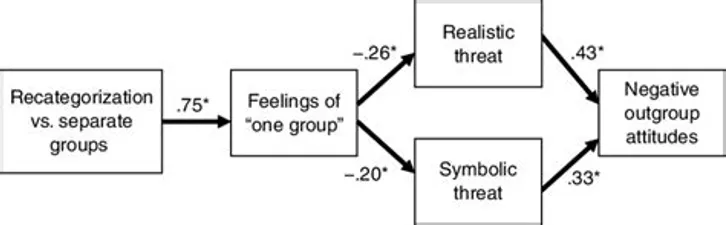
Based on the common ingroup identity model and Intergroup Threat Theory, as well as the fact that atheists are among the most stigmatized groups in the U.S., the present experiments tested whether and why people would be less willing to accommodate atheist (relative to Christian, Jewish, or Muslim) employees’ religion-related requests in the workplace. In three studies, participants responded to vignettes depicting an employee who requested to express his/her religious beliefs (or lack thereof) at work—for example, by displaying a quote at his/her cubicle or wearing a pin with a religious (or non-religious) symbol. As predicted, participants were especially unlikely to honor the atheist employees’ requests; this effect was driven by participants’ perceptions that the atheist employees posed a symbolic threat (i.e., were trying to impose their beliefs onto others; Studies 2–3) and, to a lesser extent, a realistic threat (i.e., jeopardized the organization’s economic status and resources; Study 3) in the workplace. Though the effects of participant religiosity were inconsistent across studies, the tendency for reluctance to accommodate the atheist employees’ requests was slightly stronger among religious than non-religious participants. Implications for how anti-atheist bias at work arises and can be mitigated are discussed. (PsycInfo Database Record (c) 2021 APA, all rights reserved)

Citations, References And Other Reading

  1. Featured Photo Courtesy of :  
  2. https://www.psypost.org/2022/07/new-study-sheds-light-on-a-key-factor-influencing-perceptions-of-workplace-harassment-against-atheists-63464
  3. https://psycnet.apa.org/record/2022-44664-001?doi=1
  4. https://psycnet.apa.org/record/2022-44665-001
  5. https://www.psypost.org/2021/08/people-are-less-tolerant-of-atheists-expressing-their-beliefs-at-work-compared-to-christians-muslims-or-jews-61626
  6. https://psycnet.apa.org/record/2017-25719-001
  7. https://psycnet.apa.org/record/2021-22804-001

The views, opinions and analyses expressed in the articles on Humanist Freedoms are those of the contributor(s) and do not necessarily reflect the views or opinions of the publishers.