Tag Archives: Catholic

A New Campaign to Oppose Ontario’s Public Funding of Religious School Systems

We have received notice that the Society of Freethinkers (SoFree)and it’s lobbying partner, Secular Connexion, based in the Hamilton/Burlington and Elmira areas (respectively), have launched a new campaign to oppose Ontario’s system of public funding of religious school systems.

Here’s what we’ve been told so far:

Secular Connexion Séculière is a national non-profit lobby group that seeks justice for non-believers. Please join The Society of Freethinkers and us in an e-mail campaign directed at Ontario MPPs to change funding for the RC separate school system by distributing the attached email and MPP contact list to your members and friends.

We want to demonstrate the overwhelming support that exists in Ontario for a change to the current funding of Catholic separate schools.  This e-mail sets out the facts about the current system and the savings that would be generated.

It is being sent to Secular Humanist organizations, religious groups, public school teachers’ organizations and others who have expressed support for this change. Our hope is that an inundation of e-mails from various sources, including from non-Catholic religious groups, will convince them that it is time for a change. Ontario is a multi-cultural, multi-ethnic, multi-religious province that differs markedly from the Ontario of 1867.

Please distribute the attached e-mail and and contact list  to members of your organizations and to others who may also support this endeavour.

There are many myths and misconceptions around the current funding of the Catholic school system. The email we are asking people to send presents these facts:

• the current full funding of the Catholic school system is not constitutionally guaranteed. The Constitution grants provinces the right to determine the amount of funding for denominational schools if they funded such school systems prior to joining Confederation. Ontario chose to fully fund Catholic elementary and high schools as did Québec. Quebec changed their school system, in 1997, to one based solely on language, not religion, by merely asking the Federal government to let them stop the funding. Newfoundland and Labrador also changed their school system to eliminate funding of Catholic schools.

• 74%1 of Ontarians are not Roman Catholic, but pay for a system that can legally refuse to hire them as teachers, and can exclude their children from its schools.

 • the municipal taxes of Catholics pay for, at most, 8% of the operating costs of the separate system: the balance is paid out of taxes paid by all Ontarians, be they Catholic, Protestant, Atheist, Jew, Muslim, Hindu, etc.

• Ontario could save over $1.5 billion a year by having one non-denominational public school system

 • parents who send their children to non-Catholic private schools pay tuition fees which are generally not tax deductible, and must also pay their municipal taxes, including the education portion


We need our children to learn what unites them, not what divides them.

Please contact either of us for additional information. Should you wish to see the source documents for the figures cited above, these can be provided.

Thank you for your consideration of our proposal.

Doug Thomas, President, Secular Connexion Séculière,
president@secularconnexion.ca
Isobel Taylor, Vice-President, SOFREE, vicepresident@sofree.ca

Up For Discussion

If you’re interested in analyzing and discussing this issue, there are actions you can take. First, here at Humanist Heritage Canada (Humanist Freedoms), we are open to receiving your well-written articles.

Second, we encourage you to visit the New Enlightenment Project’s (NEP) Facebook page and discussion group.

Citations, References And Other Reading

  1. Featured Photo Courtesy of :
  2. https://sofree.ca/
  3. https://www.secularconnexion.ca/2093-2/

By continuing to access, link to, or use this website and/or podcast, you accept the HumanistFreedoms.com and HumanistHeritageCanada.ca Terms of Service in full. If you disagree with the terms of service in whole or in part, you must not use the website, podcast or other material.

The views, opinions and analyses expressed in the articles on Humanist Freedoms are those of the contributor(s) and do not necessarily reflect the views or opinions of the publishers.

Worth the Watch: Small Things Like These

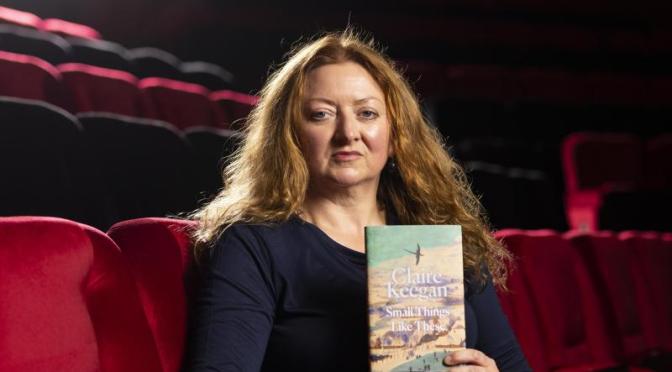
Looking for something different to watch today? Small Things Like These is a film centering on Ireland’s Magdalene Laundries. It’s based on the 2021 book by Claire Keegan.

Keegan wrote, “I’m interested in how we cope, how we carry what’s locked up in our hearts. I wasn’t deliberately setting out to write about misogyny or Catholic Ireland or economic hardship or fatherhood or anything universal, but I did want to answer back to the question of why so many people said and did little or nothing knowing that girls and women were incarcerated and forced to labour in these institutions. It caused so much pain and heartbreak for so many. Surely this wasn’t necessary or natural? 

If you’d like to learn more about the Magdalene Laundries, you may want to check out our May 2023 post.

Citations, References And Other Reading

  1. Featured Photo Courtesy of : 
  2. https://www.cbc.ca/radio/writersandcompany/claire-keegan-s-small-things-like-these-is-a-story-of-moral-crisis-heroism-and-the-human-heart-1.6426299
  3. https://en.wikipedia.org/wiki/Small_Things_like_These
  4. https://thebookerprizes.com/the-booker-library/features/claire-keegan-interview-small-things-like-these

By continuing to access, link to, or use this website and/or podcast, you accept the HumanistFreedoms.com and HumanistHeritageCanada.ca Terms of Service in full. If you disagree with the terms of service in whole or in part, you must not use the website, podcast or other material.

The views, opinions and analyses expressed in the articles on Humanist Freedoms are those of the contributor(s) and do not necessarily reflect the views or opinions of the publishers.
The Magdalene Laundries: Phoebe Judge and the Criminal Podcast Team Tell the Story

Episode 216 of Criminal, a podcast hosted by Phoebe Judge tells a story of Ireland’s Magdalene Laundries where some 10,000 to 30,000 women and girls were confined, abused and enslaved. The laundries were typically operated by the Roman Catholic church.

As a Canadian humanist publication, well aware of various abuses and human rights violations that the Catholic Church has been connected-to in Canada and around the world, what caught our particular attention was the podcast’s statement that, “The women did the laundry for all kinds of local businesses including the Royal Dublin Hotel, the Fitzwilliam Lawn Tennis Club and the French, Argentinian and Canadian embassies. They washed sheets for hospitals…”

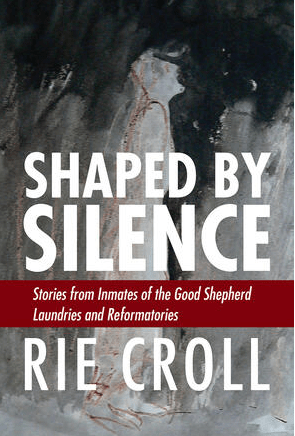
Lest we think that the Magdalene Laundries were a uniquely Irish matter that touches Canada solely via criminally lax supply chain expectations, the Toronto Star reported in 2016 about a Canadian researcher who had been gathering information regarding laundries operated in Canada as well. That research resulted in the book, Shaped By Silence: Stories from Inmates of the Good Shepherd Laundries and Reformatories published in 2019.

There is an valuable interview with Croll published in the National Post in 2019 as well…and we’ll merely quote that article briefly:

“The state was working with the Church, and families were too….“The very system of incarceration that was supposed to reform them, became a significant factor in shaping their lifelong inequality,” Croll said. “Those who the Church and state targeted for saving were simultaneously treated as bad, dirty and unsalvageable.”

The article’s title, by the way reminds us that these institutions operated in Canada as recently as the 1960s. While there seems to be significantly less information available about these operations in Canadian society than in Irish society, there seems to be every reason to assume that the Roman Catholic church is consistent in its methods.

To learn more about the (Irish) Magdalene Laundries, you may wish to visit the Justice for Magdalenes Research website. The organization has recently published, A Dublin Magdalene Laundry: Donnybrook and Church-State Power in Ireland. It is a a new collection of essays co-edited by Mark Coen, Katherine O’Donnell and Maeve O’Rourke, with further contributions by Maolíosa Boyle, Lindsey Earner-Byrne, Chris Hamill, Máiréad Enright, Brid Murphy, Martin Quinn, Lynsey Black, Laura McAtackney, Brenda Malone, Barry Houlihan and Claire McGettrick.

In the name of all of the girls and women held in the Magdalene Laundries the editors are donating all authors’ royalties to the charity Empowering People in Care.

The editors have written to Minister Roderic O’Gorman to request that the Magdalene Restorative Justice Implementation Team provide a copy of the book to every survivor who wishes to receive one.

The book’s front matter is available free of charge here.

This book offers a comprehensive exploration of the Magdalene system through a close study of Donnybrook Magdalene Laundry (DML) in Dublin. The disciplinary perspectives featured include history, philosophy, law, archaeology, criminology, accounting, architecture, archival studies and heritage management.

By focusing on this one institution–on its ethos, development, operation and built environment, and the lives of the girls and women held there–this book reveals the underlying framework of Ireland’s wider system of institutionalisation. The analysis includes a focus on the privatisation and commodification of public welfare, reproductive injustice, institutionalised misogyny, class prejudice, the visibility of supposedly ‘hidden’ institutions and the role of oral testimony in reconstructing history. In undertaking such a close study, the authors uncover truths missing from the state’s own investigations; shed new light on how these brutal institutions came to have such a powerful presence in Irish society, and highlight the significance of their continuing impact on modern Ireland.

Citations, References And Other Reading

  1. Featured Photo Courtesy of : http://jfmresearch.com/

The views, opinions and analyses expressed in the articles on Humanist Freedoms are those of the contributor(s) and do not necessarily reflect the views or opinions of the publishers.

By continuing to access, link to, or use this website and/or podcast, you accept the HumanistFreedoms.com and HumanistHeritageCanada.ca Terms of Service in full. If you disagree with the terms of service in whole or in part, you must not use the website, podcast or other material.

Human Rights Challenge to Government Funding of Catholic Schools in Ontario

The following article has been compiled from information provided by OPEN.


An application stating the current funding of Ontario separate schools violates s.15(1) of the Charter of Rights has been filed at the Ontario Superior Court and served on the Ontario government on behalf of One Public Education Now (OPEN) lawyers Adair Goldberg Bieber.

Learn more about Ontario’s History of Ontario Catholic Separate School Funding by reading the only book about that we’ve been able to find.

The two plaintiffs, a public high school teacher, and a parent of children in the French public school system, are founding members of OPEN (One Public Education Now). OPEN is a coalition of groups and individuals dedicated to challenging the current discriminatory funding of the schools of one religion.

Many people want to do something about this discriminatory funding of one religious school system, but don’t know what to do. Governments and political parties ignore letters, articles and petitions. But they can’t ignore lawsuits, and people can do something by contributing to our challenge.  Our lawsuit is funded by the donations of many people and needs additional funding to continue our legal fight.

The Application states there have been sufficient changes since 1987 that the Reference re Bill 30 Supreme Court of Canada ruling that the Charter does not apply to the funding of Ontario separate schools should be re-examined.

Therefore, the only rights protected from Charter challenge are those that existed in 1867 and are protected by s.93(1); and the public funding of non-Catholics at separate schools and the public funding of Grades 11 and 12 at separate schools, neither of which existed in 1867, violate the equality sections of the Charter of Rights.

Not only is the public funding contrary to the Charter of Rights, but it wastes money in duplicate administration and unnecessary busing of students at a time when money is needed for, among other things, protecting the safety of teachers and students. Estimating the savings is difficult because so many of the costs are hidden but it has been estimated up to 1.6 billion dollars a year could be saved. So many people think separate schools are funded by residential property taxes, not realizing just 7% of separate school operational funding, and none of the capital funding, come from the property taxes of residential separate school supporters.

OPEN’s Positions Regarding Funding of Catholic School System in Ontario
  • Separate schools were started under historical circumstances that no longer exist; for example, there were fights between Protestants and Catholics in public schools and Ontario agreed to protect separate Catholic schools in return for Quebec protecting separate Protestant schools; these circumstances no longer apply
  • So much has changed since the 1987 Reference re Bill 30 Supreme Court of Canada decision, such as Quebec abolishing its funding of separate schools in 1997,  that the ruling the Charter of Rights does not apply to the funding of Ontario separate schools, should be reconsidered
  • Separate schools are not paid for by separate school residential property taxes.
  • Capital funding is paid for entirely by general provincial revenues.  In general, only 7% of operating revenues of separate schools come from residential property taxes; 15% comes from business property taxes; 70% comes from general provincial funding.
  • By contrast, 15% of  public school funding comes from residential property taxes and only about 60% from general provincial funding.
  • The current system wastes money.  Boards of Trustees, Superintendents of Education, Board offices and administrative staff, are duplicated.
  • We don’t have two fire services, one for Catholics and one for everyone else.  Think of the waste if we did.
  • Students are bused to the closest public or separate school, instead of walking or being bused to the nearest publicly-supported public school.
  • Local community schools are being closed that could be kept open if all local students went to a public local school, not split between public and separate schools
  • Estimating the savings is difficult because so many of the costs are hidden but it has been estimated up to 1.6 billion dollars a year could be saved.
  • One third of Ontario publicly-funded teaching jobs are denied to the two-thirds of the population who are not Catholic even though all Ontario tax-payers pay for these schools.
  • Of course Catholics who want to can pay to send their children to religious schools, just as Anglicans, Baptists, Muslims and others do.  What is unfair is the government, for outdated reasons,  funding one religious group .
  • People have signed petitions, written articles, and sent letters and emails.  But because all the major parties support the status quo, nothing changes.

People can contribute to the challenge via the OPEN website, https://open.cripeweb.org/aboutOpen.html through our secure PayPal link, or send through e-transfer (Interac) to open@cripeweb.org. All contributions greatly appreciated.

Contact : open@cripeweb.org for more information.

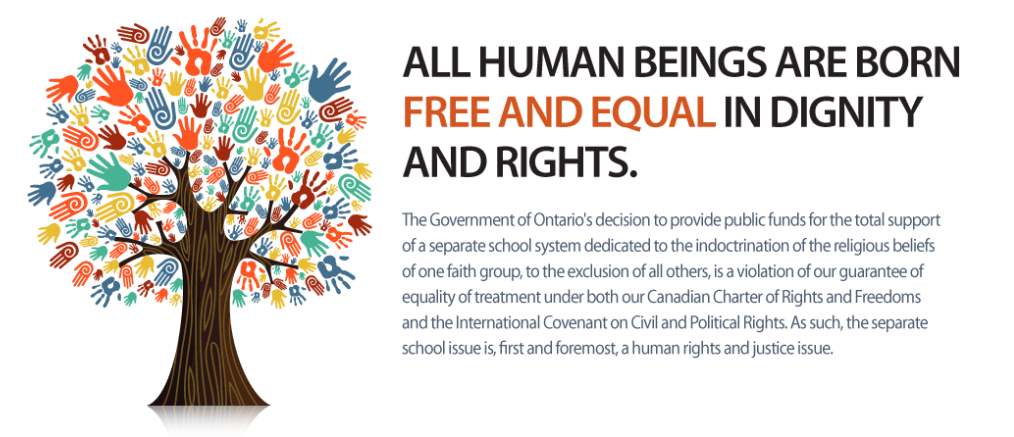
Image Courtesy of Civil Rights In Public Education


Citations, References And Other Reading

  1. Featured Photo Courtesy ofhttps://www.ontariocourts.ca/scj/about/
  2. https://open.cripeweb.org/aboutOpen.html
  3. http://www.cripeweb.org/home.php

The views, opinions and analyses expressed in the articles on Humanist Freedoms are those of the contributor(s) and do not necessarily reflect the views or opinions of the publishers.