Tag Archives: featured

HumanistHeritageCanada.ca – Getting Ready for the Upcoming Years!

In a few weeks, we will be celebrating the completion of our sixth year of publication here at Humanist Heritage Canada (HHC). Our first posts, under the name HumanistFreedoms.ca, were created in December of 2019.

Since then, we have provided ongoing, if sometimes infrequent, news and information about humanism in Canada and around the world. Most recently, we’ve taken an interest in telling the story of humanism in Canada – thus the name “Humanist Heritage Canada”. We believe that the humanists in Canada need to do a better job of communicating the important role that humanism plays in our lives and in the way that we help shape our communities.

From 2019 to 2022, our community grew each year, then declined in 2023 and 2024. The decline coincided with a decline in our efforts to keep the site continuously fresh and improving. In 2025, we recommitted time and energy and our readership responded in kind. Thank you for visiting HHC and telling your friends about our work!

The Humanist Heritage Canada audience trend since our founding in 2019.

Following is a rough plan Humanist Heritage Canada for the period 2026-2030.

One of our most recent initiatives is to produce timeline of secularism and humanism in Canada. We see the timeline as a valuable tool to connect with significant events in Canadian and global history. A timeline helps provide context to the advancement of the humanist movement. We will develop the timeline with events significant to the humanist movement in Canada.

Our original goal as HumanistFreedoms.ca was to promote contemporary applied humanism with a focus on the freedom of expression. As we have always done, we will continue to provide news and information about humanism in Canada and around the world.

While we have always been open to contributions of content from others, solicitation and inclusion of additional content has not been a significant focus of effort. We’ve been content to feature our own material and include additional material on a casual basis only. We will actively search for and invite contributions from Canada’s humanist community to help tell the story of humanism in Canada.

HHC has primarily been a text-based website. We will explore production of audio and video content. See our Youtube channel.

Advancement of humanism in Canada is often a result of the action of organizations that focus energy on humanist goals and objectives. We will investigate and report on the history and ongoing status of Canada’s humanist organizations and the individuals who drive them forward.

Do you think there are other ways that HHC can tell the story of humanism in Canada? Let us know.

Citations, References And Other Reading

  1. Featured Photo Courtesy of

The views, opinions and analyses expressed in the articles on Humanist Freedoms are those of the contributor(s) and do not necessarily reflect the views or opinions of the publishers.

Steve Tomlins’ Navigating Atheist Identities

Choosing to investigate, document and publish Canada’s Humanist heritage, as we have done on this website, it quickly becomes apparent that humanism is a perspective and identity that is quickly obscured by several forces. In some cases, the significant presence of humanism is hidden by its own vocal subcomponents. Proponents of narrow ideologies are often eager to stake ownership of humanism in the service of their (often trendy) preferred ideology. In other cases, proponents of ideologies inconsistent with humanism are eager to portray this identity as less consequential than it is. Some of those proponents are supernatural and religious in nature while others are more secular and political in nature. Either way, it can require a score-card to figure it all out.

Back in 2016, Steve Tomlins submitted a 359-page thesis to the Faculty of Graduate and Postdoctoral Studies at the University of Ottawa in partial fulfillment of the requirements for the Doctorate in Philosophy degree in Religious Studies. In some areas of study, a decade would be considered a long time. The advancement of Humanism in Canada isn’t really one of those areas.

The abstract to the thesis says,

There is very little research that is empirically-based about atheism in Canada; this thesis seeks to contribute foundational knowledge in this area . It begins with a historical and contemporary overview of atheism in Canada by examining its appearance in government, law, and media. It then addresses the question: “How do atheists construct their identities in the context of a religiously diverse Canada?” through an analysis of data collected from participant-observation with an atheist university club, the Atheist Community of the University of Ottawa (ACUO), followed by an analysis of five significant themes which arose from forty life history interviews (twenty with ACUO members; twenty with Ottawa-area atheists who did not belong to an atheist community that met in person). These themes are: loss of religious identity and/or development of atheist identity; group belonging; perceptions of media and public understanding of atheism; the use of the United States for narrative or comparative purposes; and the frequency of receiving a negative reaction simply for being an atheist. This study found that most interviewees perceived the Canadian public and the media as not understanding atheism because the subject is not commonly reported on or discussed, and many said that (ir)religiosity rarely came up in conversations with strangers, acquaintances, or co-workers. These notions were often seen as resulting from a Canadian social etiquette which dictates that controversial subjects should be avoided in order to minimize the risk of causing offense. Moreover, members of the ACUO often said that they joined an atheist community because they wanted a safe space to meet like-minded people with whom they could freely discuss religion without causing offense to religious others. Unlike in findings from the United States, interviewees did not speak of their atheist identities as being considered ‘un-Canadian’ or as excluding them from their conception(s) of Canadian society. While interviewees often said they were selective with whom they decided to express their atheism, most felt quite positive about living as an atheist in Canada, especially compared to the plight of atheists living in other countries, and atheism came across as being ‘just’ another ‘idea’ in a mosaic of cultural ideas.”

Humanist, atheist and agnostic organizations in Canada ought to bear the largest responsibility for creating greater public understanding of their perspectives and for creating appropriate environments for discussion of their ideas. That may, perhaps begin with a clear-eyed study of the perspectives and ideologies contained within the universal label of Humanism. Leaders of humanist organizations across the country should hold themselves accountable to familiarize themselves with the work of Tomlins, Hanowski and others who have undertaken much needed work.

Perhaps also to replicate and publish it for their own communities.

Up For Discussion

If you’re interested in analyzing and discussing this issue, there are actions you can take. First, here at Humanist Heritage Canada, we are open to receiving your well-written articles.

Second, we encourage you to visit the New Enlightenment Project’s (NEP) Facebook page and discussion group.

Citations, References And Other Reading

  1. Featured Photo Courtesy of :
  2. https://ruor.uottawa.ca/server/api/core/bitstreams/572affce-0324-4b23-895b-2fe4d4dfd74d/content

By continuing to access, link to, or use this website and/or podcast, you accept the HumanistFreedoms.com and HumanistHeritageCanada.ca Terms of Service in full. If you disagree with the terms of service in whole or in part, you must not use the website, podcast or other material.

The views, opinions and analyses expressed in the articles on Humanist Freedoms are those of the contributor(s) and do not necessarily reflect the views or opinions of the publishers.

Antisemitism, the Left and 1967

This article by Lloyd Hawkeye Robertson is adapted from a chapter of the same name in Unadorned: Conversations on Antisemitism, edited by Scott Douglas Jacobsen (In-Sight Publishing / Apple Books, October 2025).


Television was still “black and white” when I entered a high school oratory contest to talk about the U.S. war in Vietnam. A young Trotskyist subsequently recruited me to join the New Democratic Youth. I immersed myself in socialist political thought.


The U.S was a colonial empire and therefore, oppressive; however, as I understood Marx, capitalism was a necessary stage before socialism and eventual communism. The newly formed state of Israel was allied with United States and was, therefore, an oppressor. I noted that the majority of socialist thinkers I had been reading – Rosa Luxembourg, Leon Trotsky, Edward Bernstein, and even Marx himself were Jews. The Jewish Left must have switched sides out of self-interest – the worst sort of traitor. The Balfour Declaration was proof that Israel was a colonial Zionist plot from the beginning of the British mandate in Palestine in 1920. Zionism was said to be a form of religious fundamentalism based on a divine mandate for Jews to occupy this particular area of the globe thus offending my newly developing humanist sensibilities.


 We weren’t told that most of European Jewry had rejected Zionism. From 1919 to 1932 only 120,000 immigrated to Palestine joining the 60,000 to 80,000 Jews already present. In comparison, 280,000 to 380,000 European Jews migrated elsewhere, mainly to the Americas. After 1932, as conditions for Jews in Europe became progressively worse, western governments limited Jewish immigration to their countries. We also weren’t told that Britain had never allowed Jewish immigration to the 60% of Palestine east of the Jordan River or that in 1939 they stopped Jewish immigration to Palestine entirely. This trapped potentially hundreds of thousands who could have been saved from the holocaust. The Left has had more sympathy for non-Jewish refugees.

In an act of ethnic cleansing, 850,000 Jews were expelled from Arab lands following World War II. While the United States and France took 250,000 of them, most had no choice but to resettle in Palestine. In 1947, the United Nations offered a “two state” solution for that part of Palestine that was not already part of the new state of Jordan. The Jews accepted the plan and named their portion “Israel.” The Arabs refused the two-state solution, invaded and lost. The majority of Arabs and all of the Jews were expelled from that part of Palestine designated for the other group. Why are the descendants of the Arabs still designated as refugees but not the descendants of Jews who also lost their homes?


I learned that most Zionists were not religious fundamentalists. Zionism was a movement for the re-establishment of a Jewish nation in Palestine. I still opposed Zionism for the same humanistic reason I would oppose nationalism generally – it is restrictive of minority populations who may not fit into the ethnic and linguistic definition of “the nation.” I have since learned that the leaders who established the state of Israel were from the Jewish Enlightenment tradition and they implemented a constitution guaranteeing liberal values, secularism and democracy. Three quarters of Israel’s population are Jews and a quarter of these are atheists. More than 20% of Israel’s population are Arab Muslims with full rights of citizenship. Women, gays transsexuals and religious minorities have constitutional equality. In a nod to socialism, the two hundred and seventy kibbutzim that dot the landscape are rural communes. Why would the Left abandon the only people in the Middle East that have established a democracy with at least some semblance of socialism?


In 1967 Canada got colour television and Egypt, Jordan and Syria once again invaded Israel. They lost. Israel took the Sinai Peninsula and Gaza from Egypt, the West Bank from Jordan, and the Golan Heights from Syria. This was also the year the Arabs from these regions began referring to themselves as “Palestinians,” as distinct from other Arabs. In defence of the Left, Nasser of Egypt, Arafat of Palestine and the Baath parties of Syria and Iraq sounded like socialists but, like Josef Stalin in the Soviet Union, they needed totalitarian methods to compensate for their lack of popular support. All were eventually replaced by Islamists bent on restoring a Medieval view of mankind with a strict fundamentalist interpretation of Islam. Humanists are opposed to the imposition of religious doctrine on subject peoples. Why did the Left support these reactionaries?


The Arab Palestinians were offered their own state with East Jerusalem as its capital in 2000 and again in 2008, but their leaders again rejected this “two-state” solution. Likud led by Benjamin Netanyahu was elected in 2009 on a platform opposed to such territorial concessions while favouring settlement expansion. The Israeli Labor Party has not had a role in government since. Why does the Left malign the Israeli Left?


With the return of the Sinai Peninsula, Egypt agreed to recognize Israel as a state. In 2005 Israel ended its occupation of Gaza “trading land for peace” by forcibly removing nine thousand Jews in 21 communities from the territory. The Islamic Resistance Movement (Hamas) won elections for the Palestinian Authority in 2006 and subsequently formed the government of Gaza violently repressing opposition. Since its founding charter promised the elimination of Israel, the Israelis have maintained a blockade to prevent Hamas from acquiring heavy weapons. The Left has equated this blockade with occupation thus broadening the meaning of the term which had meant “control and administration.”


On October 7, 2023 Hamas led Gazans invaded Israel and murdered 1,200 mostly civilians, including 378 who were attending a music festival. They did not spare infants or elderly. They took 251 hostages in preparation for the inevitable counter-attack. The Left accused Israel of “genocide.”


“Genocide” is a term that was coined to describe attempts to remove a people from the gene pool. Six million Jews were placed into concentration camps and systematically murdered during World War II. The population of European Jews decreased accordingly. There has been no corresponding decrease in Muslim Arab populations, for example, the population of Gaza was 356,000 in 1967 growing to 2.1 million on 2023. In a reverse of this growth, the number of Syrian Christians dropped from 2.1 million in 2011 to 300,000 by 2022. Where is the outcry? At one time there were 14,000 Lebanese Jews but fewer than 20 remain alive today, yet no one has accused the Muslims of genocide. Hamas has reported that 300 Gazans have died of hunger since October 7, 2023 but during the same time period 100,000 to 150,000 people have died from hunger in Yemen and 50,000 to 100,000 have died in South Sudan. Where are the demonstrations on Western university campuses opposing Yemeni and Sudanese “genocide?”


Israeli forces have been targeting Hamas operatives who dress in civilian clothes and operate in civilian areas. In Ukraine the Russian forces actually do engage in indiscriminate bombing of civilian areas. Why has the Left not organized mass demonstrations against Russian “genocide?”
We need to consider that Israel stands accused of genocide for defending itself from an enemy that refused to release its hostages unconditionally and who refuses to surrender. The term “genocide” was created to represent the intentional extermination of a racial, ethnic or religious group from the gene pool. To expand the definition of genocide to mean “war crimes” or even the effects of war on civilian populations, we negate the meaning and purpose of the original concept. Expanding the definition in this way equates the holocaust with other phenomenon –thus erasing the significance of the concept – a clever form of holocaust denial.

The Left claims to be anti-Zionist, not antisemitic, but they appear to have a special set of rules for the only majority Jewish state in the world; and, their “Pro-Palestinian” campaign has resulted in attacks on synagogues and Jewish run businesses. Students have expressed fear of identifying as Jews in Canadian universities. Jews only represent 1% of the Canadian population, but in 2023 there were 900 police reported attacks on Jews representing 70% of all religiously motivated hate crimes in the country. In the modern context “anti-Zionism” has become an engine of Jew hatred. At least some of the Left can trace their antisemitism to a misreading of Marx who said: “What is the worldly religion of the Jew? Huckstering. What is his worldly God? Money. […] In the final analysis, the emancipation of the Jews is the emancipation of mankind from Judaism” (Marx, 1844/2008) .


These words were used by Stalin and his successors in the Soviet Union to justify widespread purges that killed or imprisoned thousands of Jews while equating Zionism with imperialism and fascism. The American Communist Party justified Arab pogroms against Jews in Palestine and North Africa while conflating Jewish financiers with plutocratic exploitation. Soviet bloc propaganda, allied with authoritarian Arab states, funded vicious campaigns demonizing Israel as a colonial outpost, and influencing the New Left of the 1960s and 1970s to adopt tropes of Jewish power and victim-blaming. Marx would not have been pleased. In the context of his writing, he was telling Jewish capitalists to give up on capitalism. His words were part of a movement that saw Jews embrace socialist and union activity in an attempt to integrate with workers the world over. But Marx’s more literal followers turned class politics into identity politics.


It began with Marcuse and the New Left in the 1960s (Coughlin & Higgins, 2019) . In an act of revisionism, it declared students and academics, as opposed to workers, to be the revolutionary class. By the 1980s it had replaced workers in another way – designated identity groups were now seen as the primary victims of oppression. In the 1980s and 1990s this not-so new Left adopted postmodern relativism with at least one important difference – while postmodernism held that all knowledge is socially constructed by people with power, the new Left held that its own ideology could not be critically examined. Pinker noted this new belief system had the trappings of a quasi-religion (Pinker, 2003) . This new religious movement that has become increasingly strident and intolerant is commonly referred to as “Wokism” (Robertson, 2021; Robertson & Tasca, 2022; Samuels, 2022) .


Any religion or ideology based on identity groups and politics will inevitably favor some groups over others thus promoting racism. The tropes used to demonize Jews from the left frequently channel those used by 20 th Century fascists. Since Enlightenment science and reason are seen as “Eurocentric” with Jews defined as ultra-white, the resultant demonization is often impervious to logic. Humanists need to consider how ideological belief that is religiously held can damage free speech, reason and, ultimately, compassion.


The media often see the Wokists as “the Left,” but there is a branch of the traditional Left who believed Enlightenment tools of science and reason could be used to address social problems and build a better society. Guided by humanist compassion, Democratic Socialists like Bernstein sought to curb the excesses of capitalism while preserving individual liberty and human rights. They rejected the authoritarianism of both the far-left and the far-right championing free speech and open discussion to overcome the bias and programing that would otherwise determine our worldview. Over the years, my views have evolved accordingly. I still do not pretend I have it exactly right and I remain open to refining my understanding through continued reflection and dialogue.

Cold hearted orb that rules the night
Distorts the colours from our sight
Red is grey and yellow white
But we decide which is right
And which is illusion.
-The Moody Blues, 1967


References

Coughlin, S., & Higgins, R. (2019). Re-remembering the Mis-Remembered Left: The Left’s strategy and tactics to transform America. Unconstrained Analytics.


Marx, K. (1844/2008). On the Jewish Question. Deutsch-Französische Jahrbücher.


Pinker, S. (2003). A biological understanding of human nature. In J. Brockman (Ed.), The new humanists: Science at the edge (pp. 33-51). Barnes & Noble.


Robertson, L. H. (2021). Year of the virus: Understanding the contagion effects of wokism. In-sight, 26(B). Retrieved March 1, from https://in-sightjournal.com/2021/02/22/wokism/


Robertson, L. H., & Tasca, E. (2022). Waking from Wokism: Innoculating Ourselves against a Mind Virus. Free Inquiry, June/July, 21-25.

Samuels, D. (2022). How Turbo-Wokism broke America: Oligarchs and activists are playing for the same team. UnHerd.
https://unherd.com/?p=446548tl_inbound=1&tl_groups%5B0%5D=18743&tl_period_type=3&mc_cid=d6deab138c&mc_eid=bb998e3506

Up For Discussion

If you’re interested in analyzing and discussing this issue, there are actions you can take. First, here at Humanist Heritage Canada (Humanist Freedoms), we are open to receiving your well-written articles.

Second, we encourage you to visit the New Enlightenment Project’s (NEP) Facebook page and discussion group.

Citations, References And Other Reading

  1. Featured Photo Courtesy of : New Enlightenment Project

By continuing to access, link to, or use this website and/or podcast, you accept the HumanistFreedoms.com and HumanistHeritageCanada.ca Terms of Service in full. If you disagree with the terms of service in whole or in part, you must not use the website, podcast or other material.

The views, opinions and analyses expressed in the articles on Humanist Freedoms are those of the contributor(s) and do not necessarily reflect the views or opinions of the publishers.

World Humanist Congress – Ottawa 2026

The World Humanist Congress is a triennial event that brings together representatives from the global humanist, atheist, and secular community to learn from one another and work toward addressing the most pressing issues of our time.

Humanists International and Humanists Canada will be the World Humanist Congress and HI General Assembly hosts in Ottawa, Canada in 2026. But it will be up to local and regional humanists, both individual and at the organization level who determine if the event will be a landmark in Canadian humanism.

The congress organizers state that they we will welcome elected officials, business and civic leaders, artists, scholars, and on-the-ground activists and organizers to lend their expertise to these discussions.

If you think you may be interested to attend, we at Humanist Heritage Canada encourage you to consider attending the event. Check it out on the Conference website.

What could possibly be on the agenda? There is no shortage of global and Canadian issues that humanists need to discuss. We have a laundry list of our own…but what do you think?

Up For Discussion

If you’re interested in analyzing and discussing this issue, there are actions you can take. First, here at Humanist Heritage Canada (Humanist Freedoms), we are open to receiving your well-written articles.

Second, we encourage you to visit the New Enlightenment Project’s (NEP) Facebook page and discussion group.

Citations, References And Other Reading

  1. Featured Photo Courtesy ofhttps://www.worldhumanistcongress.org/

The views, opinions and analyses expressed in the articles on Humanist Freedoms are those of the contributor(s) and do not necessarily reflect the views or opinions of the publishers.

Robert Munsch and MAiD

As reported by the National Post, Canadian children’s author Robert Munsch has stated that he must “pick the moment when I can still ask for it,” and worries that if he loses capacity before then, his family will be left to make one of the most difficult decisions that any person or family can make…whether Medical Assistance in Dying (MAiD) the appropriate choice for Robert Munsch.

Munsch was born in Pittsburgh, Pennsylvania and eventually studies for 7 years to be a Jesuit priest while working part-time at an orphanage and then spend ten year working in daycare. Munsch became a Canadian citizen in in the 1970s and became a member of the Order of Canada in 1999.

One of his books, Giant; or Waiting for the Thursday Boat (1989), was banned in some places as offensive to religion, e.g., a character threatens to “pound God into applesauce.” Because of its depiction of God as a little girl, and threats toward God, it was challenged/removed from some school libraries in Ontario.  In Middlesex County, the book was removed or restricted (for example from primary grades, or not read aloud by teachers) because of its religious content;  In Welland (Niagara Region), similar challenges occurred.  

Munsch is a Unitarian who attended the Unitarian Fellowship in Guelph “until the routine petered out when the kids got restless.” (Citation below.) Munsch and his wife have three adopted children. According to the Freedom From Religion Foundation,

Munsch became Canada¹s best selling author, but was not selling much in the USA. Then LOVE YOU FOREVER came out as a Canadian book in 1986. It sold 30,000 in 1986 and was the bestselling kid’s book in Canada that year, 70,000 in 1987 and was the bestselling Canadian kids book that year too. It sold 1,000,000 in 1988 . It was the bestselling Canadian kid’s book that year too. The strange thing was that it was also the bestselling kid’s book in the USA, only nobody knew it. It never occurred to Munsch that it could be an invisible bestseller.

On the official Munsch website, a candid advisory to parents says, “I am a storyteller. I write books for kids, I talk to kids, and I listen to kids. But that is not all that I am. Several years ago I was diagnosed as obsessive-compulsive and manic-depressive. Those challenges have led me to make some big mistakes. I have worked hard to overcome my problems, and I have done my best. I have attended twelve-step recovery meetings for more than 25 years. My mental health and addiction problems are not a secret to my friends and family. They have been a big support to me over the years, and I would not have been able to do this without their love and understanding. I hope that others will also understand. I hope that everyone will talk to their kids honestly, listen to them, and help them do their best with their own challenges.

And that seems like some pretty reasonable perspective at any stage of life, doesn’t it?

Up For Discussion

If you’re interested in analyzing and discussing this issue, there are actions you can take. First, here at Humanist Heritage Canada (Humanist Freedoms), we are open to receiving your well-written articles.

Second, we encourage you to visit the New Enlightenment Project’s (NEP) Facebook page and discussion group.

Citations, References And Other Reading

  1. Featured Photo Courtesy of :
  2. https://ffrf.org/publications/day/robert-munsch/
  3. https://robertmunsch.com/
  4. https://nationalpost.com/news/canada/robert-munsch-qualify-for-maid-dementia-canada
  5. https://www.thebeaverton.com/2025/09/robert-munsch-announces-he-will-choose-maid-program-also-even-sadder-new-ending-to-love-you-forever/
  6. https://nationalpost.com/entertainment/robert-munsch-daughter-not-dying
  7. https://www.sudbury.com/beyond-local/beloved-guelph-childrens-author-robert-munsch-chooses-maid-11222971

By continuing to access, link to, or use this website and/or podcast, you accept the HumanistFreedoms.com and HumanistHeritageCanada.ca Terms of Service in full. If you disagree with the terms of service in whole or in part, you must not use the website, podcast or other material.

The views, opinions and analyses expressed in the articles on Humanist Freedoms are those of the contributor(s) and do not necessarily reflect the views or opinions of the publishers.

Review: Elliot Hanowski’s “Towards a Godless Dominion

A few months ago, we mentioned an intention to acquire and read a copy of Elliot Hanowski’s 2023 book, “Towards A Godless Dominion: Unbelief in Interwar Canada”. While we were a little late in discovering the book, we’re very glad that we did…and we’re very pleased with following-through on our intentions.

Our copy is a soft-cover with about 330 pages and we read the book over the course of several weekend mornings in May and June. We can confirm that our earlier expectation that it is an obvious must-read for anyone wishing to examine Canada’s humanist heritage was correct.

There are eight chapters, several of which feature a regional focus. Depictions of events in Manitoba, Ontario and Quebec dominate the book, but there is also a brief chapter covering “Unbelief on the Coasts“, as well. The bibliography is about 22 pages long, giving credit and credibility to Hanowski for what must be un-counted hours of research.

According to McGill-Queen’s University Press, Elliot Hanowski is an academic librarian at the University of Manitoba. Hanowski is the author of Towards A Godless Dominion: Unbelief in Interwar Canada. Hanowski is also one of the founders of the International SocieWety for Historians of Atheism, Secularism and Humanism.

The book’s publicity materials state, Towards a Godless Dominion explores both anti-religious activism and the organized opposition unbelievers faced from Christian Canada during the interwar period. Despite Christianity’s prominence, anti-religious ideas were propagated by lectures in theatres, through newspapers, and out on the streets. Secularist groups in Montreal, Toronto, Winnipeg, and Vancouver actively tried to win people away from religious belief. In the first two cities, they were met with stiff repression by the state, which convicted unbelievers of blasphemous libel, broke up their meetings, and banned atheistic literature from circulating. In the latter two cities unbelievers met social disapproval rather than official persecution. Looking at interwar controversies around religion, such as arguments about faith healing and fundamentalist campaigns against teaching evolution, Elliot Hanowski shows how unbelievers were able to use these conflicts to get their skeptical message across to the public. Challenging the stereotype of Canada as a tolerant, secular nation, Towards a Godless Dominion returns to a time when intolerant forms of Christianity ruled a country that was considered more religious than the United States.

What we gained from having read the book is a renewed sense of connection to the humanist heritage that is an unjustly obscured part of our Canadian identity. The Canadian humanist community has not been particularly effective in recalling and telling its own story. Hanowski’s book is a an important and effective gift to the collection of “nones” that make up such a large part of Canadian society.

The final sentence of Hanowski’s book states, “Interwar unbelievers demonstrated considerable courage and determination in their struggle to create a godless yet more humane Canada.” and that may be the best place to conclude…along with our encouragement to everyone to go ahead and acquire a copy of this book, read it over a few weekend mornings and connect with the heritage that it contains.

Up For Discussion

If you’re interested in analyzing and discussing this issue, there are actions you can take. First, here at Humanist Heritage Canada (Humanist Freedoms), we are open to receiving your well-written articles.

Second, we encourage you to visit the New Enlightenment Project’s (NEP) Facebook page and discussion group.

Citations, References And Other Reading

  1. Featured Photo Courtesy of : https://umanitoba.academia.edu/ElliotHanowski
  2. https://www.mqup.ca/towards-a-godless-dominion-products-9780228018834.php#!prettyPhoto

By continuing to access, link to, or use this website and/or podcast, you accept the HumanistFreedoms.com and HumanistHeritageCanada.ca Terms of Service in full. If you disagree with the terms of service in whole or in part, you must not use the website, podcast or other material.

The views, opinions and analyses expressed in the articles on Humanist Freedoms are those of the contributor(s) and do not necessarily reflect the views or opinions of the publishers.

A New Campaign to Oppose Ontario’s Public Funding of Religious School Systems

We have received notice that the Society of Freethinkers (SoFree)and it’s lobbying partner, Secular Connexion, based in the Hamilton/Burlington and Elmira areas (respectively), have launched a new campaign to oppose Ontario’s system of public funding of religious school systems.

Here’s what we’ve been told so far:

Secular Connexion Séculière is a national non-profit lobby group that seeks justice for non-believers. Please join The Society of Freethinkers and us in an e-mail campaign directed at Ontario MPPs to change funding for the RC separate school system by distributing the attached email and MPP contact list to your members and friends.

We want to demonstrate the overwhelming support that exists in Ontario for a change to the current funding of Catholic separate schools.  This e-mail sets out the facts about the current system and the savings that would be generated.

It is being sent to Secular Humanist organizations, religious groups, public school teachers’ organizations and others who have expressed support for this change. Our hope is that an inundation of e-mails from various sources, including from non-Catholic religious groups, will convince them that it is time for a change. Ontario is a multi-cultural, multi-ethnic, multi-religious province that differs markedly from the Ontario of 1867.

Please distribute the attached e-mail and and contact list  to members of your organizations and to others who may also support this endeavour.

There are many myths and misconceptions around the current funding of the Catholic school system. The email we are asking people to send presents these facts:

• the current full funding of the Catholic school system is not constitutionally guaranteed. The Constitution grants provinces the right to determine the amount of funding for denominational schools if they funded such school systems prior to joining Confederation. Ontario chose to fully fund Catholic elementary and high schools as did Québec. Quebec changed their school system, in 1997, to one based solely on language, not religion, by merely asking the Federal government to let them stop the funding. Newfoundland and Labrador also changed their school system to eliminate funding of Catholic schools.

• 74%1 of Ontarians are not Roman Catholic, but pay for a system that can legally refuse to hire them as teachers, and can exclude their children from its schools.

 • the municipal taxes of Catholics pay for, at most, 8% of the operating costs of the separate system: the balance is paid out of taxes paid by all Ontarians, be they Catholic, Protestant, Atheist, Jew, Muslim, Hindu, etc.

• Ontario could save over $1.5 billion a year by having one non-denominational public school system

 • parents who send their children to non-Catholic private schools pay tuition fees which are generally not tax deductible, and must also pay their municipal taxes, including the education portion


We need our children to learn what unites them, not what divides them.

Please contact either of us for additional information. Should you wish to see the source documents for the figures cited above, these can be provided.

Thank you for your consideration of our proposal.

Doug Thomas, President, Secular Connexion Séculière,
president@secularconnexion.ca
Isobel Taylor, Vice-President, SOFREE, vicepresident@sofree.ca

Up For Discussion

If you’re interested in analyzing and discussing this issue, there are actions you can take. First, here at Humanist Heritage Canada (Humanist Freedoms), we are open to receiving your well-written articles.

Second, we encourage you to visit the New Enlightenment Project’s (NEP) Facebook page and discussion group.

Citations, References And Other Reading

  1. Featured Photo Courtesy of :
  2. https://sofree.ca/
  3. https://www.secularconnexion.ca/2093-2/

By continuing to access, link to, or use this website and/or podcast, you accept the HumanistFreedoms.com and HumanistHeritageCanada.ca Terms of Service in full. If you disagree with the terms of service in whole or in part, you must not use the website, podcast or other material.

The views, opinions and analyses expressed in the articles on Humanist Freedoms are those of the contributor(s) and do not necessarily reflect the views or opinions of the publishers.
Manitoba’s Bill 40

As you may be aware, Humanist Heritage Canada emerged, primarily, from a concern with protecting the freedom of expression in Canada and in support of humanist initiatives to oppose public funding of religion – in schools and other places. It is with these core issues in mind that we note that the current Manitoba government has a bill which may be of tremendous value.

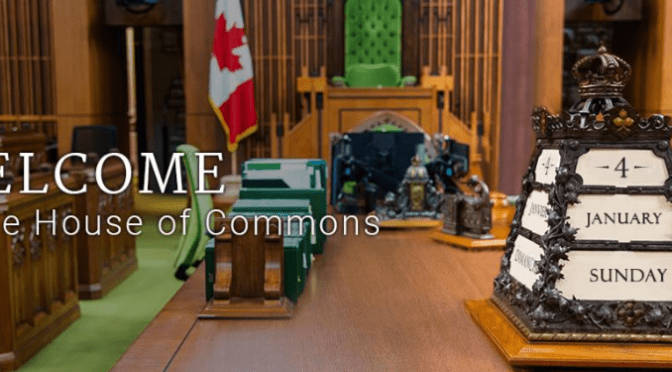
Bill 40 is titled, “AN ACT RESPECTING “O CANADA” AND OTHER OBSERVANCES AND LAND AND TREATY ACKNOWLEDGEMENTS IN SCHOOLS (EDUCATION ADMINISTRATION ACT AND PUBLIC SCHOOLS ACT AMENDED)”. On March 6, 2025, it was at First Reading.

The part that should interest Canadian secularists and humanists says:

Assuming the bill does pass and come into force, this will be a significant advancement for secularization in Canada. As we are not up-to-speed regarding any Manitoba-based humanists or secularists who may have been involved in advocating for the repeal of these regulations, we’ll content ourselves with referring further reading to the recent BC Humanist article, “In 2023, the BC Humanist Association released Religion in Public School Acts, which documented the provinces that still include provisions to permit prayers and Bible studies in schools.

We join BCHA in their encouragement to Manitoba citizens and residents to contact their Member of Legislative Assembly in support of this provision of Bill 40. The bill has other provisions which are not secularist in nature and deserve evaluation on their own merits.

We also encourage those who are interested in humanism and secularism in Manitoba to procure a copy of Elliot Hanowski’s Toward a Godless Dominion: Unbelief in Interwar Canada. We recently acquired and read a copy (a book review is forthcoming) and were greatly pleased with the thorough review of Manitoba’s significant history of humanism and atheism during that period. If you’re looking for insights into Canada’s humanist heritage, this is a treasure.

Up For Discussion

If you’re interested in analyzing and discussing this issue, there are actions you can take. First, here at Humanist Heritage Canada (Humanist Freedoms), we are open to receiving your well-written articles.

Second, we encourage you to visit the New Enlightenment Project’s (NEP) Facebook page and discussion group.

Citations, References And Other Reading

  1. Featured Photo Courtesy of : https://www.mhs.mb.ca/docs/sites/legislativebuilding.shtml
  2. https://www.bchumanist.ca/manitoba_plans_to_scrap_religion_in_public_schools_act
  3. https://www.bchumanist.ca/religion_in_public_school_acts
  4. https://www.canlii.org/en/mb/mbqb/doc/1992/1992canlii8482/1992canlii8482.html
  5. https://web2.gov.mb.ca/bills/43-2/b040e.php
  6. https://www.gov.mb.ca/legislature/business/billstatus.pdf
  7. https://web2.gov.mb.ca/laws/regs/current/554-88.php?lang=en

By continuing to access, link to, or use this website and/or podcast, you accept the HumanistFreedoms.com and HumanistHeritageCanada.ca Terms of Service in full. If you disagree with the terms of service in whole or in part, you must not use the website, podcast or other material.

The views, opinions and analyses expressed in the articles on Humanist Freedoms are those of the contributor(s) and do not necessarily reflect the views or opinions of the publishers.

Centre For Inquiry Canada’s Annual Report 2024

Each year, formally organized entities must make available an annual report of their prior year’s activity. In Canada, there are a relatively small number of organization that thar obligated to provide such a report.

Humanist Heritage Canada is not required to publish an annual report because we are not a public organization. However, we maintain an interest in documenting the activity of Canada’s humanist communities.

Centre For Inquiry Canada was founded in Toronto in 2009 and rapidly became one of Canada’s leading secular/humanist organizations. The organizations 2024 report was released via the CFIC website on March 9, 2025.

CFIC’s lead claim for the year appears to be that, “GLOBALLY AND ACROSS CANADA SECULARISM, SCIENCE AND HUMAN RIGHTS HAVE BEEN… UNDER ATTACK.” (all caps courtesy of CFIC). The report provide some description of how it has responded to the situation.

In addition to providing an annual report, CFIC makes available a statement of its financial position. This is a part of the organization’s responsibility as a registered charity. This information helps to reveal information about the organization’s scope and active membership.

Given that CFIC’s membership fees are $45 (individual) and $60 (family), we can determine that CFIC reported a membership of approximately 205-275 people for the year. The annual donation figures provide a much less precise measure of the organization’s scope as these revenues are typically skewed by a small number of large donors. In CFIC’s first years of operations, a single family foundation provided the primary sustenance of the organization.

Of some reasonable concern is the distribution of the organization’s expenses as some 41.7% of the organization’s revenues appears to have been sent to “subcontractors”. The annual report does not make clear what the subcontractors did for the organization. Given that this line is the single largest in value for the organizations’ report and that it is more than double the “program” expenses, some additional transparency may be appropriate to explain what the expenses represent.

In a 2008 article, Mark Blumberg posted an article regarding the use of funds by charities, “Some people use the 80/20 rule because the Canadian disbursement quota (DQ) requires charities in most cases to spend 80% of the amount receipted by the charity in the previous year on charitable activities in the following year.  The 80/20 rule is very misleading in terms of overhead as many charities receipt little of their donations and therefore can legally spend much less than 80% of their revenue in the previous year on the subsequent year’s activities and still be compliant with the disbursement quota.  In fact, many charities could take in a lot, and spend nothing, and still be compliant with their disbursement quota obligations.”

Blumberg goes on cite Canada Revenue Agency guidance to assessing the activity of charitable organizations:

“The CRA has come up with a grid for evaluating fundraising expenses based on the percentage of “fundraising costs” to “fundraising revenue”.  The evaluation grid provides:

Ratio of fundraising cost/fundraising revenue in fiscal period

  • Rarely acceptable: more than 70% (charity nets less than 30%)
  • Generally not acceptable: 50% to 70% (charity nets 30% to 50%)
  • Potentially not acceptable: 35.1% to 49.9% (charity nets 50.1% to 64.9%)
  • Generally acceptable: 20% to 35% (charity nets 65% to 80%)
  • Acceptable: less than 20% (charity nets more than 80%)”

Given CFIC’s activity expressing concern regarding the “cost of religion in Canada’ which includes an examination of financial indicators of faith-based charities in Canada, it seems appropriate that CFIC’s financial report receive at least some public, independent third-party scrutiny.

Up For Discussion

If you’re interested in analyzing and discussing this issue, there are actions you can take. First, here at Humanist Heritage Canada (Humanist Freedoms), we are open to receiving your well-written articles.

Second, we encourage you to visit the New Enlightenment Project’s (NEP) Facebook page and discussion group.

Citations, References And Other Reading

  1. Featured Photo Courtesy of :
  2. https://www.canada.ca/en/revenue-agency/services/charities-giving/charities/operating-a-registered-charity/annual-spending-requirement-disbursement-quota/disbursement-quota-calculation.html
  3. https://centreforinquiry.ca/become-a-member-of-cfic/
  4. https://www.canadiancharitylaw.ca/blog/how_much_should_canadian_charity_spend_on_overhead/
  5. https://centreforinquiry.ca/wp-content/uploads/2021/04/CoR-charitable-tax-receipting-revised-may-6.pdf

By continuing to access, link to, or use this website and/or podcast, you accept the HumanistFreedoms.com and HumanistHeritageCanada.ca Terms of Service in full. If you disagree with the terms of service in whole or in part, you must not use the website, podcast or other material.

The views, opinions and analyses expressed in the articles on Humanist Freedoms are those of the contributor(s) and do not necessarily reflect the views or opinions of the publishers.

Reading List: Eliot Hanowski’s “Towards a Godless Dominion

According to McGill-Queen’s University Press, Elliot Hanowski is an academic librarian at the University of Manitoba. Hanowski is the author of Towards A Godless Dominion: Unbelief in Interwar Canada. Hanowski is also one of the founders of the International Society for Historians of Atheism, Secularism and Humanism.

The book appears to be an obvious must-read for anyone wishing to examine Canada’s humanist heritage…and we’ll be acquiring a copy soon so that we may share our impressions.

In the meantime, we’ll make do with an overview provided by the publishers:

In recent surveys, one in four Canadians say they have no religion. A century ago Canada was widely considered to be a Christian nation, and the vast majority of Canadians claimed they were devoutly religious. But some were determined to resist. In the 1920s and ’30s, groups of militant unbelievers formed across Canada to push back against the dominance of religion.

Towards a Godless Dominion explores both anti-religious activism and the organized opposition unbelievers faced from Christian Canada during the interwar period. Despite Christianity’s prominence, anti-religious ideas were propagated by lectures in theatres, through newspapers, and out on the streets. Secularist groups in Montreal, Toronto, Winnipeg, and Vancouver actively tried to win people away from religious belief. In the first two cities, they were met with stiff repression by the state, which convicted unbelievers of blasphemous libel, broke up their meetings, and banned atheistic literature from circulating. In the latter two cities unbelievers met social disapproval rather than official persecution. Looking at interwar controversies around religion, such as arguments about faith healing and fundamentalist campaigns against teaching evolution, Elliot Hanowski shows how unbelievers were able to use these conflicts to get their skeptical message across to the public.

Challenging the stereotype of Canada as a tolerant, secular nation, Towards a Godless Dominion returns to a time when intolerant forms of Christianity ruled a country that was considered more religious than the United States.

Up For Discussion

If you’re interested in analyzing and discussing this issue, there are actions you can take. First, here at Humanist Heritage Canada (Humanist Freedoms), we are open to receiving your well-written articles.

Second, we encourage you to visit the New Enlightenment Project’s (NEP) Facebook page and discussion group.

Citations, References And Other Reading

  1. Featured Photo Courtesy of : https://umanitoba.academia.edu/ElliotHanowski
  2. https://www.mqup.ca/towards-a-godless-dominion-products-9780228018834.php#!prettyPhoto

By continuing to access, link to, or use this website and/or podcast, you accept the HumanistFreedoms.com and HumanistHeritageCanada.ca Terms of Service in full. If you disagree with the terms of service in whole or in part, you must not use the website, podcast or other material.

The views, opinions and analyses expressed in the articles on Humanist Freedoms are those of the contributor(s) and do not necessarily reflect the views or opinions of the publishers.