In our search for interesting, challenging and critical perspectives on contemporary humanism, we occasionally find articles published via other venues that we think HumanistHeritageCanada.ca readers may enjoy. The following article was located on In-Sight Publishing. Dr. Robertson and the publishers have kindly provided permission to re-publish here.
Featured sections of the text are selections of our own.
National Indigenous Peoples Day is June 21 in Canada.
Is Humanism Compatible with Indigeneity?
By : Dr. Lloyd Hawkeye Robertson
In this essay I argue that humanism is perfectly compatible with aboriginality; however, its compatibility with “indigeneity” will depend on the meaning assigned to the word. Connotative meaning not only impacts on the immediate message, it can influence the trajectory of thought, making definition necessary at the beginning of meaningful discourse. The term, “humanism,” involves the belief that science, reason and compassion can lead to material and spiritual progress. As defined by the late Carl Sagan (1996) the word “spiritual” exists within the realm of science conveying our ability to “grasp the intricacy, beauty and subtlety of life” that includes a “sense of elation and humility combined” (p. 29).
This humanist belief system flows from the Enlightenment that began in 17th Century Europe. In The Evolved Self (Robertson, 2020), I suggest this Enlightenment honoured the individualism that was already inherent in having a self that was capable of taking oneself as an object in remembered past events and imagined future ones. I argued that this skill had been in existence for at least 3 millennia and that organized religions evolved to put constraints or limitations on the self in the interest of preserving collectivist societies. The question posited in the title to this article then becomes, “Is the humanist rejection of supernatural explanations in favour of scientific and rational understandings compatible with cultures aboriginal or indigenous to the Americas?”
The connotative power of words was impressed on me in 1982 when I chaired a committee reporting to the Regina Public School Board on the education provided aboriginal students. Naming our committee proved to be more controversial than our examination of text books or teacher training. The descendants of those who signed treaties with the Canadian government insisted the word “Indian” be in our name arguing, “It was Indians who signed the treaties, and we should honour to treaties and be known as Indians.” Emphasizing our commonality, the Metis, who were recognized as an aboriginal people in Canada’s constitution that year, argued that the more inclusive word “native” should be used. This resulted in the somewhat confusing name: “The Indian and Native Committee on Education for the Regina Public School Board.”
The term “aboriginal,” means “original inhabitants” and its use is controversial when used to describe descendants of multiple migrations. For example, are the descendants of the Clovis peoples who settled most of the American supercontinent more aboriginal than the Dene who appeared around 15,000 years later? Can we call the Inuit, whose ancestry can be traced to the Siberian Birnirk people and who replaced the now extinct Paleo-Eskimo people in the Arctic about 1,000 years ago aboriginal while denying the term to the Norse who were simultaneously migrating from the other direction (Raff et al., 2015; Raghavan et al., 2014)? In accordance with modern usage, this essay refers to all peoples who inhabited the Americas before the 16th Century European migration by the adjective “aboriginal” or by the proper nouns Amerindian, Inuit and Metis.
Those who originally peopled the Americas were explorers and adventurers. They established empires in Central and South America, but in North America sovereign clan based bands of 100 to 1000 people were the norm. They were not particularly adept conservationists and during their watch woolly mammoths, giant mastodons, ground sloths, glyptodonts, bear-sized beavers, saber-toothed tigers, American lions, cheetahs, camels, and horses all went extinct (Shermer, 2004). Like humans everywhere else on the planet, Amerindians and later the Inuit and Metis made war. War was the cause of death of 30 to 35 percent of the aboriginal populations in northern British Columba from 1,500 BCE to 500 CE (Shermer, 2004). While women and children were often taken as captives following war, there is documentation of entire populations being murdered (Denig, 1856/1961; Widdowson & Howard, 2008).
Humanists often trace religious precepts to notions of supernatural agency developed by pre-historic hunters and gatherers. Equating the animism practiced by aboriginal peoples with the religious dogmatism that served to constrain science is an over-reach. Animism, of course, flowed from our evolved ability to attribute motives to others. In filling a very human need to answer the question “why” the agency we attribute to other humans was often attributed to lakes, mountains, weather systems and other species by Neolithic peoples. It would be logically consistent to assert that these animate forces would have wants and needs that could be appeased by human intervention. “If everyone “knows” that a person needs to make a sacrifice to the sentient spirit of a lake to ensure a safe journey across, then one makes the sacrifice” (Robertson, 2014, p. 31). Such beliefs are not religiously held if held tentatively subject to new evidence. In this example, such new evidence could be provided by the repeated successful crossings of people who did not make the prescribed sacrifice. Traditional aboriginal beliefs were more pragmatic than religious.
While I was on the staff of the Saskatchewan Indian Federated College during the 1980s, a Dakota Sioux elder used to say “Dem Crees, we taught them everything they know.” Historically, he had a point. During the 18th century the Cree, armed with Hudson Bay rifles, drove the Sioux out of the northern Great Plains; but they adopted many of the cultural practices of the Sioux such as powwows, sun dances, horse dances and the heyoka. They did not convert to the religion of the Sioux in a religious sense, but they chose practices that had worked for the peoples already present. George Catlin, a U.S. American artist who married a Plains Cree woman at the beginning of the 18th century and joined her band described these pragmatists as a nation of atheists. Edwin Denig, who married an Assiniboine woman at the beginning of the 19th century and joined her band was surprised that they had no belief in a creator god and that they asserted that life began when the sun’s rays impregnated the ground (Denig, 1856/1961). This understanding can be used to teach the theory of evolution since life began in earth’s primordial shallow seas warmed by the sun’s rays and continues to be plant based to this day. So where did the idea begin that there is a Creator-god to whom we could pray?
There are creators in some aboriginal mythologies. Saulteaux elders have shared that while their Anishinaabe tradition included a great spirit that spirit was not a creator. Creation of plants and animals was left to four lesser spirits who acted in the spirit of the great one, and they suggested it would be disrespectful to pray to the Great Spirit. In 1871 Wanapum tribal leader and shaman, Smohalla, declared:
It is good for man and woman to be together on the earth…. We do not know how the earth was made, nor do we say who made it. The earth was peopled and their hearts are good, and my mind is that it is as it ought to be. The world was peopled by whites and Indians and they should all grow as one flesh. (Bell, 2011)
Smohalla’s words suggest humility and mental flexibility – necessary qualities for the development of knowledge. I have suggested that the traditional stone medicine wheels that dot the Great Plains demonstrate a similar flexibility (Robertson, 2021). The circle can be taken to represent holism but the contents vary. Few of the estimated 343 wheels were divided into four. One in southern Alberta has 26 spokes. Many have no spokes at all with some featuring parallel lines and others featuring petro forms both inside and outside the circle. The number of variations suggests flexibility in thought and representation. Such flexibility allows for new evidence based approaches to life’s challenges. Medicine wheels can be constructed to represent the intersection of two or more variables. They can also be used to illustrate a variety of concepts not necessarily based on the number four which in itself has no magical power.
Secular humanism is a philosophical and ethical stance that emphasizes the value and agency of human beings, with an emphasis on critical thinking and evidence. It is relevant to aboriginal peoples in several ways: 1) A humanist perspective emphasizes individual agency leading to people taking control of their own lives, communities, and cultural heritage; 2) Humanism values diversity and respect for different cultures, beliefs, and lifestyles; and 3) Evidence-based decision-making as embraced by humanism can be seen as important for aboriginal communities in making decisions about their future and addressing social, economic, and environmental challenges. Respect for all cultures involves accepting that people can benefit from the knowledge science and reason creates, and they can enrich their cultures accordingly. While it would be tempting to declare, “Yes, humanism and aboriginality are compatible with each other,” such a position ignores a significant challenge mounted by people who call this approach “assimilation.”
During the first decade of this century I presented at six annual conferences of the Native Mental Health Association of Canada on such topics as the use of prior learning and assessment in building the aboriginal self, the self in family and community, residential school syndrome, attention deficit disorder, youth suicide, and building community. Other presenters focused on “The Medicine Wheel” which they assumed was a circle with four basic quadrants: mental, emotional, spiritual and physical. These presenters often attacked the “Bering Strait Theory” that holds that humans, perhaps as early as 20,000 years ago migrated to the Americas from Asia. As with Christian literalists who attack the theory of evolution, these presenters defined the word “theory” to be a guess. They declared that there is a thing called “western science” that holds the individual to be completely separate from the object of investigation; and they asserted that these “scientists” believe they are infallible, exact and accurate, unbiased, objective and impartial. Humanists will recognize the strawman created here as the actual opposite of science which holds that human beings are subjective and we need to find means to reduce our subjectivity to advance knowledge.
At mid-decade, Bill Mussel, president of the Native Mental Health Association of Canada, began talking circle discussions with presenters and members of the association as to whether the preferred term to be used with Amerindian, Inuit and Metis peoples should be “aboriginal” or “indigenous.” Mussel said he liked both terms but preferred “indigenous” because it implies a people who are rooted in the land. From the Latin indigena, the word refers to a plant or animal that lives, grows, originates or is naturally occurring to a particular area. Those who asserted that there is such a thing as “western science” contrasted it with “indigenous knowledge” which was rooted in North America. The implications of this particular word usage were demonstrated at an Ontario university while these discussions were being held.
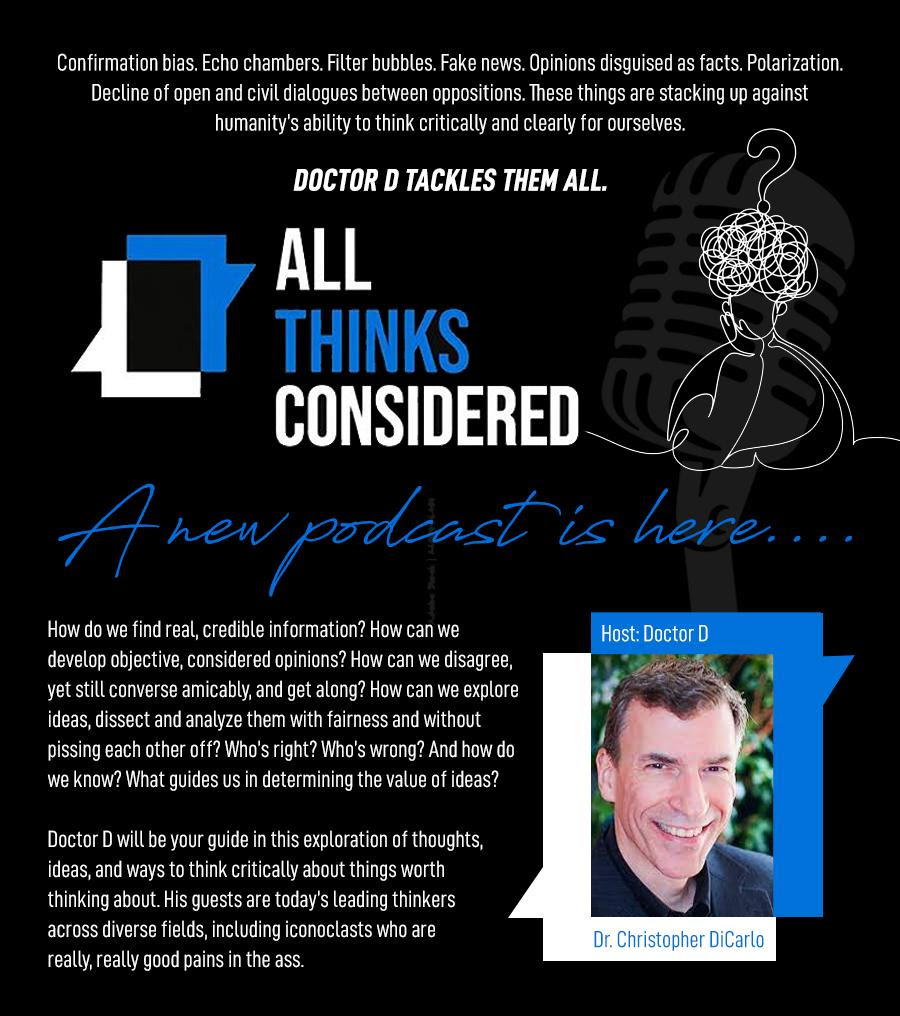
In 2005 philosopher Chris DiCarlo suggested to a graduate class at Wilfrid Laurier University that given our common human origins in East Africa any racist philosophy is untenable. When a student complained that DiCarlo was being “insensitive” to the aboriginal teaching that a creator placed aboriginal people to the American continents, he suggested a class debate on the subject. The debate did not happen and he was made to appear before a disciplinary committee for being disrespectful of this “indigenous knowledge” (DiCarlo, 2005; Kaill, 2005). His teaching contract was not renewed. Conversely, many aboriginal elders end their prayers with the phrase “All my relations.” This phrase denotes the unity of all living things and can be taken to support the theory of evolution and the united ancestry of the human race.
In discussing the DiCarlo example, Cree/Metis elder and historian, Keith Goulet, said there is a spectrum of views associated with aboriginal or indigenous spirituality similar to the spectrum that exists within the sects of Christianity. I have previously referred to the more “fundamentalist” indigenous spirituality on this spectrum as Native Spirituality (Robertson, 2014) in describing how it was used to discipline an elder support worker in a northern Cree community.
While the Plains Cree of the 19th Century adopted many of the practices of Siouxian culture, the Cree who remained in the boreal forest did not. In the 1990s I assisted one such community battling the problem of youth suicide (Robertson, 2015). With the assistance of community elders, we were successful. This community had voluntarily become Anglican in the mid-19th Century, and the elders identified as Anglican. For the band’s health department, located some 80 kilometers away, this was “problematic.” The department conducted workshops and sponsored cultural gatherings promoting “Native Spirituality,” but the elders appeared unmoved. They recognized that historically their people had not always been Christian, but they said many of the practices promoted by the “traditionalists,” including powwows and sun dances, had never been part of the Woodland Cree culture, and the efforts to convert them to this new Native Spirituality were felt to be oppressive. The local elder support worker was threatened with disciplinary action for failing to promote Native Spirituality with sufficient vigor, and this led to legal action.
The band health staff did not view their efforts to be one of oppression but one of healing.
Brave Heart (2003), a Lakota Sioux, popularized the notion that all Amerindian peoples suffer from historic trauma irrespective of their actual history. This trauma is “awakened” using audiovisual materials and role play, so that a “cathartic working-through necessary for healing” (p. 11) can commence using prayer, smudging, pipe ceremonies, sweat lodge ceremonies and medicine wheel teachings. One participant in a workshop on Prior Learning Assessment and Recognition that was sponsored by the local community college did not perceive this approach as healing stating:
Our provincial Department of Higher Education and Manpower has no more business teaching Native Spirituality—with the intent of conversion—than it has teaching Tibetan Buddhism…. Imagine what towering indignation would have been engendered had (the PLAR instructor) been a Catholic and she had asked us to burn incense, to partake in Holy Sacraments, to confess our sins, and tied problem-solving to the four points of the Cross. (Robertson, 2011, pp. 99-100)
In the mind of this participant smudging, the burning of sweet grass often used in a cleansing ceremony, was like the burning of incense in the Catholic tradition. The pipe ceremony was thought of as like holy sacraments. The presumption that all participants suffer from trauma from which they need to publicly confess was felt to be like the concept of original sin. The use of the four part reified medicine wheel seemed to have a similar function to the Catholic cross. The parallels between Christianity and Native Spirituality are not accidental.
Earlier in this article I quoted Smohalla as saying in 1871 that he did not know who created Earth, but that it was good that all races work together. By 1875 he was a changed prophet. He had climbed a mountain in what is now Washington State and received a new vision that led him to predict a day of redemption when people of European descent would be removed from the American continents leaving indigenous people to resume their pre-ordained way of life. At that time the spirits of the deceased who were true to their aboriginal ways would return to their bodies in a great resurrection. Smohalla, who was the first recorded aboriginal leader to use the concept of Mother Earth (Gill, 1991), told his followers to not farm as that was like taking a knife to her bosom. They were also to not participate in mining as that was chipping away at her bones. He was not the first aboriginal prophet to preach a messianic religion.
Wovoka, became a 19th century Paiute shaman after being adopted and raised by Christian missionaries. He taught that by living piously and by performing a type of round dance called “the ghost dance” the Europeans would disappear from the Americas, the buffalo would return, and the way of life of people aboriginal to North America would be restored. Wovoka performed levitation and bullet stopping tricks to convince onlookers of the power of his magic. As the new religion spread northward his Lakota Sioux disciples came to believe the ghost shirts worn by dancers would stop the bullets of the white men (Robertson, 2014). The dream of Smohalla and Wovoka to rid North America of Europeans did not materialize, but many of the teachings were codified and exported to other aboriginal peoples where they continued to evolve protected by a smoldering sense of entitlement.
The modern medicine wheel, often known as “The Medicine Wheel,” is divided into quadrants representing physical, emotional, mental and spiritual selves. The four quadrants are said to be symbolically representative of the “four” races of the earth: red and yellow; black and white, but many readers will recognize that the order and colours of these so-called races come from a Christian children’s song “Jesus Loves the Little Children.” It is said that this medicine wheel divides the stages of life into four: childhood, adolescence, adult and old age; but adolescence was unknown to Neolithic societies having been invented by European civilization with the advent of the industrial revolution. This medicine wheel is said to count the four seasons failing to note that the Woodland Cree had six. Widdowson and Howard (2013) questioned whether the concept itself could be used to advance critical thinking, the dissemination of abstract ideas, or the organization of complex information into constituent parts:
While it appears that the Medicine Wheel . . . offers a more systematic pedagogical technique (as compared to concrete conceptualizations in hunter-gatherer societies), this turns out to be a mirage. The “constituent parts” that emerge from the “breaking down of complex situations” are arbitrarily constructed, the only basis for which is a spiritual belief about the significance of the number four. (p. 294)
The Medicine Wheel critiqued by Widdowson and Howard had non-aboriginal origins. The word “mental” has no direct translation in any Algonquian language native to Canada. For example, the Cree word/phrase Kiskwew (literally, “s/he is crazy”) is used to represent the term in northern Saskatchewan to the angst of practicing mental health workers. It can be inferred that whoever first added the word mental to the Medicine Wheel was thinking in a European language, and we need to consider the possibility that it was influenced by the New Age Movement that in the mid-20th century embraced and promoted a Native Spirituality with non-aboriginal pipe carriers. While Native Spirituality is situated on the spectrum of aboriginal spiritualities referenced by Elder Goulet, more traditional spiritualities described here were local to the band, tribe or nation. In contrast, Native Spirituality can be considered to be linked to pan-Indianism where indigineity is viewed to be universal.
My daughter and I attended a powwow on the Kahnawake reserve near Montreal in 2002, and we recognized all but one of the drum songs and dances as being from the northern plains. We attended a family reunion on the Ashcroft reserve in western British Columbia. The drum songs at the honor feast were again plains culture except for one traditional hand drum number. The export of plains culture goes beyond songs and dances. In his study of two bands in Nova Scotia, Poliandri (2011) noted that what is understood as Mi’kmaq spirituality as practiced by traditionalists often involves the beliefs and ceremonies of the Sioux and Blackfoot. While the older spiritualities may be practiced in local communities, the pan-Indian Native Spirituality is recognized by universities and the general public. I have often had students tell me they learned to be aboriginal by attending university. I want to tell them that it is likely their home communities never had aspects of culture taught at university, and in any case their traditional beliefs and practices were not held religiously, that is for all time and place.
At the beginning of the millennium Steven Pinker (2003) noted that a proto-religious movement had coalesced around three myths: the blank slate, the ghost in the machine, and the noble savage. The blank slate is the notion that we are created by culture and thus are infinitely malleable dependent on cultural change with a particular emphasis on how words are used. The ghost in the machine myth supposes some essence prior to birth that, for example, might determine that doctors made a mistake in naming an infant with a penis a boy. The noble savage myth supposes that pre-colonization civilizations and indigenous knowledge were inherently superior but that this “better world” was destroyed during the process of colonization. Humanists will recognize the parallels with fundamentalist Christianity in 1) being “born again” as a new person, 2) having an essence or soul that defines a true self, and 3) needing salvation from original sin. This new religious movement that includes but transcends Native Spirituality is, as yet, without an official name but is often referred to as “Wokism.”
In 1493 a Papal Bull proclaimed that America was unoccupied and that any aboriginal people found had no right of ownership and could be taken as slaves. Although this original “Doctrine of Discovery” was, in effect, modified by subsequent Papal Bulls, humanism was founded on the idea that no religious order should be able to make such pronouncements and that humans are self-determined knowledge producers in their own right. This is compatible with the traditional aboriginal stance of being humble in one’s beliefs that are dependent on evidence and context. While humanism is compatible with more traditional aboriginalities, it would find those who proclaim superior moral authority based on authority “rooted” in the land to be “problematic.”
In summation, the Enlightenment is a technology that allows for knowledge creation and should thus be available to all cultures ensuring their progressive advancement by the people who constitute those cultures. Humanism is an ethical and moral stance that grew out of the European Enlightenment that recognizes the worth and value of all people. Traditional aboriginal cultures practiced animism, and while supernatural beliefs are incompatible with humanism such beliefs were not traditionally religiously held thus allowing for an indigenization of the tools of the Enlightenment. A new religious movement is evolving that romanticizes a fundamentalistic form of indigeniety, and this has the effect of keeping the tools of the Enlightenment from peoples aboriginal to the Americas.
Acknowledgement: The author conveys his thanks to Francis Widdowson who critiqued an earlier draft of the is article and to Keith Goulet who contributed his knowledge through a series of two interviews.
Bibliography
Bell, D. D. (2011). The bottomless pit becomes the arch-nemisis Ridged Valley Reflections. http://justbetweentheridges.wordpress.com/2011/08/
Brave Heart, M. Y. (2003). The historical trauma response among natives and its relationship with substance abuse: A Lakota illustration. Journal of Psychoactive Drugs, 35(1), 7-13.
Denig, E. T. (1856/1961). Five Indian Tribes of the Upper Missouri. University of Oklahoma Press. (Five Indian Tribes of the Upper Missouri)
DiCarlo, C. (2005, June 25). The importance of being ignorant: Critical thinking and the relations of natural systems Humanism Now Conference, Ottawa, ON.
Gill, S. D. (1991). Mother Earth: An American story. University of Chicago Press.
Kaill, D. (2005). We are all African. Humanist Perspectives, 154, 5-7.
Pinker, S. (2003). A biological understanding of human nature. In J. Brockman (Ed.), The new humanists: Science at the edge (pp. 33-51). Barnes & Noble.
Poliandri, S. (2011). First Nations Identity and Reserve Live: the Mi’kmaq of Novia Scotia. University of Nebraska Press.
Raff, J. A., Rzhetskaya, M., Tackney, J., & Hayes, M. G. (2015). Mitochondrial diversity of I ñupiat people from the A laskan N orth S lope provides evidence for the origins of the Paleo‐and Neo‐E skimo peoples. American Journal of Physical Anthropology, 157(4), 603-614.
Raghavan, M., DeGiorgio, M., Albrechtsen, A., Moltke, I., Skoglund, P., Korneliussen, T. S., Grønnow, B., Appelt, M., Gulløv, H. C., & Friesen, T. M. (2014). The genetic prehistory of the New World Arctic. Science, 345(6200), 1255832.
Robertson, L. H. (2011). An application of PLAR to the development of the aboriginal self: One college’s experience. International Review of Research in Open and Distance Learning, 12(1), 96-108.
Robertson, L. H. (2014). Native Spirituality: The making of a new religion. Humanist Perspectives, 47(1)(1), 16-23.
Robertson, L. H. (2015). The trauma of colonization: A psycho-historical analysis of one aboriginal community in the North American “North-West” Interamerican Journal of Psychology, 49(3), 317-332.
Robertson, L. H. (2020). The Evolved Self: Mapping an understanding of who we are. University of Ottawa Press.
Robertson, L. H. (2021). The Medicine Wheel Revisited: Reflections on Indigenization in Counseling and Education. SAGE Open, 11(2), 1-11. https://doi.org/10.1177/21582440211015202
Sagan, C. (1996). Demon haunted world: Science as a candle in the dark. Ballantine Books.
Shermer, M. (2004). The science of good and evil: Why people cheat, gossip, care, share, and follow the golden rule. Henry Holt and Company.
Widdowson, F., & Howard, A. (2008). Disrobing the Aboriginal Industry: The deception behind indigenous cultural preservation. MiGill-Queen’s University Press.
Citations
American Medical Association (AMA 11th Edition): Robertson L. Is Humanism Compatible with Indigeneity?. April 2023; 11(2). http://www.in-sightpublishing.com/illusion-inequalities
American Psychological Association (APA 7th Edition): Robertson, L. (2023, April 8). Is Humanism Compatible with Indigeneity?. In-Sight Publishing. 11(2). http://www.in-sightpublishing.com/illusion-inequalities.
Brazilian National Standards (ABNT): ROBERTSON, L. Is Humanism Compatible with Indigeneity?. In-Sight: Independent Interview-Based Journal, Fort Langley, v. 11, n. 2, 2023.
Chicago/Turabian, Author-Date (17th Edition): Robertson, Lloyd. 2023. “Is Humanism Compatible with Indigeneity?.” In-Sight: Independent Interview-Based Journal 11, no. 2 (Spring). http://www.in-sightpublishing.com/illusion-inequalities.
Chicago/Turabian, Notes & Bibliography (17th Edition): Robertson, L “Is Humanism Compatible with Indigeneity?.” In-Sight: Independent Interview-Based Journal 11, no. 2 (April 2023). http://www.in-sightpublishing.com/illusion-inequalities.
Harvard: Robertson, L. (2023) ‘Is Humanism Compatible with Indigeneity?’, In-Sight: Independent Interview-Based Journal, 11(1). <http://www.in-sightpublishing.com/illusion-inequalities>.
Harvard (Australian): Robertson, L 2023, ‘Is Humanism Compatible with Indigeneity?’, In-Sight: Independent Interview-Based Journal, vol. 11, no. 2, <http://www.in-sightpublishing.com/illusion-inequalities>.
Modern Language Association (MLA, 9th Edition): Robertson, Lloyd. “Is Humanism Compatible with Indigeneity?.” In-Sight: Independent Interview-Based Journal, vo.11, no. 2, 2023, http://www.in-sightpublishing.com/illusion-inequalities.
Vancouver/ICMJE: Lloyd R. Is Humanism Compatible with Indigeneity? [Internet]. 2023 Apr; 11(2). Available from: http://www.in-sightpublishing.com/illusion-inequalities
License
In-Sight Publishing by Scott Douglas Jacobsen is licensed under a Creative Commons Attribution-NonCommercial-NoDerivatives 4.0 International License.
Based on work at www.in-sightpublishing.com.
Copyright
© Scott Douglas Jacobsen and In-Sight Publishing 2012-Present. Unauthorized use and/or duplication of this material without express and written permission from this site’s author and/or owner is strictly prohibited. Excerpts and links may be used, provided that full and clear credit is given to Scott Douglas Jacobsen, or the author(s), and In-Sight Publishing with appropriate and specific direction to the original content. All interviewees and authors copyright their material, as well, and may disseminate for their independent purposes.
Citations, References And Other Reading
- Featured Photo Courtesy of : https://destinationindigenous.ca/blog/guide-indigenous-tourism-canada/
- https://in-sightpublishing.com/2023/04/08/humanism-indigeneity/
- https://www.hawkeyeassociates.ca/
The views, opinions and analyses expressed in the articles on Humanist Freedoms are those of the contributor(s) and do not necessarily reflect the views or opinions of the publishers.









 Humanist Heritage Canada