In our search for interesting, challenging and critical perspectives on contemporary humanism, we occasionally find articles published via other venues that we think humanistfreedoms.com readers may enjoy. The following article was located on Kansas Reflector. Steve Lopes is a Lawrence resident who taught technology in a suburban Boston high school and other tech schools for 15 years. He was a union organizer for Kansas-NEA for 30 years and over the past 10 years has advised progressive groups and Democrats in Douglas, Johnson and Wyandotte counties.
As a former teacher, I strongly oppose the use of CRT in public school classrooms – but I’m not talking about critical race theory.
Steve Lopes
I’m talking about Crappy Rejection Teaching, the concerted effort of self-serving political forces to deny our students a quality objective education. Crappy Rejection Teaching has a long history of misleading students and coercing teachers to avert truth in favor of selective political agendas.
This CRT is an intentional effort by adults with weird personal agendas, usually based on dubious sources, to promote their prejudiced views at the expense of our children’s future success. They are forcing this generation, our future leaders, to accept a dumbed down curriculum and limited opportunities. We have a responsibility for teaching our children facts and truth, however uncomfortable.
This current assault on quality public education is just the latest in ongoing efforts by the ignorance lobby to promote their personal beliefs as valid, and therefore imperative for everyone.
Secular humanism
My first experience with a CRT-like assault was as a suburban Boston high school teacher in the 1970s, when our district was accused of promoting secular humanism. My teacher colleagues scratched their heads in disbelief. What is this stuff? The leader of our local teachers’ union suggested a way to respond.
We forgave our accusers and thanked them for bringing this to our attention, and after further investigation, several of us accepted this secular humanism as a meaningful personal belief.
Creationism
In the 1980s, as a field organizer for Kansas NEA, I frequently represented members facing challenges for teaching objectionable stuff. In one district, a local pastor who denied evolution, urged the school board to promote the teaching of Creationism. The biology teacher presented an evidence-based defense of evolution that persuaded the board to retain the science curriculum.
Intelligent design
In 1999, there was a concerted effort to force the Kansas State Board of Education to include intelligent design in school science standards. In response, educators statewide organized Kansas Citizens for Science to demand evidence-based standards.
In 2005, the anti-science majority on the state board held bogus hearings during which KCFS exposed the flawed logic of intelligent design. These hearings were documented in the film “Kansas vs. Darwin.”
Additionally, KCFS efforts led to the subsequent election of a majority of board members who endorsed the scientific method.
Banning books
On Nov. 10, 2021, this Associated Press headline appeared: “Kansas District Orders 29 Books Removed From Circulation.” The Goddard school district had placed holds on this lengthy list of books in their school libraries based on a single parent objection to “language he found offensive.” The district ultimately reinstated the books.
The history of book banning to restrict learning goes back to the origin of books and continues to this day.
Now, the critical race theory scare tactics have arrived in Kansas.
Partisans have been diverting the public’s attention from developing and implementing effective solutions that address real education challenges in favor of unfounded propaganda. Recently seven local school board candidates running against the teaching of critical race theory were elected in Kansas communities.
With the state and national GOP leveraging dubious science to energize their base, the anticipated Democratic Party response has been … limited to nonexistent.
The kids are all right
How do we respond to this craziness in the absence of a countervailing force? We must ask the group with the most to lose from this craziness: our children.
I have a proposal based on my faith in Gen Z (those born between 1997 and 2012).
This generation, which will suffer most from this disinformation campaign, should rise and say: “STOP” on behalf of themselves and our future.
Activists at public schools and colleges could form interest groups — perhaps with names like: “Teach Us the Truth About History” — and demand evidence-based curricula in their classrooms.
If you’re a young person who agrees with this assessment, let the adults in your life know that the actions of extremists are damaging their future opportunities. Spread the word, not out of partisanship but because we all deserve to know the truth about our country and its past.
Americans have stood up to Crappy Rejection Teaching in the past. We can do it again.
The views, opinions and analyses expressed in the articles on Humanist Freedoms are those of the contributor(s) and do not necessarily reflect the views or opinions of the publishers.
In April 2020, Humanists worldwide were shocked to learn of the arrest of Mubarak Bala, President of the Humanist Association of Nigeria. Mubarak is well known in Africa and was active on social media, which is where most African Humanists “meet”. It’s safer that way, as in each of our countries we are judged for turning our backs on religion and in several countries we face the death sentence for being openly Irreligious.
It was a post Mubarak made on Facebook, speaking out against Prophet Muhammed that led to his arrest. It was seen to be “blasphemous”, and “blasphemy” is considered a crime in Nigeria – punishable for up to 2 years under Customary Law (which is practiced throughout all Nigerian States) and by death under Shari’a Law (any State has the power to establish their own courts under Shari’a Law, especially if the accused is Muslim.)
Mubarak’s father’s role in his arrest
Mubarak first made news in 2014 when his father, Muhammed Bala, forcibly had him drugged and admitted to a mental ward for denouncing Islam and declaring he was an Atheist. (Atheism is viewed as a ‘mental illness’ by some.) But thanks to the worldwide Humanist community and a hospital strike, he was discharged.
His father is a ‘respected’ Islamic scholar and his son’s Atheism supposedly brought unforgivable “shame and dishonour” on his family. It is widely accepted amongst African Humanists and those close to Mubarak personally, that his father is behind his recent arrest and prolonged imprisonment – despite him being a devout and ‘respected’ follower of the so called “Religion of Peace”.
Nigeria’s Constitution guarantees “the rights of “freedom of thought, expression & religion” so the fact that “blasphemy” is considered a crime, violates International Human Rights terms, which are protected by all major Human Rights agreements, which Nigeria is signatory to.
Continued Human Rights abuses
For the first 5 months after his arrest, aside from being told that he’d been transferred to the Muslim State of Kano, (a State renowned for its practice of Shar’ia Law) nobody knew exactly where he was, or even if he were still alive.
His wife, Amina Ahmed, had just given birth to their first child, a son, 6 weeks prior to his disappearance and was distraught – pleading publically in national media for “Proof of Life”. Dr Leo Igwe, personal friend of Mubarak’s and also a renowned Nigerian Human Rights Advocate and founder of the Humanist Association of Nigeria, spearheaded the campaign to raise awareness for Mubarak’s plight and Humanists around the world gave Nigeria their support.
A person must be charged within 24 hours of their arrest, or otherwise released, but (as was found out much later) Mubarak was only formally detained the following month, and without legal counsel or appearing in court was formally charged under Customary Law for 10 “public disturbances caused in relation to 5 Facebook posts” which falls under Nigeria’s ‘Cybercrimes Act’.
Mubarak’s legal team were denied any contact with him until almost 6 months after his arrest, when only 1 lawyer was allowed to briefly see him – to date this is the only meeting he’s been allowed with his lawyer in the 19 months he’s been held.
In the interim, his lawyers filed a petition to enforce his Fundamental Rights, which according to the law, is a matter of urgency and must be heard within 7 days – it was heard after 164 days and it was determined that he was being illegally detained which was a gross violation of his Human Rights.
In view of this, the Abuja Federal High Court (which is in the predominantly Christian Kaduna State, operating under Customary Law) ordered his immediate release in December 2020. To date, this order of the High Court has been ignored.
African Humanist groups unite to support Nigeria
In the interim, Humanists around the world have continued their support and African Humanists have joined together online to support Nigeria, all who had never ‘met’ before. The ironic thing is that by silencing one Humanist, so many more have spoken out and are now united in a way they were never before.
We have individual Humanists as well as groups from South Africa, Zambia, Zimbabwe, Malawi, Ghana, Uganda, Tanzania and Kenya who have now all connected and are in almost daily contact – sharing the trials we face in each of our countries, discussing things which relate to us all – like Human Rights, overhauling Africa’s outdated school education system and introducing Critical Thinking and a more Science based approach to learning and working towards a Secular Africa where religion plays no part in our schools or governments.
We are gaining strength from each other and some countries are speaking to each other for the first time – all thanks to Mubarak Bala, yet he doesn’t even know it !
Mubarak’s lawyers filed a 2nd Fundamental Rights Petition in January this year, (to be held urgently within 7 days, by law) – 11 months have since passed. Court dates are set and then typically postponed 2 to 3 times with reasons like “the judge is in ill health” being given.
The next court date is in December, and Mubarak has not attended any of them so far.
He has a chronic condition and since the day of his arrest, has been denied his daily chronic medication and access to a Doctor, even when he was very sick a few months ago. He was told he was “faking it to try and escape”.
This is in violation of the United Nations “Minimum Rules For Prisoners Act” but despite requests and his lawyers following the legal process to request this, nothing has yet been done.
Despite not being allowed visitors, it was hoped that he would be allowed to see his wife and son before the end of the year, but that was refused. His son turns 2 early next year and he is growing up without even knowing his father and being raised alone by his strong yet heartbroken mother, who has been in her own personal prison almost 2 years now, too.
In September, 4 Human Rights lawyers wrote a letter to Nigeria’s President Buhari and published it in national newspapers, giving the facts of the case and asked, once again, for him to be transferred to a prison in Abuja, Kaduna State (where he stands a better chance of having a fair trial), to treat the second Fundamental Rights case as the emergency that it is and to restore his rights as guaranteed in the Nigerian Constitution.
To date, there has been no response.
Those who hold him are reportedly pleased that (especially since he is an avid reader and writer) Mubarak is denied reading and writing material and “has been silenced and can no longer poison people’s minds with evil lies from the West”.
His supporters, upon learning this, along with his wife, decided to publish a series of quotes taken from his speeches, interviews, newspaper articles and writing when he was still a free man – so that his words and his truths are never silenced and to show that by silencing his voice, many others have lent theirs in its place.
Please help us to keep Mubarak’s case in the spotlight !
A quote is posted each day on our Facebook campaign page and is forwarded worldwide from there – some have been printed in newsletters as far away as New Zealand, as his silenced voice now reaches around the world !
It’s been 19 months since his arrest but we will never give up on him. We ask the worldwide Humanist community to please continue their support – our African governments take much more notice when there is international interest in a case like this and we need to show them that Mubarak will never be forgotten.
Our Facebook page (no membership necessary, it’s open to all) is “Free Mubarak Bala” and Humanists International website, which publishes regular updates, can be viewed here.
We’re in the process of launching a website in Mubarak’s name, to reach a wider global audience and it has the input of Humanists from across Africa. This will hopefully be live sometime in December – to be announced on our Facebook page.
Please visit, “like” and share the above, publish or re post articles about his case, put pressure on your own governments by writing to them to request his release and let fellow Humanists in your communities know of his plight – every single action, no matter how small, will help to put unwelcome pressure on Nigeria and to eventually secure his release !
The views, opinions and analyses expressed in the articles on Humanist Freedoms are those of the contributor(s) and do not necessarily reflect the views or opinions of the publishers.
In our search for interesting, challenging and critical perspectives on contemporary humanism, we occasionally find articles published via other venues that we think humanistfreedoms.com readers may enjoy. The following article was located on SAGE Open, an open-access publishing source. Dr. Robertson has kindly provided a brief opening paragraph for HumanistFreedoms.com. (Note that bold features are ours and may not coincide with any emphasis that Dr. Robertson might prefer.)
The Medicine Wheel Revisited: Reflections on Indigenization in Counseling and Education
Enlightenment humanism seeks universal values common to the human condition. For example, in humanism the dignity of the person is valued regardless of the race, creed, sex, sexual orientation, ethnicity or geographic location of that person. Similarly, empirical scientific truth will apply to all individuals, irrespective of divinely given alternate “realities” that are subjectively held. In this article I argue that the methods of science and reason that makes such a naturalistic understanding possible are compatible with traditional aboriginal worldviews, but that each culture must ground the Enlightenment to its traditions for that culture to participate equally in the scientific revolution. I call this process of adapting new technologies to local cultures “indigenization.” I recommend a secular approach to indigenization relating modern conceptual thought to traditional cultures in a way that is consistent with traditional constructs. In this article, I use the ancient medicine wheels found on the Great Plains of North America to illustrate how this could be done.
This article is peer reviewed and was first published by SAGE Open as “open access.” It may be referenced: Robertson, LH. (2021) The Medicine Wheel Revisited: reflections on indigenization in counselling and education, Sage Open, 11(2) 1-11 DOI: 10.1177/21582440211015202
Abstract
Indigenization involves relating traditional cultures to modern methods, concepts, and science to facilitate their use by those populations. Despite attempts to indigenize both the practice of counseling and the content of educational curricula, mental health and educational deficits in Amerindian communities have remained. This article suggests indigenization in the North American context is often based on a reified view of culture that discounts naturalistic and scientific approaches, and that this dynamic inhibits progressive cultural change at institutional and community levels. A secular approach to indigenization is proposed that relates modern conceptual thought to traditional cultures in a way that is consistent with traditional constructs. The medicine wheel, traditional to North American Great Plains cultures, is applied to counseling to illustrate how concepts found in aboriginal cultures could inform modern practice with wider applications to curriculum development. Related tensions involving interpretations of aboriginal spiritualities and modernity are discussed.
As Director of Lifeskills for the Saskatchewan Indian Federated College in Regina, Canada, during the 1980s, I would be asked, “Why do we (aboriginal people1) always have to become more like them (non-aboriginal people), why can’t they become more like us?” While modern North American cultures are constituted by the histories of their constituent peoples, including those aboriginal to the continent,2 these students were actually voicing alienation from a modern educational system that emphasizes mathematics, logical constancy, and chronological time delineated behavior—skills that were not indigenous to Canadian hunter-gathering societies. Attempts to rectify such alienation have included calls for the indigenization of curricula that are pictured as “western” or “European” (Barman et al., 1986; Louie et al., 2017).
Counseling is also pictured as Euro-American and unsupportive of aboriginal cultural traditions (McCormick, 1996; Poonwassie & Charter, 2001; Sojonky, 2010) with the result that some aboriginal students are unwilling to see nonnative counselors (Dolan, 1995). Indigenization in this context is a process whereby an imported psychology is transformed in ways that are appropriate to the local culture (Adair, 2006).3 Indigenization may be understood as the appropriation of technologies, practices, or systems of conceptual thought in ways that accord with the receiving culture.
Swidler (1986) redefined culture as excluding change to technology and material artifacts while including “beliefs, ritual practices, art forms, and ceremonies, as well as informal cultural practices such as language, gossip, stories, and rituals of daily life” (p. 273). Although technologies and artifacts per se may not be part of culture, the ways that they are used and interpretive significance given them would be. In this article, cultures are held to be fluid concepts consisting of generally shared experiences or generic representations that may be called cultural schemas common to populations linked by tradition (Quinn, 2011). As counseling and education can effect change in the mental schemas held by clients and students, the acquisition of the knowledge, attitudes, and skills required by them to participate successfully in modern economies will inevitably lead to change in their family and community cultures. The alternate view that cultures are defined entities as opposed to fluid concepts leads to at least two important corollaries: (a) a person could have incompletely or inadequately learned a culture with which he or she identifies or is otherwise assigned making that person a less worthy representative; and (b) speakers from a defined culture may make knowledge claims that are at variance with those made by speakers from other cultures but are nonetheless of greater truth for the represented cultural group. Representative of this perspective on culture, a peer reviewer of an earlier version of this manuscript asked whether the author was aboriginal and writing from an indigenous perspective. Had I identified as a person with aboriginal ancestry, I could still have been accused, under this paradigm, of not taking an “aboriginal perspective.” Such a static and defined view of culture is similar to a religiously held dogma in that deviations from a prescribed belief system are proscribed.
The goal of this article is to suggest a paradigm of dynamic cultural change compatible with secular enlightenment that is rooted in cultures indigenous to North America. Using the concept of the medicine wheel as a metaphor for traditional cultural knowledge generally, it is argued that the practice of indigenization in counseling and curriculum development will contribute to progressive change. World views based on a static or essentialist view of culture, it will be argued, have impeded participation in the modern economy by aboriginal peoples.4 It is suggested that historical and interpretive factors used in advancing the essentialist view are in need of reexamination. We begin by establishing a case for such a reframe.
Stalled Education: Colonization and “Indian Control”
Education is an important value in human cultures. Goulet and Goulet (2014) identified three forms of the teaching-learning process conceptualized in the indigenous Cree language: “kiskinaumegahin (teaching another), kiskinaumasowin (teaching oneself), and kiskinaumatowin (teaching each other)” (p. 65). While teaching as a profession was necessitated by the increased complexities of modern civilization and falls within the rubric of “teaching another,” the introduction of such education to students aboriginal to Canada had disastrous consequences. The Canadian government contracted with five churches to provide education with the goal of assimilating indigenous students into the colonial economy5 with the churches responsible for operating costs. The churches planned to cover these costs by generating income through industrial production. For example, schools on the Canadian prairies typically taught farming and animal husbandry with students providing manual labor half days. When these “industrial schools” failed to generate sufficient revenues, many students suffered from malnutrition and dis- ease. Furthermore, examples of physical and sexual abuse Indian Residential Schools were widespread (Aboriginal Healing Foundation, 2006; Barman et al., 1986). While such experiences contributed to a negative view of education among many indigenous people, it is important to also consider that this view was not universally held. When the Canadian government attempted to end the residential school program in 1969,6 the Federation of Saskatchewan Indian Nations (FSIN) successfully lobbied to keep the schools open in their province. Hired by FSIN as part of this process, educational consultants Robertson and Redman (1988) were told the Indian residential school system was to be maintained because (a) the quality of residential school education was considered superior to that offered by on-reserve day schools and (b) the schools effectively provided an alternative to the apprehension of children in dysfunctional families by child welfare agencies.7
Schools have also been viewed as a vehicle for cultural preservation. In a 1972 policy document, the National Indian Brotherhood (NIB) declared, “The present school system is culturally alien to native students . . . School curricula in federal and provincial/territorial schools should recognize Indian culture, values, customs, languages and the Indian contribution to Canadian development” (“Indian control of Indian education,” 1972, p. 9). Prototypically, the Plains Indians Cultural Survival School was established in Calgary, Canada, with 50% of its curriculum consisting of cultural components, including “bustle-making, hide-tanning, drumming, Indian dances, native languages, tepee-making and visits with native elders” (Friesen, 1983, p. 54). This model emphasizing indigenous cultural restoration coupled with local control at primary, secondary, technical and university levels has been replicated across Canada.
This level of indigenization did not result in improved academic achievement. Richards (2014) found that aboriginal students have a significantly higher incompletion rate in band-run reserve-based secondary schools (58%) than in provincial schools (30%). Those who do graduate may not have the literacy skills implied by their grade level. During my experience as an educational psychologist with a northern community college servicing a largely (80%) aboriginal population, I found that graduates of band-run schools often obtained scores 3 to 7 years below grade level on standardized tests of reading and mathematical achievement. A study of Grade 3, 6, and 9 Albertans found that 50% of aboriginal students were not achieving at grade level (Richards & Scott, 2009).
This educational achievement gap cannot be totally attributed to shortfalls in funding. In their comparative study, Richards and Scott (2009) found that federal funding for First Nations schools exceeded the average per student funding provided by provincial governments by more than $4,000 CAD.8 The achievement gap in education could be partly explained by conflicting expectations between educational authorities and local communities. At the university level, Robertson et al. (2015) documented examples of indigenous students whose educational success was considered secondary to the culturally sanctioned demands of their families. Students in counseling described themselves as “caught between two worlds” with the implication that their formal education was considered secondary in one of those worlds.
Another explanation for the education gap between aboriginal, particularly Amerindian, and non-aboriginal students is that the increase in aboriginal cultural content has brought with it a concomitant assumption that traditional “aboriginal ways of knowing” are equivalent to modern conceptual thought. But as Widdowson and Howard (2013) warned, “Because hunting and gathering/horticultural societies lack a culture of literacy, incorporating aboriginal traditions will not facilitate the values, skills, and attitudes that aboriginal people will need to obtain a scientific understanding of the world” (p. 303).9 As a considerable body of research emphasizes the necessity for cultural grounding in learning (Banks, 2001; Hutcheon, 1999; Petersson et al., 2007), a suggestion that cultural teaching may retard learning requires further examination.
Anyone bereft of culture would not have the constructs, the mental scaffolds, upon which to organize and understand experience. Indeed, such a person would not have the language to describe that experience. This is not how cultural loss is usually presented. A more essentialized view is that culture is a “thing” that exists independent of a body of people but can be possessed by them (Waldram, 2004). In such a view, modern science and mathematics may be presented as European, colonialist, or “western.” However, extending the definition used by Swidler (1986), modern conceptual thoughts, especially as found in science and advanced mathematics such as statistics, are not, in themselves, cultural, thus freeing each culture to appropriate scientific, mathematical, and concomitant critical thinking abilities in the course of their own evolution. The evolution of Euro-American cultures from their medieval roots included (a) scientific discoveries rendering old faith-based teachings obsolete and (b) cross-cultural contact contributing to a globalization of their (Euro-American) world view. As a result of this evolution, any school curriculum that taught a geocentric model of the universe or the inherent superiority of European races would not be tolerated. Nonetheless, a continuity of descent marks this education as “European” to students within the Euro- American tradition. The indigenization of curricula within Amerindian traditions requires a similar descent, and such a cultural descent has also been recommended in counseling (Chandler & Lalonde, 1998; Poonwassie & Charter, 2001).
The use of multisensory presentations, democratization of grading, and the use of oral storytelling has been commended as representing indigenization of methodologies in the Canadian context (Louie et al., 2017). All of these techniques had been previously commended by non-aboriginal educators in non-aboriginal settings (McCown et al., 1996; Nelson & Michaelis, 1980; Postman & Weingartner, 1969); therefore, the marker of aboriginality could not have been found in the method but in the content. The development of active listening and critical thinking skills may be enhanced by cross-cultural content grounded in the student’s own culture, but if the purpose of teaching cultural content is to inculcate the student in a particular belief system or worldview, then that would serve to thwart the development of such critical thinking abilities.
While the reification of culture may have the effect of closing minds to new knowledge, it is also possible to view education as a process of opening minds to new possibilities with debates about culture and multiculturalism at the heart of education as a meaningful project (Robertson et al., 2020). If we view all cultures as aggregates evolved from historical and contemporary appropriation, then each participant in the cultural project becomes an authorized speaker capable of investing in culture in creative ways with applications dependent on context and purpose. Under this paradigm, education has the potential to be transformative (Robertson & Conrad, 2016) with individual self-definition enhanced and expanded from a menu of possibilities of increasing size and scope.
Ethical Issues in Education and Counseling Associated With Cultural Reification
While it has been suggested that education and mental health gaps facing Amerindian peoples in Canada may be attributed to cultural insensitivity and even racism on the part of providers (Barman et al., 1986; Chandler & Lalonde, 1998; Louie et al., 2017), a lack of receptivity to services perceived as “western” or “Euro-Canadian” by indigenous students may also explain such deficiencies. It is argued here that the reification of a set of beliefs about aboriginal spirituality creates resistance to learning modern concepts and that such reification is counterproductive in a quest for cultural continuity. In this example, the Medicine Wheel, as a sacred and unvarying ontological dictum is unhelpful, but the medicine wheel concept as an epistemological understanding may serve as a bridge for connecting culture to technological and scientific development. The medicine wheel has been used in various forms to build identity (Mussel, 2005), adult lifeskills development (Lavalley & Wilson, 2006), and adult basic education (Clarke et al., 1998), and such usage suggests the compatibility of the medicine wheel concept with science and reason. Before building on this theme, we need to consider the process of reification.
The Cree elder advised, “If you have even a little (aboriginal ancestry) then you can choose to be either Indian or white, but you cannot be both.”10 Such a view conflates race with culture with the implication that culture is a quantifiable thing that is subject to choice only if one is of mixed ancestry, and even then only as a binary “either or” proposition. In such an essentialist view, cultural assimilation may be equated with genocide (Swidrovich, 2004; Wesley-Esquimaux & Smolewski, 2004). While effective teaching and counseling necessarily relates to the worldview of the student or client, the essentialist view holds that if the individual does not sufficiently know or identify with their ascribed culture, then he or she has lost some- thing and is judged to be unhealthy (Robertson, 2011b). “Loss of culture” by those who can trace at least part of their genetic ancestry to those aboriginal to North America has been blamed for a host of social problems with cultural restoration frequently framed as “healing” (Brave Heart, 2003; McCormick, 1996; Robertson, 2014a).
The process of cultural restoration is not always appreciated. Elders in one northern community said they recognized that their community had not always been Christian, but efforts to teach them Aboriginal Spirituality11 based on southern (plains buffalo culture) normative beliefs12 felt oppressive (Robertson, 2015). Such conflict between Aboriginal Spirituality and Christianity has not been uncommon (Aboriginal Healing Foundation, 2006). Swidler (1986) explained that during “unsettled times,” ideologies become highly articulated and directive “because they model patterns of action that do not ‘come naturally’” (p. 284).
Religious belief, as defined here, begins when a source is considered authoritatively omnipotent. For example, a Saulteaux elder expressed the concern that “white” schools teach his grandchildren Earth goes around the sun, but his elders taught him the reverse (Scott & Nippi, 2004). If the views of these long-deceased elders were taken as revealed truths not subject to material evidence, then these views were held religiously. Such religiously held views may conflict with scientific teachings in educational settings. For example, Ontario philosopher Christopher DiCarlo faced a university disciplinary hearing after two students complained his suggestion of a common human African ancestry was insensitive to an Amerindian teaching that aboriginal people were placed on the American continents by a “Creator” (Kaill, 2005). While notions of a geocentric universe and a creator-god are also indigenous to European cultures, cultural accommodations have been made, allowing teachers to reference science even in non-science courses. Teaching religiously held belief as fact (or an alternative factum) in education classes can be offensive to people with a scientific worldview. One participant in a workshop on Prior Learning Assessment and Recognition for staff at a northern community college commented, Our provincial Department of Higher Education and Manpower has no more business teaching Native Spirituality—with the intent of conversion—than it has teaching Tibetan Buddhism . . . Imagine what towering indignation would have been engendered had (the instructor) been a Catholic and she had asked us to burn incense, to partake in Holy Sacraments, to confess our sins, and tied problem-solving to the four points of the Cross. (Robertson, 2011a, pp. 99–100)
The “four points of the Cross” in this example is an allusion to the four parts of the Medicine Wheel reproduced in Figure 1. This medicine wheel has been capitalized, referenced in the singular, and described as a sacred part of Aboriginal Spirituality (Dyck, 1998; Sanderson, 2010).
The quadrants represent what are thought of as the four dimensions essential for life balance: mental, physical, emotional, and spiritual. This medicine wheel may be expanded to include four seasons, directions, races, and periods of life overlayed on the basic medicine wheel with each item in a set of four presented in separate quadrants. Holism is then defined as must be represented in the life of the individual for that person to be healthy.
Figure 1. The standard medicine wheel identified with Aboriginal Spirituality.
The division of the circle into four quadrants makes mathematical sense if it is used to represent two variables—one on each of the x- and y-axis, but the use of the number four in this medicine wheel is arbitrary. For example, the notion that there are four races – red, yellow, black, and white – does not conform to scientific understandings of the concept (Miele, 2002; Pinker, 2002; Templeton, 1998) and may have been appropriated from the Christian children’s song Jesus Loves Me. While it may be generally thought that there are four seasons, the traditional Woodland Cree had six. The representation of four life stages, including child, teenager, adult, and elder, must be a recent application to the medicine wheel because the concept of “teenager” is a modern European invention.
There is no direct translation for the English word mental in languages aboriginal to Canada. For example, the Cree word/phrase Kiskwew (literally, “s/he is crazy”) is used to represent the term in that language to the angst of practicing mental health workers. It can be inferred that whoever first added the word mental to the Medicine Wheel was probably thinking in a European language, and then sought to translate the concept into an aboriginal language. As the wheel was not indigenous to aboriginal North American cultures, the very term medicine wheel must be viewed as a cultural appropriation. Widdowson and Howard (2013) questioned whether the concept itself could be used to advance critical thinking, the dissemination of abstract ideas, or the organization of complex information into constituent parts:
While it appears that the Medicine Wheel . . . offers a more systematic pedagogical technique (as compared to concrete conceptualizations in hunter-gatherer societies), this turns out to be a mirage. The “constituent parts” that emerge from the “breaking down of complex situations” are arbitrarily constructed, the only basis for which is a spiritual belief about the significance of the number four. (p. 294)
The teaching of this Medicine Wheel along with other beliefs associated with Aboriginal Spirituality presents an ethical dilemma for professionals who believe education involves teaching analytic skills concomitant with opening young minds to multiple possibilities. Psychotherapists and counselors who assume the construction of an aboriginal self is based on Aboriginal Spirituality potentially do disservice to aboriginal clients whose worldviews are constructed differently. It will be argued that there is a much older concept of the medicine wheel that is amenable to both modern education and counseling that is client-centered.
Using the Lens of Diversity to Understand the Stone Medicine Wheels of the Plains
There have been tens of thousands of circular structures dotting the Great Plains of North America with most identified as “tipi rings”—stones used to hold the flaps of a tipi in place. Some rings do not fit this explanation. After restricting the definition to include only those circular stone structures too large to be a tipi ring having a central stone cairn, one or more concentric stone circles, and/or two or more stone lines radiating outward from the center, Brumley (1988) estimated that there were between 100 to 200 stone medicine wheels on the plains. Two medicine wheels (one near the Bow River in southern Alberta and another at Medicine Mountain, Wyoming) are divided into 28 pie- shaped parts (Grinnell, 1922). It has been suggested that medicine wheels in Wisconsin (Bender, 2008), Alberta, Saskatchewan, and Wyoming (Freeman, 2009) are aligned with astrological phenomena, but this suggestion remains controversial (Vogt, 2015). Restricting the definition to include only those structures divided into four (or multiples of the number four) would exclude these medicine wheels from the classification.
In estimating there to be more than 340 medicine wheels, Robertson (2014b) included circular structures too large to be tipi rings that are not divided at all, and those that are divided without reference to a central hub or spokes as with, for example, parallel lines. An example of such a medicine wheel can be found at the Tie Creek site in eastern Manitoba, Canada (Steinbring & Muller, 2012). This site includes a triangle centering a large circle of stones connected by a complex of lines to other petroforms, including a large winged bird. It would be curious to deny that this is a “medicine wheel” while conferring the title on other structures that have potentially less obvious interpretive and ceremonial significance. An equally important consideration is that the act of taking a modern definition of the term medicine wheel and applying it to ancient stone structures (albeit loosely to figures divided in ways that are not multiples of the number four) restricts the interpretive possibilities that may be attached to such structures, thereby potentially minimizing the traditional cultural wisdom contained therein. It is argued here that the traditional spirituality of the aboriginal inhabitants of North America employed flexible teachings having a pragmatic character.
Figure 2. The generic medicine wheel of Roberts et al. (1998).
This flexible and pragmatic interpretation of the medicine wheel concept may be applied to counseling.
Using the Medicine Wheel Concept in Counseling
Adlerians traditionally eschew the medical model in favor of a psychotherapy focussed on educating the client in new behaviors that better meet individual goals (Christensen & Marchant, 1993; Morris, 1993/2004). In comparing the holism of the aboriginal medicine wheel with that of Individual (Adlerian) Psychology, Roberts et al. (1998) acknowledged, “A wide variety of medicine wheels exist and no one claims a particular official symbol” (p. 137). Nonetheless, they produced what they called a “generic” medicine wheel reproduced in Figure 2. The reference to four directions in this figure suggests wholeness, but the attachment of the qualities of power, uniqueness, vision, and connectedness to specific directions appears to be arbitrary. The quality of individual uniqueness is not often attributed to collectivist cultures; however, the sense that we are unique individual beings is necessary to exercise personal decision-making and forward planning (Damon & Hart, 1988; Robertson, 2020).
I taught an undergraduate university class on contemporary native health issues in which students were invited to create their own personal medicine wheel. While many drew a wheel with four divisions, the number of spokes ranged from 0 to 18. One aboriginal person drew a series of concentric circles with herself surrounded by family, community, “helpers” (meaning outside agencies such as educators and counselors), and “white” society. Another student used spokes to divide a circle into categories representing vision, compassion, family, work, education, language (Cree), planning, doing, love, nature, and God. Although it might be possible to reduce such a self-characterization to four more general categories, doing so serves to constrain the individual’s meaning and relational experience.
If counseling were to be viewed as advice giving, then it would be expected that the advice so given would be informed by the cultural background of the counselor. Alternatively, the counselor could learn and reference a set of values appropriate for the individual based on his or her assigned cultural designation. Either stance is prescriptive with the direction of client-change determined by forces external to the client. Traditionally, professional counselors and psychotherapists use more client-centered approaches with advice giving minimized.
Counselors concerned with issues of identity within the field of psychology typically attempt to create a shared holistic understanding of the selves of their clients (Adler, 1927/1957; Dryden et al., 2001; Epstein, 1994) with client- directed self-change based on new information or alternative preferred narratives (Hermans, 2006; Robertson, 2016; Strong & Zeman, 2005). The role of the counselor is to assist in information gathering and the generation of alternative interpretations. While the use of a reified Medicine Wheel both constrains the presentation of the self and externalizes the direction of change, it is argued here that the use of the medicine wheel concept is both in keeping with aboriginal tradition and consistent with a nondirective view of counseling. Counselors may use the concept of the medicine wheel without teaching any one form as correct. Examples of different medicine wheels could be presented so as to capture the idea of diversity along with the common theme of holism. These unique medicine wheels would reflect individual values, behaviors, and world views, and the act of self-reflection may promote self-understanding with the decision to initiate change in keeping with the principle that the client is the expert on himself.
Both aboriginal and western counseling accepts client individuality within a social context and decision-making based on client choice. In a qualitative analysis of the writings of 17 schools of psychology and the transcripts of an equal number of interviewed Inuit elders, Korhonen (2002) found universal acceptance of such client-centeredness in problem definition, goal-setting, and choice of interventions. Positive psychologists (Dahlsgaard et al., 2005; Hart & Sasso, 2011; Seligman et al., 2005) have reported cross-cultural success by inviting clients to define for themselves terms like happiness and meaning and to cognitively plan, within their contexts, ways of meeting those objectives. While Christopher and Hickinbottom (2008) argued that using such an ethic privileges the individual to make decisions for the benefit of his or herself (thus giving apparent support to an individualist perspective), I replied (Robertson, 2017) that the capacity for individual volition implied in such tasks as forward planning is itself cross-cultural, and that the capacity for logical thought, including the assumption of an objective reality, flows from a cross-culturally informed cognitive self. This understanding of the self as a volitional, rational, and reflective entity both unites modern schools of psychotherapy and resonates with the self as found in collectivist societies (Robertson, 2020). If the client is viewed as self-actualizing, then he or she effectively becomes a culture of one and each counseling relationship becomes a cross-cultural exploration. In such a paradigm, aboriginal identity development can be supported without presuppositions as to what that identity will entail. While the Medicine Wheel pictured in Figure 1 makes such presuppositions as to how an aboriginal self should look, the medicine wheel in Figure 3 illustrates how the different schools of psychology gain an understanding of the self that is embedded in each “culture of one.”
Figure 3 was prepared by recognizing a continuum between physical and mental states of the individual on the x-axis and a continuum between active and passive states on the y-axis. The intersection of the two axes creates four quadrants labeled: cognitive, emotive, physiological, and behavioral. Various therapies were situated on those quad- rants based on their primary focus. Given a holistic perspective, it is anticipated that intervention directed at any one quadrant will necessarily create change in the other three. Thus, a client with attention deficit disorder could be given stimulant medication with the expected result that the medication will influence subsequent emotions, cognitions, and behavior. Similarly, a behavioral plan directed at the same condition would be expected to produce changes in the other three quadrants. Of course, some therapies, such as cognitive behavioral therapy, may address two or more quadrants directly as part of their methodology. Counselors can use this medicine wheel to explain to clients the process and expected results of therapy while building a holistic picture of the client’s self (Robertson, 2020).
Discussion
If we view traditional indigenous cultures as holistic (Poonwassie & Charter, 2001; Sanderson, 2010), then distinctions between modern constructs such as education and counseling may be seen as arbitrary. As we have seen, education in the modern era can be transformative of the self while counseling as practiced by many psychotherapists is often educational. It is hardly surprising, therefore, that practices and conceptualizations predating the modern era in any given culture would transcend modern categorical boundaries. It has been argued here that such transcendence is a potentiality of the ancient itineration of the medicine wheel. As culture does not include technology or artifacts (Swidler, 1986), modern scientific and mathematical laws also transcend culture. Thus, while the Age of Enlightenment leading to the modern explosion of knowledge began in Europe, thus rendering the term western science an accurate description of the locale of that knowledge explosion during one historical epoch, the corollary that there are other culturally bound “ways of knowing” that are equally efficacious serves to defeat both the educational objective (Robertson et al., 2020) and the psychotherapeutic objective of developing “mind” (Robertson, 2017). It
Figure 3. An application of the aboriginal concept of the medicine wheel to the practice of counseling psychology situating various therapies in quadrants defined by two axes: physical/mental and active/passive.
is the function of culture, then, to relate to science, technology, mathematics, and existing artifacts in some ways. The challenge then is not to replace “western science” with “cultural wisdom” but to link the knowledge therein to indigenous cultures. By facilitating a meaningful appropriation of the techniques by which new knowledge may be learned, aboriginal people will generate new knowledge. We are aided by the belief that aboriginal spirituality is not a religion but a variety of life stances that are open to change based on evidence and reason.
This article began with the suggestion that curricular indigenization to Amerindian cultures will necessarily involve the rooting of modern conceptual thought to earlier cultural constructs in a process of directed evolution. Figure 3 demonstrated how the medicine wheel can be used to illustrate modern conceptual thought in counseling and psychotherapy. Just as it is possible to use the concept of the medicine wheel without attempting to enforce a particular world view, other themes in aboriginal spirituality may be referenced without reifying a particular set of practices and beliefs. Berry (1999) found that a relationship with the land such as being able to hunt, trap, fish, and go berry picking was generally important to the spirits of Inuit, Amerindian, and Metis peoples. It is not necessary to script a particular way of interacting with the land. For example, Robertson (2015) reported on a successful community development program that included Christian indigenous elders taking youth out into the Precambrian Boreal Forest of northern Canada to learn survival skills. In the author’s private practice as a counseling psychologist, it is sometimes suggested that clients consider spending time on family “traplines,” an area traditionally used by a family for the purpose of trapping fur-bearing animals. What the clients do on their trapline that is therapeutic is individualized.
From a holistic perspective, both the student counseling services and curriculum offered by an educational institution are part of a common institutional culture. The indigenization of one cannot be successfully accomplished in isolation. While this article drew on an exemplar involving counseling practice, it is an exemplar with implications for curriculum development. Both involve opening minds to new possibilities. The individual agency implied by such education is not incompatible with cultural grounding:
A relativist position that all cultural tenets are of equal truth or value serves to nullify the cognitive revolution; however, the capacity to take an objective stance can be applied to the interpretive understanding of textual and oral tradition. We hold that it is possible to be inclusive of cultures even if their basic texts are contradictory, provided the process is of being challenged by tradition and working to adopt it in the manner appropriate to one’s own historical circumstance and in preparation for the pluralistic situation of living with other people. (Robertson et al., 2020, pp. 22–23)
The challenge discussed here involves the application of the medicine wheel concept to modern knowledge. As has been noted, the reified Medicine Wheel has already been used to illustrate the concept of race, but inaccurately. It is common in anthropology to note that genetic interchange through population movements over the last hundreds of thousands of years has ensured that there are no human sub- species or races (Lewontin, 2006; Livingstone, 1993; Templeton, 1998). The notion that there is only one race (the human race) could be illustrated by a wheel without divisions. Discussion of the more traditional view that there are three races, Mongoloid, Caucasoid, and Negroid (Nei & Roychoudhury, 1974; Rushton & Ankney, 1993), could be illustrated by dividing the wheel into three with major sub- divisions (e.g., most South Asians and Middle Eastern people are classified as Caucasoid in this system) noted within their respective places in the wheel. The more nuanced view that there are seven races (Edwards, 2003; Miele, 2002) could be similarly illustrated. Boundaries between racial categories could be made diffuse to indicate that racial demarcation is largely arbitrary with no one characteristic common to any race.
It has been customary to think of the medicine wheel as representing four directions, but in a three-dimensional world, there are six. The directions of “up” and “down” could be illustrated by adding a line, perpendicular to the two-dimensional directions, at the center of the wheel. The resultant “medicine sphere” could be used to illustrate numerous three-dimensional concepts in nature. The addition of movement to this sphere could be used to illustrate the fourth dimension of time and some of the effects of relativity. It is contended that linking such modern concepts with historical processes will aid in the internalization of both.
The ultimate objective of both counseling and education is the development of informed logical and critical thought allowing the individual to seek an objective stance relative to received tradition. Failure to ground such skills in indigenous cultures will make their transmission feel assimilationist and foreign. This article has explored the use of the concept of the medicine wheel as one bridge linking indigeneity with modernity. It is hoped that this exemplar will con- tribute to the development and use of other markers of aboriginality in education and counseling.
Acknowledgments
This article received support from Humanist Canada.
Declaration of Conflicting Interests
The author(s) declared no potential conflicts of interest with respect to the research, authorship, and/or publication of this article.
Funding
The author(s) received no financial support for the research, author- ship, and/or publication of this article.
In this article, the terms aboriginal and indigenous are used to reference people, things, and ideas that were commonly pres- ent prior to colonization or modernity. The terms are not capi- talized when used as adjectives but are capitalized when used as part of a proper noun. The reason for this convention will become apparent in the subsequent discussion distinguishing between Aboriginal Spirituality and the more generic “aborigi- nal spiritualities.”
Much that was indigenous to the Americas, such as foods (potatoes, corn, bison, beans, and turkeys), pharmaceuticals (aspirin, coca, peyote, and quinine), industrial products (rub- ber), clothing (moccasins), transportation (canoes, toboggans), and habit-forming substances (tobacco, chewing gum), have been appropriated into the general culture.
Adair (2006) was talking specifically about a need for a psy- chology indigenous to Canada and not a psychology indig- enous to people aboriginal to Canada.
Half a century ago, an indigenous Cree lawyer (Wuttunee, 1971) predicted policies of cultural reification pursued by Amerindian leaders of the day would result in impoverished communities dependent on increasing levels of govern- ment largess. That prediction has been realized (Helin, 2011; Richards & Scott, 2009).
This was actually the second European colonization of the North West with the first involving participation in the fur trade by its aboriginal inhabitants in a direct relationship with Britain. Canadian expansion involved the development of the North West as an agricultural and industrial hinterland (see Innis, 1930/1970; Ray, 1974; Robertson, 2015).
This was the second time the Canadian government attempted to end the Indian Residential Schools program. An earlier attempt to do so in 1907 was reversed subsequent to a successful lobby by western churches and Amerindian chiefs (Woods, 2012).
During the 1960s, the provincial authorities reluctantly took over responsibility for Indian child welfare, but they did not have sufficient foster or adoptive parents of indigenous ancestry to meet the child welfare need. The Federation of Saskatchewan Indian Nations (FSIN) viewed student place- ment at residential schools preferable to “adopting out” to non-aboriginal parents. A two-step process resulted in the transfer of authority for these schools to those Indian bands that contributed to the student population with Indian authori- ties first administering the physical plant. This development was not divorced from child welfare. As Director of the Health and Social Development Commission for FSIN, the author oversaw the development of a document titled “Indian Control of Indian Child Welfare” that paralleled the earlier docu- ment “Indian Control of Indian Education.” Indian Child and Family Service (ICFS) agencies were developed on each band replacing provincial child welfare services during the 1990s. While, officially, the last Indian Residential School in Canada closed in 1996, in 1999 the author completed psychologi- cal assessments of students at a facility offering a residential school program identical to its earlier mandate, but it was now called a “child welfare” facility. The ICFS agencies in northern Saskatchewan had given themselves each a quota of children to be sent to this institution that was still popularly known as the Prince Albert Residential School.
When provincial funding for school districts with fewer than 1,000 students was compared with federal per capita funding, the per capita advantage enjoyed by Amerindian educational authorities shrank to $2,547.
Working from a critical postmodernist perspective, Strong (2002) declared science to be a “white, male way of knowing” and that “truth” is something arrived at through the “discourse of knowledgeable people” (p. 3). In advocating the use of the reified Medicine Wheel, Dyck (1998) declared that “western science” was devoid of spirituality and creativity, and that people recognized as knowledgeable in presenting traditional teachings should be recognized as authoritative . In contrast, science is a process of learning about an independent reality by reducing subjective bias by using hypothesis testing (Bhaskar, 1975; Bloom & Weisberg, 2007), or as Wilson (1999) said, “Science . . . is the organized, systematic enterprise that gath- ers knowledge about the world and condenses the knowledge into testable laws and principles” (p. 58). The idea that there is an objective reality that may be discerned through careful observation predates Europe’s “scientific revolution” by about 2 millennia and is cross cultural (Robertson, 2020). Therefore, the idea that people from so-called collectivist cultures cannot be objective is suspect.
This is from personal communication with Cree elder Ernest Tootoosis, Poundmaker Indian Reserve, 1971. This advice has since been repeated to me by several aboriginal elders and is aligned with the Iroquoian “Two Row Wampum” teaching that the “Redman” and the “Whiteman” will paddle in separate (but parallel) canoes and that if someone tries to have a foot in both canoes, “there will be a high wind and the boats will separate and the person that has his feet in each of the boats shall fall between the boats . . .” (Onkehonweh as cited in Widdowson, 2013, p. 341). Other elders may have different understandings.
In this article, “Aboriginal Spirituality” (upper case) is a proper noun referencing a faith-based belief system (see Robertson, 2014b). The term aboriginal spirituality when lowercased ref- erences older beliefs that included supernatural attribution, but was nonetheless evidence based and thus open to change.
During the early 19th century, many Cree bands, in alli- ance with a Siouxian people called the Assiniboine, invaded the northern plains of North America. These “Plains Cree” adopted many Siouxian “buffalo culture” practices such as powwows, sun dances, and horse dances. The Cree remaining in the woodlands did not adopt these practices but, as Poliandri (2011) and Waldram (2014) have noted, Great Plains cultural practices have become increasingly identified with Aboriginal Spirituality across North America.
References
Aboriginal Healing Foundation. (2006). Final report of the Aboriginal Healing Foundation: Volume II, measuring prog- ress: Program evaluation. Aboriginal Healing Foundation.
Adair, J. G. (2006). Creating indigenous psychologies: Insights from empirical social studies of the science of psychology. In
U. Kim, K.-S. Yang & K.-K. Hwang (Eds.), Indigenous and Cultural Psychology: Understanding People in Context (pp. 467–486). New York: Springer Science.
Adler, A. (1957). Understanding human nature (B. Wolfe, Trans.).
Fawcett. (Original work published 1927)
Banks, J. A. (2001). Citizen education and diversity: Implications for teacher education. Journal of Teacher Education, 52, 5–16. Barman, J., Hebra, Y., & McCaskill, D. (1986). Indian education in Canada: The legacy (Vol. 1). University of British Columbia
Press.
Bender, H. E. (2008). Medicine wheels or “calendar sites”: Indian time or the space/time continuum. Time and Mind, 1(2), 195– 206.
Berry, J. W. (1999). Aboriginal cultural identity. Canadian Journal of Native Studies, 19(1), 1–36.
Bloom, P., & Weisberg, D. S. (2007). Why do some people resist science? Science and Public Affairs, 100(22).
Brave Heart, M. Y. H. (2003). The historical trauma response among natives and its relationship with substance abuse: A Lakota illustration. Journal of Psychoactive Drugs, 35(1), 7–13.
Brumley, J. H. (1988). Medicine wheels on the Northern Plains: A summary and appraisal. Alberta Culture and Multiculturalism, Historical Resources Division.
Chandler, M. J., & Lalonde, C. (1998). Cultural continuity as a hedge against suicide in Canada’s First Nations. Transcultural Psychiatry, 35(2), 191–219.
Christensen, O. C., & Marchant, W. C. (1993). The family counsel- ling process. In O. C. Christensen (Ed.), Adlerian family coun- selling (revised ed., pp. 27–56). Educational Media Corporation. Christopher, J. C., & Hickinbottom, S. (2008). Positive psychology, ethnocentrism, and the disguised ideology of individualism.
Theory & Psychology, 18(5), 563–589.
Clarke, J., Erickson, K., Sealy, D., & Herringer, J. (1998). Developmental studies phase 1 instructors manual. Northlands College.
Dahlsgaard, K., Peterson, C., & Seligman, M. E. (2005). Shared vir- tue: The convergence of valued human strengths across culture and history. Review of General Psychology, 9(3), 203–213.
Damon, W., & Hart, D. (1988). Self-understanding in childhood and adolescence. Cambridge University Press.
Dolan, C. A. (1995). A study of the mismatch between native stu- dents’ counselling needs and available services. Canadian Journal of Counselling, 29(3), 234–243.
Dryden, W., Neenan, M., & Yankura, J. (2001). Counselling indi- viduals: A rational emotive behavioural handbook (3rd ed.). Whurr Publishers.
Dyck, L. E. (1998). An analysis of western, feminist and aboriginal science using the medicine wheel of the Plains Indians. In L.
A. Stiffarm (Ed.), As we see aboriginal pedagogy (pp. 87–101). University Extension Press, University of Saskatchewan.
Edwards, A. W. F. (2003). Human genetic diversity: Lewontin’s fallacy. Bioessays, 25(8), 798–801.
Epstein, S. (1994). Integration of the cognitive and the psychody- namic unconscious. American Psychologist, 49(8), 709.
Freeman, G. R. (2009). Canada’s Stonehenge. Kingsley.
Friesen, J. W. (1983). Schools with a purpose. Detselig Publishing.
Goulet, L. M., & Goulet, K. N. (2014). Teaching each other: Nehinuw concepts and indigenous pedagogies. UBC Press.
Grinnell, G. B. (1922). The medicine wheel. American Anthro- pologist, 24(3), 299–310.
Hart, K. E., & Sasso, T. (2011). Mapping the contours of contempo- rary positive psychology. Canadian Psychology, 52(2), 82–92.
Helin, C. (2011). The economic dependency trap. Ravencrest. Hermans, H. J. M. (2006). Moving through three paradigms,
yet remaining the same thinker. Counselling Psychology Quarterly, 19(1), 5–25.
Hutcheon, P. D. (1999). Building character and culture. Praeger.
Indian control of Indian education. (1972). Policy paper presented to the Minister of Indian Affairs and Northern Development. National Indian Brotherhood.
Innis, H. A. (1970). The fur trade in Canada: An introduction to Canadian economic history (revised ed.). University of Toronto Press. (Original work published 1930)
Kaill, D. (2005). We are all African. Humanist Perspectives, 154, 5–7.
Korhonen, M.-L. (2002). Inuit clients and the effective helper: An investigation of culturally sensitive counselling. University of Durham.
Lavalley, P., & Wilson, L. (2006). Adult basic education level three: Life/work studies curriculum guide. Saskatchewan Advanced Education and Employment, Government of Saskatchewan.
Livingstone, F. B. (1993). On the nonexistence of human races. In
S. Harding (Ed.), The racial economy of science: Toward a democratic future (pp. 133–141). Indiana University Press.
Louie, D. W., Pratt, Y. P., Hanson, A. J., & Ottmann, J. (2017). Applying indigenizing principles of decolonizing method- ologies in university classrooms. Canadian Journal of Higher Education, 47(3), 16–33.
McCormick, R. (1996). Culturally appropriate means and ends of counselling as described by the First Nations people of British Columbia. International Journal for the Advancement of Counselling, 18, 163–172.
McCown, R. R., Driscoll, M., Roop, P., Saklofske, D. H., Kelly,
I. W., & Schwean, V. L. (1996). Educational psychology: A learning-centered approach to classroom practice (Canadian ed.). Allyn & Bacon.
Miele, F. (2002). Intelligence, race and genetics: Conversations with Arthur R. Jensen. Westview Press.
Morris, P. (2004). Post Traumatic Stress Disorder (PTSD): Adlerian assessment and treatment. http://www.creativelife-therapy.com/ (Original work published 1993)
Mussel, W. J. (2005). Warrior-caregivers: Understanding the chal- lenges and healing of First Nations men. Aboriginal Healing Foundation.
Nei, M., & Roychoudhury, A. K. (1974). Genic variation within and between the three major races of man, Caucasoids, Negroids, and Mongoloids. American Journal of Human Genetics, 26(4), 421.
Nelson, J. L., & Michaelis, J. U. (1980). Secondary social studies: Instruction, curriculum, evaluation. Prentice-Hall.
Petersson, K. M., Silva, C., Castro Caldas, A., Ingvar, M., & Reis, A. (2007). Literacy: A cultural influence on functional left-right differences in the inferior parietal cortex. European Journal of Neuroscience, 26(3), 791–799.
Pinker, S. (2002). The blank slate: The modern denial of human nature. Penguin.
Poliandri, S. (2011). First Nations identity and reserve life: The Mi’kmaq of Novia Scotia. University of Nebraska Press.
Poonwassie, A., & Charter, A. (2001). An aboriginal worldview of helping: Empowering approaches. Canadian Journal of Counselling, 35(1), 63–73.
Postman, N., & Weingartner, C. (1969). Teaching as a subversive activity. Dell.
Quinn, N. (2011). Models school reconsidered: A paradigm shift in cognitive anthropology. In D. B. Kronenfeld, G. Bennardo, V.
C. de Munck, & M. D. Fischer (Eds.), A companion to cogni- tive anthropology (Vol. 1, pp. 30–47). Blackwell.
Ray, A. J. (1974). Indians in the fur trade: Their role as hunters, trapper and middlemen in the lands southwest of Hudson Bay 1660–1870. University of Toronto Press.
Richards, J. (2014). Are we making progress? New evidence on aboriginal education outcomes in provincial and reserve schools. CD Howe Institute.
Richards, J., & Scott, M. (2009). Aboriginaleducation:Strengtheningthe foundations. Canadian Policy Research Networks.
Roberts, R. L., Harper, R., Bull, T.-E., & Heideman-Provost, L. M. (1998). The Native American medicine wheel and Individual Psychology: Common themes. Journal of Individual Psychology, 54(1), 135–146.
Robertson, L. H. (2011a). An application of PLAR to the devel- opment of the aboriginal self: One college’s experience. International Review of Research in Open and Distance Learning, 12(1), 96–108.
Robertson, L. H. (2011b). Prior learning assessment and recognition in aboriginal self (re) construction. Pimatisiwin: A Journal of Aboriginal and Indigenous Community Health, 9(2), 459–472. Robertson, L. H. (2014a). In search of the aboriginal self: Four indi-
vidual perspectives. SAGE Open, 4(2), 1–13.
Robertson, L. H. (2014b). Native spirituality: The making of a new religion. Humanist Perspectives, 471(1), 16–23.
Robertson, L. H. (2015). The trauma of colonization: A psy- cho-historical analysis of one aboriginal community in the North American “North-West.” InterAmerican Journal of Psychology, 49(3), 317–332.
Robertson, L. H. (2016). Self-mapping in counselling: Using memetic maps to enhance client reflectivity and therapeutic efficacy. Canadian Journal of Counselling and Psychotherapy, 50(3), 332–347.
Robertson, L. H. (2017). Implications of a culturally evolved self for notions of free will. Frontiers in Psychology, 8(1889), 1–8. Robertson, L. H. (2020). The evolved self: Mapping an understand-
ing of who we are. University of Ottawa Press.
Robertson, L. H., & Conrad, D. (2016). Considerations of self in recognising prior learning and credentialing. In S. Reushle, A. Antonio, & M. Keppell (Eds.), Open learning and formal cre- dentialing in higher education: Curriculum models and institu- tional policies (pp. 187–204). IGI Global.
Robertson, L. H., Holleran, K., & Samuels, M. (2015). Tailoring university counselling services to aboriginal and international students: Lessons from native and international student cen- tres at a Canadian university. Canadian Journal of Higher Education, 45(1), 122–135.
Robertson, L. H., & Redman, P. (1988). A comprehensive review of educational programs and support services of the Qu’Appelle Indian Residential School. Qu’Appelle Indian Residential School. Robertson, L. H., Robertson, T. J., & Robertson, D. T. (2020). The opened mind: An application of the historical concept of open- ness to education. In D. Conrad & P. Prinsloo (Eds.), Opening
education: Theory and practice (pp. 26–46). Brill.
Rushton, J. P., & Ankney, C. D. (1993). The evolutionary selec- tion of human races: A response to Miller. Personality and Individual Differences, 15(6), 677–680.
Sanderson, J. (2010). Culture brings meaning to adult learning: A medicine wheel approach to program planning. Pimatisiwin: A Journal of Aboriginal and Indigenous Community Health, 8(1), 32–54.
Scott, A., & Nippi, D. (2004, May 27). Walking in harmony: A workshop for healing within.
Seligman, M. E., Steen, T. A., Park, N., & Peterson, C. (2005). Positive psychology progress: Empirical validation of inter- ventions. American Psychologist, 60(5), 410–421.
Sojonky, T. (2010). A self-study: Being a white psychologist in an Indian world. Peter Lang.
Strong, T. (2002). Collaborative “expertise” after the discursive turn. Journal of Psychotherapy Integration, 12(2), 218–232.
Strong, T., & Zeman, D. (2005). “Othering” and “selving” in therapeutic dialogue. European Journal of Psychotherapy, Counselling and Health, 7(4), 245–261.
Swidler, A. (1986). Culture in action: Symbols and strategies.
American Sociological Review, 51(2), 273–286.
Swidrovich, C. M. (2004). Positive experiences of first nations chil- dren in non-aboriginal foster or adoptive care: De-constructing the “Sixties Scoop.” University of Saskatchewan.
Templeton, A. R. (1998). Human races: A genetic and evolutionary perspective. American Anthropologist, 100(3), 632–650.
Vogt, D. (2015). Medicine wheels of the great plains. In C. L. N. Ruggles (Ed.), Handbook of archaeoastronomy and ethnoas- tronomy (pp. 541–550). Springer.
Waldram, J. B. (2004). Revenge of the windigo: The construction of the mind and mental health of North American aboriginal peoples. University of Toronto Press.
Waldram, J. B. (2014). Healing history? Aboriginal healing, his- torical trauma, and personal responsibility. Transcultural Psychiatry, 51(3), 370–386.
Wesley-Esquimaux, C. C., & Smolewski, M. (2004). Historic trauma and aboriginal healing. Aboriginal Healing Foundation. Widdowson, F. (2013). Native studies and Canadian political sci- ence: The implications of “decolonizing the discipline.” In F. Widdowson & A. Howard (Eds.), Approaches to aboriginal education in Canada: Searching for solutions (pp. 340–356).
Widdowson, F., & Howard, A. (2013). Running the gaunt- let: Challenging the taboo obstructing aboriginal education policy development. In F. Widdowson & A. Howard (Eds.), Approaches to aboriginal education in Canada: Searching for solutions (pp. 288–317). Brush Education.
Brush Education.
Wilson, E. O. (1999). Consilience: The unity of knowledge. Vintage Books.
Woods, E. T. (2012). The Anglican Church of Canada and the Indian Residential Schools: A meaning-centred analysis of the long road to apology. London School of Economics and Political Science.
Wuttunee, W. I. C. (1971). Ruffled feathers: Indians in Canadian society. Bell.
The views, opinions and analyses expressed in the articles on Humanist Freedoms are those of the contributor(s) and do not necessarily reflect the views or opinions of the publishers.
A consortium of humanist individuals and organizations has begun to work collaboratively and cooperatively to express concern to the Canadian government regarding what they view as a discriminatory oversight (we prefer the term omission) of certain categories of people from the Canadian response to political change in Afghanistan. Particularly, the consortium has expressed concern for Canada’s failure to specifically include atheists, agnostics, humanists and other apostates from its list(s) of categories of those who are vulnerable and may qualify for Canadian assistance. Following is a statement by the consortium.
Statement to Address Discriminatory Oversight in Canadian Special Humanitarian Assistance Program for Afghan Nationals
October 4th, 2021
The tenuous and dangerous living circumstances in Afghanistan following the nation’s fall to the Taliban are dire for many of its citizens, especially atheists and other apostates. Humanist, atheist, and agnostic organizations in Canada represent a diverse group of people who believe that each of us has the responsibility to give meaning to our own life. Those citizens finding meaning in rethinking and rejecting the idea of supernatural entities, including gods, must be as respected as religious believers. In the spirit of the universalism of secular humanism, a consortium of Canada’s many humanist, atheist and agnostic organizations have come together to urgently call upon the government to ameliorate a grave error in the Special Humanitarian Assistance Program for Afghan Nationals.
you don’t have a durable solution in a third country
This group will include people such as
woman leaders
human rights advocates
journalists and people who assisted Canadian journalists
persecuted religious minorities
LGBTI individuals
immediate family members of one of the above
Group 2:
You may be eligible for this program if you’re an extended family member of someone who helped the Government of Canada and has already been resettled to Canada.”
The language used in this policy that exclusively designates eligibility based on membership in a persecuted religious minority group explicitly discriminates against those persecuted on the basis of their non-belief and atheism.
Atheists and apostates from Islam in Afghanistan face extreme danger and this serious risk should be neither overlooked nor dismissed. It is well established that the classical punishment for apostasy in Islamic jurisprudence is death. Senior Taliban officials have recently announced their intention to impose strict traditional Sharia (Islamic law) punishments, including execution and the amputation of hands. Thus, the safety of all apostates and non-believers is of the utmost concern.
This policy’s highly restrictive current language fails to meet Article 18 of the UN Universal Declaration of Human Rights, which enshrines the observance and promotion of “freedom of religion or belief.” The government of Canada is also failing to fulfill its responsibility as a party to the United Nations 1951 UN Refugee Convention, which describes refugees as those who are “unable or unwilling to return to their country of origin owing to a well-founded fear of being persecuted for reasons of race, religion, nationality, membership in a particular social group, or political opinion.”
Our collaborative endeavour urgently calls upon the government of Canada to immediately issue a clarification of its Special Humanitarian Assistance Program for Afghan Nationals, to explicitly include non-religious Afghan atheists, humanists, and agnostics.
The above statement is supported by the following organizations and individuals:
Abdullah Sameer, YouTuber & Blogger, Friendly Ex-Muslim, & Previous Founder, Light Upon Light and Verse By Verse Quran
Ali A. Rizvi, M.D., Author, “The Atheist Muslim”, & Co-Host, Secular Jihadists for a Muslim Enlightenment podcast
Andy Blair, Founder & Chair, Ubuntu Canada Refugee
Armin Navabi, Founder, Atheist Republic, Author, “Why There Is No God: Simple Responses to 20 Common Arguments for the Existence of God”, & Co-Host, Secular Jihadists for a Muslim Enlightenment podcast
Prof. Arthur Schafer, Founding Director, Centre for Professional and Applied Ethics, University of Manitoba
Christine Ball, Co-President, Ontario Humanist Society
Christopher DiCarlo, Ph.D., Philosopher, Founder, Critical Thinking Solutions, & author of multiple titles including, “So You Think You Can Think? Tools for Having Intelligent Conversations and Getting Along”
David Rand, President, Libres penseurs athées — Atheist Freethinkers
Diane Bruce, Director, Centre for Inquiry Canada, & Branch Manager, Centre for Inquiry Canada — Ottawa
Edan Tasca, Board Member, Centre For Inquiry Canada
Fika Taillon, Founder & Organizer, Minds & Hearts Without Borders
George Cordahi, Vice President, Halton Peel Humanist Community
Gus Lyn-Piluso, Ph.D., President, Centre for Inquiry Canada
Henry Beissel, Distinguished Emeritus Professor, Concordia University, Montreal
Homa Arjomand, Active Director, The Cultural Bridges Association, & Coordinator, The Campaign Open Borders for Afghan Women and Children Fleeing the Taliban
Jannalee Morris, President, Atheist Society of Calgary
Jason Sylvester, Board Member at Large, Atheist Alliance International
Jocelyne Lemoine, Branch Manager, Centre for Inquiry Canada — Winnipeg
Katherine Dimou, President, Society of Freethinkers
Kendra Getty, Branch Manager, Centre for Inquiry Canada — Saskatoon
Kenn Bur, Founder, Secular Wall
Kerry Bowser, Co-President, Ontario Humanist Society
Lawrence M. Krauss, Ph.D., President, The Origins Project Foundation, Host, The Origins Podcast, & authorof multiple titles including, “The Greatest Story Ever Told–So Far: Why Are We Here?”
Leonard Walsh, Branch Manager, Centre for Inquiry Canada — Nova Scotia
Lloyd Hawkeye Robertson, M.Ed., Ph.D., President, The New Enlightenment Project: A Canadian Humanist Initiative
Muhammad Syed, President, Ex-Muslims of North America
Neil Bernstein, YouTuber, Neil The 604 Atheist
Onur C. Romano, Human Rights Chair, Centre For Inquiry Canada, & President, Ateizm Derneği International
Randolf Richardson, President, Canadian atheists
Richard Dowsett, President, Halton Peel Humanist Community, & Coordinator, Humanist Association of Toronto
Richard G. L. Thain, D.D.S., Founding board member, Centre For Inquiry Canada, & Founder, Humanist Canada Student Essay Contest
Richard Young, M.Eng.,Co-Editor, Humanist Perspectives magazine
Robert Hamilton, President, Humanist Ottawa
Sandra Dunham, BSc, MPA, Executive Director of Development, Centre For Inquiry Canada
Scott Douglas Jacobsen, Independent Researcher, Journalist
Seanna Watson, Vice President, Centre for Inquiry Canada
Sheila Ayala, President, Secular Ontario
Simon Parcher, President, Canadian Humanist Publications
Sohail Ahmad, President, Ex-Muslims of Toronto
Sophie Shulman, M.D., Ph.D., D.Sci., Branch Manager, Centre For Inquiry Canada — Victoria
Steven Pinker, Ph.D., Johnstone Family Professor of Psychology, Harvard University, & author of multiple titles including, “Rationality: What It Is, Why It Seems Scarce, Why It Matters”
Susanna McIntyre, President & CEO, Atheist Republic
Tahmineh Sadeghi, Spokesperson, Hambasteghi – International Federation of Iranian Refugees
Tarek Fatah, Fellow, Middle East Forum, Columnist, The Toronto Sun, & author of multiple tiles including, “The Jew is Not My Enemy”,
Yasmine Mohammed, Founder, Free Hearts Free Minds, & Author, “Unveiled: How Western Liberals Empower Radical Islam”
The views, opinions and analyses expressed in the articles on Humanist Freedoms are those of the contributor(s) and do not necessarily reflect the views or opinions of the publishers.
In our search for interesting, challenging and critical perspectives on contemporary humanism, we occasionally find organizations and activities that we think humanistfreedoms.com readers may enjoy. The “New Enlightenment Project” caught our eye (particularly the blog section of the organization’s website which features a growing library of articles and discussion) and we asked this new organization’s President, Dr. Lloyd Hawkeye Robertson to tell us more. (Note that bold features are ours and may not coincide with any emphasis that Dr. Robertson might prefer.)
1) What is the New Enlightenment Project and why did you (the organizers) create it?
The New Enlightenment Project was established with three objectives. First, we aim to provide education on the enduring qualities of reason and compassion which define humanism. Second, we affirm that the application of humanist values that flow from a stance firmly rooted in reason and compassion will necessarily change over time. One forum for accomplishing this, for example, is provided by Humanists International and their initiative to amend the Amsterdam Declaration of 2002. This process of updating is part of the “new” in the “New Enlightenment.” Third, since there is no deity that can give us the final word, we must depend on each other honing our knowledge through open discussion and free debate. We provide that forum.
2) How will NEP be different from other humanist-branded organizations? What will NEP do that others aren’t already doing?
The NEP is inclusive. We recognize that there is a wide range of opinion within humanism and that humanists often have differences in focus. But we also believe that we need a venue where humanists can have difficult conversations about controversial topics. Humanist Canada had such an open discussion group which they shut down last year. They then engaged in discussions with the Centre for Inquiry – Canada about creating a joint open discussion forum, but they have been unable to create such a forum. In the meantime, NEP has created two such forums, one on our website and one on Facebook, and these forums are open to everyone. To our knowledge, we are the only humanist organization in Canada providing this opportunity, and we invite all humanist organizations to embrace this initiative.
3) What does NEP see as the top priorities for humanism and humanists now and in the coming years? Within Canada? Globally?
There are many contemporary issues of concern. One of our top priorities is to come to terms with indigeneity in a postcolonial world. There are those who consider themselves to be allies of the descendants of the colonized who call science and reason “Western” and who promote “other ways of knowing.” When you think about it, this position is quite racist. It is saying that science and reason belong to Europeans and their decedents. Further, it is patronizing to suggest that faith based “other ways of knowing” is somehow equivalent to the enlightenment afforded by empirically verified research. Humanists need to come to terms with how these fundamental values can relate to traditional indigenous cultures. To help accomplish this the NEP participates in an Aboriginal Circle aimed at combining aborigineity and humanism.
There are other injustices that are worth fighting against. For example, with the recent Taliban takeover of Afghanistan we are witnessing the re-imposition of Medieval practices that include beheadings and the use of amputation to enforce religiously based authoritarian laws. We are part of a coalition of humanist groups raising public awareness and lobbying for government recognition and support of humanists, atheists and apostates as refugees. While this hearkens back to the original Enlightenment that concerned itself with replacing feudal structures, we must contend with modern economic forces that can also bring injustice.
I think humanists also need to also celebrate the achievements our movement has helped produce. Secularism is on the rise. We have achieved fantastic gains in combating racism and sexism. We need to continue to fight injustice while being wary of beliefs that are anti-scientific and discourage open inquiry. Compassion, which is an essential part of humanism, must be extended to all.
4) What does NEP see as the greatest threats to humanism and humanists now and in the coming years? Within Canada? Globally?
Humanism is under attack. It was always thus. We recognize the primacy of human reason in generating knowledge about knowledge about reality. Religionists have maintained that human reason is faulty and we need guidance from a deity. Totalitarians like Martin Heidegger have argued that science and reason are faulty and we need guidance from a great leader or Fuehrer as to ultimate “truths.”
In Canada we have become quite effective in fending off the attacks of religious fundamentalists. Globally, however, we have to deal with religiously infused authoritarian regimes, particularly in the Muslim world, who harass, jail and even execute atheists. Our defence of these humanists and apostates is hampered by the attitude of some North Americans who should be our secular allies but who provide deference to Muslim authoritarianism under the notion that these authoritarians represent victims of oppression.
In Canada, humanists are facing attacks from these people who identify themselves as secularists as well as from religious fundamentalists. In an article that was published earlier by Humanist Freedoms I identified these secularists as the Woke. These Woke operate from the premise that objective knowledge is impossible and that even science and reason are “white, male ways of knowing.” We have been slow to recognize and respond to their challenge. The NEP aims to take up their challenge.
5) HumanistFreedoms.com attempts to present a portrait of contemporary humanism and humanists in its articles; how does New Enlightenment Project, an organization whose name seems to be focused on the past, relate to contemporary issues and reflect a contemporary humanism?
The Age of Reason never really ended and is responsible for the scientific explosion we still see today, but there are attempts to make it seem old, passe. But without the grounding provided by the Enlightenment, humanism ceases to be humanism. Respecting the dignity of the individual is impossible if the individual is denied. If there is no individual who can reason, then all knowledge must be granted by a deity or some analogous ideological structure. If there is no objective reality, then science, empiricism and reason are empty culturally sanctioned performances. Put succinctly, humanism is grounded on the idea that there is a reality that exists outside of ourselves and we can come to know that reality through careful observation.
The Enlightenment affirmed a capacity that was already present in the individual. In my book The Evolved Self, I trace the modern structure of the self that balances both individualism and collectivism back 3,000 years. Steven Pinker, in his new book Rationality states that the capacity to reason is much, much older than that, and while this is certainly correct, the self that did the reasoning and put meaning to the process has evolved. A new self that was volitional, continuous and uniquely felt evolved from the old, but it was almost immediately constrained by organized religions. The Enlightenment released those bonds for increasing numbers of mankind, and we have been living the Enlightenment ever since.
But social, political and cultural contexts continually change. We have problems such as global warming, overpopulation and globalization that were not present 400 years ago. While the original Enlightenment was concerned with replacing feudalism, the New Enlightenment must concern itself with recent global capitalism in the digital age and the rise of a new Woke educated aristocracy. The New Enlightenment uses the capacities that are already inherent in the self to amend and update humanism making it very contemporary. Those who would deny those capacities would return us to the Dark Ages.
The views, opinions and analyses expressed in the articles on Humanist Freedoms are those of the contributor(s) and do not necessarily reflect the views or opinions of the publishers.
A fable is a story that imbues animals and imaginary creatures, along with any manner of natural or supernatural forces, with human-like traits to convey any part of its plot, meaning or narrative. It seems that fables have been a staple of human storytelling for as long as humans have had stories to tell. Even the oldest documented story currently know, The Epic of Gilgamesh, contains elements of fable carved into tablets.
Given this fundamental position of fable in human culture, it should be no surprise, that fable retains a key role in contemporary story-telling. Human connection, whether individual or collective, to the natural world is too vital for fable to ever be completely banished. Fable may be considered as humanism over-lain on the natural world.
We do tend to used fable where it seems to have proven highly effective: story-telling to convey a moralistic message. Often that means children’s stories, but fable is certainly not exclusively for children.
The Council of Animals, by Nick McDonell was published early in 2021 and is a contemporary fable. The storytelling is not particularly innovative nor is the story itself novel and compelling. At the beginning of the story, a council of animals is gathering to decide the fate of humanity – will the animals decide to exterminate the last of humanity or leave them to live out their lives in peace?
In reading the story, other fables readily come to mind and it seems only marginally necessary to state their titles. Pick the first five fables that come to mind and you’ve probably stitched together much of the plot and much of the narrative style. Mentioning McDonell’s willingness as an author to mug for the camera via animal-themed puns and set-pieces and that might be the end of it. It’s almost unworthy of a book review.
Except that the book feels as though its original intent, a story where Kingdom Animalia renders judgment on humanity, had been leant a new direction when the global pandemic came to town. Over the course of the story, it is revealed that some unspecified pandemic had struck down humanity’s population and provided animals (and some mythological creatures) the opportunity to finally gather their collective strength and dominance to be able to decide what to do with the stragglers that had survived.
The efficacy of fables is not their reality. The efficacy is in their ability to convey a moralistic meaning. McDonell’s novel expresses existential concern regarding humanity’s relationship to nature and existential panic in the face of pandemic. Whether that should be considered to be moralized fear-mongering, naive hand-wringing or something else entirely may be up to the reader.
Whether the book is viewed as any of these things should not preclude recognizing that the matter of the book’s panic (a human-created pandemic that threatens to end humanity) is the smaller consideration compared to the book’s concern ( humanity’s relationship to nature).
The book does not seem to be a book of humanism, however it is a book which offers a reminder that contemporary humanists, or perhaps more accurately, contemporary human societies whether they’re humanist or not, currently have the significant challenge to set aside human-centered existential crises in order to address the larger and more significant concern of this planet’s capacity to support life in any form at all. We need a new and vigorous Biophilic Humanism – a humanism, and a humanity, that places its interest in itself within the sustaining interests of the natural world we inhabit.
The moral of the story, when it comes to reading The Council of Animals, is that the time for fables, this over-laying of human priorities and characteristics onto nature, seems to be reaching its limits. Now is the time for laying of nature’s needs and priorities over human character.
The views, opinions and analyses expressed in the articles on Humanist Freedoms are those of the contributor(s) and do not necessarily reflect the views or opinions of the publishers.
According to their website, The Harvard Chaplains “are a professional community of more than thirty chaplains, representing many of the world’s religious, spiritual, and ethical traditions, who share a collective commitment to serving the spiritual needs of the students, faculty, and staff of Harvard University. “
In August of 2021, it was reported that this organization elected a Humanist as their ‘Chief Chaplain’. As one may expect, such a generated media attention and is seen by some as a kind of controversy.
Greg Epstein, the subject of that controversy is one of the organization’s chaplains. Again, according to the organization’s website: Greg M. Epstein serves as the Humanist Chaplain at Harvard University, as well as the president of the Harvard Chaplains, Harvard University’s corps of over forty chaplains from more than 20 different religious, spiritual, and ethical traditions. Greg also serves the Massachusetts Institute of Technology (MIT) as humanist chaplain and as Convener for Ethical Life at the MIT Office of Religious, Spiritual, and Ethical Life. For nearly two decades, he has built a unique career as one of the world’s most prominent humanist chaplains — professionally trained members of the clergy who support the ethical and communal lives of nonreligious people.
Described as a “godfather to the [humanist] movement” by The New York Times Magazine, Epstein was also named “one of the top faith and moral leaders in the United States” by Faithful Internet, a project coordinated by the United Church of Christ with assistance from the Stanford Law School Center for Internet and Society, for his efforts to bring together atheists, agnostics, and allies, as part of an ancient and ever-evolving ethical tradition that can be called humanism. As Greg believes deeply: in a changing world where faith in humankind has become more difficult to maintain, it is more important than ever to fight for our common humanity, and for each other.
As an author, Greg’s New York Times bestselling book, “Good Without God: What a Billion Nonreligious People Do Believe,” continues to be influential years after its initial publication helped popularize the notion that the rapidly growing population of secular people can live lives of deep purpose, compassion, and connection. More recently,Greg’s 2018 move to join MIT, in addition to his work at Harvard, inspired an 18-month residency at the leading Silicon Valley publication TechCrunch, in which he published nearly 40 in-depth pieces exploring the ethics of technologies and companies that are shifting our definition of what it means to be human, often in troubling ways. Greg is currently writing a book on technology, religion, and humanism, based in part on this initial research. His writing on topics such as humanism, ethics, technology, and politics, has also appeared in The Boston Globe, CNN.com, The Washington Post, Newsweek, Salon, Critical Inquiry, and The Humanist.
In 2005, Greg received ordination as a Humanist Rabbi from the International Institute for Secular Humanistic Judaism. He holds a B.A. (Religion and Chinese) and an M.A. (Judaic Studies) from the University of Michigan, Ann Arbor, and a Masters of Theological Studies from the Harvard Divinity School, and he completed a year-long graduate fellowship at the Hebrew University of Jerusalem.
That Epstein’s appointment is a controversy is not really any great surprise. Whenever religion and organization politics (regardless of that organization’s nature) combine, controversy seems to be an automatic outcome. The real question here, is whether the controversy is about the right questions(s). In 2021, there are still a great many people who seem to feel it is perfectly acceptable to deride a person’s election to some form of public office based on whether they personally believe in a God.
The Harvard Chaplains unanimously elected Epstein. To those who are interested to object and cause snide, disrespectful and deriding headlines and commentary, is seems reasonable to ask two questions.
The first question is, “Since he was unanimously elected by his peaers, What’s the problem?” That question can easily be turned-into a two-or- even-three-parter, with a variety of follow-ups. But let’s leave that one as it is.
The second, and the more considerable question is, “Why do you think it’s OK to discriminate against someone who is merely living the best life that they can within their freedom not to believe what you happen to?”
It certainly seems that a world which continues to move toward allowing religious freedom and the freedom of belief must still be encouraged to recognize that these freedoms include, most fundamentally, the freedom not to believe. There’s the real controversy.
The views, opinions and analyses expressed in the articles on Humanist Freedoms are those of the contributor(s) and do not necessarily reflect the views or opinions of the publishers.
On Saturday, August 21, 2021 , local residents and community leaders of Russell Township gathered at the Township Hall to raise a flag in celebration of Pride Week. You may find a link to a video of the activity in the references of this article.
A modest flag raising in mostly rural Eastern-Ontario community may not seem like an attention-getting activity. After all, it is 2021 and a celebration of inclusive community values seems as though it ought to be de rigueur. Other terms that one might think to apply might include routine, banal, standard or even expected.
But it’s not.
Given the unprecedented changes in how individuals and groups have been able to navigate their communities since the global COVID 19 crisis has quite literally locked-down communities and nations, even the question of a flag-raising event entailed significant questions and potential barriers. Can we even hold a flag-raising even in pandemic-lockded-down world?
It took the action of an activist humanist to gather their own personal motivation and energy to reach out to family, friends and community leaders to make it happen. Raising a flag to celebrate inclusive community values still requires commitment and effort.
HumanistFreedoms.com became aware of the flag raising about mid-way through August when Dr. Richard Thain , a long-standing and much respected member of the Canadian secular humanist community, brought to our attention his plan to make the event happen. Using his typically warm, affable and engaging charisma – Dr. Thain inquired about an opportunity to chat about the project. Chat, we did.
Richard and Geneviève Thain
Soon after, Thain had engaged the support and assistance of the KIN Club Of Russell, his daughter Geneviève Thain, as well as other community members to organize a celebration that ought to have been an expected, standard or routine activity of the municipality. Of every municipality.
The bi-lingual event began with opening comments by the Co-Ceremony Masters, Richard and Geneviève:
…. proud to welcome you, all the dignitaries, the Russell township’s Community, diversity, equity, and inclusion committee, my family, friends, neighbours, fellow citizens and all of you who are viewing this around the world from the Kin Club of Russell’s live-stream on Facebook, to this flag-raising ceremony as we gather for this celebration of love and compassion.
It is fitting that we think about unity and about community today. Over the past seventeen to eighteen months, we have seen how events, beyond our control, such as a virus, can separate and isolate us from our communities.
Today, we are moved and honoured – in a word, proud – to have a renewed opportunity to come together with new understanding, new unities and renewed pride in our inclusive community.
We all know that there are those who may disagree on any given issue. Whether it be those who stand in the way of advances in women’s reproductive rights, medical aid in dying… or, indeed, the full realization of fundamental human rights for all marginalized persons in our community – there seem to be infinite ways and motives to divide communities. We are here today to remember historical wrongs and tragedies for Canadians who self-identify as LGBTQ+ but more importantly to celebrate the continued progress of human rights and progressive communities.
En 2013, la Haut-Commissaire des Nations Unies aux droits de l’homme a lancé l’initiative « L’ONU libre et égale » (the UN Free and Equal campaign) en réponse à leurs conclusions selon lesquelles: Plus d’un tiers des pays du monde criminalisent les relations homosexuelles consensuelles et aimantes, en consoltant les préjugés et en exposant des millions de personnes à des risques de chantage, d’arrestation et d’emprisonnement.
Many countries force transgender people to undergo medical treatment, sterilization or meet other unjust preconditions before they can obtain legal recognition of their gender identity. Intersex children are often subjected to unnecessary surgery, causing physical and psychological pain and suffering. In many cases, a lack of adequate legal protections combined with hostile public attitudes leads to widespread discrimination against lesbian, gay, bisexual, transgender and intersex people – including workers being fired from jobs, students bullied and expelled from schools, and patients denied essential healthcare.”
En résumé, dans de nombreux cas, l’absence de protections juridiques adéquates combinée à des attitudes publiques hostiles conduit à une discrimination généralisée contre les lesbiennes, gays, bisexuels, transgenres et intersexués – y compris les travailleurs licenciés, les étudiants intimidés et expulsés des écoles, et les patients privés de soins de santé essentiels.
The rights that we wish to see around the world, we must first establish and celebrate here at home.
We have come to know and respect members of our community who have faced unbearable and unacceptable discrimination based-upon their sexual identity or orientation. Whether it is police officers and firefighters who serve their community or Canadian military personnel who served here at home and internationally;Whether it is students at our publicly-funded schools or adults of any walk of life… I am proud to be part of this flag raising which clearly states that those who serve our country and community deserve a free and equal place within it.
To paraphrase a UN Free and Equal campaign – everyone deserves a safe and loving home and everyone deserves a safe and loving community.
Soon after these opening comments, the Thains were joined by local dignitaries including the Member of Parliament of Glengarry, Prescott Russell, the Honourable Francis Drouin and the Mayor of Russell Township, His Worship Mayor Pierre Leroux and the President of the Kin Club of Russell, Patrick Hunter.
Dr. Thain read a letter from Allan Hubley, an Ottawa city councillor (Kanata South) and Chair of the Transit Commission. Dr. Thain shared that:
While thinking about and planning this flag-raising celebration a couple of weeks ago, I recalled the tragic story from a decade ago, of a Kanata high school student, named James Hubley.
James had been bullied and subsequently lost his life to suicide. His father, a member of Ottawa City Council, issued a statement on behalf of his family in October 2011. From that statement we learned:
“Jamie asked a question no child should have to ask – why do people say mean things to me?… Although James had a great many people who loved and supported him, something in his mind kept taking him to a dark place where he could not see the positive side of life…Recently, when Jamie tried to start a Rainbow Club at his high school to promote acceptance of others, the posters were torn down and he was called vicious names in the hallways and online,” writes his father.
Jamie Hubley was a figure skater and the only openly gay boy in his school. Jamie is remembered as a boy who was not afraid to be himself. He was a championship figure skater for years, loved to sing and act.
I wrote to Mr. Hubley and asked if he would be willing and available to attend our ceremony here today. He sent a wonderful reply that he has agreed for me to share with you.
Thank you for your effort and for your email. My family and I want to thank you for keeping our boy Jamie’s memory in your hearts. We are touched and filled with gratitude.
Unfortunately, I am away for a family wedding at the time of your event but wish you well and thank you for your kind invitation.
By raising the Pride flag we are going back to what Pride ceremonies were meant to accomplish. You are raising, not just a flag, but also awareness of the issues that people in every community experience. Promoting the acceptance of our differences as a community is part of what Canadians do so well.
Acceptance and respect for each other make our community and our country a better, safer place for individuals and families. For someone who is experiencing bullying or discrimination based on how they look, their sexual orientation or for any reason that makes you unique, your action in raising this flag is a very powerful statement.
The flag-raising activity was accompanied by comments from Srishti Hukku, a Kashmiri Canadian is a Research Fellow with Cambridge Reproductive Health Consultants and has over a decade of experience with the federal government in increasingly senior positions. Srishti holds a Master’s of Public Administration and a Bachelor’s degree in Political Science and Economics.
Before we turn to the history of the Quasar Progress Pride flag, I’d like totell you a brief story. The year was 2002 and it was lunch time on a hot summer’s day at an Ottawa high school. Debates on same-sex marriage were roaring in the courts. I went outside to enjoy the sunshine and realized that a group of students were protesting in a circle around the main flagpole in front of the school. They had signs and were loudly chanting – you might be surprised to hear that this group of students was opposed to same-sex marriage. However, for me, that was a watershed moment. It became very clear that love is love… comme on dit en français, l’amour c’est l’amour. And that such basic human rights were worth fighting for.
Fortunately, the courts and I felt the same way with the ruling indicating only a few days later that: Marriage is … one of the most significant formsof personal relationships. Through the institution of marriage, individuals can publicly express their love and commitment to each other … This can only enhance an individual’s sense of self-worth and dignity. Now being here today for this flag raising ceremony certainly feels like my story coming full circle. As you may know, the original multi-coloured Rainbow Flag was designed by artist Gilbert Baker in 1978 in San Francisco. The version that you see here today is Daniel Quasar’s Progress Pride Flag designed 40 years later in 2018. Quasar added the black and brown stripes to represent marginalised 2LGBTQ+ communities of colour, along with the colours pink, light blue and white, which are used on the Transgender Pride Flag. The additional elements form an arrow shape that points to the right, to represent “forward movement” and are along the left edge of the flag to state that “progress still needs to be made.”
A few of those gathered for the Pride Week Flag-Raising ceremony in Russell.
Gay rights and freedoms. Women’s rights and freedoms. Minority rights and freedoms. These are all human rights and freedoms. And even in 2021, raising a flag to celebrate human rights and freedoms is not an assured and expected activity; whether in Russell Township or in any community around the world, there is still much work to be done and many gatherings to be organized before human rights and freedoms are truly such a commonplace thing that raising a flag doesn’t also raise an eyebrow.
Well done, Richard. Well done , Geneviève. Well done to all those who gathered on a warm August day to remember where we’ve been, where we are and where we wish to go with UNIVERSAL human rights.
The views, opinions and analyses expressed in the articles on Humanist Freedoms are those of the contributor(s) and do not necessarily reflect the views or opinions of the publishers.
In 1995, Christopher Hitchens published The Missionary Position: Mother Theresa in Theory and Practice. Both then and now, Hitchens’ investigative journalism (and let’s be honest, polemics) earn him life-size portions of love and hate. But Hitchens was well aware that going after one of the twentieth century’s most iconic and celebrated figures of religious propagation would not result in anonymity.
Twenty-first century humanists owe much to Hitchens’ willingness – or perhaps more accurately, energetic eagerness! – not only to publish the results of his inquiries, his insights and his opinions but also to engage with the often passionate and outraged responses.
Consider the popular new podcast, The Turning: The Sisters Who Left which currently has ten episodes available via iHeartRadio and other podcast providers. It hardly seems at all likely that this podcast would be available and popularly received, if not for the earlier work of Hitchens.
The folks responsible for producing the podcast have indicated that it is “inspired by Mary Johnson’s memoir, An Unquenchable Thirst. Weaving poignant, sometimes startling stories with a gorgeous soundscape, host Erika Lantz of Rococo Punch interviews Mary and several other former Missionaries of Charity.”
Meanwhile, on Mary Johnson’s website, we learned that “Mary Johnson is the author of An Unquenchable Thirst, named one of 2011’s best nonfiction books by Kirkus Reviews and awarded the New Hampshire Literary Award for Outstanding Work of Nonfiction. After spending 20 years as a nun with the Sisters of Mother Teresa of Calcutta, she completed an MFA in Creative Writing at Goddard College and helped found A Room of Her Own Foundation. She married. Mary now considers herself a secular Humanist .As a Humanist Celebrant, Mary creates unique ceremonies for weddings, funerals, and other rites of passage, and has twice been voted New Hampshire’s top wedding officiant….Mary continues to find the world a marvelous place and tries her best to treat others well. She continues to invest in community, knowing that respectful, affectionate bonds formed among human beings are among life’s most precious gifts, whether in churches, mosques, gyms or bars, schools or shops, or synagogues. “
The Turning, An Unquenchable Thirst and The Missionary Position are each deserving of recognition for their own type of courage and their own humanist character, inevitably linked to their times and social conditions. In ten or twenty years, there will be humanists who will be able to say, Thank you Christopher Hitchens. Thank you Mary Johnson.”
The views, opinions and analyses expressed in the articles on Humanist Freedoms are those of the contributor(s) and do not necessarily reflect the views or opinions of the publishers.
In our search for interesting, challenging and critical perspectives on contemporary humanism, we occasionally find articles published in other venues that we think humanistfreedoms.com readers may enjoy. The following article was published on February 22, 2021 on:
Year of the Virus: Understanding the contagion effects of wokism
Dr. Lloyd Hawkeye Robertson
The novel coronavirus had not yet been recognized when Yasmin Mohammed (2019) published her memoire blaming “Western Liberalism” for failing to protect her from forcible confinement and beatings she suffered as a child. Following an intervention by child welfare authorities, a Canadian judge acknowledged her suffering but refused to intervene in her parent’s “cultural (Muslim) ways.” Early the following year journalist Margaret Wente was removed from an honorary position with a Canadian university following a social media mobbing in which she was accused of being a racist and anti-feminist (Wente, 2020). “Due process” which would have allowed her to defend herself from the allegations was not given. In March, 2020, demonstrations spread throughout North America and into other continents following the death of George Floyd while he was in police custody in Minneapolis, USA. Systemic racism was assumed to be the cause. During the same year many schools and colleges in the United States ended achievement testing as a requirement for admittance, and employers paid for employee re-education sessions.
Dr. Lloyd Hawkeye Robertson
Pluckrose and Lindsay (2020b) named the movement behind these interconnected events “Critical Social Justice,” but this paper develops an argument that these events were influenced by an underlying social contagion that can be better understood as a mind virus. In developing this argument, it is first necessary to describe the “body” that may be infected by such a virus. The self is proposed as that body in the next section along with an evolutionary account of its development. In the second section of this paper I apply a model that allows us to recognize a mind virus to the modern cultural phenomenon of “wokeness.”
The self as a mental analogue to the body
The self is core to such psychological concepts as self-esteem, self-concept and self-empowerment. In this section, I describe how this evolved cultural construct became the paradigm of practice within the profession and how cultural units may attach themselves to this self. I discuss the historic tension between collectivism that gives definition to ourselves as a social species and the individualism inherent in a self capable of volitional planning and consciousness. I conclude this section by reviewing how we might determine this self has become infected by other units of culture that serve to appropriate the self’s resources.
Most current schools of psychotherapy emphasize individual choice with respect to personal development with the implication that selved individuals are making these choices. Classical behaviourists (Skinner, 1974) presented an alternative view that consciousness and the self that has it are unnecessary distractions preventing a scientific examination of behaviour. In keeping with this deterministic view, behaviourism focused on helping patients using classical and operant conditioning as opposed to cognitive processing. Behaviourism delivered impressive results in treating such conditions as depression, anxiety, alcoholism, trauma and conduct disorder, and in so doing, providing concrete evidence that we are a species whose behaviours are determined by genetic and environmental factors. Despite these successes, behaviourism failed to become dominant in the profession. As we shall see, this failure was grounded in a species-wide consensus on the mental attributes of humanness. Its successes, however, suggest a way that mind viruses could operate to undermine those attributes.
Thomas Kuhn (1970) described psychology as a “proto-science” for failing to develop a unifying paradigm that would take it out of the domain of philosophy and into the domain of science. Hutcheon (1996) identified three “formations” that potentially could have become such a paradigm: Psychoanalysis, genetic developmentalism, and behaviourism. She identified behaviourism as the most fruitful of the three; however, she concluded it failed “because it attacks the very roots of our cultural assumptions” (p. 261). These cultural assumptions include: 1) human beings have minds, 2) minds presuppose the presence of beliefs, and 3) beliefs are only possible if there is the notion of objective evidence by which we can determine truth.
Many academics have endorsed the determinist alternative to these cultural assumptions, that consciousness, free will and the self are illusions (Blackmore, 1999; Coyne, 2012; Cronin, 2003; DiCarlo, 2010), but the practice of psychotherapy has proceeded in the opposite direction. By the twenty-first century, even those who still called themselves behaviourists were talking about personal choices and cognitive distortions, thus sounding very much like the therapists who now called themselves cognitive-behaviourists. Classical behaviourism had encountered an already-established paradigm that humans are thinking animals with minds capable of logical consistency and rational evidence-based assessment. While a profession that is united by these notions could assimilate deterministic methods, it could not capitulate to a determinist ontology because to do so would undermine the foundational assumption of that we are thinking, rational beings.
A mind capable of having beliefs necessarily posits evidence for those beliefs–evidence that, in turn, presupposes a reality that the mind can understand. Moreover, a mind with the ability to assess evidence, independently and temporally, could not exist without self-awareness. But the self, defined by these capabilities, represents a relatively recent cultural adaptation (Robertson, 2020) that embodies a tension between individualism (with its sense of volition, uniqueness, constancy and reflectivity) and collectivism (with its sense of community, social interest, attachment and productivity). The two case studies that follow illustrate the self in map form, and how that self may change.
Therapeutic change to the self of two clients
“Suzie” (Robertson, 2011) had attempted suicide five times before I saw her. When established methods of treating suicide ideation failed to bring necessary results (cognitive behavioural therapy, Adlerian psychotherapy, narrative therapy, and Eye Movement Desensitization and Reprocessing), I suggested that we map her self to find out what was blocking treatment. We began by identifying units of culture that represented who she was. Each referent word, or meme, included connotative meaning, affect and associated behaviours. Using the idea that connotative, affective or behavioural similarities between memes could be represented as links, we produced the map in figure 1.
Few memes in figure 1 suggest individual volition or social interest. A meme labeled “depressed person” is central and attempts to remove it prematurely had destabilized the entire structure. We began to move or remove memes supporting the placement of “depressed person” as central while building a new core with a focus on social interest and volition. Suzie could now visualize a better self and accept evidence that it was true. Her suicide risk receded. She found achievement and recognition when she relocated to a new community.
When I presented this case study to a doctoral class, one participant declared that I was simply doing cognitive behavioural therapy (CBT). From that point of view, the map suggested cognitive re-framing, supplemented by behavioural “homework assignments.” These challenged negative memes such as “ugly” and supported a new “human rights” core. A narrative therapist in class disagreed, suggesting that memes provided the outline of a story, and I had helped my client write a better one. Actually, I began my career as an Adlerian psychotherapist. This anecdote illustrates that the self, as pictured here, is fundamental across psychotherapeutic schools of practice.
Figure 1: Initial self-map of a youth with suicide ideation, showing memes in relation to each other
About a decade after I worked with Suzie, another client, “Olivia” came to me with symptoms of PTSD after being raped by a friend during a night of heavy drinking (Robertson, 2016). After a month of CBT-informed treatment, she was able to return to work. Nonetheless, she acknowledged a personal history that included failed relationships, alcohol abuse and the loss of child custody. She asked for further psychotherapy, focused to become a better decision-maker. We began by developing the self-map represented in figure 2.
Figure 2: A self map of a woman suffering from post-traumatic stress disorder
The bottom bar represents the biological forces that sometimes triggered various clusters of memes labeled “imperfect,” “spiritual / fitness” and “social self.” Thick arrows represent the influence of her family, spouse and work on her self-definition. To the extent that biological and environmental forces control the structure of the self, we can say that it is “determined.” During the course of treatment, we were able to add or modify several memes in Olivia’s “imperfect self” giving her a more balanced identity. She developed a sense of empowerment and volitional control, both of which she used to maintain her commitment to behavioural change. She no longer defined herself as a depressed person, although she acknowledged that everyone experiences sadness and depression on occasion. She developed new associations between clusters that gave her the ability to choose to not ruminate on her deficiencies. We added a second bar, below the menu of emotions, to recognize her “psychological characteristics” such as intelligence, introversion and self-assurance.
Significantly, Olivia now found restrictive the very relationships that she had found to be supportive during her bout with PTSD. Her spouse now accused her of wanting to be better than him, possibly when she refused to join him on his drinking binges. Her employer refused to allow her enough latitude to make decisions on the job. Her mother would unexpectedly enter her house searching for the drugs that she assumed were stashed there. Olivia came to the insight that her spouse, employer and parents had not changed—but that she had changed. If she wanted to keep her newly minted self, therefore, she would have to move to another community. With the help of distance-counselling and some new friends, she re-established herself elsewhere and even negotiated new boundaries with her family.
A determined species unchained and re-chained
As can be seen from the examples of these two clients, the social environment is a powerful determinant of who we are. Determinists would say that psychotherapists, directed by their programming, overpower the other determinants that keep their clients’ old selves in place. Determinists would have more difficulty, however, in explaining why both clients chose to move to other communities without the advice of their therapist. To argue that therapists unconsciously push their clients in such directions requires the assumption of unseen forces. A simpler explanation would be that most of our decisions are determined but that, with hard work and mental resources, we can make decisions at variance from our memetic and genetic programming (Robertson, 2017a).
In The Evolved Self (Robertson, 2020), I argue that volition and temporal constancy combined with a more primal self as recently as the beginning of the first millennium BCE. Our sense of constancy, that we are in some important sense the same person over time, allows us to think about our selves in remembered events while considering how we might have influenced alternative outcomes. Using a similar mechanism, we can imagine our selves in the future and predict outcomes on the basis of available evidence. What constitutes evidence will necessarily, at least in the first instance, be learned. If having a better grasp of reality ultimately favours better outcomes then cultures will evolve in that direction. For example, the scientific method, which originated in post-Enlightenment Europe, has brought about a revolution in new knowledge. The method itself has been appropriated by most non-European cultures where “culture” is defined as current practices, values and artifacts.
Beliefs are possible only in the mind of someone who accepts that there is some way to differentiate truth from falsehood; and that implies an objective reality. To change a belief about oneself, one must first take oneself as an object that can be examined. Unfortunately clients cannot change who they are at will. Like Suzie, they often resist changing even dysfunctional selves. They need evidence to support desired changes; otherwise it feels as though they are merely play-acting.
The rejection of classical behaviourism by psychotherapists, despite its demonstrated efficacy, flowed from deeply held cultural assumptions about what it means to be human. The combination of behaviourism with cognitivism suggests a form of compatibilism, that the concepts of free will and determinism are not mutually exclusive. The ideal of free will became part of our self-definition flowing from culturally evolved changes to the self (Robertson, 2020). While assumptions of personal volition, continuity, and reason became the benchmark of what it means to be human, we do not always attain this ideal. Psychologists are in the business of teaching clients the skills that they need to approximate this self. To Sagan (1996) that ideal involved doing science: “Every time we exercise self-criticism, every time we test our idea against the outside world, we are doing science. When we are self-indulgent and uncritical, when we confuse hopes with facts, we slide into pseudoscience and superstition” (p. 27).
Taking the objective view, as is necessary in science, does not come naturally to the human species. Jaynes (1976) said pre-Homeric Greeks relied on pre-programmed cultural responses to triggering events and when an event occurred that had not been prepared for in their cultural programming they reacted in a random, sometimes schizophrenic way. After a study of early Egyptian hieroglyphics, Johnson (2003) concluded that the early Egyptians did not have minds, as we would now define the term. A simpler explanation is that they did not have the kind of self that we take for granted today.
The individualism that forms a part of what I call “the modern self” (Robertson, 2020) was a potential threat to the stability of pre-modern societies made up primarily of people with a different kind of self. Since the self is a culturally mediated construct, by controlling available memes, collectivist societies can limit the possibilities available for self-construction. Acceptance of such constraints can be supported by appeals to authority, particularly religious authority. The Axial Age of the first millennium BCE (Jaspers, 1951; Mahoney, 1991) produced major world religions that were concerned with regulating the self in some ways. Early Confucian thought dealt with the moral development of the self in relation to the collectivity infusing it with a sense of duty to ancestors (Wu, 2017). Hindu thought divided society into a series of castes with a full education available only to the Brahmin caste. The Buddhist doctrine of “no-self” required initiates to place themselves under the direction of masters who represent the Buddha himself. Like Judaism, Christianity, has held that people must renounce the self, because human reasoning is faulty and true knowledge is divinely inspired. These teachings are consistent with a hypothesis that while the presence of people who could engage in individual volition and planning were valued, their abilities needed to be regulated.
Although the medieval Roman Catholic Church encouraged the practice of science that was consistent with its theology, the Protestant Reformation coupled with the re-learning of classical Greek philosophy in the scientific Renaissance of the sixteenth century led to the Enlightenment that began with Descartes, Bacon and Newton in the seventeenth. This Enlightenment did not invent individualism; it proclaimed that the individualism already inherent in the self that allowed for the determination of objective reality was good. Since a healthy self also requires relationships with others in the form of social interest, collective identity and intimacy, this development did not spell the end of collectivism, and each “individualist” society has retained or created ways of expressing communal or group identification.
In The Evolved Self, I argue that the struggle between collectivism and individualism occurs, in the first instance, within each person’s self. I argue also that, for the most part, we remain the determined beings that we have been throughout most of our history as a species; but also beings with the capacity to reflectively reprogram ourselves by acting on reasons that matter to us as individuals. If we view this conscious self that is capable of such reflective thought[3] as analogous to the body, then we need to consider that memes and meme complexes (which are not part of the self but nonetheless exist in culture) can be deleterious to it. These meme complexes would be analogous to viruses that can enter the body.
The emancipation of the self was not welcomed by everyone. People with functional selves face responsibility, after all, for their own well-being. They must realistically assess their circumstances, selecting those that would provide meaning and purpose, but also implement plans to assure their own happiness. My private practice is beset with clients who would rather place the responsibility for their own well-being on others. In his examination of totalitarian movements following World War II, Eric Hoffer (1966/1951) noted, “The frustrated follow a leader less because of their faith that he is leading them to a promised land than because of their immediate feeling that he is leading them away from their unwanted selves” (p. 110).
Building on the religious trope that our selves are inadequate, Martin Heidegger (1962) deconstructed science and reason by claiming that only one who is “Dasein” could know ultimate truth. “Dasein,” in Heidegger’s idiosyncratic usage, includes being present simultaneously in the past, present and future which only a few can achieve. He named himself and the fuehrer as Dasein. German psychologist Eric Fromm (1969) described the relationship between the totalitarian dynamic and the self:
There is the wish to submit to an overwhelmingly strong power, to annihilate the self, besides the wish to have power over helpless beings. This masochistic side of the Nazi ideology and practices is most obvious with the respect to the masses. They are told again and again: the individual is nothing and does not count. The individual should accept this personal insignificance, dissolve himself to a higher power, and then feel proud in participating in the strength and glory of this higher power. (pp. 257, 256)
It is frightening to consider that if Suzie had lived in pre-war Germany, a Nazi sympathizer could have suggested not only that she needed to accept her sense of personal insignificance but also that she could do so most effectively by identifying her self with glory of the Aryan race. Incorporating a new ideological or religious meme into one’s self, moreover, includes incorporating whatever attaches to that meme. In this example, Suzie would have felt Nazi militarism, anti-Semitism, and fuehrer worship as essential to her self. If both the Nazi and Suzie were caught in the same contagion, then we could say that one passed a mind virus to the other. In an earlier article (Robertson, 2017b), I listed four conditions necessary for diagnosing such a virus:
A mind virus will result in an observable change or transition in self-definition, one that is neither planned nor related to self-betterment;
The change must involve a diminution or negation of the modern self or its component parts;
The change must involve an appropriation of personal resources for the purpose of spreading the meme cluster in question; and,
The change is likely marked by considerable and uncharacteristic emotional valence.
Is wokism a mind-virus contagion?
The first section of this paper examined the structure of the self. I then proposed an evolutionary understanding of that structure and concluded with four conditions that are needed to satisfy a diagnosis of a mind virus that could be said to infect this self. Before applying those conditions to wokism in this second section, I define the term and explain why it is preferred to other labels sometimes used. Each of these labels are examined in turn: (1) postmodernism; (2) identity politics; (3) neo-Marxism; and (4) social justice (as a movement).
Postmodernism, the view that all knowledge is “socially constructed” and a product of power relationships, provides a method for the woke to attack and discredit competing beliefs. Objective evidence cannot be used to counter these woke beliefs since it is assumed that even science and reason amount to nothing other than a “white, male way of knowing” (Strong, 2002) and is, therefore, a conspiracy to oppress others. Tellingly, however, since they never deconstruct wokism itself, it cannot be said that it is completely postmodern. It is more like a religious faith, something postmodernists considered to be a grand meta-narrative.
Identity politics incorporates the tenet that that people are defined by the oppression that they have endured as members of their own races or other identity groups. Advocates do not apply this analysis to all groups. They describe Jews as white oppressors despite 2,000 years of anti-Semitic oppression. They describe East Asians as “honorary whites,” moreover, because in the United States these U.S. Americans are statistically ahead of actual whites on measures of academic achievement and income. Since identity politics is selectively applied, wokism cannot contribute to a general understanding of racism or oppression.
Most woke people identify with “the Left” and are sometimes referred to as “Neo-Marxists,” but postmodernism classified Marxism as a modernist “grand narrative” (Lyotard, 1984). Wokism appropriated Marx’s theory of class conflict where the “white race” is assigned the place of the capitalist or ruling class. By replacing Marx’s idea of class conflict with cultural warfare they ascribe class solidarity to one’s racial, gender or other assigned oppressed group. Thus, a black person who identifies with non-black workers might be accused of “false consciousness” which is, of course, a reversal of actual Marxism. Instead of striving to eradicate the capitalist class the logic of woke-Marxism would be to eradicate “whiteness” or “maleness.”[4]
The social-justice movements that began in the 1960s aimed at eliminating barriers faced by members of disadvantaged groups. The goal of equal opportunity would permit people, irrespective of sex or racial background to advance on the basis of their motivation and ability. Wokism appropriated the rhetoric of social justice. But by insisting on equal outcomes, instead of equal opportunities, they have devalued merit and work thus reversing the original goals of the social justice movements.
Wokism represents an inconsistent application of various historical, and sometimes conflicting, conceptual paradigms. I now examine this movement for the four conditions outlined in the previous section for determining the presence of a mind-virus.
Condition One: Change in Individual Self-Definition
The form of identity politics, on which wokism relies heavily, gives high status to recognized victim groups—which is to say non-whites, non-heterosexuals and non-males. Moreover, it gives even higher status to people who are simultaneously members of several victim groups under the rubric “intersectionality.” Competition between victim groups for greater recognition rewards people for identifying and fixating on perceived grievances (Noor, Shnabel, Halabi, & Nadler, 2012). One study of university students (Gabay, Hameiri, Rubel-Lifschitz, & Nadler, 2020) identified an emergent interpersonal-victimhood personality type characterized by a pathological need for recognition, difficulty empathizing with others, feelings of moral superiority, and a thirst for vengeance. The study noted that those who have this personality type “lash out” when others question their victimhood or challenge their self-image of moral superiority. Increasing numbers of these self-identified victims create a culture of victimhood in which “the aggrieved actively seek the support of third parties as well as those that focus on oppression” (Campbell & Manning, 2014 p. 692). This culture of group victimhood is gradually supplanting a culture based on individual dignity.
Woke identity politics holds that members of the “white race” are collectively and innately oppressors, which makes them analogous to the capitalist or bourgeois class in Marxism (Campbell & Manning, 2014; Dovidio, Kawakami, & Gaertner, 2002; Pluckrose & Lindsay, 2020b). Because it is assumed, in wokism, that white males have benefitted from “privilege” both racially and sexually, they are not allowed to claim victim status even though they may be victims in many ways. Yet, white males are visibly active in the woke movement. I would expect their personalities and self-definitions to vary from those of other woke people. Here is a case study of woke white male personality based on my personal “lived experience” as a moderator of two humanist discussion groups in 2020.
The first discussion group was “open” in that any member of the group was allowed to post any article or topic providing they had not been previously banned from doing so. Although membership in the group varied between 1,500 and 1,600, active participants on any given post rarely numbered more than 20 except for the most controversial ones. Wokists were active on most controversial posts, and most of these activists were, judging from their profile pictures, white males.
When I actively began to moderate this group, I found woke members swearing at people who disagreed with them, calling them racists, “alt-righters,” and “white supremacists.” The woke members frequently suggested that the moderators should ban such people for not being true humanists. I scrolled through the relevant conversations and found that no one had posted anything that advocated racism or white supremacy. I developed a set of rules to encourage civil discourse and announced that I would delete posts that expressed hatred toward any person or any group. I announced that name-calling would be considered a form of expressed hatred.
“Bill” was probably already angry with me for deleting a post in which he called someone “a racist piece of shit” for suggesting that the authorities should not remove statues of Canada’s first Prime Minister, Sir John A. Macdonald. Macdonald, who gave Amerindian people in Ontario the vote and provided food to ward off starvation, also contracted with four Christian denominations to provide education. Malnutrition, physical and sexual abuses were subsequently found in many of these Indian Residential Schools. I suggested to Bill that Macdonald should not be judged for events that occurred without his knowledge well after his death. His reply was that I was “completely without conscience” and that I favoured “raping and torturing children.”
Screen Shot of News Items Taken July 1, 2021: Canada Day
In a second humanist discussion group,[5] a Humanist Canada board member posted an article about a woke mobbing of a retired professor who had suggested there should be limits to abortion. The woke demanded that this professor lose his emeritus status at McGill University in Montreal, Canada, but the board member suggested that humanists need to fight for the freedom of speech of those even with whom we may disagree. “Jason” replied:
I don’t want anti-choice misogynists to have a platform. Voltaire’s quote you used is nice when you have the privilege to utter it, but it doesn’t mean much to oppressed and marginalized voices to know that their oppressors will continue to get a seat at the table because of some bizarre equivocation around free speech.
Within wokism, Bill and Jason are powerful white males who are assumed to have “voice” and a duty to speak for recognized victim groups whose “voices” are “oppressed and marginalized.” Disagreement with some aspect of a woke narrative identifies oppressors who are to be confronted by the special-status white males. At any point, however, a member of a victim group could find their voice and accuse those who have adopted a saviour role of patronizing them. I observed this in the open humanist discussion group. A board member had created a post with the theme “trans rights are human rights.” A transperson accused the board member of using trans issues to further a political agenda. The member both apologized deferentially and explained, without evidence, that humanists had been posting many transphobic statements which is why his post was needed.
Members of the woke movement who are also members of victim groups and who adopt a personality type consistent with woke narratives will assume a posture of moral superiority. Woke advocates who are white males can forestall negative intervention by these morally superior people by vigorously pursuing attacks on the non-woke coupled uncomplicated by nuance or compromise. We also need to consider the psychological benefits whites may obtain from a process Rene Girard described as “scapegoating” (Girard, 1989). Wokism has labeled whites to be an “oppressor race” with all members presumably guilty of benefiting from this oppressor status. White woke can temporarily transfer this guilt to a named scapegoat who then takes on the sins ascribed to this race. We have seen this process in the example of John A. Macdonald in Canada, attacks on Winston Churchill in Britain and on the founding fathers in the United States. As we will see in the subsequent discussion of woke mobbing, the process of scapegoating can be applied to anyone but in all cases it can only provide temporary psychological relief. While white males are more likely to be selected as a sacrificial scapegoat, as the sacrificial crisis becomes more severe categories start to break down and the actual victim selected by mimetic violence could be anyone. During the height of the sacrifice, it will seem that the victim is to blame for everything.
As can be seen from the foregoing, wokism has the effect of assigning specific personality characteristics to identity groups. While it may be that some people enter the woke movement with such personalities already expressed, the internal logic of wokism pressures individuals to conform to the personality assigned to their particular status.
Condition Two: Diminution of the Modern Self
The first section of this paper outlined how a healthy modern self includes the capacity for relationships with others in the form of social interest, collective identity and intimacy as well as more individualist aspects such as volition, uniqueness, continuity and reason. Combined, this self allows for the objective investigation of external reality. A negation of either our collectivist or individualist qualities would diminish this capacity.
In the humanist discussion groups that I monitored, woke members dismissed as racism or “transphobia” scientific research into the heritability of intelligence and rapid onset gender dysphoria. In doing so, they rely on the critical-social-justice trope that all knowledge is a function of power and is perpetrated by oppressive “discourses.” There is, of course, a contradiction in this argument in that if there is no objective reality, as has to be the case where what is taken as knowledge is a function of power, then there can be no basis to believe that critical social justice is true. In this, the woke are similar to Heidegger who also put limits on science and reason but advocated a “higher authority” to inform the masses as to ultimate truth. The woke present themselves as that higher authority.
Yet another thing to thank Martin Heiddegger for? Say it ain’t so.
A functioning society is impossible if everyone were to uniquely determine their own subjectively held individual realties. If objective knowledge is impossible, then an alternative reality acting in the place of a Dasien must be imposed on non-believers. Free speech is irrelevant in arriving at truth if truth is determined by that higher authority. Indeed, free speech, in such circumstances, is potentially dangerous for allowing other understandings of reality to compete for the minds of those who are to be led. Therefore, the woke have journalists fired, have books and articles withdrawn from publication, “de-platform” speakers, and have professors fired for replacing ideological orthodoxy with heresy. The woke accuse those who fail to conform to their “reality,” of racism, sexism or a host of new “phobias” that no psychologist would ever diagnose. All this is done in the name of those who allegedly lack “voices.”
The voice of former Sacramento Kings broadcaster Grant Napeer was also silenced. Asked his opinion of Black Lives Matter, he said that “All lives matter, every single one.” In an apology, he stated that he had never imagined how the phrase could be offensive to anyone. He was fired on June 2, 2020. Anyone who believes that all lives matter, of course, cannot be racist, but people to whom the woke had given this label had chanted the phrase at counter-demonstrations. As a sports broadcaster, Napeer could be forgiven for not knowing this history. Entertainers, writers and politicians have also been forced to apologize for uttering this anti-racist sentiment. On October 8, 2020 an aboriginal Inuit cabinet minister, Patterk Netser, was removed as housing minister in the territory of Nunavut after posting “all lives matter” on his Facebook page.
The woke list of proscribed phrases includes “sexual preference,” “colour blind” (when referencing racism), “not racist,” and “sex change.” New words such as “intersectionality,” “heteronormativity,” “cisgender,” “microaggression” and “LGBTQ+” are de rigueur. Old words and phrases, moreover, take on new meanings. During the 1970s, for example, “systemic racism” was used in connection with organizational policies and practices that resulted in discrimination. The Royal Canadian Mounted Police (RCMP) during that era had a policy that police officers had to wear a standard issue hat. The effect of that policy was that devout Sikhs, who wear a turban, could not become police officers. That policy was changed. A policy of racially profiling people to be stopped to be searched would also be an example of systemic racism.
In June 2020 RCMP Commissioner Brenda Lucki said she had looked at her organization’s policies and procedures and could not find any examples of systemic racism. The prime minister’s office, using a different definition, forced her to recant her views. This more recent woke definition of systemic racism is that if there are differential outcomes, for example in arrest rates, then systemic racism must be the cause.Such a simplistic analysis ignores the need to research complex socio-economic factors that could lead to a higher crime rate over which the police have no control.
The picture that emerges is wokism as a kind of filter, an overlay on actual events. Because we think primarily in words when interpreting events, the woke emphasis on language and language policing is an attempt to force the general public to accept the interpretations this filter produces. Thus, wokism is not merely about restricting freedom of speech, it is about restricting freedom of thought. In trying to control, restrict or inhibit our ability to reason, wokism diminishes these very capacities of the self returning us to a form of pre-Enlightenment collectivism. From this perspective, wokism is not revolutionary but reactionary.
Condition Three: Appropriation of Individual Resources
When a woke participant in one of my humanist discussion groups amended his comments after others had already responded, I viewed it as a personal idiosyncrasy. After three participants did the same thing, however, I took notice. These actions pointed to a psychological means by which wokism appropriates time and resources.
The term “woke” originated as a self-referent by adherents of this odd mixture of postmodernism, Hegelianism, Marxism, “social justice” and religion. Appropriated from African American slang, it represented a slur against those who were not sufficiently “awake” to accept their belief system. Like early Calvinists, who believed that they are predestined to join the “elect” and end up in heaven but still needed to continually demonstrate their piety as a way of proving their claim, the woke need to continually demonstrate their superior insight. In this example, they did not need to change the record to help the unwoke, with whom the conversation had already ended, but to demonstrate to other woke who might come across that record that they are indeed one of the elect. In “cancel culture” individual posts and records are examined dating back decades so that enemies of wokism can be eviscerated and publically shamed. This results in an impulse for woke advocates to not leave any record that might imply they are not sufficiently woke.
One can display one’s woke virtue by participating in internet and media mobbing. In November 2019, Don Cherry, a sports broadcaster who had been baiting liberals for decades on his Hockey Night in Canada program, decided to promote Canada’s Remembrance Day tradition of buying poppies to support programs for veterans. He lamented that no one from Toronto was buying poppies anymore and opined, “You people, you love our way of life, you love our milk and honey, at least you can pay a couple bucks for a poppy or something like that.” Within two days, the Canada Broadcast Standards Council received so many complaints about Cherry’s “racist” comment that their website went down. But this was not a popular public reaction. Only those using the woke mental filter can see racism in a request to buy poppies. Because the woke were not politically predisposed to watching Cherry in the first place, it is unlikely that many of those who complained actually listened to the program. But Cherry lost his job.
Another venue for virtue signalling involves participation in anti-racist demonstrations. Not all members of Black Lives Matter (BLM) are woke, but those who are, given their allegedly superior understanding, try to occupy its leadership positions. Within three days of the killing of George Floyd by police on May 25, 2020, BLM demonstrations occurred in at least 30 U.S. American cities and others around the world. Eight thousand protesters demonstrated in Portland, Oregon, on May 28. Rioting that included breaking store windows, looting, starting fires, and hurling projectiles at the police began the day after. A pattern of peaceful demonstrations by day and riots by night soon solidified. “Riots,” in this instance, were planned in advance. On Facebook and Twitter, the rioters found locations, times and instructions. They were provided food, medical attention, gas masks and shields to protect them from rubber bullets and tear gas. They were armed with modified lasers, fireworks, clubs, hockey sticks, hammers, and in one case, a chain saw.
Portland city council responded to demands to defund the police by cutting $15 million from its police budget in June. On July 2, several federal policing agencies arrived in Portland to protect federal buildings and monuments. On July 15, Mayor Ted Wheeler said that the federal “troops” were responsible for provoking the violence and demanded their withdrawal. On July 18, rioters broke into the Municipal Police Association building, setting it on fire. On July 30, the federal police were withdrawn. Except for serious offences, rioters went free without bail. According to reporter Andy Ngo, some rioters were charged and released as many as five times.
In August, Wheeler stated that President Trump had caused the riots through his policies. On September 10, in keeping with the demands of protestors, Wheeler banned the use to tear gas by police. Trump was defeated in November, but the riots continued. Following a riot on New Year’s Day, 2021, Wheeler stated that his “good faith efforts at de-escalation have been met with ongoing violence and even scorn from radical Antifa and anarchists.”
Real revolutions are led by real revolutionaries who believe there is an objective reality outside of themselves, and they use that reality to plan. Violence in their world is connected to goals. It may be difficult but not impossible to negotiate with these realists. But Wheeler could not deal with people who have rejected the realist approach. A virus does not recognize compromise, only an opportunity to grow. From a viral perspective, that is what Wheeler provided with his various appeasements. Not that they would thank him. A woke group assaulted him in a Portland restaurant on January 6, 2021.
In this section I outlined a psychological mechanism explaining the extreme attention to detail exhibited by woke in making their presentations. I also reviewed part of a massive social upheaval that is only made possible through a substantial time and financial commitment by woke. Those woke who participate in riots are also risking their physical well-being. It is clear from this account that wokism involves the appropriation of considerable personal resources.
Condition Four: Emotional Valence
Wokism is a morality play involving an epic and enduring struggle between the forces of good and evil. In this respect, it resembles a fundamentalist form of religion. As Eric Hoffer (1966/1951) noted following World War II, “A mass movement can get along without a god but not without a devil. An abstract devil won’t do, it must be tangible. This is why Christians must demonize and dehumanize opponents.
”
In True Believers, Hoffer (1966/1951) described a subset of people in each religion or ideology who cannot accept the idea that others, with very different beliefs, could have an equal claim to goodness. Minions of the devil in wokism are given names such as “alt-righters,” “racists” and “gender traitors.” But few people actually advocate white supremacy, support racism, or see themselves as traitors to their own genders. Wokists try to resolve the resultant cognitive dissonance by declaring statistical evidence itself to be a product of racism and by resorting to what Nathanson and Young (2006) called “linguistic inflation.” We have already discussed how calling on people to buy Remembrance Day poppies was seen as the hate crime of “racism.” The linguistically inflated hate crime of being a gender traitor was illustrated with an article by a transwoman posted on the “open” humanist discussion group previously mentioned. The article describes J.K. Rowling’s view that sharing safe spaces between women and transwomen is threatening for women as “overblown.” The author conceded, however, that some predatory men could potentially use their access (as transwomen) to gain access. She recommended that trans and feminist communities should negotiate a solution. A fellow moderator deleted the article on the grounds of “hate speech.” If suggesting even negotiation makes one a “gender traitor,” then any deviation at all from woke dogma is tantamount to complicity in evil. This cynical mentality creates a problem for woke people, because conventional wisdom necessarily changes over time. With no central organization to define or authorize such change, woke people protect themselves from internal criticism by being hyper-alert and over reactive.
Compassion and social interest are likely the initial factors by which the woke memeplex attaches itself to the selves of most woke people. But the driving force behind their activism flows from a moral panic—which relies on the assertion that evil people, who must be stopped, are bent on oppressing others. A similar moral panic emerged in 1966 as the Chinese Cultural Revolution.
China’s policies had produced economic failure and widespread famine. A cadre around Chairman Mao Zedong concluded this was the fault of “bourgeois elements” in industry, in government circles and even in the Communist Party. Believers conceded that many of these people were unconscious of their revisionism. Mao organized idealistic students, his “Red Guards,” to save the revolution. They began by revolting against their respective schools and cancelling classes. When huge demonstrations failed to produce the desired change, they began rooting out the evil, identifying members of the “bourgeoisie” by their lifestyle, use of language, family backgrounds, and how well they applied Chairman Mao’s “little red book” of quotations. The Red Guards publically humiliated offenders, who typically lost their jobs. Mob violence was common and killed many people. Academics and intellectuals ended up in remote “re-education camps.” Vandals destroyed books, statues, monasteries, museums and anything associated with “old culture.”
Moral panics in the United States and Canada show some affinity with wokism. Even though almost everyone agreed in the 1920s that drunkenness was a problem, the Prohibition movement claimed that even a little alcohol was evil. Despite good intentions, Prohibition was a windfall for criminal gangs. And with the authorities confiscating alcohol, it became logical to quickly drink all one had resulting in an upsurge in binge drinking.
Fear of communism drove the McCarthyism of the 1950s. Associates, friends and relatives reported on each other to the House Un-American Activities Committee, which made sure that suspected communists were publicly humiliated and lost their jobs and that those who refused to cooperate spent time in jail. The Satanic abuse and sexual abuse scares of the 1990s, aided by the dubious science of Repressed Memory Syndrome, resulted in lost jobs, broken families and many innocents in prison. These North American moral panics intended to change culture in some ways, but they did not require a diminution of selves and thus would not satisfy the definition of a mind-virus used here.
Discussion
Wokism meets the four criteria used for identifying a mind virus. Because those criteria include the diminution of the self, it should not be surprising that wokism is heavily deterministic. By controlling the outer world of the cultural environment, it seeks to control the inner world of thought. As classical behaviourists in psychotherapy discovered, behaviourism works. Psychologist Susan Blackmore (1999) described humans as “meme machines” with illusions of free will. But she is only partially correct. Ordinarily, we modern humans follow patterns that our parents, teachers, religious leaders or other significant others mandated. Or we perform some behaviours habitually. Nonetheless, we have the capacity to re-program ourselves by focusing our attention, examining evidence, selecting alternatives, predicting results, and changing our behaviours (Robertson, 2017a). This is hard work and time consuming. Wokism seeks to become our significant other, replacing the role of such people as parents, teachers and religious leaders in generating our behavioural programming, while limiting our capacity for self-programming. That a mishmash involving the partial application of often competing philosophies could accomplish this in a largely educated population invites discussion as to its origin.
We can speculate about how a group of old Stalinist academics, sufficiently traumatized by the collapse of the Soviet Union to ignore the postmodernist attack on Marxism as a grand meta-narrative, began experimenting with pieces of various philosophies. Shaped by the reactions of their students, these professors hit on a combination that, though not philosophically consistent, was highly emotive: implanting a feeling of superior knowledge and urgency in their charges along with built-in “attack memes” that prevented them from easily assimilating non-sanctioned points of view. From the perspective of a mind-virus, people become vectors for the purpose of infecting new hosts (Bjarneskans, Gronnevik, & Sandberg, 1997). I doubt that many of the woke have actually read Jacques Derrida let alone Marx, Heidegger, Hegel or the other white males that grandfathered their worldview. Irrespective of its actual origins, this mind-virus has demonstrated a capacity to mutate that defies placement on the political spectrum.
A virus has no ideological loyalty. New mutations can rapidly overtake older ones. While initial varieties of wokism were anti-capitalist, the corporate media and transnational high tech companies (including some of the world’s richest people) have adopted a new strain. Whereas the Left has traditionally challenged the concentration of corporate power, particularly with respect to corporations controlling news, the woke have embraced the rights of private companies to censor viewpoints. We have to consider, therefore, how wokism serves monopoly capitalism. Globalization has lowered the real wages of working class people and reduced the job prospects of anyone with a high school education or less in the United States and Canada. The jobs that these people once held have been largely outsourced to low-wage economies. If the working class is racially divided, which is guaranteed by identity politics, then it cannot be effectively organized by unions or political parties as a class. Wokism provides the capitalists who benefit most from globalization with opportunities to signal their own virtue while cementing in place the very system that created their huge profits in the first place.
Inoculation against a mind-virus is possible through self-education. We need to recognize the code words that woke people use and the contradictions that are inherent in their assertions. This virus normally begins by appealing to our social conscience. If we happen to be members of an identified minority, it appeals to our group loyalty. If that does not work, then the woke typically lash out, as I have shown. We need to recognize the pattern. I recommend a sense of humour to maintain perspective. I do not recommend apologies, because wokists see these as admissions of moral deficiency, and these “admissions” can be used to manipulate others. Instead, we should focus on the deficiencies in wokism and on objectively verifiable facts. Remember that the world has become a much better place in the last 50 years. Poverty, disease, infant mortality, racism, sexism and the murder rate have all declined worldwide. We need to celebrate these advances and protect science and reason that have made them possible. Pluckrose and Lindsay (2020a) said:
We do not believe that bad ideas can be defeated by being repressed, especially when they are as socially powerful as postmodern ideas are right now. Instead, they need to be engaged and defeated within the marketplace of ideas, so that they may die a natural death and be rightly recognized as defunct. (p. 264)
To defeat a mind-virus we must first re-assert the Enlightenment ideal that human beings, through the use of evidence-based processes, can indeed begin to discern objective reality and truth. I hope that I have contributed to this process with this paper.
Treatment Modalities: Self-education versus Punching your Computer, only you can decide.
Acknowledgements
Paul Nathanson contributed to the sections on linguistic inflation and moral panics in previous discussions with the author. He contributed his extensive editing skills to this project.
Trevor Robertson of Woosong University, South Korea, suggested the use of Rene Girard’s concept of scapegoating. He also assisted in editing this manuscript.
Dovidio, J. F., Kawakami, K., & Gaertner, S. L. (2002). Implicit and explicit prejudice and interracial interaction. Journal of personality and social psychology, 82(1), 62-68.
Fromm, E. (1969). Escape from freedom (24 ed.). New York: Avon Books.
Gabay, R., Hameiri, B., Rubel-Lifschitz, T., & Nadler, A. (2020). The tendency for interpersonal victimhood: The personality construct and its consequences. Personality and Individual Differences, 165, 110134.
Girard, R. (1989). The scapegoat (Y. Frecarro, Trans.). Baltimore, USA: Johns Hopkins University Press.
Heidegger, M. (1962). Being and Time (J. Macquarrie & E. Robinson, Trans. First English ed.). Malden, MA, USA: Blackwell.
Hoffer, E. (1966/1951). True believer (First Perennial Library Edition ed.). New York: Harper & Row.
Hutcheon, P. D. (1996). Leaving the cave: Evolutionary naturalism in social-scientific thought. Waterloo, ON: Wilfred Laurier University Press.
Jaspers, K. (1951). Way to Wisdom: An Introduction to Philosophy. New Haven, CT: Yale University Press.
Jaynes, J. (1976). The origins of consciousness in the breakdown of the bicameral mind. Boston: Houghton Mifflin.
Johnson, D. M. (2003). How history made mind: The cultural origins of objective thinking. Chicago: Open Court Books.
Kuhn, T. S. (1970). Reflections on my critics. In I. Lakatos & A. Musgrave (Eds.), Criticism and the growth of knowledge (pp. 231-278). London: Cambridge University Press.
Lyotard, J.-F. (1984). The postmodern condition: A report on knowledge (Vol. 10). Minneapolis, MN: U of Minnesota Press.
Mahoney, M. J. (1991). Human change processes: The scientific foundations of psychotherapy. New York: Basic Books.
Mohammed, Y. (2019). Unveiled: How Western Liberals Empower Radical Islam. Victoria, BC: Hearts and Minds.
Nathanson, P., & Young, K. K. (2006). Legalizing Misandry: From public shame to systemic discrimination against men. Montreal, PQ: McGill-Queen’s University Press.
Noor, M., Shnabel, N., Halabi, S., & Nadler, A. (2012). When suffering begets suffering: The psychology of competitive victimhood between adversarial groups in violent conflicts. Personality and Social Psychology Review, 16(4), 351-374.
Pluckrose, H., & Lindsay, J. (2020a). Cynical theories: How activist scholarship made everything about race, gender, and identity. Durham, NC: Pitchstone.
Pluckrose, H., & Lindsay, J. (2020b, July 15). The two big falsehoods of critical social justice. Areo.
Robertson, L. H. (2011). Self-mapping in treating suicide ideation: A case study. Death Studies, 35(3), 267-280.
Robertson, L. H. (2016). Self-mapping in counselling: Using memetic maps to enhance client reflectivity and therapeutic efficacy. Canadian Journal of Counselling and Psychotherapy, 50(3), 332-347.
Robertson, L. H. (2017a). Implications of a culturally evolved self for notions of free will. [Hypothesis and Theory]. Frontiers in Psychology, 8(1889), 1-8.
Robertson, L. H. (2017b). The infected self: Revisiting the metaphor of the mind virus. Theory & Psychology, 27(3), 354-368.
Robertson, L. H. (2020). The Evolved Self: Mapping an understanding of who we are. Ottawa, ON: University of Ottawa Press.
Sagan, C. (1996). Demon haunted world: Science as a candle in the dark. New York: Ballantine Books.
Skinner, B. F. (1974). About Behaviorism. New York: Vintage Books.
Strong, T. (2002). Collaborative ‘expertise’ after the discursive turn. Journal of Psychotherapy Integration, 12(2), 218-232.
Wente, M. (2020). It Wasn’t My Cancelation That Bothered Me. It Was the Cowardice of Those Who Let It Happen. Quillette, (July 9). Retrieved from https://quillette.com/?s=Wente&submit=Search
Wu, M. (2017). The process of self-cultivation and the mandala model of the self. [Hypothesis & Theory]. Frontiers in Psychology, 8(24).
Appendix I: Footnotes
[1] Dr. Robertson is Lead Psychologist, Collaborative Centre for Justice and Safety at the University of Regina, Canada. He has published on the structure of the self, the use of prior learning assessment in self-construction, self-mapping in therapy, memetic mutations in religious transmission, and “residential school syndrome” as a form of post-traumatic stress disorder. His recent book The Evolved Self: Mapping an Understanding of Who We Are was published by the University of Ottawa Press.
[3] As used here, reflective thought is a kind of thinking involving situating one’s self in past events.
[4] In 2017, a founder of Black Lives Matter, Toronto was reported as posting on her Facebook page “Whiteness is not humxness, in fact, white skin is sub-humxn. All phenotypes exist within the black family and white ppl are a genetic defect of blackness” (Curl, 2017).
[5] This second group is Humanist Canada’s official Facebook page. Only Humanist Canada board members and designated employees could post to this page although all members can respond.
Appendix II: Citation Style Listing
American Medical Association (AMA): Robertson L. Year of the Virus: Understanding the contagion effects of wokism [Online]. February 2021; 26(B). Available from: http://www.in-sightjournal.com/wokism.
American Psychological Association (APA, 6th Edition, 2010): Robertson, L.H. (2021, February 22). Year of the Virus: Understanding the contagion effects of wokism. Retrieved from http://www.in-sightjournal.com/wokism.
Brazilian National Standards (ABNT): ROBERTSON, L. Year of the Virus: Understanding the contagion effects of wokism.In-Sight: Independent Interview-Based Journal. 26.B, February. 2021. <http://www.in-sightjournal.com/wokism>.
Chicago/Turabian, Author-Date (16th Edition): Robertson, Lloyd. 2021. Year of the Virus: Understanding the contagion effects of wokism.” In-Sight: Independent Interview-Based Journal. 26.B. http://www.in-sightjournal.com/wokism.
Chicago/Turabian, Humanities (16th Edition): Robertson, Lloyd “Year of the Virus: Understanding the contagion effects of wokism.” In-Sight: Independent Interview-Based Journal. 26.B (February 2021). http://www.in-sightjournal.com/wokism.
Harvard: Robertson, L. 2021, ‘Year of the Virus: Understanding the contagion effects of wokism’, In-Sight: Independent Interview-Based Journal, vol. 26.B. Available from: <http://www.in-sightjournal.com/wokism>.
Harvard, Australian: Robertson, L. 2021, ‘Year of the Virus: Understanding the contagion effects of wokism’, In-Sight: Independent Interview-Based Journal, vol. 26.B., http://www.in-sightjournal.com/wokism.
Modern Language Association (MLA, 7th Edition, 2009): Lloyd H. Robertson. “Year of the Virus: Understanding the contagion effects of wokism.” In-Sight: Independent Interview-Based Journal 26.B (2021): February. 2021. Web. <http://www.in-sightjournal.com/wokism>.
Vancouver/ICMJE: Robertson L. Year of the Virus: Understanding the contagion effects of wokism [Internet]. (2021, February 26(B). Available from: http://www.in-sightjournal.com/wokism.
The views, opinions and analyses expressed in the articles on Humanist Freedoms are those of the contributor(s) and do not necessarily reflect the views or opinions of the publishers.


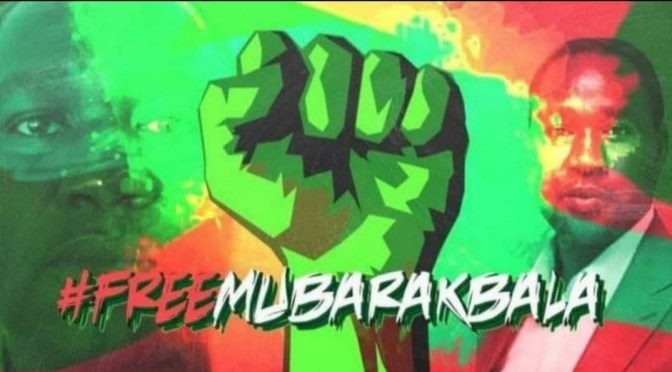


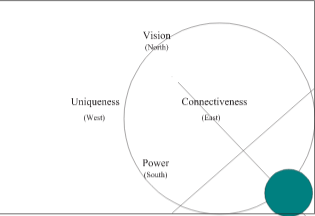





.jpg&f=1&nofb=1)

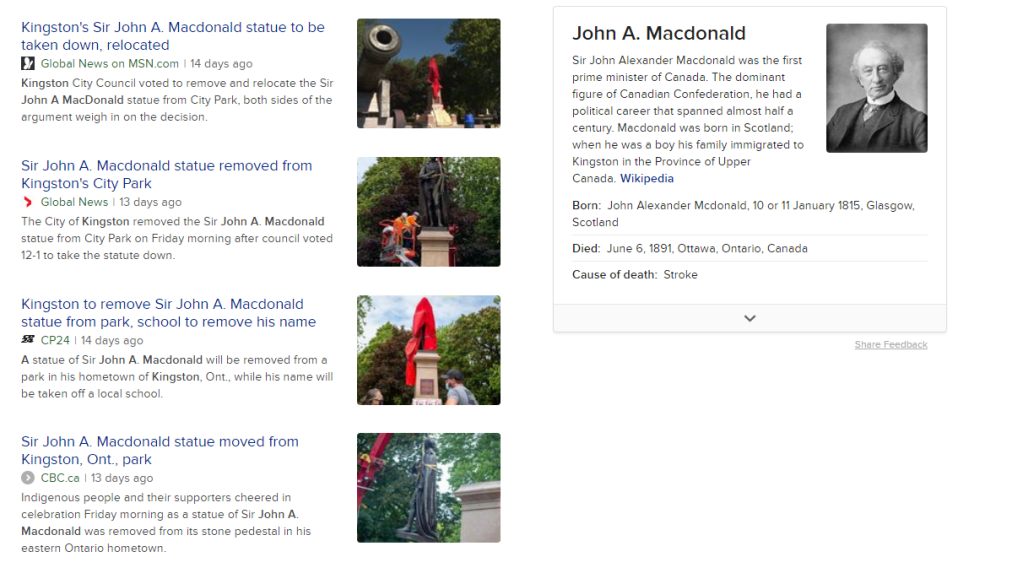


 Humanist Heritage Canada