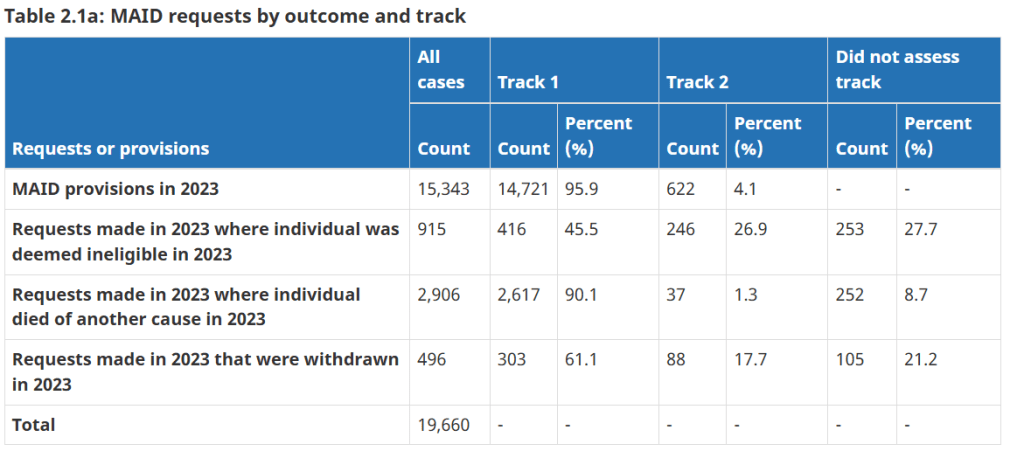
Health Canada released its fifth annual report on medical assistance in dying (MAiD) on December 11, 2024. The report “provides a summary of MAID requests, assessments and provisions for the 2023 calendar year.” To view a PDF version of he report, click the image of he cover below.
The December 2024 report is the first report to present data collected under the amended Regulations for the Monitoring of Medical Assistance in Dying, which came into force on January 1, 2023. The data includes new information on who requested MAiD, what health and other support services were offered and, where possible, how assessments were informed. Given that this was the first year collecting these additional variables, including self-identification measures such as race, Indigenous identity, and disability, there are some important data limitations to consider, including: an inability to present trends over time, some missing data, and limited quality and reliability of some measures. Nevertheless, the report provides important insight into who requested and received MAID, as well as how and where it was delivered.
TVO’s The Agenda hosted a discussion of the report early in 2025.
Humanists Should Analyze and Discuss this Issue
If you’re interested in analyzing and discussing this issue, there are actions you can take. First, here at Humanist Heritage Canada (Humanist Freedoms), we are open to receiving your well-written articles regarding MAiD.
A federal election is likely to be held in Canada in 2025. MAiD will likely be a significant “hot button” issue in the election as politicians seek out issues that will attract voters. Canadian humanists who value their rights and freedoms can help to ensure discussions of MAiD are based on fact rather than emotion and rhetoric. Is there a better place to start than within humanist publications and communities?
What do Canada’s Humanist Organizations have to say about this contemporary human rights matter?
BC Humanists: Medical assistance in dying should be available for any Canadian who freely chooses it, even if they are not terminally ill. There is no moral argument to limit access to a physician-assisted death to individuals with “a grievous and irremediable medical condition.” Safeguards should ensure that decisions are free, voluntary, and informed but should not make access unjustly difficult. Medical assistance in dying should be guaranteed through the publicly funded healthcare system and institutions that refuse should see their funding removed. Ian Bushfield, BC Humanists’ Executive Director told us that, “it’s reasonable to say we support the expansion of MAID to persons whose sole underlying condition is a mental illness.“
Continued or increased restrictions to accessing MAID do not serve to protect the disabled but rather perpetuate a paternalistic relationship between the government and those individuals. To ensure the equal dignity of all people, we must afford everyone choice in life and choice in death.
By continuing to access, link to, or use this website and/or podcast, you accept the HumanistFreedoms.com and HumanistHeritageCanada.ca Terms of Service in full. If you disagree with the terms of service in whole or in part, you must not use the website, podcast or other material.
The views, opinions and analyses expressed in the articles on Humanist Freedoms are those of the contributor(s) and do not necessarily reflect the views or opinions of the publishers.
The Ultimate Choice, a groundbreaking docuseries from TVO Today, with the Toronto Star and the Investigative Journalism Bureau was released on January 25, 2024. It follows the journey of Michael and his wife, Ann. Michael, housebound by pain and incurable disease, sees his choice for a medically assisted death (MAiD) as a powerful solution to his suffering. The series explores Michael’s motivations and how his decision affects his family, friends, and longtime doctor. Hosted by investigative reporter Rob Cribb, the podcast also challenges him to come to terms with his own family history as he dives into this highly charged story. Both a portrait of a family’s autonomy and a hard-hitting exposé, The Ultimate Choice reveals the political and ethical stakes behind Canada’s debate to expand MAID like never before.
What do Canada’s Humanist Organizations have to say about this contemporary human rights matter?
BC Humanists: Medical assistance in dying should be available for any Canadian who freely chooses it, even if they are not terminally ill. There is no moral argument to limit access to a physician-assisted death to individuals with “a grievous and irremediable medical condition.” Safeguards should ensure that decisions are free, voluntary, and informed but should not make access unjustly difficult. Medical assistance in dying should be guaranteed through the publicly funded healthcare system and institutions that refuse should see their funding removed. Ian Bushfield, BC Humanists’ Executive Director told us that, “it’s reasonable to say we support the expansion of MAID to persons whose sole underlying condition is a mental illness.“
Continued or increased restrictions to accessing MAID do not serve to protect the disabled but rather perpetuate a paternalistic relationship between the government and those individuals. To ensure the equal dignity of all people, we must afford everyone choice in life and choice in death.
By continuing to access, link to, or use this website and/or podcast, you accept the HumanistFreedoms.com and HumanistHeritageCanada.ca Terms of Service in full. If you disagree with the terms of service in whole or in part, you must not use the website, podcast or other material.
The views, opinions and analyses expressed in the articles on Humanist Freedoms are those of the contributor(s) and do not necessarily reflect the views or opinions of the publishers.
According to their website, The Harvard Chaplains “are a professional community of more than thirty chaplains, representing many of the world’s religious, spiritual, and ethical traditions, who share a collective commitment to serving the spiritual needs of the students, faculty, and staff of Harvard University. “
In August of 2021, it was reported that this organization elected a Humanist as their ‘Chief Chaplain’. As one may expect, such a generated media attention and is seen by some as a kind of controversy.
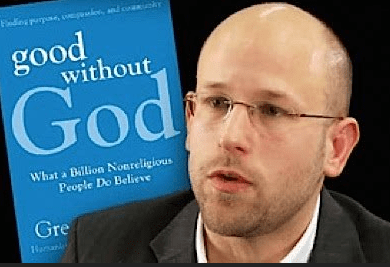
Greg Epstein, the subject of that controversy is one of the organization’s chaplains. Again, according to the organization’s website: Greg M. Epstein serves as the Humanist Chaplain at Harvard University, as well as the president of the Harvard Chaplains, Harvard University’s corps of over forty chaplains from more than 20 different religious, spiritual, and ethical traditions. Greg also serves the Massachusetts Institute of Technology (MIT) as humanist chaplain and as Convener for Ethical Life at the MIT Office of Religious, Spiritual, and Ethical Life. For nearly two decades, he has built a unique career as one of the world’s most prominent humanist chaplains — professionally trained members of the clergy who support the ethical and communal lives of nonreligious people.
Described as a “godfather to the [humanist] movement” by The New York Times Magazine, Epstein was also named “one of the top faith and moral leaders in the United States” by Faithful Internet, a project coordinated by the United Church of Christ with assistance from the Stanford Law School Center for Internet and Society, for his efforts to bring together atheists, agnostics, and allies, as part of an ancient and ever-evolving ethical tradition that can be called humanism. As Greg believes deeply: in a changing world where faith in humankind has become more difficult to maintain, it is more important than ever to fight for our common humanity, and for each other.
As an author, Greg’s New York Times bestselling book, “Good Without God: What a Billion Nonreligious People Do Believe,” continues to be influential years after its initial publication helped popularize the notion that the rapidly growing population of secular people can live lives of deep purpose, compassion, and connection. More recently,Greg’s 2018 move to join MIT, in addition to his work at Harvard, inspired an 18-month residency at the leading Silicon Valley publication TechCrunch, in which he published nearly 40 in-depth pieces exploring the ethics of technologies and companies that are shifting our definition of what it means to be human, often in troubling ways. Greg is currently writing a book on technology, religion, and humanism, based in part on this initial research. His writing on topics such as humanism, ethics, technology, and politics, has also appeared in The Boston Globe, CNN.com, The Washington Post, Newsweek, Salon, Critical Inquiry, and The Humanist.
In 2005, Greg received ordination as a Humanist Rabbi from the International Institute for Secular Humanistic Judaism. He holds a B.A. (Religion and Chinese) and an M.A. (Judaic Studies) from the University of Michigan, Ann Arbor, and a Masters of Theological Studies from the Harvard Divinity School, and he completed a year-long graduate fellowship at the Hebrew University of Jerusalem.
That Epstein’s appointment is a controversy is not really any great surprise. Whenever religion and organization politics (regardless of that organization’s nature) combine, controversy seems to be an automatic outcome. The real question here, is whether the controversy is about the right questions(s). In 2021, there are still a great many people who seem to feel it is perfectly acceptable to deride a person’s election to some form of public office based on whether they personally believe in a God.
The Harvard Chaplains unanimously elected Epstein. To those who are interested to object and cause snide, disrespectful and deriding headlines and commentary, is seems reasonable to ask two questions.
The first question is, “Since he was unanimously elected by his peaers, What’s the problem?” That question can easily be turned-into a two-or- even-three-parter, with a variety of follow-ups. But let’s leave that one as it is.
The second, and the more considerable question is, “Why do you think it’s OK to discriminate against someone who is merely living the best life that they can within their freedom not to believe what you happen to?”
It certainly seems that a world which continues to move toward allowing religious freedom and the freedom of belief must still be encouraged to recognize that these freedoms include, most fundamentally, the freedom not to believe. There’s the real controversy.
The views, opinions and analyses expressed in the articles on Humanist Freedoms are those of the contributor(s) and do not necessarily reflect the views or opinions of the publishers.
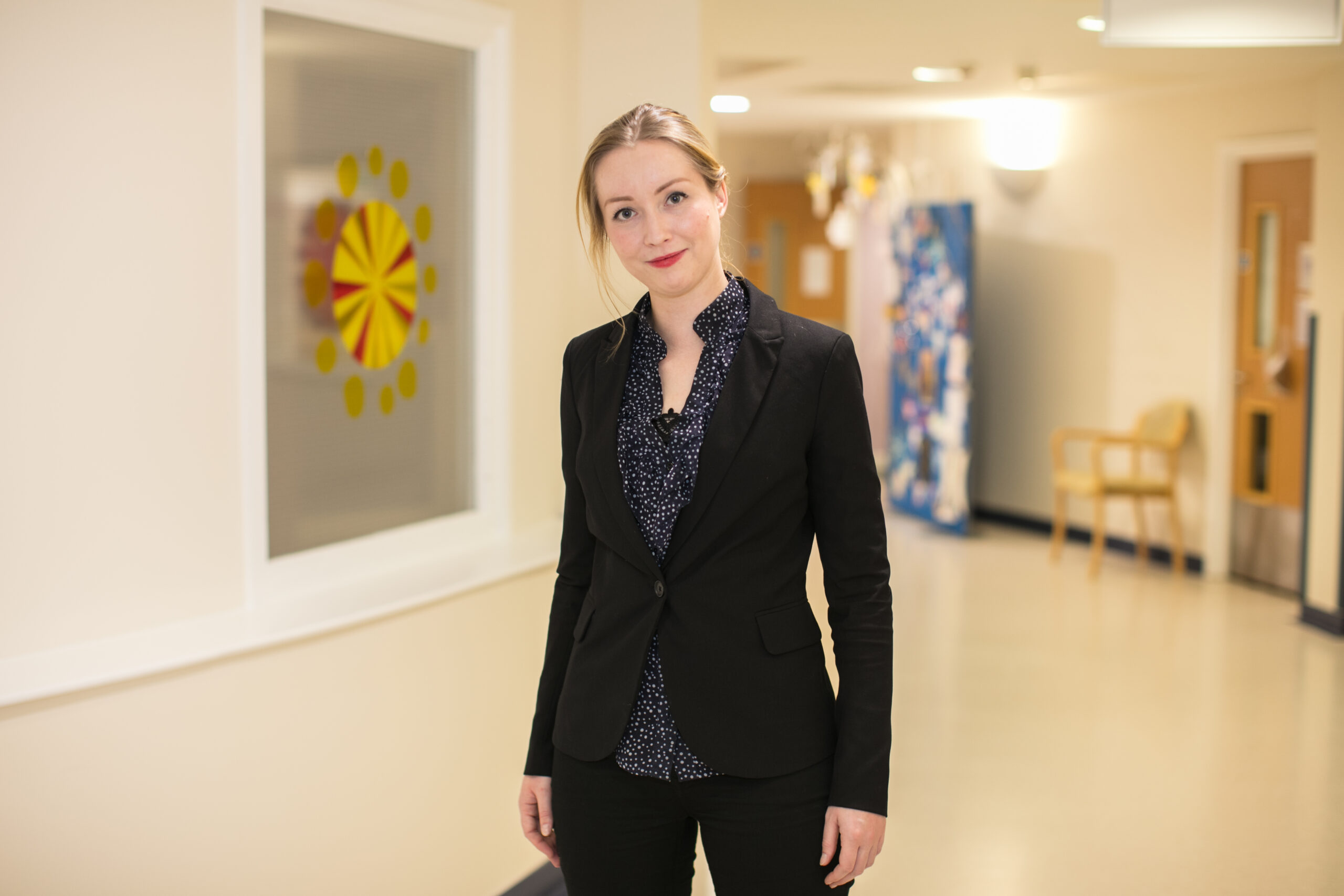
Lindsay van Dijk has been appointed to head up the chaplaincy and pastoral care team at Sheffield Teaching Hospitals NHS Foundation Trust, which provides person-centred pastoral and spiritual care. As a head of service role, this is the most senior role a humanist pastoral carer has ever held in the NHS. She is also the youngest person to have held such a position. Humanists UK has congratulated Ms van Dijk. It hopes her appointment will encourage other trusts to embrace more inclusive and diverse pastoral care teams.
Research shows that only 4% of hospital visits by religious chaplains are to non-religious patients. This suggests that non-religious people’s pastoral needs are not met when an NHS trust only has religious chaplains. People in need of support should be able to choose to speak to someone who shares their worldview. Until recently, only religious chaplains provided this kind of service. But recently some NHS trusts have started to introduce non-religious pastoral carers.
Previously, Ms Van Dijk was Lead Chaplain at Buckinghamshire Healthcare NHS Trust. She is also the chair of the Non-Religious Pastoral Support Network (NRPSN), which is part of Humanists UK. She holds a BA and MA in humanist pastoral care from the University of Humanistic Studies in the Netherlands. She is currently studying for a PhD in humanist pastoral care. She worked at the Humanist Community at Harvard as a humanist pastoral carer. She held posts in a hospice and nursing home for elderly patients with advanced Alzheimer’s disease. She has also worked as a humanist pastoral carer at a UK secondary school. She is a member of the British Association for Counselling & Psychotherapy (BACP) and accredited by the UK Board of Healthcare Chaplaincy (UKBHC).
Welcoming the appointment, Humanists UK’s Head of Humanist Care Clare Elcombe Webber commented,
‘I am delighted that Lindsay has been appointed to such a senior role within an NHS Trust. A few years ago, such opportunities were not open to humanists. Non-religious people were not able to get the like-minded support that they needed. It is a mark of how far we have come that a humanist is a Head of Chaplaincy and Pastoral Care. We hope this appointment will be a catalyst not only for other trusts to embrace inclusion and diversity, but other public institutions such as the prison service and armed forces to do the same.’
On her appointment, Lindsay van Dijk commented,
‘It is a great honour to be appointed to this position. The heart of my role is to ensure that patients get the person-centred care that they need and is right for them.’
NHS England is currently reviewing its Chaplaincy Guidelines, which set out best practice across pastoral, spiritual, and religious care. Humanists UK is currently working with other religion and belief groups to make sure that the new guidelines address issues of equality and inclusion as standard practice. This includes the need for non-religious pastoral care.
Notes:
For further comment or information, please contact Humanists UK Director of Public Affairs and Policy Richy Thompson at press@humanists.uk or phone 020 7324 3072 or 07534 248 596.
Humanists UK is the national charity working on behalf of non-religious people. Powered by 100,000 members and supporters, we advance free thinking and promote humanism to create a tolerant society where rational thinking and kindness prevail. We provide ceremonies, pastoral care, education, and support services benefitting over a million people every year and our campaigns advance humanist thinking on ethical issues, human rights, and equal treatment for all.
In 2021, Humanists UK is celebrating its 125th anniversary with a renewed focus on its history. The new website Humanist Heritage is a rich new web resource that uncovers the untold story of humanism in the UK – a story of people, groups, objects, places, movements, publications, and ideas.
The views, opinions and analyses expressed in the articles on Humanist Freedoms are those of the contributor(s) and do not necessarily reflect the views or opinions of the publishers.




 Humanist Heritage Canada