Tag Archives: humanists international

Does Humanism Inform Your Foreign Policy Opinions? Case Study: Palestine

Recently, the folks at the New Enlightenment Project shared a discussion paper (see below) regarding Palestine with us with a request that we post the paper and encourage visitors to our site to participate in a conversation about humanism-informed positions on the ongoing conflict in Israel/Palestine.

The folks at NEP told us that, the document “is an NEP discussion paper and we would like to receive input from humanists. We could develop a position paper from this discussion but this is not guaranteed. More generally, our goal is  to establish the historical record on which humanists can base their own opinions.

While discussion of contentious and difficult topics is an important and valuable activity on its own, it leads us to an inevitable set of questions about the value of humanism and humanist-based values in coming to opinions about domestic and foreign policy. It’s all well and good to have an opinion…but what are you going to do about it?

NEP let us know that, “the recommendations in their current state are meant to stimulate discussion as to a humanist view for ending the conflict. At least two respondents have suggested the humanist (or the approach used by humanists) is naïve. Although {we} would rather be naïve than cynical, all such concerns should be considered. We have no timelines. Our general recommendation for Canadians is to become familiar with the issues and history behind any controversial topic before taking a position. One way of doing this is to be able to articulate, in a positive way, the position of the “other” – those on each side of the debate.”

Discussion Paper on Palestine 

Abstract

Although enmity between Arab and Jew did not begin with the United Nations 1947 proposal for the partition of Palestine, the history of the region since has been one of intermittent warfare followed by periods of uneasy peace. The Jews, who established the state of Israel in their designated part of Palestine, have won each subsequent war, thereby largely dictating peace terms. The non-Israeli Arabs have generally broken each ceasefire when they believed it is in their interests to do so. Calls for a ceasefire during hostilities seem destined to continue this cycle with a concomitant increase in hate between each side. This paper conducts a historical scan to provide insight into the motivations of each side. We also examine the role of religion. We suggest that a humanist solution would give effect to a secular one-state solution based on Enlightenment values, but we recognize that this is not possible until the cycle of violence and mutual hatred is broken

On October 7, 2023 Gazan terrorists led by Hamas (an acronym for “Islamic Resistance Movement”) invaded Israel, brutally murdering over 1,200 people. They did not only kill. They mutilated, tortured, beheaded, raped, and set fire to their victims who included infants, children, men, women and the elderly. Moreover, many of the terrorists bragged about their exploits to their parents on the telephone, and they took selfies of themselves committing these acts posting them on the internet. They then retreated with 250 hostages and several mutilated corpses, which they paraded in front of Gazan civilians. 

On October 8, 2024 the Shiite Islamic group Hezbollah (Arabic for “Party of God”) began firing missiles on Israel from their base in Lebanon, vowing to maintain their attack until Israel agreed to a ceasefire with Hamas. Israel started ground operations in Gaza on October 13, 2023 and continued with a full scale invasion on October 27. Two Israeli-American women were released by Hamas on October 20. Twenty-four women were released on November 25, 2023 in exchange for 39 prisoners in Israeli jails.  By August 28, 2024, 117 hostages had been released or freed by Israeli forces. In addition, 37 bodies of hostages had been repatriated including three who were killed by friendly fire. On October 1, 2024 Israel invaded Lebanon forcing Hezbollah to agree to a separate peace.

In the initial phase of a new ceasefire to February 1, 2025, 10 Israelis held as hostages were released in exchange for 400 Arab Palestinian prisoners. At the time of this writing, the Hamas controlled Gazan Health Authority estimated that 47,000 Gazans, including both terrorists and civilians, have been killed by the Israelis. In the course of this conflict, Israel has also been attacked from Yemen, Syria, Iraq, and Iran. 

The ongoing conflict between Israelis and Arab Palestinians has resulted in demonstrations and counter-demonstrations in Canada, calling on various levels of governments to take action. At its November 2024 meeting, the NEP board mandated the creation of a paper to promote enlightened discussion of the Palestine question. Other humanist organizations had already taken positions on this matter. For example, in 2024 Humanist Ottawa took a position that:

  1. Advocates a total ceasefire between Israel and Hamas, emphasizing that wars inevitably end with political agreements and that the time for one is long overdue.
  1. Condemns the severe humanitarian disaster in Gaza, involving significant civilian casualties, the displacement of millions of Palestinians, and loss of life on both sides.
  1. Stresses the use of understanding, dialogue, and empathy in discussions about the conflict, thus avoiding dehumanizing rhetoric.
  1. Advocates that the Canadian government actively work toward ending the violence, ensuring compliance with international humanitarian law, and striving for sustainable peace.
  1. Expresses hope for a world where all people can coexist without fear of violence or oppression, regardless of their ethnicities or cultures.

This position, similar to positions taken by Humanist UK and Humanists International, is a call for peace. It expresses hope for a world where all people can coexist but we need a greater analysis to understand why this has not yet happened. This paper seeks to increase understanding and respectful dialogue in keeping with the third point of the Humanist Ottawa position.

The New Enlightenment Project seeks a world where reason, science, and compassion guide the pursuit of knowledge, the practice of governance, and the pursuit of personal goals. It is our experience that this vision can be best implemented in a liberal, secular state, one that avoids even the appearance of favouring any particular religion while allowing all to practice their religious traditions both personally and communally independent of the state. In this kind of state, Jews and Muslims would be free to practice their religions, or not, while being equal citizens subject to laws, policies and programs applicable to everyone. 

The Role of Context and the Construction of Narratives of Palestine

The Palestine Liberation Organization, Hamas and many Western academics begin their examination of the historical context of this conflict with the Balfour Declaration of 1917. That declaration, communicated to the Zionist Federation of Great Britain and Ireland, declared British support for “a national home for the Jewish people.” Beginning the historical context with this declaration invites a narrative of colonialism: The Jews were colonizers, presumably placed in Palestine to further the interests of the British Empire. With this narrative, the local Arabs are framed as indigenous victims of Western imperialism.

But if we were to begin our historical narrative only eight years earlier, with the establishment of Tel Aviv on a sandy and largely deserted Mediterranean beach, the narrative necessarily changes. This area was then ruled by the Ottoman Empire, and not as “Palestine” (which did not exist administratively) but as part of Syria. The empire was an Islamic one, of course, but it allowed local Jewish and Christian communities to survive if they adhered to occupational restrictions and paid a head tax. Although Tel Aviv was established with the help of local Jews, it was a Zionist project before the British arrived. The narrative that flows from this beginning indicates that Zionism was a Jewish nationalist movement that encouraged Jews to return to their ancient homeland. 

The Ottomans defeated the Mameluk Egyptians in 1517. Were we to start our historical narrative then, we would note that both the Ottomans and the Mameluks administered the region as part of Syria with neither recognizing a Palestinian people. Prior to the Egyptian conquest, the Kingdom of Jerusalem, established by the Crusades, ruled much of the area from 1099 to 1291. While the population was mainly Christian, it included large Muslim (Arab) and Jewish minorities. The Arab Muslims had arrived centuries earlier with the conquering armies of the first (Rashidun) caliphate in 637. These Arabs and their descendents could therefore be described as “settlers” or “colonizers,” but they lived in what was known not as Palestine but as part of Syria. Before the conquering Arab armies, the Byzantine (Eastern Roman) Empire ruled the area except for a brief period under the Sassanian (Persian) Empire. The Jews, who were the demographic majority at that time, had negotiated “home rule” with both empires in return for military support. Once victorious, each empire reneged on its promise. Under Byzantine rule, this area was called Syria Palaestina. 

Earlier, in 135, the (still united) Roman Empire had called it “Palestine” after a series of Jewish revolts and consequent expulsion of Jews from the city of Jerusalem.  In 63 BC, immediately before the Romans arrived, this area was a Jewish state of the Hasmonean dynasty. Before that, it had been ruled by the (Seleucid) Greeks, the (Achaemenid) Persians and the Babylonians, but the inhabitants were Jews. 

The Israelite tribes settled in this region by the twelfth century BCE and established a kingdom in the tenth century BCE that soon became two kingdoms: Israel and Judah. If we started our history at this point, we would consider Jews to be the aboriginal people of Palestine. This is the position of many Jews who have created settlements in the West Bank and who call the area by the ancient names “Judea” and “Samaria.” Of course, the Jews displaced the ancient Canaanites except for Gaza which was conquered first by an Aegean people, the Philistines, and then by the Egyptians who ruled the city for 350 years. Arab Palestinians sometimes base their claim for aboriginal title to the presence of Canaanite DNA, but such DNA is found in all Middle Eastern peoples including the Jews but with the highest ratios found in the modern Lebanese.

We do not think there is much to be gained in “returning” Gaza to Lebanon and, as humanists, we do not believe that aboriginality necessarily offers on anyone the right to a state. Being the first humans to enter an area does not grant title in perpetuity; indeed, the formal system of land title is a relatively recent European invention. Prior to the invention of titles, land was commonly owned by a ruler who would recognize land use, often but not always, on the basis of customary land tenure. We sometimes think that tribal societies have communal or joint ownership but that is not entirely accurate. In such societies the concept of land ownership did not exist and occupancy was based on the ability to defend it. Populations shifted over time for a variety of reasons including war and migration. Since aboriginality does not imply ownership or a corresponding “right of return” we must reject any settler claim made on that basis.

This historical scan demonstrates that there were no Palestinian people recognized as such before the twentieth century. The Romans gave the name to one of their provinces in the first century, and the British appropriated that name to describe a part of the Ottoman Empire that they administered after World War I. Events in this “Palestine Mandate” shaped the current conflict. 

Anti-Semitism and the Recent History of Palestine

In 1918, one year after the Balfour Declaration, a group of Arab leaders from Mandatory Palestine petitioned the French Commisariat in Jerusalem to include Palestine as part of Syria for historical and cultural reasons. In the ten-year period following the Balfour Declaration, only 40,000 Jews arrived in Palestine, and 1.5 million Jews migrated to the Americas, which indicates a comparative lack of enthusiasm for the Zionist project on the part of world Jewry. This Zionism can be traced to the worldview provided by the nineteenth century Jewish Enlightenment, or Haskalah.  This movement called for Jewish integration in Europe and Jewish adoption of European secular knowledge and values while retaining Judaism.  Under the tutelage of philosophers such as Elijah Benamozegh (1823-1900) and Leopold Zunz (1794-1886), Jewish education was modernized with secular studies promoted alongside traditional Talmudic learning. Jews were encouraged to adopt the languages, dress, and customs of their surrounding societies. Scientists with Jewish ancestry became recognized as global citizens. In the nineteenth century, Paul Ehrlich won a Nobel Prize in medicine, Gabriel Lippmann in physics and Adolf von Baeyer in chemistry. Sigmund Freud and Alfred Adler were (with Carl Jung) part of the triumvirate that founded modern psychology. Some, including Freud, became atheists. Others, including Adler, converted to Christianity. Others created religious reform movements within Judaism. Many turned to socialist, communist, union or social-activist movements. Karl Marx co-authored the Communist Manifesto. Ferdinand Lassalle founded the German Workers’ Association, Victor Adler founded the Democratic Socialist Party of Austria, and Paul Singer led the Social Democratic Party of Germany. Unlike Zionism, the Haskalah sought collective security by eliminating racial and ethnic identitarianism, and by emphasizing economic security, human rights and social justice. Pogroms continued, however, particularly in Eastern Europe, but with education, modernization and humanism, they thought, surely a better world would emerge. That hope was premature.

In 1920, three Jewish villages, Tel Hai, Kfar Giladi, and Metula, were destroyed by Arab terrorists in Palestine. Since there had not been, as yet, a significant influx of repatriated Jews, the terrorists could have been responding to the changed status of Jews under British rule. Under Ottoman rule, Jews (and Christians) had been required to show submission to the Islamic authority, but now, they were considered equal. The Jewish Palestinians responded to this pogrom by raising militias of their own. Thirteen Jewish villages were destroyed by the Arabs from 1920 to 1936. Although there are no recorded instances of Arab villages destroyed during this period, Jewish paramilitary forces attacked Arabs during the 1920 Nebi Musa (Arab) riots and the 1936 Arab revolt.

Although the Haskalah favoured Jewish migration to the West, that window of opportunity was closing. In Britain, the Aliens Act of 1905 had already restricted the entry of Jews, particularly those from Eastern Europe. The United States Immigration Act of 1924 established strict quotas on immigration from Eastern Europe including Jewish refugees from pogroms. In 1939, Canada, Cuba and the United States infamously denied entry to the Jewish refugees aboard the MS St. Louis, which meant that 907 Jews were returned to Europe with most ending up back in Nazi Germany. The experience of Thessaloniki, Greece, offers a glimpse of the unfolding tragedy.

The city’s Jewish population dates back to biblical times, having been mentioned by the Apostle Paul in First Thessalonians. The city’s Jewish population swelled with Sephardic refugees from the Spanish Inquisition in the fifteenth century. In the late nineteenth century the city’s Jewish population expanded further with Ashkenazi survivors of some 200 pogroms in Eastern Europe. Given natural increase, there likely were 120,000 Jews in the city by 1930. About half of them emigrated by 1939, when the British reached an agreement with the Arabs to restrict Jewish immigration to Palestine. The Nazis recorded 56,000 Jews in Thessaloniki when they captured the city in 1941. Only a few hundred survived. 

Arabs ask why they should pay the price for Nazi atrocities by allowing the creation of a Jewish “refugee state.” The meeting between, Haj Amin al-Husseini. the Grand Mufti of Jerusalem. and Adolf Hitler in 1941, and his attempts to recruit Muslims for the Waffen SS can be seen as a continuation of the anti-Semitism that had already been historically present in Palestine. While Arabs have argued that the British allowed in too many Jewish refugees, a survivor from Thessaloniki would have argued that the British were harsh in allowing in so few. If the Arabs had formed the government, they might in theory have adopted a different refugee policy, but as this historical scan shows, the local Arab population did not form the government of this region and never had. Furthermore, it shows that Jews had lived there continuously for the past 3,000 years. Finally, Arabs assume that the Jewish refugees came from Europe, but the nine Arab countries created in the aftermath of World War II expelled nearly 600,000 Jews. Only a minority of Israel’s Jewish population are descended from Europe’s Ashkenazim.

In 1947, the United Nations proposed a partition plan that would establish two states in Palestine, one for Jews and another for Arabs, according to population density. Under this plan Jerusalem would be an international city with separate governance. The Jewish Palestinians accepted this partition and named their new state “Israel.” The Arab leaders did not accept this “two-state” solution and a civil war broke out between the paramilitary forces on both sides. The Israeli military plan was to disable the local Arab forces before the armies from the surrounding Arab states of Egypt, Transjordan, Syria, Lebanon, Saudi Arabia and Yemen arrived. By war’s end, about 700,000 of the Arabs in Israel had fled, forcibly displaced or encouraged by their leaders to leave with the promise of a right of return after an Arab victory. According to the  partitian plan , the area designated as the Arab state had a population of approximately 1,181,000 consisting of 630,000 Muslims, 143,000 Christians, and 408,000 Jews. Between the ethnic cleansing of Jews by the surrounding Arab states and those in Arab Palestine, the new state of Israel absorbed a million Jewish refugees. 

The new Israeli government was dominated by leftists and socialists of the Haskalah tradition. In many ways, they established a modern secular state with accommodations for religious orthodoxy. For example, while government offices are closed on the Sabbath, the “basic laws” under which Israeli courts and government operation include: 

  1. the right to life, personal liberty and property; 
  2. the right to engage in any profession or occupation; 
  3. equality before the law including a prohibition of discrimination on the basis of race, religion, nationality, or gender; and, 
  4. freedom of religion. 

The 150,000 Arab Palestinians who remained in Israel after 1948 were granted full citizenship and their language had official status, although they remained under military administration until 1966. Their descendants now number about 2.1 million, comprising about 20% of Israel’s population. They have their own political parties with representation in Israel’s parliament. They serve at all levels of governance including the country’s Supreme Court. They face discrimination, because not all Israelis believe that they can be trusted given their ethnic and religious connections with those Palestinians seeking to destroy the Israeli state. 

What does religion have to do with it?

“Good men will do good things and bad men will do bad things, but to make a good man do bad things it takes religion?”  – Steven Weinberg

Most humanists will recognize the moral depravity exhibited by those who participated in the October 7 massacre, but some excuse this behaviour as the natural or inevitable result of years under occupation. But the Hebron massacre of Jews almost 100 years earlier, before the creation of Israel, displayed similar dehumanizing hate:

It was a quiet Shabbat morning in Hebron (August 23, 1929) when a Muslim Arab mob 3,000 strong, armed with clubs and swords and knives, spent two hours going from house to house, massacring, raping and mutilating any Jews they found. They slaughtered 30 Rabbinical students as they rested in their quarters. They tied a baker’s head to a lit stove and cooked it. They cut a Rabbi’s brain out of his skull. They hung a Jewish woman by her feet, and cut breasts, noses and hands off bodies. (Quoted in Danielle Kubes; Hamas’s savagery would exist with or without Israel., Dec. 5, 2023.)

As we have noted, Israel’s War of Independence broke out in 1948. Despite winning that war, peace was marred by continuing conflict on a smaller scale: shootings, car-bombings, knifings, kidnappings and other acts of terror. The Sinai War broke out in 1956 after Egypt closed the Straits of Tiran blockading Israel’s only port on the Red Sea and closed the Suez Canal to international shipping. France and Britain joined Israel intent on reopening the canal. The war ended with an agreement to reopen the Straits and place the canal under international control. Egypt maintained control of the Sinai Peninsula and Gaza. 

The Six-Day War broke out in 1967, after Egypt once again closed the Straits of Tiran to Israeli shipping. Joining the Egyptian invasion of Israel were Jordan and Syria. After this war, Israel took control of the Sinai Peninsula and Gaza. The Arabs in Palestine began to call themselves “Palestinians.” 

The Yom Kippur War broke out in 1973 in a surprise attack on the Jewish Day of Atonement. In the peace treaty, not signed until 1979, Egypt recognized Israel as a state and regained the Sinai Peninsula. Egypt did not ask for the return of Gaza.  

The new Palestinians have engaged in two “Intifadas.” The first, beginning in 1987, featured rock throwing youth, strikes and civil disobedience. It ended in 1993 with the signing of the Oslo Accords that gave limited self-government to the Palestine Liberation Organization. At the subsequent Camp David Accords of 2000, the PLO was offered a Palestinian state that included 96% of the West Bank, the Gaza Strip and East Jerusalem as its capital. The PLO rejected this offer, because it did not include control of Temple Mount in Old Jerusalem and did not grant the Arabs a right of return to Israel proper. As a consequence of the failure to accept this “two state” solution, Israel maintained formal control of approximately 60% of the West Bank. It is within this area new Jewish settlements have been created. A second intifada began in 2000 and  included suicide bombings. It ended five years later with a ceasefire agreement to de-escalate hostilities. Israel withdrew from the Gaza Strip in 2005 closing all Jewish settlements in what was termed “trading land for peace.” 

Hamas claims that the events of October 7, 2023 were a consequence of Israeli occupation, even though Israel had not occupied Gaza for 18 years. The claim of occupation is often based on Israel’s continued control of its borders with Gaza and its blockade restricting the movement of goods and people. Israel maintains that these measures are a necessary response to terrorist attacks. Hamas was able to convince Israeli officials that they had adopted a more pragmatic non-terrorist approach prior to the 2023 atrocity, which is why the Israelis relaxed their guard even to the point of ignoring the concerns of lower ranking intelligence officers. 

A blockade is not an occupation, but we need to consider that the Islamists, represented by Hamas and Islamic Jihad, view the very existence of Israel to be “occupation.” They have insisted on one Palestinian state that stretches “from the [Jordan] river to the [Mediterranean] sea” with the implication that Jews are not Palestinians and have no right to live in this territory. The tenacity with which Palestinians insists on this “solution” in the face of repeated defeats indicates a religious fervor. For Hamas, Hezbollah and other jihadist movements, this is not a secular struggle. Its heroes are “martyrs” not “freedom fighters.” We must consider the possibility that the jihadists counted on Israel invading Gaza after the October 7 atrocity, which would create many civilian martyrs for their cause.

 The original 1988 charter of the Islamic Resistance Movement (Hamas) frames its struggle in the context of jihad stating, “Israel will exist and will continue to exist until Islam will obliterate it, just as it obliterated others before it,” It’s revised 2017 charter still identifies its members as Muslims and promises to obliterate the State of Israel but frames this struggle as “anti-Zionism.”. 

Because Zionism originated in order to establish a Jewish state, anti-Zionism is a denial of the Jewish state’s right to exist. Yet Israel has existed for 75 years. Although some humanists might disagree with the nationalism underpinning the creation of modern nation states — that people who identify with a particular language and culture and live in a common territory are a nation with the right to a state on that territory — we would not agree with involuntarily destroying the states so created or killing their citizens. Since the modern state of Israel has adopted many secular and liberal values, we suspect that the problem is not that the majority of the population are Zionist but that the majority are of Jewish ancestry. 

The persistence of the jihadists in attempting to murder Israelis irrespective of danger to themselves with cries of “Allahu Ahkbar” explicitly indicates a religious motivation. The mutilation that often accompanies jihad can be legitimated by Qur’an 8:12: “I will cast terror into the hearts of those who disbelieve. Therefore strike off their heads and strike off every fingertip of them” and Qur’an 9:5 “And when the forbidden months have passed, kill the idolaters wherever you find them and take them prisoners, and beleaguer them, and lie in wait for them at every place of ambush.” According to a hadith attributed to the Prophet Mohammad in both Sahih al-Bukhari and Sahih Muslim, two of the most respected collections of hadith in Islam, the Day of Judgment will not come until the Muslims fight the Jews and the rocks and trees will call out saying, “O Muslim, O servant of Allah, there is a Jew behind me, come and kill him.”

Maybe the modern jihadists are trying to emulate the Prophet Mohammed’s seventh-century conquest of Medina (then known as Yathrib). Thirty to forty percent of its population had consisted of three Jewish tribes. After a series of battles, Mohammad showed mercy allowing two tribes to immigrate to the Daraa region of Syria (which borders what is now the Golan Heights). The third tribe was destroyed with all males who had reached puberty executed and the women and children taken into slavery. 

In defending the notion of Islam as a religion of peace, some theologians can argue that the passages referenced need to be understood in the context of violent times in which they were written.  Another interpretation grounded in medieval Sufism, is that the concept of jihad has two meanings: an outward (military) struggle and an inner (spiritual) one and that the more peaceful interpretation applies to modernity. Although humanists certainly hope that this modern interpretation will prevail, the jihadists of today appear to be externalizing their struggle. Jihad meant conquest of the infidels in the seventh century, and to them it still does. The leaders of Hamas and Islamic Jihad declare dead terrorists to be “martyrs” who will be given a special place in Heaven.

There are also Israelis who hate. On December 18, 2023, Israeli police charged Noam Dayan with incitement to violence. He had written on social media, “Personally, I would relish blowing up Arab babies’ skulls,” “Palestinian girls should be raped,” and “Death camps should be made for Palestinians.” Since October 7, 2023 Israeli police have charged 34 people with this crime. A web search using ChatGPT did not uncover any data on similar charges against Arabs in Palestinian courts. 

A Humanist Way Forward

It is possible to develop a humanist dialectical theory of history. We are both individual and social beings. The Enlightenment increased the freedom of the individual to ascertain what is true through rational and scientific means, thereby displacing previous mechanisms, such as organized religion, that enforced a form of collectivism. The resultant increased emphasis on individualism led to the rise of capitalism and the Industrial Revolution. Humanist compassion, supported by Western religious traditions, placed limits on unfettered capitalism, and this led to universal education, medicare and the welfare state. But this has not happened in many parts of the world. 

Karl Marx proposed a post-capitalist socialist collectivism wherein the Enlightenment individual would meld into a cooperative commonwealth while retaining personal rights and freedoms. That, of course, did not happen. The Soviet Union was built on a pre-capitalist feudal society that inherited its view of humanity from the Mongols, and this eventually resulted in Stalin. Similarly, the early leaders of the Palestine Liberation Organization along with other Arab liberation movements, such as the Baath parties of Syria and Iran, were educated in Western socialism, but their movements emerged in societies that had experienced neither the Enlightenment nor industrial capitalism. Individual life was of value only insofar as it serves the collectivity. For example, Hamas built hundreds of miles of tunnels for terrorists and their armaments but forced civilians to remain above ground. Similarly, Hamas stores weapons in, under or near schools, mosques and hospitals, thus placing civilians in direct danger during enemy attacks.

In an ideal world, humanists would favour a single state that includes both Jews and Palestinians with a secular government that promotes rational discourse, freedom of thought and speech, scientific discovery and universal compassion. But that kind of state is not possible apart from a society that actually values those principles. Israel is the only functioning democracy with (somewhat) liberal values in the Middle East today. Given that fact, we would recommend an intermediate stage of development that includes:

  1. Recognition of Israel’s right to exist and to defend itself; 
  2. Interim self-government for Palestinians in Gaza and the West Bank with the understanding that they must not harbor terrorists or their supporters;
  3. A universal education system which teaches the values of equality, human rights and peace along with basic literacy, and the replacement of textbooks that demonize Jews or Arabs;
  4. Mixed classrooms of Arabs, Jews and other ethnic and religious groups where possible;
  5. The development of cross-cultural exchanges for all students;
  6. Universal hate speech laws that criminalize incitement to murder while promoting freedom of speech.
  7. The return of West Bank settlements deemed illegal by the United Nations to the new secular government in the West Bank 

Humanists would view any “two-state” solution with respect to Palestine as interim. We hold that Jews and Arabs should ultimately live cooperatively in a secular state as equals. The problems in reaching that ideal were illustrated by the suspension given an Israeli teacher shortly before the October 7 massacre. Sabrine Masarwa’s participation in a Nakba Day march was noted by some parents and students in her community, who demanded her dismissal. Her community of Tayibe is predominately descended from those Arabs who never left Israel and were granted Israeli citizenship. The Israeli Ministry of Education maintained that her conduct violated professional ethics. Masarwa said that her identity as a Palestinian and her participation in the march were important to her. The ministry admitted that there was no evidence that she had incited violence or used her position to indoctrinate her students.

In an ideal society, teachers and other citizens are allowed, in fact are encouraged, to give expression to unpopular ideas without undue censorship. Perhaps Masarwa would have been allowed to express her viewpoint on her own time, had her school used an approach based on ethical guidelines for teaching controversial matters.

Teaching about the Nakba and the parallel ethnic cleansing of Jews from Arab territories involves navigating a complex and sensitive historical narrative beginning with historical accuracy and balance. Such an approach might begin with a historical timeline that includes the Zionist movement’s aspirations, Jewish anti-Zionist perspectives, and various, sometimes competing, Palestinian narratives. Events can be understood from various perspectives without the suggestion that a perspective is necessarily tied to an ethnicity. An ethical approach to controversial topics avoids simplification while drawing liberally on primary sources. The teacher acts as a facilitator of discussion rather than an advocate for one side. Students are encouraged to analyze sources for bias, understand propaganda from the period, and evaluate the reliability of information. Teachers foster an environment where students can express their views while being respectful of others. The curriculum would include comparative history, legal and humanitarian aspects. Educators using this method should be transparent about their own biases or cultural background, encouraging students to recognize and critique bias in themselves and others. By using this multi-faceted approach, educators can ethically teach these complex historical events, helping students to understand the multifaceted nature of history, the impact of collective memory, and the importance of empathy and critical inquiry. In the process, students would be learning the skills they need to live side by side with “the other.” This dream may only be possible in a remote future, and it begins with education. But first, terrorism must be eliminated.

Up For Discussion

If you’re interested in analyzing and discussing this issue, there are actions you can take. First, here at Humanist Heritage Canada (Humanist Freedoms), we are open to receiving your well-written articles regarding artificial intelligence.

Second, we encourage you to visit the New Enlightenment Project’s (NEP) Facebook page and discussion group.

Citations, References And Other Reading

  1. Featured Photo Courtesy of: NEP

The views, opinions and analyses expressed in the articles on Humanist Freedoms are those of the contributor(s) and do not necessarily reflect the views or opinions of the publishers.
Humanist International’s 2024 Freedom of Thought Report

At an event hosted by the American Humanist Association, Humanists International launched the 2024 Key Countries Edition of the Freedom of Thought Report. Introducing the event, Executive Director of the American Humanist Association, Fish Stark, stated:

“For much of human history despots and tyrants have used belief as a weapon to consolidate power and compel conformity, to narrow minds and silence critics, to rob people of the dignity and empowerment of choosing for themselves the sources from which they draw their meaning and their inspiration. […] Attacks on freedom of thought are attacks on universal human rights, attacks on civil liberties, and attacks on the human spirit. It’s our job not to just to be aware of them, not just to investigate them, but to protect our fellow humans from them.”

The 2024 report is the 13th annual report. Humanist Heritage Canada has kept an eye on the HI’s Freedom of Thought report for much of that period, with posts about our observations in 2020 and 2022:

2025’s Key Countries Edition features 10 country entries – including Afghanistan, Italy, Nigeria and Qatar, among others – as well as a powerful piece by Indian filmmaker and poet Leena Manimekalai that gives us insights into her personal battle against ‘blasphemy’ allegations.

Senior Policy Director at Hindus for Human Rights, Ria Chakrabarty, shared the organization’s work to promote democracy, pluralism, and human rights, and challenge caste and supremacy. Reflecting on the impact of Hindu nationalism in India today and the case of Leena Manimekalai, Ria stated:

“If you know anything about the way fundamentalist Hinduism works in India today, everything about Kali is antithetical to the way that they present Hinduism, which is vegetarian, puritanical, misogynistic. It has no place for me and hundreds of millions of Hindus who worship Kali. And that India also has no place for people like Leena who tap into a millennia-old tradition to reimagine Gods and Goddesses in a land where faith and belief are often moulded to people’s unique identities. […]

“Faith as it is practised should be multiple and syncretic. The weaponization of blasphemy (as seen in Leena’s case) seeks to take away all of the pluralism surrounding a faith tradition. […]

“Blasphemy laws are used to identify who is insufficiently religious, religious in the wrong way or not religious at all. And the rights of those that fall into this brackets are curtailed for the sake of purity and oppression.

“Blasphemy laws aren’t just about curtailing the freedom to worship as you see fit, or not worship at all, but are also about curtailing people’s broader freedom of expression. [….] This is one of the many tools used to attack people’s democratic rights.”

Nigerian humanist, Mubarak Bala, shared his reflections on their origins and impact of ‘blasphemy’ laws in Nigeria, sharing details of his case, and the challenges he has faced after coming out as non-religious some 15 years ago.

Speaking at the launch of the report, USCIRF Commissioner Mohamed Elsanousi, stated:

“Unfortunately, governments around the world continue to persecute people because of their religious beliefs or lack thereof. In recent years, USCIRF has been particularly troubled by the passage and enforcement of blasphemy laws, including a 2023 law in Denmark criminalizing ‘inappropriate treatment of a religious text’. Legal penalties around the world include fines, imprisonment as well as the death penalty on some occasions. Blasphemy laws affect people of all religious beliefs. However, members of atheist communities in many countries, especially vulnerable communities including women and LGBTQ+ communities, are at elevated risk given their fundamental disagreement with government-endorsed religious interpretations. […] For humanists, atheists and secular people in oppressive societies these [blasphemy] laws represent a severe restriction on their religious freedom.”

Introducing the Report, Humanists International’s Casework & Campaigns Manager, Emma Wadsworth-Jones, reminded guests that:

“We know from our work supporting humanists at risk across the globe that the fear of being accused of being ‘blasphemous’ or an ‘apostate’ – and the perils that are associated with it, be it ostracism, challenges securing employment, violence or legal prosecution – is one of the primary drivers of self-censorship among our community. For the non-religious, simply saying ‘I don’t believe in God’ can be taken as evidence of ‘blasphemy’. Their very belief system is ‘blasphemous’.”

Being concerned with humanism in Canada, we note that the Canadian entry in the FOTR was last updated in 2023.

Citations, References And Other Reading

  1. Featured Photo Courtesy of https://humanists.international/
  2. https://humanists.international/2025/02/american-humanist-association-hosts-international-launch-of-the-freedom-of-thought-report-2024/
  3. https://humanists.international/2020/06/growing-evidence-of-worsening-persecution-targeting-the-non-religious-around-the-world-new-report-reveals/
  4. https://humanistfreedoms.com/2020/12/18/humanist-internationals-2020-freedom-of-thought-report/
  5. https://www.msn.com/en-us/news/world/us-leaders-gather-to-discuss-rights-of-nonreligious-people-across-the-world/ar-AA156MlE

The views, opinions and analyses expressed in the articles on Humanist Freedoms are those of the contributor(s) and do not necessarily reflect the views or opinions of the publishers.

Humanist International’s 2022 Freedom of Thought Report

On December 8, 2022 Humanists International launched the 2022 Freedom of Thought Report. In the report, HI concludes that only 4% of the global population live in societies that are truly secular, where there is a clear separation of religious and political authorities, that do not discriminate against any religion or belief community.

“This year’s Report provides evidence of clear and systematic discrimination against humanists and non-religious people, and this discrimination is most prevalent in countries with less state secularism. State secularism appears to be a prerequisite for the full enjoyment of the right to freedom of religion or belief.”

Andrew Copson, President of Humanists International

According to the organization’s research, 70% of the world’s population live in countries where the expression of humanist values is severely repressed; where the full realization of one’s right to freedom of religion or belief is impossible. The result: harsh penalties for apostasy; a higher likelihood of the perpetuation of harmful traditional practices; religious nationalism entrenching conservative values within society.

Through 10 country chapters, this year’s Key Countries edition demonstrates the progressive erasure of the principle of secularism across the globe, and with it a decline in the protection of human rights. On the other hand, the report also exposes how extreme enforcement of so-called “neutrality” in the name of secularism can also impinge on the rights of others.

The Report exposes the harmful social and political consequences of both extremes of the spectrum of secularism, supporting the organization’s assertions that true secularism, which is inclusive of all, “is the best approach to politics and the ordering of states, and that it has proved itself to have greater potential for human freedom, happiness, and equality than all other political settlements in history.”

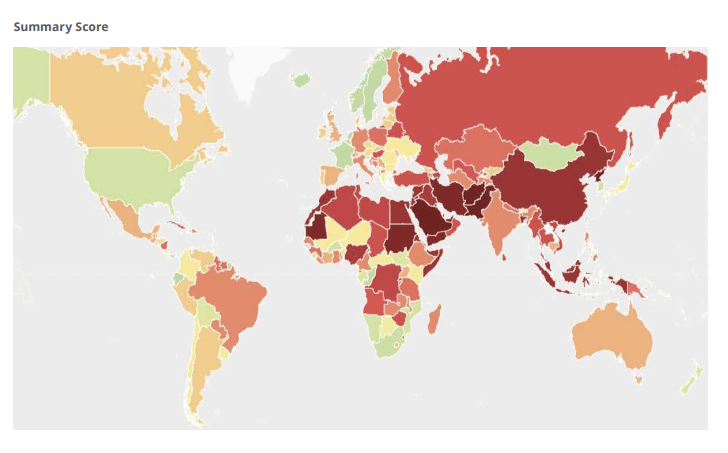
In HumanistFreedoms.com’s coverage of the 2020 edition, we indicated that the report contains an entry for every country in the world and uses a unique rating system ranging from “Fee and Equal” to “Grave Violations”. Canada’s rating overview states:

Canada is a federal parliamentary democracy, extending north into the Arctic Ocean, and sharing the world’s longest land border with the United States. Despite what should be strong constitutional protections for freedom of thought and expression, significant religious privileges are in force, both nationally and in several of its ten provinces and three territories.

Canada’s rating does not appear to have been altered since the 2022 edition, as there doesn’t appear to be any significantly new information presented. This lack of an update appears to be based on some strategic changes in the way the FOTR is published.

The last page of the report that bears any kind of text explains that the report is a worldwide survey of discrimination and persecution against humanists, atheists and the nonreligious published by Humanists. While the report is intended to be continuously updated, HI’s goal is to update 40 countries each year on average and to continue to publish a “Key Countries” edition.

While HI doesn’t appear to have much new to say about Canada at this time, you may be interested in the infographics showing overall ratings:

Watch List vs. Key Countries

HI’s most recent report contains a “watch-list” of countries the organization continues to monitor but for which no new entry is provided. Meanwhile, the “key countries” section of the report updates 40 countries.

One Big Indicator

In November of 2022, we published our own story where we suggested that a significant indicator of concern is any state which retains a religious police force.

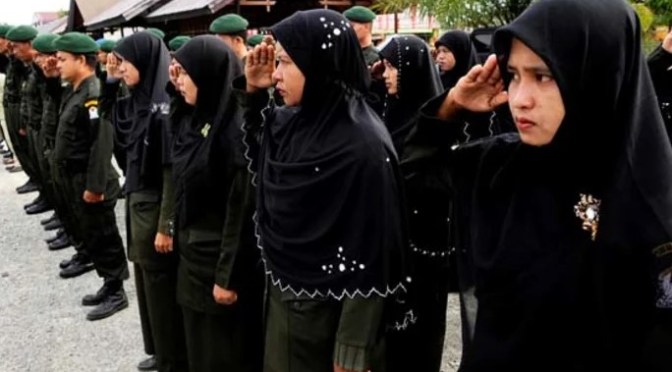
At this time, seven nations have formalized and explicitly-designated religious police: Afghanistan, Indonesia, Iran, Malaysia, Nigeria, Saudi Arabia and Sudan. These are a dirty seven which should be under international scrutiny and pressure to discontinue faith-based policing – a practice that is nothing other than state violation of fundamental human rights.

What Big Indicators would you add to HI’s list and our reporting?

Citations, References And Other Reading

  1. Featured Photo Courtesy of https://humanists.international/
  2. https://humanists.international/2020/06/growing-evidence-of-worsening-persecution-targeting-the-non-religious-around-the-world-new-report-reveals/
  3. https://humanistfreedoms.com/2020/12/18/humanist-internationals-2020-freedom-of-thought-report/
  4. https://www.msn.com/en-us/news/world/us-leaders-gather-to-discuss-rights-of-nonreligious-people-across-the-world/ar-AA156MlE

The views, opinions and analyses expressed in the articles on Humanist Freedoms are those of the contributor(s) and do not necessarily reflect the views or opinions of the publishers.

Kaali: Screening out the Censors

Image Courtesy: Wikipedia

In September of 2022, HumanistFreedoms.com shared information about Humanists International‘s expression of deep concern regarding what it has called “the judicial harassment of poet and filmmaker Leena Manimekalai” and regarding Humanist Ottawa’s subsequent letter to the Canada Excellence Research Chair in Migration and Integration, Dr. Anna Triandafyllidou.

Manimekalai, who has previously identified as bi-sexual, had been selected to produce a creative piece on multiculturalism in Canada as part of the national level academic programme ‘Under the Tent’ organized by CERC Migration – Toronto Metropolitan University. The film, ‘Kaali’ was launched at the Aga Khan Museum on July 2, 2022.

Soon the inevitable occurred. As the film came to the wider attention, some people were offended and began to express outrage and hate. This controversy led TMU and the Aga Khan Museum to pull Manimekalai’s film and to apologize to any (essentially anonymous) offended parties.

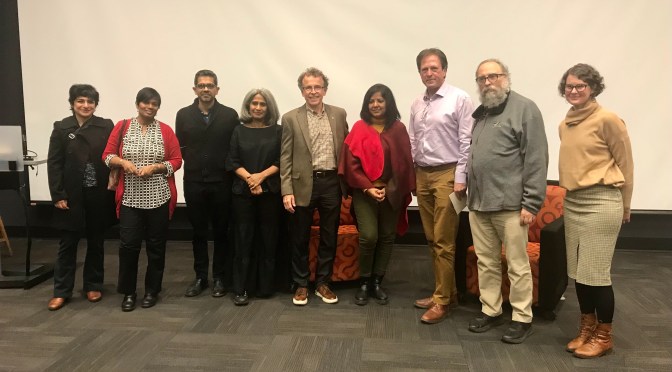
We have learned since our previous coverage, Kaali: The Short-sightedness of Censors and Kaali: Choose Love and Champion Humanity, that representatives of the Humanist Society of Toronto (HAT) and Humanist Ottawa attended a screening of Kaali on November 3 at TMU. Indeed, HAT was one of several co-sponsors of the event.

Richard Dowsett, HAT spokesperson was one of the scheduled speakers and delivered a “wonderful and incisive statement” which received enthusiastic applause. News of Dowsett’s reception at the event was shared with us by another humanist named Richard who was in attendance – Richard Thain.

Thain, who has his own experience with censors violating his charter right to freedom of expression, was also invited to speak when the event organizers learned that a Humanist Ottawa board member was present:

It is a pleasure to join you for this important event. I was just invited a few minutes ago to say a few words, so I don’t have a prepared statement, but I don’t need a prepared statement to tell you, simply from my heart, how proud I am to stand here, with all of you, ( with a gentle wave toward the audience) in support Leena Manimekalai. And I don’t need a prepared speech to tell you, Leena, how strongly we support artistic freedom and how much we, at Humanist Ottawa, admire your creativity and perseverance, in the face of adversity. (audience actually applauded several times). 

As an historical aside, in 1954, the Humanist Fellowship of Montréal was founded by a man originally from India, Dr R K Mishra, a professor at Universite  de Montréal. This became one of the founding groups of the Humanist Association of Canada in 1968 (now Humanist Canada). 

I drove here from Ottawa, not only to support Leena, but also to oppose those people who have given-in to the “Heckler’s Veto.” People who should know better!

Our Humanist Ottawa president, Robert Hamilton, could not be here this evening, as he is  presently out of the country, but he sends his warm greetings and support. 

Thain also read Humanist Ottawa’s letter to TMU and the leadership of The CERC in Migration and Integration.

According to BlogTO and other mainstream media outlets, the  “sold-outevent, which also featured another of the creative’s films, was sponsored by the Centre for Free Expression, PEN Canada, the Poetic Justice Foundation and other champions of free speech and creative expression as a protest against censorship.

HumanistFreedoms.com congratulates Leena Manimekalai for courage and creativity and all of the individual and organizational supporters who didn’t leave as unchallenged the censors and the un-named (and therefore un-identifiable) offended attempt to stifle the fundamental human right to freedom of expression.

Citations, References And Other Reading

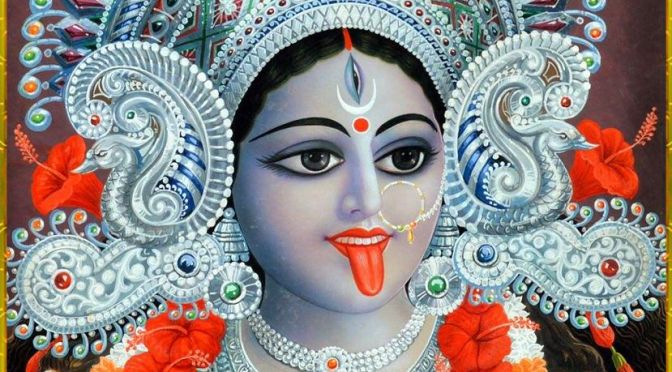
  1. Featured Photo Courtesy of: https://hindutrend.com/images-of-maa-kali-face/
  2. https://humanists.international/2022/08/india-drop-investigations-into-filmmaker/
  3. https://www.blogto.com/film/2022/11/toronto-filmmaker-bombarded-death-threats-gets-revenge/
  4. https://www.cbc.ca/news/entertainment/kaali-film-leena-manimekalai-screening-1.6638601

The views, opinions and analyses expressed in the articles on Humanist Freedoms are those of the contributor(s) and do not necessarily reflect the views or opinions of the publishers.
Mahsa Amini: The Tragedy that Reminds the World Why Policing Must Be Secular

Image Courtesy Wikipedia

Amidst a set of global events such as the COVID-19 pandemic/epidemic response, the war in Ukraine and the so-called culture wars of right wing versus left wing politics, it is predictable, if not absolutely inevitable, that attention to the ongoing travesties and tragedies of violated fundamental human rights would be reduced.

It seems equally likely that faith-based authoritarians (or for that matter any ideologues) would take advantage of the distracted times to increase their entrenched influence and control.

HumanistFreedoms.com hopes that the distractions of the early 2020’s may finally pass and that secularist organizations may again be relied-upon to focus attention and action upon promoting humanist values and undertaking serious opposition to theocracies and religious police forces.

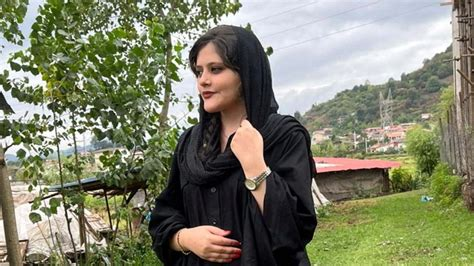
The tragic death of Mahsa Amini seems like an excellent matter to begin with.

Humanists International (Excerpts below from HI Sept 28, 2022)

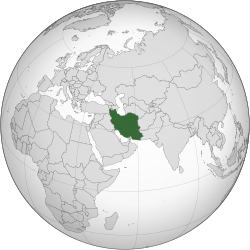
In a statement made during the General Debate segment of the 51st UN Human Rights Council, Humanists International’s Advocacy Officer, Lillie Ashworth, responded to the recent murder in custody of 22-year old Kurdish-Iranian Mahsa Amini. Amini had been arrested by Iran’s “morality police” on 13 September for wearing her hijab “improperly”. She was accused of being in violation of Iran’s discriminatory compulsory veiling laws which require girls from the age of 9 to cover their hair completely. As several UN independent experts stated in the days following her death, there is evidence that Amini had been beaten and subjected to torture while in the custody of Iran’s theocratic regime. The Iranian police have claimed that she had suffered a stroke and a heart attack.

Ashworth’s statement reminded Iran that “compulsory veiling is a human rights violation, and that appeals to religious morality can never be used to police women’s choices, or to invalidate their equal dignity and worth.”

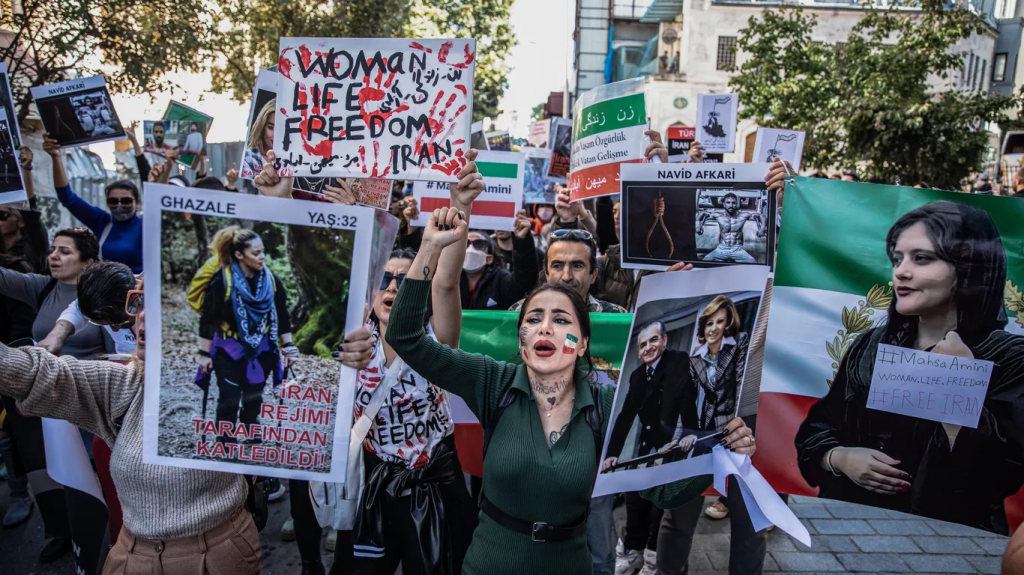
Since Amini’s murder, there has been widespread protests in Iran and around the world. In Iran, crackdowns by the theocratic state has resulted in further faith-based beatings and murders.

Religious Police

At this time, seven nations have formalized and explicitly-designated religious police: Afghanistan, Indonesia, Iran, Malaysia, Nigeria, Saudi Arabia and Sudan. These are a dirty seven which should be under international scrutiny and pressure to discontinue faith-based policing – a practice that is nothing other than state violation of fundamental human rights.

HumanistFreedoms.com looks forward to observing whether Canadian (in particular) and global humanist, atheist, secularist organizations join Humanist International in a re-focus on issues of this scope and type. We feel certain that there are still many other women, girls and families who might appreciate the kind of help from the international community that might have saved Mahsa Amini’s life.

Citations, References And Other Reading

  1. Featured Photo Courtesy of: ttps://www.smh.com.au/world/acehs-religious-police-crack-down-on-tight-jeans-20100526-weap.html
  2. https://humanists.international/2022/09/at-un-humanists-international-calls-for-justice-following-murder-of-mahsa-amini/

The views, opinions and analyses expressed in the articles on Humanist Freedoms are those of the contributor(s) and do not necessarily reflect the views or opinions of the publishers.

Kaali: The Short-sightedness of Censors

Image Courtesy: Wikipedia

Following Humanists International‘s expression of deep concern regarding what it has called “the judicial harassment of poet and filmmaker Leena Manimekalai“, Humanist Ottawa has issued a letter to the Canada Excellence Research Chair in Migration and Integration, Dr. Anna Triandafyllidou.

In the letter, Humanist Ottawa President Robert Hamilton expressed the organization’s “deep concern for the egregious actions taken by CERC Migration and Integration and Toronto Metropolitan University against filmmaker Leena Manimekalia and her short artistic film, “Kaali.

Image Courtesy of Humanist Ottawa

Humanist Ottawa asserted that CERC “asserted a privileged position of your organization over a person of colour and a member of the 2SLGBTQ+ community – in glaring opposition to your own stated values of diversity, equity and inclusion. As well, these action unequivocally contravened Article 18 of the United Nations Declaration of Human Rights supporting freedom of thought, conscience and religion.

Manimekalai, who has previously identified as bi-sexual, had been selected to produce a creative piece on multiculturalism in Canada as part of the national level academic programme ‘Under the Tent’ organized by CERC Migration – Toronto Metropolitan University. The film, ‘Kaali’ was launched at the Aga Khan Museum on July 2, 2022.

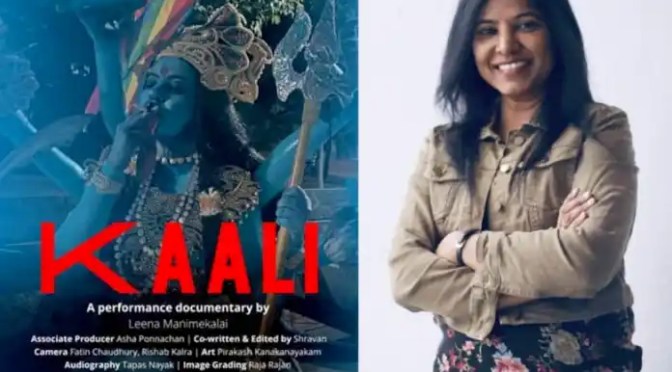
The documentary film documents Manimekalai in the guise of the Hindu goddess Kali wandering the streets of Toronto at night during a pride festival. Manimekalai observes groups of people out on the town, riding the subway, stopping at a bar, taking selfies with members of the public, and sharing a cigarette with a man on a park bench.

Humanist Ottawa pointed out in their letter to Dr. Triandafyllidou that CERC’s actions “directly empowered others who have disseminated hate speech posters and other social media advocating violence and death against Leena Manimekalai. Your actions have cause the perpetration of flagrant injustice and have forced Leena to take steps to protect her safety.”

Maintaining an intent to promote diversity and inclusive values, Maimekalai was quoted in the New Indian Express as saying: “Kaali, the film is all about choosing love and championing humanity. Trolls who are witch-hunting me are fueled by hate. They have nothing to do with faith. If they are patient enough to watch the film they might choose love. But that’s exactly why they want the film to be banned.”

Taking aim at CERC’s status as a federally-funded status, Robert Hamilton also wrote, “In addition, your acquiescent public apology to vague assertions of offence were not only short sighted, but were indeed corrosive to individual freedoms that Canadians cherish and have fought to preserve including the freedom to express artistic and religious idea.

Finally, you took quick actions against the filmmaker without due consideration to the foreseeably dangerous consequences that could ensue. This speaks to a failure in judgement and accountability unworthy of a federally-funded program and an institution of higher learning. Canadians deserve and expect better than this.

On 4 July, the High Commission of India in Ottawa issued a statement calling on the Canadian authorities and event organizers to withdraw her film. Her film was subsequently withdrawn and her name removed from the ‘Under the Tent’ programme by Toronto Metropolitan University, while Toronto’s Aga Khan Museum host to a screening of her film apologized for any offence caused by the film.In India, a de facto ‘blasphemy’ provision , Section 295A of the IPC allows up to three years imprisonment for “whoever, with deliberate and malicious intention of outraging the religious feelings of any class of citizens of India, by words, either spoken or written, or by signs or by visible representations or otherwise, insults or attempts to insult the religion or the religious beliefs of a class.”

To date, CERC does not appear to have provided any public statement of how it may plan to take accountability for its contributions to the risks faced by Manimekalai. Humanist Ottawa provided some expectations from the perspective of the organization’s inclusive humanist values:

Accordingly, we therefore urge you to:

  • Promptly express a public apology to the filmmaker, Leena Manimekalai
  • Publicly articulate support for the legal, free expression of thoughts and ideas
  • Financially compensate the filmmaker for the pain and suffering that she continues to endure
  • Financially underwrite all expenses needed to ensure the safety and security of the filmmaker

HumanistFreedoms.com encourages you to share your perspective on this situation with Dr. Triandafyllidou by writing a letter of your own – and by commenting in this post.

Citations, References And Other Reading

  1. Featured Photo Courtesy of: https://hindutrend.com/images-of-maa-kali-face/
  2. https://humanists.international/2022/08/india-drop-investigations-into-filmmaker/

The views, opinions and analyses expressed in the articles on Humanist Freedoms are those of the contributor(s) and do not necessarily reflect the views or opinions of the publishers.
Kaali: Choose Love and Champion Humanity

In our search for interesting, challenging and critical perspectives on contemporary humanism, we occasionally find articles published via other venues that we think HumanistFreedoms.com readers may enjoy. The following articles and studies were located on the Humanists International website and in several online publications.

Humanists International is deeply concerned to learn of the judicial harassment of poet and filmmaker Leena Manimekalai, who is currently facing accusations of “hurting religious sentiments” in connection with her latest documentary short ‘Kaali’.

Leena Manimekalai – a published poet and award-winning filmmaker, who is studying for an MFA in Canada – was selected to produce a creative piece on multiculturalism in Canada as part of the national level academic programme ‘Under the Tent’ organized by CERC Migration – Toronto Metropolitan University. Her project, ‘Kaali’ was launched at Aga Khan Museum on 2 July 2022.

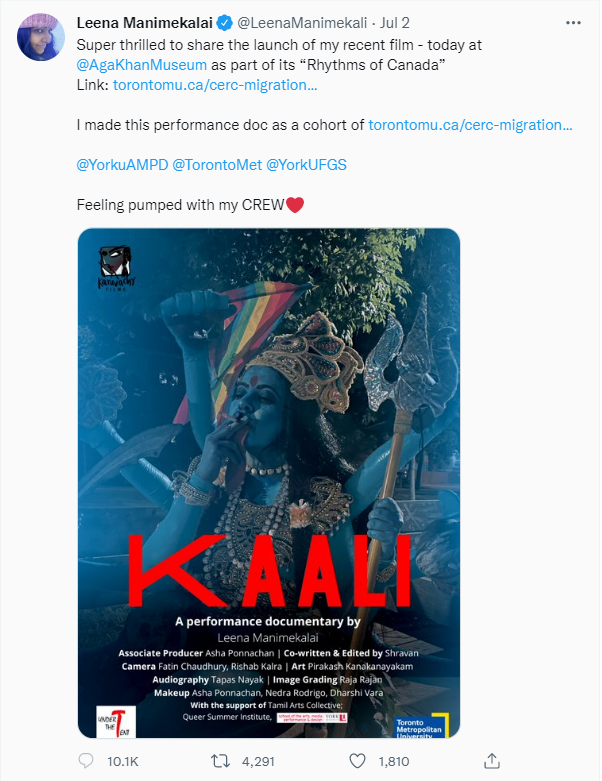
The short film shows the Hindu goddess Kali wandering the streets of Toronto at night during a pride festival, observing groups of people out on the town, riding the subway, stopping at a bar, taking selfies with members of the public, and sharing a cigarette with a man on a park bench. The poster for the film shows Kaali – played by Manimekalai – smoking, holding an LGBTI+ flag.

She is quoted in the New Indian Express as saying: “Kaali, the film is all about choosing love and championing humanity. Trolls who are witch-hunting me are fueled by hate. They have nothing to do with faith. If they are patient enough to watch the film they might choose love. But that’s exactly why they want the film to be banned.”

Manimekalai announces the screening of her film ‘Kaali’ on social media

Since sharing the poster which went viral on social media, Manimekalai has faced a barrage of death threats, a campaign of harassment on social media – with the hashtag #arrestleenamanimekalai trending on Twitter India – and legal complaints filed against her by right-wing Hindu nationalists in India.

On 4 July, the High Commission of India in Ottawa issued a statement calling on the Canadian authorities and event organizers to withdraw her film. Her film was subsequently withdrawn and her name removed from the ‘Under the Tent’ programme by Toronto Metropolitan University, while Toronto’s Aga Khan Museum host to a screening of her film apologized for any offence caused by the film.

Speaking to The Hindu, Manimekalai stated, “My intention is not to provoke. […] By succumbing to fundamentalist elements, Toronto Metropolitan University and Aga Khan Museum have compromised on academic and artistic freedom.

To date, Manimekalai is aware of at least nine First Information Reports (FIR) – an official legal complaint that initiates a police investigation – filed with local authorities in the states of Uttar Pradesh, Delhi, Uttarakhand, and Madhya Pradesh. The petitioners allege that Manimekalai has breached a range of laws, including Article 295A of the Indian Penal Code (IPC) and section 153A (promoting enmity between different groups on grounds of religion.

de facto ‘blasphemy’ provision, Section 295A of the IPC allows up to three years imprisonment for “whoever, with deliberate and malicious intention of outraging the religious feelings of any class of citizens of India, by words, either spoken or written, or by signs or by visible representations or otherwise, insults or attempts to insult the religion or the religious beliefs of a class.”

In addition, a court in Delhi has reportedly issued a summons for Manimekalai and her company to appear in court on 6 August in connection with a civil complaint filed against her.

Humanists International fears that filmmaker Leena Manimekalai is being targeted for her peaceful exercise of her rights to freedom of religion or belief and expression. The organization calls on the Indian authorities to drop all investigations relating to the film, and to repeal its ‘blasphemy’ laws.

Citations, References And Other Reading

  1. Featured Photo Courtesy ofhttps://hindutvawatch.org/film-maker-leena-manimekalai-gets-alleged-death-threat-from-rss-the-siasat-daily/
  2. https://humanists.international/2022/08/india-drop-investigations-into-filmmaker/

The views, opinions and analyses expressed in the articles on Humanist Freedoms are those of the contributor(s) and do not necessarily reflect the views or opinions of the publishers.

Amsterdam 2022: Humanists International’s 70th Anniversary Update of its Definitive Guiding Principle

Humanist International defines itself as “the global representative body of the humanist movement, uniting a diverse community of non-religious organizations and individuals. Inspired by humanist values, we are optimistic for a world where everyone can have a dignified and fulfilling life. We build, support and represent the global humanist movement and work to champion human rights and secularism.”

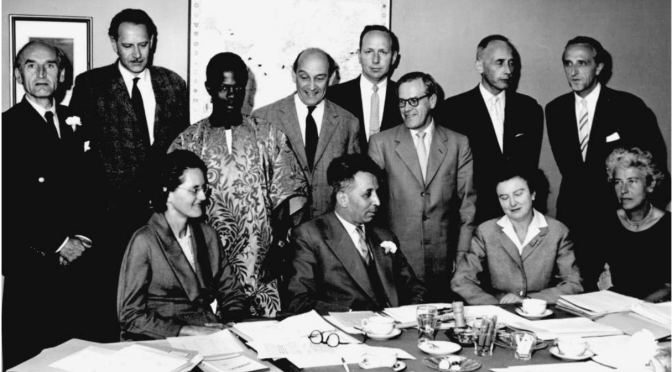
In other words, Humanist International strives to be the global voice for humanism. The organization held its annual General Assembly (i.e. governance and policy meetings) in Glasgow, Scotland (UK) from June 3-5 this year. The 2022 assembly represented a landmark as it marked the 70th anniversary of the first World Humanist Congress.

Back in 1952, the first World Humanist Congress launched The Amsterdam Declaration, a document which intended to articulate a set of agreed-upon fundamental principles of “modern humanism“.

Somewhat parenthetically, visitors to HumanistFreedoms.com may observe that we use the term “contemporary applied humanism” to describe our content rather than “modern applied humanism”. This choice is a deliberate choice as there are philosophical and semantic implications of the term “modernism” which are, to say the least, problematic.

Qualms and quibbles over terminology, such as we’ve just touched-upon, can be a necessary thing. Which is, presumably, why Humanists International included in its celebration of 70 years of existence, an update and relaunch of the 1952 original (and its 2002 revision) which is currently being called The Amsterdam Declaration 2022. It seems a bit odd that the new document hasn’t been called The Glasgow Declaration or even The Glasgow Revision of the Noordwijkerhoutu Update of the Amsterdam Declaration – but such is the nature of geo-political sentimentalism, traditionalism and authorial pride. It weens its way into just about everything to the extent that a “global” declaration must necessarily be tied to a specific set of meetings and those who attended.

How about “Global Declaration of Humanism III” and let everyone own it in the time and place of their own? Just a thought.

Humanists International have published an educational video for those who may be interested in the history and details which includes recitations of the text.

On the Humanists International website, the organization explains that the original declaration was a “child of its time” . The implication is that the original needed revision to bring it into alignment with contemporary perspectives and issues – that is to say, the tastes and attitudes of organization-based humanists of 2022.

Here is what the organized and political Humanists have establishes as the fundamental principles of humanism in 2022:

Humanist beliefs and values are as old as civilization and have a history in most societies around the world. Modern humanism is the culmination of these long traditions of reasoning about meaning and ethics, the source of inspiration for many of the world’s great thinkers, artists, and humanitarians, and is interwoven with the rise of modern science. As a global humanist movement, we seek to make all people aware of these essentials of the humanist worldview:

1. Humanists strive to be ethical

  • We accept that morality is inherent to the human condition, grounded in the ability of living things to suffer and flourish, motivated by the benefits of helping and not harming, enabled by reason and compassion, and needing no source outside of humanity.
  • We affirm the worth and dignity of the individual and the right of every human to the greatest possible freedom and fullest possible development compatible with the rights of others. To these ends we support peace, democracy, the rule of law, and universal legal human rights.
  • We reject all forms of racism and prejudice and the injustices that arise from them. We seek instead to promote the flourishing and fellowship of humanity in all its diversity and individuality.
  • We hold that personal liberty must be combined with a responsibility to society. A free person has duties to others, and we feel a duty of care to all of humanity, including future generations, and beyond this to all sentient beings.
  • We recognise that we are part of nature and accept our responsibility for the impact we have on the rest of the natural world.

2. Humanists strive to be rational

  • We are convinced that the solutions to the world’s problems lie in human reason, and action. We advocate the application of science and free inquiry to these problems, remembering that while science provides the means, human values must define the ends. We seek to use science and technology to enhance human well-being, and never callously or destructively.

3. Humanists strive for fulfillment in their lives

  • We value all sources of individual joy and fulfillment that harm no other, and we believe that personal development through the cultivation of creative and ethical living is a lifelong undertaking.
  • We therefore treasure artistic creativity and imagination and recognise the transforming power of literature, music, and the visual and performing arts. We cherish the beauty of the natural world and its potential to bring wonder, awe, and tranquility. We appreciate individual and communal exertion in physical activity, and the scope it offers for comradeship and achievement. We esteem the quest for knowledge, and the humility, wisdom, and insight it bestows.

4. Humanism meets the widespread demand for a source of meaning and purpose to stand as an alternative to dogmatic religion, authoritarian nationalism, tribal sectarianism, and selfish nihilism

  • Though we believe that a commitment to human well-being is ageless, our particular opinions are not based on revelations fixed for all time. Humanists recognise that no one is infallible or omniscient, and that knowledge of the world and of humankind can be won only through a continuing process of observation, learning, and rethinking.
  • For these reasons, we seek neither to avoid scrutiny nor to impose our view on all humanity. On the contrary, we are committed to the unfettered expression and exchange of ideas, and seek to cooperate with people of different beliefs who share our values, all in the cause of building a better world.
  • We are confident that humanity has the potential to solve the problems that confront us, through free inquiry, science, sympathy, and imagination in the furtherance of peace and human flourishing.
  • We call upon all who share these convictions to join us in this inspiring endeavor.

Is this a perfectly-achieved declaration? Certainly not. There are plenty of quibbles and nuances that probably need to be given some attention. But it may well be more adequate to serve most contemporary humanists needs and preferences when it comes to something like this than its 1952 and 2002 predecessors. Or maybe not.

Setting qualms and quibbles aside – it is a good thing that Humanists International and the growing number of national and local organizations continue to update and revise their public positions. Any organization which believes that it has nailed these things down once-and-for-all begins to dance the dance of dogma. We wouldn’t want that.

Nor would we want a Global Declaration of Fundamental Principles that we fully agree-with and are satisfied-by. A document like that seems like it would probably find itself out of relevance pretty damn quick. So let’s embrace those qualms and quibbles for what they are – indicators of the kind of progress we’d like to see within contemporary and future applied humanism.

What do you think? Let us know in the comments.

Citations, References And Other Reading

  1. Featured Photo Courtesy of: Humanists International
  2. https://humanists.international/2022/08/humanists-international-celebrates-70-years/
  3. https://humanists.international/what-is-humanism/the-amsterdam-declaration/

The views, opinions and analyses expressed in the articles on Humanist Freedoms are those of the contributor(s) and do not necessarily reflect the views or opinions of the publishers.
Humanist International’s 2020 Freedom of Thought Report

On December 10, 2020 Humanists International re-launched the Freedom of Thought Report as an updated document. The document has been in continuous development and circulation since 2012 as a monitor of the rights and treatment of humanists, atheists and non-religious people in every country in the world.

The report contains an entry for every country in the world and uses a unique rating system ranging from “Fee and Equal” to”Grave Violations”. Canada’s rating overview states:

Canada is a federal parliamentary democracy, extending north into the Arctic Ocean, and sharing the world’s longest land border with the United States. Despite what should be strong constitutional protections for freedom of thought and expression, significant religious privileges are in force, both nationally and in several of its ten provinces and three territories.

Of particular interest to humanistfreedoms.com is the report’s sections covering Quebec’s Bill C-21, education in Canada, and blasphemy & hate speech. Our readers will recall that this site was partially inspired by Dr. Richard Thain’s fight to defend his right to free expression when he attempted to advertise his opposition to the public funding of Catholic school boards in Ontario.

In this year, when speaking publicly about controversial issues has become a notably riskier endeavour, the need to support individuals and organizations who actively defend humanist freedoms has grown enormously.

Consider Humanist International’s Humanists At Risk Action Report 2020, which exposes a lack of separation between state and religion, as well as an array of tactics used against humanists, atheists and non-religious people in Colombia, India, Indonesia, Malaysia, Nigeria, Pakistan, the Philippines, and Sri Lanka to limit their rights to freedom of thought, conscience, and religion or the right to freedom of expression, association and assembly. No other organization may be relied upon to devote a significant portion of its time to defending humanist freedoms.

Citations, References And Other Reading

  1. Featured Photo Courtesy of https://humanists.international/
  2. https://humanists.international/2020/06/growing-evidence-of-worsening-persecution-targeting-the-non-religious-around-the-world-new-report-reveals/

The views, opinions and analyses expressed in the articles on Humanist Freedoms are those of the contributor(s) and do not necessarily reflect the views or opinions of the publishers.