Tag Archives: Lloyd Hawekeye Robertson

Discussion With the Founder of a Humanist School in Toronto

With the help of a United Nations agency, Nasser Yousefi established a school for children in his native Iran 20 years ago. Since the theocracy controls and restricts education, his “Peace School” remained unaccredited. During this time Dr. Yousefi gained unique insights into the role of education in shaping individuals. He has recently been accredited by the Ontario government to operate a new “Peace School” in Thornhill in the greater Toronto area. . He believes that traditional school structures no longer meet the needs of students. He argues that schools must adapt before they become obsolete but that humanistic philosophy and psychology can prevent this collapse.

In this conversation Dr. Yousefi engages with fellow psychologist and New Enlightenment Project president, Lloyd Hawkeye Robertson. They discuss the educational philosophy guiding the Children’s Peace School.

Robertson: I took a quick look at your website, Nasser. The individualized, experiential and holistic education you offer students appears to have a Montessori flavour.  Please comment on the education you offer and why you have introduced it to Canadian students.

Yousefi: First and foremost, I must clarify that while I hold deep respect for the work and programs of Maria Montessori, our school does not follow the Montessori model. The Montessori model is based on cognitive psychology, whereas we do not adhere to cognitive approaches. We explicitly and distinctly operate based on the principles of humanistic psychology and humanistic education.

It has been twenty years since the founding of our school in Iran, and unfortunately, during these twenty years, the Ministry of Education in Iran has never agreed to officially recognize our system or accept our programs. As a result, our students have never been able to obtain official diplomas. However, over the past twenty years, our school in Iran has become a unique model that we needed to register internationally and introduce as a humanistic educational model to the world… Among the countries we considered, the Ontario government was one of the few that granted us permission to establish this school, and it is an honor to be able to continue this model in Canada.

Undoubtedly, we need support and collaboration on this journey. It is essential that all humanistic groups and movements globally strengthen, support, and establish humanistic schools. I firmly believe that humanistic schools will have a direct impact on the global peace process, and the world needs schools based on the humanistic model.

I believe that the humanist movement and the peace movement are closely linked, and it is crucial to prepare generations for peaceful living based on respect for humanity. I am committed to this cause and am eager to collaborate with all humanistic groups.

Robertson: I assume that the humanistic psychology to which you refer would be built on the work of Maslow and Rogers. Their psychology, as I understand it, intersects with that of Montessori in that both emphasize the individual and self-actualization. I recognize, however, that cognitive approaches can be more directive and that Rogers, in particular, eschewed such approaches. Does this relate in some ways to your approach to education?

On a related issue, a person-centered psychology necessarily implies a self. Such a self would give rise to what we understand as “mind” with a capacity for logical constancy, othering and projecting oneself into past events and anticipated future ones. The implied human potential forced changes to both Fruedianism and Skinnerian behaviorism. Would you say you are in the process of developing the minds of these young students? If so, what to you emphasize in doing so?

Yousefi: You are absolutely right; our educational program is based on the theories of Rogers and Maslow, while also being significantly influenced by Paulo Freire’s perspectives. I am excited to share that I have authored a book on humanistic education, which is set to be published by a university in England. Additionally, a university in Germany has expressed interest in publishing it in German. I hope to have the opportunity to further develop and promote these ideas in Canada as well.

It is surprising to see that humanistic educational models are still relatively unfamiliar in Canada, with many schools not yet recognizing this approach. I believe it is crucial to collaboratively introduce humanistic ideas to educators and families. I am hopeful that the Peace School will serve as a valuable platform for families who are interested in integrating this model into their children’s education.

Robertson: Cognitivist approaches attempt to build thinking skills but, as we mentioned, Rogers expressed concern that such approaches in therapy can potentially undermine individual autonomy by suggesting answers. He focused on the affective with the assumption that once the relevant emotions are expressed the answers for therapy would be found within. I suspect educating young minds is different in some ways. How do you avoid cognitivist approaches when educating young minds?

Yousefi: Cognitivism was a major breakthrough in psychology and philosophy. At a time when behaviorists insisted on limiting awareness and education to the transfer of information through stimulus and response, cognitivists sought to elevate knowledge to a level of understanding. This meant that they wanted knowledge to become a stable behavior in an individual. Therefore, it is important to appreciate the efforts of cognitivists. In the process of education, we can certainly utilize their achievements, just as we can benefit from the techniques of behaviorists in education.

However, the main problem arises when these approaches… insist that all educational practices must follow their specific model. Despite their efforts to understand the human mind, cognitivists viewed humans only within the limits of cognition and intellectual abilities. This approach advanced to the point where for Piaget, the only thing that mattered in humans or children was intelligence—intelligence defined as mathematical logic and the ability to reason based on predetermined patterns. The excessive focus on intelligence led many schools to direct all their efforts toward enhancing students’ intelligence… As a result, schools became more about educational techniques than educational philosophy. Consequently, educational systems and schools increasingly distanced themselves from understanding and awareness.

Cognitivist schools, from Montessori to Waldorf and even Gardner Schools became limited to educational techniques and skills, each focusing on raising students’ intelligence levels in a concentrated manner.  However, they overlooked the fact that the brain is enriched through life experiences. Every experience, every encounter with challenges, and every individual or social event connects thousands of synapses in the brain. Simply creating neural connections through techniques or even with the help of neurofeedback devices alone is unlikely to generate new experiences. Humans learn through connection, diversity, work, hands-on activities, and sensory experiences, turning that learning into a lasting behavior.

The problem with behaviorist and cognitivist schools was that they confined students within the four walls of a classroom and, through a series of predetermined lessons, tried to impart a set of information or skills.  The focus on memory in behaviorism and repetition in cognitivism distanced students from the essence of life and real-life experiences. Students sit in repetitive classes with a teacher who often dominates the conversation, listening for hours, memorizing, and repeating, calling this process “education.” The influence of cognitivism in education grew so strong that even behaviorists, who could have had a variety of programs based on their models, centered their lessons on cognitive tasks.  As a result, a significant portion of schools worldwide, at least since the 1960s, have been dominated by memory, repetition, and predetermined programs.

In humanistic education, the primary focus is on human experiences.  Students must experience, touch, see, face various events, and connect with them. In humanistic psychology, intelligence is just one attribute. It is not a criterion for classifying people but a feature like any other human characteristic that can be nurtured over time. Intelligence is not a fixed, uniform, or all-encompassing phenomenon. Furthermore, cognitive intelligence is just one aspect of human development.

Humanistic education is equipped with holistic thinking and aims at the integrated and comprehensive development of students.  All the needs of children and all domains of development are important, and each domain should have the opportunity to emerge and be experienced. Cognitive growth, without attention to emotional, social, and even physical development, is incomplete and will sooner or later come to a halt. Focusing on a single ability or talent, or even one area of development, will lead to the creation of one-dimensional individuals—people who, like robots, may excel in one area but perform repetitive and stereotypical tasks within that domain.

Cognitivists define intelligence as closely related to mathematical logic. In their view, an intelligent person is someone who can think, analyze, evaluate, and examine based on mathematical logic and predetermined patterns. They gave intelligence a systematic and logical structure so that they could identify, predict, guide, and control the functioning of the brain, cognition, and learning. Essentially, intelligence was aligned with mathematical logic so it could be controlled, directed, and predicted. Cognitivists are pleased that they can control, guide, and predict cognition and learning, seeing it as an advantage for psychology. As a result, control over human beings is a common ground between behaviorists and cognitivists. These two psychological approaches are keen on controlling people—one through stimulus and response, and the other by controlling brain function.Because emotions and feelings cannot easily be controlled or predicted, cognitivists do not consider them as part of intelligence. Gardner, however, attempted to categorize emotions and feelings as a form of intelligence, hoping that by doing so, they could be brought under rational control.

For cognitivists, a teenage poet who can compose hundreds of beautiful verses is not considered a genius, but a teenager who can memorize and recite a thousand verses of the same poet might be regarded as one. According to the cognitivist perspective, figures like Marcel Proust, Mother Teresa, Mandela, Albert Schweitzer, and Gandhi are not geniuses because they were unpredictable and uncontrollable by those in power. Even Leonardo da Vinci’s genius is recognized by cognitivists mainly when he is viewed as an industrial designer or architect performing remarkable calculations in his inventions, or adhering to mathematical principles in his designs and paintings.

Despite all of this, neither cognitivists nor behaviorists have a comprehensive set of criteria for defining intelligence. They rely on a limited set of psychological tests to evaluate intelligence—tests that even their fellow cognitivists do not fully accept, as all agree that these tests only assess parts of the intelligence process. Modern psychology remains skeptical of these psychological tests and is careful not to use them to label, classify, or assign value to individuals.

In his book *The Future of the Mind,* scientist Michio Kaku writes that intelligence is the human ability to construct a model of the world in order to create a future. It’s about being able to use divergent thinking to turn all experiences and learnings into a structure that shapes the future. Preparing for change, building a better world, and contributing to a better future are, according to Kaku, the best indicators of intelligence.

Maslow and Rogers emphasize that intelligence is just one of many human abilities and characteristics. It holds no superiority over other human capacities. Intelligence might be understood as a way for a person to utilize all of their abilities effectively—to solve problems, dream, create new ideas, and bring those ideas to fruition. Unlike cognitivists, humanists do not view intelligence as a linear, controllable, or predictable entity. Intelligence is a highly creative and unpredictable process, which serves to integrate all abilities and capacities. However, this does not mean that a person must always behave intelligently or be predictable in every aspect of life. Intelligence requires the capability to disrupt linear mathematical logic, allowing individuals to move beyond their learned knowledge. Humanistic schools strive to help students use their diverse life experiences to build a better world.

Robertson: I had not heard anyone suggest that people like Schweitzer and Gandhi were not geniuses, just the opposite, in fact. I think we can agree that logical thought is related to mathematical thinking in some ways. If I understand correctly, your concern is that logical thought can be understood as having a predetermined structure thereby restricting and limiting outcomes. I would think that you still teach mathematics at the Peace School, but that you also place an emphasis on creativity. Would this be correct?

Also, you referenced Paulo Freire who, in adult education, used the life experiences of learners to teach literacy and mathematics. How do you apply this to elementary students who have limited life experiences? Do you create experiences for the students that can then be discussed?

Yousefi: Yes, I agree with you. It’s well known that figures like Gandhi and Albert Schweitzer were remarkable, but there’s rarely a discussion labeling them as geniuses. This is partly due to the linear, binary thinking typical of behaviorists and cognitivists, who don’t generally define prominent figures in social or emotional growth as geniuses. These days, we encounter books and articles that try to diagnose Gandhi with bipolar disorder or Mother Teresa with depression. Yet, few attempt to ascribe such traits to scientists like Marie Curie or Louis Pasteur. This reflects a conditioned mindset shaped by behaviorist education, which often seeks to rationalize the relentless energy and resilience of figures like Gandhi and Mother Teresa by attributing them to psychological issues rather than recognizing their brilliance.

I’m not saying that Mother Teresa, Albert Schweitzer, or Nelson Mandela were geniuses. I don’t favor such language, and I never use terms like genius, elite, or exceptional. My point is that linear, binary thinking applies quantitative standards, even to genius, rather than qualitative ones. In this mindset, everything is reduced to numbers.

In the Peace School, we emphasize mathematics with our students. We introduce them to various philosophies of mathematics, from Euclidean to fuzzy mathematics, and our approach extends beyond mere calculations. We explore core concepts and elements of mathematics, and our students enjoy this more expansive form of math education. Even in logic and mathematical logic, we explore multiple narratives, styles, and viewpoints. Education’s role is to expose students to the richness and diversity within every field of human knowledge. Just as we encounter a variety of perspectives in art, literature, and empirical science, similar diversity exists in mathematics and its definitions. It’s essential to share this diversity with students, while behaviorists and cognitivists often fail to do so, presenting only rigid, predetermined definitions. This mindset struggles to accept that people can or should change.

Now, about Freire: I’ve written a book titled “Reinterpreting Freire’s Works with a Focus on Education.” In this book, I attempt to revisit Freire’s educational perspectives and offer my narrative. I use the term narrative because this is my personal interpretation of Freire’s views on education. I did not aim to present myself as a researcher or an author but rather as a storyteller. My interpretations are based on my experiences working with children’s education and with diverse community groups, including rural and marginalized urban populations.

Many people know Freire primarily for his work in adult literacy, but literacy education was just one facet of his broader efforts. To limit Freire’s legacy to literacy diminishes the broader intellectual movement he championed. Freire was a fierce critic of behaviorism on an international scale, standing against behaviorists and cognitivists to defend liberating, human-centered education. He was deeply influenced by Sartre and Erich Fromm. In his book “Pedagogy of the Oppressed,” Freire famously compares schools to banking systems. He argued that the evaluation systems in schools, often based on exam scores, mirror banking logic: just as banks use numbers and percentages to communicate with clients, schools use grades to communicate with families. This numerical evaluation system is easier for the public to understand, largely because people have been conditioned to associate learning progress with scores.

However, Freire’s criticism of the “banking” approach in education goes beyond just grades. He noted that schools predominantly engage students’ short-term memory, much like how banks store data. Schools insist on students accumulating information, akin to how banks accumulate data. For schools, emotional and social needs are secondary; the focus is on students’ ability to answer specific, predefined exam questions.

Freire questioned why schools have adopted this banking approach and why they evaluate and categorize students based on numbers. He believed that the foundation of education in most schools globally operates as a system of dominance. This educational system behaves like an oppressive force, not listening to its audience, not allowing dialogue, not considering their needs, not encouraging inquiry, and running on rigid, predetermined programs. This model is similar to that of oppressors and dictators who impose their beliefs as absolute. Schools and educational systems rooted in behaviorist and cognitivist approaches treat students in this authoritarian manner, denying them participation in educational planning. Ironically, even in countries that advocate democracy, many school systems are still grounded in control and dominance, making it unlikely for students in such environments to be prepared for democratic societies.

Freire argued that education must meet students’ needs within their communities for learning to be truly effective and sustainable. Otherwise, education cannot inspire the enthusiasm and motivation necessary for genuine engagement. Freire laid the theoretical groundwork for humanistic schools, similar to how thinkers like Erich Fromm, Maslow, and Rogers expanded the theoretical base of humanism. Although Freire proposed the basis of humanistic education, he never had the opportunity to establish or manage a humanistic school directly. Freire offers remarkable insights to the educational community, and I believe educators, curriculum planners, and school administrators should explore his ideas.

Robertson: I am not aware of Marie Curie or Louis Pasteur ever writing that they were depressed. Mother Teresa, in “Dark Night of the Soul,” indicated symptoms  of her depression, such as feelings of worthlessness, persistent sadness, and a lack of joy in her work. Former volunteers and medical professionals have criticized her for failing to provide adequate pain killers to patients in her hospices. She is on record as saying that their suffering had spiritual value. I don’t know how these things are tied together, but it seems to me the exploration would be worthwhile. In “Psychoanalysis and Religion.” Eric Fromm states:

When man has thus projected his own most valuable powers onto God, what of his relationship to his own powers? They have become separated from his self. Everything he has is now God’s and nothing is left in him. His only access to himself is through God. In worshipping God he tries to get in touch with that part of himself which he has lost through projection. (p. 50)

I would think that this is an important discussion to have but probably not at the elementary or Division 1 level. How would you begin to prepare students to have such discussions?

Irrespective of any relationship contradictions, the genius of Gandhi was in devising and implementing a strategy of non-violence in a fight for national liberation – a strategy copied by people like Martin Luther King Jr. and, to a certain extent, Nelson Mandela.

Most of the people you are valorizing here – Gandhi who opposed British imperialism, Fromm who was a Marxist of the Frankfurt School, and Nelson Mandela who opposed a system of apartheid – are revolutionaries. As you mentioned, Paulo Freire is famous for his book “Pedagogy of the Oppressed” wherein he talks about using skills like literacy and mathematics to describe experiences of oppression. In one country, for example, peasants were taught to write the phrase “Why does the church have all the land and we have none?” and this phrase began appearing in public places. Is there a sense that Ontario students are oppressed in the way that Freire describes? How would you use Freire’s approach in, for example, teaching English literacy to Division One students in that province?

Yousefi: As a respected professor, psychologist, and specialist in Canada, I would greatly appreciate your insights: Do Freire’s ideas apply to Canadian students? I believe this question is common among experts in Europe and North America: Are children in these regions experiencing oppression, and are there oppressive forces that we should make students aware of? It’s interesting to note that many educators in Europe, the U.S., and Canada are deeply influenced by Freire and strive to introduce his ideas to their students.

Freire often discusses systems that control and dominate in their interactions with individuals. According to him, any controlling system, wherever it exists, is inherently oppressive, and anyone subject to it is oppressed. If we accept this definition, we can explore many forms of systemic oppression that may affect children in Europe and North America. Therefore, I am sharing these thoughts as questions, not as definitive opinions, and I would appreciate it if you consider them as such.

For instance, is the consumer culture—which leads to environmental destruction—a form of widespread oppression? Are students who are indirectly affected by this environmental threat considered oppressed? Are children influenced by large advertising systems to consume more, and does this constitute a form of oppression? Do the standards and norms set by advertising networks in nutrition, health, arts, and literature represent oppression? Could issues like climate change, melting ice caps, and the extinction of species, both locally and globally, be considered forms of oppression against children? Is promoting education systems that emphasize competition, rewards, individualism, and a narrow focus a type of oppression? And is the lack of diverse perspectives in education systems, often controlled by behaviorist approaches, a form of oppression against students?

I lack detailed information about the specific issues faced by Canadian students, but official statistics on children and students in Europe and the U.S. reveal various forms of oppression. For example, child sexual abuse is a serious threat in Europe. Educational disparities affect communities of color in the U.S. Social justice has become a significant focus in Europe and the U.S., with democratic school communities working to address these issues with their governments. Could educational inequality itself be a form of oppression against children?

Additionally, the World Health Organization reports on the rising threats of collective depression and loneliness among teenagers in Europe and the U.S., often due to family dynamics that leave many students feeling isolated. The situation of immigrant children and First Nations children in Canada and the U.S. has also been a significant area of concern among experts.

I present these as questions, not conclusions. These are not definitive claims about the state of students in Canada, and it’s possible that Canadian students may not face these specific issues. However, if any of these challenges do affect Canadian students, perhaps Freire’s concept of oppression and the effort to improve students’ experiences through education could provide a useful framework for addressing these issues. It seems that psychologists and humanistic educators could potentially play a significant role in advocating for children’s well-being.

Robertson: You asked me to share my insights about the application of Freire’s Pedagogy of the Oppressed to young students. I want to repeat that while I know something of Freire’s approach to adult education, I had not considered his approach with respect to children’s education. However, I accept your challenge to explore the application of Freire’s notion that “any controlling system, wherever it exists, is inherently oppressive, and anyone subject to it is oppressed.”

It seems that the family could fall into this definition of a “controlling system.” Infants are subjected to feeding schedules. Later, the parents of most families establish systems of discipline. I had one girl tell me that her father’s talks were “too long” and this constituted “child abuse.” Schools in some jurisdictions, and I think Ontario is one, seemed to have accepted this notion that families are oppressive. They have mandated teachers to change children’s genders and not tell the parents. If we understand that gender dysphoria is a mental health condition, then these educators are keeping children’s mental health concerns from their parents. This can only be justified by people who think that parents are inherently oppressive.

But schools are also open to charges of oppression. To begin with, children of certain ages are required, by law, to attend school – forced attendance. Second, teachers ordinarily know more than students. This implies a power relationship based on knowledge possession. Third, regardless of how democratic the school, moral assumptions govern relationships. For example, students in a kindergarten class in Montreal were subjected to a “struggle session” in which the educator challenged their knowledge as to whether they were boys or girls. I think the educator was motivated by a moral concern to promote diversity but she forced the students into submission on the subject while weakening the children’s identities. If you are interested, here is the transcript of the lesson published on the New Enlightenment Project website: The sex of our angels – THE NEW ENLIGHTENMENT PROJECT (nep-humanism.ca)

You changed the definition of oppression in the second part of your answer to me. Whereas. in the first part, oppression was defined as the consequence of power relationships, in the second it is the product of bad choices. The consequences of consumerism can be seen as consumers making uninformed choices. Similarly, climate change can be seen as the failure to regulate. With this second definition, the weakening of family or school structure can be seen as a form of oppression denying children their necessities. I am certain that Peace School has considered these issues in greater detail than I, and I would like to hear your response.

Yousefi: If I understood correctly, you asked how we can expect student education to be based on their life experiences when their experiences are limited, and how we address this challenge in our school. That’s why I detailed our daily practices—how we consistently introduce students to new areas. I am certain that traditional schools cannot offer this variety of opportunities on a daily basis. Every day, we organize off-campus visits for different groups of students. I emphasize—every single day and continuously! We also have daily programs like inviting guests. Each class has the opportunity to either invite a guest or visit someone during the week. As a result, given the number of classes, we sometimes have up to three specialist guests for different classes in one day. Occasionally, almost every month, a class might go on a one- or two-day trip based on one of their educational programs or lessons. The notes I shared with you are not merely taken from the internet; we actively engage students in these activities daily. For example, our primary school students interact with 12 to 15 different teachers throughout the week, whereas most elementary schools typically have only one or two permanent teachers for their students throughout the year. This unique feature is only possible in humanistic-based schools.

Additionally, regarding Mother Teresa, I did not suggest that we discuss her religious views with students. My intention was to highlight that cognitivists, who see all aspects of a person through the lens of intelligence and cognitive development, often fail to recognize social activists or creative artists as geniuses. In their typical definition, genius is limited to fields like mathematics, science, engineering, and logical reasoning. This mindset easily leads them to question the mental well-being of prominent social figures. My point is not whether Mother Teresa or Mandela experienced depression; every individual can have a range of well-being or distress. However, society, influenced by cognitivists, rarely questions the well-being of prominent scientists and even views conditions like autism or dyslexia as unique traits in them. In contrast, if an artist like Van Gogh has an emotional disorder, his creativity is always judged in the context of that emotional struggle. If a peace activist uses tranquilizers, their emotional health is scrutinized indefinitely.

I hope I was able to convey my point clearly. Essentially, what I’m trying to say is that society, influenced by cognitive perspectives, often prioritizes science, mathematics, and logical reasoning above all else, and those who excel in these fields are given greater status. Creative artists, social activists, and humanistic theorists are often marginalized.

Robertson: In its 2022 Declaration of Modern Humanism, Humanists International affirmed:

We are convinced that the solutions to the world’s problems lie in human reason, and action. We advocate the application of science and free inquiry to these problems, remembering that while science provides the means, human values must define the ends. We seek to use science and technology to enhance human well-being, and never callously or destructively.

The reference to human values in this quote refers the worth and dignity of the individual. In my book, The Evolved Self, I argued that a function of organized religion was to constrain the self thereby ensuring that key religiously held precepts cannot be questioned. The Scientific Revolution and subsequent Enlightenment that initially occurred in Europe led to the development of modern humanism. In The Opened Mind: An application of the historical concept of openess in Education my colleagues and I argued that education is an expression of the development of the human mind that allows the individual to seek an objective stance relative to received tradition. Given that Iran is a modern theocracy, it does not surprise me that your school was constrained by what they define as received tradtion. I would be interested in hearing how you managed to survive in what I take to be a hostile environment for so long.

I graduated as a teacher in 1981 when John Dewey’s approach to education, often referred to as experiential learning or progressive education, was dominant. Dewey’s key principles included learning by doing, pragmatism – that ideas and knowledge are tools for solving practical problems, a democratic approach to education where students and teachers collaborate and learn from each other, the integration of subjects connecting different areas of knowledge, and reflective thinking in the learning process. I suspect much of this is reflected in the approach of the Peace School.

Dewey worked in the late 19th and early 20th centuries. Montessori believed in a more passive role for the teacher who would act as a guide or facilitator rather than a direct instructor. She emphasized allowing children to learn independently through exploration and discovery. As you know, the Montessori classroom is highly structured with specific materials designed to promote self-directed learning in contrast with Dewey who was more flexible and less structured promoting a learning environment that encouraged social interaction and collaborative learning. Unlike Dewey,  Montessori placed a strong emphasis on individual learning and development, whereas Dewey emphasized the importance of social learning. I suspect that your approach is more similar to Dewey’s in this regard.  

As previously discussed, I know Carl Rogers primarily as the founder of a school of psychotherapy whose hallmark is “unconditional positive regard” for the individual. His suggestion that teachers should act as facilitators rather than traditional instructors and that learning be self-directed seems to channel Montessori. His emphasis on emotional and social growth may be an extension of Dewey, but I think he would have emphasized the interpersonal relationship between the teacher as facilitator and student to a greater degree.

As discussed, I am familiar with Paulo Freire with respect to adult education, and I am still unsure as to how he would be applied to the age group on which the Peace School focuses. I understand that Freire would criticize Dewey for insufficiently addressing power dynamics and social inequalities but does this reference the relative powerlessness of young children or an ideological concern focusing on their families, economic class or assigned identity groups? I suspect that Freire believed Rogers approach was too individualistic failing to address the collective and societal aspects of education. If you would agree with this criticism of Rogers, then I would be interested in know how the humanist Peace School addresses the collective and societal aspects of education that so concerned Freire.

Is your concern that Montessori, and I presume Dewey as well, were “cognitivist” based on their measuring progress in some ways similar to Freire’s description of schools as “banks.” This is where I think we are in this enlightening discussion. I have made some guesses here, and I look forward to your response.

Yousefi: I value your valuable insights, and to learn about your views as a global expert. I am also excited to share some of my experiences working directly with students in a humanistic school. I believe that with your guidance and support, this approach can become an effective model for all schools.

I agree with you that John Dewey made a significant impact on democratic education. He was a philosopher who shifted educational philosophy in favor of students and human experiences. For those of us working in humanistic psychology or education, Dewey’s views are a foundational reference. Many humanistic psychologists consider Dewey’s ideas as a basis for their work, and his perspectives are often seen as more modern and innovative compared to those of Montessori. What sets Dewey apart from other educational theorists before and during his time is his focus on individual students’ experiences in the learning process. He believed in addressing the needs and desires of students and designing educational programs based on their experiences. This approach was seen as revolutionary in the early 20th century.

However, any theory must evolve through direct practice and engagement with its audience. I believe that Paulo Freire built on Dewey’s ideas and expanded them, creating opportunities for more teachers in various countries to use his educational approaches. Many educators took from Dewey the emphasis on focusing on the student’s own education—understanding what each student needs in their personal world and classroom environment and helping them engage in their learning journey. However, Dewey’s views paid less attention to the broader society in which students live. He primarily focused on students within school classrooms, mainly emphasizing academic learning.

But every student needs to connect with other groups and participate in building a better world. Focusing solely on classroom needs is important but not sufficient. Freire and others like me, who have lived in countries under controlling regimes, see a greater need for approaches that include social critique. For example, I grew up in a country where controlling systems have limited social growth for centuries, dictating learning according to the will of those in power. In educational systems where everything is predetermined for students, even the specific texts they must learn, how can we focus only on the individual education of the student? Sometimes, teaching the same lessons or conveying the same pre-set knowledge is a mistake—it perpetuates oppression, dominance, and control-driven thinking.

Freire came from societies where military and controlling regimes dominated education. How can an educator or educational planner in the Middle East, China, Russia, Iran, and large parts of Africa, Asia, or Latin America ignore social inequalities and focus solely on individual education? If education cannot change societal structures for the common good, how can we call it sustainable? While Dewey was interested in democracy and social justice, he did not see education as a tool for radical social change like Freire did.

Many education experts in Europe and America accept that Freire’s views can be effective in non-democratic countries. However, these same experts often take a critical stance on Freire’s perspectives when applied to Europe or America.

Freire believes that relativism or absolute individualism in Western educational systems can lead to inaction or a lack of commitment, especially in social and political contexts where the world urgently needs fundamental changes. According to Freire, education cannot and should not be neutral; it must be a political and moral act that seeks liberation and social justice. He argues that education should consciously and purposefully critique oppressive and unequal structures.

At this stage, some Western experts, particularly in North America, argue that they do not face issues of inequality or social oppression and that students do not need to be sensitized to the needs of the global community. However, many global planners or even those in developing countries are Western experts. Many global needs are managed by Western professionals, and it is crucial that Western graduates take action to reduce social inequalities. Graduates of Western schools and universities need to become familiar with the needs of the global community and consider the interests of the Global South in their planning.

I believe that the West has prominent architects and designers in shaping democratic structures, and experts strive to uphold democratic laws in their national frameworks. But we often forget that students must also learn the principles and foundations of democracy in schools, experience democratic behaviors, and even practice the principles of participatory education. When students become familiar with these principles, they can help create a fairer society for all humanity.

Additionally, with the growing immigrant population in the U.S. and Canada, many students who migrate with their families have no experience with democratic behavior. They do not experience democracy in American and Canadian schools, nor do they practice it at home. Therefore, it is necessary to activate democratic schools to provide these experiences for students. Every student should learn participatory methods, feel responsible toward their community, critique society, examine the current situation, and think about the desired future. They should be able to generate ideas and have aspirations for a better world. Schools can equip and empower students with these abilities.

On the other hand, some Western experts mistakenly believe that children in Western countries are not oppressed and consider the general welfare index as the most important indicator of a fair situation for children. However, UNICEF reports indicate that the overall condition of children globally is not good. In Europe and America, many children spend long hours alone, without caregivers to support them, and face many dangers. The issue of sexual abuse of children in the West is troubling, as highlighted in reports like the Rights of Children report on violence against children in Canada. UNICEF and many NGOs report that children everywhere are subjected to violence and domestic abuse. Often, neglect and abandonment by parents also constitute a form of violence against children, as noted in Protect Children Canada’s report on crime data during the pandemic. Juvenile delinquency is on the rise in all countries, and the issue of malnutrition and the lack of micronutrients equally threaten children in the West and East, as shown in Canadian child nutrition statistics. In many countries, behaviorist-dominated education systems have stripped students of any choice.

Therefore, I think Freire’s views can help us sensitize students to their own societies and the citizens of the world, instilling in them a sense of responsibility. I believe it is essential to practice love, empathy, compassion, and support for others with students.

In my view, the humanistic movement of this century must fill the gap of neglecting human connections. While it is important to think of oneself and one’s needs, it is not enough. We need to live together on this planet with love. I believe humanistic schools should lead the way in this endeavor, and I am eager to contribute alongside you on this path.

Citations, References And Other Reading

  1. Featured Photo Courtesy of : 
  2. https://childrenforpeace.ca/

By continuing to access, link to, or use this website and/or podcast, you accept the HumanistFreedoms.com and HumanistHeritageCanada.ca Terms of Service in full. If you disagree with the terms of service in whole or in part, you must not use the website, podcast or other material.

The views, opinions and analyses expressed in the articles on Humanist Freedoms are those of the contributor(s) and do not necessarily reflect the views or opinions of the publishers.

The Medicine Wheel Revisited: Reflections on Indigenization in Counseling and Education

In our search for interesting, challenging and critical perspectives on contemporary humanism, we occasionally find articles published via other venues that we think humanistfreedoms.com readers may enjoy. The following article was located on SAGE Open, an open-access publishing source. Dr. Robertson has kindly provided a brief opening paragraph for HumanistFreedoms.com. (Note that bold features are ours and may not coincide with any emphasis that Dr. Robertson might prefer.)


The Medicine Wheel Revisited: Reflections on Indigenization in Counseling and Education

By : Dr. Lloyd Hawkeye Robertson

Enlightenment humanism seeks universal values common to the human condition. For example, in humanism the dignity of the person is valued regardless of the race, creed, sex, sexual orientation, ethnicity or geographic location of that person. Similarly, empirical scientific truth will apply to all individuals, irrespective of divinely given alternate “realities” that are subjectively held. In this article I argue that the methods of science and reason that makes such a naturalistic understanding possible are compatible with traditional aboriginal worldviews, but that each culture must ground the Enlightenment to its traditions for that culture to participate equally in the scientific revolution. I call this process of adapting new technologies to local cultures “indigenization.” I recommend a secular approach to indigenization relating modern conceptual thought to traditional cultures in a way that is consistent with traditional constructs. In this article, I use the ancient medicine wheels found on the Great Plains of North America to illustrate how this could be done.

This article is peer reviewed and was first published by SAGE Open as “open access.” It may be referenced: Robertson, LH. (2021) The Medicine Wheel Revisited: reflections on indigenization in counselling and education, Sage Open, 11(2) 1-11 DOI: 10.1177/21582440211015202


Abstract

Indigenization involves relating traditional cultures to modern methods, concepts, and science to facilitate their use by those populations. Despite attempts to indigenize both the practice of counseling and the content of educational curricula, mental health and educational deficits in Amerindian communities have remained. This article suggests indigenization in the North American context is often based on a reified view of culture that discounts naturalistic and scientific approaches, and that this dynamic inhibits progressive cultural change at institutional and community levels. A secular approach to indigenization is proposed that relates modern conceptual thought to traditional cultures in a way that is consistent with traditional constructs. The medicine wheel, traditional to North American Great Plains cultures, is applied to counseling to illustrate how concepts found in aboriginal cultures could inform modern practice with wider applications to curriculum development. Related tensions involving interpretations of aboriginal spiritualities and modernity are discussed.


As Director of Lifeskills for the Saskatchewan Indian Federated College in Regina, Canada, during the 1980s, I would be asked, “Why do we (aboriginal people1) always have to become more like them (non-aboriginal people), why can’t they become more like us?” While modern North American cultures are constituted by the histories of their constituent peoples, including those aboriginal to the continent,2 these students were actually voicing alienation from a modern educational system that emphasizes mathematics, logical constancy, and chronological time delineated behavior—skills that were not indigenous to Canadian hunter-gathering societies. Attempts to rectify such alienation have included calls for the indigenization of curricula that are pictured as “western” or “European” (Barman et al., 1986; Louie et al., 2017).

Counseling is also pictured as Euro-American and unsupportive of aboriginal cultural traditions (McCormick, 1996; Poonwassie & Charter, 2001; Sojonky, 2010) with the result that some aboriginal students are unwilling to see nonnative counselors (Dolan, 1995). Indigenization in this context is a process whereby an imported psychology is transformed in ways that are appropriate to the local culture (Adair, 2006).3 Indigenization may be understood as the appropriation of technologies, practices, or systems of conceptual thought in ways that accord with the receiving culture.

Swidler (1986) redefined culture as excluding change to technology and material artifacts while including “beliefs, ritual practices, art forms, and ceremonies, as well as informal cultural practices such as language, gossip, stories, and rituals of daily life” (p. 273). Although technologies and artifacts per se may not be part of culture, the ways that they are used and interpretive significance given them would be. In this article, cultures are held to be fluid concepts consisting of generally shared experiences or generic representations that may be called cultural schemas common to populations linked by tradition (Quinn, 2011). As counseling and education can effect change in the mental schemas held by clients and students, the acquisition of the knowledge, attitudes, and skills required by them to participate successfully in modern economies will inevitably lead to change in their family and community cultures. The alternate view that cultures are defined entities as opposed to fluid concepts leads to at least two important corollaries: (a) a person could have incompletely or inadequately learned a culture with which he or she identifies or is otherwise assigned making that person a less worthy representative; and (b) speakers from a defined culture may make knowledge claims that are at variance with those made by speakers from other cultures but are nonetheless of greater truth for the represented cultural group. Representative of this perspective on culture, a peer reviewer of an earlier version of this manuscript asked whether the author was aboriginal and writing from an indigenous perspective. Had I identified as a person with aboriginal ancestry, I could still have been accused, under this paradigm, of not taking an “aboriginal perspective.” Such a static and defined view of culture is similar to a religiously held dogma in that deviations from a prescribed belief system are proscribed.

The goal of this article is to suggest a paradigm of dynamic cultural change compatible with secular enlightenment that is rooted in cultures indigenous to North America. Using the concept of the medicine wheel as a metaphor for traditional cultural knowledge generally, it is argued that the practice of indigenization in counseling and curriculum development will contribute to progressive change. World views based on a static or essentialist view of culture, it will be argued, have impeded participation in the modern economy by aboriginal peoples.4 It is suggested that historical and interpretive factors used in advancing the essentialist view are in need of reexamination. We begin by establishing a case for such a reframe.

Stalled Education: Colonization and “Indian Control”

Education is an important value in human cultures. Goulet and Goulet (2014) identified three forms of the teaching-learning process conceptualized in the indigenous Cree language: “kiskinaumegahin (teaching another), kiskinaumasowin (teaching oneself), and kiskinaumatowin (teaching each other)” (p. 65). While teaching as a profession was necessitated by the increased complexities of modern civilization and falls within the rubric of “teaching another,” the introduction of such education to students aboriginal to Canada had disastrous consequences. The Canadian government contracted with five churches to provide education with the goal of assimilating indigenous students into the colonial economy5 with the churches responsible for operating costs. The churches planned to cover these costs by generating income through industrial production. For example, schools on the Canadian prairies typically taught farming and animal husbandry with students providing manual labor half days. When these “industrial schools” failed to generate sufficient revenues, many students suffered from malnutrition and dis- ease. Furthermore, examples of physical and sexual abuse Indian Residential Schools were widespread (Aboriginal Healing Foundation, 2006; Barman et al., 1986). While such experiences contributed to a negative view of education among many indigenous people, it is important to also consider that this view was not universally held. When the Canadian government attempted to end the residential school program in 1969,6 the Federation of Saskatchewan Indian Nations (FSIN) successfully lobbied to keep the schools open in their province. Hired by FSIN as part of this process, educational consultants Robertson and Redman (1988) were told the Indian residential school system was to be maintained because (a) the quality of residential school education was considered superior to that offered by on-reserve day schools and (b) the schools effectively provided an alternative to the apprehension of children in dysfunctional families by child welfare agencies.7

Schools have also been viewed as a vehicle for cultural preservation. In a 1972 policy document, the National Indian Brotherhood (NIB) declared, “The present school system is culturally alien to native students . . . School curricula in federal and provincial/territorial schools should recognize Indian culture, values, customs, languages and the Indian contribution to Canadian development” (“Indian control of Indian education,” 1972, p. 9). Prototypically, the Plains Indians Cultural Survival School was established in Calgary, Canada, with 50% of its curriculum consisting of cultural components, including “bustle-making, hide-tanning, drumming, Indian dances, native languages, tepee-making and visits with native elders” (Friesen, 1983, p. 54). This model emphasizing indigenous cultural restoration coupled with local control at primary, secondary, technical and university levels has been replicated across Canada.

This level of indigenization did not result in improved academic achievement. Richards (2014) found that aboriginal students have a significantly higher incompletion rate in band-run reserve-based secondary schools (58%) than in provincial schools (30%). Those who do graduate may not have the literacy skills implied by their grade level. During my experience as an educational psychologist with a northern community college servicing a largely (80%) aboriginal population, I found that graduates of band-run schools often obtained scores 3 to 7 years below grade level on standardized tests of reading and mathematical achievement. A study of Grade 3, 6, and 9 Albertans found that 50% of aboriginal students were not achieving at grade level (Richards & Scott, 2009).

This educational achievement gap cannot be totally attributed to shortfalls in funding. In their comparative study, Richards and Scott (2009) found that federal funding for First Nations schools exceeded the average per student funding provided by provincial governments by more than $4,000 CAD.8 The achievement gap in education could be partly explained by conflicting expectations between educational authorities and local communities. At the university level, Robertson et al. (2015) documented examples of indigenous students whose educational success was considered secondary to the culturally sanctioned demands of their families. Students in counseling described themselves as “caught between two worlds” with the implication that their formal education was considered secondary in one of those worlds.

Another explanation for the education gap between aboriginal, particularly Amerindian, and non-aboriginal students is that the increase in aboriginal cultural content has brought with it a concomitant assumption that traditional “aboriginal ways of knowing” are equivalent to modern conceptual thought. But as Widdowson and Howard (2013) warned, “Because hunting and gathering/horticultural societies lack a culture of literacy, incorporating aboriginal traditions will not facilitate the values, skills, and attitudes that aboriginal people will need to obtain a scientific understanding of the world” (p. 303).9 As a considerable body of research emphasizes the necessity for cultural grounding in learning (Banks, 2001; Hutcheon, 1999; Petersson et al., 2007), a suggestion that cultural teaching may retard learning requires further examination.

Anyone bereft of culture would not have the constructs, the mental scaffolds, upon which to organize and understand experience. Indeed, such a person would not have the language to describe that experience. This is not how cultural loss is usually presented. A more essentialized view is that culture is a “thing” that exists independent of a body of people but can be possessed by them (Waldram, 2004). In such a view, modern science and mathematics may be presented as European, colonialist, or “western.” However, extending the definition used by Swidler (1986), modern conceptual thoughts, especially as found in science and advanced mathematics such as statistics, are not, in themselves, cultural, thus freeing each culture to appropriate scientific, mathematical, and concomitant critical thinking abilities in the course of their own evolution. The evolution of Euro-American cultures from their medieval roots included (a) scientific discoveries rendering old faith-based teachings obsolete and (b) cross-cultural contact contributing to a globalization of their (Euro-American) world view. As a result of this evolution, any school curriculum that taught a geocentric model of the universe or the inherent superiority of European races would not be tolerated. Nonetheless, a continuity of descent marks this education as “European” to students within the Euro- American tradition. The indigenization of curricula within Amerindian traditions requires a similar descent, and such a cultural descent has also been recommended in counseling (Chandler & Lalonde, 1998; Poonwassie & Charter, 2001).

The use of multisensory presentations, democratization of grading, and the use of oral storytelling has been commended as representing indigenization of methodologies in the Canadian context (Louie et al., 2017). All of these techniques had been previously commended by non-aboriginal educators in non-aboriginal settings (McCown et al., 1996; Nelson & Michaelis, 1980; Postman & Weingartner, 1969); therefore, the marker of aboriginality could not have been found in the method but in the content. The development of active listening and critical thinking skills may be enhanced by cross-cultural content grounded in the student’s own culture, but if the purpose of teaching cultural content is to inculcate the student in a particular belief system or worldview, then that would serve to thwart the development of such critical thinking abilities.

While the reification of culture may have the effect of closing minds to new knowledge, it is also possible to view education as a process of opening minds to new possibilities with debates about culture and multiculturalism at the heart of education as a meaningful project (Robertson et al., 2020). If we view all cultures as aggregates evolved from historical and contemporary appropriation, then each participant in the cultural project becomes an authorized speaker capable of investing in culture in creative ways with applications dependent on context and purpose. Under this paradigm, education has the potential to be transformative (Robertson & Conrad, 2016) with individual self-definition enhanced and expanded from a menu of possibilities of increasing size and scope.

Ethical Issues in Education and Counseling Associated With Cultural Reification

While it has been suggested that education and mental health gaps facing Amerindian peoples in Canada may be attributed to cultural insensitivity and even racism on the part of providers (Barman et al., 1986; Chandler & Lalonde, 1998; Louie et al., 2017), a lack of receptivity to services perceived as “western” or “Euro-Canadian” by indigenous students may also explain such deficiencies. It is argued here that the reification of a set of beliefs about aboriginal spirituality creates resistance to learning modern concepts and that such reification is counterproductive in a quest for cultural continuity. In this example, the Medicine Wheel, as a sacred and unvarying ontological dictum is unhelpful, but the medicine wheel concept as an epistemological understanding may serve as a bridge for connecting culture to technological and scientific development. The medicine wheel has been used in various forms to build identity (Mussel, 2005), adult lifeskills development (Lavalley & Wilson, 2006), and adult basic education (Clarke et al., 1998), and such usage suggests the compatibility of the medicine wheel concept with science and reason. Before building on this theme, we need to consider the process of reification.

The Cree elder advised, “If you have even a little (aboriginal ancestry) then you can choose to be either Indian or white, but you cannot be both.”10 Such a view conflates race with culture with the implication that culture is a quantifiable thing that is subject to choice only if one is of mixed ancestry, and even then only as a binary “either or” proposition. In such an essentialist view, cultural assimilation may be equated with genocide (Swidrovich, 2004; Wesley-Esquimaux & Smolewski, 2004). While effective teaching and counseling necessarily relates to the worldview of the student or client, the essentialist view holds that if the individual does not sufficiently know or identify with their ascribed culture, then he or she has lost some- thing and is judged to be unhealthy (Robertson, 2011b). “Loss of culture” by those who can trace at least part of their genetic ancestry to those aboriginal to North America has been blamed for a host of social problems with cultural restoration frequently
framed as “healing” (Brave Heart, 2003; McCormick, 1996; Robertson, 2014a).

The process of cultural restoration is not always appreciated. Elders in one northern community said they recognized that their community had not always been Christian, but efforts to teach them Aboriginal Spirituality11 based on southern (plains buffalo culture) normative beliefs12 felt oppressive (Robertson, 2015). Such conflict between Aboriginal Spirituality and Christianity has not been uncommon (Aboriginal Healing Foundation, 2006). Swidler (1986) explained that during “unsettled times,” ideologies become highly articulated and directive “because they model patterns of action that do not ‘come naturally’” (p. 284).

Religious belief, as defined here, begins when a source is considered authoritatively omnipotent. For example, a Saulteaux elder expressed the concern that “white” schools teach his grandchildren Earth goes around the sun, but his elders taught him the reverse (Scott & Nippi, 2004). If the views of these long-deceased elders were taken as revealed truths not subject to material evidence, then these views were held religiously. Such religiously held views may conflict with scientific teachings in educational settings. For example, Ontario philosopher Christopher DiCarlo faced a university disciplinary hearing after two students complained his suggestion of a common human African ancestry was insensitive to an Amerindian teaching that aboriginal people were placed on the American continents by a “Creator” (Kaill, 2005). While notions of a geocentric universe and a creator-god are also indigenous to European cultures, cultural accommodations have been made, allowing teachers to reference science even in non-science courses. Teaching religiously held belief as fact (or an alternative factum) in education classes can be offensive to people with a scientific worldview. One participant in a workshop on Prior Learning Assessment and Recognition for staff at a northern community college commented, Our provincial Department of Higher Education and Manpower has no more business teaching Native Spirituality—with the intent of conversion—than it has teaching Tibetan Buddhism . . . Imagine what towering indignation would have been engendered had (the instructor) been a Catholic and she had asked us to burn incense, to partake in Holy Sacraments, to confess our sins, and tied problem-solving to the four points of the Cross. (Robertson, 2011a, pp. 99–100)

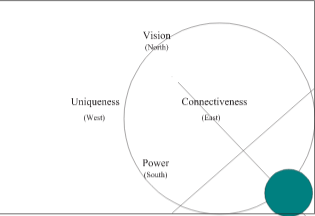
The “four points of the Cross” in this example is an allusion to the four parts of the Medicine Wheel reproduced in Figure 1. This medicine wheel has been capitalized, referenced in the singular, and described as a sacred part of Aboriginal Spirituality (Dyck, 1998; Sanderson, 2010).

The quadrants represent what are thought of as the four dimensions essential for life balance: mental, physical, emotional, and spiritual. This medicine wheel may be expanded to include four seasons, directions, races, and periods of life overlayed on the basic medicine wheel with each item in a set of four presented in separate quadrants. Holism is then defined as must be represented in the life of the individual for that person to be healthy.

Figure 1. The standard medicine wheel identified with Aboriginal Spirituality.

The division of the circle into four quadrants makes mathematical sense if it is used to represent two variables—one on each of the x- and y-axis, but the use of the number four in this medicine wheel is arbitrary. For example, the notion that there are four races – red, yellow, black, and white – does not conform to scientific understandings of the concept (Miele, 2002; Pinker, 2002; Templeton, 1998) and may have been appropriated from the Christian children’s song Jesus Loves Me. While it may be generally thought that there are four seasons, the traditional Woodland Cree had six. The representation of four life stages, including child, teenager, adult, and elder, must be a recent application to the medicine wheel because the concept of “teenager” is a modern European invention.

There is no direct translation for the English word mental in languages aboriginal to Canada. For example, the Cree word/phrase Kiskwew (literally, “s/he is crazy”) is used to represent the term in that language to the angst of practicing mental health workers. It can be inferred that whoever first added the word mental to the Medicine Wheel was probably thinking in a European language, and then sought to translate the concept into an aboriginal language. As the wheel was not indigenous to aboriginal North American cultures, the very term medicine wheel must be viewed as a cultural appropriation. Widdowson and Howard (2013) questioned whether the concept itself could be used to advance critical thinking, the dissemination of abstract ideas, or the organization of complex information into constituent parts:

While it appears that the Medicine Wheel . . . offers a more systematic pedagogical technique (as compared to concrete conceptualizations in hunter-gatherer societies), this turns out to be a mirage. The “constituent parts” that emerge from the “breaking down of complex situations” are arbitrarily constructed, the only basis for which is a spiritual belief about the significance of the number four. (p. 294)

The teaching of this Medicine Wheel along with other beliefs associated with Aboriginal Spirituality presents an ethical dilemma for professionals who believe education involves teaching analytic skills concomitant with opening young minds to multiple possibilities. Psychotherapists and counselors who assume the construction of an aboriginal self is based on Aboriginal Spirituality potentially do disservice to aboriginal clients whose worldviews are constructed differently. It will be argued that there is a much older concept of the medicine wheel that is amenable to both modern education and counseling that is client-centered.

Using the Lens of Diversity to Understand the Stone Medicine Wheels of the Plains

There have been tens of thousands of circular structures dotting the Great Plains of North America with most identified as “tipi rings”—stones used to hold the flaps of a tipi in place. Some rings do not fit this explanation. After restricting the definition to include only those circular stone structures too large to be a tipi ring having a central stone cairn, one or more concentric stone circles, and/or two or more stone lines radiating outward from the center, Brumley (1988) estimated that there were between 100 to 200 stone medicine wheels on the plains. Two medicine wheels (one near the Bow River in southern Alberta and another at Medicine Mountain, Wyoming) are divided into 28 pie- shaped parts (Grinnell, 1922). It has been suggested that medicine wheels in Wisconsin (Bender, 2008), Alberta, Saskatchewan, and Wyoming (Freeman, 2009) are aligned with astrological phenomena, but this suggestion remains controversial (Vogt, 2015). Restricting the definition to include only those structures divided into four (or multiples of the number four) would exclude these medicine wheels from the classification.

In estimating there to be more than 340 medicine wheels, Robertson (2014b) included circular structures too large to be tipi rings that are not divided at all, and those that are divided without reference to a central hub or spokes as with, for example, parallel lines. An example of such a medicine wheel can be found at the Tie Creek site in eastern Manitoba, Canada (Steinbring & Muller, 2012). This site includes a triangle centering a large circle of stones connected by a complex of lines to other petroforms, including a large winged bird. It would be curious to deny that this is a “medicine wheel” while conferring the title on other structures that have potentially less obvious interpretive and ceremonial significance. An equally important consideration is that the act of taking a modern definition of the term medicine wheel and applying it to ancient stone structures (albeit loosely to figures divided in ways that are not multiples of the number four) restricts the interpretive possibilities that may be attached to such structures, thereby potentially minimizing the traditional cultural wisdom contained therein. It is argued here that the traditional spirituality of the aboriginal inhabitants of North America employed flexible teachings having a pragmatic character.

Figure 2. The generic medicine wheel of Roberts et al. (1998).

This flexible and pragmatic interpretation of the medicine wheel concept may be applied to counseling.

Using the Medicine Wheel Concept in Counseling

Adlerians traditionally eschew the medical model in favor of a psychotherapy focussed on educating the client in new behaviors that better meet individual goals (Christensen & Marchant, 1993; Morris, 1993/2004). In comparing the holism of the aboriginal medicine wheel with that of Individual (Adlerian) Psychology, Roberts et al. (1998) acknowledged, “A wide variety of medicine wheels exist and no one claims a particular official symbol” (p. 137). Nonetheless, they produced what they called a “generic” medicine wheel reproduced in Figure 2. The reference to four directions in this figure suggests wholeness, but the attachment of the qualities of power, uniqueness, vision, and connectedness to specific directions appears to be arbitrary. The quality of individual uniqueness is not often attributed to collectivist cultures; however, the sense that we are unique individual beings is necessary to exercise personal decision-making and forward planning (Damon & Hart, 1988; Robertson, 2020).

I taught an undergraduate university class on contemporary native health issues in which students were invited to create their own personal medicine wheel. While many drew a wheel with four divisions, the number of spokes ranged from 0 to 18. One aboriginal person drew a series of concentric circles with herself surrounded by family, community, “helpers” (meaning outside agencies such as educators and counselors), and “white” society. Another student used spokes to divide a circle into categories representing vision, compassion, family, work, education, language (Cree), planning, doing, love, nature, and God. Although it might be possible to reduce such a self-characterization to four more general categories, doing so serves to constrain the individual’s meaning and relational experience.

If counseling were to be viewed as advice giving, then it would be expected that the advice so given would be informed by the cultural background of the counselor. Alternatively, the counselor could learn and reference a set of values appropriate for the individual based on his or her assigned cultural designation. Either stance is prescriptive with the direction of client-change determined by forces external to the client. Traditionally, professional counselors and psychotherapists use more client-centered approaches with advice giving minimized.

Counselors concerned with issues of identity within the field of psychology typically attempt to create a shared holistic understanding of the selves of their clients (Adler, 1927/1957; Dryden et al., 2001; Epstein, 1994) with client- directed self-change based on new information or alternative preferred narratives (Hermans, 2006; Robertson, 2016; Strong & Zeman, 2005). The role of the counselor is to assist in information gathering and the generation of alternative interpretations. While the use of a reified Medicine Wheel both constrains the presentation of the self and externalizes the direction of change, it is argued here that the use of the medicine wheel concept is both in keeping with aboriginal tradition and consistent with a nondirective view of counseling. Counselors may use the concept of the medicine wheel without teaching any one form as correct. Examples of different medicine wheels could be presented so as to capture the idea of diversity along with the common theme of holism. These unique medicine wheels would reflect individual values, behaviors, and world views, and the act of self-reflection may promote self-understanding with the decision to initiate change in keeping with the principle that the client is the expert on himself.

Both aboriginal and western counseling accepts client individuality within a social context and decision-making based on client choice. In a qualitative analysis of the writings of 17 schools of psychology and the transcripts of an equal number of interviewed Inuit elders, Korhonen (2002) found universal acceptance of such client-centeredness in problem definition, goal-setting, and choice of interventions. Positive psychologists (Dahlsgaard et al., 2005; Hart & Sasso, 2011; Seligman et al., 2005) have reported cross-cultural success by inviting clients to define for themselves terms like happiness and meaning and to cognitively plan, within their contexts, ways of meeting those objectives. While Christopher and Hickinbottom (2008) argued that using such an ethic privileges the individual to make decisions for the benefit of his or herself (thus giving apparent support to an individualist perspective), I replied (Robertson, 2017) that the capacity for individual volition implied in such tasks as forward planning is itself cross-cultural, and that the capacity for logical thought, including the assumption of an objective reality, flows from a cross-culturally informed cognitive self. This understanding of the self as a volitional, rational, and reflective entity both unites modern schools of psychotherapy and resonates with the self as found in collectivist societies (Robertson, 2020). If the client is viewed as self-actualizing, then he or she effectively becomes a culture of one and each counseling relationship becomes a cross-cultural exploration. In such a paradigm, aboriginal identity development can be supported without presuppositions as to what that identity will entail. While the Medicine Wheel pictured in Figure 1 makes such presuppositions as to how an aboriginal self should look, the medicine wheel in Figure 3 illustrates how the different schools of psychology gain an understanding of the self that is embedded in each “culture of one.”

Figure 3 was prepared by recognizing a continuum between physical and mental states of the individual on the x-axis and a continuum between active and passive states on the y-axis. The intersection of the two axes creates four quadrants labeled: cognitive, emotive, physiological, and behavioral. Various therapies were situated on those quad- rants based on their primary focus. Given a holistic perspective, it is anticipated that intervention directed at any one quadrant will necessarily create change in the other three. Thus, a client with attention deficit disorder could be given stimulant medication with the expected result that the medication will influence subsequent emotions, cognitions, and behavior. Similarly, a behavioral plan directed at the same condition would be expected to produce changes in the other three quadrants. Of course, some therapies, such as cognitive behavioral therapy, may address two or more quadrants directly as part of their methodology. Counselors can use this medicine wheel to explain to clients the process and expected results of therapy while building a holistic picture of the client’s self (Robertson, 2020).

Discussion

If we view traditional indigenous cultures as holistic (Poonwassie & Charter, 2001; Sanderson, 2010), then distinctions between modern constructs such as education and counseling may be seen as arbitrary. As we have seen, education in the modern era can be transformative of the self while counseling as practiced by many psychotherapists is often educational. It is hardly surprising, therefore, that practices and conceptualizations predating the modern era in any given culture would transcend modern categorical boundaries. It has been argued here that such transcendence is a potentiality of the ancient itineration of the medicine wheel. As culture does not include technology or artifacts (Swidler, 1986), modern scientific and mathematical laws also transcend culture. Thus, while the Age of Enlightenment leading to the modern explosion of knowledge began in Europe, thus rendering the term western science an accurate description of the locale of that knowledge explosion during one historical epoch, the corollary that there are other culturally bound “ways of knowing” that are equally efficacious serves to defeat both the educational objective (Robertson et al., 2020) and the psychotherapeutic objective of developing “mind” (Robertson, 2017). It

Figure 3. An application of the aboriginal concept of the medicine wheel to the practice of counseling psychology situating various therapies in quadrants defined by two axes: physical/mental and active/passive.

is the function of culture, then, to relate to science, technology, mathematics, and existing artifacts in some ways. The challenge then is not to replace “western science” with “cultural wisdom” but to link the knowledge therein to indigenous cultures. By facilitating a meaningful appropriation of the techniques by which new knowledge may be learned, aboriginal people will generate new knowledge. We are aided by the belief that aboriginal spirituality is not a religion but a variety of life stances that are open to change based on evidence and reason.

This article began with the suggestion that curricular indigenization to Amerindian cultures will necessarily involve the rooting of modern conceptual thought to earlier cultural constructs in a process of directed evolution. Figure 3 demonstrated how the medicine wheel can be used to illustrate modern conceptual thought in counseling and psychotherapy. Just as it is possible to use the concept of the medicine wheel without attempting to enforce a particular world view, other themes in aboriginal spirituality may be referenced without reifying a particular set of practices and beliefs. Berry (1999) found that a relationship with the land such as being able to hunt, trap, fish, and go berry picking was generally important to the spirits of Inuit, Amerindian, and Metis peoples. It is not necessary to script a particular way of interacting with the land. For example, Robertson (2015) reported on a successful community development program that included Christian indigenous elders taking youth out into the Precambrian Boreal Forest of northern Canada to learn survival skills. In the author’s private practice as a counseling psychologist, it is sometimes suggested that clients consider spending time on family “traplines,” an area traditionally used by a family for the purpose of trapping fur-bearing animals. What the clients do on their trapline that is therapeutic is individualized.

From a holistic perspective, both the student counseling services and curriculum offered by an educational institution are part of a common institutional culture. The indigenization of one cannot be successfully accomplished in isolation. While this article drew on an exemplar involving counseling practice, it is an exemplar with implications for curriculum development. Both involve opening minds to new possibilities. The individual agency implied by such education is not incompatible with cultural grounding:

A relativist position that all cultural tenets are of equal truth or value serves to nullify the cognitive revolution; however, the capacity to take an objective stance can be applied to the interpretive understanding of textual and oral tradition. We hold that it is possible to be inclusive of cultures even if their basic texts are contradictory, provided the process is of being challenged by tradition and working to adopt it in the manner appropriate to one’s own historical circumstance and in preparation for the pluralistic situation of living with other people. (Robertson et al., 2020, pp. 22–23)

The challenge discussed here involves the application of the medicine wheel concept to modern knowledge. As has been noted, the reified Medicine Wheel has already been used to illustrate the concept of race, but inaccurately. It is common in anthropology to note that genetic interchange through population movements over the last hundreds of thousands of years has ensured that there are no human sub- species or races (Lewontin, 2006; Livingstone, 1993; Templeton, 1998). The notion that there is only one race (the human race) could be illustrated by a wheel without divisions. Discussion of the more traditional view that there are three races, Mongoloid, Caucasoid, and Negroid (Nei & Roychoudhury, 1974; Rushton & Ankney, 1993), could be illustrated by dividing the wheel into three with major sub- divisions (e.g., most South Asians and Middle Eastern people are classified as Caucasoid in this system) noted within their respective places in the wheel. The more nuanced view that there are seven races (Edwards, 2003; Miele, 2002) could be similarly illustrated. Boundaries between racial categories could be made diffuse to indicate that racial demarcation is largely arbitrary with no one characteristic common to any race.

It has been customary to think of the medicine wheel as representing four directions, but in a three-dimensional world, there are six. The directions of “up” and “down” could be illustrated by adding a line, perpendicular to the two-dimensional directions, at the center of the wheel. The resultant “medicine sphere” could be used to illustrate numerous three-dimensional concepts in nature. The addition of movement to this sphere could be used to illustrate the fourth dimension of time and some of the effects of relativity. It is contended that linking such modern concepts with historical processes will aid in the internalization of both.

The ultimate objective of both counseling and education is the development of informed logical and critical thought allowing the individual to seek an objective stance relative to received tradition. Failure to ground such skills in indigenous cultures will make their transmission feel assimilationist and foreign. This article has explored the use of the concept of the medicine wheel as one bridge linking indigeneity with modernity. It is hoped that this exemplar will con- tribute to the development and use of other markers of aboriginality in education and counseling.

Acknowledgments

This article received support from Humanist Canada.

Declaration of Conflicting Interests

The author(s) declared no potential conflicts of interest with respect to the research, authorship, and/or publication of this article.

Funding

The author(s) received no financial support for the research, author- ship, and/or publication of this article.

ORCID iD

Lloyd Hawkeye Robertson  https://orcid.org/0000-0001-9158

-538X

Notes

  1. In this article, the terms aboriginal and indigenous are used to reference people, things, and ideas that were commonly pres- ent prior to colonization or modernity. The terms are not capi- talized when used as adjectives but are capitalized when used as part of a proper noun. The reason for this convention will become apparent in the subsequent discussion distinguishing between Aboriginal Spirituality and the more generic “aborigi- nal spiritualities.”
  2. Much that was indigenous to the Americas, such as foods (potatoes, corn, bison, beans, and turkeys), pharmaceuticals (aspirin, coca, peyote, and quinine), industrial products (rub- ber), clothing (moccasins), transportation (canoes, toboggans), and habit-forming substances (tobacco, chewing gum), have been appropriated into the general culture.
  3. Adair (2006) was talking specifically about a need for a psy- chology indigenous to Canada and not a psychology indig- enous to people aboriginal to Canada.
  4. Half a century ago, an indigenous Cree lawyer (Wuttunee, 1971) predicted policies of cultural reification pursued by Amerindian leaders of the day would result in impoverished communities dependent on increasing levels of govern- ment largess. That prediction has been realized (Helin, 2011; Richards & Scott, 2009).
  5. This was actually the second European colonization of the North West with the first involving participation in the fur trade by its aboriginal inhabitants in a direct relationship with Britain. Canadian expansion involved the development of the North West as an agricultural and industrial hinterland (see Innis, 1930/1970; Ray, 1974; Robertson, 2015).
  6. This was the second time the Canadian government attempted to end the Indian Residential Schools program. An earlier attempt to do so in 1907 was reversed subsequent to a successful lobby by western churches and Amerindian chiefs (Woods, 2012).
  7. During the 1960s, the provincial authorities reluctantly took over responsibility for Indian child welfare, but they did not have sufficient foster or adoptive parents of indigenous ancestry to meet the child welfare need. The Federation of Saskatchewan Indian Nations (FSIN) viewed student place- ment at residential schools preferable to “adopting out” to non-aboriginal parents. A two-step process resulted in the transfer of authority for these schools to those Indian bands that contributed to the student population with Indian authori- ties first administering the physical plant. This development was not divorced from child welfare. As Director of the Health and Social Development Commission for FSIN, the author oversaw the development of a document titled “Indian Control of Indian Child Welfare” that paralleled the earlier docu- ment “Indian Control of Indian Education.” Indian Child and Family Service (ICFS) agencies were developed on each band replacing provincial child welfare services during the 1990s. While, officially, the last Indian Residential School in Canada closed in 1996, in 1999 the author completed psychologi- cal assessments of students at a facility offering a residential school program identical to its earlier mandate, but it was now called a “child welfare” facility. The ICFS agencies in northern Saskatchewan had given themselves each a quota of children to be sent to this institution that was still popularly known as the Prince Albert Residential School.
  • When provincial funding for school districts with fewer than 1,000 students was compared with federal per capita funding, the per capita advantage enjoyed by Amerindian educational authorities shrank to $2,547.
  • Working from a critical postmodernist perspective, Strong (2002) declared science to be a “white, male way of knowing” and that “truth” is something arrived at through the “discourse of knowledgeable people” (p. 3). In advocating the use of the reified Medicine Wheel, Dyck (1998) declared that “western science” was devoid of spirituality and creativity, and that people recognized as knowledgeable in presenting traditional teachings should be recognized as authoritative . In contrast, science is a process of learning about an independent reality by reducing subjective bias by using hypothesis testing (Bhaskar, 1975; Bloom & Weisberg, 2007), or as Wilson (1999) said, “Science . . . is the organized, systematic enterprise that gath- ers knowledge about the world and condenses the knowledge into testable laws and principles” (p. 58). The idea that there is an objective reality that may be discerned through careful observation predates Europe’s “scientific revolution” by about 2 millennia and is cross cultural (Robertson, 2020). Therefore, the idea that people from so-called collectivist cultures cannot be objective is suspect.
  • This is from personal communication with Cree elder Ernest Tootoosis, Poundmaker Indian Reserve, 1971. This advice has since been repeated to me by several aboriginal elders and is aligned with the Iroquoian “Two Row Wampum” teaching that the “Redman” and the “Whiteman” will paddle in separate (but parallel) canoes and that if someone tries to have a foot in both canoes, “there will be a high wind and the boats will separate and the person that has his feet in each of the boats shall fall between the boats . . .” (Onkehonweh as cited in Widdowson, 2013, p. 341). Other elders may have different understandings.
  • In this article, “Aboriginal Spirituality” (upper case) is a proper noun referencing a faith-based belief system (see Robertson, 2014b). The term aboriginal spirituality when lowercased ref- erences older beliefs that included supernatural attribution, but was nonetheless evidence based and thus open to change.
  • During the early 19th century, many Cree bands, in alli- ance with a Siouxian people called the Assiniboine, invaded the northern plains of North America. These “Plains Cree” adopted many Siouxian “buffalo culture” practices such as powwows, sun dances, and horse dances. The Cree remaining in the woodlands did not adopt these practices but, as Poliandri (2011) and Waldram (2014) have noted, Great Plains cultural practices have become increasingly identified with Aboriginal Spirituality across North America.

References

Aboriginal Healing Foundation. (2006). Final report of the Aboriginal Healing Foundation: Volume II, measuring prog- ress: Program evaluation. Aboriginal Healing Foundation.

Adair, J. G. (2006). Creating indigenous psychologies: Insights from empirical social studies of the science of psychology. In

U. Kim, K.-S. Yang & K.-K. Hwang (Eds.), Indigenous and Cultural Psychology: Understanding People in Context (pp. 467–486). New York: Springer Science.

Adler, A. (1957). Understanding human nature (B. Wolfe, Trans.).

Fawcett. (Original work published 1927)

Banks, J. A. (2001). Citizen education and diversity: Implications for teacher education. Journal of Teacher Education, 52, 5–16. Barman, J., Hebra, Y., & McCaskill, D. (1986). Indian education in Canada: The legacy (Vol. 1). University of British Columbia

Press.

Bender, H. E. (2008). Medicine wheels or “calendar sites”: Indian time or the space/time continuum. Time and Mind, 1(2), 195– 206.

Berry, J. W. (1999). Aboriginal cultural identity. Canadian Journal of Native Studies, 19(1), 1–36.

Bhaskar, R. (1975). A realist theory of science Retrieved January 20, 2006, from http://www.criticalrealism.com/archive/rts/ index.html

Bloom, P., & Weisberg, D. S. (2007). Why do some people resist science? Science and Public Affairs, 100(22).

Brave Heart, M. Y. H. (2003). The historical trauma response among natives and its relationship with substance abuse: A Lakota illustration. Journal of Psychoactive Drugs, 35(1), 7–13.

Brumley, J. H. (1988). Medicine wheels on the Northern Plains: A summary and appraisal. Alberta Culture and Multiculturalism, Historical Resources Division.

Chandler, M. J., & Lalonde, C. (1998). Cultural continuity as a hedge against suicide in Canada’s First Nations. Transcultural Psychiatry, 35(2), 191–219.

Christensen, O. C., & Marchant, W. C. (1993). The family counsel- ling process. In O. C. Christensen (Ed.), Adlerian family coun- selling (revised ed., pp. 27–56). Educational Media Corporation. Christopher, J. C., & Hickinbottom, S. (2008). Positive psychology, ethnocentrism, and the disguised ideology of individualism.

Theory & Psychology, 18(5), 563–589.

Clarke, J., Erickson, K., Sealy, D., & Herringer, J. (1998). Developmental studies phase 1 instructors manual. Northlands College.

Dahlsgaard, K., Peterson, C., & Seligman, M. E. (2005). Shared vir- tue: The convergence of valued human strengths across culture and history. Review of General Psychology, 9(3), 203–213.

Damon, W., & Hart, D. (1988). Self-understanding in childhood and adolescence. Cambridge University Press.

Dolan, C. A. (1995). A study of the mismatch between native stu- dents’ counselling needs and available services. Canadian Journal of Counselling, 29(3), 234–243.

Dryden, W., Neenan, M., & Yankura, J. (2001). Counselling indi- viduals: A rational emotive behavioural handbook (3rd ed.). Whurr Publishers.

Dyck, L. E. (1998). An analysis of western, feminist and aboriginal science using the medicine wheel of the Plains Indians. In L.

A. Stiffarm (Ed.), As we see aboriginal pedagogy (pp. 87–101). University Extension Press, University of Saskatchewan.

Edwards, A. W. F. (2003). Human genetic diversity: Lewontin’s fallacy. Bioessays, 25(8), 798–801.

Epstein, S. (1994). Integration of the cognitive and the psychody- namic unconscious. American Psychologist, 49(8), 709.

Freeman, G. R. (2009). Canada’s Stonehenge. Kingsley.

Friesen, J. W. (1983). Schools with a purpose. Detselig Publishing.

Goulet, L. M., & Goulet, K. N. (2014). Teaching each other: Nehinuw concepts and indigenous pedagogies. UBC Press.

Grinnell, G. B. (1922). The medicine wheel. American Anthro- pologist, 24(3), 299–310.

Hart, K. E., & Sasso, T. (2011). Mapping the contours of contempo- rary positive psychology. Canadian Psychology, 52(2), 82–92.

Helin, C. (2011). The economic dependency trap. Ravencrest. Hermans, H. J. M. (2006). Moving through three paradigms,

yet remaining the same thinker. Counselling Psychology Quarterly, 19(1), 5–25.

Hutcheon, P. D. (1999). Building character and culture. Praeger.

Indian control of Indian education. (1972). Policy paper presented to the Minister of Indian Affairs and Northern Development. National Indian Brotherhood.

Innis, H. A. (1970). The fur trade in Canada: An introduction to Canadian economic history (revised ed.). University of Toronto Press. (Original work published 1930)

Kaill, D. (2005). We are all African. Humanist Perspectives, 154, 5–7.

Korhonen, M.-L. (2002). Inuit clients and the effective helper: An investigation of culturally sensitive counselling. University of Durham.

Lavalley, P., & Wilson, L. (2006). Adult basic education level three: Life/work studies curriculum guide. Saskatchewan Advanced Education and Employment, Government of Saskatchewan.

Lewontin, R. C. (2006). Confusions about human races. Is Race “Real”. Retrieved from http://raceandgenomics.ssrc.org/ Lewontin/

Livingstone, F. B. (1993). On the nonexistence of human races. In

S. Harding (Ed.), The racial economy of science: Toward a democratic future (pp. 133–141). Indiana University Press.

Louie, D. W., Pratt, Y. P., Hanson, A. J., & Ottmann, J. (2017). Applying indigenizing principles of decolonizing method- ologies in university classrooms. Canadian Journal of Higher Education, 47(3), 16–33.

McCormick, R. (1996). Culturally appropriate means and ends of counselling as described by the First Nations people of British Columbia. International Journal for the Advancement of Counselling, 18, 163–172.

McCown, R. R., Driscoll, M., Roop, P., Saklofske, D. H., Kelly,

I. W., & Schwean, V. L. (1996). Educational psychology: A learning-centered approach to classroom practice (Canadian ed.). Allyn & Bacon.

Miele, F. (2002). Intelligence, race and genetics: Conversations with Arthur R. Jensen. Westview Press.

Morris, P. (2004). Post Traumatic Stress Disorder (PTSD): Adlerian assessment and treatment. http://www.creativelife- therapy.com/ (Original work published 1993)

Mussel, W. J. (2005). Warrior-caregivers: Understanding the chal- lenges and healing of First Nations men. Aboriginal Healing Foundation.

Nei, M., & Roychoudhury, A. K. (1974). Genic variation within and between the three major races of man, Caucasoids, Negroids, and Mongoloids. American Journal of Human Genetics, 26(4), 421.

Nelson, J. L., & Michaelis, J. U. (1980). Secondary social studies: Instruction, curriculum, evaluation. Prentice-Hall.

Petersson, K. M., Silva, C., Castro Caldas, A., Ingvar, M., & Reis, A. (2007). Literacy: A cultural influence on functional left-right differences in the inferior parietal cortex. European Journal of Neuroscience, 26(3), 791–799.

Pinker, S. (2002). The blank slate: The modern denial of human nature. Penguin.

Poliandri, S. (2011). First Nations identity and reserve life: The Mi’kmaq of Novia Scotia. University of Nebraska Press.

Poonwassie, A., & Charter, A. (2001). An aboriginal worldview of helping: Empowering approaches. Canadian Journal of Counselling, 35(1), 63–73.

Postman, N., & Weingartner, C. (1969). Teaching as a subversive activity. Dell.

Quinn, N. (2011). Models school reconsidered: A paradigm shift in cognitive anthropology. In D. B. Kronenfeld, G. Bennardo, V.

C. de Munck, & M. D. Fischer (Eds.), A companion to cogni- tive anthropology (Vol. 1, pp. 30–47). Blackwell.

Ray, A. J. (1974). Indians in the fur trade: Their role as hunters, trapper and middlemen in the lands southwest of Hudson Bay 1660–1870. University of Toronto Press.

Richards, J. (2014). Are we making progress? New evidence on aboriginal education outcomes in provincial and reserve schools. CD Howe Institute.

Richards, J., & Scott, M. (2009). Aboriginal education: Strengthening the foundations. Canadian Policy Research Networks.

Roberts, R. L., Harper, R., Bull, T.-E., & Heideman-Provost, L. M. (1998). The Native American medicine wheel and Individual Psychology: Common themes. Journal of Individual Psychology, 54(1), 135–146.

Robertson, L. H. (2011a). An application of PLAR to the devel- opment of the aboriginal self: One college’s experience. International Review of Research in Open and Distance Learning, 12(1), 96–108.

Robertson, L. H. (2011b). Prior learning assessment and recognition in aboriginal self (re) construction. Pimatisiwin: A Journal of Aboriginal and Indigenous Community Health, 9(2), 459–472. Robertson, L. H. (2014a). In search of the aboriginal self: Four indi-

vidual perspectives. SAGE Open, 4(2), 1–13.

Robertson, L. H. (2014b). Native spirituality: The making of a new religion. Humanist Perspectives, 471(1), 16–23.

Robertson, L. H. (2015). The trauma of colonization: A psy- cho-historical analysis of one aboriginal community in the North American “North-West.” InterAmerican Journal of Psychology, 49(3), 317–332.

Robertson, L. H. (2016). Self-mapping in counselling: Using memetic maps to enhance client reflectivity and therapeutic efficacy. Canadian Journal of Counselling and Psychotherapy, 50(3), 332–347.

Robertson, L. H. (2017). Implications of a culturally evolved self for notions of free will. Frontiers in Psychology, 8(1889), 1–8. Robertson, L. H. (2020). The evolved self: Mapping an understand-

ing of who we are. University of Ottawa Press.

Robertson, L. H., & Conrad, D. (2016). Considerations of self in recognising prior learning and credentialing. In S. Reushle, A. Antonio, & M. Keppell (Eds.), Open learning and formal cre- dentialing in higher education: Curriculum models and institu- tional policies (pp. 187–204). IGI Global.

Robertson, L. H., Holleran, K., & Samuels, M. (2015). Tailoring university counselling services to aboriginal and international students: Lessons from native and international student cen- tres at a Canadian university. Canadian Journal of Higher Education, 45(1), 122–135.

Robertson, L. H., & Redman, P. (1988). A comprehensive review of educational programs and support services of the Qu’Appelle Indian Residential School. Qu’Appelle Indian Residential School. Robertson, L. H., Robertson, T. J., & Robertson, D. T. (2020). The opened mind: An application of the historical concept of open- ness to education. In D. Conrad & P. Prinsloo (Eds.), Opening

education: Theory and practice (pp. 26–46). Brill.

Rushton, J. P., & Ankney, C. D. (1993). The evolutionary selec- tion of human races: A response to Miller. Personality and Individual Differences, 15(6), 677–680.

Sanderson, J. (2010). Culture brings meaning to adult learning: A medicine wheel approach to program planning. Pimatisiwin: A Journal of Aboriginal and Indigenous Community Health, 8(1), 32–54.

Scott, A., & Nippi, D. (2004, May 27). Walking in harmony: A workshop for healing within.

Seligman, M. E., Steen, T. A., Park, N., & Peterson, C. (2005). Positive psychology progress: Empirical validation of inter- ventions. American Psychologist, 60(5), 410–421.

Sojonky, T. (2010). A self-study: Being a white psychologist in an Indian world. Peter Lang.

Steinbring, J., & Muller, N. (2012). North American petroforms: Questions of their chronological and cultural placement [Paper presentation]. L’art pléistocène dans le monde / Pleistocene art of the world / Arte pleistoceno en el mundo Actes du Congrès IFRAO, Tarascon-sur-Ariège, Septembre 2010. http://blogs. univ-tlse2.fr/palethnologie/wp-content/files/2013/fr-FR/ver- sion-longue/articles/AMN08_Steinbring-Muller.pdf

Strong, T. (2002). Collaborative “expertise” after the discursive turn. Journal of Psychotherapy Integration, 12(2), 218–232.

Strong, T., & Zeman, D. (2005). “Othering” and “selving” in therapeutic dialogue. European Journal of Psychotherapy, Counselling and Health, 7(4), 245–261.

Swidler, A. (1986). Culture in action: Symbols and strategies.

American Sociological Review, 51(2), 273–286.

Swidrovich, C. M. (2004). Positive experiences of first nations chil- dren in non-aboriginal foster or adoptive care: De-constructing the “Sixties Scoop.” University of Saskatchewan.

Templeton, A. R. (1998). Human races: A genetic and evolutionary perspective. American Anthropologist, 100(3), 632–650.

Vogt, D. (2015). Medicine wheels of the great plains. In C. L. N. Ruggles (Ed.), Handbook of archaeoastronomy and ethnoas- tronomy (pp. 541–550). Springer.

Waldram, J. B. (2004). Revenge of the windigo: The construction of the mind and mental health of North American aboriginal peoples. University of Toronto Press.

Waldram, J. B. (2014). Healing history? Aboriginal healing, his- torical trauma, and personal responsibility. Transcultural Psychiatry, 51(3), 370–386.

Wesley-Esquimaux, C. C., & Smolewski, M. (2004). Historic trauma and aboriginal healing. Aboriginal Healing Foundation. Widdowson, F. (2013). Native studies and Canadian political sci- ence: The implications of “decolonizing the discipline.” In F. Widdowson & A. Howard (Eds.), Approaches to aboriginal education in Canada: Searching for solutions (pp. 340–356).

Widdowson, F., & Howard, A. (2013). Running the gaunt- let: Challenging the taboo obstructing aboriginal education policy development. In F. Widdowson & A. Howard (Eds.), Approaches to aboriginal education in Canada: Searching for solutions (pp. 288–317). Brush Education.

Brush Education.

Wilson, E. O. (1999). Consilience: The unity of knowledge. Vintage Books.

Woods, E. T. (2012). The Anglican Church of Canada and the Indian Residential Schools: A meaning-centred analysis of the long road to apology. London School of Economics and Political Science.

Wuttunee, W. I. C. (1971). Ruffled feathers: Indians in Canadian society. Bell.


Citations, References And Other Reading

  1. Featured Photo Courtesy of : https://www.amusingplanet.com/2016/10/bighorn-medicine-wheel.html
  2. https://journals.sagepub.com/doi/full/10.1177/21582440211015202
  3. https://www.hawkeyeassociates.ca/

The views, opinions and analyses expressed in the articles on Humanist Freedoms are those of the contributor(s) and do not necessarily reflect the views or opinions of the publishers.