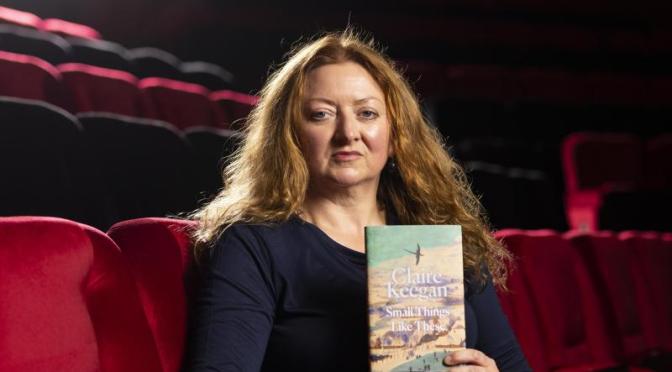
Looking for something different to watch today? Small Things Like These is a film centering on Ireland’s Magdalene Laundries. It’s based on the 2021 book by Claire Keegan.
Keegan wrote, “I’m interested in how we cope, how we carry what’s locked up in our hearts. I wasn’t deliberately setting out to write about misogyny or Catholic Ireland or economic hardship or fatherhood or anything universal, but I did want to answer back to the question of why so many people said and did little or nothing knowing that girls and women were incarcerated and forced to labour in these institutions. It caused so much pain and heartbreak for so many. Surely this wasn’t necessary or natural? “
If you’d like to learn more about the Magdalene Laundries, you may want to check out our May 2023 post.
By continuing to access, link to, or use this website and/or podcast, you accept the HumanistFreedoms.com and HumanistHeritageCanada.ca Terms of Service in full. If you disagree with the terms of service in whole or in part, you must not use the website, podcast or other material.
The views, opinions and analyses expressed in the articles on Humanist Freedoms are those of the contributor(s) and do not necessarily reflect the views or opinions of the publishers.
Episode 216 of Criminal, a podcast hosted by Phoebe Judge tells a story of Ireland’s Magdalene Laundries where some 10,000 to 30,000 women and girls were confined, abused and enslaved. The laundries were typically operated by the Roman Catholic church.
As a Canadian humanist publication, well aware of various abuses and human rights violations that the Catholic Church has been connected-to in Canada and around the world, what caught our particular attention was the podcast’s statement that, “The women did the laundry for all kinds of local businesses including the Royal Dublin Hotel, the Fitzwilliam Lawn Tennis Club and the French, Argentinian and Canadian embassies. They washed sheets for hospitals…”
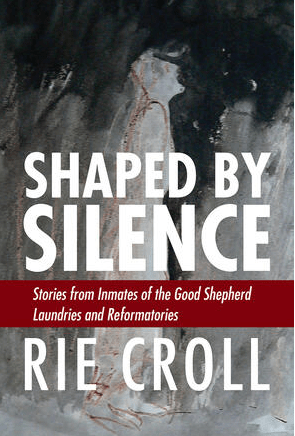
“The state was working with the Church, and families were too….“The very system of incarceration that was supposed to reform them, became a significant factor in shaping their lifelong inequality,” Croll said. “Those who the Church and state targeted for saving were simultaneously treated as bad, dirty and unsalvageable.”
The article’s title, by the way reminds us that these institutions operated in Canada as recently as the 1960s. While there seems to be significantly less information available about these operations in Canadian society than in Irish society, there seems to be every reason to assume that the Roman Catholic church is consistent in its methods.
To learn more about the (Irish) Magdalene Laundries, you may wish to visit the Justice for Magdalenes Research website. The organization has recently published, A Dublin Magdalene Laundry: Donnybrook and Church-State Power in Ireland. It is a a new collection of essays co-edited by Mark Coen, Katherine O’Donnell and Maeve O’Rourke, with further contributions by Maolíosa Boyle, Lindsey Earner-Byrne, Chris Hamill, Máiréad Enright, Brid Murphy, Martin Quinn, Lynsey Black, Laura McAtackney, Brenda Malone, Barry Houlihan and Claire McGettrick.
In the name of all of the girls and women held in the Magdalene Laundries the editors are donating all authors’ royalties to the charity Empowering People in Care.
The editors have written to Minister Roderic O’Gorman to request that the Magdalene Restorative Justice Implementation Team provide a copy of the book to every survivor who wishes to receive one.
The book’s front matter is available free of charge here.
This book offers a comprehensive exploration of the Magdalene system through a close study of Donnybrook Magdalene Laundry (DML) in Dublin. The disciplinary perspectives featured include history, philosophy, law, archaeology, criminology, accounting, architecture, archival studies and heritage management.
By focusing on this one institution–on its ethos, development, operation and built environment, and the lives of the girls and women held there–this book reveals the underlying framework of Ireland’s wider system of institutionalisation. The analysis includes a focus on the privatisation and commodification of public welfare, reproductive injustice, institutionalised misogyny, class prejudice, the visibility of supposedly ‘hidden’ institutions and the role of oral testimony in reconstructing history. In undertaking such a close study, the authors uncover truths missing from the state’s own investigations; shed new light on how these brutal institutions came to have such a powerful presence in Irish society, and highlight the significance of their continuing impact on modern Ireland.
The views, opinions and analyses expressed in the articles on Humanist Freedoms are those of the contributor(s) and do not necessarily reflect the views or opinions of the publishers.
By continuing to access, link to, or use this website and/or podcast, you accept the HumanistFreedoms.com and HumanistHeritageCanada.ca Terms of Service in full. If you disagree with the terms of service in whole or in part, you must not use the website, podcast or other material.
 Humanist Heritage Canada