Tag Archives: news

HumanistHeritageCanada.ca – Getting Ready for the Upcoming Years!

In a few weeks, we will be celebrating the completion of our sixth year of publication here at Humanist Heritage Canada (HHC). Our first posts, under the name HumanistFreedoms.ca, were created in December of 2019.

Since then, we have provided ongoing, if sometimes infrequent, news and information about humanism in Canada and around the world. Most recently, we’ve taken an interest in telling the story of humanism in Canada – thus the name “Humanist Heritage Canada”. We believe that the humanists in Canada need to do a better job of communicating the important role that humanism plays in our lives and in the way that we help shape our communities.

From 2019 to 2022, our community grew each year, then declined in 2023 and 2024. The decline coincided with a decline in our efforts to keep the site continuously fresh and improving. In 2025, we recommitted time and energy and our readership responded in kind. Thank you for visiting HHC and telling your friends about our work!

The Humanist Heritage Canada audience trend since our founding in 2019.

Following is a rough plan Humanist Heritage Canada for the period 2026-2030.

One of our most recent initiatives is to produce timeline of secularism and humanism in Canada. We see the timeline as a valuable tool to connect with significant events in Canadian and global history. A timeline helps provide context to the advancement of the humanist movement. We will develop the timeline with events significant to the humanist movement in Canada.

Our original goal as HumanistFreedoms.ca was to promote contemporary applied humanism with a focus on the freedom of expression. As we have always done, we will continue to provide news and information about humanism in Canada and around the world.

While we have always been open to contributions of content from others, solicitation and inclusion of additional content has not been a significant focus of effort. We’ve been content to feature our own material and include additional material on a casual basis only. We will actively search for and invite contributions from Canada’s humanist community to help tell the story of humanism in Canada.

HHC has primarily been a text-based website. We will explore production of audio and video content. See our Youtube channel.

Advancement of humanism in Canada is often a result of the action of organizations that focus energy on humanist goals and objectives. We will investigate and report on the history and ongoing status of Canada’s humanist organizations and the individuals who drive them forward.

Do you think there are other ways that HHC can tell the story of humanism in Canada? Let us know.

Citations, References And Other Reading

  1. Featured Photo Courtesy of

The views, opinions and analyses expressed in the articles on Humanist Freedoms are those of the contributor(s) and do not necessarily reflect the views or opinions of the publishers.

A New Campaign to Oppose Ontario’s Public Funding of Religious School Systems

We have received notice that the Society of Freethinkers (SoFree)and it’s lobbying partner, Secular Connexion, based in the Hamilton/Burlington and Elmira areas (respectively), have launched a new campaign to oppose Ontario’s system of public funding of religious school systems.

Here’s what we’ve been told so far:

Secular Connexion Séculière is a national non-profit lobby group that seeks justice for non-believers. Please join The Society of Freethinkers and us in an e-mail campaign directed at Ontario MPPs to change funding for the RC separate school system by distributing the attached email and MPP contact list to your members and friends.

We want to demonstrate the overwhelming support that exists in Ontario for a change to the current funding of Catholic separate schools.  This e-mail sets out the facts about the current system and the savings that would be generated.

It is being sent to Secular Humanist organizations, religious groups, public school teachers’ organizations and others who have expressed support for this change. Our hope is that an inundation of e-mails from various sources, including from non-Catholic religious groups, will convince them that it is time for a change. Ontario is a multi-cultural, multi-ethnic, multi-religious province that differs markedly from the Ontario of 1867.

Please distribute the attached e-mail and and contact list  to members of your organizations and to others who may also support this endeavour.

There are many myths and misconceptions around the current funding of the Catholic school system. The email we are asking people to send presents these facts:

• the current full funding of the Catholic school system is not constitutionally guaranteed. The Constitution grants provinces the right to determine the amount of funding for denominational schools if they funded such school systems prior to joining Confederation. Ontario chose to fully fund Catholic elementary and high schools as did Québec. Quebec changed their school system, in 1997, to one based solely on language, not religion, by merely asking the Federal government to let them stop the funding. Newfoundland and Labrador also changed their school system to eliminate funding of Catholic schools.

• 74%1 of Ontarians are not Roman Catholic, but pay for a system that can legally refuse to hire them as teachers, and can exclude their children from its schools.

 • the municipal taxes of Catholics pay for, at most, 8% of the operating costs of the separate system: the balance is paid out of taxes paid by all Ontarians, be they Catholic, Protestant, Atheist, Jew, Muslim, Hindu, etc.

• Ontario could save over $1.5 billion a year by having one non-denominational public school system

 • parents who send their children to non-Catholic private schools pay tuition fees which are generally not tax deductible, and must also pay their municipal taxes, including the education portion


We need our children to learn what unites them, not what divides them.

Please contact either of us for additional information. Should you wish to see the source documents for the figures cited above, these can be provided.

Thank you for your consideration of our proposal.

Doug Thomas, President, Secular Connexion Séculière,
president@secularconnexion.ca
Isobel Taylor, Vice-President, SOFREE, vicepresident@sofree.ca

Up For Discussion

If you’re interested in analyzing and discussing this issue, there are actions you can take. First, here at Humanist Heritage Canada (Humanist Freedoms), we are open to receiving your well-written articles.

Second, we encourage you to visit the New Enlightenment Project’s (NEP) Facebook page and discussion group.

Citations, References And Other Reading

  1. Featured Photo Courtesy of :
  2. https://sofree.ca/
  3. https://www.secularconnexion.ca/2093-2/

By continuing to access, link to, or use this website and/or podcast, you accept the HumanistFreedoms.com and HumanistHeritageCanada.ca Terms of Service in full. If you disagree with the terms of service in whole or in part, you must not use the website, podcast or other material.

The views, opinions and analyses expressed in the articles on Humanist Freedoms are those of the contributor(s) and do not necessarily reflect the views or opinions of the publishers.

Statistics Canada: Migration from USA to Canada

In light of recent interest in Canada-USA relations, Statistics Canada has released an analysis of migration flows from the US to Canada.

The analysis, and the information it is based on, is not interesting merely to satisfy curiosity about how many “Americans” are moving to Canada – nor even to fuel narrow and competitive nationalist views between the two countries. Instead, this information seems valuable to understand who may be interested to move to Canada as policies within the USA change over time. And, incidentally, what perspectives they may wish to bring to Canada as their new home.

This interest to know who may wish to join Canadian society, and why, is stimulated by recent USA politics, but a similar curiosity ought to extend to any jurisdiction from which Canada accepts a significant quantity of immigrants.

Humanists should use controversial topics of this kind to inform their humanist principles…and use their humanist principles to inform their outlook on controversial topics of this kind.

We present the StatsCan report in full below for those who may be interested.

Recent trends in migration flows from the United States to Canada

by Feng Hou and Max Stick

Release date: March 26, 2025

Introduction

Canada has long been a destination for American expatriates because of its geographic proximity, familiar culture and similar socioeconomic environment. However, migration flows have historically fluctuated in response to economic, political and social factors (Boyd, 1981; Kobayashi & Ray, 2005). Notably, shifts in U.S. administration policies—particularly those affecting immigration, labour markets and social stability—have influenced U.S. residents’ intentions to move north (Croucher, 2011).

Media reports have offered mixed assessments of how political shifts in the United States impact migration to Canada (Benenson & Mattey, 2025; Cain, 2016; Singer, 2024). These reports primarily focus on U.S. citizens, overlooking the migration of U.S. non-citizen residents. This group is often more affected by U.S. immigration policy changes and is a key target of Canada’s efforts to attract high-skilled workers (Arnold, 2020; Rose, 2020). Additionally, little attention has been given to Canadian-born individuals and permanent residents who previously resided in the United States but returned to live in Canada.

This article examines recent trends in migration flows from the United States to Canada. U.S. immigrants are individuals who obtained permanent residency in Canada and whose country of birth, citizenship or last residence was the United States.Note  The analysis distinguishes five immigrant categories: (1) U.S.-born individuals whose last country of residence was the United States, (2) U.S. citizens born outside the United States, (3) U.S. non-citizen residents, (4) U.S. citizens who were temporary residents in Canada before obtaining Canadian permanent residencyNote  and (5) U.S. citizens who were temporary residents in a third country before obtaining Canadian permanent residency. The analysis draws on data from the Longitudinal Immigration Database. The article also uses Canadian census data to estimate the number of Canadian-born individuals and Canadian permanent residents who previously lived in the United States and returned to live in Canada.  

While this study explores whether migration flows from the United States to Canada align with changes in U.S. administrations, any observed patterns should not be interpreted as causal. Beyond political factors, economic conditions and personal motivations also influence migration decisions. The relative strength of U.S. and Canadian labour markets affects cross-border movement, as seen during the 2008 financial crisis, which led more Americans to seek jobs abroad (Singer & Wilson, 2009). Additionally, Canadian immigration policies—such as Express Entry for skilled workers and targeted programs for health care and technology professionals—may have facilitated migration from the United States since 2015 (Arnold, 2020).

Migration flows of U.S. citizens and residents to Canada

Chart 1 presents the number of U.S. immigrants to Canada, revealing several salient trends in their composition and numbers.

First, there have been significant changes in the composition of U.S. immigrant inflows to Canada based on U.S. citizenship status, country of birth and country of last residence. In the early 1980s, almost all immigrants were U.S. citizens, with more than three-quarters born and last residing in the United States. While this share declined in the following decade, it remained above two-thirds until the early 2010s, when it began to drop rapidly. Meanwhile, the proportion of U.S. non-citizen residents immigrating to Canada rose sharply from the early 2010s, reaching 45% in 2019—the year before the COVID-19 pandemic. The share of U.S. citizens who were previously temporary residents in Canada also increased significantly during this period, peaking at 54% in 2017 and fluctuating in subsequent years. The proportion of immigrants who were not born in the United States but acquired U.S. citizenship ranged from about 8% to 12% before the early 2010s but declined to 2% by the early 2020s. As a result of these shifts, the majority of U.S. immigrants to Canada in recent years have been either U.S. non-citizen residents or U.S. citizens who had already been living in Canada.Note 

Second, there was no clear correlation between changes in U.S. government administrations and the number of U.S. immigrants to Canada from the early 1980s to mid-2005. The decline in inflows during the early 1980s was a continuation of the gradual decline from a peak in the mid-1970s, following the end of the Vietnam War, and coincided with recessions in the United States and Canada (Kobayashi & Ray, 2005). Similarly, the decline in the early 1990s corresponded with an economic downturn and a reduction in overall immigration levels in Canada. Inflows of U.S. immigrants remained low until the early 2000s.

Chart 1: Numbers of new permanent residents to Canada who were U.S. citizens or U.S. residents before immigrating to Canada, 1980 to 2023

Data table for Chart 1

Third, fluctuations in U.S. immigration to Canada following changes in U.S. government administrations since the mid-2000s were associated with different categories of U.S. immigrants. U.S. citizen residents (both those born in and outside the United States) were the primary drivers of the increase in migration to Canada during the second term of the 43rd presidential administration and the decline in the early years of the 44th administration. In contrast, the rise in inflows during the initial years of the 45th administration was driven primarily by U.S. non-citizen residents whose numbers quadrupled from 2,100 in 2016 to 9,310 in 2019. This may suggest that restrictive U.S. immigration policies—such as visa caps, delays in employment-based green cards and heightened deportation risks—pushed temporary migrants (e.g., H-1B workers and international students) to seek more stable opportunities in Canada. Conversely, U.S. immigration to Canada decreased by 20% in the first three years of the 46th administration compared with the same point in the 45th administration, despite a 38% increase in overall immigration during this period. This decline was primarily driven by U.S. non-citizen residents.

Returning Canadians from the United States

Chart 2 presents the estimated number of returning Canadian-born individuals and permanent residentsNote  who lived in the United States five years prior but resided in Canada at the time of the census.Note 

The number of returning Canadian-born individuals increased by 92% from 1996 (under the 42nd presidential administration) to 2006 (under the 43rd administration) before declining by 29% from 2006 to 2016 (under the 44th administration). Similarly, the number of returning Canadian permanent residents rose by 122% from 1996 to 2006, followed by a 23% decline over the next decade. These trends suggest that the trend of returning Canadians broadly aligned with changes in U.S. government administrations from the mid-1990s to the mid-2010s. From 2016 to 2021, there was a small decrease in the number of returning Canadian-born individuals (-6%), while the number of returning permanent residents increased by 15%. The inflow in the 2016-to-2021 period was likely affected by COVID-19 travel restrictions.

Chart 2: Estimated number of Canadian-born individuals and Canadian permanent residents returning from the United States to Canada in the previous five years

Data table for Chart 2

Returning Canadian-born individuals and permanent residents were more likely to be in their prime working years and had higher educational attainment than other Canadian-born individuals and permanent residents in Canada. In 2021, 58% of returning Canadian-born individuals and 72% of returning permanent residents were aged 25 to 64, compared with 50% of other Canadian-born individuals and 64% of other permanent residents. Among those in this age group, 64% of returning Canadian-born individuals and 70% of returning permanent residents held a bachelor’s degree or higher, compared with 27% of other Canadian-born individuals and 42% of other permanent residents. These findings suggest that individuals with higher levels of human capital tend to be more mobile.

In sum, there have been significant shifts in the composition of U.S. immigrants to Canada since the 1980s, when migration inflows were dominated by U.S. residents born in the United States. In recent years, the majority of U.S. immigrants to Canada have been either U.S. non-citizen residents or U.S. citizens who were temporary residents in Canada. These changes are likely driven in part by the large increase of temporary foreign workers in Canada and the increasing selection of immigrants from this pool (Hou, Crossman & Picot, 2020).

Additionally, the number of U.S. citizen residents (both those born in and outside the United States) moving to Canada increased during the second term of the 43rd presidential administration and declined during the 44th administration, whereas U.S. non-citizen residents moving to Canada quadrupled in the first three years of the 45th administration and decreased under the 46th administration. The movement of Canadian-born individuals and permanent residents returning from the United States also reflected shifts in U.S. government administrations.

Looking ahead, given the changing political and economic landscape in the United States, the results of this study could inform the potential immigration patterns of U.S. non-citizen and Canadian-born individuals currently living in the U.S. to Canada over the next several years.

Authors

Feng Hou and Max Stick are with the Social Analysis and Modelling Division, Analytical Studies and Modelling Branch, at Statistics Canada.

References

Arnold, Z. (2020). Canada’s skilled immigration system increasingly draws talent from the United States.

Benenson, L. & Mattey. (2025). Trump’s First 100 Days: Potential Immigration Actions. Accessed February 12, 2025.

Boyd, M. (1981). The American emigrant in Canada: Trends and consequences. International Migration Review15(4), 650-670.

Cain, P. (2016.) Some U.S. liberals walk the walk: Immigration to Canada doubled after Bush’s 2004 re-election. Global News. Accessed February 11, 2025.

Croucher, S. (2011). The nonchalant migrants: Americans living north of the 49th parallel. International Migration & Integration,12:113–131.

Hou, F., Crossman, E., & Picot, G. (2020). Two-step immigration selection: An analysis of its expansion in Canada. Statistics Canada: Economic Insights, Catalogue no. 11-626-X — 2020009 – No. 112.

IRCC. (n.d.). Permanent Residents – Monthly IRCC Updates – Canada – Permanent Residents by Country of Citizenship. Open Government Portal. Accessed February 15, 2025.

Kobayashi, A., & Ray, B. (2005). Placing American emigration to Canada in context. Migration Policy Institute. Accessed February 11, 2025.

Rose, J. (2020). Canada wins, U.S. loses in global fight for high-Tech workers. NPR.

Singer, A. & Wilson, J. (2009). How the Recession’s Affecting Immigration. The Brookings Institution. Accessed February 13, 2025.

Singer, C. (2022). What Americans Should Know About Canada Immigration in Light of Trump’s Election Victory – Canada Immigration and Visa Information. Canadian Immigration Services and Free Online Evaluation. Accessed February 15, 2025.

Statistics Canada. (2022). Immigrants make up the largest share of the population in over 150 years and continue to shape who we are as Canadians. Statistics Canada, The Daily. Accessed February 13, 2025.

Notes

Note 

Immigration, Refugees and Citizenship Canada (IRCC) usually uses the country of citizenship to define the source country in reporting immigrant statistics (e.g., IRCC n.d.), while statistics from Canadian census data generally use the country of birth (e.g., Statistics Canada, 2022).  

Note 

This group includes those who reported Canada as their country of last residence or held temporary residency permits in Canada before obtaining Canadian permanent residency.

Note 

Additional analysis revealed variations in sociodemographic characteristics across different types of U.S. immigrants (table not shown). In 2019, 92% of U.S. non-citizen residents were admitted through the economic class, compared with 35% of U.S. citizens who were temporary residents in Canada and 59% of U.S. citizen residents. Among economic principal applicants, 89% of U.S. non-citizen residents held a graduate degree, compared with 47% of U.S. citizens who were temporary residents in Canada and 66% of U.S. citizen residents born in the United States.

Note 

Returning permanent residents are individuals who obtained Canadian permanent residency at least six years before the census. Similar trends are observed when a restriction criterion of five or seven years before the census was used.

Note 

This method is different from that of the Demographic Estimates Program at Statistics Canada.

Up For Discussion

If you’re interested in analyzing and discussing this issue, there are actions you can take. First, here at Humanist Heritage Canada (Humanist Freedoms), we are open to receiving your well-written articles.

Second, we encourage you to visit the New Enlightenment Project’s (NEP) Facebook page and discussion group.

Citations, References And Other Reading

  1. Featured Photo Courtesy of :
  2. https://www150.statcan.gc.ca/n1/pub/36-28-0001/2025003/article/00004-eng.htm

By continuing to access, link to, or use this website and/or podcast, you accept the HumanistFreedoms.com and HumanistHeritageCanada.ca Terms of Service in full. If you disagree with the terms of service in whole or in part, you must not use the website, podcast or other material.

The views, opinions and analyses expressed in the articles on Humanist Freedoms are those of the contributor(s) and do not necessarily reflect the views or opinions of the publishers.

Canada: Election 2025

A federal general election has been called for April 28, 2025. Throughout the month, we’ll refresh this post with any news, information or resources that may be of interest. Check back often!

1745881200

  days

  hours  minutes  seconds

until

Ontario Provincial General Election

Having achieved leadership of the Liberal Party of Canada, Mark Carney announced that voters will have their opportunity to reflect on Canadian politics and submit their vote in the 45th general election.

Elections Canada has provided an informational video to help Canadians to know what to expect when they go to vote:

This election became inevitable as confidence in the Liberal government, as led by Justin Trudeau, had been effectively lost late in 2024. However, the lack of confidence in Trudeau’s Liberals has not been the dominant issue in the news. Canadian’s attention has shifted from whether the Liberals could be trusted to govern in the post-COVID global environment to what Canada and Canadians must do in light of dramatic changes in the foreign and trade policies of the United States of America.

In the meantime, what can we expect politicians and media to focus on until election day? Here are a few obvious topics:

  • National Unity and Federalism: Quebec separatism, Western alienation, US-Canada relations and the role of the federal government in addressing regional concerns and national unity.
  • Foreign Aid Policy, Trade, International Relations: Global relationships are getting a shake-up. Canadians may be getting a wake-up.
  • Climate Change and Environment: Canada’s commitment to reducing greenhouse gas emissions, renewable energy policies, and addressing the impacts of climate change, selling oil.
  • Economic Growth and Inequality: A few decades ago, Jean Chretien won an election on a chant of Jobs! Jobs! Jobs!….in 2025, it may be time for a politician to chant Homes! Homes! Homes.
  • Immigration and Border Security: The management of Canada’s immigration system, border security, and the balance between economic growth, social cohesion and pressures imposed by the USA.
  • Gun Control and Public Safety: Gun control laws and measures to address public safety concerns, including mental health and community well-being and human rights.

Some potential (and perennial) concerns for Canadian humanists in the 2025 federal election might include:

  • Secularism and Church-State Separation: Humanists in Canada should continue to be concerned about the role of religion in public life and the separation of church and state.
  • Science, Education and Critical Thinking: Humanists will want nee to be on the watch for science and critical-thinking in policy-making.
  • Social Justice and Human Rights: Humanists often prioritize social justice, equality, and human rights, including issues like LGBTQ+ rights, access to healthcare, and Indigenous reconciliation.
  • Freedom of Expression and Speech: Humanists may advocate for the protection of freedom of expression and speech, including the right to criticize religion and other forms of oppression.
  • Social Justice: Addressing issues of poverty, inequality, and systemic racism, including promoting affordable housing, increasing the minimum wage, and supporting marginalized communities.
  • Environmental Protection: Taking action to address climate change, promoting renewable energy, and protecting Ontario’s natural resources for future generations.

Canadians are well-aware that the primary options for electing a candidate in their riding include, along with the already-mentioned Liberals, the Conservative Party of Canada as led by Pierre Poilievre, Jagmeet Singh New Democratic Party , the Green Party of Canada and the Bloc Quebecois (for those living in Quebec).

Certainly, there are a few aspiring hopefuls, like Maxime Bernier’s People’s Party of Canada, but Canadians also know the real contest of who will form the next government is between team blue and team red.

Pundits, experts and horse-race fans will be eager to pitch their favorite team based on their individual biases. And that may be the biggest hint that any humanist voter needs to make their local selection. Take heed of your preferences, biases and priorities and vote for whichever party or candidate that seems likeliest to make decisions the way you want them made.

Up For Discussion

If you’re interested in analyzing and discussing this issue, there are actions you can take. First, here at Humanist Heritage Canada (Humanist Freedoms), we are open to receiving your well-written articles.

Second, we encourage you to visit the New Enlightenment Project’s (NEP) Facebook page and discussion group.

Citations, References And Other Reading

  1. Featured Photo Courtesy of :
  2. https://www.elections.ca/home.aspx
  3. https://www.elections.ca/content.aspx?section=pol&dir=par&document=index&lang=e

By continuing to access, link to, or use this website and/or podcast, you accept the HumanistFreedoms.com and HumanistHeritageCanada.ca Terms of Service in full. If you disagree with the terms of service in whole or in part, you must not use the website, podcast or other material.

The views, opinions and analyses expressed in the articles on Humanist Freedoms are those of the contributor(s) and do not necessarily reflect the views or opinions of the publishers.

Supreme Court of Canada Will Hear Challenges to Québec’s Secularism Law

On January 23, 2025, the Supreme Court of Canada announced that it would hear challenges to Québec’s secularism law, commonly referred to as “Bill 21”.

While this news may have been missed due to the political and economic uncertainties resulting from such situations as the trade relations between Canada and the United States of America (as led by its current President), the federal Liberal Party’s leadership race or even the Ontario provincial election, this is indeed significant national history in the making.

Here is what the Supreme Court has to say: “The Act respecting the laicity of the State was passed and assented to on June 16, 2019. Its purposes include affirming the laicity of the Quebec State and specifying the general obligations arising therefrom, prohibiting the listed persons from wearing religious symbols in the exercise of their functions and requiring those persons to perform their functions with their face uncovered. The Act also contains provisions through which the legislature exercises the override power granted to it by s. 52 of the Quebec Charter and s. 33 of the Canadian Charter and permits the Act to apply notwithstanding certain rights and freedoms.

Once the Act came into force, a number of persons, groups of persons and organizations brought separate proceedings challenging the constitutionality of the Act or certain of its provisions. They raised constitutional grounds, some of which were related to the Canadian Charter or the Quebec Charter. The Superior Court largely dismissed the challenge, except on two points. The Court of Appeal arrived at the same conclusions except as regards the educational language rights that s. 23 of the Canadian Charter guarantees to Canadian citizens belonging to Quebec’s English linguistic minority. Unlike the trial judge, the Court of Appeal found that the Act does not infringe s. 23.

Since that January 23 announcement, a number of parties have requested intervenor status, including the Government of Canada and the Canadian Civil Liberties Association.

Meanwhile, Québec’s justice minister has, “criticized the federal government for appointing Robert Leckey — a vocal opponent of the province’s secularism law and French language reforms — as a judge on the Quebec Superior Court.” The federal Liberal party has clearly set itself against Quebec’s secularism law.

Québec launched a Charter of Human Rights and Freedoms in 1975, approximately seven years before the Canadian charter. Meanwhile, the recent history of controversial secularism (laicité) laws dates to 2013’s proposed Charter of Values. You may wish to review our timeline to review this and other major events in the advancement of human rights in Canada, including Québec.

The latter (failed) proposal was a source of disagreement among many humanist and secularist organizations and opinion leaders in Canada.

Whether Bill 21 is an un-constitutional law or not is a serious matter which deserves significant consideration not only by the Supreme Court of Canada but also by humanists and all Canadians. Humanist Heritage Canada encourages earnest and forthright analysis and discussion of the various arguments and claims both for and against this law and all laws regarding secularism in Canada.

Up For Discussion

If you’re interested in analyzing and discussing this issue, there are actions you can take. First, here at Humanist Heritage Canada (Humanist Freedoms), we are open to receiving your well-written articles regarding artificial intelligence.

Second, we encourage you to visit the New Enlightenment Project’s (NEP) Facebook page and discussion group.

Citations, References And Other Reading

  1. Featured Photo Courtesy of: https://www.scc-csc.ca/media-medias/new-nouveautes/2025-02-27/
  2. https://www.ctvnews.ca/montreal/article/supreme-court-to-hear-challenge-of-quebec-secularism-law/
  3. https://www.scc-csc.ca/cases-dossiers/search-recherche/41231/#summary
  4. https://decisions.scc-csc.ca/scc-csc/news/en/item/8142/index.do
  5. https://www.scc-csc.ca/cases-dossiers/search-recherche/41231/#summary
  6. https://www.ctvnews.ca/montreal/article/supreme-court-to-hear-challenge-of-quebec-secularism-law/
  7. https://www.montrealgazette.com/news/provincial-news/article720572.html
  8. https://ccla.org/major-cases-and-reports/bill-21/

The views, opinions and analyses expressed in the articles on Humanist Freedoms are those of the contributor(s) and do not necessarily reflect the views or opinions of the publishers.

Ontario Election 2025

A provincial general election has been called for February 27, 2025. Throughout the month, we’ll refresh this post with any news, information or resources that may be of interest. Check back often!

1740697200

  days

  hours  minutes  seconds

until

Ontario Provincial General Election

It is probably clear to most Ontario electors that Premier Doug Ford called the election now, rather than waiting until 2026, primarily because the timing is better for him and his Progressive Conservative Party of Ontario.

According to Joshua Freedman at CP24, the leading reasons for an early election in Ontario include strong polling for the PCs, threats of punitive tariffs by the current President of the United States of America, and Ontario’s frequent tendency to elect provincial liberals when a federal conservative government is in power (and vice versa). These reasons all seem correctly assumed.

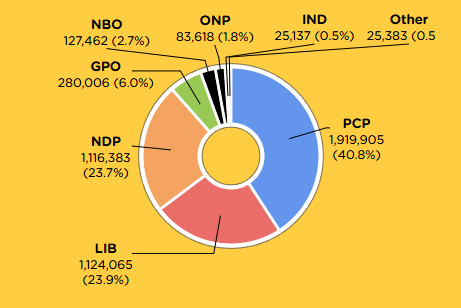
Polling the electorate is valued by the media and political parties in our first past the post system. It isn’t necessary in Canadian politics to be more popular than the other candidate(s). As a candidate, it’s great if you and your party happen to be more popular, but it isn’t really the bottom line. Consider the 2022 Ontario election results:

If you weren’t already familiar with our system, you’d wonder how a party with 40.8 percent of the vote was able to achieve a majority government. You’d be baffled to see that 40.8 can get you a 66.9 percent majority of seats.

That is indeed what you can get when every riding is its own horse-race. It takes a lot for Canadians to send a political party packing. Premier Ford does not want to wait until the Ontario electorate is completely sick of hearing his name. In Canadian politics, our tendency is not to vote FOR a government, but to vote to GET RID of a government.

This informs Ontario’s tendency to have a red party in power provincially when a blue party is in power federally (and vice versa). Once we’ve gotten sick of seeing red….we’re sick of it regardless of whether they’re sitting in Ottawa or Toronto. Is it more complicated than that? Probably…or maybe. But it’s not a popular myth for no reason.

Did you know that there are 25 registered political parties in Ontario? We checked the Elections Ontario website today to get an idea of who’s who. That’s a lot of parties to try to explore and we’ll do our best to run through the lot (probably in a separate post). For now…starting at the top the alphabetically sorted list, the Canadians’ Choice Party website states that their mandate is to, “help Independent Candidates across Ontario to better represent their ridings and to bring a fair measure of direct democracy to all Ontarians and Canadians.” and that they have four “pillars” grouped under the somewhat uncomfortable acronym FIST: Fiscal responsibility and respect for taxpayers, Individual freedom and the right to free speech, Sovereignty and protection of common-law rights, Transparency and accountability in government. Apparently these folks have been around since 2011 with “A bottom-up approach to engage citizens.” We’ll let you work out the pun(s) that inevitably (and perhaps, deservedly) comes to mind. The initiative seems to be earnestly motivated, but doesn’t really present a credible, self-consistent philosophy.

Meanwhile, perhaps the biggest motivation for the election that’s been posited so far is the threat of tariffs and/or financial hard times. Some pundits will suggest that non-blue candidates will be wise to stay away from the issue. For those who oppose the ongoing financial and human rights embarrassment of funding religious schools…this is an opportunity.

Our reasoning goes like this: Given the RISKS associated with unreliable global trading partners, supply chain business practices that destroy Ontario-based value-added business and the ever-increasing probability of continued financial hard-times….can Ontario really afford the anachronistic, misguided, wasteful and discriminatory practice of funding the Catholic school system with public money any longer?

There has never been a more pressing time to push Ontario’s conservative politicians to set aside their puppy-eyed adoration of Bill Davis, admit that discriminatory funding of one religious group’s schools is a bad and wasteful idea and rip the band-aid off.

As a very modest side note (and speaking of puppy-eyed adoration), Ontario humanists may do well to spend some time with Steve Paikin’s biography of Bill Davis titled, Bill Davis: Nation Builder, and Not So Bland After All. If you read the book and between the lines, you may come away with important insight into why Ontario perpetuates this recognized human rights violation and what it may take to finally get the province back on track for a single school system.

Lest we be accused of being a one-trick-pony kind of place, we asked an AI to generate a list of issues in the current provincial election. The response we got back was:

  • Jobs and the economy, with a focus on creating new opportunities and supporting workers
  • Healthcare, including the need for more family doctors and improved access to healthcare services
  • Affordability, with parties proposing various solutions to address the rising cost of living in Ontario
  • Gridlock and transportation, with discussions on highway expansion, public transit, and the removal of tolls on Highway 407
  • Education, with the NDP proposing to invest an additional $830 million a year to clear the repair backlog in schools and create a universal School Food Program
  • Housing, with the NDP proposing to create 60,000 new supportive housing units and establish Homes Ontario to build permanently affordable housing
  • Energy and the environment, with the PC party proposing to permanently cut the provincial tax on gas and diesel5
  • Indigenous issues, with a focus on reconciliation and supporting Indigenous communities
  • Long-term care, with a need for improved services and support for seniors
  • Infrastructure, with the PC party proposing to invest up to $15 billion more over three years to speed up key capital projects
  • Social assistance, with the NDP and Liberal parties proposing to double ODSP
  • Tariff response, with the PC party proposing $10 billion in cash-flow support for Ontario employ

When we asked, what issues should be of importance to humanists in this coming election, we were advised that, “As a humanist, you may be particularly interested in issues that promote the well-being, dignity, and flourishing of all individuals in Ontario,” and the following list of priorities was presented:

  • Education: Investing in public education, promoting critical thinking, and ensuring that all students have access to quality education, regardless of their background or socioeconomic status.
  • Healthcare: Ensuring that all Ontarians have access to quality, publicly-funded healthcare, including mental health services, reproductive health, and palliative care.
  • Social Justice: Addressing issues of poverty, inequality, and systemic racism, including promoting affordable housing, increasing the minimum wage, and supporting marginalized communities.
  • Environmental Protection: Taking action to address climate change, promoting renewable energy, and protecting Ontario’s natural resources for future generations.
  • Human Rights: Ensuring that all Ontarians are treated with dignity and respect, regardless of their identity, including promoting LGBTQ2+ rights, Indigenous reconciliation, and anti-racism initiatives.
  • Access to Justice: Ensuring that all Ontarians have access to justice, including affordable legal services, mental health support, and community resources.
  • Science and Critical Thinking: Promoting the use of evidence-based decision-making, critical thinking, and scientific literacy in policy-making.

Up For Discussion

If you’re interested in analyzing and discussing this issue, there are actions you can take. First, here at Humanist Heritage Canada (Humanist Freedoms), we are open to receiving your well-written articles.

Second, we encourage you to visit the New Enlightenment Project’s (NEP) Facebook page and discussion group.

Citations, References And Other Reading

  1. Featured Photo Courtesy of : https://results.elections.on.ca/en/results-overview
  2. https://www.ontario.ca/page/premier
  3. https://ontariopc.ca/
  4. https://www.cp24.com/news/2025/01/29/why-doug-ford-called-an-early-ontario-election-and-everything-else-you-need-to-know-as-the-campaign-begins/
  5. https://www.fairvote.ca/04/06/2022/pcs-form-majority-government-with-40-83-of-the-vote-ontario-voters-cheated-by-first-past-the-post/
  6. https://finances.elections.on.ca/en/registered-parties

By continuing to access, link to, or use this website and/or podcast, you accept the HumanistFreedoms.com and HumanistHeritageCanada.ca Terms of Service in full. If you disagree with the terms of service in whole or in part, you must not use the website, podcast or other material.

The views, opinions and analyses expressed in the articles on Humanist Freedoms are those of the contributor(s) and do not necessarily reflect the views or opinions of the publishers.
Mubarak Bala 2025

According to Legit and The Cable Mubarak Bala has been freed, “Initially sentenced to 24 years in 2022, Bala’s term was reduced following an appellate court decision deeming it excessive“.

According to a BBC report on Tuesday, Bala is being housed in a secure location due to alleged threats of harm against him.

The freedom is here but also, there is an underlying threat that I will now have to face, probably all those years those threats are maybe out there while I was under the security system. The concern about my safety is always there,” Bala said.

When asked about his guilty plea in 2022, Bala said his motivation was to protect himself and others connected to the situation.

I believe that what I did then was saving not only my life but people in the state and especially those that were attached to my case, because they were also targets,” he said.


On August 9, 2020, HumanistFreedoms.com published our first article about Mubarak Bala. At that time, we featured Wole Soyinka’s all-too-prophetic condemnation of the Nigerian government’s treatment of Bala:

When I accepted the International Humanist Award at the World Humanist Congress in 2014, I spoke of the conflict between Humanists and Religionists; one of enlightenment versus the chains of enslavement. Your arbitrary incommunicado detention over the last 100 days is the cruel reality of this conflict. All too often these chains of enslavement lead directly to the gallows or a prison cell.

On April 5, 2022 – the Kano High State Court sentence Bala to 24 years imprisonment following a guilty plea to 18 charges blasphemy and public incitement. As the president of the Humanist Association of Nigeria, Mubarak Bala is a prisoner of religious tyranny.

BBC Africa has recently published a documentary titled “The Cost of Being an Atheist” which carries a terrible reminder of just how correct Wole Soyinka’s words were. Too often and far too readily, tyrants curtail free speech with arbitrary actions which lead to prison cells and worse.

Mubarak Bala is a chemical process engineer. A husband. A father. He and his family deserve better than this. They don’t just deserve better – they had a fundamental right to better.

And so does every living person, regardless of the country they live in or the beliefs or non-beliefs that they may have. That’s why the freedom of thought, freedom of expression and freedom of religion (including freedom from religion) are called Fundamental Freedoms.

Citations and References

  1. https://humanists.international/2020/08/wole-soyinka-sends-message-of-solidarity-to-mubarak-bala/
  2. https://www.theguardian.com/books/2020/aug/06/wole-soyinka-protests-imprisonment-of-nigerian-humanist-mubarak-bala
  3. https://freemubarakbala.org/
  4. https://en.wikipedia.org/wiki/Wole_Soyinka
  5. https://www.legit.ng/nigeria/1634435-muslim-man-turned-atheist-arrested-blasphemy-finally-regained-freedom-speaks/
  6. https://www.thecable.ng/my-life-is-still-at-risk-mubarak-bala-speaks-after-release-from-jail-for-blasphemy/

The views, opinions and analyses expressed in the articles on Humanist Freedoms are those of the contributor(s) and do not necessarily reflect the views or opinions of the publishers.
Featured Photo Courtesy of Humanists International

Discussion With the Founder of a Humanist School in Toronto

With the help of a United Nations agency, Nasser Yousefi established a school for children in his native Iran 20 years ago. Since the theocracy controls and restricts education, his “Peace School” remained unaccredited. During this time Dr. Yousefi gained unique insights into the role of education in shaping individuals. He has recently been accredited by the Ontario government to operate a new “Peace School” in Thornhill in the greater Toronto area. . He believes that traditional school structures no longer meet the needs of students. He argues that schools must adapt before they become obsolete but that humanistic philosophy and psychology can prevent this collapse.

In this conversation Dr. Yousefi engages with fellow psychologist and New Enlightenment Project president, Lloyd Hawkeye Robertson. They discuss the educational philosophy guiding the Children’s Peace School.

Robertson: I took a quick look at your website, Nasser. The individualized, experiential and holistic education you offer students appears to have a Montessori flavour.  Please comment on the education you offer and why you have introduced it to Canadian students.

Yousefi: First and foremost, I must clarify that while I hold deep respect for the work and programs of Maria Montessori, our school does not follow the Montessori model. The Montessori model is based on cognitive psychology, whereas we do not adhere to cognitive approaches. We explicitly and distinctly operate based on the principles of humanistic psychology and humanistic education.

It has been twenty years since the founding of our school in Iran, and unfortunately, during these twenty years, the Ministry of Education in Iran has never agreed to officially recognize our system or accept our programs. As a result, our students have never been able to obtain official diplomas. However, over the past twenty years, our school in Iran has become a unique model that we needed to register internationally and introduce as a humanistic educational model to the world… Among the countries we considered, the Ontario government was one of the few that granted us permission to establish this school, and it is an honor to be able to continue this model in Canada.

Undoubtedly, we need support and collaboration on this journey. It is essential that all humanistic groups and movements globally strengthen, support, and establish humanistic schools. I firmly believe that humanistic schools will have a direct impact on the global peace process, and the world needs schools based on the humanistic model.

I believe that the humanist movement and the peace movement are closely linked, and it is crucial to prepare generations for peaceful living based on respect for humanity. I am committed to this cause and am eager to collaborate with all humanistic groups.

Robertson: I assume that the humanistic psychology to which you refer would be built on the work of Maslow and Rogers. Their psychology, as I understand it, intersects with that of Montessori in that both emphasize the individual and self-actualization. I recognize, however, that cognitive approaches can be more directive and that Rogers, in particular, eschewed such approaches. Does this relate in some ways to your approach to education?

On a related issue, a person-centered psychology necessarily implies a self. Such a self would give rise to what we understand as “mind” with a capacity for logical constancy, othering and projecting oneself into past events and anticipated future ones. The implied human potential forced changes to both Fruedianism and Skinnerian behaviorism. Would you say you are in the process of developing the minds of these young students? If so, what to you emphasize in doing so?

Yousefi: You are absolutely right; our educational program is based on the theories of Rogers and Maslow, while also being significantly influenced by Paulo Freire’s perspectives. I am excited to share that I have authored a book on humanistic education, which is set to be published by a university in England. Additionally, a university in Germany has expressed interest in publishing it in German. I hope to have the opportunity to further develop and promote these ideas in Canada as well.

It is surprising to see that humanistic educational models are still relatively unfamiliar in Canada, with many schools not yet recognizing this approach. I believe it is crucial to collaboratively introduce humanistic ideas to educators and families. I am hopeful that the Peace School will serve as a valuable platform for families who are interested in integrating this model into their children’s education.

Robertson: Cognitivist approaches attempt to build thinking skills but, as we mentioned, Rogers expressed concern that such approaches in therapy can potentially undermine individual autonomy by suggesting answers. He focused on the affective with the assumption that once the relevant emotions are expressed the answers for therapy would be found within. I suspect educating young minds is different in some ways. How do you avoid cognitivist approaches when educating young minds?

Yousefi: Cognitivism was a major breakthrough in psychology and philosophy. At a time when behaviorists insisted on limiting awareness and education to the transfer of information through stimulus and response, cognitivists sought to elevate knowledge to a level of understanding. This meant that they wanted knowledge to become a stable behavior in an individual. Therefore, it is important to appreciate the efforts of cognitivists. In the process of education, we can certainly utilize their achievements, just as we can benefit from the techniques of behaviorists in education.

However, the main problem arises when these approaches… insist that all educational practices must follow their specific model. Despite their efforts to understand the human mind, cognitivists viewed humans only within the limits of cognition and intellectual abilities. This approach advanced to the point where for Piaget, the only thing that mattered in humans or children was intelligence—intelligence defined as mathematical logic and the ability to reason based on predetermined patterns. The excessive focus on intelligence led many schools to direct all their efforts toward enhancing students’ intelligence… As a result, schools became more about educational techniques than educational philosophy. Consequently, educational systems and schools increasingly distanced themselves from understanding and awareness.

Cognitivist schools, from Montessori to Waldorf and even Gardner Schools became limited to educational techniques and skills, each focusing on raising students’ intelligence levels in a concentrated manner.  However, they overlooked the fact that the brain is enriched through life experiences. Every experience, every encounter with challenges, and every individual or social event connects thousands of synapses in the brain. Simply creating neural connections through techniques or even with the help of neurofeedback devices alone is unlikely to generate new experiences. Humans learn through connection, diversity, work, hands-on activities, and sensory experiences, turning that learning into a lasting behavior.

The problem with behaviorist and cognitivist schools was that they confined students within the four walls of a classroom and, through a series of predetermined lessons, tried to impart a set of information or skills.  The focus on memory in behaviorism and repetition in cognitivism distanced students from the essence of life and real-life experiences. Students sit in repetitive classes with a teacher who often dominates the conversation, listening for hours, memorizing, and repeating, calling this process “education.” The influence of cognitivism in education grew so strong that even behaviorists, who could have had a variety of programs based on their models, centered their lessons on cognitive tasks.  As a result, a significant portion of schools worldwide, at least since the 1960s, have been dominated by memory, repetition, and predetermined programs.

In humanistic education, the primary focus is on human experiences.  Students must experience, touch, see, face various events, and connect with them. In humanistic psychology, intelligence is just one attribute. It is not a criterion for classifying people but a feature like any other human characteristic that can be nurtured over time. Intelligence is not a fixed, uniform, or all-encompassing phenomenon. Furthermore, cognitive intelligence is just one aspect of human development.

Humanistic education is equipped with holistic thinking and aims at the integrated and comprehensive development of students.  All the needs of children and all domains of development are important, and each domain should have the opportunity to emerge and be experienced. Cognitive growth, without attention to emotional, social, and even physical development, is incomplete and will sooner or later come to a halt. Focusing on a single ability or talent, or even one area of development, will lead to the creation of one-dimensional individuals—people who, like robots, may excel in one area but perform repetitive and stereotypical tasks within that domain.

Cognitivists define intelligence as closely related to mathematical logic. In their view, an intelligent person is someone who can think, analyze, evaluate, and examine based on mathematical logic and predetermined patterns. They gave intelligence a systematic and logical structure so that they could identify, predict, guide, and control the functioning of the brain, cognition, and learning. Essentially, intelligence was aligned with mathematical logic so it could be controlled, directed, and predicted. Cognitivists are pleased that they can control, guide, and predict cognition and learning, seeing it as an advantage for psychology. As a result, control over human beings is a common ground between behaviorists and cognitivists. These two psychological approaches are keen on controlling people—one through stimulus and response, and the other by controlling brain function.Because emotions and feelings cannot easily be controlled or predicted, cognitivists do not consider them as part of intelligence. Gardner, however, attempted to categorize emotions and feelings as a form of intelligence, hoping that by doing so, they could be brought under rational control.

For cognitivists, a teenage poet who can compose hundreds of beautiful verses is not considered a genius, but a teenager who can memorize and recite a thousand verses of the same poet might be regarded as one. According to the cognitivist perspective, figures like Marcel Proust, Mother Teresa, Mandela, Albert Schweitzer, and Gandhi are not geniuses because they were unpredictable and uncontrollable by those in power. Even Leonardo da Vinci’s genius is recognized by cognitivists mainly when he is viewed as an industrial designer or architect performing remarkable calculations in his inventions, or adhering to mathematical principles in his designs and paintings.

Despite all of this, neither cognitivists nor behaviorists have a comprehensive set of criteria for defining intelligence. They rely on a limited set of psychological tests to evaluate intelligence—tests that even their fellow cognitivists do not fully accept, as all agree that these tests only assess parts of the intelligence process. Modern psychology remains skeptical of these psychological tests and is careful not to use them to label, classify, or assign value to individuals.

In his book *The Future of the Mind,* scientist Michio Kaku writes that intelligence is the human ability to construct a model of the world in order to create a future. It’s about being able to use divergent thinking to turn all experiences and learnings into a structure that shapes the future. Preparing for change, building a better world, and contributing to a better future are, according to Kaku, the best indicators of intelligence.

Maslow and Rogers emphasize that intelligence is just one of many human abilities and characteristics. It holds no superiority over other human capacities. Intelligence might be understood as a way for a person to utilize all of their abilities effectively—to solve problems, dream, create new ideas, and bring those ideas to fruition. Unlike cognitivists, humanists do not view intelligence as a linear, controllable, or predictable entity. Intelligence is a highly creative and unpredictable process, which serves to integrate all abilities and capacities. However, this does not mean that a person must always behave intelligently or be predictable in every aspect of life. Intelligence requires the capability to disrupt linear mathematical logic, allowing individuals to move beyond their learned knowledge. Humanistic schools strive to help students use their diverse life experiences to build a better world.

Robertson: I had not heard anyone suggest that people like Schweitzer and Gandhi were not geniuses, just the opposite, in fact. I think we can agree that logical thought is related to mathematical thinking in some ways. If I understand correctly, your concern is that logical thought can be understood as having a predetermined structure thereby restricting and limiting outcomes. I would think that you still teach mathematics at the Peace School, but that you also place an emphasis on creativity. Would this be correct?

Also, you referenced Paulo Freire who, in adult education, used the life experiences of learners to teach literacy and mathematics. How do you apply this to elementary students who have limited life experiences? Do you create experiences for the students that can then be discussed?

Yousefi: Yes, I agree with you. It’s well known that figures like Gandhi and Albert Schweitzer were remarkable, but there’s rarely a discussion labeling them as geniuses. This is partly due to the linear, binary thinking typical of behaviorists and cognitivists, who don’t generally define prominent figures in social or emotional growth as geniuses. These days, we encounter books and articles that try to diagnose Gandhi with bipolar disorder or Mother Teresa with depression. Yet, few attempt to ascribe such traits to scientists like Marie Curie or Louis Pasteur. This reflects a conditioned mindset shaped by behaviorist education, which often seeks to rationalize the relentless energy and resilience of figures like Gandhi and Mother Teresa by attributing them to psychological issues rather than recognizing their brilliance.

I’m not saying that Mother Teresa, Albert Schweitzer, or Nelson Mandela were geniuses. I don’t favor such language, and I never use terms like genius, elite, or exceptional. My point is that linear, binary thinking applies quantitative standards, even to genius, rather than qualitative ones. In this mindset, everything is reduced to numbers.

In the Peace School, we emphasize mathematics with our students. We introduce them to various philosophies of mathematics, from Euclidean to fuzzy mathematics, and our approach extends beyond mere calculations. We explore core concepts and elements of mathematics, and our students enjoy this more expansive form of math education. Even in logic and mathematical logic, we explore multiple narratives, styles, and viewpoints. Education’s role is to expose students to the richness and diversity within every field of human knowledge. Just as we encounter a variety of perspectives in art, literature, and empirical science, similar diversity exists in mathematics and its definitions. It’s essential to share this diversity with students, while behaviorists and cognitivists often fail to do so, presenting only rigid, predetermined definitions. This mindset struggles to accept that people can or should change.

Now, about Freire: I’ve written a book titled “Reinterpreting Freire’s Works with a Focus on Education.” In this book, I attempt to revisit Freire’s educational perspectives and offer my narrative. I use the term narrative because this is my personal interpretation of Freire’s views on education. I did not aim to present myself as a researcher or an author but rather as a storyteller. My interpretations are based on my experiences working with children’s education and with diverse community groups, including rural and marginalized urban populations.

Many people know Freire primarily for his work in adult literacy, but literacy education was just one facet of his broader efforts. To limit Freire’s legacy to literacy diminishes the broader intellectual movement he championed. Freire was a fierce critic of behaviorism on an international scale, standing against behaviorists and cognitivists to defend liberating, human-centered education. He was deeply influenced by Sartre and Erich Fromm. In his book “Pedagogy of the Oppressed,” Freire famously compares schools to banking systems. He argued that the evaluation systems in schools, often based on exam scores, mirror banking logic: just as banks use numbers and percentages to communicate with clients, schools use grades to communicate with families. This numerical evaluation system is easier for the public to understand, largely because people have been conditioned to associate learning progress with scores.

However, Freire’s criticism of the “banking” approach in education goes beyond just grades. He noted that schools predominantly engage students’ short-term memory, much like how banks store data. Schools insist on students accumulating information, akin to how banks accumulate data. For schools, emotional and social needs are secondary; the focus is on students’ ability to answer specific, predefined exam questions.

Freire questioned why schools have adopted this banking approach and why they evaluate and categorize students based on numbers. He believed that the foundation of education in most schools globally operates as a system of dominance. This educational system behaves like an oppressive force, not listening to its audience, not allowing dialogue, not considering their needs, not encouraging inquiry, and running on rigid, predetermined programs. This model is similar to that of oppressors and dictators who impose their beliefs as absolute. Schools and educational systems rooted in behaviorist and cognitivist approaches treat students in this authoritarian manner, denying them participation in educational planning. Ironically, even in countries that advocate democracy, many school systems are still grounded in control and dominance, making it unlikely for students in such environments to be prepared for democratic societies.

Freire argued that education must meet students’ needs within their communities for learning to be truly effective and sustainable. Otherwise, education cannot inspire the enthusiasm and motivation necessary for genuine engagement. Freire laid the theoretical groundwork for humanistic schools, similar to how thinkers like Erich Fromm, Maslow, and Rogers expanded the theoretical base of humanism. Although Freire proposed the basis of humanistic education, he never had the opportunity to establish or manage a humanistic school directly. Freire offers remarkable insights to the educational community, and I believe educators, curriculum planners, and school administrators should explore his ideas.

Robertson: I am not aware of Marie Curie or Louis Pasteur ever writing that they were depressed. Mother Teresa, in “Dark Night of the Soul,” indicated symptoms  of her depression, such as feelings of worthlessness, persistent sadness, and a lack of joy in her work. Former volunteers and medical professionals have criticized her for failing to provide adequate pain killers to patients in her hospices. She is on record as saying that their suffering had spiritual value. I don’t know how these things are tied together, but it seems to me the exploration would be worthwhile. In “Psychoanalysis and Religion.” Eric Fromm states:

When man has thus projected his own most valuable powers onto God, what of his relationship to his own powers? They have become separated from his self. Everything he has is now God’s and nothing is left in him. His only access to himself is through God. In worshipping God he tries to get in touch with that part of himself which he has lost through projection. (p. 50)

I would think that this is an important discussion to have but probably not at the elementary or Division 1 level. How would you begin to prepare students to have such discussions?

Irrespective of any relationship contradictions, the genius of Gandhi was in devising and implementing a strategy of non-violence in a fight for national liberation – a strategy copied by people like Martin Luther King Jr. and, to a certain extent, Nelson Mandela.

Most of the people you are valorizing here – Gandhi who opposed British imperialism, Fromm who was a Marxist of the Frankfurt School, and Nelson Mandela who opposed a system of apartheid – are revolutionaries. As you mentioned, Paulo Freire is famous for his book “Pedagogy of the Oppressed” wherein he talks about using skills like literacy and mathematics to describe experiences of oppression. In one country, for example, peasants were taught to write the phrase “Why does the church have all the land and we have none?” and this phrase began appearing in public places. Is there a sense that Ontario students are oppressed in the way that Freire describes? How would you use Freire’s approach in, for example, teaching English literacy to Division One students in that province?

Yousefi: As a respected professor, psychologist, and specialist in Canada, I would greatly appreciate your insights: Do Freire’s ideas apply to Canadian students? I believe this question is common among experts in Europe and North America: Are children in these regions experiencing oppression, and are there oppressive forces that we should make students aware of? It’s interesting to note that many educators in Europe, the U.S., and Canada are deeply influenced by Freire and strive to introduce his ideas to their students.

Freire often discusses systems that control and dominate in their interactions with individuals. According to him, any controlling system, wherever it exists, is inherently oppressive, and anyone subject to it is oppressed. If we accept this definition, we can explore many forms of systemic oppression that may affect children in Europe and North America. Therefore, I am sharing these thoughts as questions, not as definitive opinions, and I would appreciate it if you consider them as such.

For instance, is the consumer culture—which leads to environmental destruction—a form of widespread oppression? Are students who are indirectly affected by this environmental threat considered oppressed? Are children influenced by large advertising systems to consume more, and does this constitute a form of oppression? Do the standards and norms set by advertising networks in nutrition, health, arts, and literature represent oppression? Could issues like climate change, melting ice caps, and the extinction of species, both locally and globally, be considered forms of oppression against children? Is promoting education systems that emphasize competition, rewards, individualism, and a narrow focus a type of oppression? And is the lack of diverse perspectives in education systems, often controlled by behaviorist approaches, a form of oppression against students?

I lack detailed information about the specific issues faced by Canadian students, but official statistics on children and students in Europe and the U.S. reveal various forms of oppression. For example, child sexual abuse is a serious threat in Europe. Educational disparities affect communities of color in the U.S. Social justice has become a significant focus in Europe and the U.S., with democratic school communities working to address these issues with their governments. Could educational inequality itself be a form of oppression against children?

Additionally, the World Health Organization reports on the rising threats of collective depression and loneliness among teenagers in Europe and the U.S., often due to family dynamics that leave many students feeling isolated. The situation of immigrant children and First Nations children in Canada and the U.S. has also been a significant area of concern among experts.

I present these as questions, not conclusions. These are not definitive claims about the state of students in Canada, and it’s possible that Canadian students may not face these specific issues. However, if any of these challenges do affect Canadian students, perhaps Freire’s concept of oppression and the effort to improve students’ experiences through education could provide a useful framework for addressing these issues. It seems that psychologists and humanistic educators could potentially play a significant role in advocating for children’s well-being.

Robertson: You asked me to share my insights about the application of Freire’s Pedagogy of the Oppressed to young students. I want to repeat that while I know something of Freire’s approach to adult education, I had not considered his approach with respect to children’s education. However, I accept your challenge to explore the application of Freire’s notion that “any controlling system, wherever it exists, is inherently oppressive, and anyone subject to it is oppressed.”

It seems that the family could fall into this definition of a “controlling system.” Infants are subjected to feeding schedules. Later, the parents of most families establish systems of discipline. I had one girl tell me that her father’s talks were “too long” and this constituted “child abuse.” Schools in some jurisdictions, and I think Ontario is one, seemed to have accepted this notion that families are oppressive. They have mandated teachers to change children’s genders and not tell the parents. If we understand that gender dysphoria is a mental health condition, then these educators are keeping children’s mental health concerns from their parents. This can only be justified by people who think that parents are inherently oppressive.

But schools are also open to charges of oppression. To begin with, children of certain ages are required, by law, to attend school – forced attendance. Second, teachers ordinarily know more than students. This implies a power relationship based on knowledge possession. Third, regardless of how democratic the school, moral assumptions govern relationships. For example, students in a kindergarten class in Montreal were subjected to a “struggle session” in which the educator challenged their knowledge as to whether they were boys or girls. I think the educator was motivated by a moral concern to promote diversity but she forced the students into submission on the subject while weakening the children’s identities. If you are interested, here is the transcript of the lesson published on the New Enlightenment Project website: The sex of our angels – THE NEW ENLIGHTENMENT PROJECT (nep-humanism.ca)

You changed the definition of oppression in the second part of your answer to me. Whereas. in the first part, oppression was defined as the consequence of power relationships, in the second it is the product of bad choices. The consequences of consumerism can be seen as consumers making uninformed choices. Similarly, climate change can be seen as the failure to regulate. With this second definition, the weakening of family or school structure can be seen as a form of oppression denying children their necessities. I am certain that Peace School has considered these issues in greater detail than I, and I would like to hear your response.

Yousefi: If I understood correctly, you asked how we can expect student education to be based on their life experiences when their experiences are limited, and how we address this challenge in our school. That’s why I detailed our daily practices—how we consistently introduce students to new areas. I am certain that traditional schools cannot offer this variety of opportunities on a daily basis. Every day, we organize off-campus visits for different groups of students. I emphasize—every single day and continuously! We also have daily programs like inviting guests. Each class has the opportunity to either invite a guest or visit someone during the week. As a result, given the number of classes, we sometimes have up to three specialist guests for different classes in one day. Occasionally, almost every month, a class might go on a one- or two-day trip based on one of their educational programs or lessons. The notes I shared with you are not merely taken from the internet; we actively engage students in these activities daily. For example, our primary school students interact with 12 to 15 different teachers throughout the week, whereas most elementary schools typically have only one or two permanent teachers for their students throughout the year. This unique feature is only possible in humanistic-based schools.

Additionally, regarding Mother Teresa, I did not suggest that we discuss her religious views with students. My intention was to highlight that cognitivists, who see all aspects of a person through the lens of intelligence and cognitive development, often fail to recognize social activists or creative artists as geniuses. In their typical definition, genius is limited to fields like mathematics, science, engineering, and logical reasoning. This mindset easily leads them to question the mental well-being of prominent social figures. My point is not whether Mother Teresa or Mandela experienced depression; every individual can have a range of well-being or distress. However, society, influenced by cognitivists, rarely questions the well-being of prominent scientists and even views conditions like autism or dyslexia as unique traits in them. In contrast, if an artist like Van Gogh has an emotional disorder, his creativity is always judged in the context of that emotional struggle. If a peace activist uses tranquilizers, their emotional health is scrutinized indefinitely.

I hope I was able to convey my point clearly. Essentially, what I’m trying to say is that society, influenced by cognitive perspectives, often prioritizes science, mathematics, and logical reasoning above all else, and those who excel in these fields are given greater status. Creative artists, social activists, and humanistic theorists are often marginalized.

Robertson: In its 2022 Declaration of Modern Humanism, Humanists International affirmed:

We are convinced that the solutions to the world’s problems lie in human reason, and action. We advocate the application of science and free inquiry to these problems, remembering that while science provides the means, human values must define the ends. We seek to use science and technology to enhance human well-being, and never callously or destructively.

The reference to human values in this quote refers the worth and dignity of the individual. In my book, The Evolved Self, I argued that a function of organized religion was to constrain the self thereby ensuring that key religiously held precepts cannot be questioned. The Scientific Revolution and subsequent Enlightenment that initially occurred in Europe led to the development of modern humanism. In The Opened Mind: An application of the historical concept of openess in Education my colleagues and I argued that education is an expression of the development of the human mind that allows the individual to seek an objective stance relative to received tradition. Given that Iran is a modern theocracy, it does not surprise me that your school was constrained by what they define as received tradtion. I would be interested in hearing how you managed to survive in what I take to be a hostile environment for so long.

I graduated as a teacher in 1981 when John Dewey’s approach to education, often referred to as experiential learning or progressive education, was dominant. Dewey’s key principles included learning by doing, pragmatism – that ideas and knowledge are tools for solving practical problems, a democratic approach to education where students and teachers collaborate and learn from each other, the integration of subjects connecting different areas of knowledge, and reflective thinking in the learning process. I suspect much of this is reflected in the approach of the Peace School.

Dewey worked in the late 19th and early 20th centuries. Montessori believed in a more passive role for the teacher who would act as a guide or facilitator rather than a direct instructor. She emphasized allowing children to learn independently through exploration and discovery. As you know, the Montessori classroom is highly structured with specific materials designed to promote self-directed learning in contrast with Dewey who was more flexible and less structured promoting a learning environment that encouraged social interaction and collaborative learning. Unlike Dewey,  Montessori placed a strong emphasis on individual learning and development, whereas Dewey emphasized the importance of social learning. I suspect that your approach is more similar to Dewey’s in this regard.  

As previously discussed, I know Carl Rogers primarily as the founder of a school of psychotherapy whose hallmark is “unconditional positive regard” for the individual. His suggestion that teachers should act as facilitators rather than traditional instructors and that learning be self-directed seems to channel Montessori. His emphasis on emotional and social growth may be an extension of Dewey, but I think he would have emphasized the interpersonal relationship between the teacher as facilitator and student to a greater degree.

As discussed, I am familiar with Paulo Freire with respect to adult education, and I am still unsure as to how he would be applied to the age group on which the Peace School focuses. I understand that Freire would criticize Dewey for insufficiently addressing power dynamics and social inequalities but does this reference the relative powerlessness of young children or an ideological concern focusing on their families, economic class or assigned identity groups? I suspect that Freire believed Rogers approach was too individualistic failing to address the collective and societal aspects of education. If you would agree with this criticism of Rogers, then I would be interested in know how the humanist Peace School addresses the collective and societal aspects of education that so concerned Freire.

Is your concern that Montessori, and I presume Dewey as well, were “cognitivist” based on their measuring progress in some ways similar to Freire’s description of schools as “banks.” This is where I think we are in this enlightening discussion. I have made some guesses here, and I look forward to your response.

Yousefi: I value your valuable insights, and to learn about your views as a global expert. I am also excited to share some of my experiences working directly with students in a humanistic school. I believe that with your guidance and support, this approach can become an effective model for all schools.

I agree with you that John Dewey made a significant impact on democratic education. He was a philosopher who shifted educational philosophy in favor of students and human experiences. For those of us working in humanistic psychology or education, Dewey’s views are a foundational reference. Many humanistic psychologists consider Dewey’s ideas as a basis for their work, and his perspectives are often seen as more modern and innovative compared to those of Montessori. What sets Dewey apart from other educational theorists before and during his time is his focus on individual students’ experiences in the learning process. He believed in addressing the needs and desires of students and designing educational programs based on their experiences. This approach was seen as revolutionary in the early 20th century.

However, any theory must evolve through direct practice and engagement with its audience. I believe that Paulo Freire built on Dewey’s ideas and expanded them, creating opportunities for more teachers in various countries to use his educational approaches. Many educators took from Dewey the emphasis on focusing on the student’s own education—understanding what each student needs in their personal world and classroom environment and helping them engage in their learning journey. However, Dewey’s views paid less attention to the broader society in which students live. He primarily focused on students within school classrooms, mainly emphasizing academic learning.

But every student needs to connect with other groups and participate in building a better world. Focusing solely on classroom needs is important but not sufficient. Freire and others like me, who have lived in countries under controlling regimes, see a greater need for approaches that include social critique. For example, I grew up in a country where controlling systems have limited social growth for centuries, dictating learning according to the will of those in power. In educational systems where everything is predetermined for students, even the specific texts they must learn, how can we focus only on the individual education of the student? Sometimes, teaching the same lessons or conveying the same pre-set knowledge is a mistake—it perpetuates oppression, dominance, and control-driven thinking.

Freire came from societies where military and controlling regimes dominated education. How can an educator or educational planner in the Middle East, China, Russia, Iran, and large parts of Africa, Asia, or Latin America ignore social inequalities and focus solely on individual education? If education cannot change societal structures for the common good, how can we call it sustainable? While Dewey was interested in democracy and social justice, he did not see education as a tool for radical social change like Freire did.

Many education experts in Europe and America accept that Freire’s views can be effective in non-democratic countries. However, these same experts often take a critical stance on Freire’s perspectives when applied to Europe or America.

Freire believes that relativism or absolute individualism in Western educational systems can lead to inaction or a lack of commitment, especially in social and political contexts where the world urgently needs fundamental changes. According to Freire, education cannot and should not be neutral; it must be a political and moral act that seeks liberation and social justice. He argues that education should consciously and purposefully critique oppressive and unequal structures.

At this stage, some Western experts, particularly in North America, argue that they do not face issues of inequality or social oppression and that students do not need to be sensitized to the needs of the global community. However, many global planners or even those in developing countries are Western experts. Many global needs are managed by Western professionals, and it is crucial that Western graduates take action to reduce social inequalities. Graduates of Western schools and universities need to become familiar with the needs of the global community and consider the interests of the Global South in their planning.

I believe that the West has prominent architects and designers in shaping democratic structures, and experts strive to uphold democratic laws in their national frameworks. But we often forget that students must also learn the principles and foundations of democracy in schools, experience democratic behaviors, and even practice the principles of participatory education. When students become familiar with these principles, they can help create a fairer society for all humanity.

Additionally, with the growing immigrant population in the U.S. and Canada, many students who migrate with their families have no experience with democratic behavior. They do not experience democracy in American and Canadian schools, nor do they practice it at home. Therefore, it is necessary to activate democratic schools to provide these experiences for students. Every student should learn participatory methods, feel responsible toward their community, critique society, examine the current situation, and think about the desired future. They should be able to generate ideas and have aspirations for a better world. Schools can equip and empower students with these abilities.

On the other hand, some Western experts mistakenly believe that children in Western countries are not oppressed and consider the general welfare index as the most important indicator of a fair situation for children. However, UNICEF reports indicate that the overall condition of children globally is not good. In Europe and America, many children spend long hours alone, without caregivers to support them, and face many dangers. The issue of sexual abuse of children in the West is troubling, as highlighted in reports like the Rights of Children report on violence against children in Canada. UNICEF and many NGOs report that children everywhere are subjected to violence and domestic abuse. Often, neglect and abandonment by parents also constitute a form of violence against children, as noted in Protect Children Canada’s report on crime data during the pandemic. Juvenile delinquency is on the rise in all countries, and the issue of malnutrition and the lack of micronutrients equally threaten children in the West and East, as shown in Canadian child nutrition statistics. In many countries, behaviorist-dominated education systems have stripped students of any choice.

Therefore, I think Freire’s views can help us sensitize students to their own societies and the citizens of the world, instilling in them a sense of responsibility. I believe it is essential to practice love, empathy, compassion, and support for others with students.

In my view, the humanistic movement of this century must fill the gap of neglecting human connections. While it is important to think of oneself and one’s needs, it is not enough. We need to live together on this planet with love. I believe humanistic schools should lead the way in this endeavor, and I am eager to contribute alongside you on this path.

Citations, References And Other Reading

  1. Featured Photo Courtesy of : 
  2. https://childrenforpeace.ca/

By continuing to access, link to, or use this website and/or podcast, you accept the HumanistFreedoms.com and HumanistHeritageCanada.ca Terms of Service in full. If you disagree with the terms of service in whole or in part, you must not use the website, podcast or other material.

The views, opinions and analyses expressed in the articles on Humanist Freedoms are those of the contributor(s) and do not necessarily reflect the views or opinions of the publishers.
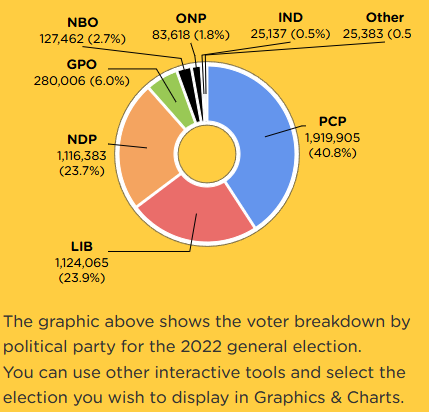
Alumni to Amend Section 93 Ontario

Opposition to Ontario’s public funding of faith-based schools is almost exactly as old as the funding itself. Unfortunately, organized opposition to public funding has not yet pulled together the right combination of strategy and execution to succeed the goal to put an end to the human rights violation at the core of Ontario’s education system.

However – the ambition continues. Alumni to Amend Section 93 Ontario (AA93) represents former students and their supporters fighting to end the public funding of Catholic education in Ontario. Ontarian taxpayers pay for an inefficient, discriminatory education system that causes both Catholic and Public boards to divert resources away from their classrooms.

The organizations’ website states that it was founded in May of 2023 by Christina Cody. Cody comes from a long line of Catholic school attendees and was educated via the York Catholic District School Board. It was that board’s adoption of a set of anti-LGBTQ+ policies that Cody couldn’t accept. Disheartened to see that the faith-based school system’s ideologies and actions hadn’t changed, Cody was inspired by other former attendees who disavowed the actions of the YCDSB. 

AA93 states that it is driven by and centered on “the experiences of former students and teachers who have attended and been employed by Catholic school boards. Those who have worked and been educated within these boards paint a picture of systematic bullying, abuse, and marginalization that is encouraged and supported by church teachings.”

Opposition to public funding of faith-based schools is, of itself, a correct and worthy thing. Perhaps strategies borne of the alumni of the system will be more successful than those that have started outside the machinations of the Catholic church. We can only hope so, and encourage renewed efforts to bring greater fairness, equality and efficiency to Ontario.

Citations, References And Other Reading

  1. Featured Photo Courtesy of :

By continuing to access, link to, or use this website and/or podcast, you accept the HumanistFreedoms.com and HumanistHeritageCanada.ca Terms of Service in full. If you disagree with the terms of service in whole or in part, you must not use the website, podcast or other material.

The views, opinions and analyses expressed in the articles on Humanist Freedoms are those of the contributor(s) and do not necessarily reflect the views or opinions of the publishers.