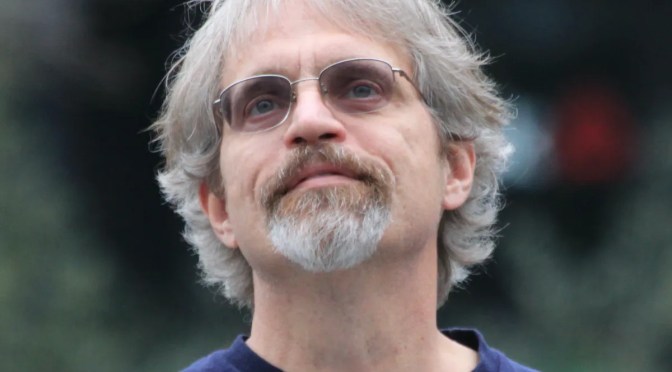
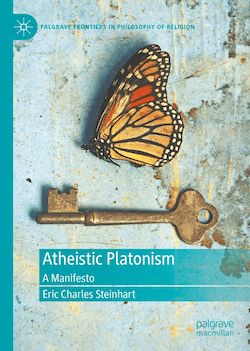
Eric Charles Steinhart is Professor of Philosophy at William Paterson University. Among many articles and books, he has authored Your Digital Afterlives: Computational Theories of Life after Death, The Logic of Metaphor and Believing in Dawkins: The New Spiritual Atheism. You may wish to visit Steinhart’s website for chapter abstracts as a sampler.
According to Steinhart, “Atheistic Platonism is an alternative to both theism and nihilistic atheism. Where atheisms based on materialism fail, atheisms based on Platonism succeed.
Atheistic Platonism provides reality with foundations that are eternal, necessary, rational, beautiful, and utterly mindless. It argues for a plenitude of mathematical objects, and an infinite plurality of possible universes.
Atheistic Platonism provides mindless rational grounds for objective values, and for objective moral laws for the persons who evolve in universes.
Atheistic Platonism defines a meaningful and spiritually deep way of life, which facilitates ethical self-improvement.
Atheistic Platonism includes computational theories of life after death, in which humans ascend through transhuman and superhuman degrees of animal excellence.
Atheistic Platonism includes a rich system of spiritual symbols. It values transformational practices and ecstatic experiences.”
The views, opinions and analyses expressed in the articles on Humanist Freedoms are those of the contributor(s) and do not necessarily reflect the views or opinions of the publishers.
By continuing to access, link to, or use this website and/or podcast, you accept the HumanistFreedoms.com and HumanistHeritageCanada.ca Terms of Service in full. If you disagree with the terms of service in whole or in part, you must not use the website, podcast or other material.
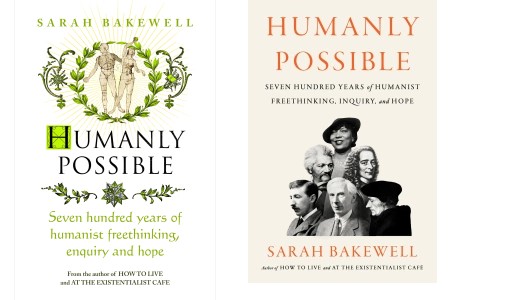
There’s a new history of humanism coming to libraries and bookstores in March that you may want to get your order(s) in for now! Written by Sarah Bakewell, Humanly Possible: 700 Years of Humanist Freethinking, Inquiry and hope promises to introduce “us to some of these people, as it asks what humanism is and why it has flourished for so long, despite opposition from fanatics, mystics and tyrants. It is a book brimming with ideas, personalities and experiments in living ‒ from the literary enthusiasts of the fourteenth century to the secular campaigners of our own time, from Erasmus to Esperanto, from anatomists to agnostics, from Christine de Pizan to Bertrand Russell, and from Voltaire to Zora Neale Hurston. It takes us on an irresistible journey, and joyfully celebrates open-mindedness, optimism, freedom and the power of the here and now ‒ humanist values which have helped steer us through dark times in the past, and which are just as urgently needed in our world today.“
Whether you think of yourself as a humanist or not, an education in ethical, philosophical and religious material is essential to navigating the ever-more complicated and challenging options and opportunities that we face as individuals and society. Bakewell’s book presents a history of humanism for those who are drawn to humanism, literature and the humanities as well as those who may prefer to base their moral choices on fellow-feeling and responsibility to others, rather than on religious commandments.
Bakewell’s book tells the story of the many extraordinary individuals throughout history who have put rational inquiry, cultural richness, freedom of thought and a sense of hope at the heart of their lives.
The views, opinions and analyses expressed in the articles on Humanist Freedoms are those of the contributor(s) and do not necessarily reflect the views or opinions of the publishers.
By continuing to access, link to, or use this website and/or podcast, you accept the HumanistFreedoms.com and HumanistHeritageCanada.ca Terms of Service in full. If you disagree with the terms of service in whole or in part, you must not use the website, podcast or other material.
As 2022 draws to a close, HumanistFeedoms.com extends greetings of the season. Regular visitors to the site may notice a number of changes to the site in the coming weeks as we prepare for a new year and some changes in our strategic plan for the website.
Earlier this year we launched our logo (as seen at right). The logo design is intended to convey contemporary humanist principles which we try to fulfill and convey with every new article that we post:
the “Happy Humanist” emblem is used to stay maintain a close connection to Humanist organizations around the world;
the logo features three figures, each rooted in a common point (humanism and human rights and freedoms) while reaching for joy in their individual directions (individuality and diversity;
the figures are green to symbolize a connection with the environment (Eco-Humanism)
You may have noticed that we have added the brand Humanist Heritage Canada to the site. This added branding is in an effort to diversify the work that we do.
Currently, and for the foreseeable future, you will be able to find the site using either humanistfreedoms.com or humanistheritagecanada.ca. The branding of our Humanist news activities will continue as HumanistFreedoms.com and will continue as the “News” (blog) feed and menu item.
The website will be updated with a focus on stories and information under the theme of Humanist heritage in Canada and from a Canadian perspective. We look forward to providing educational content about important Humanist individuals, organizations and events.
Finally – we will also be launching a new podcast in January called The Humanist Freedoms Podcast by Humanist Heritage Canada. Stay tuned, as they stay, for more!
We need your help! To continue growth, we need help tracking and telling important stories. The project is volunteer-driven and self-funded. If Humanism is your thing and you like what we’re doing around here, we’d love to talk about how you could joining the team.
Citations, References And Other Reading
Featured Photo Courtesy of
The views, opinions and analyses expressed in the articles on Humanist Freedoms are those of the contributor(s) and do not necessarily reflect the views or opinions of the publishers.
By continuing to access, link to, or use this website and/or podcast, you accept the HumanistFreedoms.com and HumanistHeritageCanada.ca Terms of Service in full. If you disagree with the terms of service in whole or in part, you must not use the website, podcast or other material.
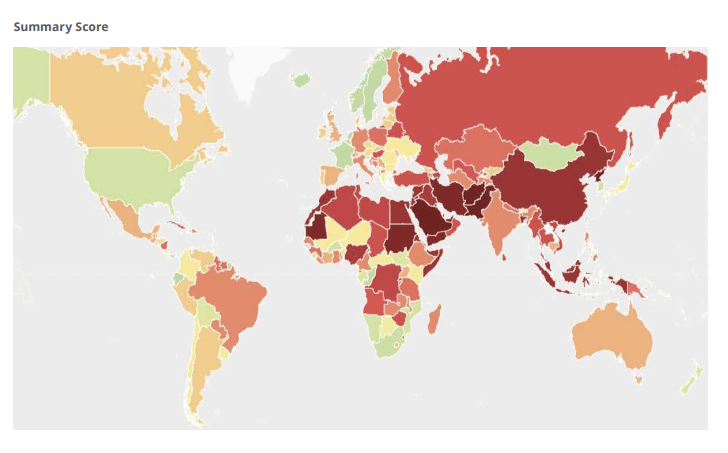
On December 8, 2022 Humanists International launched the 2022 Freedom of Thought Report. In the report, HI concludes that only 4% of the global population live in societies that are truly secular, where there is a clear separation of religious and political authorities, that do not discriminate against any religion or belief community.
“This year’s Report provides evidence of clear and systematic discrimination against humanists and non-religious people, and this discrimination is most prevalent in countries with less state secularism. State secularism appears to be a prerequisite for the full enjoyment of the right to freedom of religion or belief.”
Andrew Copson, President of Humanists International
According to the organization’s research, 70% of the world’s population live in countries where the expression of humanist values is severely repressed; where the full realization of one’s right to freedom of religion or belief is impossible. The result: harsh penalties for apostasy; a higher likelihood of the perpetuation of harmful traditional practices; religious nationalism entrenching conservative values within society.
Through 10 country chapters, this year’s Key Countries edition demonstrates theprogressive erasure of the principle of secularism across the globe, and with it a decline in the protection of human rights. On the other hand, the report also exposes how extreme enforcement of so-called “neutrality” in the name of secularism can also impinge on the rights of others.
The Report exposes the harmful social and political consequences of both extremes of the spectrum of secularism, supporting the organization’s assertions that true secularism, which is inclusive of all, “is the best approach to politics and the ordering of states, and that it has proved itself to have greater potential for human freedom, happiness, and equality than all other political settlements in history.”
In HumanistFreedoms.com’s coverage of the 2020 edition, we indicated that the report contains an entry for every country in the world and uses a unique rating system ranging from “Fee and Equal” to “Grave Violations”. Canada’s rating overview states:
“Canada is a federal parliamentary democracy, extending north into the Arctic Ocean, and sharing the world’s longest land border with the United States. Despite what should be strong constitutional protections for freedom of thought and expression, significant religious privileges are in force, both nationally and in several of its ten provinces and three territories.“
Canada’s rating does not appear to have been altered since the 2022 edition, as there doesn’t appear to be any significantly new information presented. This lack of an update appears to be based on some strategic changes in the way the FOTR is published.
The last page of the report that bears any kind of text explains that the report is a worldwide survey of discrimination and persecution against humanists, atheists and the nonreligious published by Humanists. While the report is intended to be continuously updated, HI’s goal is to update 40 countries each year on average and to continue to publish a “Key Countries” edition.
While HI doesn’t appear to have much new to say about Canada at this time, you may be interested in the infographics showing overall ratings:
Watch Listvs. Key Countries
HI’s most recent report contains a “watch-list” of countries the organization continues to monitor but for which no new entry is provided. Meanwhile, the “key countries” section of the report updates 40 countries.
One Big Indicator
In November of 2022, we publishedour own story where we suggested that a significant indicator of concern is any state which retains a religious police force.
At this time, seven nations have formalized and explicitly-designated religious police: Afghanistan, Indonesia, Iran, Malaysia, Nigeria, Saudi Arabia and Sudan. These are a dirty seven which should be under international scrutiny and pressure to discontinue faith-based policing – a practice that is nothing other than state violation of fundamental human rights.
What Big Indicators would you add to HI’s list and our reporting?
The views, opinions and analyses expressed in the articles on Humanist Freedoms are those of the contributor(s) and do not necessarily reflect the views or opinions of the publishers.
According to their website, The Canadian Hospice Palliative Care Association (CHPCA) is “the national voice forHospice Palliative Care in Canada. Advancing and advocating for quality end-of-life/hospice palliative care in Canada, its work includes public policy, public education and awareness. Established in 1991, its volunteer Board of Directors is composed of hospice palliative care workers and volunteers from Canadian provinces and territories as well as members-at-large.”
It is always interesting to observe an organization declare itself to be “the” national voice for this, that or the other thing. That particular phrasing seems to presume, preclude or presuppose a variety of details, matters and alternatives. While this article isn’t an exploration of how organizations may be created out of nothing more than a handful of individuals with a common interest to become The National Voice on a given topic, it is interesting to note that the Government of Canada says that applying to be a charity is a four-step process. You’d think it would be more complicated than that.
On a rather tangential detail, did you know that Sue Rodriguez was diagnosed with amyotrophic lateral sclerosis (ALS) — also known as Lou Gehrig’s disease — a quickly progressing neurological disease that attacks the nerve cells controlling voluntary muscle movement in 1991?
At that time, medical assistance in dying was illegal in Canada.
While the timeline of CHPCA’s creation and Sue Rodriguez’s diagnosis may earnestly be assumed as nothing more than coincidence, it does make one wonder what CHPCA’s policies and attitudes may be about medical assistance in dying. Fortunately, CHPCA has a page on their website dedicated to ethics. On that page, it says:
Palliative Sedation
Palliative sedation refers to the use of pharmacological agents to reduce consciousness with the intention of providing relief for intractable symptoms when all other possible therapeutic options have failed. This intervention is only considered in a patient who has been diagnosed with an advanced progressive illness and typically the patient is perceived to be close to death (i.e. in the last two weeks of life). Generally, the goal is the lowest level of sedation required to achieve the desired comfort level/control of symptoms; therefore, specific pharmacological agents are generally started at the smallest possible dose and titrated upwards to effect. This therapy is distinct from medical assistance in dying, as the intention is not to hasten death or shorten one’s life. Common indications include intractable cases of agitated delirium or dyspnea, massive hemorrhaging, and refractory seizures—all of which are extremely distressing to a patient3. The role of palliative sedation in psychological, spiritual, or existential distress is unclear. Commonly, the experience of having a patient sedated can be a conflicting and emotional time for families and caregivers; it is therefore crucial to ensure they receive appropriate psychosocial and spiritual support.
Responding to requests for assisted dying
When patients are confronted by their life-limiting illness and experience loss of function in their day-to-day lives due to their disease, it can be very distressing. In their suffering, some patients become compelled to wish for a hastened death. Some of those patients may endorse some passive suicidal thoughts, whereas others are insistent about wanting to end their lives in a specific moment with medical assistance. With recent developments in the movement for medical assistance in dying (MAID) in Canada, it is important for healthcare practitioners to recognize these requests and respond appropriately. Regardless of whether an individual healthcare practitioner supports or stands against this controversial topic, it is important that patients are still heard. Perhaps patients fear a protracted disease course with intractable symptoms, or they are distressed by the disability that their illness brings—regardless of what is driving their request, it is crucial for healthcare practitioners to recognize that there is some unaddressed suffering at the root of this request that needs further exploration.
On another tangential note. It wasn’t our idea to place those two paragraphs together. That’s the way we found them. The bold font is, admittedly, our innovation.
Despite CHPCA’s suggestion that palliative sedation’s role in distress is unclear, it does seem clear that CHPCA’s ethics suggest that dosing someone into un- or semi-consciousness in the clinically-expected final two weeks of their existence is reasonable as well as clinically and ethically sound.It may also be observed that CHPCA understands that patients should be heard. One wonders how articulate an individual who has been medicated into un- or semi-consciousness may be.
For those who are able to communicate strongly enough that their care-takers hear them, CHPCA’s ethics also make clear that any unaddressed suffering still needs to be explored. Even during the clinically-expected final two weeks of life. Ethics is such an interesting term.
While still able to make her voice heard, Sue Rodriguez asked whose life it was to continue or end, if not her own. It would be interesting and informative if CHPCA posted a clear, direct and unequivocal answer to that question on their ethics website.
Until then we’ll just have to infer.
On an Unrelated Matter
Dying With Dignity Canada (DWDC) is the national human-rights charity committed to improving quality of dying, protecting end-of-life rights, and helping people across Canada avoid unwanted suffering.
DWDC hosted the 2022 World Federation of Right to Die Societies (WFRTDS) International Conference in Toronto from November 3 to 6, 2022. The event brought international delegates and local attendees together. It was the must-attend event for clinicians, lawyers, advocates, and supporters who wanted to learn more about assisted dying in Canada and around the world.
DWDC’s 2023 to 2025 strategic plan states that the organization will “lead national advocacy efforts to eliminate obstacles to end-of-life choice, including access to advance requests and end forced transfers.” This is in an effort to:
To protect the constitutional right of Canadians to MAID
To identify and remove new and ongoing barriers and challenges to choice-in-dying
To ensure accurate information is easily available
What is a “forced transfer“? It seems to be what may happen if you’d rather end any unaddressed suffering in the final days of your life rather than be medicated into unconsciousness or have your suffering otherwise explored.
HumanistFreedoms.com wonders how long it will be until some ethical folks take the necessary four steps to ensure that there are institutions and facilities in place that provide a straight-forward palliative care alternative to all this forced transfer bullshit. But we suppose that things are probably more complicated than that.
The views, opinions and analyses expressed in the articles on Humanist Freedoms are those of the contributor(s) and do not necessarily reflect the views or opinions of the publishers.
In September of 2022, HumanistFreedoms.com shared information about Humanists International‘s expression of deep concern regarding what it has called “the judicial harassment of poet and filmmaker Leena Manimekalai” and regarding Humanist Ottawa’s subsequent letter to the Canada Excellence Research Chair in Migration and Integration, Dr. Anna Triandafyllidou.
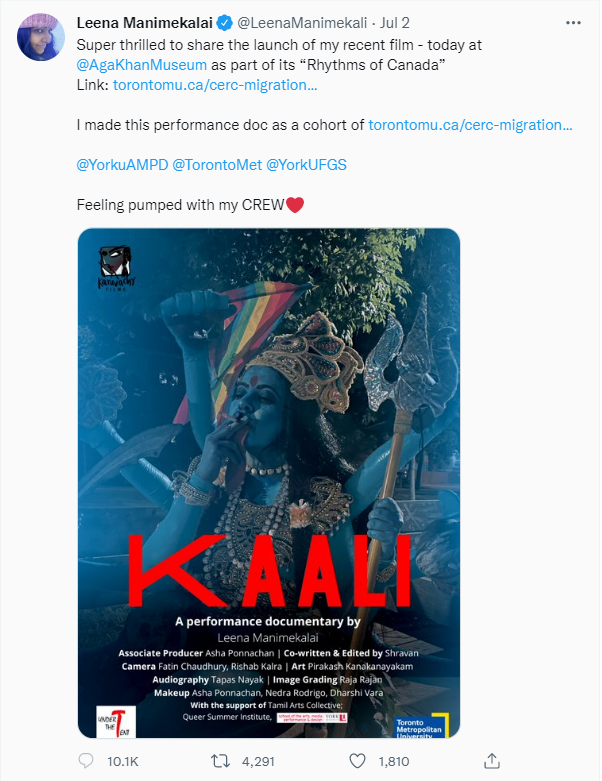
Manimekalai, who has previously identified as bi-sexual, had been selected to produce a creative piece on multiculturalism in Canada as part of the national level academic programme ‘Under the Tent’ organized by CERC Migration – Toronto Metropolitan University. The film, ‘Kaali’ was launched at the Aga Khan Museum on July 2, 2022.
Soon the inevitable occurred. As the film came to the wider attention, some people were offended and began to express outrage and hate. This controversy led TMU and the Aga Khan Museum to pull Manimekalai’s film and to apologize to any (essentially anonymous) offended parties.
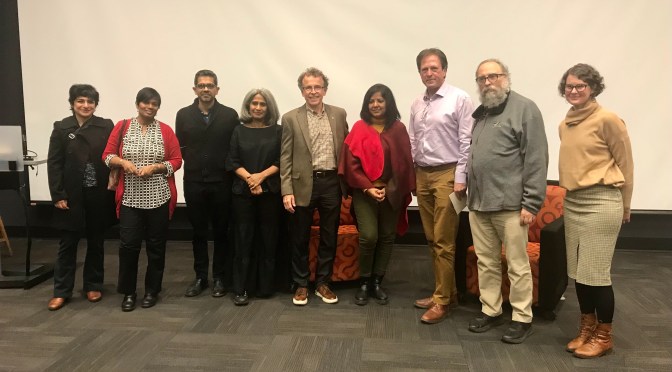
Richard Dowsett, HAT spokesperson was one of the scheduled speakers and delivered a “wonderful and incisive statement” which received enthusiastic applause. News of Dowsett’s reception at the event was shared with us by another humanist named Richard who was in attendance – Richard Thain.
Thain, who has his own experience with censors violating his charter right to freedom of expression, was also invited to speak when the event organizers learned that a Humanist Ottawa board member was present:
It is a pleasure to join you for this important event. I was just invited a few minutes ago to say a few words, so I don’t have a prepared statement, but I don’t need a prepared statement to tell you, simply from my heart, how proud I am to stand here, with all of you, ( with a gentle wave toward the audience) in support Leena Manimekalai. And I don’t need a prepared speech to tell you, Leena, how strongly we support artistic freedom and how much we, at Humanist Ottawa, admire your creativity and perseverance, in the face of adversity. (audience actually applauded several times).
As an historical aside, in 1954, the Humanist Fellowship of Montréal was founded by a man originally from India, Dr R K Mishra, a professor at Universite de Montréal. This became one of the founding groups of the Humanist Association of Canada in 1968 (now Humanist Canada).
I drove here from Ottawa, not only to support Leena, but also to oppose those people who have given-in to the “Heckler’s Veto.” People who should know better!
Our Humanist Ottawa president, Robert Hamilton, could not be here this evening, as he is presently out of the country, but he sends his warm greetings and support.
Thain also read Humanist Ottawa’s letter to TMU and the leadership of The CERC in Migration and Integration.
According to BlogTO and other mainstream media outlets, the “sold-outevent, which also featured another of the creative’s films, was sponsored by the Centre for Free Expression, PEN Canada, the Poetic Justice Foundation and other champions of free speech and creative expression as a protest against censorship.“
HumanistFreedoms.com congratulates Leena Manimekalai for courage and creativity and all of the individual and organizational supporterswho didn’t leave as unchallenged the censors and the un-named (and therefore un-identifiable) offended attempt to stifle the fundamental human right to freedom of expression.
The views, opinions and analyses expressed in the articles on Humanist Freedoms are those of the contributor(s) and do not necessarily reflect the views or opinions of the publishers.
On August 9, 2020, HumanistFreedoms.com published our first article about Mubarak Bala. At that time, we featured Wole Soyinka’s all-too-prophetic condemnation of the Nigerian government’s treatment of Bala:
“When I accepted the International Humanist Award at the World Humanist Congress in 2014, I spoke of the conflict between Humanists and Religionists; one of enlightenment versus the chains of enslavement. Your arbitrary incommunicado detention over the last 100 days is the cruel reality of this conflict. All too often these chains of enslavement lead directly to the gallows or a prison cell.“
On April 5, 2022 – the Kano High State Court sentence Bala to 24 years imprisonment following a guilty plea to 18 charges blasphemy and public incitement. As the president of the Humanist Association of Nigeria, Mubarak Bala is a prisoner of religious tyranny.
BBC Africa has recently published a documentary titled “The Cost of Being an Atheist” which carries a terrible reminder of just how correct Wole Soyinka’s words were. Too often and far too readily, tyrants curtail free speech with arbitrary actions which lead to prison cells and worse.
Mubarak Bala is a chemical process engineer. A husband. A father. He and his family deserve better than this. They don’t just deserve better – they had a fundamental right to better.
And so does every living person, regardless of the country they live in or the beliefs or non-beliefs that they may have. That’s why the freedom of thought, freedom of expression and freedom of religion (including freedom from religion) are called FundamentalFreedoms.
The views, opinions and analyses expressed in the articles on Humanist Freedoms are those of the contributor(s) and do not necessarily reflect the views or opinions of the publishers.
The Middle East has never been far from the headlines.
The last 100 or so years has seen the Middle East to be the center of continuous struggles starting with the end of the first world war, the subsequent collapse of the Ottoman Empire and over the next forty or so years the withdrawal of the western powers from the region.
Many of these struggles led to bloody conflicts, some between Arab countries and Israel, and others between allegedly secular or progressive republics and conservative monarchies.
Starting in the mid 1970’s the Middle East has been the scene of the resurgence of Islamic revivalist forces attempting to replace both republics and monarchies, and to overthrow all aspects of modernity. This in turn led to resistance by secular groups; some uneasily allied with the existing regimes, while others doing so enthusiastically while ignoring or justifying corruption and repression.
This sad state of affairs has obscured a lively fermentation of enlightened intellectual thought asserting the necessity of secularism for progress and modernity to take hold, and triggered strong reactions from forces seeking to reinforce religious privileges and blunt any progress.
Professor Hamed Abdel-Samad will describe for us these countervailing forces and the prospects for the future.
About Hamed Abdel-Samad Hamed Abdel-Samad is a German-Egyptian writer and political scientist.
Hamed was born in Egypt and grew up in a devout Muslim family, his father being an Imam. He studied French and English at Ain Shams University in Cairo during which time he joined the Muslim Brotherhood. That close association triggered within him a skepticism of Islam, and led to him eventually abandoning it.
He moved to Germany at age 23 to study political science at Augsburg University, subsequently taught Islamic studies at Erfurt, conducted research at Munich University and worked as an educational expert for UNESCO.
He has authored several books in German and Arabic with titles translating to “Muhammad– A final reckoning”, “The downfall of the Islamic world”, “My farewell to heaven”, “War or peace – The Arab revolution and the future of the West”, and most recently “What the commoners don’t know about Islam: A brief history from Mohammed to the present”. One book, “Islamic Fascism”, has been translated into English and released by Prometheus Press in 2016.
Hamed appears frequently on German television, and is very active on his YouTube channel Hamed.TV (also the name of his website). There he released series of talks called “Box of Humanity” and “Box of Islam” that deal with life, with history and with Islam. He is a sought after guest on many other YouTube channels.
Unfortunately Hamed’s has rarely appeared on English language media.
The views, opinions and analyses expressed in the articles on Humanist Freedoms are those of the contributor(s) and do not necessarily reflect the views or opinions of the publishers.
In January of 2022, HumanistFreedoms.com reported on a human rights challenge to the Province of Ontario’s public-funding of Catholic schools led by an organizations named One Public Education Now (OPEN). Recently, OPEN has sent us an update on their work.
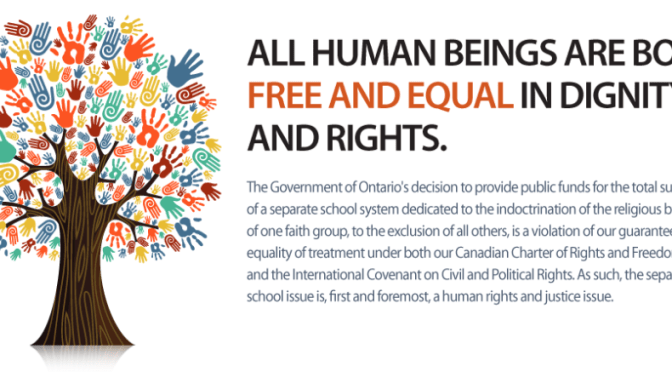
Two members of OPEN are plaintiffs in a Charter of Rights challenge to the current funding of separate schools in Ontario. The lawsuit states the funding of non-Catholics in separate schools and the funding of Grades 11 and 12 are not protected from Charter challenge and violate the s.15(1) guarantee of equal protection and benefit of the law for all religions and beliefs (including beliefs in no religion).
The two plaintiffs are a teacher who cannot obtain a teaching position in one-third of publicly-funded separate schools because she is not Catholic, and a parent whose children must travel an extra 80 minutes per day in order for them to have a non-denominational public education, and not a publicly-funded Catholic education.
The Attorney-General of Ontario has brought a Motion to Dismiss the Application before it even gets to a full hearing. The Motion is scheduled for Friday, November 25, 2022 and we think it will not be successful for various reasons including that the funding of non-Catholics in separate schools has not been ruled on by any court in Ontario. But obviously it means further delay and further expenses. We have already raised over $175,000, but we know we need to raise more. People can find out more on our website, https://open.cripeweb.org/, where they can also donate through secure PayPal or by E-transfer to open@cripeweb.org.
The views, opinions and analyses expressed in the articles on Humanist Freedoms are those of the contributor(s) and do not necessarily reflect the views or opinions of the publishers.
On November 16, 2022, HumanistFreedoms.com was notified by Feedspot.com that we made their list of the top 15 Humanist blogs on the web. According to the content reader site, HumanistFreedoms.com earned a #10 rating based on: traffic, social media followers, domain authority andfreshness.
Feedspot further explains the basis of their rankings as:
Relevancy
Industry blogs (those not favoring a specific brand) are given higher rank than blogs by individual brands (who often tend to promote their own products).
Blog post frequency (freshness)
Social media follower counts and engagements
Domain authority
Age of a blog
Alexa Web Traffic Rank, and many other parameters.
Feedspot claims to routinely remove inactive blogs as well as those that aren’t relevant to any given list. Lists are updated as they receive new blog submissions to ensure updated rankings every few weeks.
When notifying us of this honour, Anuj Agarwal (a founder of FeedSpot) said, “I personally give you a high-five and want to thank you for your contribution to this world. This is the most comprehensive list of Top 15 Humanist Blogs on the internet and I’m honored to have you as part of this!“
Feedspot discovers, categorizes and ranks blogs, podcasts and influencers in several niche categories. We have curated over 250,000 popular blogs and categorized them in more than 5,000 niche categories and industries. With millions of blogs on the web, finding influential, authority and trustworthy bloggers in a niche industry is a hard problem to address. Our experience leads us to believe that a thoughtful combination of both algorithmic and human editing offers the best means of curation.
You may wish to view Feedspot’s top-15 rankings to learn about other leading Humanist blogs that you may find useful or informative.
We thank Anuj Agarwal and the Feedspot team for being recognized in it’s rankings!
The views, opinions and analyses expressed in the articles on Humanist Freedoms are those of the contributor(s) and do not necessarily reflect the views or opinions of the publishers.














 Humanist Heritage Canada