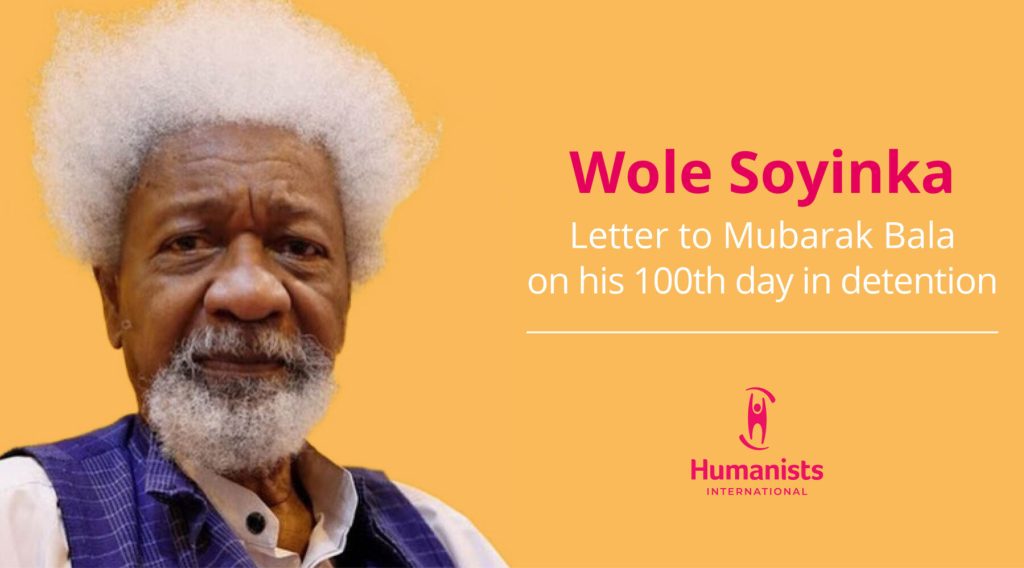
Wole Soyinka: The Concept of Blasphemy Should Not Even Exist in a Secular State

In our search for interesting, challenging and critical perspectives on contemporary humanism, we occasionally find articles published in other venues that we think humanistfreedoms.com readers may enjoy. The following article was published on April 19, 2021 on:

The Punch


By: Solomon Odeniyi

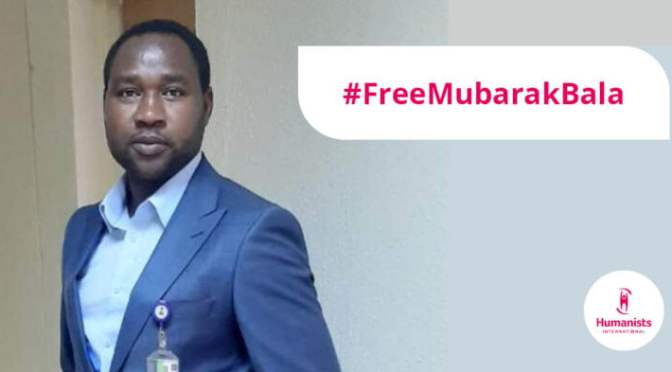
Nobel Laureate, Prof. Wole Soyinka, has lambasted Governor Abdullahi Ganduje of Kano State for his hypocrisy and promotion of religious intolerance in the state which allegedly contributed to the 24-year jail term handed down to atheist, Mubarak Bala.

In a telephone interview with The PUNCH, Soyinka said the sentence handed down to Bala must be appealed at once even as he argued that it was hypocritical of the Ganduje government and the Sharia authorities to be chasing blasphemers while the governor himself saw nothing wrong in stuffing his babariga outfit with dollars.

Ganduje was in 2018 caught on video stuffing his outfit with wads of dollars presumed to be kickbacks, a development which attracted criticisms from several pro-transparency groups.

The governor however denied receiving kickbacks.

Soyinka said he was shocked by Ganduje’s statement wherein he promised to sign the death warrant of musician, Yahaya Shariff, who was convicted for blasphemy in 2020.

“You can imagine a governor saying he would sign the death warrant of a musician for blasphemy! For me, it is nothing short of a crime against humanity. It reeks of hypocrisy. This was the same governor that was stuffing his outfit with dollars.

“I have deliberately not called for his arrest because he enjoys immunity. But these are the people who arrest blasphemers,” said the Nobel Laureate.

When asked if he would be seeking Ganduje’s prosecution after he leaves office, Soyinka responded, “Of course, the authorities know what to do once he leaves office.”

He added that it was hypocritical of the northern leaders to hound blasphemers while turning a blind eye to corruption.

The Nobel Laureate called on civil society groups to launch a campaign against the 24-year imprisonment of Bala even as he insisted that the moves should be made to immediately appeal the sentence.

“I am glad that the conviction will be appealed but I think it is imperative for rights groups to launch a campaign against these atrocities. Nigeria is a secular nation and has no state religion. The conviction is one of the fallouts of the so-called Sharia that was adopted by some of these states years ago.

“We are not in the dark ages or cavemen. No one should be imprisoned for their religious views. The concept of blasphemy should not even exist in a secular state,” he said.

Also in an interview with The PUNCH, Bala’s lawyer, James Ibor, said the matter would be appealed soon.

The lawyer said the 24-year sentence handed to his client was outrageous, adding that the court even lacked the jurisdiction to hear the matter in the first place.

Ibor lamented that despite a Federal High Court in Abuja ordering the release of his client, the authorities refused to obey the order.

“We will appeal the matter very soon. This is a travesty of justice. My client only pleaded guilty because he and his family had been receiving threats and just decided to end it all. And even after pleading guilty, the sentence should not have exceeded five years based on Kano sentencing guidelines and he has already been in detention for two years which means he shouldn’t have been given more than three years,” Ibor said.

Human rights lawyer, Mr. Femi Falana (SAN), also condemned the sentence, adding that he was sure the matter would be overturned once it is challenged at the Court of Appeal.

“The conviction will not stand the test of an appeal. He should also apply for bail. No doubt, the Court of Appeal will uphold his fundamental rights of freedom of conscience and freedom of expression,” Falana said.


Citations, References And Other Reading

  1. Featured Image Courtesy:
  2. https://www.msn.com/en-xl/africa/other/soyinka-accuses-ganduje-of-hypocrisy-over-atheist-s-imprisonment/ar-AAWneX2?ocid=BingNewsSearch
  3. https://www.theguardian.com/world/2021/apr/28/un-condemns-one-year-detention-of-nigerian-humanist-mubarak-bala?msclkid=6998673bc5b911ec882193d39ff8250c

The views, opinions and analyses expressed in the articles on Humanist Freedoms are those of the contributor(s) and do not necessarily reflect the views or opinions of the publishers.

Faith Under Fire -BBC Africa Eye Documentary

For hundreds of millions of Africans, Christianity is the cornerstone of their existence. But an explosion of rogue pastors exploiting the trust and belief of their followers for profit and power has led to a fight for the soul of Christianity in Africa.

Africa Eye reporter Peter Macjob travels to Uganda to meet the new religious movements rejecting Christian conventions, the traditional pastors working hard to maintain their flocks, the families who have suffered tragic losses at the hands of rogue pastors, and those who have abandoned religion altogether.

Over 80% of the population in Uganda are Christian. Churches offer blessings, life changing miracles and exorcisms’ of evil spirits.

In 2000 a cult in Kanungu, Western Uganda called the Movement for the Restoration of the Ten Commandments of God – believed the new millennium signalled the end of the world. Over 500 members of its members were put in a church. The doors and windows were nailed shut and the church was set alight. Everyone in the church died.

In Kagadi, Western Uganda thousands of followers belong to a religious sect known as ‘Faith of Unity’.  Their leader Omukama Bisaka perceived himself as God with supernatural powers. Despite passing away 1 year ago many of his followers believe that he will return. Faith of Unity is so popular that it has support from the government, including the President. Their teachings reject the bible as they are of the view that it has been introduced to distort the minds of Africans.  Instead, they use a version that was written by their former leader Bisaka. In theirs, Jesus does not exist and their leader is portrayed as a Deity.

Asiimwe George William was a senior leader in the Faith of Unity for over 20 years.  He tells Africa Eye: “When I read the characteristics of a cult I discovered that we actually belonged to a cult.” He admits things were made up; “Things we used to concoct, but they did not harm directly anyone. We wanted to sustain our faith. That’s why we concocted them.”

BBC Africa Eye put these claims to Faith of Unity but they declined to comment.

Pastor Rodgers Atwebembeire has spent years looking at new religious movements across East Africa. He breaks down how these leaders act. “Their word is as authoritative as the Bible. When they speak, God has spoken. Their followers are expected to obey them without question.”

Despite there being over 40,000 evangelical churches in Uganda. Many are struggling to maintain their memberships.

Peter met a family who opened up their home to a pastor and his wife. Their 4-year-old daughter was allegedly murdered by the couple for a human sacrifice. The mother says: “When you looked at him you would think he was a man of God. He used to praise, worship, and clap his hands. He would pretend to be spiritual, but it was all a lie.”

Due to the rise of rogue pastors many Ugandans are turning to other secular forms such as Humanism. Its core principles are based on accepting everyone regardless of religion, culture or sexual orientation. Pastor Rodgers Atwebembeire says: “I really do think that in the coming 10 years or 15 years we are going to see a very huge shift. We will see a lot of Humanism, not only taking over our institutions of education, but also even what used to be Christian churches and congregations.

With charlatans and conmen preying on the faith of millions, what is the future for believers in Uganda and across Africa?

Africa Eye brings you original, investigative journalism revealing secrets and rooting out injustice in the world’s most complex and exciting continent. Nothing stays hidden forever.

You can check out all #BBCAfricaEye investigations here: https://bit.ly/bbcafricaeye Credits: Reporter – Peter Macjob Filmed, Produced and Directed by Chris Alcock Archive – AP, NEXT MEDIA, IrabTV Composer – Yasmin Latkowski Film Editor – David Preston Online Editor – Chris Stott Dubbing Mixer – Jez Spencer Colour Grader – Boyd Nagle Reversioning Producer- Izzy Fleming Digital Producer – Ameer Ahmed Impact Producer – Courtney Bembridge Social Media Producer – Anusha Kumar Production Coordinator – Sarah Clarke, Charlotte Fraser Production Manager – Simon Frost Africa Eye Editor – Tom Watson


Citations, References And Other Reading

  1. Featured Image Courtesy:
  2. https://www.bukedde.co.ug/news/131061/bbc-africa-eye-investigation—faith-under-fi

The views, opinions and analyses expressed in the articles on Humanist Freedoms are those of the contributor(s) and do not necessarily reflect the views or opinions of the publishers.

SHARE THIS:

Read: Ontario’s Funding of Catholic School Systems – A Story of Systemic Faithism

The concept of systemic faithism may not be familiar to HumanistFreedoms.com readers, so as a kind of preamble to the focus of this article, consider this definition of systemic faithism as presented by the Government of Ontario’s own Ontario Human Rights Commission presented in its 2013 Human Rights and Creed Research and Consultation Report.:

Systemic faithism refers to the ways that cultural and societal norms, systems, structures and institutions directly or indirectly, consciously or unwittingly, promote, sustain or entrench differential (dis)advantage for individuals and groups based on their faith (understood broadly to include religious and non-religious belief systems). Systemic faithism can adversely affect both religious and non-religious persons, depending on the context, as discussed in the examples below. Some forms of systemic faithism can be actionable under the Code (e.g. those amounting to “systemic discrimination”), while others may not be (e.g. those taking broader cultural or societal forms). This section looks more closely at two dominant forms of systemic faithism in the current era, flowing from the “residually Christian” structuring of public culture and institutions, and from “closed secular” ideology and practice...Among the most obvious examples of residual Christianity in Ontario…public funding in Ontario of Roman Catholic separate schools, but not other religion-based schools.

How is it that a provincial government is able to simultaneously identify, define and detail a form of systemic discrimination and continuously defend and perpetuate the abuse? It’s a puzzler.

The authors of upsetting.ca have decided to do their best to explore and communicate the lengthy and, well as the website says – upsetting history of ongoing privileging of a particular community within the provinces of Ontario, Alberta and Saskatchewan (a bit of rough math reveals that roughly half of all Canadians live in a jurisdiction that continues to ensconce and fund a major form of systemic discrimination).

Upsetting’s authors make their position clear: On the practical side, the Ontario public has never sanctioned the public funding of separate school systems for Roman Catholic citizens, just politicians.  The RC school systems (French & English) were foisted upon Ontario through two dictatorial moves by politicians.  Skullduggery (trickery, dishonesty) in the highest places has maintained them.  Each post in this series will tell a different story in order to reveal all the events and the characters associated with them.  Posts will be every Sunday evening, Tuesday evening, and Thursday evening for several weeks.

You can subscribe to the series of fifteen articles/posts at: https://civilrightsinpubliceducationinc.forwardtomyfriend.com/r-hkftrjdkk-3AC2157C-tyyusdl-l-j.

A Second Thought…

Perhaps you’re interested to investigate systemic faithism from a distinctly different angle? Have a listen to a podcast from York University’s Critical Spirituality in Leadership who say that they recognize that “neutral” or “secular” views often privilege agnostic or atheist traditions and worldviews (Ontario Human Rights Commission, n.d.) and are “residually and normatively Christian” (Seljak et. al, 2008). This leads to systemic faithism.. we consider Seljak et. al’s (2008) analysis of the close connections between religion, ethnicity and race in the Ontario context and caution that Christian privilege can result in anti-religious sentiment, ethno-religious alienation, polarization, and alienation, rooted in the belief that religious practices and identities are incompatible with Canadian identity and citizenship (OHRC, n.d.). This encourages the creation of religious “ghettoes” that may lead to religious radicalization and disengagement from Canadian public life (OHRC, n.d.). We heed Butler’s (2000) warning that spirituality may be commodified in modern schooling, reducing it to individual approaches instead of situating it in larger contexts of social struggle. 

Citations, References And Other Reading

  1. https://www.ohrc.on.ca/en/human-rights-and-creed-research-and-consultation-report
  2. https://www.ohrc.on.ca/en/iii-background-and-context/4-systemic-faithism
  3. https://www.upsetting.ca/
  4. https://www.yorku.ca/edu/unleading/podcast-episodes/critical-spirituality/#:~:text=This%20leads%20to%20systemic%20faithism%2C%20which%20the%20Ontario,broadly%20to%20include%20religious%20and%20non-religious%20belief%20systems%29.

The views, opinions and analyses expressed in the articles on Humanist Freedoms are those of the contributor(s) and do not necessarily reflect the views or opinions of the publishers.

Listen: Centre For Inquiry Canada’s Podcast for Inquiry

One of Canada’s leading secular humanist organizations, Centre For Inquiry Canada (CFIC) has launched a new podcast titled The Podcast For Inquiry. The podcast appears to be available on the CFIC’s website as well as Spotify.

Leslie Rosenblood, the podcast’s host and a long-time member of the CFIC community in the Toronto area has walked through seven episodes (to date) of conversation about such topics as freedom of expression, the state of democracy in the world and Quebec’s Bill C-21.

In the most recent March 23, 2022) episode, Leslie speaks with James Turk, the Director of the Centre for Free Expression at Ryerson University about “the importance of free expression in a democratic society, the futility and counterproductive nature of censorship, and what limits on expression are reasonable and justified.”

We note that our friend and inspiration, Dr. Richard Thain’s experience of attempting to advertise in the City of Winnipeg, is featured during the conversation.

We hope CFIC continues to provide compelling and valuable insights into our most important humanist rights and freedoms.

Citations, References And Other Reading


The views, opinions and analyses expressed in the articles on Humanist Freedoms are those of the contributor(s) and do not necessarily reflect the views or opinions of the publishers.

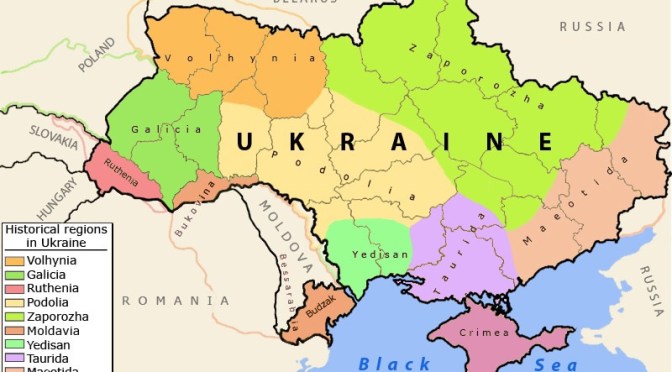
War in Ukraine 2022: What are the Humanists Saying?

On February 24, 2022, the Russian military invaded Ukraine. Whether this conflict should be considered any more or less serious than other global conflicts may be a matter for historians to consider at some future date. Currently, however, this seems to be a very concerning situation as it is viewed by some as the largest military assault in Europe since the 1940’s. This attitude seems to ignore the Bosnian war of the early 1990’s, which was no small incident.

Setting aside comparisons, the conflict in Ukraine may well be a world-changing situation. So HumanistFreedoms.com is interested to know what humanists and humanist organizations have to say. Following is a sample of what we’ve found. Are you a humanist and have something to say? Do you know about a humanist position on this situation that we ought to cover? Let us know.


February 28, 2022: Humanists International Says “Human Rights Council must act in response to Russia’s invasion of Ukraine”

Ahead of an urgent debate at the UN Human Rights Council on the Human Rights situation in Ukraine following the unprovoked and illegal invasion by Russia, Humanists International is calling for the creation of a UN mechanism to monitor and report on the situation in Ukraine and for Russia to be suspended as a member of the Human Rights Council.

During the opening of the 49th session of the UN Human Rights Council – which began this morning – Ukraine called on the Council to approve the holding of an urgent debate following the Russian invasion on 24 February.

When requesting that the debate happen, the Ukrainian Ambassador, said, “The reason for this request is known to the whole world. Russia, a member of this Council, perpetrated an unprovoked and unified attack on Ukraine.” She noted that, “Russian aggression is accompanied by a massive flow of disinformation that aims to distort the truth and mislead the international community. Some of it we will hear today, as well as in other rooms of the [UN] Palais des Nations.”

Members of the Human Rights Council approved the request of an urgent debate to be held, with 29 out of 47 countries voted in favor. China, Cuba, Russia, Venezuela and Eritrea voted against having the debate. Armenia, Cameroon, Gabon, India, Kazakhstan, Mauritania, Namibia, Pakistan, Senegal, Somalia, Sudan, UAE, and Uzbekistan abstained.

The debate is scheduled to happen on Thursday 3 March and Friday 4 March.

Ahead of the debate, Humanists International is calling for the debate to lead to the adoption of a resolution unequivocally condemning Russia’s violations of international law, including international criminal law, international human rights law and the UN Charter. It should recognise that Russia’s actions against Ukraine constitute an unprovoked and illegal invasion, and one which has, and will, result in massive human rights violations.

It is also calling for the resolution to:

  • Call on the UN General Assembly to suspend Russia’s membership of the Human Rights Council (in line with GA Resolutions General Assembly Resolution 60/251);
  • Create a Commission of Inquiry, to monitor and report on the situation in Ukraine and to promote accountability for all human rights violations;
  • Mandate a Special Rapporteur on the human rights situation in Russia itself. The oppressive human rights climate in the Russian Federation itself (including the severe restrictions on free expression, the widespread propagation of disinformation, the repression of civil society, and the intimidation, censoring and criminalisation of journalists) all contribute to the Russian government being able to wage a war of aggression without accountability at home.


March 1, 2022 on Pressenza: A Guide for Peace in Ukraine: A Humanist and Nonviolent Proposal

The Centre for Humanist Studies “Exemplary Actions”, the Portuguese branch of the World Centre for Humanist Studies, an organism of the Humanist Movement, is disseminating a non-violent proposal for the restoration of peace in Ukraine, inviting citizens and non-governmental organisations who identify with it to sign it and send it to the Russian, Ukrainian and American embassies, as well as to the United Nations (UN), the European Commission and the Ministry of Foreign Affairs of their respective countries, to sign it and send it to the Russian, Ukrainian and American embassies, as well as to the United Nations (UN), the European Commission and the Ministry of Foreign Affairs of their respective countries, in order to produce a popular outcry capable of influencing the course of events.

For your information, we transcribe here the humanist proposal in its entirety:

Whereas,

  • A nation is defined by the mutual recognition established by people who identify themselves with similar values ​​and who aspire to a common future – and this does not necessarily have to do with race or ethnicity, or with language, or with History understood as a long process that begins in a mythical past;
  • This mutual recognition between people can lead to the formation of national or plurinational States, as well as the existence of nations spread over several States, without this implying the loss of the individual’s sense of belonging to their community or preventing the possibility of convergence in diversity;
  • States do not have the potentiality to constitute, by themselves, nations and can, therefore, be transformed throughout history, since they are, for all intents and purposes, changeable social and political constructions, as models of governance of peoples ;
  • National minorities have, in any case, the right to have their cultural specificity recognized, as well as the right to self-determination, within the framework of a democratic federative organization and respect for human rights.

And recognizing that,

  • Peaceful conflict resolution requires each party to put itself in the other’s shoes, opening itself to a process of cooperative negotiation and reciprocal treatment;
  • National interests must be reciprocally attended, as far as possible, but they do not justify everything, nor can they override the human being as a central value and concern;
  • The freedom of choice of individuals and peoples only exists if it can be exercised without external pressure and interference, imposed in a violent way;
  • Humanity’s progress is not made through the constitution of empires or supranational entities that alienate the power of the social base in favour of particular economic interests, but through the construction of a Universal Human Nation, diverse and inclusive, governed by freedom, equal rights and opportunities and non-violence;

We propose the following guide for peace, given the difficult situation currently experienced on Ukrainian territory, with a view to halting the unacceptable return to war on European soil, which has caused so much life and destruction in the recent past:

  1. Immediate ceasefire between the warring parties and opening of humanitarian corridors for assistance to civilian populations;
  2. Withdrawal of Russian troops from Ukrainian territory and creation of a multinational peacekeeping force, constituted under the aegis of the United Nations (UN), for the Dombass region;
  3. Temporary demilitarization of Dombass by the belligerent forces and the possibility of the return of refugee civilian populations;
  4. Organization of a fair and free referendum on the self-determination of Dombass territory, under UN supervision, with a commitment to the acceptance of the respective results by the interested parties;
  5. Organization of a fair and free referendum on the self-determination of the territory of Crimea, under UN supervision, with a commitment to the acceptance of the respective results by the interested parties;
  6. Adoption of a status of political-military neutrality by Ukraine and recognition of its sovereignty and territorial integrity, depending on the results of the aforementioned referendums, by Russia;
  7. Lifting of all economic sanctions between the parties and resumption of international political and economic cooperation.
  8. Conducting international talks on nuclear and conventional disarmament at regional and global levels.

March 4, 2022 : The Ontario Humanist Society Condemns Russia’s Invasion of Ukraine

OHS calls for Russia to cease its illegal and unprovoked actions, and to cease all challenges to Ukraine’s independence. Russia must terminate its violation of international law and of the UN Charter, and withdraw from Ukraine immediately. There is no justification for this aggression and the cost will be borne by innocent Ukrainians. As Humanists we can NOT turn away from this humanitarian crisis. We encourage OHS members to stand behind the Ukrainian people through the many opportunities available to us, some suggestions are listed below. Our Ethical Actions Committee will further examine steps we can take to continue to show our support for Ukraine.

If you would like to donate to support Ukraine, here are some charities that you might wish to consider:

Canada/Ukraine Foundation

Ukrainian Red Cross

Canadian Red Cross Ukraine Humanitarian Appeal The Canadian Government will match all donations by Canadians dollar-for-dollar, to a maximum of $10 million.

United Nations High Commission on Refugees Canada

If you would like to provide input into Canada’s response to the situation in Ukraine:

Write to our Prime Minister https://pm.gc.ca/en/connect/contact

Or seek out an on-line petition that supports your point of view. Thank you for joining the OHS board in condemning this travesty that is unfolding before us.

Sincerely,

Kerry J. Bowser President, OHS


March 14, 2022: The Gold Foundation’s Statement in Support of Ukraine and Humanism

These tumultuous and uncertain times demand of us the greatest possible expression of humanism. As Dr. George Thibault, Trustee of the Gold Foundation, has said in his defining essay on this topic,  “It will be hard to have humanism in medicine if there is no humanism in the world around us.

We are reminded of these words as the crisis continues to unfold in the Ukraine. Russia has attacked not only military targets and soldiers but civilians, schools, homes, and hospitals. More than 30 hospitals have been destroyed, including the horrific bombing of a children’s hospital in Mariupol.

These attacks are the essence of anti-humanism, sparing no human interests, values, and dignity. They are both direct attacks on humanism in healthcare, the sphere of our work, and on the wider humanism in our world, literally the foundation of freedom, compassion and science.

Still, through the scenes of rubble and destruction, we see humanity. Humanity in the healthcare heroes dodging artillery as they work tirelessly on the frontlines of the conflict. Humanity in those rising to defend their homes, their country, and democracy at large. Humanity in the charitable donations and mobilization here in the United States and around the globe. Humanity in a time where home can be everywhere and nowhere all at once, an unfortunate truth that tells the story of so many refugees from war and conflict throughout our world.

At the Gold Foundation, in thousands of ways, we’ve seen Gold community members apply compassion, collaboration, and scientific excellence in practical, real-life ways throughout their clinical work, teachings, talks, and relationships. The culture of humanism in healthcare is the bedrock of the Gold Foundation, influencing all of our work, creating the structure and draw of the Gold community and its Gold Humanism Honor Society, whose Advisory Council voted unanimously to publish a statement on the inhumanity of the tragedy in Ukraine. It is joined by the entirety of the Gold Foundation family in standing with the efforts of humanists around the world who rally together and further humanism in all its forms. The Ukrainian people and all people affected depend on the shared mission of humanism, in this crisis and in the years to come.


March 16, 2022: Humanists International says: Belgian Humanist convoy reaches Ukraine border with humanitarian aid

After a journey of 1,500km, employees from deMens.nu and Centre d’Action Laïque reached Medyka, a village on the Polish-Ukrainian border, on Monday night.

Four vans, packed with medical supplies and other necessities, were unloaded at the tent camp yesterday, then sorted and distributed to Ukrainian refugees .

“We are all very impressed by what we have seen. It is quiet in the car, words fail everyone . Despite the confrontation with a lot of human suffering, I am particularly proud of our humanist community, which has shown its full force,” says Yasmina El Boubkari.

deMens.nu is still collecting funds to help Ukrainian refugees. You can donate to BE 55 9734 2242 6344.

With this money, deMens.nu and CAL are buying bandages, syringes, infusions,, paracetamol, ibuprofen, isobetadine, styptic drugs, antibiotics, haemostatic agents, but also baby food, milk powder, wet wipes, sanitary towels, candles, diapers, thermal blankets, gloves, hats, stockings, backpacks, thermal clothing, ski clothes, sleeping bags, food preserves and ready meals.


Citations, References And Other Reading

  1. Featured Photo Courtesy of
  2. https://www.ontariohumanists.ca/post/the-ontario-humanist-condemns-russia-s-invasion-of-ukraine
  3. https://www.gold-foundation.org/newsroom/news/statement-in-support-of-ukraine-and-humanism/
  4. https://en.wikipedia.org/wiki/2022_Russian_invasion_of_Ukraine
  5. https://www.elephantjournal.com/2022/03/war-humanism-racism-in-ukraine-when-people-arent-just-people-anymore-james-ezimoha/
  6. https://www.pressenza.com/2022/03/a-guide-for-peace-in-ukraine-a-humanist-and-nonviolent-proposal/
  7. https://humanists.international/2022/02/humanists-international-human-rights-council-must-act-in-response-to-russias-invasion-of-ukraine/
  8. https://humanists.international/2022/03/belgian-humanist-convoy-reaches-ukraine-border-with-humanitarian-aid/

The views, opinions and analyses expressed in the articles on Humanist Freedoms are those of the contributor(s) and do not necessarily reflect the views or opinions of the publishers.

Humanists UK’s New President

Humanists UK is delighted to announce that acclaimed geneticist, science writer, broadcaster, and humanist Adam Rutherford will be its next President. He will succeed current President Alice Roberts in June 2022 who, like her predecessors as President, will become a Vice President of Humanists UK.

Adam has been a high-profile ambassador and patron of Humanists UK for many years, especially as an advocate for robust science education and against religious discrimination in state faith schools. As President, Adam has pledged to spearhead both those campaigns, as well as Humanists UK’s campaign for assisted dying. He will also continue Humanists UK’s work of connecting the millions of non-religious people in the UK who strongly hold to values of rational thinking, kindness, and empathy – the humanist approach to life.

According to YouGov research, over 17 million people in the UK hold humanist beliefs and values, with 5 million primarily calling themselves ‘humanists’. Around 34 million people – half the population of the UK – identify as ‘non-religious’.

Adam continues to use his platform and his insights as a geneticist to challenge racism and to promote humanist values. He delivered Humanists UK’s 2019 Voltaire Lecture, How to argue with a racist, which became the basis for his 2020 bestselling book of the same name. The lecture, and indeed, much of Adam’s work, challenged false claims from religion, pseudoscience, and simple prejudice, emphasising instead our common humanity and our capacity to build a better society. This is also the subject of his latest book, Control: The Dark History and Troubling Present of Eugenics.

Accepting the appointment, Adam Rutherford said:

‘As a geneticist, I believe strongly in our shared humanity and how, through science and the humanist values of logic, reason, and evidence, we can overcome divisions and create a society where everyone is treated equally.

Surveys show that most people in the UK are non-religious, and about a quarter hold humanist beliefs and values. Humanists can be found in so many walks of life and, by working together, there is so much we can do to help promote a better, fairer society.

I am deeply honoured to become the next President of Humanists UK and to be part of this community of like-minded, thoughtful, and compassionate people striving for positive social change.’

Adam also paid tribute to his predecessor Alice Roberts, saying:

‘Alice has done an amazing job at advancing the causes of and promoting humanism to a wider audience. She’s a hard act to follow, but it’s an honour to do so.’

Welcoming the appointment, Humanists UK Chief Executive Andrew Copson said:

‘Throughout his career Adam has used his platform as a geneticist and science communicator to challenge falsehood and prejudice in the interests of building a better society.

At a time of increased uncertainty, and when our work in bringing non-religious people together is more important than ever, we are delighted to welcome such an experienced communicator with a passion for promoting humanist values.’

Outgoing President Professor Alice Roberts commented:

‘Since 2019, I’ve been honoured to serve as President of Humanists UK and help to bring attention to our amazing work – from our ceremonies for non-religious people and the support we offer to the vulnerable in hospitals and prisons, through to our important campaigns for freedom of thought, choice, and expression. Adam is a brilliant scientist and communicator who I know will do a fantastic job promoting the values of humanism.’

Citations, References And Other Reading

  1. Featured Photo Courtesy of
  2. https://humanists.uk/2022/03/05/adam-rutherford-named-next-president-of-humanists-uk/

The views, opinions and analyses expressed in the articles on Humanist Freedoms are those of the contributor(s) and do not necessarily reflect the views or opinions of the publishers.

Alex Coghe: How to Make Humanist Photography That is Respectful of People’s Dignity

In our search for interesting, challenging and critical perspectives on contemporary humanism, we occasionally find articles published via other venues that we think humanistfreedoms.com readers may enjoy. In December of 2021, we introduced photojournalist and photography coach Alex Coghe and his approach to HumanistFreedoms.com. We asked Alex a few questions about his humanist approach and he’s kindly supplied a few answers. You may be interested to see Alex Coghe’s new book, The Ricoh Files.


By Alex Coghe

I was asked to go deeper into the humanistic aspects that inspire my photography. So I am answering to some questions.

From the project: They ask me for photos – 2021

Anything starts from this statement I proposed in a post on this blog:

I believe the dignity of the people portrayed and respect never fail.

How does this work in my photography?

Despite I am a photographer who uses spontaneous photography a lot, without asking for permission many times, i am not hiding what i do on the street. My presence as a photographer is obvious and I don’t use ninjia tactics. My every choice is made in awareness and in the will to portray reality as it is. Avoiding sensationalism or altering to make a situation more dramatic.

You can see it through my decisions to leave the photo as natural as possible without those pushed post productions that aim to contrast and make everything more dramatic. But this approach influences on a technical level also my choice of lenses ranging from 35m to 40mm. In this way I have a result more similar to that of the vision of the human eye, avoiding making people ugly due to lens distortion. Many associate with asking permission from people before photographing them with respect for them. But I don’t think so: you can also ask for permission but if your approach and your mindset is wrong people will be uncomfortable in front of your lens.

I believe that if you are a person who is really interested in the other and you are not taking a picture only for yourself, if there is real communication and intention, in respect, this is felt by the person photographed, even if you do not ask him/her before to be able to photograph him/her.

How does this relate to Humanist Photography as a genre/field?

Today we assist too many times to photographers that are not really interested in humanity and yet they photograph people. This is because they make photography for the wrong reasons: to get famous, to win awards, to have objects, pieces in their compositions and they are forgetting the individual with his/her dignity. Or simply they are photographers focused only to build their project, which is often only driven by their personality and not that of the subject and theme. In that case clearly photography is just a selfish act. And this is not good at all.

In my career I could see for my direct experience as Humanist Photography can be a great tool of change and improvement for a social issue. This is the reason hy I collaborate with NGOs and I offered my service as photographer for free in several situations.

Is there ever tension in these issues that you experience in your own work or the work that you observe others do?

A big issue is about not respecting really the culture of people. Many photographers think to solve everything by buying people. Yes, some photographers buy people. for example they use models using traditional clothing of a community, even to propose their documentary workshops. The result can obviously also have an aesthetic impact and they will be sure to bring home beautiful photos, but I consider it an absolutely negative thing to do at various levels. It is a question of a cultural appropriation which, counting with the false and the posed, also damages the sociological reception of images.

And after all we have seen how even among photographers considered masters this practice has continued for years and continues today, especially among those who today prefer to define themselves as storytellers.


In 2018 Polaris Images commissioned me a breaking news work on the situation of migrants arriving in Mexico City. Today I am talking to you about that work and how, in carrying it out, the dignity of people was the priority aspect that I took care to preserve.

In photojournalism there is a thin line that demarcates the territory of documentation from that of the exploitation of people through images. The photojournalist is required to document what is happening with images and texts. In approaching certain issues, already difficult in themselves, the photographer should take care of photographing reality as it is, without sweetening it or making it more fascinating, but above all he/she should avoid dramatizing events for his/her own gain. Unfortunately this happens more and more rarely and we are witnessing aesthetic extremes to give character to the photographic work.

The Human Caravan coverage

Hundreds of immigrants crossed the south border of Mexico from Central America (Honduras mostly) arrived in a “caravan” and they were hosted at “Casa del Peregrino” a first reception humanitarian center.

How I approached the work on assignment

I don’t do a lot of breaking news but when I do it I give my all. I document in advance on the issue to be addressed in order to have a mental order and choose a certain setting rather than another. Obviously I am aware that there will be other colleagues in the place dedicated to the documentation and I also consider the way of telling the various small stories that I will meet in a different way, in order not to have images similar to those of all the others.

I mentally referred to the work on the Great Depression commissioned in the United States by the FSA. The model had to be that to ensure dignity to the people portrayed.

The work required as much empathic contact as possible with the subjects portrayed. Talk to them and take an interest in their story before you even start taking pictures.

When I say that a photographer reveals a lot about himself I am referring to the fact that, for example, in the photos you immediately notice if the subjects feel uncomfortable and the exact opposite if, instead, the photographer was able to empathize with the subjects and do not make the act of being photographed as something to be suffered.

As a photographer, first of all, I am interested in preserving people’s dignity. In this case we are talking about people who have been forced to leave their country in spite of themselves. And where they would like to return as soon as conditions allow. All this must emerge from the photos of a truly humanist photographer.

In my head there was undoubtedly the idea of making photos as iconic as possible but at the same time in full respect of the person portrayed.

In reviewing this work after three years I am still satisfied with what I have managed to achieve.


Citations, References And Other Reading

  1. Featured Photo Courtesy ofhttps://alexcoghe.com/portfolio/project-one-z9zrg
  2. https://alexcoghe.com/journal/humanist-and-realist-at-the-center-of-the-approach
  3. https://alexcoghe.com/journal/how-to-make-humanist-photography-that-is-respectful-of-peoples-dignity

The views, opinions and analyses expressed in the articles on Humanist Freedoms are those of the contributor(s) and do not necessarily reflect the views or opinions of the publishers.

“Don’t Say It…or Else”: Blasphemy in the 2020s

Up to recently, news coverage in the 2020’s has been overwhelmingly dominated by the COVID-19 pandemic and the many considerations, concerns and controversies it has led to. Not least of these has been recurring concerns over the nature of public discourse about COVID-19, mRNA vaccines, the roles of big pharmaceutical companies, media corporations, government, churches and community organizations. One hopes that the world is emerging from active concern over the uncertainties of a global pandemic.

But our experience so far in these 2020’s out to make one think about the nature of the freedom of expression and about the various kinds of laws designed to curtail it. And it makes us think….so what is the state of blasphemy these days?

Well, as always, the Pew Research Center, has some information. A recent headline on the Pew website states that 40% of countries wordwide still have a blasphemy law on the books. That’s 79 countries. 22 countries have a law against apostasy.

A map showing that eighteen countries in the Middle East-North Africa region had blasphemy laws in 2019
Image Courtesy of Pew Research Center

As the infographic implies, most of the countries where this is a fact are in Africa and the Middle-East. With that, there’s more than a billion people on the planet for whom blasphemy, in its more original speaking-against-god(s)-and-religious-authoritarians context, is still a clear and present restriction of their fundamental human right to the freedom of expression.

Do a modest internet search at any given time, and you’ll still read such headlines as:

A list of headlines (and the situations they describe) is not, unfortunately, exhaustive, authoritative and final. There’s certainly more going on in the world of “Don’t Say it….or else” than this. But with all the pandemic distractions in mainstream media, maybe the fact that some ideologues don’t intend to tolerate ideas they don’t agree with has been escaping our collective notice? Maybe.

Maybe it’s time to catch up on some reading.

Citations, References And Other Reading

  1. Featured Photo Courtesy ofhttps://end-blasphemy-laws.org/

Citations, References And Other Reading

  1. Featured Photo Courtesy ofhttps://en.unesco.org/news/toolkit-judges-freedom-expression
  2. https://www.pewresearch.org/fact-tank/2022/01/25/four-in-ten-countries-and-territories-worldwide-had-blasphemy-laws-in-2019-2/

The views, opinions and analyses expressed in the articles on Humanist Freedoms are those of the contributor(s) and do not necessarily reflect the views or opinions of the publishers.


The views, opinions and analyses expressed in the articles on Humanist Freedoms are those of the contributor(s) and do not necessarily reflect the views or opinions of the publishers.
UNESCO Releases Judiciary Toolkit for Freedom of Expression

In our search for interesting, challenging and critical perspectives on contemporary humanism, we locate articles and information published via other venues that we think HumanistFreedoms.com readers may enjoy. The following information is drawn from UNESCO’s website.


On February 7, 2022, UNESCO (United Nations Educational, Scientific and Cultural Organization) launched the Training Manual for Judges on International Standards on Freedom of Opinion and Expression, a comprehensive toolkit for supporting judges to take into account international human rights standards on freedom of expression in their decisions, has been launched. The toolkit was prepared by the Centre for Law and Democracy (CLD) in collaboration with International Media Support (IMS), UNESCO and the Judicial Institute of Jordan, and piloted at a training of judges in Amman, Jordan in September/October 2021.The toolkit is divided into six main modules, namely: International and National Guarantees of Freedom of Expression, The Legitimate Scope of Criminal and Civil Law Restrictions on the Right to Freedom of Expression, Legal Resolution of Attacks on Freedom of Expression, The Right to Access Public Information, Media Regulation to Promote Free, Independent and Diverse Media, and Regulating Freedom of Expression in the Digital Era. It also has a number of annexes addressing common questions and answers, and containing exercises to support the training and additional resources.

The 126-page toolkit contains six modules, covering International and National Guarantees of Freedom of Expression, The Legitimate Scope of Criminal and Civil Law Restrictions on the Right to Freedom of Expression, Legal Resolution of Attacks on Freedom of Expression, The Right to Access Public Information, Media Regulation to Promote Free, Independent and Diverse Media, and Regulating Freedom of Expression in the Digital Era.

The key objective of the toolkit is to promote freedom of expression by helping judges integrate international standards on this fundamental human right into their domestic decisions. It builds on work in this area by UNESCO in Latin America and Africa but is specifically tailored to freedom of expression issues that are commonly found in the Arab World.

The launch of the tool followed a recent Massive Open Online Course (MOOC) conducted by UNESCO and the Bonavero Institute of Human Rights at the University of Oxford.

Close to 5,000 judicial actors, including judges, prosecutors, lawyers and representatives of judicial training academies, as well as civil society representatives from around the world were trained on international standards and regional jurisprudence on freedom of expression. The highest numbers of participants joined the MOOC from the Philippines, Kenya, United States, Brazil, India, Thailand, Zimbabwe and Zambia.The 5-week course, from 10 May until 07 June 2021, was unique in its global scope on freedom of expression issues, and particularly targeted judges and members of the judiciary, given their essential role in the promotion and protection of the right to freedom of expression. The course strengthened the knowledge and capacities of judicial actors on regional and international human rights standards through five Modules, including, (1) the general principles and scope of freedom of expression; (2) the limitations on the right to freedom of expression; (3) the right of access to information; (4) the question of the safety of journalists; and, (5) challenges created by the digital world .Notably, the course raised awareness of judicial actors on the legal protection and rights of journalists under international law, particularly addressing the threats, attacks and killings of journalists, the specific nature of threats against women journalists, as well as the importance to protect the secrecy of sources for journalists.

Since 2013, UNESCO’s Judges’ Initiative has trained judicial actors and representatives of civil society on the international and regional standards on freedom of expression, access to information and the safety of journalists in Latin America, Africa and the Arab region. Following the global MOOC on freedom of expression, a total number of 23,000 judicial actors and civil society representatives from 150 countries have been trained on these fundamental issues. While the first global MOOC was in English, subsequent editions will be rolled-out in additional languages in the future. The course received support from the Multi Donor Programme on Freedom of Expression and Safety of Journalists.

In continuity with these efforts to raise awareness on issues related to freedom of expression, UNESCO has also developed an explainer video on the role of the judiciary in ending impunity for crimes against journalists, available in 6 UN languages: English, French, Spanish, Arabic, Russian and Chinese.

Citations, References And Other Reading

  1. Featured Photo Courtesy of: https://en.unesco.org/news/toolkit-judges-freedom-expression
  2. https://indiaeducationdiary.in/unesco-university-of-oxford-conclude-a-mooc-for-judicial-actors-on-freedom-of-expression/#:~:text=UNESCO%20and%20the%20Bonavero%20Institute%20of%20Human%20Rights,access%20to%20information%20and%20the%20safety%20of%20journalists.
  3. https://www.youtube.com/watch?v=VuQTq2Ej6q8
  4. https://www.youtube.com/watch?v=S0NA2cI1da8
  5. https://www.youtube.com/watch?v=WTfyeYWB77U

The views, opinions and analyses expressed in the articles on Humanist Freedoms are those of the contributor(s) and do not necessarily reflect the views or opinions of the publishers.

Human Rights Challenge to Government Funding of Catholic Schools in Ontario

The following article has been compiled from information provided by OPEN.


An application stating the current funding of Ontario separate schools violates s.15(1) of the Charter of Rights has been filed at the Ontario Superior Court and served on the Ontario government on behalf of One Public Education Now (OPEN) lawyers Adair Goldberg Bieber.

Learn more about Ontario’s History of Ontario Catholic Separate School Funding by reading the only book about that we’ve been able to find.

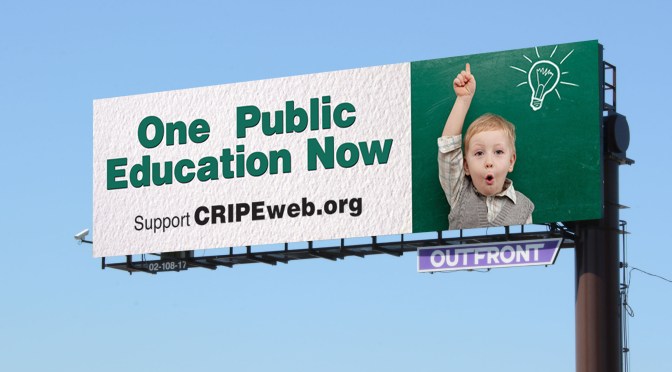
The two plaintiffs, a public high school teacher, and a parent of children in the French public school system, are founding members of OPEN (One Public Education Now). OPEN is a coalition of groups and individuals dedicated to challenging the current discriminatory funding of the schools of one religion.

Many people want to do something about this discriminatory funding of one religious school system, but don’t know what to do. Governments and political parties ignore letters, articles and petitions. But they can’t ignore lawsuits, and people can do something by contributing to our challenge.  Our lawsuit is funded by the donations of many people and needs additional funding to continue our legal fight.

The Application states there have been sufficient changes since 1987 that the Reference re Bill 30 Supreme Court of Canada ruling that the Charter does not apply to the funding of Ontario separate schools should be re-examined.

Therefore, the only rights protected from Charter challenge are those that existed in 1867 and are protected by s.93(1); and the public funding of non-Catholics at separate schools and the public funding of Grades 11 and 12 at separate schools, neither of which existed in 1867, violate the equality sections of the Charter of Rights.

Not only is the public funding contrary to the Charter of Rights, but it wastes money in duplicate administration and unnecessary busing of students at a time when money is needed for, among other things, protecting the safety of teachers and students. Estimating the savings is difficult because so many of the costs are hidden but it has been estimated up to 1.6 billion dollars a year could be saved. So many people think separate schools are funded by residential property taxes, not realizing just 7% of separate school operational funding, and none of the capital funding, come from the property taxes of residential separate school supporters.

OPEN’s Positions Regarding Funding of Catholic School System in Ontario
  • Separate schools were started under historical circumstances that no longer exist; for example, there were fights between Protestants and Catholics in public schools and Ontario agreed to protect separate Catholic schools in return for Quebec protecting separate Protestant schools; these circumstances no longer apply
  • So much has changed since the 1987 Reference re Bill 30 Supreme Court of Canada decision, such as Quebec abolishing its funding of separate schools in 1997,  that the ruling the Charter of Rights does not apply to the funding of Ontario separate schools, should be reconsidered
  • Separate schools are not paid for by separate school residential property taxes.
  • Capital funding is paid for entirely by general provincial revenues.  In general, only 7% of operating revenues of separate schools come from residential property taxes; 15% comes from business property taxes; 70% comes from general provincial funding.
  • By contrast, 15% of  public school funding comes from residential property taxes and only about 60% from general provincial funding.
  • The current system wastes money.  Boards of Trustees, Superintendents of Education, Board offices and administrative staff, are duplicated.
  • We don’t have two fire services, one for Catholics and one for everyone else.  Think of the waste if we did.
  • Students are bused to the closest public or separate school, instead of walking or being bused to the nearest publicly-supported public school.
  • Local community schools are being closed that could be kept open if all local students went to a public local school, not split between public and separate schools
  • Estimating the savings is difficult because so many of the costs are hidden but it has been estimated up to 1.6 billion dollars a year could be saved.
  • One third of Ontario publicly-funded teaching jobs are denied to the two-thirds of the population who are not Catholic even though all Ontario tax-payers pay for these schools.
  • Of course Catholics who want to can pay to send their children to religious schools, just as Anglicans, Baptists, Muslims and others do.  What is unfair is the government, for outdated reasons,  funding one religious group .
  • People have signed petitions, written articles, and sent letters and emails.  But because all the major parties support the status quo, nothing changes.

People can contribute to the challenge via the OPEN website, https://open.cripeweb.org/aboutOpen.html through our secure PayPal link, or send through e-transfer (Interac) to open@cripeweb.org. All contributions greatly appreciated.

Contact : open@cripeweb.org for more information.

Image Courtesy of Civil Rights In Public Education


Citations, References And Other Reading

  1. Featured Photo Courtesy ofhttps://www.ontariocourts.ca/scj/about/
  2. https://open.cripeweb.org/aboutOpen.html
  3. http://www.cripeweb.org/home.php

The views, opinions and analyses expressed in the articles on Humanist Freedoms are those of the contributor(s) and do not necessarily reflect the views or opinions of the publishers.