
Category Archives: Uncategorized

Humanism In The Digital Age: The Urban Contribution Online Conference

Critical thinking about the social impacts of technology is becoming urgent, particularly in a scenario of emerging technologies such as artificial intelligence and algorithmic automation. Global digitalisation continues to widen the inequality gap as well as the digital divide, as digitalisation is not happening equally all over the world.

The event aims to explore how to build a digital transition that does not leave anyone behind, protects and reinforces human rights in the digital age, and places both people and the planet at the centre of the technological deployment.

It will assemble top-leading thinkers and doers who will discuss, identify, and address the challenges our societies are facing from a human-centred technological perspective, through themes such as Digital Inclusion, Ethical Artificial Intelligence and Digital rights.

When
Monday, November 15th
9:30 h – 18:30 h CET

Where
Hospital de la Santa Creu i Sant Pau, Barcelona.

REGISTRATION

The event will take place in Barcelona on November 15th and it will also be streamed online. Please select below the registration option you prefer. Registration for the in person and online modalities is free.

All sessions will have simultaneous translation in Spanish, Catalan and English.

In case you have already registered and need to do a modification, please click on ‘View/Edit your registration’.

Isaac Asimov’s Foundation…

If you’ve spent more than a few minutes around humanism…or science fiction….or robots….you already know who Isaac Asimov is. We don’t need to tell you that.

We probably also don’t need to tell you much about the Foundation books. We do need to tell you that there’s a new TV series based on those books. The shows AppleTV website says the show is “Based on the award-winning novels by Isaac Asimov, Foundation chronicles a band of exiles on their monumental journey to save humanity and rebuild civilization amid the fall of the Galactic Empire.”

Oh…and also “Cerebral sci-fi drama has diversity and some violence.” What an interesting combination of traits that seemed necessary to advertise.

The show premiered on September 24, 2021 and appears to encompass ten episodes in the first season. How much of Asimov’s original vision and humanism will survive in this big-budget television film version? It’s very difficult to tell at this time. What we can say is the makers have an excellent (ahem) foundation to build upon.

Foundation 2021 New TV Show - 2021/2022 TV Series Premiere ...

Citations, References And Other Reading

  1. Featured Photo Courtesy ofhttps://www.mentalfloss.com/article/54343/12-predictions-isaac-asimov-made-about-2014-1964
  2. https://tv.apple.com/us/show/foundation/umc.cmc.5983fipzqbicvrve6jdfep4x3

The views, opinions and analyses expressed in the articles on Humanist Freedoms are those of the contributor(s) and do not necessarily reflect the views or opinions of the publishers.

Humanist Action For Humanist (And Other) Refugees Who Must Flee Taliban Rule

A consortium of humanist individuals and organizations has begun to work collaboratively and cooperatively to express concern to the Canadian government regarding what they view as a discriminatory oversight (we prefer the term omission) of certain categories of people from the Canadian response to political change in Afghanistan. Particularly, the consortium has expressed concern for Canada’s failure to specifically include atheists, agnostics, humanists and other apostates from its list(s) of categories of those who are vulnerable and may qualify for Canadian assistance. Following is a statement by the consortium.

Statement to Address Discriminatory Oversight in Canadian Special Humanitarian Assistance Program for Afghan Nationals

October 4th, 2021

The tenuous and dangerous living circumstances in Afghanistan following the nation’s fall to the Taliban are dire for many of its citizens, especially atheists and other apostates. Humanist, atheist, and agnostic organizations in Canada represent a diverse group of people who believe that each of us has the responsibility to give meaning to our own life. Those citizens finding meaning in rethinking and rejecting the idea of supernatural entities, including gods, must be as respected as religious believers. In the spirit of the universalism of secular humanism, a consortium of Canada’s many humanist, atheist and agnostic organizations have come together to urgently call upon the government to ameliorate a grave error in the Special Humanitarian Assistance Program for Afghan Nationals.

The current policy language of the Special Humanitarian Assistance Program for Afghan Nationals is as follows:

“There are 2 eligible groups under this program.

Group 1:

You may be eligible for this program if

  • you’re an Afghan national
  • you’re outside of Afghanistan and
  • you don’t have a durable solution in a third country

This group will include people such as

  • woman leaders
  • human rights advocates
  • journalists and people who assisted Canadian journalists
  • persecuted religious minorities
  • LGBTI individuals
  • immediate family members of one of the above

Group 2:

You may be eligible for this program if you’re an extended family member of someone who helped the Government of Canada and has already been resettled to Canada.”

The language used in this policy that exclusively designates eligibility based on membership in a persecuted religious minority group explicitly discriminates against those persecuted on the basis of their non-belief and atheism. 

Atheists and apostates from Islam in Afghanistan face extreme danger and this serious risk should be neither overlooked nor dismissed. It is well established that the classical punishment for apostasy in Islamic jurisprudence is death. Senior Taliban officials have recently announced their intention to impose strict traditional Sharia (Islamic law) punishments, including execution and the amputation of hands. Thus, the safety of all apostates and non-believers is of the utmost concern.

This policy’s highly restrictive current language fails to meet Article 18 of the UN Universal Declaration of Human Rights, which enshrines the observance and promotion of “freedom of religion or belief.” The government of Canada is also failing to fulfill its responsibility as a party to the United Nations 1951 UN Refugee Convention, which describes refugees as those who are “unable or unwilling to return to their country of origin owing to a well-founded fear of being persecuted for reasons of race, religion, nationality, membership in a particular social group, or political opinion.”

Our collaborative endeavour urgently calls upon the government of Canada to immediately issue a clarification of its Special Humanitarian Assistance Program for Afghan Nationals, to explicitly include non-religious Afghan atheists, humanists, and agnostics.

The above statement is supported by the following organizations and individuals:

Abdullah Sameer, YouTuber & Blogger, Friendly Ex-Muslim, & Previous Founder, Light Upon Light and Verse By Verse Quran

Ali A. Rizvi, M.D., Author, “The Atheist Muslim”, & Co-Host, Secular Jihadists for a Muslim Enlightenment podcast

Andy Blair, Founder & Chair, Ubuntu Canada Refugee

Armin Navabi, Founder, Atheist Republic, Author, “Why There Is No God: Simple Responses to 20 Common Arguments for the Existence of God”, & Co-Host, Secular Jihadists for a Muslim Enlightenment podcast

Prof. Arthur Schafer, Founding Director, Centre for Professional and Applied Ethics, University of Manitoba

Babak Yazdi, Executive Director, Kanoon-e-Khavaran

Barrie Webster, Vice President, Secular Connexion Séculière

Christine Ball, Co-President, Ontario Humanist Society

Christopher DiCarlo, Ph.D., Philosopher, Founder, Critical Thinking Solutions, & author of multiple titles including, “So You Think You Can Think? Tools for Having Intelligent Conversations and Getting Along”

David Rand, President, Libres penseurs athées — Atheist Freethinkers

Diane Bruce, Director, Centre for Inquiry Canada, & Branch Manager, Centre for Inquiry Canada — Ottawa

Doug Thomas, President, Secular Connexion Séculière

Edan Tasca, Board Member, Centre For Inquiry Canada

Fika Taillon, Founder & Organizer, Minds & Hearts Without Borders

George Cordahi, Vice President, Halton Peel Humanist Community

Gus Lyn-Piluso, Ph.D., President, Centre for Inquiry Canada

Henry Beissel, Distinguished Emeritus Professor, Concordia University, Montreal

Homa Arjomand, Active Director, The Cultural Bridges Association, & Coordinator, The Campaign Open Borders for Afghan Women and Children Fleeing the Taliban

Jannalee Morris, President, Atheist Society of Calgary

Jason Sylvester, Board Member at Large, Atheist Alliance International

Jocelyne Lemoine, Branch Manager, Centre for Inquiry Canada — Winnipeg

Katherine Dimou, President, Society of Freethinkers

Kendra Getty, Branch Manager, Centre for Inquiry Canada — Saskatoon

Kenn Bur, Founder, Secular Wall

Kerry Bowser, Co-President, Ontario Humanist Society

Lawrence M. Krauss, Ph.D., President, The Origins Project Foundation, Host, The Origins Podcast, & authorof multiple titles including, “The Greatest Story Ever Told–So Far: Why Are We Here?”

Leonard Walsh, Branch Manager, Centre for Inquiry Canada — Nova Scotia

Lloyd Hawkeye Robertson, M.Ed., Ph.D., President, The New Enlightenment Project: A Canadian Humanist Initiative

Madeline Weld, Ph.D., Co-Editor, Humanist Perspectives magazine

Martin Frith, President, Humanist Canada

Muhammad Syed, President, Ex-Muslims of North America

Neil Bernstein, YouTuber, Neil The 604 Atheist

Onur C. Romano, Human Rights Chair, Centre For Inquiry Canada, & President, Ateizm Derneği International

Randolf Richardson, President, Canadian atheists

Richard Dowsett, President, Halton Peel Humanist Community, & Coordinator, Humanist Association of Toronto 

Richard G. L. Thain, D.D.S., Founding board member, Centre For Inquiry Canada, & Founder, Humanist Canada Student Essay Contest

Richard Young, M.Eng.,Co-Editor, Humanist Perspectives magazine

Robert Hamilton, President, Humanist Ottawa

Sandra Dunham, BSc, MPA, Executive Director of Development, Centre For Inquiry Canada

Scott Douglas Jacobsen, Independent Researcher, Journalist

Seanna Watson, Vice President, Centre for Inquiry Canada

Sheila Ayala, President, Secular Ontario

Simon Parcher, President, Canadian Humanist Publications

Sohail Ahmad, President, Ex-Muslims of Toronto

Sophie Shulman, M.D., Ph.D., D.Sci., Branch Manager, Centre For Inquiry Canada — Victoria

Steven Pinker, Ph.D., Johnstone Family Professor of Psychology, Harvard University, & author of multiple titles including, “Rationality: What It Is, Why It Seems Scarce, Why It Matters”

Susanna McIntyre, President & CEO, Atheist Republic

Tahmineh Sadeghi, Spokesperson, Hambasteghi – International Federation of Iranian Refugees

Tarek Fatah, Fellow, Middle East Forum, Columnist, The Toronto Sun, & author of multiple tiles including, “The Jew is Not My Enemy”,

Yasmine Mohammed, Founder, Free Hearts Free Minds, & Author, “Unveiled: How Western Liberals Empower Radical Islam”

Citations, References And Other Reading

  1. Featured Photo Courtesy of:
  2. https://www.atheistrepublic.com/press-release/secular-organizations-charge-government-errors-afghan-humanitarian-program
  3. http://www.secularconnexion.ca/

The views, opinions and analyses expressed in the articles on Humanist Freedoms are those of the contributor(s) and do not necessarily reflect the views or opinions of the publishers.
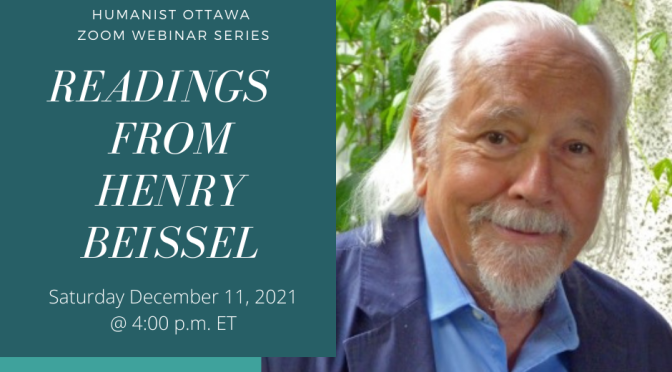
Books: The Council of Animals by Nick McDonell

A fable is a story that imbues animals and imaginary creatures, along with any manner of natural or supernatural forces, with human-like traits to convey any part of its plot, meaning or narrative. It seems that fables have been a staple of human storytelling for as long as humans have had stories to tell. Even the oldest documented story currently know, The Epic of Gilgamesh, contains elements of fable carved into tablets.

Given this fundamental position of fable in human culture, it should be no surprise, that fable retains a key role in contemporary story-telling. Human connection, whether individual or collective, to the natural world is too vital for fable to ever be completely banished. Fable may be considered as humanism over-lain on the natural world.

We do tend to used fable where it seems to have proven highly effective: story-telling to convey a moralistic message. Often that means children’s stories, but fable is certainly not exclusively for children.

The Council of Animals, by Nick McDonell was published early in 2021 and is a contemporary fable. The storytelling is not particularly innovative nor is the story itself novel and compelling. At the beginning of the story, a council of animals is gathering to decide the fate of humanity – will the animals decide to exterminate the last of humanity or leave them to live out their lives in peace?

In reading the story, other fables readily come to mind and it seems only marginally necessary to state their titles. Pick the first five fables that come to mind and you’ve probably stitched together much of the plot and much of the narrative style. Mentioning McDonell’s willingness as an author to mug for the camera via animal-themed puns and set-pieces and that might be the end of it. It’s almost unworthy of a book review.

Except that the book feels as though its original intent, a story where Kingdom Animalia renders judgment on humanity, had been leant a new direction when the global pandemic came to town. Over the course of the story, it is revealed that some unspecified pandemic had struck down humanity’s population and provided animals (and some mythological creatures) the opportunity to finally gather their collective strength and dominance to be able to decide what to do with the stragglers that had survived.

The efficacy of fables is not their reality. The efficacy is in their ability to convey a moralistic meaning. McDonell’s novel expresses existential concern regarding humanity’s relationship to nature and existential panic in the face of pandemic. Whether that should be considered to be moralized fear-mongering, naive hand-wringing or something else entirely may be up to the reader.

Whether the book is viewed as any of these things should not preclude recognizing that the matter of the book’s panic (a human-created pandemic that threatens to end humanity) is the smaller consideration compared to the book’s concern ( humanity’s relationship to nature).

The book does not seem to be a book of humanism, however it is a book which offers a reminder that contemporary humanists, or perhaps more accurately, contemporary human societies whether they’re humanist or not, currently have the significant challenge to set aside human-centered existential crises in order to address the larger and more significant concern of this planet’s capacity to support life in any form at all. We need a new and vigorous Biophilic Humanism – a humanism, and a humanity, that places its interest in itself within the sustaining interests of the natural world we inhabit.

The moral of the story, when it comes to reading The Council of Animals, is that the time for fables, this over-laying of human priorities and characteristics onto nature, seems to be reaching its limits. Now is the time for laying of nature’s needs and priorities over human character.

Citations, References And Other Reading

  1. Featured Photo Courtesy of :
  2. http://www.nickmcdonell.com/

The views, opinions and analyses expressed in the articles on Humanist Freedoms are those of the contributor(s) and do not necessarily reflect the views or opinions of the publishers.

August 2021 – A HumanistFreedoms benchmark surpassed and Call for Submissions

2020 was HumanistFreedoms.com’s first full year of operation. We enjoyed publishing articles promoting and celebrating humanism and our common humanity. We thank our contributors, readers and visitors for making http://www.humanistfreedoms.com a unique online magazine.

Please follow our website, share articles with your friends and help us grow. At the end of February, we had reached half of the views we had for all of 2020! As the month of July comes to an end, we’ve surpassed our total views from last year!

Now for 2021 we are looking for even more essays, articles and stories to share! We are not able to pay for articles (yet) but we want to hear what you have to say. This month, themes that we want to explore include:

  • Contemporary Humanism’s Biggest Priorities and Challenges for 2021
  • Leadership Within The Humanist Movement
  • Humanism and Secularism
  • Humanism and Human Trafficking
  • Digital Humanism
  • Humanism and Global Population
  • A Humanist Perspective of Radical Politics
  • Humanist Photography: Photographer Review
  • Humanism in the Arts
  • Humanism Behind the Mask: Maintaining Respect and Compassion During the Pandemic
  • Humanism and the Environment
  • Humanism and Freedom of Expression: Lessons From 2020
  • Humanism and Freedom of/from Religion: Global Lessons
  • Humanism and Architecture
  • Book/Movie/Music/Arts Review: A Humanist Recommends….

Do you have an idea that isn’t on our list? Let us know. Inquire at humanistfreedoms@gmail.com

Listen: The Turning – The Sisters Who left

In 1995, Christopher Hitchens published The Missionary Position: Mother Theresa in Theory and Practice. Both then and now, Hitchens’ investigative journalism (and let’s be honest, polemics) earn him life-size portions of love and hate. But Hitchens was well aware that going after one of the twentieth century’s most iconic and celebrated figures of religious propagation would not result in anonymity.

Pin on Unrepentant Atheist

Twenty-first century humanists owe much to Hitchens’ willingness – or perhaps more accurately, energetic eagerness! – not only to publish the results of his inquiries, his insights and his opinions but also to engage with the often passionate and outraged responses.

Consider the popular new podcast, The Turning: The Sisters Who Left which currently has ten episodes available via iHeartRadio and other podcast providers. It hardly seems at all likely that this podcast would be available and popularly received, if not for the earlier work of Hitchens.

The Turning: The Sisters Who Left

The folks responsible for producing the podcast have indicated that it is “inspired by Mary Johnson’s memoir, An Unquenchable Thirst. Weaving poignant, sometimes startling stories with a gorgeous soundscape, host Erika Lantz of Rococo Punch interviews Mary and several other former Missionaries of Charity.”

Meanwhile, on Mary Johnson’s website, we learned that “Mary Johnson is the author of An Unquenchable Thirst, named one of 2011’s best nonfiction books by Kirkus Reviews and awarded the New Hampshire Literary Award for Outstanding Work of Nonfiction. After spending 20 years as a nun with the Sisters of Mother Teresa of Calcutta, she completed an MFA in Creative Writing at Goddard College and helped found A Room of Her Own Foundation. She married. Mary now considers herself a secular Humanist . As a Humanist Celebrant, Mary creates unique ceremonies for weddings, funerals, and other rites of passage, and has twice been voted New Hampshire’s top wedding officiant….Mary continues to find the world a marvelous place and tries her best to treat others well. She continues to invest in community, knowing that respectful, affectionate bonds formed among human beings are among life’s most precious gifts, whether in churches, mosques, gyms or bars, schools or shops, or synagogues.

The Turning, An Unquenchable Thirst and The Missionary Position are each deserving of recognition for their own type of courage and their own humanist character, inevitably linked to their times and social conditions. In ten or twenty years, there will be humanists who will be able to say, Thank you Christopher Hitchens. Thank you Mary Johnson.”

Citations, References And Other Reading

  1. Featured Photo Courtesy of: https://www.maryjohnson.co/lessons-loves
  2. https://christopherhitchens.net/mother-teresa
  3. https://en.wikipedia.org/wiki/The_Missionary_Position:_Mother_Teresa_in_Theory_and_Practice
  4. https://www.iheart.com/podcast/1119-the-turning-the-sisters-w-82262169/
  5. https://www.maryjohnson.co/


The views, opinions and analyses expressed in the articles on Humanist Freedoms are those of the contributor(s) and do not necessarily reflect the views or opinions of the publishers.

Designing For Individual Experience: Selldorf Architects

It isn’t often that HumanistFreedoms.com expects to feature a job opening for a major architectural firm. We don’t even have a classifieds section! But we’ve come across something that we couldn’t overlook. According to Archinect, Selldorf Architects is searching for an Advanced Architectural Designer and a Project Architect. Not ready for “Wow!” yet? Keep reading.

What caught our eye was the job ad’s assertion that “Selldorf Architects is a 70-person architectural design practice founded by Annabelle Selldorf in New York City in 1988. The firm creates public and private spaces that manifest a clear and modern sensibility to enduring impact. Since its inception the firm’s guiding principles have been deeply rooted in humanism. At every scale and for every condition, Selldorf Architects designs for the individual experience. As a result, its work is brought to life–and made complete–by those who use it.” Sounds like a pretty good reason for any architect who happens to be a humanist to pay attention right?

How about Annabelle Selldorf’s 2018 essay Pressing for Evolution in the Field – (NewCities.org), when Selldorf advocated for greater equality in architecture, “For us to move forward as a society and within our architectural coterie we need to tackle the structures that seek to curtail women’s progress. This is both an issue of policy and individual responsibility. Ultimately, gender equality is an issue of humanism and respect. It is only until we eliminate the notion of “the other” that we will begin to truly achieve a fully evolved and equitable society. It is both an internal and personal endeavor to overcome our own biases as well as an external one to push for change within our field and broadly.

And then there’s the amazing projects the firm has been involved in: The Frick Collection, Luma Arles, The Museum of Contemporary Art San Diego, Steinway HAll and one our favorites (see featured image) The Mwabwindow School in Southern Zambia, a project to increase education in rural Africa.

Firms like Selldorf Architects are helping to make humanism an exciting feature of contemporary society. Definitely a company that ought to make a humanist say, “Wow!” If you know an architect who happens to be a humanist – maybe the July 6 job postings we found are something they will want to hear about!

Selldorf Architect’s Employment Page

Citations, References And Other Reading

  1. Featured Photo Courtesy of: https://www.selldorf.com/projects/the-mwabwindo-school
  2. https://www.selldorf.com/
  3. https://archinect.com/jobs/entry/150272692/advanced-architectural-designer
  4. https://newcities.org/the-big-picture-pressing-for-evolution-in-the-field/
  5. https://aperture.org/editorial/annabelle-selldorf-interview/
  6. https://archinect.com/jobs/entry/150272689/project-architect

The views, opinions and analyses expressed in the articles on Humanist Freedoms are those of the contributor(s) and do not necessarily reflect the views or opinions of the publishers.

The Humanist Show: Miriam Beerman, Jacob Landau and Sheba Sharrow

In our search for interesting, challenging and critical perspectives on contemporary humanism, we occasionally find articles published in other venues that we think humanistfreedoms.com readers may enjoy. The following article was published on:

 http://www.jamesyarosh.com/humanist/


THREE ARTISTS ARE CURRENTLY ON VIEW AT JAMES YAROSH ASSOCIATES: Now though October 2, 2021


Established in 1996, James Yarosh Associates Fine Art Gallery is located in the second floor loft space of the former 1917 firehouse at

45 E. Main Street (Rt.520) in Historic Holmdel Village, NJ 07733

Entrance on the inside corner of building & additional parking lots in the rear.

Open Saturday 12-4pm.
Weekday & evenings hours scheduled
by appointment


The bodies of work of three museum-recognized artists are being revisited as part of a curated exhibit that explores the different artistic answers each creator has to similar humanist subjects—but mainly to highlight how we are very much the same.

The artists in The Humanist Show at James Yarosh Associates are all from a similar era and likeminded in their philosophy of using art as a form of activism. Now, their voices have the opportunity to be heard again in an exhibit that allows visitors to experience their interaction and to feel how great art can emote in ways words alone cannot.

The arts always have been an intellectual engagement first; the conversations of artists are the most revealing of that fact and tradition.

Since his eponymous gallery opened in 1996, Yarosh’s intentions have remained clear for the gallery’s art representation: to use an artist’s eye and the very human approach of showcasing works that resonate with viewers. Curation begins with valuing art for art’s sake. Beauty is deeper than the surfaces of great art. When we view art, we share journeys through the artists’ minds, connecting us through the feelings and responses we share in the experiences of life. How lucky for collectors who embrace works that define our culture and are able to participate in the continuum!

The common theme is: artists using their talents and great minds to illustrate empathy. They provide lessons and find answers to issues confronting human welfare and respond to human suffering. Artists rely on their acute sensitivity to create and thus can become compelled to employ art to “bear witness” to the injustices they see around them.

Cultural Conversations

Each artist in this exhibit was born nearly a century ago and yet the energy of their art still feels very forward, unafraid of moving viewers today to go outside of their initial comfort zones.

The exhibit also captures the lifetime of learning that goes into a work of art and the honing of an artist’s voice at each stage of their career. An artist faces a canvas bravely, taking on subjects and often creating from nothing, just trusting their voice.

The results can become very layered and require sophistication to recognize what each artist achieved. We need open minds to view ourselves in the subject matter, beyond the simplicity of “portrait, still life and landscape,” and an investment of time to discover the depths of the work. The rewards are ultimately greater for the soul once this is understood.

In the artist documentary Expressing the Chaos, Miriam Beerman, then 90, says, “You have to do some work. I think it’s clear by now I’m not interested in painting pretty pictures.” In a 1988 catalog, Beerman referred to Sheba Sharrow as “one of the finest women artists of our time.” Sharrow mentioned often that she did not see art as entertainment and although her drawing and painting skills are brilliantly seductive, her work tends to stir the conscience. Jacob Landau was unabashedly outspoken to use his art as a flag, warning of threats to mankind if we didn’t choose change. Presenting Landau as the only male artist in the exhibit, the show shifts the dynamic of this era when males dominated the art world.

Yarosh says of the three artists: “Landau’s drafting offers exacting lines that put images in order and organizes thoughts as if he were confronting technology head-on. His mapping of paths of a new world orchestrates, almost scientifically, an equation of what will become of mankind when our humanity becomes obsolete in the name of progress.”

“Sharrow’s expressionism is direct, using both force and tenderness. The lyrical line of her hand becomes a visual poetry. Her art has an elegance, embracing formal balances of good to overcome trauma and transmute it into art. Themes of mortality are explored and revisited throughout, knowing that beauty can only be seen by knowing the sadness of its polar opposite, allowing us to understand both highs and lows as forever tied into life’s journey. Her work speaks lovingly, even if with fearless candor, acknowledging that with awareness come burdens.”

“Beerman’s work and subject matter is near primal with color. Her hands in combat, she does not shy away from the bruises of pain as these come with the safety net of a momentary intoxication, compelling her to revisit subjects like moth-to-flame to further the act of creation. Beerman’s work exalts winning the battles in life. There is even humor — albeit sometimes akin to nervous laughter — in the face of demons. The result is an art, bursting and satisfying like ripe fruit, on a precipice edged along the past, present and future, embracing living in the current moment.”

“With all of these artists, however, their messages focus on the ever-present option of choosing beauty,” he continues. “This fact is evident with the beautiful handling of their mediums, with which they simultaneously create intoxicating subplots for our eyes and reward us for not looking away, for being present in the noble act of viewing art.”

Yarosh, an artist, interior designer and gallerist, notes his gallery always has favored the idea of being more of an artist’s home, open to the public to allow people to uncover the merits of the art that “we as artists know is great.” There is an unfortunate chasm between the works collected and exhibited at museums and what galleries offer, catering to a limited concept of what people hang in the home. Artists are more interesting as they color outside the lines of restriction; it is better to follow their lead of subject matter to uncover the truths they expose. It’s fascinating to see a body of work in hindsight. Reviewing an artist’s oeuvre as a lifetime body of work offers advantages in appreciation for both dealers as well as collectors. Seeing the art through the lens of the artist’s life story allows us to more clearly understand the path they took to greatness. It is important to view artists’ works in the context of their times and also see how it still holds up today with continued interest.

“I am excited to be able to offer works by Beerman, Landau and Sharrow to collectors on a gallery level,” Yarosh says. “Their art is much bigger than many realize and even as an art dealer, I’m still discovering more as I live with these great works. As time goes on, I realize how much more there is to learn in life. These artists are our teachers, and I have always put my faith in the arts. I feel very encouraged for the future of humanist artists when I see important exhibits like Alice Neel: People Come First currently at the Metropolitan Museum. These artists’ bodies of work live on and the conversations of humanity always will connect us as long as we continue to exist.”

The Humanist exhibit at James Yarosh Associates gallery offers a window into the artists’ world in an accessible setting that allows us to meet the artists’ works up close. Works on view include large-scale canvases, works on paper and artist books of mixed-media/collage. The gallery is open to the public Saturdays 12-4 p.m. and by appointment. Previews of the show can be seen on the What’s New page on the gallery’s website, http://www.jamesyarosh.com.

Miriam Beerman

Beerman (b.1923) is a contemporary maker of painterly power objects, imbuing the paint with profound psychology as well as beauty. Her subject has been the arena of the human condition, whether expressed overtly with imagery evoking genocide or abstractly through the call-and-response of process. These works are serious paintings offering a lifetime of contemplation and stimulating a depth of thought. Beerman has contributed to the contemporary involvement in art as a political tool to alter consciousness.

Miriam Beerman

In 2015, Beerman, one of the first women to have a solo show at the Brooklyn Museum, was the subject of the 50-minute artist documentary Expressing the Chaos, a film that is available to stream on Amazon Prime and YouTube outlets. Material on Beerman’s art currently is being compiled, detailing the over 60 U.S. and European museums which include her work in their collections. She will be the focus of an Artist in Spotlight exhibit at James Yarosh Associates Fine Art Gallery for the Fall 2021/Winter 2022 season.

Jacob Landau

Jacob Landau | IngPeaceProject.com
Jacob Landau

Landau (1917–2001) was an American artist best known for his evocative works on the human condition. Typically, his works address the Great Depression, World War II and the impact of technology and politics on individuals and their surroundings. Landau’s works can be found in the permanent collections of the Metropolitan Museum of Art, the Library of Congress, the Museum of Modern Art and the National Gallery. The 2021 book The Prophetic Quest: The Stained Glass Windows of Jacob Landau brings his artistry to the fore, revealing the magnitude of a series of ten monumental abstract stained-glass windows, created by Landau for the Kenneth Israel synagogue just north of Philadelphia, depicting the lives and words of the biblical prophets.

Sheba Sharrow

Sharrow (1926–2006) was born during the Great Depression and came of age during World War II. Her art exemplifies an artist with eyes wide open. Her expressionist paintings of abstract humanity are masterful in execution, poetically engaging us with topics such as mortality, desire, vulnerability, power, warfare and spirituality.

Sheba Save The Date - James Yarosh Associates
Sheba Sharrow

In 2017, Monmouth University’s exhibit Sheba Sharrow: Balancing Act was co-curated by James Yarosh Associates Fine Art Gallery, and in 2020, Sharrow’s art was the subject of the solo exhibit History Repeats at James Yarosh Associates Gallery. Opening in September 2021, Sharrow’s multi-paneled painting “The Dateci Quartet,” in the collection of the Zimmerli Art Museum at Rutgers University, is the basis for its exhibition Dateci: Sheba Sharrow and Primo Levi and a subject of an online discussion led by Margaret Olin, Senior Research Scholar at the Yale Divinity School, entitled Social Justice as a Theme in Jewish Art. Sharrow’s work can also be seen in the Art on Paper NYC art fair in September 2021 with Exhibitor James Yarosh Associates.


Citations, References And Other Reading

  1. Featured Photo Courtesy of: http://www.jamesyarosh.com/humanist/
  2. https://www.newjerseystage.com/articles/2021/06/26/james-yarosh-associates-presents-the-humanist-show-works-by-miriam-beerman-jacob-landau-and-sheba-sharrow/
  3. http://www.miriambeerman.com/
  4. http://jacoblandau.org/
  5. http://shebasharrow.com/

The views, opinions and analyses expressed in the articles on Humanist Freedoms are those of the contributor(s) and do not necessarily reflect the views or opinions of the publishers.

Secular Wall: Good Fences Make Good Neighbours

In his 1914 poem Mending Wall, Robert Frost made significant use of the old proverb, good fences make good neighbors. In the poem, a narrator explains that “something there is that doesn’t love a wall” and this something tears down a sturdy stone wall that separates the narrator’s property from the neighbor’s. So each year, the narrator and the neighbor meet on an appointed day to “walk the line and set the line between us one again”, the neighbor often reciting the ancient wisdom. Good fences make good neighbors. Meanwhile, the narrator wants to suggest the mischievous force that is tearing down the wall is “elves” but would prefer for the neighbor to say so.

Dry Stone Walling - Good Day Out

It’s a lovely poem which aptly reminds the reader how to keep one’s metaphorical apple’s from eating-up someone else’s metaphorical pine cones .

In Canada, there is a new Facebook chat group named Secular Wall with an interest to walk the line and mend the wall. The group states that it wishes to “connect all Canadians opposed to the discriminatory and wasteful public funding of religious schools (especially in Alberta, Saskatchewan and Ontario) plus healthcare institutions. Secular Wall members support every citizen’s undisputed RIGHT to worship however they please … with the corresponding RESPONSIBILITY to fully fund their own beliefs.

The organizers of Secular Wall seem to have staked-out familiar, but necessary, territory. Just as there are many individuals who would prefer not to have all their pine cones eaten-up by the neighbor’s apples – there are also plenty of apple-growers who would like to keep their apples from tasting of pine. A bit of annual wall mending is indeed a good thing.

After all, the really does seem to be a great deal of elf-activity from year to year and the walls won’t mend themselves.

The group has a stated zero tolerance for hate speech or profanity, which suggests that dialogue may maintain a level of dignity and respect despite a topic likely to bring out deep-seated values, perspectives and opinions.

If you have an interest in the integrity of your own domain, you may want to join the conversation.


Citations, References And Other Reading

  1. Featured Photo Courtesy ofhttps://www.facebook.com/groups/secularwall/
  2. https://www.poetryfoundation.org/poems/44266/mending-wall

The views, opinions and analyses expressed in the articles on Humanist Freedoms are those of the contributor(s) and do not necessarily reflect the views or opinions of the publishers.
Heavy Metal Humanism: Personal Courage

On January 29, 2021 German heavy metal band Accept released their sixteenth studio album, Too Mean to Die. Here at http://www.humanistfreedoms.com, we don’t always connect with the latest releases in the heavy metal music scene, so we hope to be forgiven by the band for overlooking the release.

One song on Too Mean to Die has caught our ear. “No One’s Master”. We’ve provided a link to a lyric video for other humanist fans of heavy metal to connect with. Unlike many of Accept’s songs, which have carried credit to “Deaffy” all the way back to the 1980’s (actually Gaby Hoffman, the band’s manager and also Accept guitarist Wolf Hoffman’s spouse), “No One’s Master” is credited to band members Martin Motnik, Wolf Hoffmann and Mark Tornillo.

Still, it is absolutely essential when considering Accept, to identify Deaffy, who wrote the lyrics for the band’s most famous song “Ball’s to the Wall” (circa 1983). Who could forget a song that begins with the line, “Too many slaves in this world die by torture and pain”, and gets raunchier, bloodier and more rebellious from there?

Back in 1983, Deaffy also wrote the lyrics for “Fight it Back”, excerpted here as backdrop to the Accept song we’re actually listening to today “Always been the prophets who make the world evolve. Always been the average breaking it down. Majority, the unknown giving us the rules. It’s more than luck to get the standard. You’ll never find me like you hope that I am. You’ll never treat me like you think you can. Be always independent, surrendering no way. I won’t deal with crimes of society. Find myself in crisis, get near to collapse. Am I forced to live that boring life? God, I hate the average. Go and nuke it out. Go, piss the accepted, screw them all! Now, if you hate it, you gonna fight it back. Just try to change it. Fight it. Fight it back.”

Agree with the sentiments or not, Gaby Hoffman’s lyrics set out some clear perspectives on the individual’s role within their society. Now, let’s push forward to more recent days.

It appears that Tornillo, the band’s vocalist has written the lyrics for “No One’s Master”. Some time ago (actually 2012) Tornillo said that he enjoyed the opportunity to write socio-political lyrics. With “No One’s Master” Tornillo seems to be refining sentiments that Deaffy/Accept had established almost forty years earlier.

The “No One’s Master” lyrics take aim at the influence of media on people collectively while setting a rebelliously individualistic and humanistic ethic that is firmly set in the present.

Here is a “lyric video” version of the song, which is rather catchy in a rock-anthem kind of way:

For those who may not be enthusiastic fans of the genre, presented here is an abridged version of the lyrics:

The media’s controlling the masses
Stoking our anger and fear
Further dividing the classes
Serving the richest careers
Their mantra is lies and deception
When honesty’s all that I crave
I decline and there’ll be no exceptions
I am no one’s master
No one’s slave
Living in fear ain’t worth living
Wasting your life is the crime
The reaper will be unforgiving
Wake up, while you’re still in your prime
The guide of my life is my conscience
My way is the path that I pave
I treat, how I want to be treated
I am no one’s master
No one’s slave
I won’t rule; I won’t bow
I won’t sink my eyes to the ground
I won’t steal; I won’t kneel
I won’t bend my knee to the crowned
I pledge an oath to myself and to life
I’m not afraid of the sword or the knife
The guide of my life is my conscience
My way is the path that I pave
Equality’s all that I’m after
I am no one’s master
No one’s slave
No one’s master
I am no one’s
No one’s slave

The song and the genre are a terrific reminder that living a humanist ethic may occasionally require a bit of rebellion, a bit of anger and a lot of personal courage.


Citations, References And Other Reading

  1. Featured Photo Courtesy ofhttp://www.metalrockmusicpodcast.com/accept-recorded-part-of-too-mean-to-die-with-remote-producer/
  2. https://www.acceptworldwide.com/accept-discography/too-mean-to-die/
  3. https://www.acceptworldwide.com/
  4. https://www.theaquarian.com/2012/04/13/interview-with-mark-tornillo-from-accept-living-the-metal-scream-dream/
  5. http://www.darklyrics.com/lyrics/accept/ballstothewall.html#3