Category Archives: Uncategorized

DRL FY20 IRF: Promoting and Defending Freedom(s) Inclusive of Humanism

In our search for interesting, challenging and critical perspectives on contemporary humanism, we occasionally find articles published via other venues that we think HumanistFreedoms.com readers may enjoy. The following article was located on the US Department of State Website.

DRL FY20 IRF Promoting and Defending Religious Freedom Inclusive of Atheist, Humanist, Non-Practicing and Non-Affiliated Individuals

FUNDING OPPORTUNITY ANNOUNCEMENT

BUREAU OF DEMOCRACY, HUMAN RIGHTS, AND LABOR

APRIL 21, 2021

The U.S. Department of State, Bureau of Democracy, Human Rights and Labor (DRL) announces an open competition for organizations interested in submitting applications for projects that support Religious Freedom globally.

“Religious freedom” refers to the right set out in Article 18 of the International Covenant on Civil and Political Rights, including the freedom to adopt a religion or beliefs, change your beliefs, practice and teach your beliefs (which may include through publications, public and private speech, and the display of religious attire or symbols), gather in community with others to worship and observe your beliefs, and teach your beliefs to your children. It also states that no one shall be subject to coercion that would impair one’s freedom to have or to adopt a religion or belief of his/her choice. Proposed programming must be responsive to restrictions on religious freedom, and must be in line with the U.S. Government’s religious freedom, democracy, governance, and human rights goals.

Helpful resources for applicants include the annual country-specific International Religious Freedom Reports https://www.state.gov/reports/2019-report-on-international-religious-freedom/ and annual country-specific Human Rights Reports https://www.state.gov/reports-bureau-of-democracy-human-rights-and-labor/country-reports-on-human-rights-practices/.

Applicants will be responsible for ensuring program activities and products are implemented in accordance with the Establishment Clause of the United States Constitution.

DRL’s goal is to ensure everyone enjoys religious freedom, including the freedom to dissent from religious belief and to not practice or adhere to a religion. By not adhering to a predominant religious tradition, many individuals face discrimination in employment, housing, in civil and criminal proceedings, and other areas especially in the context of intersectional identities. DRL’s objective is to combat discrimination, harassment and abuses against atheist, humanist, non-practicing and non-affiliated individuals of all religious communities by strengthening networks among these communities and providing organizational training and resources.

Activities should take place in 2-3 countries selected within one of the following regions: South/Central Asia- countries within the SCA region as defined by the State Department; or the Middle East/North Africa (excluding Libya, Syria, and Yemen)- countries within the NEA region as defined by the State Department. Proposals are discouraged from including countries where ongoing conflict or violence would negatively affect beneficiary safety or quality of program oversight and must be accompanied by a strong justification in the proposal narrative should any such countries be included. By addressing and combatting discrimination towards those who are non-affiliated, non-practicing, or of no belief will increase the levels of religious freedom enjoyed by all people.

Expected Program Outcomes include but are not limited to:

  • Increased availability of mechanisms for members of minorities and marginalized groups – particularly atheists and nonbelievers – to advocate with community leaders and local and regional government officials regarding their religious freedom concerns;
  • Increased capacity among members of atheist and heterodox individuals to form or join networks or organizations, implement advocacy campaigns, and to engage with the public on issues of tolerance and acceptance of all regardless of faith;
  • Increased awareness and understanding among relevant government officials and law enforcement of the value and importance of human rights, peace, mutual respect, tolerance, and inclusion for all, irrespective of one’s religion or beliefs;
  • Increased awareness among citizens at the community level of concepts and implications of religious pluralism, mutual respect and inclusion for all, regardless of religion or belief;
  • Increased community-level interfaith or advocacy interactions inclusive of atheist, humanist, non-practicing and non-affiliated individuals (particularly those who are pressured, mandated and/or coerced into religious participation that is contrary to their personal non-belief system or philosophy);
  • Legal sector actors and/or local government officials are respectful and attentive towards the needs and interests of these individuals.

Program activities could include, but are not limited to:

  • Creating or strengthening networks of advocates for the diverse communities of atheist, humanist, non-practicing and non-affiliated individuals of all religious communities in target countries.
  • Strengthening the capacity of organizations representing diverse communities of atheist, humanist, non-practicing and non-affiliated individuals of all religious communities to advocate for their rights to political, legal, and societal leaders. Capacity building activities may include improving management structure, public engagement skills, legal rights advocacy, digital security, physical security, psychosocial support and coalition building techniques for these groups regardless of faith affiliation;
  • Expanding or creating opportunities for dialogue, coalition building, and joint action between faith and non-faith organizations in support of freedom of religion and belief. This can include but is not limited to public fora, town halls, journalism, public outreach/education, media campaigns, small grants, and other work;
  • Increasing capacity for monitoring and documenting religious freedom abuses or discrimination against individuals because of non-belief or on the basis of frequency/nature of an individual’s religious observance/practices- particularly those who are pressured, mandated, or coerced into religious participation that is contrary to their personal non-belief system or philosophy. Documentation can include: incident reports to support justice sector action, aggregate reports for legal or policy change advocacy, or quantitative reports for advocacy with international or multinational human rights bodies or agencies.

For all programs, projects should aim to have impact that leads to reforms and should have the potential for sustainability beyond DRL resources. DRL’s preference is to avoid duplicating past efforts by supporting new and creative approaches. This does not exclude from consideration projects that improve upon or expand existing successful projects in a new and complementary way. Programs should seek to include groups that can bring perspectives based on their religion (including non-belief), gender, disability, race, ethnicity, and/or sexual orientation and gender identity. Programs should be demand-driven and locally led to the extent possible. DRL also requires all of its programming to be non-discriminatory and expects implementers to include strategies for integration of individuals/organizations regardless of religion, gender, disability, race, ethnicity, and/or sexual orientation and gender identity.

Competitive proposals may also include a summary budget and budget narrative for 12 additional months following the proposed period of performance, indicated above. This information should indicate what objective(s) and/or activities could be accomplished with additional time and/or funds beyond the proposed period of performance.

Where appropriate, competitive proposals may include:

  • Opportunities for beneficiaries to apply their new knowledge and skills in practical efforts;
  • Solicitation of feedback and suggestions from beneficiaries when developing activities in order to strengthen the sustainability of programs and participant ownership of project outcomes;
  • Input from participants on sustainability plans and systematic review of the plans throughout the life of the project, with adjustments made as necessary;
  • Inclusion of vulnerable populations;
  • Joint identification and definition of key concepts with relevant stakeholders and stakeholder input into project activities;
  • Systematic follow up with beneficiaries at specific intervals after the completion of activities to track how beneficiaries are retaining new knowledge as well as applying their new skills.

Activities that are not typically allowed include, but are not limited to:

  • The provision of humanitarian assistance;
  • English language instruction;
  • Development of high-tech computer or communications software and/or hardware;
  • Purely academic exchanges or fellowships;
  • External exchanges or fellowships lasting longer than six months;
  • Off-shore activities that are not clearly linked to in-country initiatives and impact or are not necessary per security concerns;
  • Theoretical explorations of human rights or democracy issues, including projects aimed primarily at research and evaluation that do not incorporate training or capacity-building for local civil society;
  • Micro-loans or similar small business development initiatives;
  • Initiatives directed towards a diaspora community rather than current residents of targeted countries.

More available on the US Department of State’s website (link at the top of this article).

Atheism, Irreligious and Anarchist: A Cadre Education Perspective

In our search for interesting, challenging and critical perspectives on contemporary humanism, we occasionally find articles published via other venues that we think HumanistFreedoms.com readers may enjoy. The following article was located on CounterCurrents.org on June 17, 2022.

By: T. Vijayendra

T. Vijayendra (1943- ) was born in Mysore, grew in Indore and went to IIT Kharagpur to get a B. Tech. in Electronics (1966). After a year’s stint at the Saha Institute of Nuclear Physics, Kolkata, he got drawn into the whirlwind times of the late 60s. Since then, he has always been some kind of political-social activist. His brief for himself is the education of Left wing cadres and so he almost exclusively publishes in the Left wing journal Frontier, published from Kolkata. For the last nine years, he has been active in the field of ‘Peak Oil’ and is a founder member of Peak Oil India and Ecologise. Since 2015 he has been involved in Ecologise! Camps and in 2016 he initiated Ecologise Hyderabad. He divides his time between an organic farm at the foothills of Western Ghats, watching birds, writing fiction and Hyderabad. He has published a book dealing with resource depletions, three books of essays, two collections of short stories, a novella and an autobiography. Vijayendra has been a ‘dedicated’ cyclist all his life, meaning, he neither took a driving licence nor did he ever drive a fossil fuel based vehicle. Email: t.vijayendra@gmail.com.

India is going through a lot of communal tensions for the last few years. As a response to it some secular persons have been, among other things, organising ‘Inter – Faith Meetings’. Recently in Hyderabad we have been having such meetings. Many religious leaders came. I was asked to represent the Atheists. In the meeting I declared myself ‘atheist, irreligious and anarchist’. These three concepts are related and I believe they can play a small but significant role in reducing these tensions in our country.

The tone of this article is neither theoretical nor polemical. It is in the tradition of ‘cadre education’. This is so because neither in the mainstream nor in normal ‘secular or left wing media’ these trends are adequately represented. Often they are represented in a negative way. In this article I will begin with removing some misconceptions about them and then expound the positive role they can play in the current situation.

Atheism

Most people have not met atheists. They may well imagine atheists as an incarnation of devil with horns on their heads. The religious people denounce them as godless or those who do not fear God. They imply that atheists have no morals or ethics and they can do anything including immoral things.

As a matter fact the oldest Atheist Society was called ‘Ethical Society’ and the international organisation is called IHEU – International Humanists and Ethical Union!

The Ethical movement is an outgrowth of secular moral traditions in the 19th century, principally in Europe and the United States. At the international level, Ethical Culture and secular humanist groups have always organized jointly; the American Ethical Union and British Ethical Union were founding members of Humanists International, whose original name “International Humanist and Ethical Union” reflected the movement’s unity.  (https://en.wikipedia.org/wiki/Ethical_movement)

Humanists International (known as the International Humanist and Ethical Union, or IHEU, from 1952–2019) is an international non-governmental organisation championing secularism and human rights, motivated by secular humanist values. Founded in Amsterdam in 1952, it is an umbrella organisation made up of more than 160 secular humanist, atheist, rationalist, sceptic, free thought and Ethical Culture organisations from over 80 countries. (https://en.wikipedia.org/wiki/Humanists_International).

Atheism in Ancient India

According to popular belief, atheism is a modern invention: “God is dead. God remains dead. And we have killed him,” Friedrich Nietzsche declared in 1882. Supposedly, it was the modern European mind that invented the criticism of religions and religiosity.

But what if it was the other way around? What if philosophical skepticism, rational arguments, and non-religiosity came first, while religions developed later? What if irreligiousity was suppressed by medieval religious minds, before this worldview was resurrected in the modern era? In the beginning was … atheism?

The Indian school that rejected supernaturalism was originally named Lokāyata, which can be translated as prevalent (ayata) among the people (loka) – in addition to meaning “this-worldliness”, “worldly”. Since the last half of the first millennium CE, the term Cārvāka or Charvaka, has also been used for these atheist, skeptical, naturalist, and materialist traditions.

-The untold history of India’s vital atheist philosophy by Dag Herbjørnsrud (https://blog.apaonline.org/2020/06/16/the-untold-history-of-indias-vital-atheist-philosophy/)

Atheism Today in India

Of India’s 1.4 billion people, fewer than 33,000 are self-declared atheists. (https://religionnews.com/2022/05/17/in-india-hindu-nationalists-embolden-challenges-to-atheism/). These are census figure. ‘The religion data from 2011 Census of India was released in August 2015. It revealed that about 2,870,000 people had stated no religion in their response, about 0.27% of the nation’s population. However, the number included atheists, rationalists and also those who believed in a higher power.’ (https://en.wikipedia.org/wiki/Irreligion_in_India). Obviously they do not include Jains and Buddhists because in the census they do not declare themselves as atheists. If we include them the number will be much higher. Most of these atheists do not go about talking about atheism. Most Indians don’t even know that the Jains and Buddhists are atheists. It is only when atheism is combined with irreligiousity that it becomes a social issue and attracts the hostility of current Hindutva lobby.

Irreligiousness

All atheists are not irreligious. As we have said above, Jains and Buddhists are atheist and are religious. Today for all practical purposes Jains are indistinguishable from Hindus. There is a lot of inter marriage between Jains and Hindus. Other atheists also by and large do not wear their atheism on their sleeves.

However there are atheist organisations which promote rationalism and scientific temper. They conduct programmes in public, schools and colleges to spread the scientific temper and expose the frauds of false god men. They expose the ‘miracles’ performed by these false god men and show that they are nothing but tricks performed by magicians. In villages they protect widows who are falsely accused as witches and who allegedly cause death of infants. Their journals carry articles by atheists who are important scientists and philosophers (like Bertrand Russell). After independence to till 1990s, their activities went quietly because Nehru personally and Indian Constitution supported spread of scientific temper. Even some government departments like Department of Science and Technology actively promoted rationalism.

All this has changed drastically in the last decades. The Hindutva lobby has been propagating glories of ancient India through all kinds of unscientific readings of the past. Rationalists are regularly harassed, jailed and some time even murdered. The cases of murders of four rationalists — Narendra Dabholkar, Govind Pansare, MM Kalburgi and journalist Gauri Lankesh are well known.

(https://economictimes.indiatimes.com/news/politics-and-nation/dabholkar-pansare-kalburgi-lankesh-murder-cases-digging-out-weapons-million-rupee-question/articleshow/70301389.cms?utm_source=contentofinterest&utm_medium=text&utm_campaign=cppst)

 Anarchism

Not all atheists and irreligious people are anarchists nor are all anarchists irreligious and atheists. Before going any further, let me give a definition of anarchists: Briefly: 1. Anarchists are opposed to all authority, 2. Anarchists believe in self management within a local community on the basis of ‘a free association of free people’, 3. The Anarchist community will federate with other communities also on the basis of ‘a free association of free people’.

As in the case of atheists, there are a lot of misconceptions about anarchists. Since they are anti authoritarian, the image is that of a young man with long hair, unkempt dirty clothes, who doesn’t listen to any one, who does what he likes, in short he is an anarchist! It is true that many anarchists in the past and today have long hair, but rest of it is just an image. They forget the second point about self management within a local community. In general anarchists are gentle, low profile people, often good gardeners or have some good artistic manual skills. A large number of poets, authors, artists, theatre persons, philosophers, educationists, musicians etc. have been anarchists. The reason is obvious. Creativity needs freedom and hence anti authoritarian philosophy attracts these people.

At a social level, many poor and working people have been oppressed by authority. During medieval periods every mainstream authoritarian religion had a corresponding rebel group. Islam has Sufis, Christians have Quakers and a large number of smaller groups and Hinduism has Bhakti movement, particularly ‘Nirgun Bhakti’ movement where all the saints have been from artisan castes. As a matter of fact the philosophy of these Nirgunias and Sikhs was very close to the Sufis and most of the conversions to Islam have been from these castes.

However the mainstream revolutionary anarchist movement in modern times does combine atheism, irreligiousness with anarchism. The great anarchists have been: Proudhon, Bakunin and Kropotkin. Anarchism as a movement was largely in France, Italy, Greece, Spain and Portugal and in Latin America, though there are anarchists in all developed countries. They were a major force in Spanish Civil war and are still a major force in Mexico.

In the last twenty years global climate emergency and the response to it, that of, transition towns and the Russian Eco villages are very much in the Anarchist tradition.

Concluding Remarks

Humans have been around 3 lakh years. Until recently, that is until 9000 years ago, they lived in self managed small communities. Concepts of God, religion and state/governments etc have come since then. So 97% of the time humans did not know God, religion or state. Thus they were ‘atheists, irreligious and anarchist’ people! What happened in between and in recent times?

Man has the capacity to modify nature much more than any other species. Around 9000 years ago this capacity of Man became significant and man began to ‘exploit’ nature. Through a complex social process exploitation within the species also began and thus emerged what Frederick Engels described as ‘Origin of Family, Private Property and State’. There has been rebellion also among human species from the beginning.

This exploitation of man by man reached a very high level in the last 300 years and at the same time rebellion and revolution also reached high levels. In the latter half of the 20th century exploitation of nature also reached very high level. Rachael Carson’s book, ‘Silent Spring’ was the first important book of this kind. Since then in the last 20 years it has become clear that all this has become unsustainable and we are on the verge of collapse. ‘The only way to achieve a sustainable and just world is via a Transition Towns movement. The required sustainable social form must be based on mostly small, highly self-sufficient and self-governing, cooperative local communities, willingly embracing far simpler lifestyles and systems. (Detailed in ‘The Simpler Way’, 2019.) The Simper Way would be liberation from the consumer-capitalist rat race, enabling a far higher quality of life. It would not involve reduction in modern technology.’ (Ted Trainer, ‘Can we Strengthen the Transition towns Movement?’ Unpublished, personal communication.)

In this situation the theories of atheism, irreligiousness and anarchism have a big role to play.

Citations, References And Other Reading

  1. Feature Image Courtesy: https://countercurrents.org/2022/06/atheist-irreligious-and-anarchist/

The views, opinions and analyses expressed in the articles on Humanist Freedoms are those of the contributor(s) and do not necessarily reflect the views or opinions of the publishers.

Humanist Children’s Book Released to Muslim-majority Countries

“Everyone has a right to think freely” – free children’s books about science and humanism released to Muslim-majority countries

Where do we come from? What are we? How can we all get along?

For many, answers to these questions are sought in houses of worship. But like almost half of their Gen Z peers, youth authors Elle (12) and Bailey Harris (16) draw their guiding principles and values from science and humanism, not religion. The sisters have written four beloved children’s books — Elle the Humanist and the three-book My Name is Stardust series — which explore secular topics including humanism, the solar system and evolution in language and pictures that young children can understand. 

Bailey, who was eight years old when she began writing her first book, explains, “I wanted kids of all ages to see that we humans are a part of something beautiful, natural and larger than ourselves.” Now, the impact of their books is larger than she or her sister ever imagined. With the help of the Translations ProjectLabel Free Publishing is thrilled to announce that all four books are now available in Arabic, Urdu, Farsi and Bahasa Indonesia for free as downloadable PDFs at www.translationsproject.org.

The Translations Project was created by the Center for Inquiry in response to a growing appetite for scientific literature in Muslim-majority countries, where accessing such literature in the local language can be difficult, and sometimes dangerous. The program began by offering free translations of evolutionary biologist Richard Dawkin’s many books and today records over 20,000 downloads a year. The translation of the Harris sisters’ books marks the first time the program has taken on children’s literature — and the response has been overwhelming. 

Wafa Bahri, Director of the Translations Project, explains, “We’ve gotten so many emails from the translators, many who must stay anonymous out of fear for their safety, about how much they appreciate working on these children’s books. They understand the importance of this work, and care deeply about bringing change to their own countries.”  

Greg Epstein, the Humanist Chaplain at Harvard and MIT adds, “Elle the Humanist is one of my favorite humanist books — period. There are countless millions of people all over the world who are essentially raising their children as humanists, but without the tools or understanding of what that identity really means. This little book could help spark a conversation that changes the world’s perspective on religious diversity.”

Label Free Publishing is based in Santa Barbara, California and aims to inspire a love of science and nature and a sense of wonder at the universe. The Translations Project is a program of the Richard Dawkins Foundation for Reason & Science, part of the Center for Inquiry.

Citations, References And Other Reading

  1. Feature Image Courtesy: https://www.kingsenglish.com/event/bailey-harris-and-douglas-harris-my-name-stardust
  2. https://stardustscience.com/pages/news
  3. https://religionnews.com/2022/06/09/humanist-childrens-books-translated-available-free-in-muslim-majority-countries/
  4. https://stardustscience.com/

The views, opinions and analyses expressed in the articles on Humanist Freedoms are those of the contributor(s) and do not necessarily reflect the views or opinions of the publishers.

Alex Coghe: How to Make Humanist Photography That is Respectful of People’s Dignity

In our search for interesting, challenging and critical perspectives on contemporary humanism, we occasionally find articles published via other venues that we think humanistfreedoms.com readers may enjoy. In December of 2021, we introduced photojournalist and photography coach Alex Coghe and his approach to HumanistFreedoms.com. We asked Alex a few questions about his humanist approach and he’s kindly supplied a few answers. You may be interested to see Alex Coghe’s new book, The Ricoh Files.


By Alex Coghe

I was asked to go deeper into the humanistic aspects that inspire my photography. So I am answering to some questions.

From the project: They ask me for photos – 2021

Anything starts from this statement I proposed in a post on this blog:

I believe the dignity of the people portrayed and respect never fail.

How does this work in my photography?

Despite I am a photographer who uses spontaneous photography a lot, without asking for permission many times, i am not hiding what i do on the street. My presence as a photographer is obvious and I don’t use ninjia tactics. My every choice is made in awareness and in the will to portray reality as it is. Avoiding sensationalism or altering to make a situation more dramatic.

You can see it through my decisions to leave the photo as natural as possible without those pushed post productions that aim to contrast and make everything more dramatic. But this approach influences on a technical level also my choice of lenses ranging from 35m to 40mm. In this way I have a result more similar to that of the vision of the human eye, avoiding making people ugly due to lens distortion. Many associate with asking permission from people before photographing them with respect for them. But I don’t think so: you can also ask for permission but if your approach and your mindset is wrong people will be uncomfortable in front of your lens.

I believe that if you are a person who is really interested in the other and you are not taking a picture only for yourself, if there is real communication and intention, in respect, this is felt by the person photographed, even if you do not ask him/her before to be able to photograph him/her.

How does this relate to Humanist Photography as a genre/field?

Today we assist too many times to photographers that are not really interested in humanity and yet they photograph people. This is because they make photography for the wrong reasons: to get famous, to win awards, to have objects, pieces in their compositions and they are forgetting the individual with his/her dignity. Or simply they are photographers focused only to build their project, which is often only driven by their personality and not that of the subject and theme. In that case clearly photography is just a selfish act. And this is not good at all.

In my career I could see for my direct experience as Humanist Photography can be a great tool of change and improvement for a social issue. This is the reason hy I collaborate with NGOs and I offered my service as photographer for free in several situations.

Is there ever tension in these issues that you experience in your own work or the work that you observe others do?

A big issue is about not respecting really the culture of people. Many photographers think to solve everything by buying people. Yes, some photographers buy people. for example they use models using traditional clothing of a community, even to propose their documentary workshops. The result can obviously also have an aesthetic impact and they will be sure to bring home beautiful photos, but I consider it an absolutely negative thing to do at various levels. It is a question of a cultural appropriation which, counting with the false and the posed, also damages the sociological reception of images.

And after all we have seen how even among photographers considered masters this practice has continued for years and continues today, especially among those who today prefer to define themselves as storytellers.


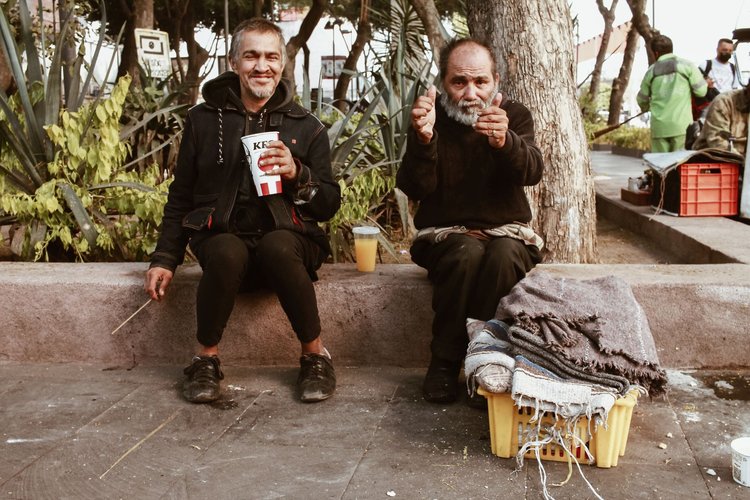
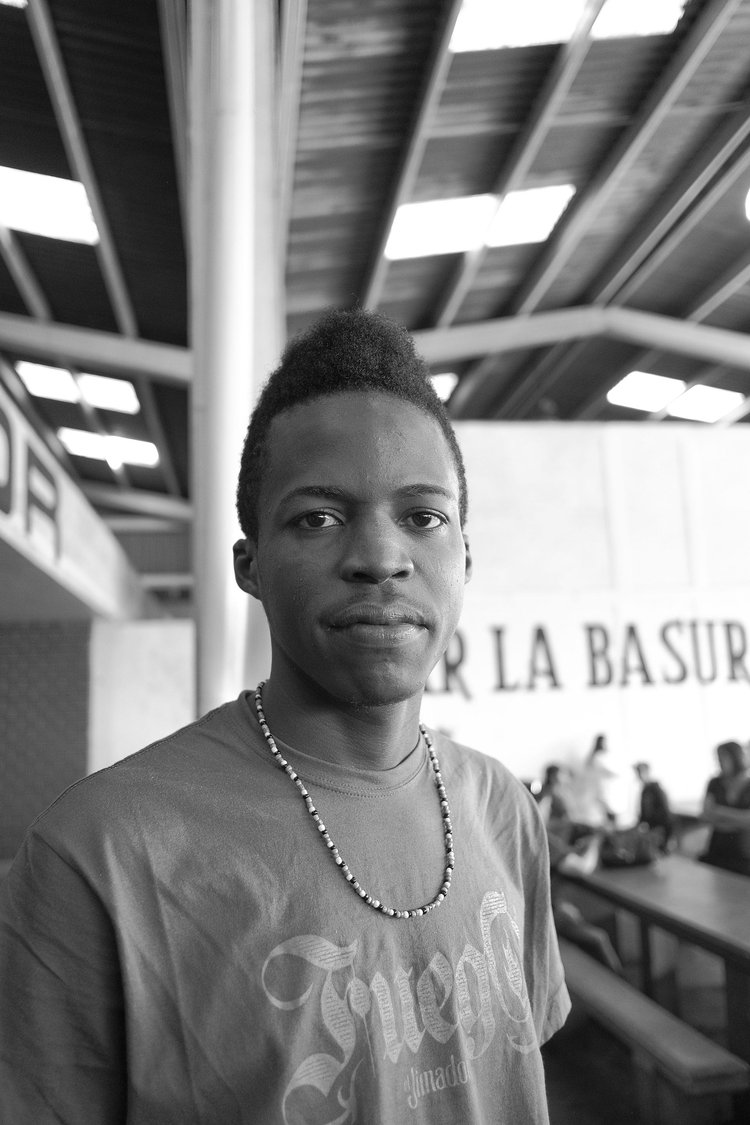
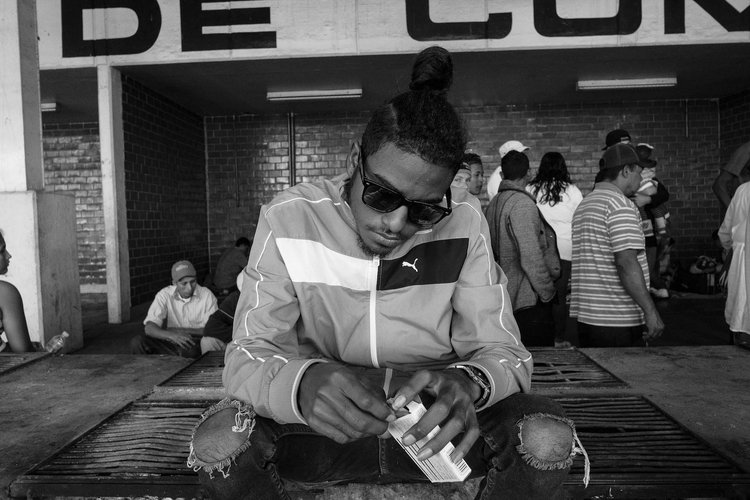
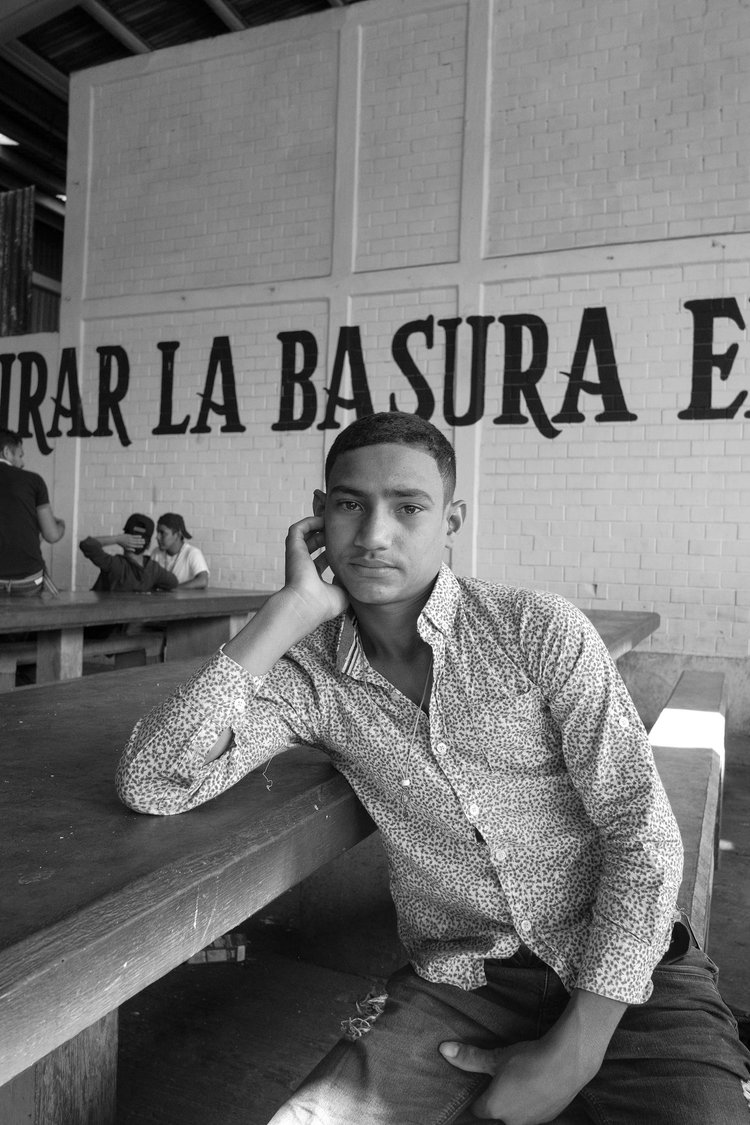
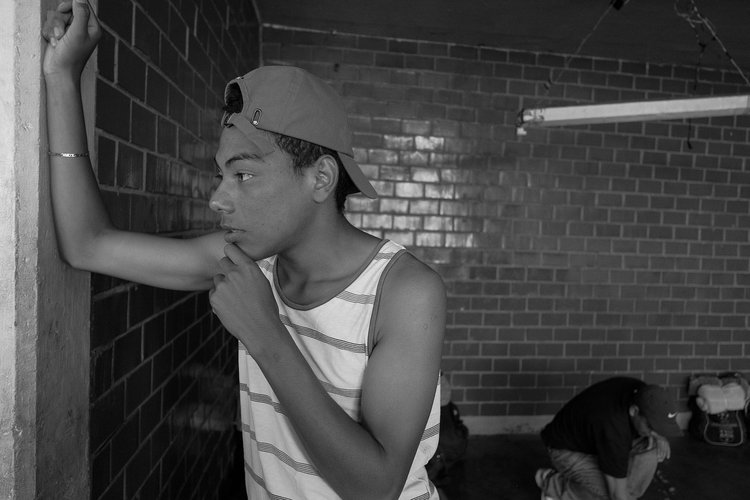
In 2018 Polaris Images commissioned me a breaking news work on the situation of migrants arriving in Mexico City. Today I am talking to you about that work and how, in carrying it out, the dignity of people was the priority aspect that I took care to preserve.

In photojournalism there is a thin line that demarcates the territory of documentation from that of the exploitation of people through images. The photojournalist is required to document what is happening with images and texts. In approaching certain issues, already difficult in themselves, the photographer should take care of photographing reality as it is, without sweetening it or making it more fascinating, but above all he/she should avoid dramatizing events for his/her own gain. Unfortunately this happens more and more rarely and we are witnessing aesthetic extremes to give character to the photographic work.

The Human Caravan coverage

Hundreds of immigrants crossed the south border of Mexico from Central America (Honduras mostly) arrived in a “caravan” and they were hosted at “Casa del Peregrino” a first reception humanitarian center.

How I approached the work on assignment

I don’t do a lot of breaking news but when I do it I give my all. I document in advance on the issue to be addressed in order to have a mental order and choose a certain setting rather than another. Obviously I am aware that there will be other colleagues in the place dedicated to the documentation and I also consider the way of telling the various small stories that I will meet in a different way, in order not to have images similar to those of all the others.

I mentally referred to the work on the Great Depression commissioned in the United States by the FSA. The model had to be that to ensure dignity to the people portrayed.

The work required as much empathic contact as possible with the subjects portrayed. Talk to them and take an interest in their story before you even start taking pictures.

When I say that a photographer reveals a lot about himself I am referring to the fact that, for example, in the photos you immediately notice if the subjects feel uncomfortable and the exact opposite if, instead, the photographer was able to empathize with the subjects and do not make the act of being photographed as something to be suffered.

As a photographer, first of all, I am interested in preserving people’s dignity. In this case we are talking about people who have been forced to leave their country in spite of themselves. And where they would like to return as soon as conditions allow. All this must emerge from the photos of a truly humanist photographer.

In my head there was undoubtedly the idea of making photos as iconic as possible but at the same time in full respect of the person portrayed.

In reviewing this work after three years I am still satisfied with what I have managed to achieve.


Citations, References And Other Reading

  1. Featured Photo Courtesy ofhttps://alexcoghe.com/portfolio/project-one-z9zrg
  2. https://alexcoghe.com/journal/humanist-and-realist-at-the-center-of-the-approach
  3. https://alexcoghe.com/journal/how-to-make-humanist-photography-that-is-respectful-of-peoples-dignity

The views, opinions and analyses expressed in the articles on Humanist Freedoms are those of the contributor(s) and do not necessarily reflect the views or opinions of the publishers.

What Does a Humanist need to know about Humanism, Human Rights and Afghanistan in 2022?

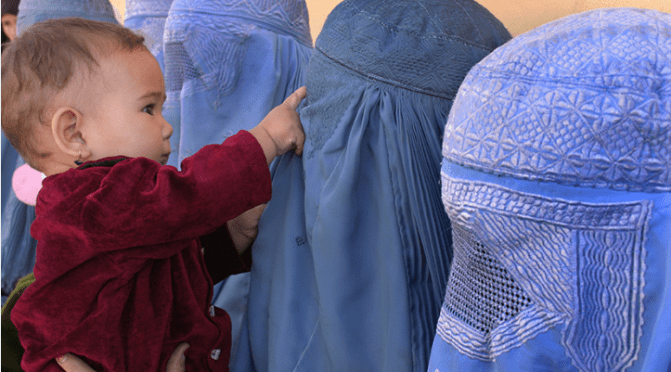
In our search for interesting, challenging and critical perspectives on contemporary humanism, we locate articles and information published via other venues that we think HumanistFreedoms.com readers may enjoy. The featured image is from the portfolio of Farzana Wahidy, an award-winning photographer from Afghanistan. Born in Kandahar in 1984, Wahidy moved with her family to Kabul at the age of six. She was a teenager when the Taliban took over Afghanistan in 1996. At age 13 she was beaten in the street for not wearing a burqa. Looking back at that moment, she stated that she wished she was a photographer at the time, able to show today’s society what it was like for young girls like herself, but photography and other forms of creative expression were banned. During the Taliban era women were forbidden from continuing their education. Hiding books under her burka so she wouldn’t get caught, she attended an underground school with about 300 other students in a residential area of Kabul, and when U.S.-led forces ended Taliban rule in 2001, she began high school. In 2007 Wahidy received a full scholarship for the two-year Photojournalism Program at Loyalist College in Belleville, Ontario, Canada, graduating on the Dean’s List in 2009. Since 2008 Wahidy has been the recipient of numerous awards and grants from organizations such as the Open Society Institute, National Geographic All Roads Film and Photography Program, University of Missouri and Mountain Film for her photography work.

Following is a collection of information pertaining to humanism and human rights inf Afghanistan.

What Do You Have to Say?

Do you have information or resources that would improve this article? Please submit it via our contact page.

What does Secular Underground Network Have to Say?

Based in Rotterdam, an organization going by the name Secular Underground Network was started in 2020 as an initiative of the International Association of Atheists. The group’s stated purpose is to connect atheists, agnostics, secularists, apostates and their friends to support community members in need. The group aims to provide wide-ranging assistance to the defined community from moral support and job finding resources to fleeing a dangerous situation, providing shelter, study help.


What Does the United Nations Have to Say?

December 14, 2021 – Excerpts from Humanitarian crisis threatens basic human rights

Briefing the UN Human Rights Council, Nada Al-Nashif detailed how the profound humanitarian crisis in Afghanistan is threatening basic rights, with women, girls, and civil society among those most affected. 

Staff from the UN human rights office, OHCHR, remain on the ground in Afghanistan, where the economy is largely paralysed and poverty and hunger are rising. 

Ms. Al-Nashif said that as Afghans struggle to meet basic needs, they are being pushed to take desperate measures, including child labour and child marriage. News reports have also surfaced of children being sold.

Ms. Al-Nashif was also deeply concerned about the continued risk of child recruitment, particularly boys, by both ISIL-KP and the de facto authorities.  Children also continue to comprise the majority of civilians killed and injured by unexploded ordnance.

Meanwhile, women and girls face great uncertainty when it comes to respecting their rights to education, livelihoods and participation. Some 4.2 million young Afghans are already out of school, 60 per cent of them girls.   

There has also been a decline in girls’ secondary school attendance, even in provinces where the de facto authorities have permitted them to attend school.  This is largely due to the absence of women teachers, since in some locations girls are only allowed to be taught by women.

Afghan civil society has also come under attack in recent months.  Since August, at least eight activists and two journalists have been killed, and others injured, by unidentified armed men. 

The UN mission in the country, UNAMA, has documented nearly 60 apparently arbitrary detentions, beatings, and threats of activists, journalists, and staff of the Afghanistan Independent Human Rights Commission, attributed to the de facto authorities. 

Several women’s rights defenders have also been threatened, and there is widespread fear of reprisals since a violent crackdown on women’s peaceful protests in September. Many media outlets have shuttered, as have numerous civil society groups.

Furthermore, the Afghanistan Independent Human Rights Commission has been unable to operate since August, while the Afghanistan Independent Bar Association faces a loss of independence as the de facto authorities now administer its activities under the de facto Ministry of Justice. 

“The safety of Afghan judges, prosecutors, and lawyers – particularly women legal professionals – is a matter for particular alarm,” Ms. Al-Nashif added. “Many are currently in hiding for fear of retribution, including from convicted prisoners who were freed by the de facto authorities, notably men convicted of gender-based violence.” 

December 12, 2021 – Joint Statement: UNHCR & UN Women join efforts to protect and uphold the rights of women and girls in Afghanistan

Kabul, 12.12.2021- UNHCR, the UN Refugee Agency, and UN Women, the UN entity dedicated to gender equality and the empowerment of women signed a letter of intent committing to strengthen their partnership to protect the rights of women and girls in Afghanistan.

The complex humanitarian crisis unfolding in Af­ghanistan is marked by gender-specific restrictions that directly impact the ability of women and girls to realize their rights. Afghan women and girls face unique vulnera­bilities and risks as gender inequality is interwoven with conflict dynamics and humanitarian needs.

Recognizing how gender inequality is shaping the ongoing humanitar­ian crisis in Afghanistan, UNHCR and UN Women committed to further strengthen their partnership to protect the rights of women and girls in Afghanistan.

The overall objective of UNHCR and UN Women in Afghanistan is to strengthen cooperation between the two organizations leveraging their respective leadership role in ensuring the centrality of protection, with a particular focus on addressing the specific needs of women and girls, through jointly advocating for the rights; and responding to the needs, of women and girls among refugees, returnees, internally displaced persons, and vulnerable members of host communities.

Without a gender lens the interna­tional community risks exacerbating pre-existing forms of inequality rather than creating pathways to ensuring no one is left behind. The UNHCR, UN Women partnership also strives to advance the civic, social and economic empowerment of women and girls and strengthen the evidence-base by improving sex and gender disaggregated data collection systems and gender analysis that address discriminatory gender norms.

For more information on this topic, please contact:

What Does Human Rights Watch Have to Say?

Image Courtesy of the Human Rights Watch website January 5, 2022

What Does Amnesty International Have to Say?

Excerpts from Amnesty International‘s website

Women and girls continued to face gender-based discrimination and violence throughout Afghanistan, especially in areas under Taliban control, where their rights were violated with impunity and violent “punishments” were meted out for perceived transgressions of the armed group’s interpretation of Islamic law.

Violence against women and girls remained chronically under-reported, with women often fearing reprisals and lacking confidence in the authorities if they came forward. According to the Afghanistan Independent Human Rights Commission (AIHRC), more than 100 cases of murder were reported during the year. Where these cases were reported, there was a persistent failure to investigate them. In some cases, victims of violence came under pressure from their communities or state officials to withdraw their complaints, or “mediation” was used to resolve complaints beyond the protection of the law. As a result, there was widespread impunity for the perpetrators of beatings, killings, torture and other ill-treatment, and corporal punishments.

Children continued to face harassment and sexual violence. Despite the sexual abuse of children being well-publicized, and the abusive practice of “bacha bazi” (male children being sexually abused by older men) being criminalized in 2018, the authorities made little effort to end impunity and hold perpetrators accountable.

Children lacked adequate opportunities to pursue their right to quality education. According to UNICEF, over 2 million girls remained out of school, and according to government figures about 7,000 schools in the country had no building. Large numbers of children continued to be pressed into forced labour or begging on the streets.

The conditions grew more difficult for journalists, media workers, and activists to function due to increasing insecurity and the targeted killings of activists, journalists, and moderate religious scholars. Journalists raised concerns over the lack of access to information and did not enjoy adequate protection from attacks by armed groups. The government introduced a draft mass media bill, which would have imposed further restrictions on the right to freedom of expression. It was forced to withdraw the bill in the face of widespread criticism.

Discussions were ongoing in parliament over a draft bill on public gatherings, strikes and demonstrations, which if passed would significantly restrict the right to freedom of peaceful assembly.

The cabinet rejected a third draft bill on NGOs after Amnesty International raised concerns that it placed unnecessary restrictions on registration processes and operational independence.

Attacks and targeted killings against activists, human rights defenders and journalists increased. Human rights defenders continued to come under attack, facing intimidation, violence and killings. In March, government officials in Helmand province physically assaulted human rights defenders who had alleged corruption. They needed hospital treatment for their injuries. In May, Mohammad Ibrahim Ebrat, a facilitator of the Civil Society Joint Working Group, was attacked and wounded by unknown gunmen in Zabul province. He subsequently died of his injuries. In June, two staff members of the AIHRC, Fatima Khalil and Jawad Folad, were killed in an attack on their car in Kabul.


Citations, References And Other Reading

  1. Featured Photo Courtesy ofhttps://www.farzanawahidy.com/portfolio-item/burqa/
  2. https://news.un.org/en/story/2021/12/1107902
  3. https://www.hrw.org/asia/afghanistan
  4. https://www.amnesty.org/en/location/asia-and-the-pacific/south-asia/afghanistan/report-afghanistan/

The views, opinions and analyses expressed in the articles on Humanist Freedoms are those of the contributor(s) and do not necessarily reflect the views or opinions of the publishers.

Politics and Humanism in Malawi: Wonderful Mkhutche

In our search for interesting, challenging and critical perspectives on contemporary humanism, we occasionally find articles published via other venues that we think humanistfreedoms.com readers may enjoy. The following article was located on Malawi24 and Africa Press.


By: Chisomo Phiri 

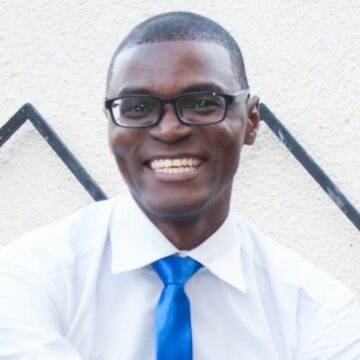
Political scientist and writer Wonderful Mkhutche has written a book on humanism and politics in Malawi which he says will help people understand how issues of humanism affect politics.

Speaking in an interview, Mkhutche said the book, ‘Humanism and Politics Short Essays’, seeks to provide deep understanding on how politics affects humanism and in turn how the humanism affects politics so as for people to grow in religious beliefs and at the same time practicing politics well in the societies.

“Through this book, I want to do two things. First of all, help the readers understand how issues of humanism affect politics and vice versa. Secondly, to provide alternative ways on how best to grow in spiritual life as well as practice politics in a good manner,” said Mkhutche.

Mkhutche said the book is currently receiving positive feedbacks from readers who say it is a helpful book that will transform people’s lives politically and spiritually.

“It is quite interesting that people are now appreciating this book saying it is a very important book in life. To me this is an achievement and I feel myself to be a great of today and tomorrow. No matter how it gets to me, this is an achievement and the work of spreading knowledge and ideas is now on track”, he said.

The writer further said there were so many challenges that were chocking him in his journey of coming up with the book but he still never gave up. One challenge he mentioned was how to manage his other duties and at the same time concentrate on the book.

“Another challenge was about generating ideas on humanism topics since this is uncommon thing in Malawi and many people oppose them. You have to take time to present ideas that can persuade readers,”, he said.

Mkhutche then said government needs to promote reading culture by giving an opportunity to budding writers to have space in book promotions and publications saying this is an expensive task to be done by the writers alone.

Comment on the book, Edgar Kapiza Bayani said the book is a very important book if one wants to understand politics and humanism in Malawi. The ‘Humanism and Politics Short Essays’book will be launched this month at Mzuzu University in Mzuzu. Apart from ‘ Humanism and Politics in Malawi” book, Mkhutche has also written other several books including a biography of musician Lucius Banda


Citations, References And Other Reading

  1. Featured Photo Courtesy of:  http://malawi24.com/2021/11/15/political-scientist-mkhutche-writes-book-on-humanism-and-politics-in-malawi/
  2. http://malawi24.com/2021/11/15/political-scientist-mkhutche-writes-book-on-humanism-and-politics-in-malawi/
  3. https://mkhutchewonderful.wordpress.com/author/mkhutche/
  4. https://www.humanism.scot/what-we-do/policy-campaigns/malawi/

The views, opinions and analyses expressed in the articles on Humanist Freedoms are those of the contributor(s) and do not necessarily reflect the views or opinions of the publishers.

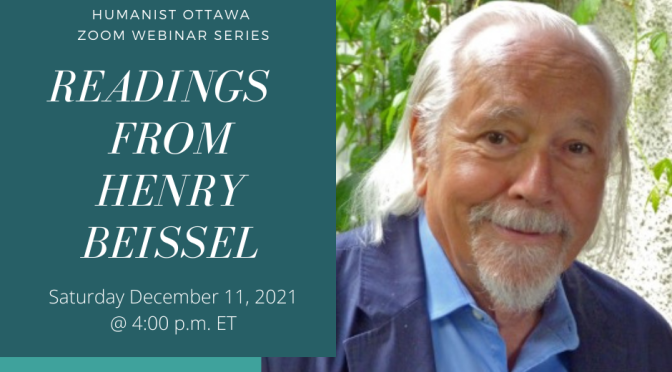
Henry Beissel Poetry Reading

Saturday, December 11, 2021 at 4:00 PM EST

With the financial assistance of the Canada Council for the Arts through the Writers’ Union of Canada, Humanist Ottawa hosts this afternoon selected readings from the works of Henry Beissel, award-winning poet, playwright, essayist, translator and editor. Henry is a past winner of the Ottawa Book Award for his book of poetry, “Footprints of Dark Energy”.

The title poem of this collection takes us on an epic journey across past and present historical events and through spaces defined by the natural sciences, as it explores the challenges of being human in these troubled times. It is accompanied by a gathering of shorter poems that confront the dark forces in our world as they struggle for the light at the end of the tunnel. In stark imagery, these poems turn words into music to celebrate the anguish and the glory of being alive.

Henry Beissel is author/editor of 44 published books. Among his 22 collections of poetry are his epic “Seasons of Blood” and the lyrical “Stones to Harvest” as well as his celebration of Canada in “Cantos North” and the 364 haiku in “What if Zen Gardens …”. He lives in Ottawa with his wife Arlette Francière, the artist and literary translator.

Register in advance for this meeting:
https://us02web.zoom.us/meeting/register/tZUqc-isqTMqG9SJkkLWOIGiZ-sAHsoNSjqf

After registering, you will receive a confirmation email containing information about joining the meeting.

Humanism In The Digital Age: The Urban Contribution Online Conference

Critical thinking about the social impacts of technology is becoming urgent, particularly in a scenario of emerging technologies such as artificial intelligence and algorithmic automation. Global digitalisation continues to widen the inequality gap as well as the digital divide, as digitalisation is not happening equally all over the world.

The event aims to explore how to build a digital transition that does not leave anyone behind, protects and reinforces human rights in the digital age, and places both people and the planet at the centre of the technological deployment.

It will assemble top-leading thinkers and doers who will discuss, identify, and address the challenges our societies are facing from a human-centred technological perspective, through themes such as Digital Inclusion, Ethical Artificial Intelligence and Digital rights.

When
Monday, November 15th
9:30 h – 18:30 h CET

Where
Hospital de la Santa Creu i Sant Pau, Barcelona.

REGISTRATION

The event will take place in Barcelona on November 15th and it will also be streamed online. Please select below the registration option you prefer. Registration for the in person and online modalities is free.

All sessions will have simultaneous translation in Spanish, Catalan and English.

In case you have already registered and need to do a modification, please click on ‘View/Edit your registration’.

Isaac Asimov’s Foundation…

If you’ve spent more than a few minutes around humanism…or science fiction….or robots….you already know who Isaac Asimov is. We don’t need to tell you that.

We probably also don’t need to tell you much about the Foundation books. We do need to tell you that there’s a new TV series based on those books. The shows AppleTV website says the show is “Based on the award-winning novels by Isaac Asimov, Foundation chronicles a band of exiles on their monumental journey to save humanity and rebuild civilization amid the fall of the Galactic Empire.”

Oh…and also “Cerebral sci-fi drama has diversity and some violence.” What an interesting combination of traits that seemed necessary to advertise.

The show premiered on September 24, 2021 and appears to encompass ten episodes in the first season. How much of Asimov’s original vision and humanism will survive in this big-budget television film version? It’s very difficult to tell at this time. What we can say is the makers have an excellent (ahem) foundation to build upon.

Foundation 2021 New TV Show - 2021/2022 TV Series Premiere ...

Citations, References And Other Reading

  1. Featured Photo Courtesy ofhttps://www.mentalfloss.com/article/54343/12-predictions-isaac-asimov-made-about-2014-1964
  2. https://tv.apple.com/us/show/foundation/umc.cmc.5983fipzqbicvrve6jdfep4x3

The views, opinions and analyses expressed in the articles on Humanist Freedoms are those of the contributor(s) and do not necessarily reflect the views or opinions of the publishers.

Humanist Action For Humanist (And Other) Refugees Who Must Flee Taliban Rule

A consortium of humanist individuals and organizations has begun to work collaboratively and cooperatively to express concern to the Canadian government regarding what they view as a discriminatory oversight (we prefer the term omission) of certain categories of people from the Canadian response to political change in Afghanistan. Particularly, the consortium has expressed concern for Canada’s failure to specifically include atheists, agnostics, humanists and other apostates from its list(s) of categories of those who are vulnerable and may qualify for Canadian assistance. Following is a statement by the consortium.

Statement to Address Discriminatory Oversight in Canadian Special Humanitarian Assistance Program for Afghan Nationals

October 4th, 2021

The tenuous and dangerous living circumstances in Afghanistan following the nation’s fall to the Taliban are dire for many of its citizens, especially atheists and other apostates. Humanist, atheist, and agnostic organizations in Canada represent a diverse group of people who believe that each of us has the responsibility to give meaning to our own life. Those citizens finding meaning in rethinking and rejecting the idea of supernatural entities, including gods, must be as respected as religious believers. In the spirit of the universalism of secular humanism, a consortium of Canada’s many humanist, atheist and agnostic organizations have come together to urgently call upon the government to ameliorate a grave error in the Special Humanitarian Assistance Program for Afghan Nationals.

The current policy language of the Special Humanitarian Assistance Program for Afghan Nationals is as follows:

“There are 2 eligible groups under this program.

Group 1:

You may be eligible for this program if

  • you’re an Afghan national
  • you’re outside of Afghanistan and
  • you don’t have a durable solution in a third country

This group will include people such as

  • woman leaders
  • human rights advocates
  • journalists and people who assisted Canadian journalists
  • persecuted religious minorities
  • LGBTI individuals
  • immediate family members of one of the above

Group 2:

You may be eligible for this program if you’re an extended family member of someone who helped the Government of Canada and has already been resettled to Canada.”

The language used in this policy that exclusively designates eligibility based on membership in a persecuted religious minority group explicitly discriminates against those persecuted on the basis of their non-belief and atheism. 

Atheists and apostates from Islam in Afghanistan face extreme danger and this serious risk should be neither overlooked nor dismissed. It is well established that the classical punishment for apostasy in Islamic jurisprudence is death. Senior Taliban officials have recently announced their intention to impose strict traditional Sharia (Islamic law) punishments, including execution and the amputation of hands. Thus, the safety of all apostates and non-believers is of the utmost concern.

This policy’s highly restrictive current language fails to meet Article 18 of the UN Universal Declaration of Human Rights, which enshrines the observance and promotion of “freedom of religion or belief.” The government of Canada is also failing to fulfill its responsibility as a party to the United Nations 1951 UN Refugee Convention, which describes refugees as those who are “unable or unwilling to return to their country of origin owing to a well-founded fear of being persecuted for reasons of race, religion, nationality, membership in a particular social group, or political opinion.”

Our collaborative endeavour urgently calls upon the government of Canada to immediately issue a clarification of its Special Humanitarian Assistance Program for Afghan Nationals, to explicitly include non-religious Afghan atheists, humanists, and agnostics.

The above statement is supported by the following organizations and individuals:

Abdullah Sameer, YouTuber & Blogger, Friendly Ex-Muslim, & Previous Founder, Light Upon Light and Verse By Verse Quran

Ali A. Rizvi, M.D., Author, “The Atheist Muslim”, & Co-Host, Secular Jihadists for a Muslim Enlightenment podcast

Andy Blair, Founder & Chair, Ubuntu Canada Refugee

Armin Navabi, Founder, Atheist Republic, Author, “Why There Is No God: Simple Responses to 20 Common Arguments for the Existence of God”, & Co-Host, Secular Jihadists for a Muslim Enlightenment podcast

Prof. Arthur Schafer, Founding Director, Centre for Professional and Applied Ethics, University of Manitoba

Babak Yazdi, Executive Director, Kanoon-e-Khavaran

Barrie Webster, Vice President, Secular Connexion Séculière

Christine Ball, Co-President, Ontario Humanist Society

Christopher DiCarlo, Ph.D., Philosopher, Founder, Critical Thinking Solutions, & author of multiple titles including, “So You Think You Can Think? Tools for Having Intelligent Conversations and Getting Along”

David Rand, President, Libres penseurs athées — Atheist Freethinkers

Diane Bruce, Director, Centre for Inquiry Canada, & Branch Manager, Centre for Inquiry Canada — Ottawa

Doug Thomas, President, Secular Connexion Séculière

Edan Tasca, Board Member, Centre For Inquiry Canada

Fika Taillon, Founder & Organizer, Minds & Hearts Without Borders

George Cordahi, Vice President, Halton Peel Humanist Community

Gus Lyn-Piluso, Ph.D., President, Centre for Inquiry Canada

Henry Beissel, Distinguished Emeritus Professor, Concordia University, Montreal

Homa Arjomand, Active Director, The Cultural Bridges Association, & Coordinator, The Campaign Open Borders for Afghan Women and Children Fleeing the Taliban

Jannalee Morris, President, Atheist Society of Calgary

Jason Sylvester, Board Member at Large, Atheist Alliance International

Jocelyne Lemoine, Branch Manager, Centre for Inquiry Canada — Winnipeg

Katherine Dimou, President, Society of Freethinkers

Kendra Getty, Branch Manager, Centre for Inquiry Canada — Saskatoon

Kenn Bur, Founder, Secular Wall

Kerry Bowser, Co-President, Ontario Humanist Society

Lawrence M. Krauss, Ph.D., President, The Origins Project Foundation, Host, The Origins Podcast, & authorof multiple titles including, “The Greatest Story Ever Told–So Far: Why Are We Here?”

Leonard Walsh, Branch Manager, Centre for Inquiry Canada — Nova Scotia

Lloyd Hawkeye Robertson, M.Ed., Ph.D., President, The New Enlightenment Project: A Canadian Humanist Initiative

Madeline Weld, Ph.D., Co-Editor, Humanist Perspectives magazine

Martin Frith, President, Humanist Canada

Muhammad Syed, President, Ex-Muslims of North America

Neil Bernstein, YouTuber, Neil The 604 Atheist

Onur C. Romano, Human Rights Chair, Centre For Inquiry Canada, & President, Ateizm Derneği International

Randolf Richardson, President, Canadian atheists

Richard Dowsett, President, Halton Peel Humanist Community, & Coordinator, Humanist Association of Toronto 

Richard G. L. Thain, D.D.S., Founding board member, Centre For Inquiry Canada, & Founder, Humanist Canada Student Essay Contest

Richard Young, M.Eng.,Co-Editor, Humanist Perspectives magazine

Robert Hamilton, President, Humanist Ottawa

Sandra Dunham, BSc, MPA, Executive Director of Development, Centre For Inquiry Canada

Scott Douglas Jacobsen, Independent Researcher, Journalist

Seanna Watson, Vice President, Centre for Inquiry Canada

Sheila Ayala, President, Secular Ontario

Simon Parcher, President, Canadian Humanist Publications

Sohail Ahmad, President, Ex-Muslims of Toronto

Sophie Shulman, M.D., Ph.D., D.Sci., Branch Manager, Centre For Inquiry Canada — Victoria

Steven Pinker, Ph.D., Johnstone Family Professor of Psychology, Harvard University, & author of multiple titles including, “Rationality: What It Is, Why It Seems Scarce, Why It Matters”

Susanna McIntyre, President & CEO, Atheist Republic

Tahmineh Sadeghi, Spokesperson, Hambasteghi – International Federation of Iranian Refugees

Tarek Fatah, Fellow, Middle East Forum, Columnist, The Toronto Sun, & author of multiple tiles including, “The Jew is Not My Enemy”,

Yasmine Mohammed, Founder, Free Hearts Free Minds, & Author, “Unveiled: How Western Liberals Empower Radical Islam”

Citations, References And Other Reading

  1. Featured Photo Courtesy of:
  2. https://www.atheistrepublic.com/press-release/secular-organizations-charge-government-errors-afghan-humanitarian-program
  3. http://www.secularconnexion.ca/

The views, opinions and analyses expressed in the articles on Humanist Freedoms are those of the contributor(s) and do not necessarily reflect the views or opinions of the publishers.