Category Archives: Uncategorized

The Humanist Show: Miriam Beerman, Jacob Landau and Sheba Sharrow

In our search for interesting, challenging and critical perspectives on contemporary humanism, we occasionally find articles published in other venues that we think humanistfreedoms.com readers may enjoy. The following article was published on:

 http://www.jamesyarosh.com/humanist/


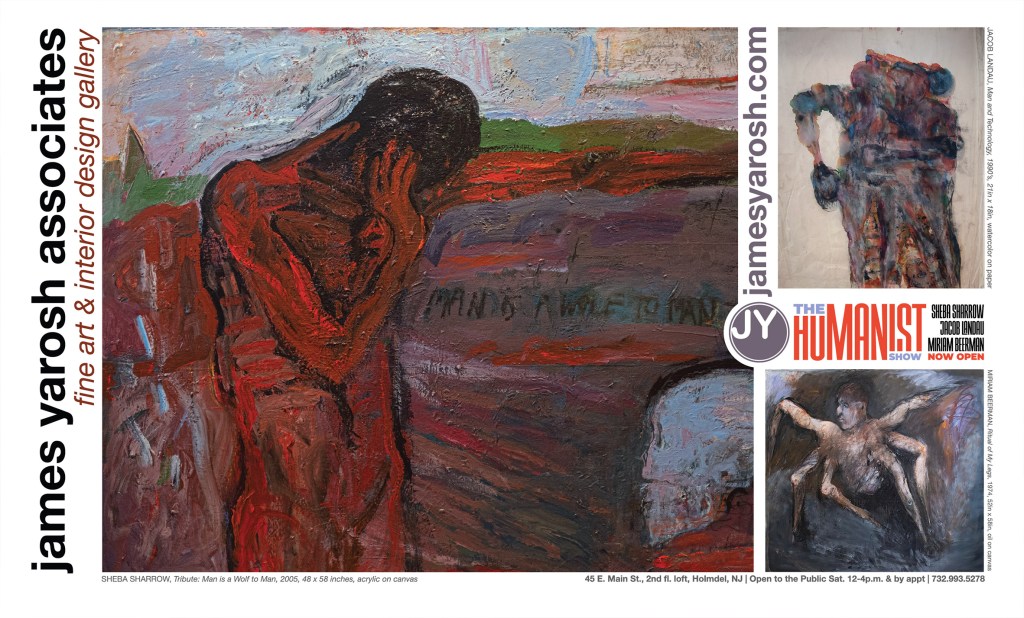
THREE ARTISTS ARE CURRENTLY ON VIEW AT JAMES YAROSH ASSOCIATES: Now though October 2, 2021


Established in 1996, James Yarosh Associates Fine Art Gallery is located in the second floor loft space of the former 1917 firehouse at

45 E. Main Street (Rt.520) in Historic Holmdel Village, NJ 07733

Entrance on the inside corner of building & additional parking lots in the rear.

Open Saturday 12-4pm.
Weekday & evenings hours scheduled
by appointment


The bodies of work of three museum-recognized artists are being revisited as part of a curated exhibit that explores the different artistic answers each creator has to similar humanist subjects—but mainly to highlight how we are very much the same.

The artists in The Humanist Show at James Yarosh Associates are all from a similar era and likeminded in their philosophy of using art as a form of activism. Now, their voices have the opportunity to be heard again in an exhibit that allows visitors to experience their interaction and to feel how great art can emote in ways words alone cannot.

The arts always have been an intellectual engagement first; the conversations of artists are the most revealing of that fact and tradition.

Since his eponymous gallery opened in 1996, Yarosh’s intentions have remained clear for the gallery’s art representation: to use an artist’s eye and the very human approach of showcasing works that resonate with viewers. Curation begins with valuing art for art’s sake. Beauty is deeper than the surfaces of great art. When we view art, we share journeys through the artists’ minds, connecting us through the feelings and responses we share in the experiences of life. How lucky for collectors who embrace works that define our culture and are able to participate in the continuum!

The common theme is: artists using their talents and great minds to illustrate empathy. They provide lessons and find answers to issues confronting human welfare and respond to human suffering. Artists rely on their acute sensitivity to create and thus can become compelled to employ art to “bear witness” to the injustices they see around them.
Cultural Conversations

Each artist in this exhibit was born nearly a century ago and yet the energy of their art still feels very forward, unafraid of moving viewers today to go outside of their initial comfort zones.

The exhibit also captures the lifetime of learning that goes into a work of art and the honing of an artist’s voice at each stage of their career. An artist faces a canvas bravely, taking on subjects and often creating from nothing, just trusting their voice.

The results can become very layered and require sophistication to recognize what each artist achieved. We need open minds to view ourselves in the subject matter, beyond the simplicity of “portrait, still life and landscape,” and an investment of time to discover the depths of the work. The rewards are ultimately greater for the soul once this is understood.

In the artist documentary Expressing the Chaos, Miriam Beerman, then 90, says, “You have to do some work. I think it’s clear by now I’m not interested in painting pretty pictures.” In a 1988 catalog, Beerman referred to Sheba Sharrow as “one of the finest women artists of our time.” Sharrow mentioned often that she did not see art as entertainment and although her drawing and painting skills are brilliantly seductive, her work tends to stir the conscience. Jacob Landau was unabashedly outspoken to use his art as a flag, warning of threats to mankind if we didn’t choose change. Presenting Landau as the only male artist in the exhibit, the show shifts the dynamic of this era when males dominated the art world.

Yarosh says of the three artists: “Landau’s drafting offers exacting lines that put images in order and organizes thoughts as if he were confronting technology head-on. His mapping of paths of a new world orchestrates, almost scientifically, an equation of what will become of mankind when our humanity becomes obsolete in the name of progress.”

“Sharrow’s expressionism is direct, using both force and tenderness. The lyrical line of her hand becomes a visual poetry. Her art has an elegance, embracing formal balances of good to overcome trauma and transmute it into art. Themes of mortality are explored and revisited throughout, knowing that beauty can only be seen by knowing the sadness of its polar opposite, allowing us to understand both highs and lows as forever tied into life’s journey. Her work speaks lovingly, even if with fearless candor, acknowledging that with awareness come burdens.”

“Beerman’s work and subject matter is near primal with color. Her hands in combat, she does not shy away from the bruises of pain as these come with the safety net of a momentary intoxication, compelling her to revisit subjects like moth-to-flame to further the act of creation. Beerman’s work exalts winning the battles in life. There is even humor — albeit sometimes akin to nervous laughter — in the face of demons. The result is an art, bursting and satisfying like ripe fruit, on a precipice edged along the past, present and future, embracing living in the current moment.”

“With all of these artists, however, their messages focus on the ever-present option of choosing beauty,” he continues. “This fact is evident with the beautiful handling of their mediums, with which they simultaneously create intoxicating subplots for our eyes and reward us for not looking away, for being present in the noble act of viewing art.”

Yarosh, an artist, interior designer and gallerist, notes his gallery always has favored the idea of being more of an artist’s home, open to the public to allow people to uncover the merits of the art that “we as artists know is great.” There is an unfortunate chasm between the works collected and exhibited at museums and what galleries offer, catering to a limited concept of what people hang in the home. Artists are more interesting as they color outside the lines of restriction; it is better to follow their lead of subject matter to uncover the truths they expose. It’s fascinating to see a body of work in hindsight. Reviewing an artist’s oeuvre as a lifetime body of work offers advantages in appreciation for both dealers as well as collectors. Seeing the art through the lens of the artist’s life story allows us to more clearly understand the path they took to greatness. It is important to view artists’ works in the context of their times and also see how it still holds up today with continued interest.

“I am excited to be able to offer works by Beerman, Landau and Sharrow to collectors on a gallery level,” Yarosh says. “Their art is much bigger than many realize and even as an art dealer, I’m still discovering more as I live with these great works. As time goes on, I realize how much more there is to learn in life. These artists are our teachers, and I have always put my faith in the arts. I feel very encouraged for the future of humanist artists when I see important exhibits like Alice Neel: People Come First currently at the Metropolitan Museum. These artists’ bodies of work live on and the conversations of humanity always will connect us as long as we continue to exist.”

The Humanist exhibit at James Yarosh Associates gallery offers a window into the artists’ world in an accessible setting that allows us to meet the artists’ works up close. Works on view include large-scale canvases, works on paper and artist books of mixed-media/collage. The gallery is open to the public Saturdays 12-4 p.m. and by appointment. Previews of the show can be seen on the What’s New page on the gallery’s website, http://www.jamesyarosh.com.

Miriam Beerman

Beerman (b.1923) is a contemporary maker of painterly power objects, imbuing the paint with profound psychology as well as beauty. Her subject has been the arena of the human condition, whether expressed overtly with imagery evoking genocide or abstractly through the call-and-response of process. These works are serious paintings offering a lifetime of contemplation and stimulating a depth of thought. Beerman has contributed to the contemporary involvement in art as a political tool to alter consciousness.

Miriam Beerman

In 2015, Beerman, one of the first women to have a solo show at the Brooklyn Museum, was the subject of the 50-minute artist documentary Expressing the Chaos, a film that is available to stream on Amazon Prime and YouTube outlets. Material on Beerman’s art currently is being compiled, detailing the over 60 U.S. and European museums which include her work in their collections. She will be the focus of an Artist in Spotlight exhibit at James Yarosh Associates Fine Art Gallery for the Fall 2021/Winter 2022 season.

Jacob Landau

Jacob Landau | IngPeaceProject.com
Jacob Landau

Landau (1917–2001) was an American artist best known for his evocative works on the human condition. Typically, his works address the Great Depression, World War II and the impact of technology and politics on individuals and their surroundings. Landau’s works can be found in the permanent collections of the Metropolitan Museum of Art, the Library of Congress, the Museum of Modern Art and the National Gallery. The 2021 book The Prophetic Quest: The Stained Glass Windows of Jacob Landau brings his artistry to the fore, revealing the magnitude of a series of ten monumental abstract stained-glass windows, created by Landau for the Kenneth Israel synagogue just north of Philadelphia, depicting the lives and words of the biblical prophets.

Sheba Sharrow

Sharrow (1926–2006) was born during the Great Depression and came of age during World War II. Her art exemplifies an artist with eyes wide open. Her expressionist paintings of abstract humanity are masterful in execution, poetically engaging us with topics such as mortality, desire, vulnerability, power, warfare and spirituality.

Sheba Save The Date - James Yarosh Associates
Sheba Sharrow

In 2017, Monmouth University’s exhibit Sheba Sharrow: Balancing Act was co-curated by James Yarosh Associates Fine Art Gallery, and in 2020, Sharrow’s art was the subject of the solo exhibit History Repeats at James Yarosh Associates Gallery. Opening in September 2021, Sharrow’s multi-paneled painting “The Dateci Quartet,” in the collection of the Zimmerli Art Museum at Rutgers University, is the basis for its exhibition Dateci: Sheba Sharrow and Primo Levi and a subject of an online discussion led by Margaret Olin, Senior Research Scholar at the Yale Divinity School, entitled Social Justice as a Theme in Jewish Art. Sharrow’s work can also be seen in the Art on Paper NYC art fair in September 2021 with Exhibitor James Yarosh Associates.


Citations, References And Other Reading

  1. Featured Photo Courtesy of: http://www.jamesyarosh.com/humanist/
  2. https://www.newjerseystage.com/articles/2021/06/26/james-yarosh-associates-presents-the-humanist-show-works-by-miriam-beerman-jacob-landau-and-sheba-sharrow/
  3. http://www.miriambeerman.com/
  4. http://jacoblandau.org/
  5. http://shebasharrow.com/

The views, opinions and analyses expressed in the articles on Humanist Freedoms are those of the contributor(s) and do not necessarily reflect the views or opinions of the publishers.

Secular Wall: Good Fences Make Good Neighbours

In his 1914 poem Mending Wall, Robert Frost made significant use of the old proverb, good fences make good neighbors. In the poem, a narrator explains that “something there is that doesn’t love a wall” and this something tears down a sturdy stone wall that separates the narrator’s property from the neighbor’s. So each year, the narrator and the neighbor meet on an appointed day to “walk the line and set the line between us one again”, the neighbor often reciting the ancient wisdom. Good fences make good neighbors. Meanwhile, the narrator wants to suggest the mischievous force that is tearing down the wall is “elves” but would prefer for the neighbor to say so.

Dry Stone Walling - Good Day Out

It’s a lovely poem which aptly reminds the reader how to keep one’s metaphorical apple’s from eating-up someone else’s metaphorical pine cones .

In Canada, there is a new Facebook chat group named Secular Wall with an interest to walk the line and mend the wall. The group states that it wishes to “connect all Canadians opposed to the discriminatory and wasteful public funding of religious schools (especially in Alberta, Saskatchewan and Ontario) plus healthcare institutions. Secular Wall members support every citizen’s undisputed RIGHT to worship however they please … with the corresponding RESPONSIBILITY to fully fund their own beliefs.

The organizers of Secular Wall seem to have staked-out familiar, but necessary, territory. Just as there are many individuals who would prefer not to have all their pine cones eaten-up by the neighbor’s apples – there are also plenty of apple-growers who would like to keep their apples from tasting of pine. A bit of annual wall mending is indeed a good thing.

After all, the really does seem to be a great deal of elf-activity from year to year and the walls won’t mend themselves.

The group has a stated zero tolerance for hate speech or profanity, which suggests that dialogue may maintain a level of dignity and respect despite a topic likely to bring out deep-seated values, perspectives and opinions.

If you have an interest in the integrity of your own domain, you may want to join the conversation.


Citations, References And Other Reading

  1. Featured Photo Courtesy ofhttps://www.facebook.com/groups/secularwall/
  2. https://www.poetryfoundation.org/poems/44266/mending-wall

The views, opinions and analyses expressed in the articles on Humanist Freedoms are those of the contributor(s) and do not necessarily reflect the views or opinions of the publishers.

Heavy Metal Humanism: Personal Courage

On January 29, 2021 German heavy metal band Accept released their sixteenth studio album, Too Mean to Die. Here at http://www.humanistfreedoms.com, we don’t always connect with the latest releases in the heavy metal music scene, so we hope to be forgiven by the band for overlooking the release.

One song on Too Mean to Die has caught our ear. “No One’s Master”. We’ve provided a link to a lyric video for other humanist fans of heavy metal to connect with. Unlike many of Accept’s songs, which have carried credit to “Deaffy” all the way back to the 1980’s (actually Gaby Hoffman, the band’s manager and also Accept guitarist Wolf Hoffman’s spouse), “No One’s Master” is credited to band members Martin Motnik, Wolf Hoffmann and Mark Tornillo.

Still, it is absolutely essential when considering Accept, to identify Deaffy, who wrote the lyrics for the band’s most famous song “Ball’s to the Wall” (circa 1983). Who could forget a song that begins with the line, “Too many slaves in this world die by torture and pain”, and gets raunchier, bloodier and more rebellious from there?

Back in 1983, Deaffy also wrote the lyrics for “Fight it Back”, excerpted here as backdrop to the Accept song we’re actually listening to today “Always been the prophets who make the world evolve. Always been the average breaking it down. Majority, the unknown giving us the rules. It’s more than luck to get the standard. You’ll never find me like you hope that I am. You’ll never treat me like you think you can. Be always independent, surrendering no way. I won’t deal with crimes of society. Find myself in crisis, get near to collapse. Am I forced to live that boring life? God, I hate the average. Go and nuke it out. Go, piss the accepted, screw them all! Now, if you hate it, you gonna fight it back. Just try to change it. Fight it. Fight it back.”

Agree with the sentiments or not, Gaby Hoffman’s lyrics set out some clear perspectives on the individual’s role within their society. Now, let’s push forward to more recent days.

It appears that Tornillo, the band’s vocalist has written the lyrics for “No One’s Master”. Some time ago (actually 2012) Tornillo said that he enjoyed the opportunity to write socio-political lyrics. With “No One’s Master” Tornillo seems to be refining sentiments that Deaffy/Accept had established almost forty years earlier.

The “No One’s Master” lyrics take aim at the influence of media on people collectively while setting a rebelliously individualistic and humanistic ethic that is firmly set in the present.

Here is a “lyric video” version of the song, which is rather catchy in a rock-anthem kind of way:

For those who may not be enthusiastic fans of the genre, presented here is an abridged version of the lyrics:

The media’s controlling the masses
Stoking our anger and fear
Further dividing the classes
Serving the richest careers
Their mantra is lies and deception
When honesty’s all that I crave
I decline and there’ll be no exceptions
I am no one’s master
No one’s slave
Living in fear ain’t worth living
Wasting your life is the crime
The reaper will be unforgiving
Wake up, while you’re still in your prime
The guide of my life is my conscience
My way is the path that I pave
I treat, how I want to be treated
I am no one’s master
No one’s slave
I won’t rule; I won’t bow
I won’t sink my eyes to the ground
I won’t steal; I won’t kneel
I won’t bend my knee to the crowned
I pledge an oath to myself and to life
I’m not afraid of the sword or the knife
The guide of my life is my conscience
My way is the path that I pave
Equality’s all that I’m after
I am no one’s master
No one’s slave
No one’s master
I am no one’s
No one’s slave

The song and the genre are a terrific reminder that living a humanist ethic may occasionally require a bit of rebellion, a bit of anger and a lot of personal courage.


Citations, References And Other Reading

  1. Featured Photo Courtesy ofhttp://www.metalrockmusicpodcast.com/accept-recorded-part-of-too-mean-to-die-with-remote-producer/
  2. https://www.acceptworldwide.com/accept-discography/too-mean-to-die/
  3. https://www.acceptworldwide.com/
  4. https://www.theaquarian.com/2012/04/13/interview-with-mark-tornillo-from-accept-living-the-metal-scream-dream/
  5. http://www.darklyrics.com/lyrics/accept/ballstothewall.html#3

BC Humanists’ World Humanist Day EVENT: George Jacob Holyoake

Visit the Event Page

June 22, 2021 at 5pm – 6pm (Pacific Daylight Time)


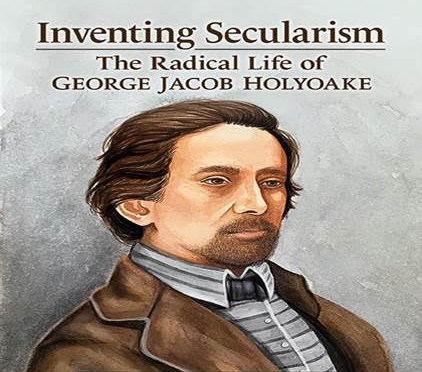
Secularism, the world’s most widely applied model for the separation of church and state, has freed peoples and their governments from control by religious authority. At a time when it is being challenged by evangelical Christianity and fundamentalist Islam, Inventing Secularism, the first modern biography of secularism’s founder, George Jacob Holyoake, is scheduled for the Spring 2021 list of McFarland & Co.

Ray Argyle, Canadian biographer of French president Charles de Gaulle and American ragtime composer Scott Joplin, writes that George Holyoake “changed the life experience of millions around the world by founding secularism on the idea that the duties of a life lived on earth should rank above preparation for an imagined life after death.”

Jailed for atheism and disowned by his family, Holyoake came out of an English prison at the age of 25 determined to bring an end to religion’s control over daily life. He became a radical editor and in 1851 invented the word secularism to represent a system of government free of religious domination. Inventing Secularism reveals details of Holyoake’s conflict-filled life in which he campaigned for public education, freedom of the press, women’s rights, universal suffrage, and the cooperative movement. He was hailed on his death in 1906 for having won “the freedoms we take for granted today.”

More than 160 secular and humanist organizations around the world today advocate principles set out by George Holyoake in his newspaper The Reasoner and in hundreds of lectures as well as books and pamphlets.

Argyle’s Inventing Secularism warns that a rise in religious extremism and populist authoritarianism has put secularism under siege in countries ranging from the United States to such once staunchly secular nations as Hungary, Poland, Turkey and India. He writes that Holyoake “looked beyond his own time, confident of a future of moral as well as material good, offering an infinite diversity of intellect with equality among humanity.” 

McFarland & Company, Inc., Publishers, is located in Jefferson, North Carolina, and is one of the leading publishers of academic and scholarly nonfiction in the United States, offering about 6000 titles in print.

This image has an empty alt attribute; its file name is argyle_holyoake_Final_Cover-600.jpg

The British Columbia Humanist Association has been providing a community and voice for Humanists, atheists, agnostics, and the non-religious of Metro Vancouver and British Columbia since 1982. We support the growth of Humanist communities across BC, provide Humanist ceremonies, and campaign for progressive and secular values.

We are a registered charitable organization. Our mission is:

  • to promote the ideas and philosophy of secular humanism by all available means of education and communication;
  • to serve the educational needs of its members and others of humanistic, scientific and naturalistic outlook, in a democratic, non-dogmatic manner free from authoritarian doctrine;
  • to provide opportunities for fellowship, study and service at all levels of humanistic endeavour, and to advance the values and welfare of humanity in dedication to the continuing enhancement of human life through human effort and understanding;
  • to offer and provide meaningful ceremonies to members and non-members at significant times such as marriage and death; and
  • to elaborate and to express publicly Humanist positions on issues of concern to people, including values, morality and ethics.

Sources, Citations and References

Featured Photo Courtesy of https://rayargyle.com/a-radical-life/


The views, opinions and analyses expressed in the articles on Humanist Freedoms are those of the contributor(s) and do not necessarily reflect the views or opinions of the publishers.

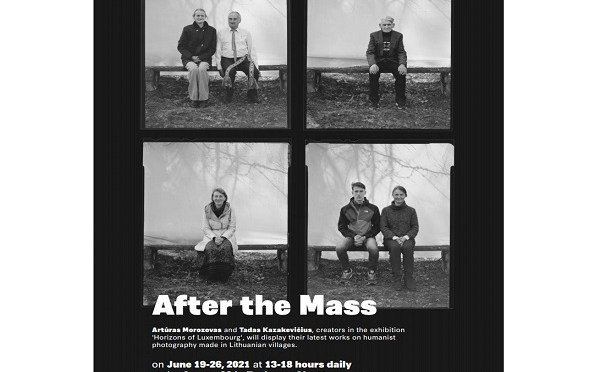
Lithuanian Artists to Present 2nd Humanist Photography Exhibition in June

Lithuanian artists Artūras Morozovas and Tadas Kazakevičius will display their latest works on humanist photography next month at the Annexe22 in Esch-sur-Alzette.

The latest works by the photographers behind the “Horizons of Luxembourg” exhibition and competition include photographs taken in in Lithuanian villages. Organised by the Lithuanian Society in Luxembourg, this second exhibition, “After the Mass”, forms part of the Esch2022 – European Capital of Culture programme.

The exhibition will run from 19 to 26 June 2021, from 13:00 to 18:00 daily.

The artists will be giving free guided tours on humanist photography, in English, on 19 and 20 June 2021 at 13:00 and 15:00. Registration is obligatory via Eventbrite or email: litartlux@gmail.com; those wishing to attend should indicate the date, time and number of attendees when registering.

Photojournalist and war photographer Artūras Morozovas is the recipient of the 2016 Award of the Lithuanian Artists’ Association. He is one of the ambassadors of Kaunas 2022 – European Capital of Culture. Likewise, photographer Tadas Kazakevičius won third prize in the 2020 World Press Photo Competition in the Portraits and Stories categories.

Humanists UK calls for broad curriculum in schools to protect freedom of thought

Humanists UK has called upon all states to make sure the school curriculum is critical, objective, and pluralistic, particularly in its approach to religions and humanism. This is necessary to safeguard the right to freedom of thought. Humanists UK made this call in response to a consultation issued by Dr Ahmed Shaheed, the UN Special Rapporteur on Freedom of Religion or Belief.

International human rights law includes the right to ‘freedom of thought, conscience, religion, or belief’. But, freedom of thought has been little considered in its own right.

Humanists UK said freedom of thought encompasses much more than our private internal experiences. It is a skill set. The skill of being able to seek out, receive, comprehend, and evaluate information. Like any skill, it needs to be taught and developed.

States have a duty to create a culture in which freedom of thought and free enquiry can flourish. In practice, this means having laws that protect people from propaganda and misinformation. It also means schools must teach critical thinking skills. These skills include an understanding of the scientific method. It also means teaching in detail about different religions and humanism, but in a critical, objective, and pluralistic way. All citizens must have access to a wide variety of educational resources, whether that means through books, online, or by other means. And the media also has a strong role to play in informing and educating citizens – particularly public sector media. It must also make sure its content is pluralistic.

Humanists UK also called for the global repeal of blasphemy and apostasy laws. As freedom of thought is an absolute right, no one should be punished because they hold certain thoughts. Laws that criminalise apostatic or blasphemous thoughts are thus incompatible with this right.

Humanists UK’s Director of Public Affairs and Policy Richy Thompson commented,

‘Thought is not only a private experience. It is also a skill. Like any crucial skill, it needs to be taught and given the opportunity to develop. Thus, the state must ensure schools teach in a critical, objective, and pluralistic way. We are concerned that in the UK this is not being achieved. Religious education syllabuses still frequently exclude humanism. All state schools must conduct a daily act of compulsory worship – usually Christian in nature. And we are also aware of an increasing number of illegal religious schools. In these schools, the curriculum is extremely narrow, putting the children at risk of indoctrination. We need a society where all schools, the media, and public access to information is diverse and pluralistic.’

Notes:

For further comment or information, please contact Humanists UK Director of Public Affairs and Policy Richy Thompson at press@humanists.uk or phone 020 7324 3072 or 07534 248 596.

Read the consultation response.

Read more about our education campaigns.

Read more about our international campaigns.

Humanists UK is the national charity working on behalf of non-religious people. Powered by 100,000 members and supporters, we advance free thinking and promote humanism to create a tolerant society where rational thinking and kindness prevail. We provide ceremonies, pastoral care, education, and support services benefitting over a million people every year and our campaigns advance humanist thinking on ethical issues, human rights, and equal treatment for all.

In 2021, Humanists UK is celebrating its 125th anniversary with a renewed focus on its history. The new website Humanist Heritage is a rich new web resource that uncovers the untold story of humanism in the UK – a story of people, groups, objects, places, movements, publications, and ideas.

Citations, References And Other Reading

  1. https://humanism.org.uk/2021/06/09/humanists-uk-calls-for-broad-curriculum-in-schools-to-protect-freedom-of-thought/
  2. https://www.ohchr.org/EN/Issues/FreedomReligion/Pages/freedom-of-thought.aspx

The views, opinions and analyses expressed in the articles on Humanist Freedoms are those of the contributor(s) and do not necessarily reflect the views or opinions of the publishers.
Human: The Movie

Upon occasion, a work of art catches our full attention when we least expect it. Maybe that work of art is a magnificent garden, cultivated over decades by a single family with a harmonious vision and discovered down that one street you kept meaning to walk along. Maybe it’s a piece of music that gets into your head and heart so completely from the first time you heard it that it no longer seems to be separate. Or maybe it’s some other bit of human skill and design – some exquisite sculpture, poem, painting, building, guitar, novel, or what have you that stops everything else and occupies you fully.

Human: The Movie is that kind of experience.

The Director’s cut version that I’ve linked from Youtube says in the description box:

What is it that makes us human? Is it that we love, that we fight ? That we laugh ? Cry ? Our curiosity ? The quest for discovery ? Driven by these questions, filmmaker and artist Yann Arthus-Bertrand spent three years collecting real-life stories from 2,000 women and men in 60 countries. Working with a dedicated team of translators, journalists and cameramen, Yann captures deeply personal and emotional accounts of topics that unite us all; struggles with poverty, war, homophobia, and the future of our planet mixed with moments of love and happiness. The VOL.1 deals with the themes of love, women, work and poverty. In order to share this unique image bank everywhere and for everyone, HUMAN exist in several versions : A theatrical version (3h11), a TV version (2h11) and a 3 volumes version for the web

The film appears to have been funded by two foundations The Bettencourt Schueller Foundation whose website says that “from its earliest days, the Foundation’s action has been driven by one unwavering principle: contributing to the common good. Acting with complete freedom while remaining true to this principle, the Foundation focuses on three areas of commitment: life sciences, the arts and inclusive society” and The GoodPlanet Foundation which is an extension of Yann Arthus-Bertrand’s artistic work and environmental commitment. GoodPlanet aims to make ecology and humanism a central issue in order to encourage people to take concrete action for the Earth and its inhabitants. The GoodPlanet Foundation takes action in three main areas: environmental and solidarity field projects, educating people on sustainable development and helping companies and people develop an environmentally responsible approach.

What is the next wave of humanism? In our earlier examination, we argued that  “contemporary humanists of the twenty-first century are concerned with applied humanism – the many ways that humanism is used for solving problems. The New Humanist says, ‘I am Extreme; I am Radical; I am Hardcore. I am Humanist.‘”….and it seems that the contemporary humanists are also saying “I am connected to my world. I care.”

Citations, References And Other Reading

  1. Featured Photo Courtesy of: http://www.human-themovie.org/
  2. https://www.fondationbs.org/en
  3. https://www.goodplanet.org/en/

The views, opinions and analyses expressed in the articles on Humanist Freedoms are those of the contributor(s) and do not necessarily reflect the views or opinions of the publishers.

Jane Goodall Receives 2021 Templeton Prize


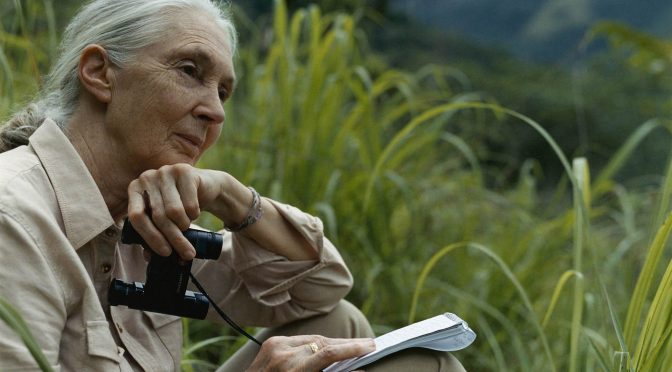
Pennsylvania, USA, May 20, 2021 – Dr. Jane Goodall, DBE, founder of the Jane Goodall Institute, UN Messenger of Peace and world-renowned ethologist and conservationist, whose groundbreaking discoveries changed humanity’s understanding of its role in the natural world, was announced today as the winner of the 2021 Templeton Prize. The Templeton Prize, valued at over $1.5 million, is one of the world’s largest annual individual awards. Established by the late global investor and philanthropist Sir John Templeton, it is given to honor those who harness the power of the sciences to explore the deepest questions of the universe and humankind’s place and purpose within it. Unlike Goodall’s past accolades, the Templeton Prize specifically celebrates her scientific and spiritual curiosity. The Prize rewards her unrelenting effort to connect humanity to a greater purpose and is the largest single award that Dr. Goodall has ever received.


“We are delighted and honored to award Dr. Jane Goodall this year, as her achievements go beyond the traditional parameters of scientific research to define our perception of what it means to be human,” said Heather Templeton Dill, president of the John Templeton Foundation. “Her discoveries have profoundly altered the world’s view of animal intelligence and enriched our understanding of humanity in a way that is both humbling and exalting. Ultimately, her work exemplifies the kind of humility, spiritual curiosity, and discovery that my grandfather, John Templeton, wrote and spoke about during his life.”

Jane Goodall Wins the Templeton Prize - SCIFI.radio - Your ...


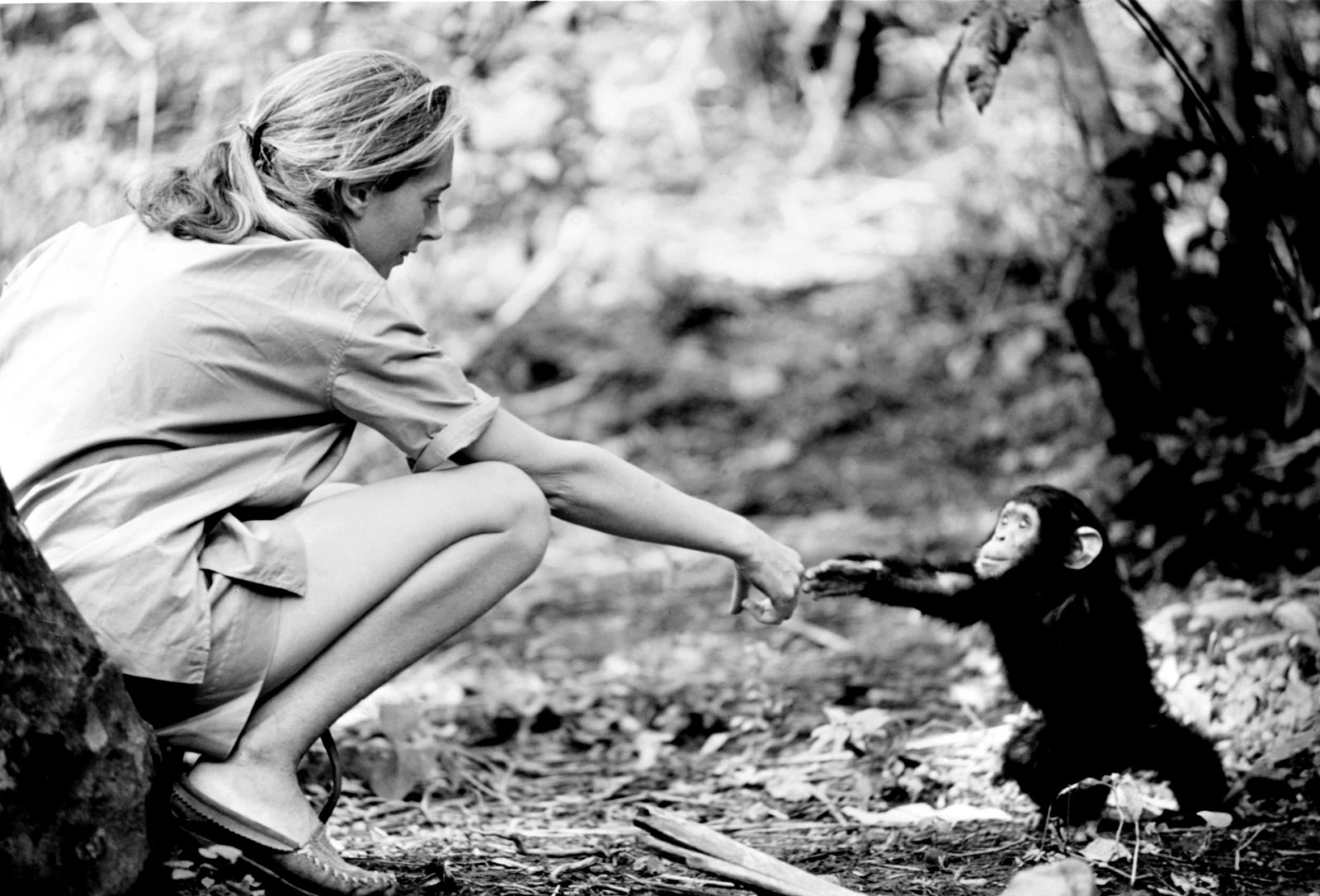
Dr. Goodall has caused a revolution in how scientists and the public perceive the mental, emotional, and social complexity of animals, regarding them as extensions of ourselves. She was the first to observe that chimpanzees engaged in activities, such as creating tools, which were previously believed to be exclusive to humans. She also proved that they have individual personality, forethought, and complex societies, much like human beings. Through her observations, Dr. Goodall showed that under certain circumstances they wage war and also, like us, show compassion. Most importantly, throughout her career, Dr. Goodall has championed the value of all life forms on Earth, changing both scientific practice and the culture at large.


“I have learned more about the two sides of human nature, and I am convinced that there are more good than bad people,” said Dr. Jane Goodall, in her acceptance statement for the Templeton Prize. “There are so many tackling seemingly impossible tasks and succeeding. Only when head and heart work in harmony can we attain our true human potential.”


“I can identify closely with the motto that Sir John Templeton chose for his foundation, How little we know, how eager to learn, and I am eternally thankful that my curiosity and desire to learn is as strong as it was when I was a child,” she added. “I understand that the deep mysteries of life are forever beyond scientific knowledge and ‘now we see through a glass darkly; then face to face.’”


As the 2021 Templeton Prize laureate, Dr. Goodall filmed a reflection on her spiritual perspectives and aspirations for the world and an interview with Heather Templeton Dill to announce her award. She will
participate in the 2021 Templeton Prize Lectures in the fall.

Dame Jane Goodall: "It's because of our lack of respect ...


Dr. Jane Goodall’s legacy extends beyond her research. As a conservationist, humanitarian and advocate for the ethical treatment of animals, she is a global force for compassion, a United Nations Messenger of Peace, and an icon to millions around the world. She founded the Jane Goodall Institute (JGI) in 1977 to continue her work to study and protect chimpanzees while also improving the lives of local communities through education and training. Since then, JGI has conserved 1.5 million acres of forests, supported 13 communities, and provided safe habitats to more than 5,000 chimpanzees and gorillas. Roots & Shoots, her environmental and humanitarian program, has inspired and empowered young people of all ages to become involved in hands-on projects to benefit the community, animals and the environment in over 65countries. Goodall has devoted her life to educating audiences of all ages about the natural world, traveling an average of 300 days per year over the last three decades.


Despite being grounded by the pandemic, her influence and popularity have grown with her virtual participation in events and lectures around the world. Since March 2020, Dr. Goodall has spoken to thousands of people in more than 150 countries, communicating on the global crisis and the connections between the rise of zoonotic diseases, biodiversity, sustainability, poverty, and humanity’s relationship with nature. At the same time, she launched a podcast, The Hopecast, from her attic studio at her childhood home in Bournemouth, England, and at the age of 87 is reaching millions of people through social media.


Dr. Goodall receives the 2021 Templeton Prize in celebration of her remarkable career, which arose from and was sustained by a keen scientific and spiritual curiosity. Raised Christian, she developed her own sense of spirituality in the forests of Tanzania, and has described her interactions with chimpanzees as reflecting the divine intelligence she believes lies at the heart of nature. In her bestselling memoir, A Reason for Hope, these observations reinforced her personal belief system—that all living things and the natural world they inhabit are connected and that the connective energy is a divine force transcending good and evil.

Goodall is the first ethologist and the fourth woman to receive the Templeton Prize since its inception in 1972. The Templeton Prize winner is selected following an extensive selection process that mobilizes an anonymous group of expert nominators from a diverse cross-section of fields, followed by a rigorous ranking process through a panel of judges, who have included royals, former presidents, scientists, and religious leaders. Judges rank nominees according to a range of criteria before scores are calculated for a winner. This year’s nine judges include Cecilia Z. Conrad, Ph.D., CEO of Lever for Change and Managing Director of the John D. and Catherine T. MacArthur Foundation; Indra Nooyi, Former Chair and CEO of PepsiCo.; Rev. Dr. Serene Jones of Union Theological Seminary; and Anousheh Ansari, CEO of the XPrize Foundation.

I Was Here.: Jane Goodall


Under the leadership of Heather Templeton Dill, president of the John Templeton Foundation, in 2020 the Templeton Prize updated its nomination process to produce a more diverse candidate pool for its award. Such steps included encouraging the nominations of women, increasing the number of female nominators and judges to more than half, and making a priority of recruiting diverse backgrounds and experiences in the nomination and selection process.


Goodall joins a list of 50 Prize recipients including St. Teresa of Kolkata (the inaugural award in 1973), the Dalai Lama (2012), and Archbishop Desmond Tutu (2013). Last year’s Templeton Prize went to geneticist and physician Francis Collins, Director of the National Institutes of Health and leader of the Human Genome Project, for his demonstration of how religious faith can motivate and inspire rigorous scientific research. Other scientists who have won the Prize include Martin Rees (2011), John Barrow (2006), George Ellis (2004), Freeman Dyson (2000), and Paul Davies (1995).


About the Templeton Prize
Established in 1972, the Templeton Prize is one of the world’s largest annual individual awards. It is given to honor individuals whose exemplary achievements advance Sir John Templeton’s philanthropic vision: harnessing the power of the sciences to explore the deepest questions of the universe and humankind’s place and purpose within it. Currently valued at 1.1 million British pounds, the award is adjusted periodically so it always exceeds the value of the Nobel Prize. Winners have come from all faiths and geographies, and have included Nobel Prize winners, philosophers, theoretical physicists, and one canonized saint. The Templeton Prize is awarded by the three Templeton philanthropies: the John Templeton Foundation, based in West Conshohocken, Pennsylvania, and by the Templeton World Charity Foundation and Templeton Religion Trust, based in Nassau, The Bahamas. To learn more, visit TempletonPrize.org

The Templeton Prize I Celebrating Scientific & Spiritual ...


About the Jane Goodall Institute
The Jane Goodall Institute is a global community-centered conservation organization that advances the vision and work of Dr. Jane Goodall. By protecting chimpanzees and other great apes through collaboration with local communities, best in class animal welfare standards and the innovative use of science and technology, we improve the lives of people, other animals and the natural world we all share. Founded in 1977 by Dr. Goodall, JGI inspires hope through collective action, and is growing the next generation of compassionate changemakers through our Roots & Shoots youth program, now active in over 50 countries around the world. To learn more, visit JaneGoodall.org

Jane Goodall Biography ⋆ (THE TRUE STORY) | Goodread Biography

Citations, References And Other Reading

  1. Featured Photo Courtesy of: http://www.la-epoca.com.bo/2018/12/13/jane-goodall-estamos-viviendo-la-sexta-extincion-masiva-de-especies/
  2. https://www.janegoodall.org/our-story/about-jane/

The views, opinions and analyses expressed in the articles on Humanist Freedoms are those of the contributor(s) and do not necessarily reflect the views or opinions of the publishers.
On Consciousness: A Probe into the Boundaries of Science (ONLINE EVENT)

May 13, 2021 19:30 EDT

What is consciousness? Is this even a sensible question to ask? Join us for a fascinating evening of discovery into scientific inquiry, where neuroscience meets ethical philosophy.

Leonard Maler | Brain and Mind Research Institute ...

Leonard Maler, Neuroscientist and Distinguished Professor at Ottawa University’s Department of Cellular and Molecular Medicine will introduce us to interesting new concepts in consciousness that open a doorway into new issues, perspectives and approaches. Arising out of recent discoveries on the neural bases of consciousness and on extensive discussions with colleague, University of Ottawa Philosophy Professor, Vincent Bergeron, the limits of “access” consciousness encounter philosophical ideas on “phenomenal” consciousness and their ethical implications.

Humanist Ottawa is a volunteer-run association, serving the Ottawa community since its founding in 1968. Our vision is a world where reason and compassion guide public policy and social values to enable the fulfillment of human potential.

May 13, 2021 19:30 EDT

Register in advance for this meeting:
https://us02web.zoom.us/meeting/register/tZMtcO6vqD4sH9HTfM4UhXxrH4sZ6X3PYUjD

After registering, you will receive a confirmation email containing information about joining the meeting.


The views, opinions and analyses expressed in the articles on Humanist Freedoms are those of the contributor(s) and do not necessarily reflect the views or opinions of the publishers.

Mubarak Bala: One Year After

On April 28, 2021, the United Nations Office of the High Commissioner for Human Rights released the following statement regarding Mubarak Bala.

You may also wish to read Wole Soyinka’s letter on the 100th day of Mubarak’s detention.


One year after: Authorities must comply with Federal High Court decision to release Mubarak Bala on bail

GENEVA (28 April 2021) – UN experts* today called on Nigerian authorities to comply with the decision of the Federal High Court to release the prominent humanist and rights defender Mubarak Bala on bail.

“Today marks one year since Mr. Bala was arrested and detained in Kano State, without any formal charges, on allegations of blasphemy. His arbitrary detention has continued despite our appeals to the Government in May and July last year,” the human rights experts said.

As president of the Humanist Association of Nigeria, Mr. Bala had led human rights education campaigns promoting freedom of religion or belief and worked to raise awareness about religious extremism. His arrest on 28 April 2020 followed a petition filed with Kano police a day earlier alleging that he had insulted the Prophet Muhammad in Facebook posts.

“The arrest and prolonged detention of Mr. Bala is not only a flagrant violation of fundamental rights, but it has also had a chilling effect on the exercise of fundamental freedoms in Nigeria,” the UN experts said. “Through his continued detention, the Government is sending the wrong signal to extremist groups that the silencing and intimidation of human rights defenders and minority non-believers is acceptable.”

On 21 December 2020, the Federal High Court in Abuja ruled that Mr. Bala’s detention, as well as the denial of his ability to choose his own legal representation, constituted gross infringements of his rights to personal liberty, fair hearing, freedom of thought, expression and movement. The Court ordered his release on bail and that he be awarded damages of 250,000 Naira (about 650 US dollars).

“We are disappointed that the respondents failed to comply with the Court’s order and blatantly undermined the competence of the judicial system,” said the experts. “The Government must take action to ensure that the responsible authorities respect the due process and enforce the judicial ruling.”

On 27 January, Mr. Bala’s lawyer filed another petition to the Federal High Court in Abuja to summon for Mr. Bala’s bail pending trial, if any. A hearing was scheduled for 20 April, which has not yet taken place because Courts are on strike.

“As soon as the Courts resume, the hearing of the new petition must proceed promptly and the authorities must end this unjustified prolonged detention of Mr. Bala for good,” the experts said.

“We remain deeply concerned for Mr. Bala’s security due to continuous death threats and his overall well-being in detention. Such prolonged incarceration may also amount to a form of psychological torture that could severely impact on his mental and physical health in consequence.

“International law protects everyone’s freedom of thought, conscience and religion or beliefs and the right to opinion and expression but it does not protect religions or beliefs per se. The use of blasphemy law is against international human rights law and the imposition of death penalty based for blasphemy is doubly egregious,” stressed the experts.  


*The experts: Mr. Ahmed Shaheed,Special Rapporteur on freedom of religion or beliefMs. Mary Lawlor, Special Rapporteur on the situation of human rights defendersMr.Nils Melzer, Special Rapporteur on torture and other cruel, inhuman or degrading treatment or punishmentMs. Tlaleng Mofokeng, Special Rapporteur on the right to physical and mental healthMr. Morris Tidball-BinzSpecial Rapporteur on extrajudicial, summary or arbitrary executions;  Mr. Fernand de Varennes, Special Rapporteur on minority issuesMs. Irene Khan, Special Rapporteur on the promotion and protection of the right to freedom of expression; and Mr. Diego García-Sayán, Special Rapporteur on the independence of judges and lawyers.

Special Rapporteurs are part of what is known as the Special Procedures of the Human Rights Council.

Special Procedures, the largest body of independent experts in the UN Human Rights system, is the general name of the Council’s independent fact-finding and monitoring mechanisms that address either specific country situations or thematic issues in all parts of the world. Special Procedures’ experts work on a voluntary basis; they are not UN staff and do not receive a salary for their work. They are independent from any government or organization and serve in their individual capacity.

Check the Declaration on the Elimination of All Forms of Intolerance and of Discrimination Based on Religion or Belief

UN Human Rights, country page: Nigeria

For more information and media requests please contact: Ms. Chian Yew Lim (+ 41 22 917 9938 / clim@ohchr.org

For media inquiries related to other UN independent experts please contact: Mr. Renato de Souza (+41 22 928 9855 / rrosariodesouza@ohchr.org)Follow news related to the UN’s independent human rights experts on Twitter @UN_SPExperts.

Concerned about the world we live in?
Then STAND UP for someone’s rights today.
#Standup4humanrights and visit the web page at http://www.standup4humanrights.org

Citations and References

  1. https://humanists.international/2020/08/wole-soyinka-sends-message-of-solidarity-to-mubarak-bala/
  2. https://www.theguardian.com/books/2020/aug/06/wole-soyinka-protests-imprisonment-of-nigerian-humanist-mubarak-bala
  3. https://freemubarakbala.org/
  4. https://en.wikipedia.org/wiki/Wole_Soyinka
  5. https://www.ohchr.org/EN/NewsEvents/Pages/DisplayNews.aspx?NewsID=27033&LangID=E
  6. https://allafrica.com/stories/202104280898.html
  7. https://religionnews.com/2021/04/30/global-pressure-mounts-for-nigerian-atheists-release-after-year-in-detention/

The views, opinions and analyses expressed in the articles on Humanist Freedoms are those of the contributor(s) and do not necessarily reflect the views or opinions of the publishers.