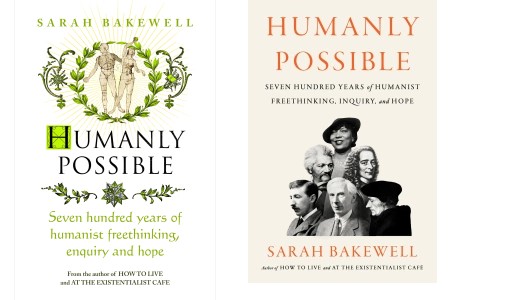
There’s a new history of humanism coming to libraries and bookstores in March that you may want to get your order(s) in for now! Written by Sarah Bakewell, Humanly Possible: 700 Years of Humanist Freethinking, Inquiry and hope promises to introduce “us to some of these people, as it asks what humanism is and why it has flourished for so long, despite opposition from fanatics, mystics and tyrants. It is a book brimming with ideas, personalities and experiments in living ‒ from the literary enthusiasts of the fourteenth century to the secular campaigners of our own time, from Erasmus to Esperanto, from anatomists to agnostics, from Christine de Pizan to Bertrand Russell, and from Voltaire to Zora Neale Hurston. It takes us on an irresistible journey, and joyfully celebrates open-mindedness, optimism, freedom and the power of the here and now ‒ humanist values which have helped steer us through dark times in the past, and which are just as urgently needed in our world today.“
Whether you think of yourself as a humanist or not, an education in ethical, philosophical and religious material is essential to navigating the ever-more complicated and challenging options and opportunities that we face as individuals and society. Bakewell’s book presents a history of humanism for those who are drawn to humanism, literature and the humanities as well as those who may prefer to base their moral choices on fellow-feeling and responsibility to others, rather than on religious commandments.
Bakewell’s book tells the story of the many extraordinary individuals throughout history who have put rational inquiry, cultural richness, freedom of thought and a sense of hope at the heart of their lives.
The views, opinions and analyses expressed in the articles on Humanist Freedoms are those of the contributor(s) and do not necessarily reflect the views or opinions of the publishers.
By continuing to access, link to, or use this website and/or podcast, you accept the HumanistFreedoms.com and HumanistHeritageCanada.ca Terms of Service in full. If you disagree with the terms of service in whole or in part, you must not use the website, podcast or other material.
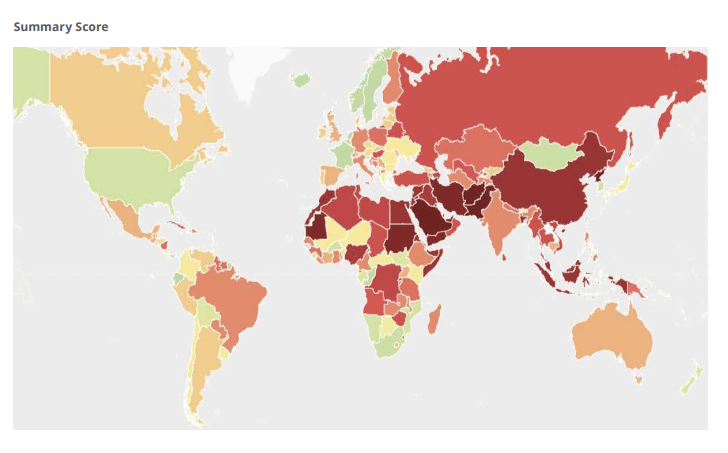
On December 8, 2022 Humanists International launched the 2022 Freedom of Thought Report. In the report, HI concludes that only 4% of the global population live in societies that are truly secular, where there is a clear separation of religious and political authorities, that do not discriminate against any religion or belief community.
“This year’s Report provides evidence of clear and systematic discrimination against humanists and non-religious people, and this discrimination is most prevalent in countries with less state secularism. State secularism appears to be a prerequisite for the full enjoyment of the right to freedom of religion or belief.”
Andrew Copson, President of Humanists International
According to the organization’s research, 70% of the world’s population live in countries where the expression of humanist values is severely repressed; where the full realization of one’s right to freedom of religion or belief is impossible. The result: harsh penalties for apostasy; a higher likelihood of the perpetuation of harmful traditional practices; religious nationalism entrenching conservative values within society.
Through 10 country chapters, this year’s Key Countries edition demonstrates theprogressive erasure of the principle of secularism across the globe, and with it a decline in the protection of human rights. On the other hand, the report also exposes how extreme enforcement of so-called “neutrality” in the name of secularism can also impinge on the rights of others.
The Report exposes the harmful social and political consequences of both extremes of the spectrum of secularism, supporting the organization’s assertions that true secularism, which is inclusive of all, “is the best approach to politics and the ordering of states, and that it has proved itself to have greater potential for human freedom, happiness, and equality than all other political settlements in history.”
In HumanistFreedoms.com’s coverage of the 2020 edition, we indicated that the report contains an entry for every country in the world and uses a unique rating system ranging from “Fee and Equal” to “Grave Violations”. Canada’s rating overview states:
“Canada is a federal parliamentary democracy, extending north into the Arctic Ocean, and sharing the world’s longest land border with the United States. Despite what should be strong constitutional protections for freedom of thought and expression, significant religious privileges are in force, both nationally and in several of its ten provinces and three territories.“
Canada’s rating does not appear to have been altered since the 2022 edition, as there doesn’t appear to be any significantly new information presented. This lack of an update appears to be based on some strategic changes in the way the FOTR is published.
The last page of the report that bears any kind of text explains that the report is a worldwide survey of discrimination and persecution against humanists, atheists and the nonreligious published by Humanists. While the report is intended to be continuously updated, HI’s goal is to update 40 countries each year on average and to continue to publish a “Key Countries” edition.
While HI doesn’t appear to have much new to say about Canada at this time, you may be interested in the infographics showing overall ratings:
Watch Listvs. Key Countries
HI’s most recent report contains a “watch-list” of countries the organization continues to monitor but for which no new entry is provided. Meanwhile, the “key countries” section of the report updates 40 countries.
One Big Indicator
In November of 2022, we publishedour own story where we suggested that a significant indicator of concern is any state which retains a religious police force.
At this time, seven nations have formalized and explicitly-designated religious police: Afghanistan, Indonesia, Iran, Malaysia, Nigeria, Saudi Arabia and Sudan. These are a dirty seven which should be under international scrutiny and pressure to discontinue faith-based policing – a practice that is nothing other than state violation of fundamental human rights.
What Big Indicators would you add to HI’s list and our reporting?
The views, opinions and analyses expressed in the articles on Humanist Freedoms are those of the contributor(s) and do not necessarily reflect the views or opinions of the publishers.
According to their website, The Canadian Hospice Palliative Care Association (CHPCA) is “the national voice forHospice Palliative Care in Canada. Advancing and advocating for quality end-of-life/hospice palliative care in Canada, its work includes public policy, public education and awareness. Established in 1991, its volunteer Board of Directors is composed of hospice palliative care workers and volunteers from Canadian provinces and territories as well as members-at-large.”
It is always interesting to observe an organization declare itself to be “the” national voice for this, that or the other thing. That particular phrasing seems to presume, preclude or presuppose a variety of details, matters and alternatives. While this article isn’t an exploration of how organizations may be created out of nothing more than a handful of individuals with a common interest to become The National Voice on a given topic, it is interesting to note that the Government of Canada says that applying to be a charity is a four-step process. You’d think it would be more complicated than that.
On a rather tangential detail, did you know that Sue Rodriguez was diagnosed with amyotrophic lateral sclerosis (ALS) — also known as Lou Gehrig’s disease — a quickly progressing neurological disease that attacks the nerve cells controlling voluntary muscle movement in 1991?
At that time, medical assistance in dying was illegal in Canada.
While the timeline of CHPCA’s creation and Sue Rodriguez’s diagnosis may earnestly be assumed as nothing more than coincidence, it does make one wonder what CHPCA’s policies and attitudes may be about medical assistance in dying. Fortunately, CHPCA has a page on their website dedicated to ethics. On that page, it says:
Palliative Sedation
Palliative sedation refers to the use of pharmacological agents to reduce consciousness with the intention of providing relief for intractable symptoms when all other possible therapeutic options have failed. This intervention is only considered in a patient who has been diagnosed with an advanced progressive illness and typically the patient is perceived to be close to death (i.e. in the last two weeks of life). Generally, the goal is the lowest level of sedation required to achieve the desired comfort level/control of symptoms; therefore, specific pharmacological agents are generally started at the smallest possible dose and titrated upwards to effect. This therapy is distinct from medical assistance in dying, as the intention is not to hasten death or shorten one’s life. Common indications include intractable cases of agitated delirium or dyspnea, massive hemorrhaging, and refractory seizures—all of which are extremely distressing to a patient3. The role of palliative sedation in psychological, spiritual, or existential distress is unclear. Commonly, the experience of having a patient sedated can be a conflicting and emotional time for families and caregivers; it is therefore crucial to ensure they receive appropriate psychosocial and spiritual support.
Responding to requests for assisted dying
When patients are confronted by their life-limiting illness and experience loss of function in their day-to-day lives due to their disease, it can be very distressing. In their suffering, some patients become compelled to wish for a hastened death. Some of those patients may endorse some passive suicidal thoughts, whereas others are insistent about wanting to end their lives in a specific moment with medical assistance. With recent developments in the movement for medical assistance in dying (MAID) in Canada, it is important for healthcare practitioners to recognize these requests and respond appropriately. Regardless of whether an individual healthcare practitioner supports or stands against this controversial topic, it is important that patients are still heard. Perhaps patients fear a protracted disease course with intractable symptoms, or they are distressed by the disability that their illness brings—regardless of what is driving their request, it is crucial for healthcare practitioners to recognize that there is some unaddressed suffering at the root of this request that needs further exploration.
On another tangential note. It wasn’t our idea to place those two paragraphs together. That’s the way we found them. The bold font is, admittedly, our innovation.
Despite CHPCA’s suggestion that palliative sedation’s role in distress is unclear, it does seem clear that CHPCA’s ethics suggest that dosing someone into un- or semi-consciousness in the clinically-expected final two weeks of their existence is reasonable as well as clinically and ethically sound.It may also be observed that CHPCA understands that patients should be heard. One wonders how articulate an individual who has been medicated into un- or semi-consciousness may be.
For those who are able to communicate strongly enough that their care-takers hear them, CHPCA’s ethics also make clear that any unaddressed suffering still needs to be explored. Even during the clinically-expected final two weeks of life. Ethics is such an interesting term.
While still able to make her voice heard, Sue Rodriguez asked whose life it was to continue or end, if not her own. It would be interesting and informative if CHPCA posted a clear, direct and unequivocal answer to that question on their ethics website.
Until then we’ll just have to infer.
On an Unrelated Matter
Dying With Dignity Canada (DWDC) is the national human-rights charity committed to improving quality of dying, protecting end-of-life rights, and helping people across Canada avoid unwanted suffering.
DWDC hosted the 2022 World Federation of Right to Die Societies (WFRTDS) International Conference in Toronto from November 3 to 6, 2022. The event brought international delegates and local attendees together. It was the must-attend event for clinicians, lawyers, advocates, and supporters who wanted to learn more about assisted dying in Canada and around the world.
DWDC’s 2023 to 2025 strategic plan states that the organization will “lead national advocacy efforts to eliminate obstacles to end-of-life choice, including access to advance requests and end forced transfers.” This is in an effort to:
To protect the constitutional right of Canadians to MAID
To identify and remove new and ongoing barriers and challenges to choice-in-dying
To ensure accurate information is easily available
What is a “forced transfer“? It seems to be what may happen if you’d rather end any unaddressed suffering in the final days of your life rather than be medicated into unconsciousness or have your suffering otherwise explored.
HumanistFreedoms.com wonders how long it will be until some ethical folks take the necessary four steps to ensure that there are institutions and facilities in place that provide a straight-forward palliative care alternative to all this forced transfer bullshit. But we suppose that things are probably more complicated than that.
The views, opinions and analyses expressed in the articles on Humanist Freedoms are those of the contributor(s) and do not necessarily reflect the views or opinions of the publishers.
On August 9, 2020, HumanistFreedoms.com published our first article about Mubarak Bala. At that time, we featured Wole Soyinka’s all-too-prophetic condemnation of the Nigerian government’s treatment of Bala:
“When I accepted the International Humanist Award at the World Humanist Congress in 2014, I spoke of the conflict between Humanists and Religionists; one of enlightenment versus the chains of enslavement. Your arbitrary incommunicado detention over the last 100 days is the cruel reality of this conflict. All too often these chains of enslavement lead directly to the gallows or a prison cell.“
On April 5, 2022 – the Kano High State Court sentence Bala to 24 years imprisonment following a guilty plea to 18 charges blasphemy and public incitement. As the president of the Humanist Association of Nigeria, Mubarak Bala is a prisoner of religious tyranny.
BBC Africa has recently published a documentary titled “The Cost of Being an Atheist” which carries a terrible reminder of just how correct Wole Soyinka’s words were. Too often and far too readily, tyrants curtail free speech with arbitrary actions which lead to prison cells and worse.
Mubarak Bala is a chemical process engineer. A husband. A father. He and his family deserve better than this. They don’t just deserve better – they had a fundamental right to better.
And so does every living person, regardless of the country they live in or the beliefs or non-beliefs that they may have. That’s why the freedom of thought, freedom of expression and freedom of religion (including freedom from religion) are called FundamentalFreedoms.
The views, opinions and analyses expressed in the articles on Humanist Freedoms are those of the contributor(s) and do not necessarily reflect the views or opinions of the publishers.
On November 16, 2022, HumanistFreedoms.com was notified by Feedspot.com that we made their list of the top 15 Humanist blogs on the web. According to the content reader site, HumanistFreedoms.com earned a #10 rating based on: traffic, social media followers, domain authority andfreshness.
Feedspot further explains the basis of their rankings as:
Relevancy
Industry blogs (those not favoring a specific brand) are given higher rank than blogs by individual brands (who often tend to promote their own products).
Blog post frequency (freshness)
Social media follower counts and engagements
Domain authority
Age of a blog
Alexa Web Traffic Rank, and many other parameters.
Feedspot claims to routinely remove inactive blogs as well as those that aren’t relevant to any given list. Lists are updated as they receive new blog submissions to ensure updated rankings every few weeks.
When notifying us of this honour, Anuj Agarwal (a founder of FeedSpot) said, “I personally give you a high-five and want to thank you for your contribution to this world. This is the most comprehensive list of Top 15 Humanist Blogs on the internet and I’m honored to have you as part of this!“
Feedspot discovers, categorizes and ranks blogs, podcasts and influencers in several niche categories. We have curated over 250,000 popular blogs and categorized them in more than 5,000 niche categories and industries. With millions of blogs on the web, finding influential, authority and trustworthy bloggers in a niche industry is a hard problem to address. Our experience leads us to believe that a thoughtful combination of both algorithmic and human editing offers the best means of curation.
You may wish to view Feedspot’s top-15 rankings to learn about other leading Humanist blogs that you may find useful or informative.
We thank Anuj Agarwal and the Feedspot team for being recognized in it’s rankings!
The views, opinions and analyses expressed in the articles on Humanist Freedoms are those of the contributor(s) and do not necessarily reflect the views or opinions of the publishers.
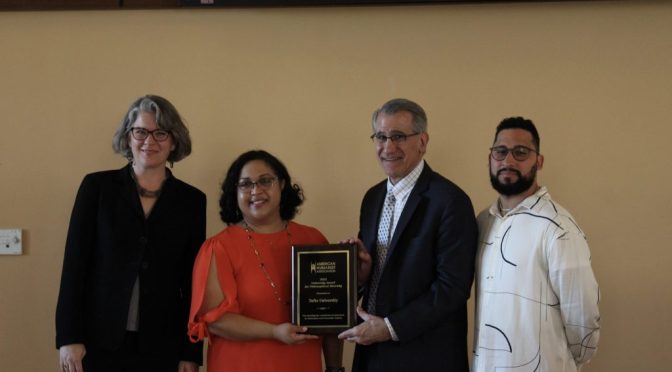
On November 2, 2022, the American Humanist Association (AHA) presented its 2022 University Award for Philosophical Diversity to Tufts University. The award, which celebrates the expression of humanism in higher education, was accepted by Anthony Monaco, President of Tufts University.
According to AHA’s press release about the presentation, interfaith work is one of the most important bridges that can build during this difficult time of our socio-political landscape. For this reason AHA presented Tufts University with their award based on the school’s Humanist Chaplaincy.
AHA says that, “The Humanist Chaplaincy at Tufts has done an exemplary job of serving not only secular students but bringing together students from other religious minorities to reimagine a future where all people belong. From hosting an “Unlearning” event that explored the decolonization of our thoughts and social norms to working with Sikh students to create art together, the AHA is proud to recognize Tufts University for fostering an environment where collaborations are encouraged to better support their student body.“
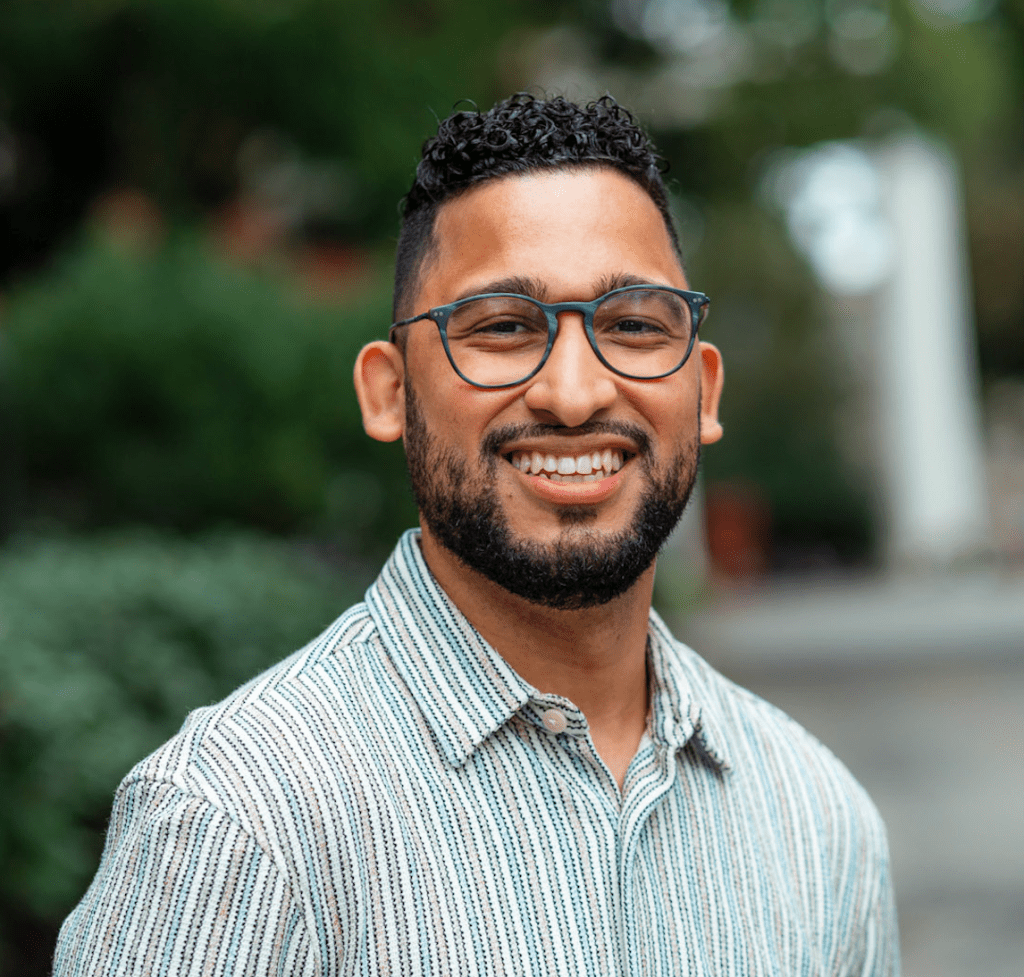
“The Humanist Chaplaincy at Tufts has been a thriving hub for the rigorous and creative exploration of religious and philosophical differences. As a higher education chaplaincy, we are strategically positioned to realize a more just and interdependent world by supporting students in a critical time of exploration and identity formation,” says Anthony Cruz Pantojas, Humanist Chaplain at Tufts University. “As the first Afro-Boricua Humanist Chaplain, I aim to embrace the complexities of the human condition through narratives and experiences with students and create anew what has been historically erased or obscured.”
According to Cruz Pantojas’ biography on the Tufts University website, “Anthony Cruz Pantojas, MATS, MALS (they/he/elle/él) is honored to be the Humanist Chaplain at Tufts University. They joined the University Chaplaincy team in August 2021. In this capacity, Anthony supports the development and sustainability of ethical inquiry through co-constructed projects with the campus community. Cruz Pantojas earned master’s degrees in Theological Studies, and Leadership and Humanist Studies from Andover Newton Theological School and Meadville Lombard Theological School, respectively. Additionally, they hold a Graduate Certificate in Humanist Studies from the American Humanist Association Center for Education. Previously, Anthony worked with Faith in the Vaccine, a program under the auspices of the Interfaith Youth Core. They worked with youth community leaders to inform marginalized communities about the significance of the COVID-19 vaccine and to curate resources that address social stigma. With Faith in the Vaccine, Anthony focused on vaccine hesitancy, as well as spearheaded projects promoting civic engagement and critical consciousness through action research and narrative methodologies.”
The AHA created its University award to recognize colleges and universities that foster a culture of openness and academic inquiry that allows humanism and a diverse array of other philosophical perspectives to flourish. Beyond the swanky plaque and the press releases, HumanistFreedoms.com has been unable to determine what AHA’s University Award is comprised-of.
Via somewhat dated press-releases, we observed that criteria for receiving the University Award for Philosophical Diversity include: offering a course in humanist studies, employing a faculty member engaged in research relevant to humanist studies with already-published works in scholarly journals, and having a secular student organization recognized by the institution and existing in a supportive environment.
In years past, the award has also been presented to Pitzer College (2016 for being the first school in the United States to offer a degree in Secular Studies) for , Carnegie Mellon University (2015 for its Humanist League’s commitment to fostering dialogue about humanism and upholding the humanist values of reason, compassion and justice), Stanford University (2014 for making humanist inquiry and study possible for students interested in pursuing careers in the secular movement and beyond).
By offering the award, the AHA aspires to counter the prejudice faced by humanists and other nontheists who are good without a god as well as encourage schools to include humanist chaplaincies on campus.
The Tufts Humanist Chaplaincy was formed in 2014 to foster institutional support for the humanist community and to attend to the “many changing needs of students across the nonreligious spectrum.”
“We are delighted to recognize Tufts University and their ongoing commitment to the representation of secularism and humanism on campus,” comments AHA Executive Director, Nadya Dutchin. “It is vital that higher educational institutions encourage an open dialogue between different worldviews and philosophies, both religious and nonreligious.”
In addition to the University Award, the American Humanist Association also bestows an annual Humanist of the Year Award (HOTYA) to a prominent individual whose work and activism promote humanist values. In 2018, AHA revoked its award of the 2015 HOTYA award from Lawrence Krauss. In 2021, Dr. Anthony Fauci was awarded AHA’s Humanist of the Year Award.
The views, opinions and analyses expressed in the articles on Humanist Freedoms are those of the contributor(s) and do not necessarily reflect the views or opinions of the publishers.
Amidst a set of global events such as the COVID-19 pandemic/epidemic response, the war in Ukraine and the so-called culture wars of right wing versus left wing politics, it is predictable, if not absolutely inevitable, that attention to the ongoing travesties and tragedies of violated fundamental human rights would be reduced.
It seems equally likely that faith-based authoritarians (or for that matter any ideologues) would take advantage of the distracted times to increase their entrenched influence and control.
HumanistFreedoms.com hopes that the distractions of the early 2020’s may finally pass and that secularist organizations may again be relied-upon to focus attention and action upon promoting humanist values and undertaking serious opposition to theocracies and religious police forces.
The tragic death of Mahsa Amini seems like an excellent matter to begin with.
Humanists International (Excerpts below from HI Sept 28, 2022)
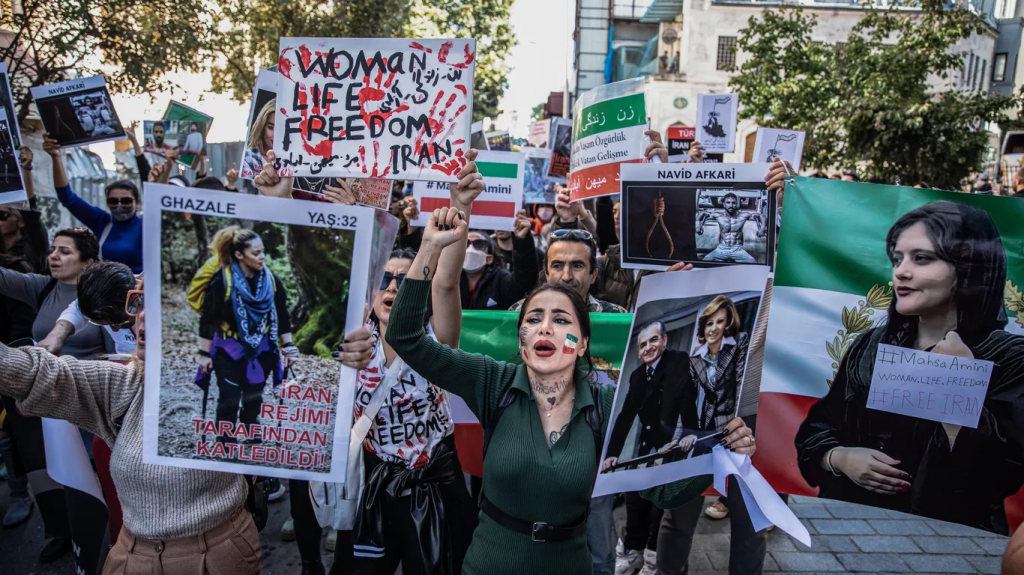
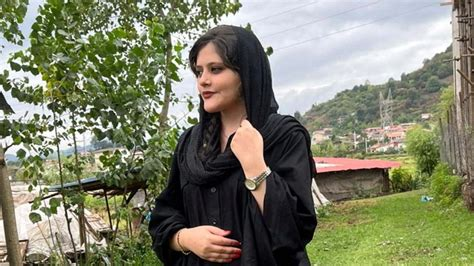
In a statement made during the General Debate segment of the 51st UN Human Rights Council, Humanists International’s Advocacy Officer, Lillie Ashworth, responded to the recent murder in custody of 22-year old Kurdish-Iranian Mahsa Amini. Amini had been arrested by Iran’s “morality police” on 13 September for wearing her hijab “improperly”. She was accused of being in violation of Iran’s discriminatory compulsory veiling laws which require girls from the age of 9 to cover their hair completely. As several UN independent experts stated in the days following her death, there is evidence that Amini had been beaten and subjected to torture while in the custody of Iran’s theocratic regime. The Iranian police have claimed that she had suffered a stroke and a heart attack.
Ashworth’s statement reminded Iran that “compulsory veiling is a human rights violation, and that appeals to religious morality can never be used to police women’s choices, or to invalidate their equal dignity and worth.”
Since Amini’s murder, there has been widespread protests in Iran and around the world. In Iran, crackdowns by the theocratic state has resulted in further faith-based beatings and murders.
At this time, seven nations have formalized and explicitly-designated religious police: Afghanistan, Indonesia, Iran, Malaysia, Nigeria, Saudi Arabia and Sudan. These are a dirty seven which should be under international scrutiny and pressure to discontinue faith-based policing – a practice that is nothing other than state violation of fundamental human rights.
HumanistFreedoms.com looks forward to observing whether Canadian (in particular) and global humanist, atheist, secularist organizations join Humanist International in a re-focus on issues of this scope and type. We feel certain that there are still many other women, girls and families who might appreciate the kind of help from the international community that might have saved Mahsa Amini’s life.
Citations, References And Other Reading
Featured Photo Courtesy of: ttps://www.smh.com.au/world/acehs-religious-police-crack-down-on-tight-jeans-20100526-weap.html
The views, opinions and analyses expressed in the articles on Humanist Freedoms are those of the contributor(s) and do not necessarily reflect the views or opinions of the publishers.
Looking for something fresh to listen to? Why not try Jamie Lenman’s (formerly of the band, Reuben) new album, The Atheist?
The album is set to be released on November 25, 2022. Two tracks, “Lena Don’t Leave Me” and “Talk Hard” are currently available via video platforms and presumably audio platforms as well. We suspect you know how to search your favorite sources. Or you could visit Lenman’s website.
Talk Hard features lyrics (below courtesy Genius.com) with an upbeat, pro-freedom-of-expression message. It’s refreshing to hear something that is boldly and encouragingly supportive of a fundamental human right.
I thought I heard you make some assertion But you were mumbling And I could not be sure So turn yourself into a bolder person There’s nothing to be gained from acting so demure
Take a breath Take a sec Take your time Take the floor buddy You’re just fine Yeah
Talk hard I know you wanna play your trump card They just ain’t listening Stand up And tell ’em what you have to say
I know it maybe seems too much to handle Finding the energy to shout above the crowd But if they take away the proper channels You have to find somehow to make it extra loud
Take a breath Take a sec Take your time Take the mic if you like Here’s mine Yeah
Talk hard I know you wanna play your trump card They just ain’t listening Stand up And tell ’em what you have to say
Yeah, talk hard I know you wanna play your trump card They just ain’t listening Stand up And tell ’em what you have to say Say Say Say Say
There does seem to be a lot of mumbling out there these days. Good on Lenman for offering up an encouraging word.
The views, opinions and analyses expressed in the articles on Humanist Freedoms are those of the contributor(s) and do not necessarily reflect the views or opinions of the publishers.
2020 was HumanistFreedoms.com’s first full year of operation. Today we reached a new milestone!
At the end of July 2021, we had surpassed the total visitors to the site in 2020. Effective today, October 23, 2022, we are thrilled to see that we’ve surpassed the 2021’s annual total visitors and pages read. By year’s end we expect to have grown 25% in 2021!
We have enjoyed publishing articles which promoting and celebrating humanism and our common humanity. We thank our contributors, readers and visitors for making http://www.humanistfreedoms.com a unique online magazine.
By contemporary internet standards, HumanistFreedoms.com is still a new and growing project. But we think that every small project has the potential to bring humanist values, outlooks and news to a continuously-growing audience; we look forward, therefore, to promoting other start-up Humanist-themed projects. Recently, the “Reasons for Reason” Youtube channel caught our attention. The channel features R4R, The Rational Robot, undertaking a number of classic counter-apologetics exercises. Currently, the channel’s most popular video is one devoted to the so-called Shroud of Turin.
If you enjoyed the R4R’s adventures in reason, please share your thoughts below and share the video with those who may be interested to learn more bour Reasons for Reason, counter-apologetics and humanism.
For the remainder of 2022 and looking forward to the new year, we are looking for even more essays, articles and stories to share! We are not able to pay for articles (yet) but we want to hear what you have to say. This month, themes that we want to explore include:
Contemporary Humanism’s Biggest Priorities and Challenges for 2022
Leadership Within The Humanist Movement
Humanism and Secularism
Humanism and Human Trafficking
Digital Humanism
Humanism and Global Population
A Humanist Perspective of Radical Politics
Humanist Photography: Photographer Review
Humanism in the Arts
Humanism and the Environment
Humanism and Freedom of Expression: Lessons of the 2020’s
Humanism and Freedom of/from Religion: Global Lessons
Humanism and Architecture
Book/Movie/Music/Arts Review: A Humanist Recommends….
Do you have an idea that isn’t on our list? Let us know. Inquire at humanistfreedoms@gmail.com
There’s something about elected office(s) and democracy that doesn’t quite match-up well with religious prerequisites. The concepts are fundamentally opposed. Elected office and democracy puts the leadership selection process in the hands of the people that the system is intended to serve while religious prerequisites place the selection process in the hands of religious authorities, regardless of who may be within that system. That seems fairly obvious doesn’t it?
Canadian media outlets have recently reported the outcome of a legal case wherein an Ontario student sued the York Catholic District School Board after having been barred from running for elected office within the school system. It seems that Dasha Kandaharian, an Orthodox Christian (i.e. not a Roman Catholic), was not allowed to run for student trustee at the high school she attended because of that sectarian difference.
Media stories have referred to the case as a “landmark” – which it undoubtedly is. The decision undoubtedly addresses the situation faced by thousands of non-Catholic students who have attended publicly-funded Catholic schools in the past (clearly, Kandaharian was not he first and only student to be barred from the elected office) – and the thousands more who may do so in the future.
What the media have not (that we can find) spent much time in considering is where the Catholic School Board(s) of Ontario may have gotten this notion that a sectarian religious prerequisite for elected office is an acceptable thing.
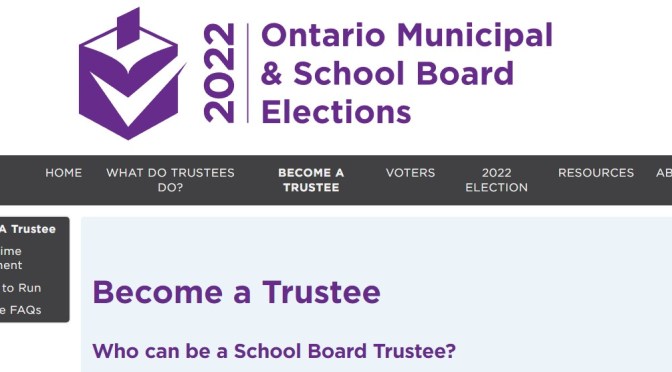
A person is qualified to be elected as a school board trustee if the person is qualified to vote in a school board election and is a resident of the school board district.
When filing a nomination a candidate must meet all of the following requirements:
a resident within the jurisdiction of the board;
a supporter of the board (“supporter” refers to the individual’s support for one of the four publicly funded school systems. A list of supporters for each system is kept by the Municipal Property Assessment Corporation);
a Canadian citizen;
at least 18 years old;
Roman Catholic (if running for a Catholic school board);
not legally prohibited from voting; and
not disqualified by any legislation from holding school board office.
Note: A candidate, if nominated, must remain qualified throughout the election and, if elected, throughout the term of office. The term of office is 4 years. School board candidates should confirm that they have the qualifications described here and in section 219 of the Education Act. It is the responsibility of the candidate to determine whether he or she is qualified to be elected to and hold office.
In case you’re interested, Section 219 of the Education Act doesn’t seem to actually bear the qualification that we’ve bolded in the language above. Perhaps the argument is implicit or explicit in some other section of the Act. But for the moment, we can skip over that murky inconsistency and observe that the York Catholic District School Board (and any other publicly funded Catholic School Board) appears merely to have been applying the same criteria to the selection and election of Student Trustees as the Government of Ontario appears to tolerate for the selection and election of School Board Trustees.
Well, this landmark court decision rather brings to question whether what’s good for the goose (students) may also be good for the gander (adult politicians).
So let us consider, in the spirit of taking note of landmarks, an entirely fictional scenario: a hypothetical Secular Humanist who happens to be a (legally defined) ‘supporter’ of the Catholic School system in their area decides that they would like to be Board Trustee of that system. Regardless of how they might fare in an open election – how well do you imagine this hypothetical individual might fare in the qualification screening process?
Here is a separate and perhaps more fundamental question: Can you imagine any other elected office in a 21st-century democratic country named Canada where membership in a religious sect would be accepted as a pre-requisite condition?
And here, in an un-related way, is an observation from our recent Preamble, schmeable article:
Did you notice that the US Supreme Court Judges who turned against Roe v Wade are all Catholic? Well, according to Catholic News Agency, they appear to be. A coincidence, no doubt.
Clearly, religious sectarian membership and elected/selected public office in a contemporary democracy is a match made in….
The views, opinions and analyses expressed in the articles on Humanist Freedoms are those of the contributor(s) and do not necessarily reflect the views or opinions of the publishers.















 Humanist Heritage Canada