Tag Archives: Humanist

Iran 2026: What Do Humanists Think?

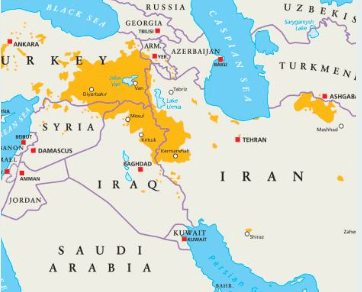
Sometime on the weekend of February 28 and March 1, Iran’s Supreme Leader, Ali Khamenei was killed during airstrikes on Tehran, Iran. For government leaders in many western nations, this was considered a beneficial killing. Iran’s state media described him as a “martyr” in a statement broadcast on state television. The attack on his compound, is claimed to have also killed his daughter, grandchild, daughter-in-law, and son-in-law. At 86 years old, Khamenei and had led Iran for more than 36 years

At around the time that Khamenei was killed, Canada’s Prime Minister released a statement regarding attacks on Iran. The statement includes three primary policies:

“The Canadian government is closely following Iran-related hostilities throughout the Middle East and urges all Canadians in Iran to shelter in place. Canadians in the wider region should follow local advice and take all necessary precautions.

Canada’s position remains clear: the Islamic Republic of Iran is the principal source of instability and terror throughout the Middle East, has one of the world’s worst human rights records, and must never be allowed to obtain or develop nuclear weapons. 

Canada and our international partners have consistently called upon the Iranian regime to end its nuclear program, including at the 2025 G7 Leaders’ Summit in Kananaskis and with the United Nations’ reimposition of sanctions in September.

Despite diplomatic efforts, Iran has neither fully dismantled its nuclear program, halted all enrichment activities, nor ended its support for regional terrorist proxy groups. Canada stands with the Iranian people in their long and courageous struggle against Iran’s oppressive regime. Canada has listed the Islamic Revolutionary Guard Corps as a terrorist entity, and has sanctioned 256 Iranian entities and 222 individuals in response to the regime’s repression and its violence both against its own people, and persistently, beyond its borders. Canada reaffirms Israel’s right to defend itself and to ensure the security of its people. 

Canada supports the United States acting to prevent Iran from obtaining a nuclear weapon and to prevent its regime from further threatening international peace and security.

The Canadian government urges the protection of all civilians in this conflict. We will take all possible measures to protect our nationals and Canadian diplomatic missions throughout the region.”


Humanists International (HI) has consistently expressed concerns regarding human rights in Iran. In January of 2026, HI joined a join civil rights report that, “highlighted widespread and coordinated lethal repression against largely peaceful protest movements in Iran, including mass unlawful killings, arbitrary detention, and severe restrictions on communication and civil liberties. The appeal calls on the HRC to respond decisively to the rapidly deteriorating situation and to uphold its responsibility to prevent further violations.


Khamenei had consistently reaffirmed the 1989 fatwa issued by Ayatollah Ruhollah Khomeini calling for the death of author Salman Rushdie – a fatwas that led to a violent attack on Rushdie as recently as 2022.

 Despite Iran’s government under President Mohammad Khatami declaring in 1998 that it would neither support nor hinder the assassination, Khamenei has maintained that the fatwa remains “solid and irrevocable” in 2017 and 2019. Iranian state media and hardline outlets celebrated attacks on Rushdie as divine vengeance” or “divine retribution”, praising assailants and predicting future attacks on Western figures. 


Ayatollah Alireza Arafi will be Khamenei’s replacement. He is a senior Iranian Shia cleric who has taken a notably hardline stance on religious pluralism and non-Islamic belief systems within Iran.

Arafi is strongly opposed to atheism, which he considers a form of idolatry — placing it in the same category as a rejection of divine authority. He extends this criticism to Christianity, particularly the phenomenon of house churches in Iran, which he views as an ideological threat to Shia Islam and the foundations of the Islamic Republic.

His positions are deeply rooted in the velayat-e faqih (guardianship of the Islamic jurist) system that underpins Iran’s theocratic governance. From this perspective, alternative belief systems are not merely personal choices but existential challenges to the state’s religious legitimacy.

Rather than tolerating religious diversity, Arafi has actively promoted the expansion of Shia Islam globally. During his tenure as head of Al-Mustafa International University (2009–2018), he claimed the institution helped convert 50 million people to Shia Islam. This figure seems to be very disputable.


AI Disclosure

This article was drafted using a process that included the use of artificial intelligence tools. If you have any stylistic or editorial concerns or find factual errors or omissions, please let us know.

Up For Discussion

If you’re interested in analyzing and discussing this issue, there are actions you can take. First, here at Humanist Heritage Canada (Humanist Freedoms), we are open to receiving your well-written articles.

Second, we encourage you to visit the New Enlightenment Project’s (NEP) Facebook page and discussion group.


Citations, References And Other Reading

  1. Featured Photo Courtesy of
  2. https://www.thestatesman.com/world/ayatollah-alireza-arafi-anti-atheism-shia-cleric-named-interim-supreme-leader-of-iran-after-khamenei-death-1503564680.html
  3. https://www.pm.gc.ca/en/news/statements/2026/02/28/statement-prime-minister-carney-and-minister-anand-situation-middle-east
  4. https://humanists.international/location/iran/
  5. https://impactiran.org/2026/01/16/joint-civil-society-call-for-a-hrc-special-session-on-the-situation-in-the-islamic-republic-of-iran/

The views, opinions and analyses expressed in the articles on Humanist Freedoms are those of the contributor(s) and do not necessarily reflect the views or opinions of the publishers.

OHCHR Publishes a Taxonomy of Human Rights Risks Connected to Generative AI

Recently, we observed an article titled Toward Humanist Superintelligence on microsoft.ai. That article, dated November 6, 2025 was credited to Mustafa Suleyman. We continue to recommend that humanists read and evaluate Suleyman’s comments about that companies aims.

in the meantime, we further note that the United Nations Human Rights Office of the High Commissioner has published a document titled, Taxonomy of Human Rights Risks Connected to Generative AI. The introduction to the 22-page document states that it , “explores human rights risks stemming from the development, deployment, and use of generative AI technology. Establishing such a rights-based taxonomy is crucial for understanding how the United Nations Guiding Principles on Business and Human Rights (UNGPs) should be operationalised in addressing human rights risks connected to generative AI. This taxonomy is concerned with demonstrating how the most significant harms to people related to generative AI are in fact impacts on internationally agreed human rights.

We urge humanists to read the OHCHR document and a related covering article on their website and reflect upon how it relates to the objectives of existing and emerging commercial interests, such as Microsoft, but by no means limited to Microsoft. The context of the UN’s work and our own investigation is essential: we must ensure discussion is oriented to concrete human dignity rather than abstract technical issues or priorities set by commercial interests focused on profit-generating activities.

From a humanist standpoint, the UN’s taxonomy could be an important starting place to center people and ethics — not profit or innovation — in policy decisions about AI’s future.

Consider:

  • Grounding AI governance in shared values — by linking risks to the UN Guiding Principles on Business and Human Rights (UNGPs), it provides a practical, universally recognized ethical framework
  • Amplifying disenfranchised voices — it explicitly highlights that generative AI often exacerbates risks for already vulnerable groups, including women, girls, and populations in the Global South
  • Addressing consent at scale — because these models often use large datasets scraped from the internet, people may not know or be able to give informed consent when their data is collected for AI training

Matters such as the ethical oversight of the advent and implementation of this massively powerful new technology are not beyond our human ability to navigate. As Suleyman has observed, humanism contains an essential ethical toolkit. We caution that humanists must ensure that which humanist tools are used, and how they are used, remains in the appropriate hands.

AI Disclosure

This article was drafted using a process that included the use of artificial intelligence tools. If you have any stylistic or editorial concerns or find factual errors or omissions, please let us know.

Up For Discussion

If you’re interested in analyzing and discussing this issue, there are actions you can take. First, here at Humanist Heritage Canada (Humanist Freedoms), we are open to receiving your well-written articles.

Second, we encourage you to visit the New Enlightenment Project’s (NEP) Facebook page and discussion group.

Citations, References And Other Reading

  1. Featured Photo Courtesy of :
  2. https://microsoft.ai/news/towards-humanist-superintelligence/
  3. https://www.indigo.ca/en-ca/building-a-god-the-ethics-of-artificial-intelligence-and-the-race-to-control-it/9781493085880.html
  4. https://www.ohchr.org/sites/default/files/documents/issues/business/b-tech/taxonomy-GenAI-Human-Rights-Harms.pdf
  5. https://unric.org/en/protecting-human-rights-in-an-ai-driven-world/

By continuing to access, link to, or use this website and/or podcast, you accept the HumanistFreedoms.com and HumanistHeritageCanada.ca Terms of Service in full. If you disagree with the terms of service in whole or in part, you must not use the website, podcast or other material.

The views, opinions and analyses expressed in the articles on Humanist Freedoms are those of the contributor(s) and do not necessarily reflect the views or opinions of the publishers.

Québec Bill 1: What Do Canada’s Humanists Think?

On February 10, 2026, Amnesty International released a statement in opposition to Québec’s Bill 1. You can find the organization’s full statement on their website.

Bill 1, the Quebec Constitution Act, 2025 was tabled by the government of Quebec on 9 October 2025. From a humanist standpoint — one that prioritizes human dignity, individual rights, and inclusive democracy — Quebec’s Bill 1 appears to raise serious concerns. To what extent these concerns might be genuinely problematic for the people of Québec and Canada is not yet clear. With law, it is a very reasonable approach to give serious thought to the potential for unintended consequences before jumping wholly in or wholly out of the bandwagon.

Amnesty International’s objections are championed by Agnès Callamard, global Secretary General of Amnesty International. Callamard is a French (not Québecoise) human rights advocate. According to the OHCRH website, Dr. Agnes Callamard was the UN Special Rapporteur on Extra-Judicial summary or arbitrary Executions from August 2016 to March 2021. She is the Director of Columbia University Global Freedom of Expression. Dr Callamard spent nine years as the Executive Director of ARTICLE 19, the international human rights organization promoting freedom of expression globally. She also founded and led Humanitarian Accountability Partnership (now CHS Alliance), the first international self-regulatory body for humanitarian agencies. Prior to this, she taught and conducted research on international refugee movements for the Center for Refugee Studies at York University in Toronto. She has led human rights investigations in more than 30 countries and published extensively, in both English and French, on human rights, women’s rights, freedom of expression, refugee movements and the methodology of human rights investigation.

Following is condensed bullet list of the organization’s assertions regarding the bill:

  • several articles jeopardize the rights of linguistic and cultural minorities and Indigenous Peoples in Québec.
  • it lacks any legitimacy as no public consultation of any kind was conducted.
  • it contradicts the Universal Declaration of Human Rights, adopted in 1948
  • the bill diminishes Québec’s Charter of Human Rights by imposing new limits on it.
  • it weakens individual and collective rights by placing them in a hierarchy.
  • it denies the rights of Indigenous Peoples and further marginalizes their economic, social and cultural rights.
  • It restricts access to justice, creating barriers to defending the rights of the most vulnerable.
  • It ignores the procedural requirements that arise from human rights law
  • If Bill 1 is adopted and enters into force, not only will Québec be in breach of its international human rights commitments, but it will also place Canada in the same position.
  • By including an absolute derogation clause that allows all fundamental rights to be overridden without justification or contextualization, Bill 1 violates international law, which allows for such provisions only in extremely limited circumstances and requires that, for certain specific rights, all such derogations – regardless of the severity of the situation – must be justified on their merits.
  • Several provisions of Bill 1 fail to recognize bearers of Indigenous rights and their own representative institutions and contravene Indigenous Peoples’ rights to self-determination, participation and free, prior and informed consent, which are enshrined in international and Canadian law.
  • The rights of linguistic and cultural minorities are absent from Bill 1
  • Bill 1 includes measures to restrict many organizations’ ability to challenge laws and would place Québec in clear violation of international law by effectively preventing the implementation of the appeals mechanisms required by its instruments.
  • No adequate and effective public consultation process was held before tabling Bill 1, therefore the bill is devoid of legitimacy and stands in complete contradiction to international law on civic engagement.

This is a long and not insignificant set of concerns that should be examined by all citizens of Canada, including those in Québec. Humanists in particular should examine these criticisms, determine if they are a valid basis of concern on their own and in application to the language of Bill 1.

There is a long and complicated history in Canada and Québec of inconsistent, if not always completely incompatible, approaches to human rights and secularism. Concerns championed by Dr. Callamard and Amnesty International may have responses or counter-arguments from other legal, secularist, constitutional and human rights experts.

For now, let us present one version of a humanist perspective on Bill 1 informed by both its critics and a preference to avoid potentially significant harmful unintended consequences. A history of seemingly contradictory and implacable perspectives suggests that there may be very significant gaps and blind-spots in each of the entrenched attitudes.

Bill 1 establishes a clear hierarchy between collective and individual rights. If enacted, the Constitution of Québec would enshrine the “intrinsic and inalienable rights” of the francophone majority. This seems to contradict a perspective that human dignity and equality belongs to every person, not just those who fit a dominant cultural identity.

A humanist framework would expect that a constitution would emerge from broad, inclusive public engagement. Yet Bill 1 was introduced with no public consultation between the Proulx-Rousseau Report (November 2024) and its tabling . A legitimate constitution should guarantee fundamental rights and prevent authoritarian tendencies.

Bill 1 would allow the National Assembly to invoke the notwithstanding clause without justification, and would block judicial review of laws framed as protecting the “Quebec nation”. Independent courts are a vital safeguard against majoritarian overreach — removing that check concentrates power dangerously.

We can acknowledge a legitimate desire of Québecers to protect a genuinely distinct language and culture on the North American continent. The tension between cultural preservation and individual rights is real. But the means matter: a constitution that would protect one group by subordinating others would contradict the universalist and progressive core of humanist ethics.

We look forward to learning what Canada’ individual and collective humanists think about Québec’s Bill 1.

AI Disclosure

This article was drafted using a process that included artificial intelligence tools. If you have any stylistic concerns or find any factual errors or omissions, please let us know.

Up For Discussion

If you’re interested in analyzing and discussing this issue, there are actions you can take. First, here at Humanist Heritage Canada (Humanist Freedoms), we are open to receiving your well-written articles.

Second, we encourage you to visit the New Enlightenment Project’s (NEP) Facebook page and discussion group.

Citations, References And Other Reading

  1. Featured Photo Courtesy of
  2. https://amnesty.ca/human-rights-news/amnesty-international-expresses-concern-quebec-bill-1/
  3. https://cultmtl.com/2026/02/amnesty-international-calls-for-full-withdrawal-of-legaults-constitution-for-violating-laws-human-rights/
  4. https://www.assnat.qc.ca/fr/travaux-parlementaires/projets-loi/projet-loi-1-43-2.html
  5. https://www.ohchr.org/en/special-procedures/sr-executions/dr-agnes-callamard-former-special-rapporteur-2016-2021
  6. https://www.youtube.com/watch?v=LpJcrcLfVrg

The views, opinions and analyses expressed in the articles on Humanist Freedoms are those of the contributor(s) and do not necessarily reflect the views or opinions of the publishers.

Humanism as Resistance: Reclaiming Dialogue in Divided Times

Lloyd Hawkeye Robertson
The New Enlightenment Project


The rise of modern individualism, scientific inquiry, and pluralistic thought did not emerge in Europe because Christianity was uniquely compatible with Enlightenment values. Rather, these developments became possible as the Roman Catholic Church gradually lost its monopoly over the dominant narrative that defined truth. This shift allowed alternative perspectives to surface and compete. From this vantage point, the Renaissance, the Protestant Reformation, the Scientific Revolution, the Commercial and Industrial Revolutions, and the Enlightenment were not isolated historical episodes. They formed a continuous, mutually reinforcing process that progressively loosened institutional constraints on individual knowledge, expression, and volition. In this sense, the Enlightenment began with the Renaissance and remains an unfinished project today.


By the mid‑twentieth century, the cumulative effects of Enlightenment thinking—scientific, technological, and humanistic—had produced a global civilization with unprecedented gains in life expectancy, reductions in child and maternal mortality, lower homicide rates, and expanded human rights (Pinker, 2018) . While modern societies still struggle with inequality and injustice, the Enlightenment ideal of democracy—where every citizen has meaningful input—depends fundamentally on freedom of speech; and indeed, that freedom allows for progress on inequality. As Karl Popper (2012) stated, authoritarian or totalitarian systems—whether religious or political—cannot sustain scientific progress because science depends on criticism, dissent, and the institutionalization of error‑correction, all of which authoritarian regimes suppress.

Resistance to the Enlightenment’s core technology—the empowerment of individual reason, empirical inquiry, and volitional judgment—has appeared in many forms. Early examples include the Roman Catholic Inquisition, the persecution of Anabaptists (often drowned in a grim parody of “rebaptism”), and the moral absolutism of the Great Awakening. In the twentieth century, these pressures intensified into the totalitarian collectivism of fascist and communist regimes, which subordinated the individual to the state or party ideology. The common theme in all of these movements, regardless of the methods used, is that the individual cannot know ultimate truths and must submit to the dictates of the authority in question.


A more subtle challenge emerged in the late twentieth century with postmodernism. Often framed as a benign academic critique, postmodernism argued that all knowledge consists of socially constructed narratives without objective grounding. It popularized the idea of “different ways of knowing,” reducing science and reason to culturally contingent viewpoints among many. If no shared standard of evidence exists, disagreements cannot be resolved through argument or data. Truth becomes whatever narrative gains dominance—through institutional power, cultural influence, or sheer repetition. In this environment, the Enlightenment ideal of an independent, evidence‑guided self is undermined not, by force but by the erosion of any common ground for truth.


The New Enlightenment Project: A Canadian Humanist Initiative was founded to advance humanism—understood as the integration of science, reason, and compassion—at a time when collective identity politics increasingly shapes public discourse. In keeping with the theme, Humanism as Resistance, we proposed a symposium for the upcoming World Humanist Congress in Ottawa: Understanding the Other: Resisting the Tyranny of Singular Narratives. The goal was to explore contemporary humanist practices that cultivate empathy, critical inquiry, and pluralistic understanding in the face of dogmatic or monolithic narratives.


The central purpose of such a symposium is to reaffirm core Enlightenment values—freedom of thought and speech, human reason, scientific inquiry, and the continual improvement of the human condition. It does so by presenting opposing viewpoints on contemporary issues and engaging them through the skills of street epistemology: asking clarifying questions, identifying the methods by which beliefs are formed, gently testing the reliability of those methods, and “steel‑manning” one another’s arguments by restating them in their strongest form. With an emphasis on listening, dialogue, and mutual understanding, participants aim to better recognize their own biases and the contextual forces that shape them, thereby strengthening their own perspectives. The symposium is planned to model seven key practices:

  1. Clearly articulating one’s beliefs or points of view in argument form.
  2. Acknowledging personal biases as open ly as possible.
  3. Demonstrating understanding by restating the opposing view accurately.
  4. Steel‑manning the opposing argument to show epistemic respect.
  5. Identifying areas of agreement before offering critique.
  6. Critically assessing the opposing argument with respect and rigor.
  7. Accepting criticism with grace and decorum.

We hoped that applying these principles to controversial issues would show that sensitive topics can be discussed publicly with civility and intellectual humility. This would exemplify the Aristotelian insight that “It is the mark of an educated mind to be able to entertain a thought without accepting it.

Unfortunately, the Program Committee of the World Humanist Congress did not feel this symposium fit with the congress theme “Humanism as Resistance.” Undeterred, the New Enlightenment Project is seeking other venues to model this work.

References

Pinker, S. (2018). Enlightenment now: The case for reason, science, humanism, and progress.
Viking.
Popper, K., Gombrich, E. H., & Havel, V. (2012). The open society and its enemies. Routledge.

Up For Discussion

If you’re interested in analyzing and discussing this issue, there are actions you can take. First, here at Humanist Heritage Canada (Humanist Freedoms), we are open to receiving your well-written articles.

Second, we encourage you to visit the New Enlightenment Project’s (NEP) Facebook page and discussion group.

Citations, References And Other Reading

  1. Featured Photo Courtesy of :

By continuing to access, link to, or use this website and/or podcast, you accept the HumanistFreedoms.com and HumanistHeritageCanada.ca Terms of Service in full. If you disagree with the terms of service in whole or in part, you must not use the website, podcast or other material.

The views, opinions and analyses expressed in the articles on Humanist Freedoms are those of the contributor(s) and do not necessarily reflect the views or opinions of the publishers.

What is HSI?: Microsoft.ai Claims They’re Not Building a God

During our weekly scan for information relevant to humanism, we came across an article titled Toward Humanist Superintelligence on microsoft.ai. The article, dated November 6, 2025 is credited to Mustafa Suleyman.

The article ends with a recruitment call to those interested to be part of the workforce engaged in the creation of artificial intelligence. Everything written ahead of that call should therefore be taken, at least in part, to be a marketing pitch appealing to certain sentiments. Whether that pitch is entirely accurate to the internal machinations of the company, only the insiders would really know.

The first heading of the article is, “A Humanist Future” and includes the claim that, “For several years now, progress has been phenomenal. We’re breezing past the great milestones. The Turing Test, a guiding inspiration for many in the field for 70 years, was effectively passed without any fanfare and hardly any acknowledgement. With the arrival of thinking and reasoning models, we’ve crossed an inflection point on the journey towards superintelligence. If AGI is often seen as the point at which an AI can match human performance at all tasks, then superintelligence is when it can go far beyond that performance.

Our own article is titled, What is HSI? The acronym stands for Humanist Superintelligence. Within the first section of the article, we seem to have a partial answer to what HSI stands for: superintelligence. The point at which some cohesive entity of processing power can exceed human performance at all tasks.

In fact, the article does provide a more detailed exposition to give us the balance of the acronym, ” At Microsoft AI, we’re working towards Humanist Superintelligence (HSI): incredibly advanced AI capabilities that always work for, in service of, people and humanity more generally. We think of it as systems that are problem-oriented and tend towards the domain specific. Not an unbounded and unlimited entity with high degrees of autonomy – but AI that is carefully calibrated, contextualized, within limits. We want to both explore and prioritize how the most advanced forms of AI can keep humanity in control while at the same time accelerating our path towards tackling our most pressing global challenges.

Mustafa Suleyman says that, “We are doing this to solve real concrete problems and do it in such a way that it remains grounded and controllable. We are not building an ill-defined and ethereal superintelligence; we are building a practical technology explicitly designed only to serve humanity.” This statement seems calibrated as a response to the thesis of Dr. Christopher DiCarlo’s book, Building A God The Ethics of Artificial Intelligence and the Race to Control It.

Suleyman wrote, “In doing this we reject narratives about a race to AGI, and instead see it as part of a wider and deeply human endeavour to improve our lives and future prospects. We also reject binaries of boom and doom; we’re in this for the long haul to deliver tangible, specific, safe benefits for billions of people. We feel a deep responsibility to get this right.

Suleyman’s focus seems to be so thoroughly focused on contradicting DiCarlo, that the next undertaking in the article is an instruction regarding the history of humanism. It is an area that Dr. DiCarlo may be fairly be considered the more appropriate expert, “The history of humanism has been its enduring ability to fight off orthodoxy, totalitarian tendencies, pessimism and help us preserve human dignity, freedom to reason in pursuit of moral human progress. In that spirit, we think this approach will help humanity unlock almost all the benefits of AI, while avoiding the most extreme risks.” It comes across as an attempt to take Dr. Dicarlo on in his own arena.

Pre-figuring our interest in the article, Suleyman wrote, “But to what end? The prize for humanity is enormous. A world of rapid advances in living standards and science, and a time of new art forms, culture and growth. It’s a truly inspiring mission, and one that has motivated me for decades. We should celebrate and accelerate technology because it’s been the greatest engine of human progress in history. That’s why we need much, much more of it.” Certainly, we’re interested to observe that nothing about what Suleyman wrote addresses the very real competition among technology (and other) companies to achieve financial benefits for themselves.

Lest we be accused of assuming the worst intents, let us be clear that the comments above are almost entirely general observations of the article and a general awareness of how corporate entities tend to operate. Suleyman and everyone at microsoft.ai may be ideally suited to the technological and ethical scenario before us. Still, it is a marketing pitch, isn’t it?

Suleyman wrote, “Quite simply, HSI is built to get all the goodness of science and invention without the “uncontrollable risks” part. It is, we hope, a common-sense approach to the field.” It is always wonderful when corporate executives assure us that their products have only up-sides and no down sides.

Suleyman admits that AI has significant ethical risks and, “Overcoming this, as with all such problems, is an immense challenge that will require meaningful coordination across companies and governments and beyond. But it starts I believe with a willingness to be open about vision, open to conversations with others in the field, regulators, the public. That’s why I’m publishing this – to start a process and to make clear that we are not building a superintelligence at any cost, with no limits. There’s a lot more to say (and of course do) on all of it, and over the next months and years you can expect more from me and MAI to candidly explain and explore our work in this area.

We’re not sure who “started the process”…but it seems the conversation about about the ethical concerns of AI began some time before Suleyman’s article. Dr. Dicarlo’s book appeared on shelves some time before November 6, 2025…and the Isaac Asimov’s three laws of robotics was first published in the early 1940s.

Ultimately, each of us will need to navigate a future that includes artificial intelligence, whether of the AGI, HSI, ASI or some other acronymical variety. It is helpful that the intellectual, ethical, financial, political and ideological details of those involved be as completely transparent to the rest of us as possible. It is in our best interests. Humanist superintelligence isn’t the only possible option.

Up For Discussion

If you’re interested in analyzing and discussing this issue, there are actions you can take. First, here at Humanist Heritage Canada (Humanist Freedoms), we are open to receiving your well-written articles.

Second, we encourage you to visit the New Enlightenment Project’s (NEP) Facebook page and discussion group.

Citations, References And Other Reading

  1. Featured Photo Courtesy of :
  2. https://microsoft.ai/news/towards-humanist-superintelligence/
  3. https://www.indigo.ca/en-ca/building-a-god-the-ethics-of-artificial-intelligence-and-the-race-to-control-it/9781493085880.html

By continuing to access, link to, or use this website and/or podcast, you accept the HumanistFreedoms.com and HumanistHeritageCanada.ca Terms of Service in full. If you disagree with the terms of service in whole or in part, you must not use the website, podcast or other material.

The views, opinions and analyses expressed in the articles on Humanist Freedoms are those of the contributor(s) and do not necessarily reflect the views or opinions of the publishers.

Bill C-9: What Do Canada’s Humanists Think?

Bill C-9 was introduced during Canada’s 45th Parliament on September 24, 2025. Sponsored by Sean Fraser, the Liberal Member of Parliament and Minister of Justice and Attorney General of Canada, the bill is titled, “An Act to amend the Criminal Code (hate propaganda, hate crime and access to religious or cultural places).”

As of January 4, 2026, Bill C-9, the Combating Hate Act, remains under review by the Standing Committee on Justice and Human Rights in the House of Commons, with no further progress reported since its consideration in committee meetings through November 2025. The bill, introduced in September 2025, aims to strengthen protections against hate crimes and intimidation by creating new criminal offences related to obstructing access to religious, cultural, and educational spaces, as well as banning the public display of hate symbols. A major point of contention has been the proposed removal of the “good faith” religious exemption, which would allow individuals to defend expressions rooted in religious belief from being classified as willfully promoting hatred. This amendment, approved by the committee, has sparked significant concern among faith and civil-liberties groups, including the Canadian Civil Liberties Association and the Canadian Muslim Public Affairs Council, who argue it risks criminalizing protected religious expression and peaceful protest.

  • The bill proposes four new criminal offences: intimidation to impede access to protected spaces, intentional obstruction of lawful access, a new hate crime offence, and a prohibition on displaying hate or terrorist symbols in public.
  • The definition of “hatred” in the bill aligns with Supreme Court precedents, specifying it as involving “detestation or vilification” rather than mere dislike or offense.
  • Despite government claims that the bill preserves Charter freedoms, critics argue that the broad language, particularly around intent to provoke fear, could lead to subjective enforcement and disproportionately impact racialized and religious minorities.
  • Humanist and secular groups have not been explicitly mentioned in the provided context, but the broader civil-liberties opposition to the bill’s potential chilling effect on free expression may resonate with humanist values emphasizing rational discourse and freedom of thought.

Also on January 4, 2026, Humanist Heritage Canada conducted a brief survey of several of Canada’s leading humanist and secularist organizations and found very little to draw conclusions regarding what these organizations may think about the bill.

One organization that can be relied-up to publish some kind of statement regarding relevant proposed legislation, BC Humanists, circulated their three-page brief regarding the bill dated November 17, 2025. The organizations stated that, “the new criminal code offenses risk silencing religious dissent…While supportive of efforts to combat hate and bigotry, the BCHA warns the current bill instead privileges religious institutions and threatens civil liberties.We do not believe the government has struck the right balance with Bill C-9.”

We will continue to monitor the published statements of Canadian humanist organizations for indications of what their positions might be. Until that time, we will have to conclude that they don’t actually have any. When and if any further information is received, we’ll update this article.

In the meantime, it is OUR position that Canadian humanists should make themselves aware of the legislation by actually reading it, and then following-up by reading the published statements of various organizations that may be wholly or partially for and against the bill. Here are a few places to start:

  • Canadian Labour Congress: The version of the Bill being debated in the House of Commons has the potential to infringe on our hard fought-for rights of freedom of expression and freedom of association with little to no oversight.  (Dec 12, 2025)
  • 50 Briefs Submitted to Parliament: Canadian Buddhist Temples and CoHNA Canada (Coalition of Hindus of North America)…”certain wording in the bill may create unintended legal and enforcement risks for religious communities that use the ancient and sacred symbol… which predates the Nazi emblem by millennia. Our concern is focused on ensuring that Buddhist, Hindu, and Jain communities are not inadvertently criminalized or targeted due to misinterpretation of their religious emblem....exemptions are defences raised after investigation”
  • Justice Centre For Constitutional Freedoms: Criminalizing emotions does not reduce crimeBill C-9 repeals the current requirement that the Attorney General consent to prosecutions for hate propaganda offences. This crucial safeguard promotes a proper public-interest assessment that considers, among other things, the Charter’s protection of free expression. The removal of this review process will result in more Canadians being prosecuted over what they say on social media and elsewhere. (November 2025)
  • Canadian Bar Association: There are concerns that despite the protective intent behind hate offence legislation, its application may produce unintended consequences, particularly in light of the historical over-policing of marginalized communities (November 3, 2025).

AI Disclosure

This article was drafted using a process that included artificial intelligence tools. If you have any stylistic concerns or find any factual errors or omissions, please let us know.

Up For Discussion

If you’re interested in analyzing and discussing this issue, there are actions you can take. First, here at Humanist Heritage Canada (Humanist Freedoms), we are open to receiving your well-written articles.

Second, we encourage you to visit the New Enlightenment Project’s (NEP) Facebook page and discussion group.

Citations, References And Other Reading

  1. Featured Photo Courtesy ofhttps://www.ourcommons.ca/en
  2. https://www.bchumanist.ca/bill_c_9_strikes_the_wrong_balance
  3. https://canadianlabour.ca/protecting-fundamental-rights-our-concerns-with-bill-c-9/

The views, opinions and analyses expressed in the articles on Humanist Freedoms are those of the contributor(s) and do not necessarily reflect the views or opinions of the publishers.

HumanistHeritageCanada.ca – Getting Ready for the Upcoming Years!

In a few weeks, we will be celebrating the completion of our sixth year of publication here at Humanist Heritage Canada (HHC). Our first posts, under the name HumanistFreedoms.ca, were created in December of 2019.

Since then, we have provided ongoing, if sometimes infrequent, news and information about humanism in Canada and around the world. Most recently, we’ve taken an interest in telling the story of humanism in Canada – thus the name “Humanist Heritage Canada”. We believe that the humanists in Canada need to do a better job of communicating the important role that humanism plays in our lives and in the way that we help shape our communities.

From 2019 to 2022, our community grew each year, then declined in 2023 and 2024. The decline coincided with a decline in our efforts to keep the site continuously fresh and improving. In 2025, we recommitted time and energy and our readership responded in kind. Thank you for visiting HHC and telling your friends about our work!

The Humanist Heritage Canada audience trend since our founding in 2019.

Following is a rough plan Humanist Heritage Canada for the period 2026-2030.

One of our most recent initiatives is to produce timeline of secularism and humanism in Canada. We see the timeline as a valuable tool to connect with significant events in Canadian and global history. A timeline helps provide context to the advancement of the humanist movement. We will develop the timeline with events significant to the humanist movement in Canada.

Our original goal as HumanistFreedoms.ca was to promote contemporary applied humanism with a focus on the freedom of expression. As we have always done, we will continue to provide news and information about humanism in Canada and around the world.

While we have always been open to contributions of content from others, solicitation and inclusion of additional content has not been a significant focus of effort. We’ve been content to feature our own material and include additional material on a casual basis only. We will actively search for and invite contributions from Canada’s humanist community to help tell the story of humanism in Canada.

HHC has primarily been a text-based website. We will explore production of audio and video content. See our Youtube channel.

Advancement of humanism in Canada is often a result of the action of organizations that focus energy on humanist goals and objectives. We will investigate and report on the history and ongoing status of Canada’s humanist organizations and the individuals who drive them forward.

Do you think there are other ways that HHC can tell the story of humanism in Canada? Let us know.

Citations, References And Other Reading

  1. Featured Photo Courtesy of

The views, opinions and analyses expressed in the articles on Humanist Freedoms are those of the contributor(s) and do not necessarily reflect the views or opinions of the publishers.

World Humanist Congress – Ottawa 2026

The World Humanist Congress is a triennial event that brings together representatives from the global humanist, atheist, and secular community to learn from one another and work toward addressing the most pressing issues of our time.

Humanists International and Humanists Canada will be the World Humanist Congress and HI General Assembly hosts in Ottawa, Canada in 2026. But it will be up to local and regional humanists, both individual and at the organization level who determine if the event will be a landmark in Canadian humanism.

The congress organizers state that they we will welcome elected officials, business and civic leaders, artists, scholars, and on-the-ground activists and organizers to lend their expertise to these discussions.

If you think you may be interested to attend, we at Humanist Heritage Canada encourage you to consider attending the event. Check it out on the Conference website.

What could possibly be on the agenda? There is no shortage of global and Canadian issues that humanists need to discuss. We have a laundry list of our own…but what do you think?

Up For Discussion

If you’re interested in analyzing and discussing this issue, there are actions you can take. First, here at Humanist Heritage Canada (Humanist Freedoms), we are open to receiving your well-written articles.

Second, we encourage you to visit the New Enlightenment Project’s (NEP) Facebook page and discussion group.

Citations, References And Other Reading

  1. Featured Photo Courtesy ofhttps://www.worldhumanistcongress.org/

The views, opinions and analyses expressed in the articles on Humanist Freedoms are those of the contributor(s) and do not necessarily reflect the views or opinions of the publishers.

HumanistHeritageCanada.ca Recognized

Just a few days ago, HumanistHeritageCanada.ca was notified that we’d be recognized by Feedspot.com that we made their list of the top 15 Humanist blogs on the web. According to the reader site, we earned a #13 rating based on traffic, social media follower, domain authority and freshness.

We received a similar rating in 2024 – down somewhat from our #10 rating a few years back (as HumanistFreedoms.com).

Feedspot further explains the basis of their rankings as:

  • Relevancy
  • Industry blogs (those not favoring a specific brand) are given higher rank than blogs by individual brands (who often tend to promote their own products).
  • Blog post frequency (freshness)
  • Social media follower counts and engagements
  • Domain authority
  • Age of a blog
  • Alexa Web Traffic Rank, and many other parameters.

Feedspot claims to routinely remove inactive blogs as well as those that aren’t relevant to any given list. Lists are updated as they receive new blog submissions to ensure updated rankings every few weeks.

We find ourselves positioned close to our colleagues at the Humanist Society of Scotland, the Secular Hub Blog and a few steps from our fellow Canadians at BC Humanists.

Feedspot discovers, categorizes and ranks blogs, podcasts and influencers in several niche categories. We have curated over 250,000 popular blogs and categorized them in more than 5,000 niche categories and industries. With millions of blogs on the web, finding influential, authority and trustworthy bloggers in a niche industry is a hard problem to address. Our experience leads us to believe that a thoughtful combination of both algorithmic and human editing offers the best means of curation.

We thank Anuj Agarwal and the Feedspot team for being recognized in it’s rankings!

Citations, References And Other Reading

  1. Featured Photo Courtesy ofhttps://techsmashers.com/how-to-choose-a-reliable-internet-connection/
  2. https://blog.feedspot.com/about_lists_and_ranking/?_src=menu
  3. https://bloggers.feedspot.com/humanist_blogs/?feedid=5416526&_src=f2_featured_email

The views, opinions and analyses expressed in the articles on Humanist Freedoms are those of the contributor(s) and do not necessarily reflect the views or opinions of the publishers.

Statistics Canada: Migration from USA to Canada

In light of recent interest in Canada-USA relations, Statistics Canada has released an analysis of migration flows from the US to Canada.

The analysis, and the information it is based on, is not interesting merely to satisfy curiosity about how many “Americans” are moving to Canada – nor even to fuel narrow and competitive nationalist views between the two countries. Instead, this information seems valuable to understand who may be interested to move to Canada as policies within the USA change over time. And, incidentally, what perspectives they may wish to bring to Canada as their new home.

This interest to know who may wish to join Canadian society, and why, is stimulated by recent USA politics, but a similar curiosity ought to extend to any jurisdiction from which Canada accepts a significant quantity of immigrants.

Humanists should use controversial topics of this kind to inform their humanist principles…and use their humanist principles to inform their outlook on controversial topics of this kind.

We present the StatsCan report in full below for those who may be interested.

Recent trends in migration flows from the United States to Canada

by Feng Hou and Max Stick

Release date: March 26, 2025

Introduction

Canada has long been a destination for American expatriates because of its geographic proximity, familiar culture and similar socioeconomic environment. However, migration flows have historically fluctuated in response to economic, political and social factors (Boyd, 1981; Kobayashi & Ray, 2005). Notably, shifts in U.S. administration policies—particularly those affecting immigration, labour markets and social stability—have influenced U.S. residents’ intentions to move north (Croucher, 2011).

Media reports have offered mixed assessments of how political shifts in the United States impact migration to Canada (Benenson & Mattey, 2025; Cain, 2016; Singer, 2024). These reports primarily focus on U.S. citizens, overlooking the migration of U.S. non-citizen residents. This group is often more affected by U.S. immigration policy changes and is a key target of Canada’s efforts to attract high-skilled workers (Arnold, 2020; Rose, 2020). Additionally, little attention has been given to Canadian-born individuals and permanent residents who previously resided in the United States but returned to live in Canada.

This article examines recent trends in migration flows from the United States to Canada. U.S. immigrants are individuals who obtained permanent residency in Canada and whose country of birth, citizenship or last residence was the United States.Note  The analysis distinguishes five immigrant categories: (1) U.S.-born individuals whose last country of residence was the United States, (2) U.S. citizens born outside the United States, (3) U.S. non-citizen residents, (4) U.S. citizens who were temporary residents in Canada before obtaining Canadian permanent residencyNote  and (5) U.S. citizens who were temporary residents in a third country before obtaining Canadian permanent residency. The analysis draws on data from the Longitudinal Immigration Database. The article also uses Canadian census data to estimate the number of Canadian-born individuals and Canadian permanent residents who previously lived in the United States and returned to live in Canada.  

While this study explores whether migration flows from the United States to Canada align with changes in U.S. administrations, any observed patterns should not be interpreted as causal. Beyond political factors, economic conditions and personal motivations also influence migration decisions. The relative strength of U.S. and Canadian labour markets affects cross-border movement, as seen during the 2008 financial crisis, which led more Americans to seek jobs abroad (Singer & Wilson, 2009). Additionally, Canadian immigration policies—such as Express Entry for skilled workers and targeted programs for health care and technology professionals—may have facilitated migration from the United States since 2015 (Arnold, 2020).

Migration flows of U.S. citizens and residents to Canada

Chart 1 presents the number of U.S. immigrants to Canada, revealing several salient trends in their composition and numbers.

First, there have been significant changes in the composition of U.S. immigrant inflows to Canada based on U.S. citizenship status, country of birth and country of last residence. In the early 1980s, almost all immigrants were U.S. citizens, with more than three-quarters born and last residing in the United States. While this share declined in the following decade, it remained above two-thirds until the early 2010s, when it began to drop rapidly. Meanwhile, the proportion of U.S. non-citizen residents immigrating to Canada rose sharply from the early 2010s, reaching 45% in 2019—the year before the COVID-19 pandemic. The share of U.S. citizens who were previously temporary residents in Canada also increased significantly during this period, peaking at 54% in 2017 and fluctuating in subsequent years. The proportion of immigrants who were not born in the United States but acquired U.S. citizenship ranged from about 8% to 12% before the early 2010s but declined to 2% by the early 2020s. As a result of these shifts, the majority of U.S. immigrants to Canada in recent years have been either U.S. non-citizen residents or U.S. citizens who had already been living in Canada.Note 

Second, there was no clear correlation between changes in U.S. government administrations and the number of U.S. immigrants to Canada from the early 1980s to mid-2005. The decline in inflows during the early 1980s was a continuation of the gradual decline from a peak in the mid-1970s, following the end of the Vietnam War, and coincided with recessions in the United States and Canada (Kobayashi & Ray, 2005). Similarly, the decline in the early 1990s corresponded with an economic downturn and a reduction in overall immigration levels in Canada. Inflows of U.S. immigrants remained low until the early 2000s.

Chart 1: Numbers of new permanent residents to Canada who were U.S. citizens or U.S. residents before immigrating to Canada, 1980 to 2023

Data table for Chart 1

Third, fluctuations in U.S. immigration to Canada following changes in U.S. government administrations since the mid-2000s were associated with different categories of U.S. immigrants. U.S. citizen residents (both those born in and outside the United States) were the primary drivers of the increase in migration to Canada during the second term of the 43rd presidential administration and the decline in the early years of the 44th administration. In contrast, the rise in inflows during the initial years of the 45th administration was driven primarily by U.S. non-citizen residents whose numbers quadrupled from 2,100 in 2016 to 9,310 in 2019. This may suggest that restrictive U.S. immigration policies—such as visa caps, delays in employment-based green cards and heightened deportation risks—pushed temporary migrants (e.g., H-1B workers and international students) to seek more stable opportunities in Canada. Conversely, U.S. immigration to Canada decreased by 20% in the first three years of the 46th administration compared with the same point in the 45th administration, despite a 38% increase in overall immigration during this period. This decline was primarily driven by U.S. non-citizen residents.

Returning Canadians from the United States

Chart 2 presents the estimated number of returning Canadian-born individuals and permanent residentsNote  who lived in the United States five years prior but resided in Canada at the time of the census.Note 

The number of returning Canadian-born individuals increased by 92% from 1996 (under the 42nd presidential administration) to 2006 (under the 43rd administration) before declining by 29% from 2006 to 2016 (under the 44th administration). Similarly, the number of returning Canadian permanent residents rose by 122% from 1996 to 2006, followed by a 23% decline over the next decade. These trends suggest that the trend of returning Canadians broadly aligned with changes in U.S. government administrations from the mid-1990s to the mid-2010s. From 2016 to 2021, there was a small decrease in the number of returning Canadian-born individuals (-6%), while the number of returning permanent residents increased by 15%. The inflow in the 2016-to-2021 period was likely affected by COVID-19 travel restrictions.

Chart 2: Estimated number of Canadian-born individuals and Canadian permanent residents returning from the United States to Canada in the previous five years

Data table for Chart 2

Returning Canadian-born individuals and permanent residents were more likely to be in their prime working years and had higher educational attainment than other Canadian-born individuals and permanent residents in Canada. In 2021, 58% of returning Canadian-born individuals and 72% of returning permanent residents were aged 25 to 64, compared with 50% of other Canadian-born individuals and 64% of other permanent residents. Among those in this age group, 64% of returning Canadian-born individuals and 70% of returning permanent residents held a bachelor’s degree or higher, compared with 27% of other Canadian-born individuals and 42% of other permanent residents. These findings suggest that individuals with higher levels of human capital tend to be more mobile.

In sum, there have been significant shifts in the composition of U.S. immigrants to Canada since the 1980s, when migration inflows were dominated by U.S. residents born in the United States. In recent years, the majority of U.S. immigrants to Canada have been either U.S. non-citizen residents or U.S. citizens who were temporary residents in Canada. These changes are likely driven in part by the large increase of temporary foreign workers in Canada and the increasing selection of immigrants from this pool (Hou, Crossman & Picot, 2020).

Additionally, the number of U.S. citizen residents (both those born in and outside the United States) moving to Canada increased during the second term of the 43rd presidential administration and declined during the 44th administration, whereas U.S. non-citizen residents moving to Canada quadrupled in the first three years of the 45th administration and decreased under the 46th administration. The movement of Canadian-born individuals and permanent residents returning from the United States also reflected shifts in U.S. government administrations.

Looking ahead, given the changing political and economic landscape in the United States, the results of this study could inform the potential immigration patterns of U.S. non-citizen and Canadian-born individuals currently living in the U.S. to Canada over the next several years.

Authors

Feng Hou and Max Stick are with the Social Analysis and Modelling Division, Analytical Studies and Modelling Branch, at Statistics Canada.

References

Arnold, Z. (2020). Canada’s skilled immigration system increasingly draws talent from the United States.

Benenson, L. & Mattey. (2025). Trump’s First 100 Days: Potential Immigration Actions. Accessed February 12, 2025.

Boyd, M. (1981). The American emigrant in Canada: Trends and consequences. International Migration Review15(4), 650-670.

Cain, P. (2016.) Some U.S. liberals walk the walk: Immigration to Canada doubled after Bush’s 2004 re-election. Global News. Accessed February 11, 2025.

Croucher, S. (2011). The nonchalant migrants: Americans living north of the 49th parallel. International Migration & Integration,12:113–131.

Hou, F., Crossman, E., & Picot, G. (2020). Two-step immigration selection: An analysis of its expansion in Canada. Statistics Canada: Economic Insights, Catalogue no. 11-626-X — 2020009 – No. 112.

IRCC. (n.d.). Permanent Residents – Monthly IRCC Updates – Canada – Permanent Residents by Country of Citizenship. Open Government Portal. Accessed February 15, 2025.

Kobayashi, A., & Ray, B. (2005). Placing American emigration to Canada in context. Migration Policy Institute. Accessed February 11, 2025.

Rose, J. (2020). Canada wins, U.S. loses in global fight for high-Tech workers. NPR.

Singer, A. & Wilson, J. (2009). How the Recession’s Affecting Immigration. The Brookings Institution. Accessed February 13, 2025.

Singer, C. (2022). What Americans Should Know About Canada Immigration in Light of Trump’s Election Victory – Canada Immigration and Visa Information. Canadian Immigration Services and Free Online Evaluation. Accessed February 15, 2025.

Statistics Canada. (2022). Immigrants make up the largest share of the population in over 150 years and continue to shape who we are as Canadians. Statistics Canada, The Daily. Accessed February 13, 2025.

Notes

Note 

Immigration, Refugees and Citizenship Canada (IRCC) usually uses the country of citizenship to define the source country in reporting immigrant statistics (e.g., IRCC n.d.), while statistics from Canadian census data generally use the country of birth (e.g., Statistics Canada, 2022).  

Note 

This group includes those who reported Canada as their country of last residence or held temporary residency permits in Canada before obtaining Canadian permanent residency.

Note 

Additional analysis revealed variations in sociodemographic characteristics across different types of U.S. immigrants (table not shown). In 2019, 92% of U.S. non-citizen residents were admitted through the economic class, compared with 35% of U.S. citizens who were temporary residents in Canada and 59% of U.S. citizen residents. Among economic principal applicants, 89% of U.S. non-citizen residents held a graduate degree, compared with 47% of U.S. citizens who were temporary residents in Canada and 66% of U.S. citizen residents born in the United States.

Note 

Returning permanent residents are individuals who obtained Canadian permanent residency at least six years before the census. Similar trends are observed when a restriction criterion of five or seven years before the census was used.

Note 

This method is different from that of the Demographic Estimates Program at Statistics Canada.

Up For Discussion

If you’re interested in analyzing and discussing this issue, there are actions you can take. First, here at Humanist Heritage Canada (Humanist Freedoms), we are open to receiving your well-written articles.

Second, we encourage you to visit the New Enlightenment Project’s (NEP) Facebook page and discussion group.

Citations, References And Other Reading

  1. Featured Photo Courtesy of :
  2. https://www150.statcan.gc.ca/n1/pub/36-28-0001/2025003/article/00004-eng.htm

By continuing to access, link to, or use this website and/or podcast, you accept the HumanistFreedoms.com and HumanistHeritageCanada.ca Terms of Service in full. If you disagree with the terms of service in whole or in part, you must not use the website, podcast or other material.

The views, opinions and analyses expressed in the articles on Humanist Freedoms are those of the contributor(s) and do not necessarily reflect the views or opinions of the publishers.